Content Menu
● What "Real Service Life" Means In Industrial Practice
● Activated Carbon Replacement Frequency: Why It Varies So Widely
● Core Factors That Determine Real Service Life
>> 1. Feedwater or Gas Quality
>> 2. Activated Carbon Type and Quality
>> 3. Bed Design and Contact Time
>> 4. Operating Conditions: Temperature, pH, and Pressure
>> 5. Maintenance Practices and Monitoring
● Service Life vs. Replacement Frequency: A Practical Comparison
● Insights From Field Experience: How Plants Really Decide When to Replace
● Case-Like Scenarios Across Key Applications
>> Water Treatment: Municipal and Industrial
>> Air and Gas Purification
>> Food & Beverage and Pharmaceutical
● How Guangdong Tongke Activated Carbon Approaches Service Life
● Advanced Monitoring: From Guesswork to Data-Driven Replacement
>> Key Metrics to Track
>> Simple Step-by-Step Monitoring Framework
● When Regeneration Makes Sense Versus Full Replacement
● Practical Guidelines to Optimize Replacement Frequency
● Example: How a Plant Can Recalibrate Its Strategy
● How Tongke Can Support Your Replacement Strategy
● Clear Next Step: Talk to a Technical Specialist
● Frequently Asked Questions (FAQ)
● References
Activated carbon replacement frequency is never one-size-fits-all—it is determined by real service life in your specific process, not by a fixed calendar interval. Understanding what truly drives service life is the only way to optimize operating cost, safeguard product quality, and avoid unexpected failures. [tongkeac]
What "Real Service Life" Means In Industrial Practice
From an engineer's perspective, service life is the period during which activated carbon can consistently meet your required performance specs: contaminant removal efficiency, pressure drop, safety, and regulatory limits. It ends when one or more of these criteria fail—even if the carbon bed still looks "fine" to the naked eye. [tongkeac]
In industrial plants, service life is typically defined by measurable outcomes such as breakthrough curves, effluent quality, and differential pressure across the bed. In other words, replacement is triggered by performance data, not visual inspection alone. [tongkeac]
Activated Carbon Replacement Frequency: Why It Varies So Widely
Replacement frequency is the practical schedule you follow for changing the media; service life is the underlying technical reality that should drive that schedule. Two systems using the same product can have completely different frequencies due to loading, operating conditions, and maintenance practices. [tongkeac]
If you set frequency purely by time (for example, "replace every six months"), you risk either over-replacement (wasting media and labor) or under-replacement (product quality issues, compliance risks, or equipment damage). Robust operators harmonize service life data with planned shutdowns and production cycles to design a replacement strategy that is both economical and safe. [tongkeac]
Core Factors That Determine Real Service Life
1. Feedwater or Gas Quality
Contaminant type, concentration, and variability are the single biggest drivers of service life in carbon beds. High organic loading, heavy metals, oxidants or surfactants saturate pores and functional groups faster, shortening effective life even when the nominal capacity appears adequate on paper. [tongkeac]
In water treatment, high TOC, residual chlorine, or micro-pollutants accelerate exhaustion; in gas purification, high VOC or sulfur content has a similar effect. Stable feed quality with pre-treatment (sedimentation, filtration, pH adjustment) typically prolongs service life and stabilizes replacement frequency. [tongkeac]
2. Activated Carbon Type and Quality
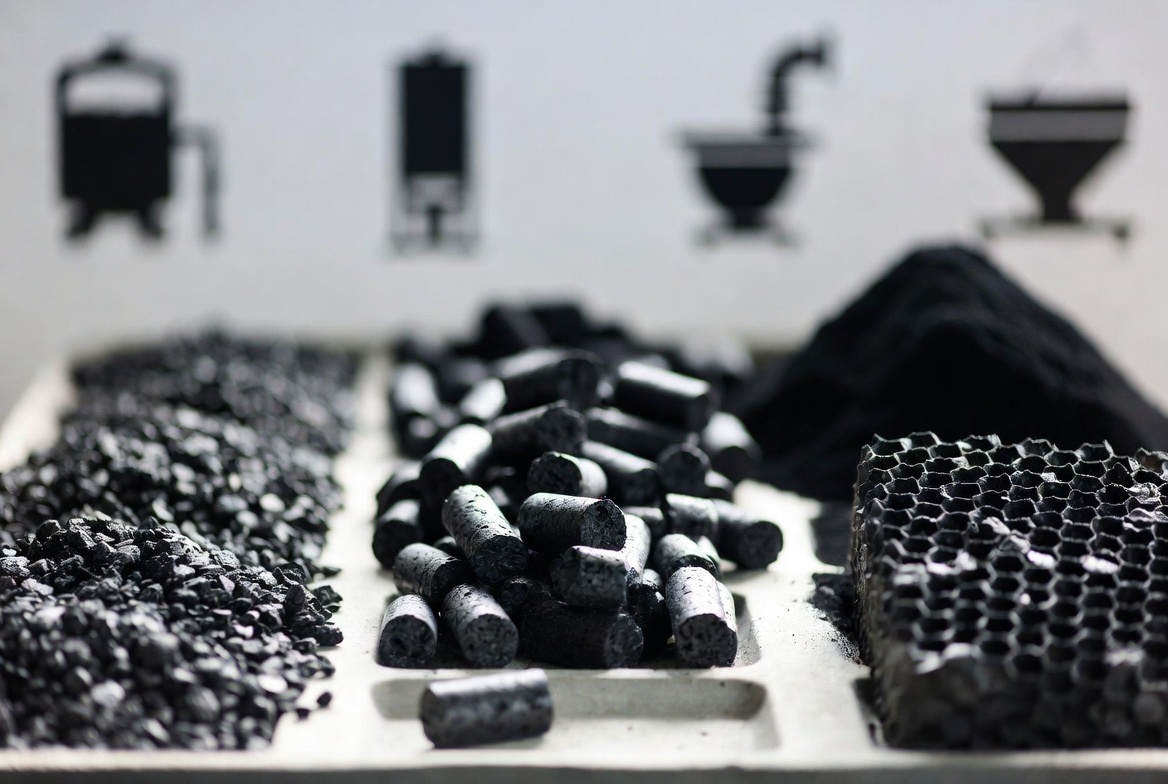
Different activated carbon materials—coconut shell, coal-based, wood-based, lignite, powdered, granular, pelletized or honeycomb—perform differently under identical conditions. Pore size distribution and surface chemistry determine how efficiently specific contaminants are adsorbed and how deeply they penetrate the carbon matrix. [tongkeac]
Industrial buyers should pay attention to iodine number, surface area, hardness, ash content and particle size distribution when predicting realistic service life. High-quality, application-matched media typically delivers longer stable performance, reducing replacement frequency even if unit price is higher. [tongkeac]
3. Bed Design and Contact Time
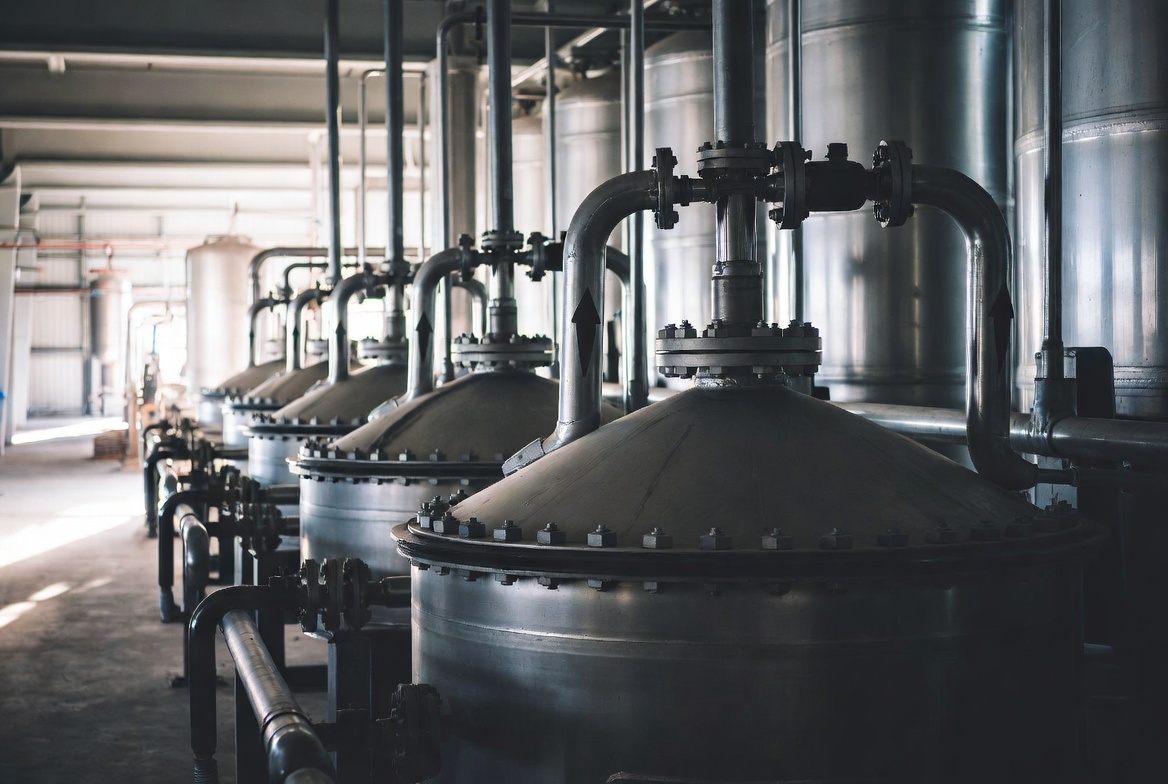
Service life is strongly influenced by EBCT (Empty Bed Contact Time), bed depth and flow distribution. Short EBCT may meet target flow rates but will reduce adsorption efficiency and lead to earlier breakthrough, forcing more frequent change-out. [tongkeac]
Uniform flow distribution, sufficient bed depth and well-designed inlet/outlet structures help utilize the full bed volume rather than overloading front layers only. Optimized bed design often extends service life more cheaply than upgrading to a more expensive carbon grade. [tongkeac]
4. Operating Conditions: Temperature, pH, and Pressure
Temperature affects adsorption capacity and kinetics; higher temperatures generally reduce capacity for many organics and gases, while extreme pH can damage surface functional groups. Pressure and humidity also influence gas-phase adsorption, especially for VOC and odor control applications. [tongkeac]
Keeping the system within the carbon supplier's recommended operating envelope can significantly stabilize service life. Conversely, frequent excursions—thermal shocks, pH swings, pressure surges—tend to shorten life and make replacement frequency less predictable. [tongkeac]
5. Maintenance Practices and Monitoring
Regular backwashing, upstream filter maintenance and instrumentation calibration directly impact service life. Poor maintenance allows solids, biofilm and scaling to block pores and channels, effectively "stealing" capacity that should be available for adsorption. [tongkeac]
Operators who log influent/effluent values, pressure drop and operational events build an empirical picture of true service life over multiple cycles. Over time this data supports evidence-based replacement frequency rather than rule-of-thumb decisions. [tongkeac]
Service Life vs. Replacement Frequency: A Practical Comparison
Below is a practical way to compare service life (technical reality) with replacement frequency (operational decision):
| Aspect | Real Service Life | Replacement Frequency |
| Primary driver | Adsorption capacity and performance limits (tongkeac) | Maintenance windows, production schedule, budget (tongkeac) |
| Trigger | Breakthrough, spec deviation, high pressure drop (tongkeac) | Calendar plan, shutdowns, internal SOPs (tongkeac) |
| Measurement | Lab analysis, online sensors, trend data (tongkeac) | Historical averages, vendor guidelines (tongkeac) |
| Risk if set wrong | Quality failure, regulatory non-compliance (tongkeac) | Cost overruns or under-protection (tongkeac) |
| Optimization lever | Carbon choice, system design, pre-treatment (tongkeac) | Planning, inventory, logistics (tongkeac) |
The most resilient strategy is to define service life technically, then translate it into a replacement schedule that fits your plant constraints. [tongkeac]
Insights From Field Experience: How Plants Really Decide When to Replace
From a practitioner's perspective, replacement decisions rarely come from a single test result; they are usually based on a combination of trend data, risk appetite and production priorities. A water bottling plant may change carbon earlier than absolutely necessary to protect brand reputation, while a chemical plant may run closer to the limit but under strict monitoring. [tongkeac]
Experienced operators look for early warning signals: gradual rise in effluent TOC, slight odor return, or slowly increasing differential pressure. Rather than waiting for a clear failure, they use these signals to plan replacement during the next scheduled shutdown, aligning service life with operational reliability. [tongkeac]
Case-Like Scenarios Across Key Applications
Water Treatment: Municipal and Industrial
In drinking water and high-purity industrial water, service life is defined by taste, odor, color, and micro-pollutant removal performance. When activated carbon no longer maintains targeted chlorine reduction or organic removal, service life is considered reached—even if total flow volume is lower than design. [tongkeac]
Plants often combine lab sampling (COD/TOC, residual chlorine, specific contaminant assays) with throughput data to refine replacement frequency. Upstream pre-treatment (sand filters, cartridge filters) and choosing a tailored carbon grade can extend service life significantly. [tongkeac]
Air and Gas Purification
In VOC, solvent, or odor control systems, service life is usually linked to outlet concentration or workplace exposure limits. When industrial hygiene measurements rise toward thresholds, carbon is approaching the end of its useful life. [tongkeac]
For gas-phase systems, humidity and temperature swings can shorten effective service life even if nominal capacity looks adequate on paper. Many plants adopt a conservative replacement frequency for critical safety systems (e.g., toxic gas scrubbing), accepting higher media consumption to reduce risk. [tongkeac]
Food & Beverage and Pharmaceutical
Here, service life is tightly tied to brand protection and compliance: even slight off-odor, off-flavor, or color deviation is unacceptable. Activated carbon used for decolorization, deodorization or purification is often replaced before full capacity utilization to avoid any quality drift. [tongkeac]
As a result, replacement frequency is often more aggressive than in utility water systems. Operators balance this by carefully selecting high-purity, low-ash, food-grade or pharma-grade carbons that deliver stable performance and predictable behavior. [tongkeac]
How Guangdong Tongke Activated Carbon Approaches Service Life
As a specialized Chinese manufacturer, Guangdong Tongke Activated Carbon Co., Ltd. provides custom activated carbon solutions across water treatment, air and gas purification, food and beverage, chemical and pharmaceutical applications. The company's portfolio covers powdered activated carbon, granular activated carbon, pelletized and honeycomb forms based on coal, lignite, wood and coconut shell. [tongkeac]
By matching pore structure and product format to each customer's contaminants and operating conditions, Tongke helps extend real service life and stabilize replacement frequency. Technical support typically includes guidance on media selection, suggested monitoring parameters, and rough life estimates under typical loading profiles, which are then refined with the client's own operating data. [tongkeac]
Advanced Monitoring: From Guesswork to Data-Driven Replacement
Key Metrics to Track
To move from intuition to data-driven replacement decisions, operators can focus on a small set of high-impact metrics:
- Influent and effluent contaminant concentration
- Differential pressure across the carbon bed
- Throughput volume (m³ of water or Nm³ of gas)
- Operating temperature, pH, and major process changes
Tracking these over time provides a clear picture of when service life is truly reached rather than guessed. [tongkeac]
Simple Step-by-Step Monitoring Framework
1. Define performance thresholds for your application (e.g., max outlet chlorine, VOC concentration, TOC). [tongkeac]
2. Install or standardize sampling and measurement routines for influent and effluent streams. [tongkeac]
3. Log differential pressure regularly to detect fouling or channeling before capacity loss becomes critical. [tongkeac]
4. Record significant process changes—feed composition, temperature, flow rates—that can affect service life. [tongkeac]
5. After each replacement, calculate achieved throughput and compare against previous cycles to refine expected service life. [tongkeac]
Over two to three cycles, this framework allows you to align replacement frequency tightly with actual service life while building a robust data record. [tongkeac]
When Regeneration Makes Sense Versus Full Replacement
In some industrial contexts, thermal or chemical regeneration of spent carbon can extend overall media utilization and reduce waste. The feasibility depends on contaminant type, carbon form, local regulations and available regeneration facilities. [tongkeac]
For applications involving hazardous organics or complex chemical mixtures, safe off-site regeneration by certified providers may be preferable to simple disposal. In other cases, especially food-grade and pharma-grade media, direct replacement is often chosen to maintain strict quality assurance. [tongkeac]
Practical Guidelines to Optimize Replacement Frequency
To convert technical insights into actionable practice, operators can follow these condensed guidelines:
- Define clear performance criteria for end of service life before installing the carbon.
- Choose application-specific carbon grades rather than generic products.
- Design or retrofit systems to ensure adequate contact time and bed depth.
- Implement simple but consistent monitoring and logging routines.
- Align replacement events with planned shutdowns while staying inside safe performance margins.
These practices help you avoid both premature replacement and late reactive change-out. [tongkeac]
Example: How a Plant Can Recalibrate Its Strategy
Imagine a mid-size beverage plant that has been changing GAC filters every six months simply because "that's how it has always been done." After introducing systematic monitoring, the team discovers that:
- Performance remains within spec for roughly eight months under normal operation.
- A major seasonal spike in organic load reduces service life to about six months during peak periods.
By combining this data, the plant shifts to a flexible replacement frequency: earlier change-out during high-load seasons and extended intervals during stable periods, all while maintaining a safety buffer. This reduces media consumption and labor while preserving product quality and compliance. [tongkeac]
How Tongke Can Support Your Replacement Strategy
Guangdong Tongke Activated Carbon Co., Ltd. works with industrial clients to translate these principles into tailored solutions and realistic service life expectations. Support typically covers media selection, pilot testing, and guidance on monitoring parameters so customers can refine replacement frequency based on their own data rather than generic rules. [tongkeac]
For multi-site operations or multi-country supply chains, Tongke's breadth of product forms and raw materials allows harmonization of quality standards while adapting to local feed conditions. This reduces complexity in procurement while improving predictability of service life and replacement planning. [tongkeac]

Clear Next Step: Talk to a Technical Specialist
If you are evaluating activated carbon replacement strategies for water, air, food, chemical or pharmaceutical processes, the most effective next step is to review your current service life data with a specialist and match it against the appropriate carbon grade and system design. By doing so, you can transition from fixed, calendar-based replacement to a data-driven, risk-managed approach that optimizes cost and performance across your entire operation. [tongkeac]
For tailored guidance, consider sharing your influent/effluent data, throughput volumes and current replacement schedule with a technical team experienced in custom activated carbon solutions. They can help you estimate realistic service life under your actual conditions and design a replacement plan that fits your production constraints. [tongkeac]
Frequently Asked Questions (FAQ)
1. How can I estimate activated carbon service life before installation?
You can combine vendor capacity data, expected contaminant loading, EBCT and safety factors to estimate an initial service life range, then refine it with real monitoring data after startup. [tongkeac]
2. Why does my carbon fail earlier than the supplier's advertised capacity?
Advertisement figures are based on controlled test conditions; real plants face fluctuations in feed quality, temperature, pH, and maintenance that often shorten effective service life. [tongkeac]
3. Is there a universal replacement frequency I can follow?
No. Replacement frequency is application-specific and depends on feed characteristics, system design and risk tolerance; universal rules of thumb are only starting points. [tongkeac]
4. Can regeneration fully restore activated carbon performance?
Regeneration can recover significant capacity for certain applications, but effectiveness depends on contaminant type and process; some food and pharma uses still require full replacement. [tongkeac]
5. What data should I start collecting if I want to optimize my replacement strategy?
Begin with influent/effluent contaminant levels, throughput, differential pressure and any major operational changes; these parameters are enough to build a useful service life profile. [tongkeac]
References
1. Guangdong Tongke Activated Carbon Co., Ltd. – Company profile and product range. [tongkeac]
2. Guangdong Tongke Activated Carbon Co., Ltd. – Application overview for water, air, food, chemical and pharmaceutical use. [tongkeac]
3. Guangdong Tongke Activated Carbon Co., Ltd. – Lignite activated carbon product information and characteristics. [tongkeac]
4. Guangdong Tongke Activated Carbon Co., Ltd. – "How Long Does Activated Carbon Work?" technical article on service life. [tongkeac]
5. Guangdong Tongke Activated Carbon Co., Ltd. – "How To Install Activated Carbon Filter?" guidance on system installation and maintenance. [tongkeac]


