Content Menu
● What Is Activated Carbon Manufacturing?
● Why Manufacturing Process Matters for Your Application
● Overview of Tongke Carbon's Manufacturing Capabilities
● Raw Materials: Wood, Coconut Shell and Coal
>> Wood‑Based Precursors
>> Coconut Shells
>> Coal
● Step‑by‑Step: Wood Activated Carbon Phosphoric Acid Process
>> 1. Screening and Drying
>> 2. Preparation of Phosphoric Acid Solution
>> 3. Mixing and Impregnation
>> 4. Carbonization and Activation
>> 5. Cooling, Washing and Phosphoric Acid Recovery
>> 6. Dehydration, Drying, Grinding and Packaging
● Advantages of Phosphoric Acid–Activated Wood Carbon
● Coconut Shell Activated Carbon Production
>> 1. Carbonization of Coconut Shell
>> 2. Chemical Activation Route
>> 3. Physical (Steam/CO₂) Activation Route
>> 4. Screening, Grading and Quality Control
● Coal‑Based Activated Carbon Manufacturing
>> 1. Carbonization
>> 2. Steam Activation
>> 3. Granular, Pelletized and Powdered Grades
● Physical Steam Activation: Key Benefits
● Sustainability: Emerging Trends in Activated Carbon Manufacturing
● How Tongke Carbon Supports Industrial Applications
● Practical Checklist for Selecting Activated Carbon
● Frequently Asked Questions (FAQ)
● References
Manufacturing high‑performance activated carbon is not just a chemical process—it is a strategic decision that directly impacts water safety, air quality, product purity and environmental compliance for modern industries worldwide. Drawing on more than 20 years in the field, our team at Guangdong Tongke Activated Carbon Co., Ltd. (Tongke Carbon) has seen how a well‑engineered manufacturing process can reduce total treatment cost while helping plants meet ever‑stricter regulations. [tongkeac]
What Is Activated Carbon Manufacturing?
Activated carbon manufacturing is the controlled conversion of carbon‑rich raw materials—such as wood, coconut shell and coal—into highly porous adsorbents through carbonization and activation. The goal is to create a network of micro‑, meso‑ and macropores that provide very high internal surface area, enabling efficient removal of organic pollutants, odors, colors and trace contaminants from liquids and gases. [eureka.patsnap]
For industrial users, the manufacturing route is not just a technical detail. It affects:
- Adsorption efficiency and selectivity for specific contaminants
- Compliance with standards in drinking water, food, pharmaceutical and chemical industries
- Operating costs, including regeneration frequency and media replacement
- Sustainability, including energy use and waste generation across the lifecycle [papers.ssrn]
Why Manufacturing Process Matters for Your Application
Different industries—from municipal water and beverage plants to refineries, pharmaceutical manufacturers and gold mines—need activated carbon with different pore structures, densities and impurity profiles. For example: [tkcarbon.en.made-in-china]
- Water treatment requires high surface area, controlled ash content and low leachable impurities to meet potable water standards. [tongkeac]
- Air and gas purification often relies on mechanically strong pelletized or granular carbons that can withstand pressure, abrasion and high temperatures. [tkcarbon.en.made-in-china]
- Food and sugar decolorization demands very low residual chemicals and strictly controlled pore distribution for color bodies. [tongkeac]
- Chemical and pharmaceutical processes may need carbons with specific surface functional groups for catalytic or selective adsorption uses. [eureka.patsnap]
Global demand for activated carbon is projected to reach around USD 5.47 billion by 2031, driven by tightening environmental and product quality regulations. Choosing a manufacturer with robust process control and application‑driven product design is therefore critical to long‑term performance and risk management. [mordorintelligence]
Overview of Tongke Carbon's Manufacturing Capabilities
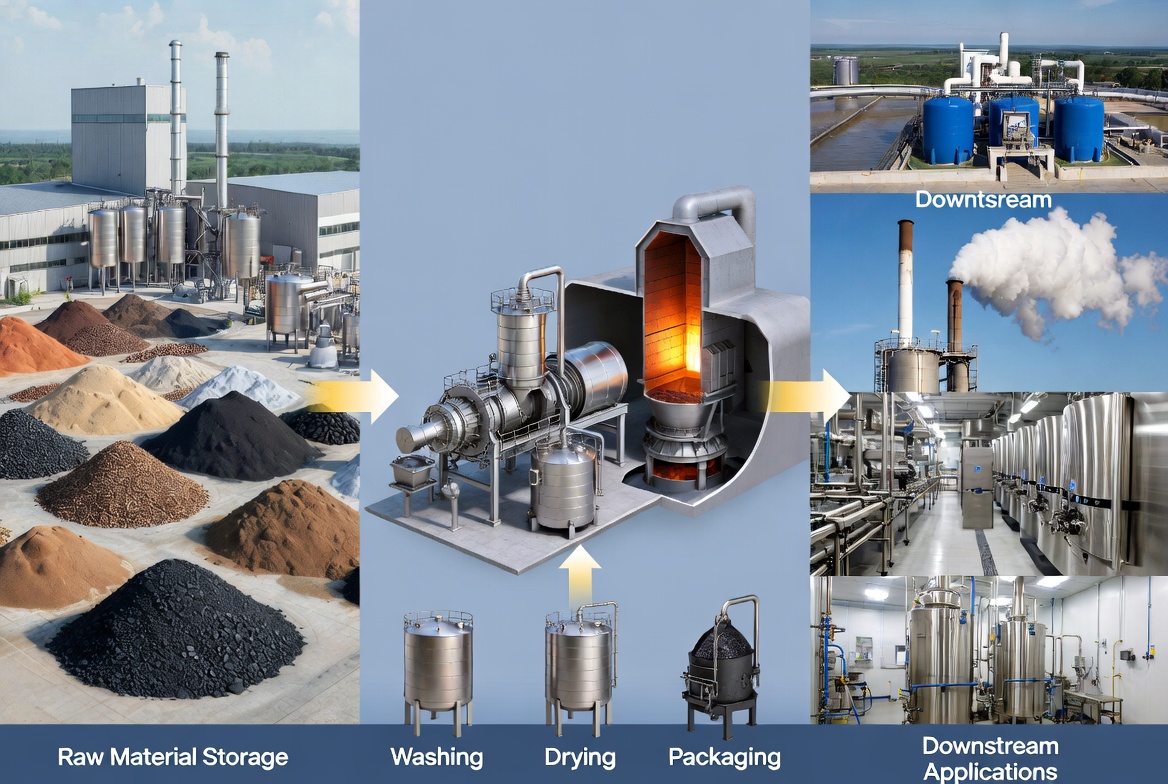
As a China‑based manufacturer with over 30,000 tons annual capacity and multiple production bases in Guangdong, Shandong, Sichuan and Hunan, Tongke Carbon integrates R&D, manufacturing and technical service into a single supply platform. We supply: [tkcarbon.en.made-in-china]
- Wood‑based activated carbon (primarily phosphoric‑acid activated, mostly powdered)
- Coconut shell activated carbon (granular, powdered and pelletized, both chemical and physical activation routes)
- Coal‑based activated carbon (granular, pelletized and powdered, steam activated) [tongkeac]
Our products serve customers in water treatment, air & gas purification, food & beverage, chemicals, pharmaceuticals, gold recovery, catalysts and cigarette filtration across Asia, Europe and North America. Certifications including NSF, KOSHER and HALAL help end users integrate our products into regulated processes with confidence. [tkcarbon.en.made-in-china]
Raw Materials: Wood, Coconut Shell and Coal
Wood‑Based Precursors
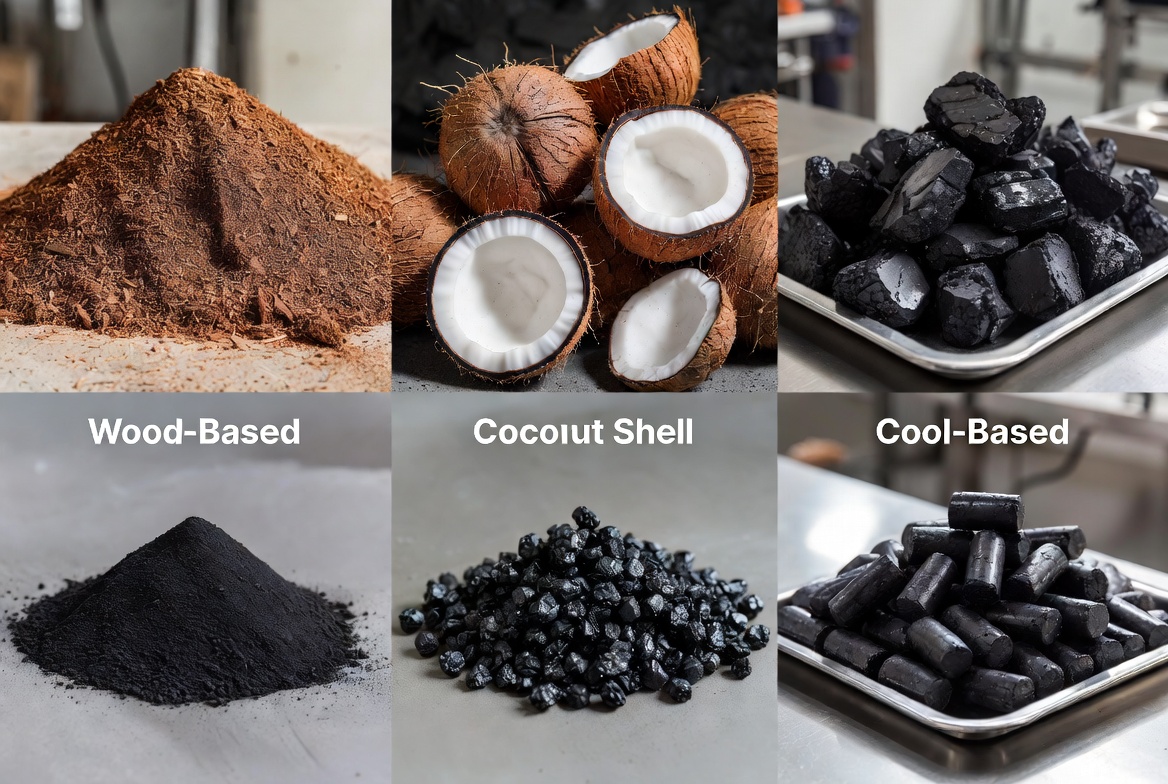
In China, softwood sawdust (especially fir) is a preferred raw material for phosphoric‑acid activated wood carbon because it provides a favorable balance between yield and pore development. Fresh pine sawdust contains rosin components that hinder acid penetration, so controlled storage is used to allow volatile fractions to oxidize and dissipate before processing. [tongkeac]
Key process requirements for sawdust include:
- Particle size typically 0.425–3.35 mm
- Controlled moisture content in the 15–20% range
- Low levels of impurities such as bark, sand, metals and stones [tongkeac]
Coconut Shells
Coconut shells are valued for their high fixed carbon and low ash content, making them ideal for high‑hardness, high‑micropore activated carbons used in demanding water and gas applications. The shells are washed and dried before entering carbonization to ensure consistent pore development and low contamination. [eureka.patsnap]
Coal
Coal‑based precursors (such as lignite, bituminous and anthracite) offer:
- Rich raw material availability and consistent supply
- High mechanical strength, supporting reuse and backwash cycles
- Moderate pore structures suitable for a wide range of water and gas phase applications [eureka.patsnap]
Coal blocks are crushed and screened to controlled sizes (typically 10–100 mm) before low‑temperature carbonization. [tongkeac]

Step‑by‑Step: Wood Activated Carbon Phosphoric Acid Process
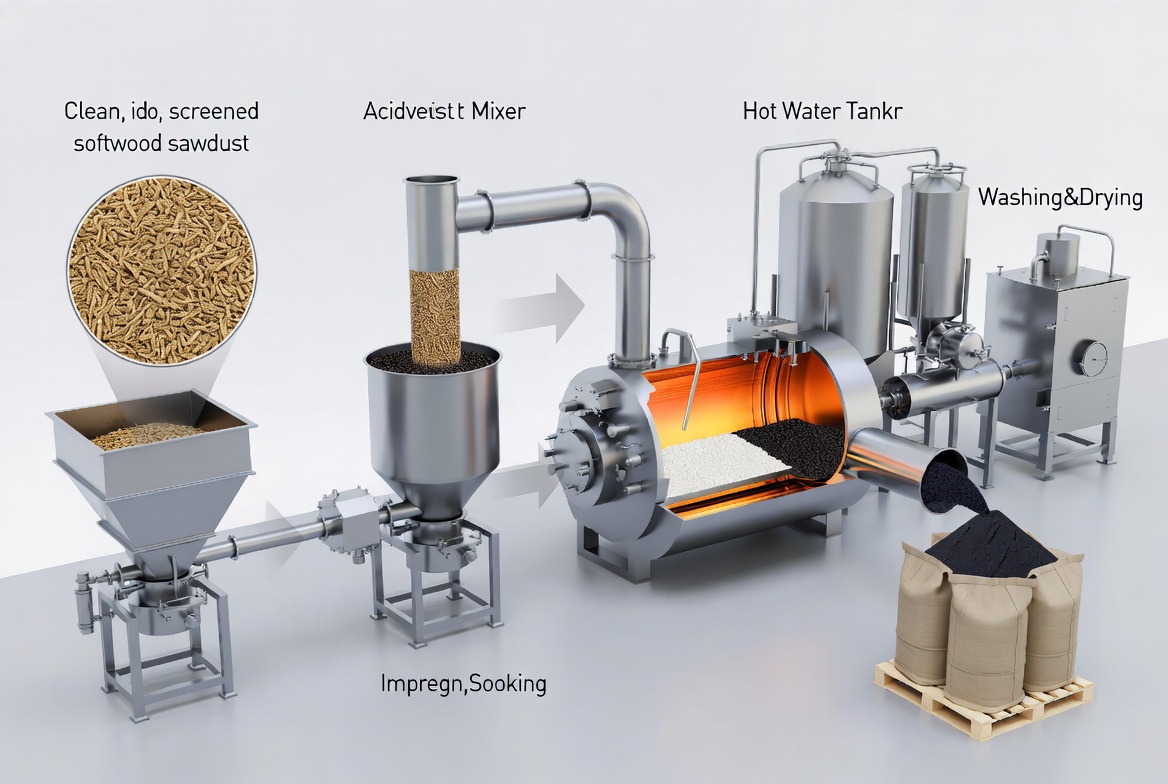
Among chemical activation routes, phosphoric acid activation of wood is a mature technology that allows fine tuning of pore structure and surface chemistry. The process we use can be summarized in the following stages. [eureka.patsnap]
1. Screening and Drying
Sawdust passes through vibratory or drum screens to achieve the target size range and to remove foreign materials such as bark, metal fragments and sand. It is then dried to the specified moisture content to ensure stable impregnation and carbonization behavior. [tongkeac]
2. Preparation of Phosphoric Acid Solution
Industrial‑grade 85% H₃PO₄ is diluted to a working concentration of 40–60%, controlled via Baumé degree and temperature. Accurate control of concentration and temperature is essential, as the acid‑to‑wood ratio directly influences yield, pore volume and distribution. [eureka.patsnap]
3. Mixing and Impregnation
In an acid‑resistant mixer, sawdust is thoroughly blended with phosphoric acid solution, typically with an impregnation time of 12–24 hours. Proper mixing ensures deep penetration of acid into cell walls, promoting: [tongkeac]
- Dehydration reactions
- Formation of crosslinked structures
- Controlled development of micropores during subsequent activation [eureka.patsnap]
4. Carbonization and Activation
The impregnated material is fed into a kiln—often an internally heated rotary kiln—for combined carbonization and activation at 400–600°C over 2–3 hours. Phosphoric acid catalyzes dehydration and promotes the formation of thermally stable, porous carbon networks at lower temperatures than steam activation. [eureka.patsnap]
5. Cooling, Washing and Phosphoric Acid Recovery
After activation, the material is cooled and washed with hot water at 80–90°C multiple times (typically 3–5 washes) to remove residual phosphoric acid and soluble by‑products. Phosphoric acid and its condensed forms (pyro‑ and polyphosphoric acids) can account for up to around 75% of the residue in the fresh product, so recovery and recycling are crucial for both cost and environmental reasons. [papers.ssrn]
Because phosphoric acid is non‑volatile within the typical temperature window (around 450–500°C), it remains in condensed forms and can be reconverted to orthophosphoric acid in water for reuse. This closed‑loop approach significantly reduces acid consumption and waste generation. [papers.ssrn]
6. Dehydration, Drying, Grinding and Packaging
Washed carbon is centrifugally dewatered, then dried, milled and sieved to the target particle size distribution. The result is typically a powdered wood‑based activated carbon with high methylene blue value, good decolorization performance, adjustable pH and relatively low ash content. [tongkeac]
Advantages of Phosphoric Acid–Activated Wood Carbon
From an end user's perspective, phosphoric acid–activated wood carbon offers several practical advantages:
- Precisely controllable pore structure – process parameters such as acid concentration, impregnation ratio and temperature can be tuned to target specific pore size distributions. [eureka.patsnap]
- High yield and energy efficiency – the process runs at lower temperatures than steam activation, reducing fuel consumption and preserving more carbon. [papers.ssrn]
- Rich surface chemistry – functional groups like carboxyl, hydroxyl and phosphate enhance adsorption of heavy metals and polar organics. [eureka.patsnap]
- Milder process conditions and lower equipment stress – lower temperatures reduce thermal damage and enable longer kiln lifetimes. [tongkeac]
- Improved environmental profile – recyclable phosphoric acid and lower gaseous emissions help reduce overall environmental impact compared to some high‑temperature steam routes. [papers.ssrn]
These properties make wood‑based phosphoric‑acid carbons especially suitable for food decolorization, sugar and glucose refining, edible and vegetable oil purification, fish protein and marine collagen decolorization, as well as selected wastewater applications. [tongkeac]
Coconut Shell Activated Carbon Production
1. Carbonization of Coconut Shell
Clean, dried coconut shell is carbonized in an oxygen‑limited environment at 300–500°C to produce a char or "green carbon". This step removes volatile matter and prepares the material for activation, but at this stage the pore network is still underdeveloped. [tongkeac]
2. Chemical Activation Route
In chemical activation, the carbonized shell is impregnated with reagents such as KOH, H₃PO₄ or ZnCl₂, followed by high‑temperature treatment at 500–900°C. The activator reacts with carbon, promoting the formation of a dense network of micropores and some mesopores. [eureka.patsnap]
Chemically activated coconut shell carbon typically exhibits:
- Very high specific surface area
- Uniform microporous structure
- Suitability for pharmaceutical, food, and high‑purity gas applications where fine adsorption performance is critical. [eureka.patsnap]
3. Physical (Steam/CO₂) Activation Route
In physical activation, the carbonized shell reacts with steam or carbon dioxide at 700–1000°C, forming pores via controlled gasification. Several reactor types are used: [eureka.patsnap]
- Stewing furnaces with fixed beds and permeable activation tanks
- Moving bed systems, such as multi‑tube and multi‑stage furnaces, which improve uniformity and energy recovery
- Slep furnaces, using alternating steam and flue gas for high‑grade products
- Rotary kilns, where continuous rotation enhances gas–solid contact and supports a broad feed size range [sciencedirect]
Physically activated coconut shell carbon typically provides larger pore sizes and is widely used for water treatment, air purification and industrial waste gas treatment, where large throughput and robustness are key. [tongkeac]
4. Screening, Grading and Quality Control
After activation, the product is screened into powdered, granular or columnar grades, tested for surface area, pore size distribution, adsorption capacity and mechanical strength, and then packaged in moisture‑resistant bags. [tongkeac]
Coal‑Based Activated Carbon Manufacturing
1. Carbonization
Suitable coals are crushed and screened, then carbonized at 400–700°C to form a stable char. This step removes volatiles and lays the foundation for a robust pore structure. [tongkeac]
2. Steam Activation
Steam activation is performed at 800–1000°C, where steam reacts with carbon to form CO and CO₂, gradually opening and enlarging pores. Careful control of temperature, residence time and steam flow allows manufacturers to tailor: [eureka.patsnap]
- Total pore volume
- Ratio of micro‑ to mesopores
- Mechanical strength and density of the final carbon [tongkeac]
3. Granular, Pelletized and Powdered Grades
Coal‑based activated carbon can be supplied in three primary forms: [tongkeac]
- Granular (0.2–5 mm): widely used in drinking water, bottled water, COD/BOD and heavy‑metal removal, river and rainwater treatment, steam condensate polishing and amine treatment. [tongkeac]
- Pelletized (columnar) (typically 4–10 mm diameter): high strength, uniform shape, ideal for H₂S and VOC removal, industrial and flue gas treatment, biogas and natural gas purification. [tkcarbon.en.made-in-china]
- Powdered (often <75 µm): high surface area and rapid kinetics, used for wastewater treatment, flue gas cleaning, cement and waste incineration gas treatment. [tongkeac]
Physical Steam Activation: Key Benefits
From a plant operation viewpoint, physical steam activation offers advantages that directly translate into reliability and compliance:
- High product purity – no chemical activators means minimal residual chemicals, critical for food, pharma and drinking water uses. [tongkeac]
- No chemical pollution – emissions are mainly CO, CO₂ and water vapor, simplifying environmental management compared to some chemical routes. [papers.ssrn]
- Stable pore structure and product stability – steam‑activated carbons maintain performance over long service times and storage periods. [tongkeac]
- Suitability for large‑scale production – the process is robust, easily standardized and cost‑effective for high‑volume applications. [sciencedirect]
These properties make steam‑activated coal and coconut carbons the preferred choice for many industrial water, flue gas and solvent recovery systems. [tkcarbon.en.made-in-china]
Sustainability: Emerging Trends in Activated Carbon Manufacturing
Recent research highlights that traditional activated carbon production can involve significant energy consumption (often in the range of 5–10 MWh per ton) and emissions if not carefully managed. In response, leading manufacturers and users are focusing on: [papers.ssrn]
- Utilization of agricultural and biomass wastes (such as nutshells and forestry residues) to reduce dependence on fossil‑based feedstocks. [sciencedirect]
- Energy recovery from exhaust gases in kilns and activation furnaces to reduce net fuel consumption. [sciencedirect]
- Closed‑loop chemical recovery, particularly for phosphoric acid, to minimize fresh chemical input and liquid waste. [papers.ssrn]
- Lifecycle assessment (LCA) to quantify environmental impacts from raw materials to end‑of‑life disposal or regeneration. [papers.ssrn]
At Tongke Carbon, our multi‑base manufacturing model in China allows us to balance feedstock selection, energy mix and logistics to meet both performance and sustainability expectations from OEMs, EPC contractors and end users. [tkcarbon.en.made-in-china]
How Tongke Carbon Supports Industrial Applications
Because we work closely with customers across water, air & gas, food & beverage, chemicals, pharmaceuticals, gold recovery, energy and OEM filtration, our engineering team can help you align product selection with process needs. [tkcarbon.en.made-in-china]
Typical support includes:
- Media selection and design – choosing between wood, coconut or coal carbons, and between powdered, granular or pelletized forms for each application.
- Pilot testing and performance validation – supporting trials to fine‑tune dose, contact time and backwash/regeneration cycles.
- Custom specifications – adjusting parameters like iodine value, methylene blue value, ash content and particle size distribution to match system requirements. [tkcarbon.en.made-in-china]
- Technical troubleshooting – diagnosing issues like early saturation, pressure drop or fouling and recommending process improvements. [tongkeac]
For OEM and system integrators, we also provide consistent long‑term supply backed by our 30,000‑ton capacity and multiple logistics hubs, reducing supply risk across projects. [tkcarbon.en.made-in-china]
Practical Checklist for Selecting Activated Carbon
When evaluating activated carbon for your project, consider the following practical factors:
1. Application environment
- Liquid vs gas phase, temperature range, pH, presence of oxidants or solvents.
2. Target contaminants
- Organic compounds (COD, BOD, VOCs), color bodies, taste/odor, heavy metals, sulfur compounds, or specific molecules.
3. Regulatory requirements
- Drinking water, food contact, pharma or emission norms, which may influence raw material and activation method.
4. Operating constraints
- Pressure drop limits, backwashing frequency, regeneration strategy and bed life expectations.
5. Total cost of ownership
- Media cost, regeneration or replacement cycles, and energy consumption in your system.
Our technical team can help you translate these considerations into a tailored carbon specification and supply plan for new or retrofit installations. [tkcarbon.en.made-in-china]
Frequently Asked Questions (FAQ)
1. What is the difference between chemical and physical activation?
Chemical activation uses agents such as phosphoric acid or potassium hydroxide at moderate temperatures to create pores, often with higher yields and more controlled microporous structures. Physical activation, by contrast, uses steam or CO₂ at higher temperatures to gasify carbon and open pores, usually without chemical residues and with strong mechanical stability. [eureka.patsnap]
2. Which raw material should I choose for water treatment?
For drinking and process water, coal‑based granular and coconut shell carbons are commonly preferred because of their mechanical strength and suitable pore distribution. Wood‑based carbons are often used in powdered form for decolorization and batch treatment where rapid adsorption is needed. [tkcarbon.en.made-in-china]
3. How does activated carbon manufacturing impact sustainability?
Manufacturing affects energy consumption, feedstock sourcing and waste generation across the lifecycle. Using biomass‑based precursors, recovering activation energy and recycling chemical activators (such as phosphoric acid) can significantly improve the environmental profile. [sciencedirect]
4. How do I know if a carbon is suitable for food or pharmaceutical use?
Look for certifications and compliance, such as NSF, KOSHER and HALAL, along with impurity and leachate testing aligned with industry standards. Manufacturers like Tongke Carbon can provide detailed technical data sheets and regulatory support for qualification. [tkcarbon.en.made-in-china]
5. Can activated carbon be regenerated and reused?
Many granular and pelletized carbons can be thermally or in‑situ chemically regenerated, depending on the contaminant loading and system design. Evaluating regeneration feasibility requires a case‑by‑case assessment of contaminant type, safety, energy cost and expected performance recovery. [sciencedirect]
References
1. Heycarbons. "Manufacture Process of Activated Carbon – Wood, Coconut Shell and Coal‑Based Processes." https://heycarbons.com/manufacture-of-activated-carbon/
2. Patsnap Materials. "Activated Carbon: Production Methods, Structural Properties, and Advanced Applications." https://eureka.patsnap.com/materials/activated-carbon-production
3. SSRN. "Production of Activated Carbons: Processes, Applications, and Environmental Considerations" (2024). https://papers.ssrn.com/sol3/papers.cfm?abstract_id=5025307
4. Guangdong Tongke Activated Carbon Co., Ltd. "About Us – Tongke Carbon." https://www.tongkeac.com/aboutus.html
5. Guangdong Tongke Activated Carbon Co., Ltd. "Company Profile – Made‑in‑China." https://tkcarbon.en.made-in-china.com
6. ScienceDirect. "Industrial Production of Activated Carbon Using Circular Bio‑Waste Approaches." https://www.sciencedirect.com/science/article/pii/S2666790822000489
7. Mordor Intelligence. "Activated Carbon Market – Size, Trends, Share & Global Report 2031." https://www.mordorintelligence.com/industry-reports/activated-carbon-market


