
Language
Views: 258 Author: Tongke Activated Carbon Publish Time: 2026-07-09 Origin: Site


Content Menu
● Introduction: Why High-Temperature Activated Carbon Selection Matters
>> What Do We Mean by "Industrial Activated Carbon"?
● Industrial Activated Carbon vs. High Temperature Applications
>> General Industrial Uses vs. High-Temperature Use Cases
● Key Selection Factor 1 – Base Material and Thermal Stability
>> Coal-Based vs. Coconut Shell vs. Wood-Based Activated Carbon
>> Practical Checklist – Matching Raw Material to Temperature Range
● Key Selection Factor 2 – Particle Form and Mechanical Strength
>> Powdered vs. Granular vs. Pelletized vs. Honeycomb
>> Expert Insight – Design for Bed Stability
● Key Selection Factor 3 – Pore Structure and Target Contaminants
>> Micropores, Mesopores, and High Temperature Behavior
>> Application-Focused Pore Design
● Key Selection Factor 4 – Chemical Resistance and Impregnation
>> Impregnated Activated Carbon for Challenging Streams
>> Expert Recommendation – Co-Design with the Supplier
● Unique Expert Section – 3-Step Framework for Specifying High-Temperature Industrial Activated Carbon
>> Step 1 – Define the Process Envelope
>> Step 2 – Map Requirements to Material Families
>> Step 3 – Validate with Pilot Data and Service Support
● Service and Support – Why Manufacturer Expertise Matters
>> Technical Support and Global Logistics
● Practical Comparison Table – Industrial Activated Carbon vs. High-Temperature Applications
● Action-Oriented Recommendations for Buyers and Engineers
● Call to Action – Partner with Guangdong Tongke for High-Temperature Solutions
● FAQs
When industrial processes run at elevated temperatures, activated carbon is often the last line of defense protecting product quality, worker safety, and environmental compliance. Yet, not all activated carbon grades can withstand high temperature conditions without losing capacity, structural integrity, or performance. From my experience working with manufacturing plants and engineering teams, selecting the right industrial activated carbon for high temperature applications is a strategic decision—not just a procurement choice. [tongkeac]
This article compares two core concepts embedded in the title: "industrial activated carbon" as a broad material category and "high temperature applications" as a specific use case with demanding operating conditions. Using both a personal practitioner lens and an industry expert perspective, I'll break down the key selection factors that buyers, process engineers, and procurement managers should consider when working with manufacturers like Guangdong Tongke Activated Carbon Co., Ltd. [tongkeac]
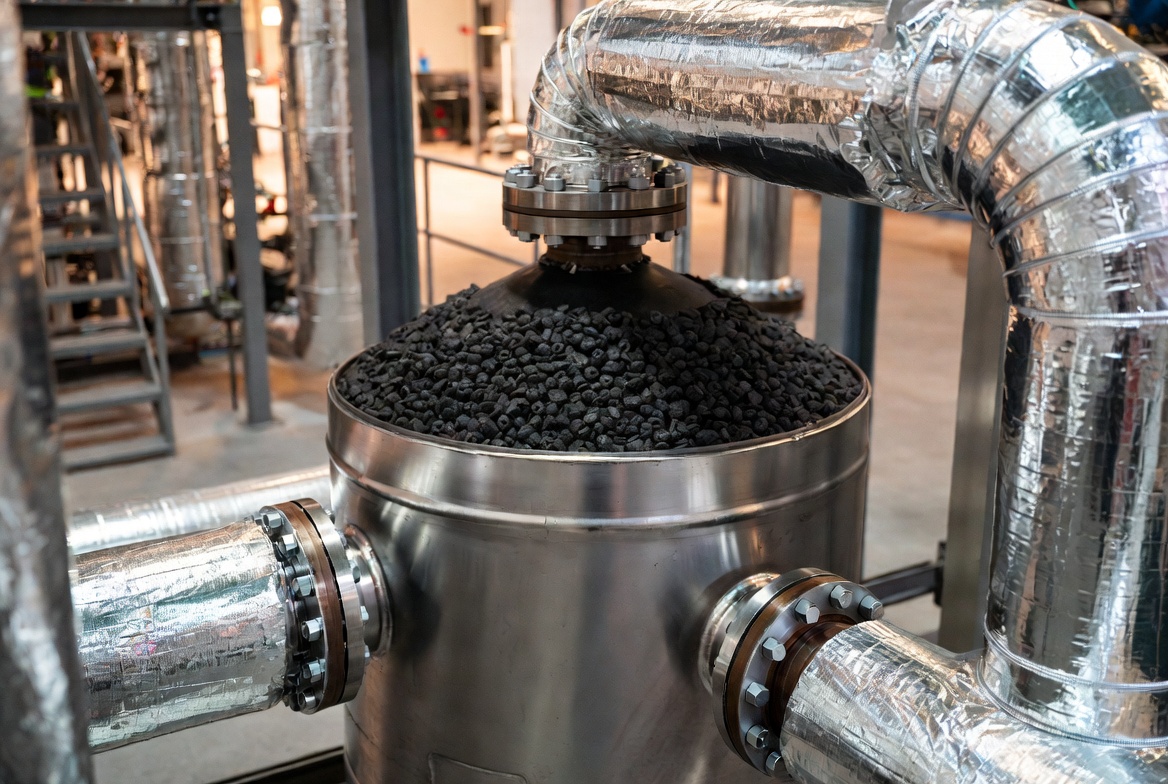
In industrial environments, activated carbon refers to a family of engineered adsorbents produced from raw materials such as coal, wood, coconut shell, fruit shells, and other biomass feedstocks. Through activation processes, these materials develop a vast network of micro-, meso-, and macropores, creating enormous internal surface area and powerful adsorption capability. In practice, industrial activated carbon supports: [tongkeac]
- Water and wastewater treatment for organic pollutants, chlorine, odors, and some heavy metals. [tongkeac]
- Air and gas purification for volatile organic compounds (VOCs), odorous molecules, and harmful gases. [tongkeac]
- Chemical, food & beverage, and pharmaceutical processing, where purity and color stability are critical. [haycarb]
In high-temperature environments, however, not every industrial grade will perform reliably. The choice of base material, pore structure, particle shape, and treatment must align with both process temperature and target contaminants.
Industrial activated carbon is a broad category; high temperature applications are a demanding subset that narrows which grades are truly fit for purpose. Understanding the difference helps avoid overspecification (unnecessary cost) and underspecification (process risk). [tongkeac]
In typical ambient or mildly elevated temperatures, industrial activated carbon serves:
- Water treatment systems (municipal, industrial, boiler feed)
- HVAC and air purification units in commercial buildings
- Food & beverage filtration for decolorization and de-odorization
- Pharmaceutical polishing for process fluids and intermediates [haycarb]
High temperature applications go further and often involve:
- Hot gas purification in combustion exhaust, chemical reactors, or incineration plants
- Solvent recovery systems where vapor phase streams can be significantly heated
- Process gas treatment in petrochemical, fertilizer, and specialty chemical production
- Thermal VOC removal in coating, printing, and packaging industries [activatedcarbon]
In my consulting experience, buyers frequently assume that any "industrial activated carbon" will perform across all of these scenarios. In reality, temperature tolerance and thermal stability must be explicitly checked against the application profile.
The first selection factor is the base material used to produce the activated carbon. Different raw materials respond differently to heat stress, mechanical load, and chemical environments. [tongkeac]
Industrial manufacturers like Guangdong Tongke Activated Carbon Co., Ltd. supply multiple base-material families, each with unique characteristics. [tongkeac]
- Coal-based activated carbon
- Typically offers robust mechanical strength and good performance in gas-phase applications.
- Suitable for many high temperature scenarios where resistance to attrition and structural collapse is critical. [activatedcarbon]
- Coconut shell activated carbon
- Known for high microporosity and strong adsorption capacity for small molecules.
- Performs well in many industrial water and air applications, but long-term exposure to very high temperatures may require specific grades designed for thermal stress. [activatedcarbon]
- Wood-based activated carbon
- Generally provides excellent decolorization capability and larger pore structures.
- Widely used in food and beverage and pharmaceutical applications, often at moderate temperatures, with specialty grades needed for higher thermal loads. [haycarb]
From an expert standpoint, coal-based and certain engineered coconut-shell grades are usually the first candidates for sustained gas-phase high temperature service, particularly when thermal cycling is frequent.
When evaluating material options, process engineers should:
1. Define the typical operating temperature and maximum temperature excursion in the process.
2. Check the manufacturer's specification sheet for recommended temperature limits and thermal stability data.
3. Prioritize coal-based or thermally-stabilized grades for continuous hot gas or solvent vapor streams.
4. Use wood-based or standard coconut-shell grades where temperature is moderate and adsorption selectivity is more important than thermal resistance. [activatedcarbon]
Using this base-material lens immediately narrows viable options for high temperature applications to a subset of industrial activated carbon grades.
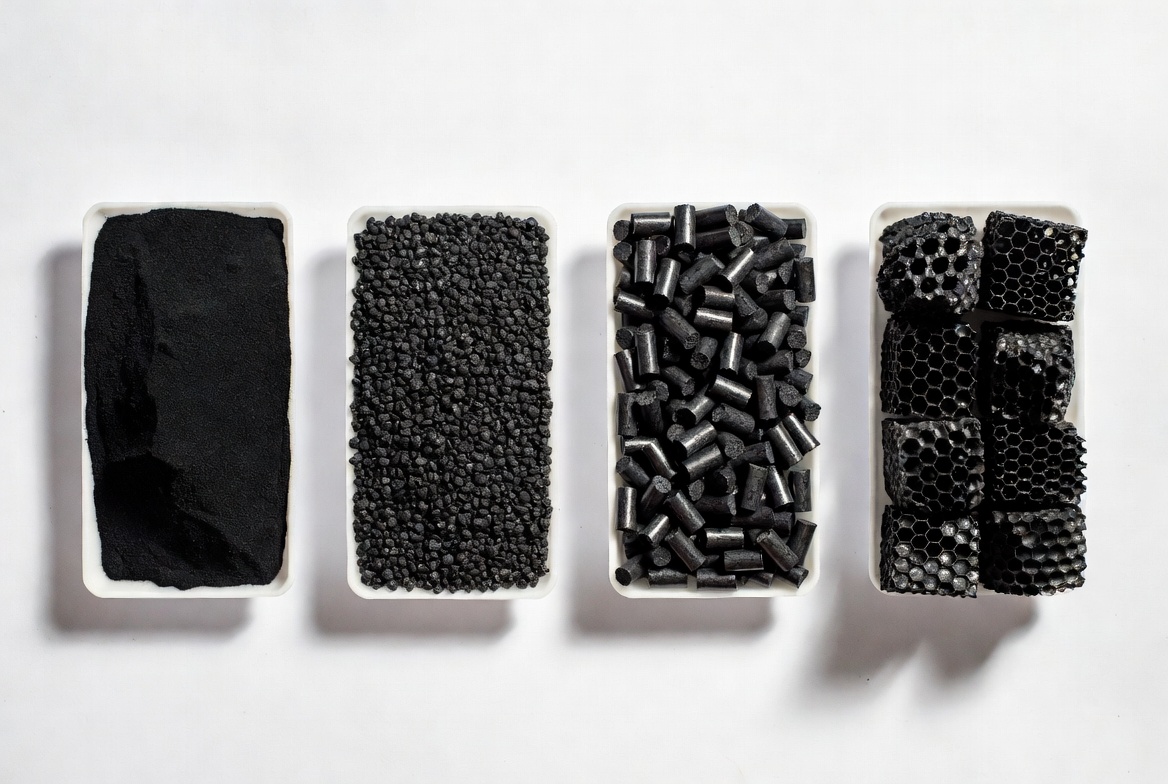
Industrial activated carbon is available in multiple physical forms: powdered, granular, pelletized, and honeycomb structures. For high temperature applications, particle shape directly impacts mechanical stability, pressure drop, and handling. [tongkeac]
Manufacturers like Tongke typically provide:
- Powdered Activated Carbon (PAC) – fine particles, high surface area, ideal for batch dosing into liquids. [tongkeac]
- Granular Activated Carbon (GAC) – larger particles, suitable for fixed beds and continuous filtration.
- Pelletized Activated Carbon – extruded cylindrical pellets offering uniform shape and high mechanical strength.
- Honeycomb Activated Carbon – monolithic blocks with regular channels, often used for air and VOC treatment. [tongkeac]
At higher temperatures, pelletized and honeycomb forms are often preferred because they:
- Maintain structural integrity under thermal stress.
- Offer lower dust generation, beneficial for hot gas systems.
- Provide predictable flow channels and manageable pressure drop. [activatedcarbon]
In contrast, PAC may suffer from entrainment, dusting, and handling challenges in hot gas streams unless carefully contained.
In high-temperature systems, I recommend focusing on:
- Pelletized coal-based activated carbon for hot gas treatment where mechanical strength and thermal resilience are critical.
- Honeycomb activated carbon in VOC removal systems operating at elevated temperatures, especially when low pressure drop and modular replacement are advantages. [activatedcarbon]
Engineers should evaluate bed design, support screens, and flow distribution to minimize localized overheating and mechanical stress that can degrade the media over time.
Even in high temperature applications, pore size distribution remains central to performance. Industrial activated carbon works via physical adsorption, relying on van der Waals forces to trap molecules inside its pores. [tongkeac]
- Micropores (less than 2 nm) dominate capacity for small molecules and many VOCs.
- Mesopores (2–50 nm) support diffusion and adsorption of larger organic molecules.
- Macropores (above 50 nm) primarily act as transport channels. [activatedcarbon]
In high temperature environments, adsorption capacity can decline as temperature rises, since adsorption is often exothermic. However, a well-designed pore structure can still deliver sufficient performance when:
- The contaminant partial pressure remains high.
- The gas or liquid is cooled slightly before entering the adsorption bed.
- The activated carbon is engineered for the specific contaminant profile and thermal conditions. [haycarb]
Industrial manufacturers adjust activation conditions and raw material selection to tune pore structures for:
- Water & wastewater treatment – often emphasizing a mix of micro- and mesopores.
- Hot gas purification – focusing on robust microporosity and mechanical stability.
- VOC removal from air – targeting smaller molecules with high micropore volume. [haycarb]
For buyers, the practical step is to provide detailed stream composition—including temperature, pressure, and contaminant concentrations—to the supplier. This allows companies like Guangdong Tongke to recommend custom high temperature activated carbon solutions aligned to the actual process conditions. [tongkeac]
High temperature applications are often chemically aggressive. Reactive gases, acids, bases, and oxidizing species can attack the carbon surface or alter its performance.
Industrial suppliers offer impregnated activated carbon, where specific chemicals are deposited on the pore surfaces to enhance capture or neutralization of certain contaminants. Examples include: [activatedcarbon]
- Acid-impregnated carbons for ammonia and basic gas removal.
- Alkali-impregnated carbons for acid gas control.
- Specialty formulations for mercury, sulfur compounds, or hazardous VOCs. [haycarb]
At high temperatures, these impregnations must be stable; otherwise, they can decompose or volatilize, reducing performance and potentially contaminating the stream.
For complex chemical environments, it is wise to:
- Share full gas composition, including trace species and expected temperature range.
- Request application-specific impregnated grades from the manufacturer.
- Validate performance via pilot trials or laboratory testing under realistic temperature conditions. [haycarb]
Guangdong Tongke's technical teams emphasize one-on-one guidance for this kind of matching process, helping customers navigate between standard and customized high temperature formulations. [tongkeac]
To add practical depth beyond standard selection advice, here is a simple three-step framework I use when consulting with industrial clients.
Start by documenting the process envelope:
- Operating temperature range and maximum excursion.
- Pressure, flow rate, and phase (gas or liquid).
- Target contaminants and acceptable outlet concentrations.
This may sound basic, but incomplete process data is a leading cause of mis-specified activated carbon systems in industry.
Next, map the envelope to material families:
- Coal-based pelletized or honeycomb for continuous hot gas streams with high mechanical demands.
- Coconut-shell or wood-based granular for moderate temperatures where adsorption selectivity is key.
- Impregnated variants for chemically challenging streams. [haycarb]
At this stage, involve the manufacturer's application engineers. They can often provide case examples from similar industries, such as hot flue gas treatment, solvent recovery, or chemical process vent polishing.
Finally, validate with:
- Small-scale trials or pilot plant tests in representative conditions.
- Laboratory analysis of spent carbon to understand loading behavior.
- Ongoing technical support and lifetime assistance, which suppliers like Tongke explicitly commit to for their customers. [tongkeac]
This continuous feedback loop improves carbon selection, replacement intervals, and overall system reliability at high temperature.
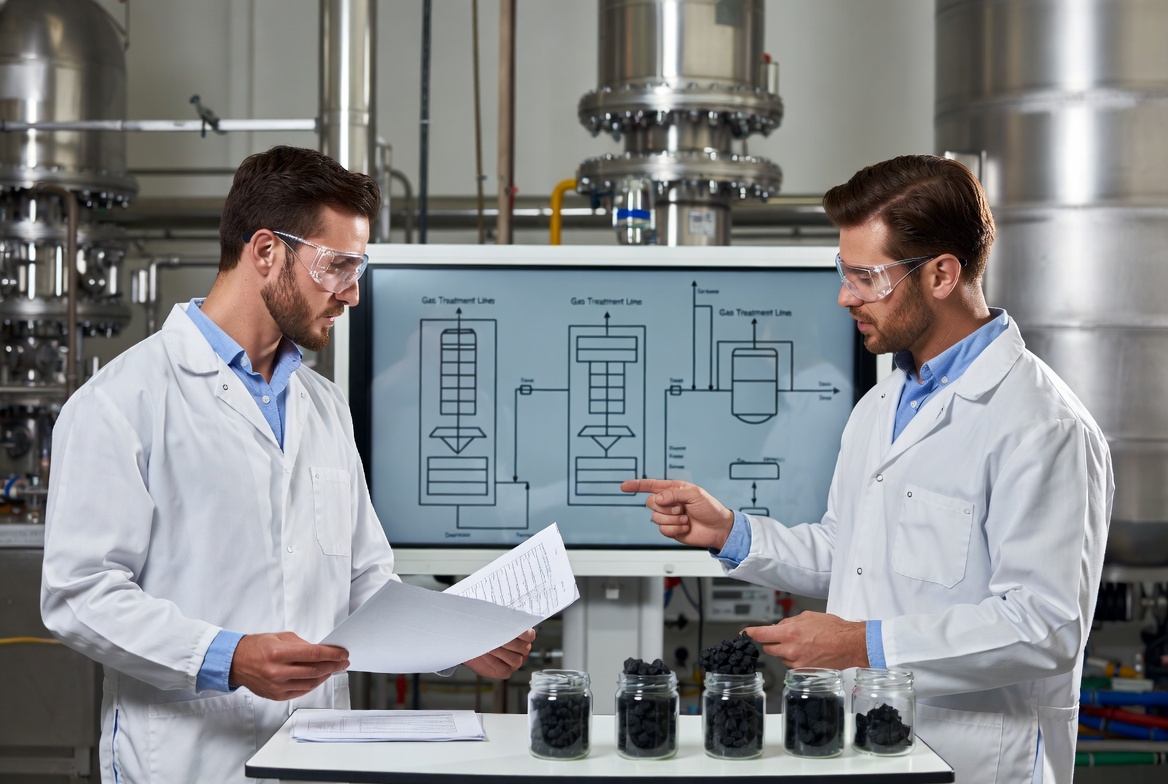
Industrial activated carbon selection for high temperature applications is not purely a catalog choice. It depends heavily on manufacturer expertise, quality control, and support.
Guangdong Tongke Activated Carbon Co., Ltd. emphasizes strict full-range quality tests before delivery, with a Certificate of Analysis (COA) for every batch. For buyers, these documents are essential to: [tongkeac]
- Verify key parameters like iodine value, surface area, hardness, and ash content.
- Confirm that the selected high temperature grade meets specification consistently.
In my experience, plants that integrate COA data into their quality systems significantly reduce unplanned downtime and performance variability.
Tongke also offers professional technical support, global shipping, and lifetime technical assistance, including long-term consulting during product usage. For high temperature applications, this kind of support is particularly valuable when: [tongkeac]
- Process conditions change and carbon grades need adjustment.
- New contaminants appear due to upstream modifications.
- Plants seek to optimize bed design, replacement intervals, or operating cost. [activatedcarbon]
Working closely with the manufacturer transforms activated carbon procurement into a long-term performance partnership.
| Aspect | Industrial Activated Carbon (General) | High Temperature Applications Focus |
|---|---|---|
| Typical base materials | Coal, coconut shell, wood, fruit shells (tongkeac) | Coal-based, thermally-stabilized coconut shell, selected specialty grades (tongkeac) |
| Common forms | PAC, GAC, pelletized, honeycomb (tongkeac) | Pelletized and honeycomb for bed stability, selected GAC |
| Main environments | Water, ambient air, food & beverage, pharmaceutical, chemical processing (tongkeac) | Hot gas, thermal VOC removal, solvent vapor, combustion exhaust (tongkeac) |
| Key performance drivers | Adsorption capacity, purity, selectivity | Thermal stability, mechanical strength, pore structure under heat |
| Typical support needs | Standard technical guidance and COA | Close technical collaboration, pilot validation, long-term performance monitoring (tongkeac) |
This table highlights how industrial activated carbon forms the broad foundation, while high temperature applications represent a specialized subset requiring careful material and design choices.
To maximize both performance and risk control when sourcing industrial activated carbon for high temperature use, I recommend:
- Engage early with the manufacturer to share full process conditions and contaminant profiles.
- Prioritize coal-based pelletized or honeycomb grades for continuous hot gas applications with high mechanical and thermal stress. [activatedcarbon]
- Use a three-step specification framework—process envelope, material mapping, and pilot validation—to de-risk decisions.
- Treat COA and quality data as integral to your quality management system, not just paperwork. [tongkeac]
Industrial activated carbon is a powerful tool, but in high temperature applications, success depends on engineering collaboration, not just catalog selection.
If your facility operates hot gas treatment, thermal VOC control, or high temperature solvent recovery systems, partnering with a specialized activated carbon manufacturer can significantly improve performance and reliability. Guangdong Tongke Activated Carbon Co., Ltd. offers: [activatedcarbon]
- A broad portfolio of coal-based, coconut-shell, wood-based, pelletized, granular, and honeycomb activated carbon products. [tongkeac]
- Strict quality inspection with COA for every batch and professional technical support. [tongkeac]
- Customized solutions tailored to water treatment, air and gas purification, chemical and pharmaceutical processing, and other industrial applications worldwide. [haycarb]
To optimize your next high-temperature filtration or purification project, collaborate with Tongke's technical team, share your process details, and co-design an industrial activated carbon solution engineered for real-world operating conditions.
Q1: Can standard industrial activated carbon be used directly in high-temperature gas streams?
A1: Not always. Standard grades may lack thermal and mechanical stability for sustained high temperature operation. It is better to use coal-based pelletized or honeycomb grades designed specifically for hot gas service and validated against your temperature range. [activatedcarbon]
Q2: Which base material is most suitable for high temperature VOC removal?
A2: Coal-based activated carbon is commonly favored for high temperature VOC removal due to its mechanical strength and thermal resilience. Thermally-engineered coconut-shell grades may also be used when specific adsorption selectivity is required. [activatedcarbon]
Q3: How important is pore structure in high temperature applications?
A3: Pore structure remains critical, even at elevated temperatures. Micropores drive capacity for smaller molecules, while mesopores aid diffusion. The right distribution ensures effective adsorption despite the temperature-related reduction in capacity. [haycarb]
Q4: When should impregnated activated carbon be considered for high temperature use?
A4: Impregnated activated carbon is recommended when the gas or liquid contains reactive contaminants such as acid gases, ammonia, or sulfur compounds. However, the impregnation must be stable at the operating temperature, so laboratory or pilot validation is important. [haycarb]
Q5: What role does manufacturer support play in long-term system performance?
A5: Manufacturer support is essential for maintaining long-term performance, especially in high temperature applications. Ongoing technical assistance, COA-based quality control, and lifetime consulting help adapt carbon grades as processes evolve and operating conditions change. [activatedcarbon]
1. Guangdong Tongke Activated Carbon Co., Ltd. – Products and applications overview. [https://www.tongkeac.com/activated-carbon-product.html] [tongkeac]
2. Guangdong Tongke Activated Carbon Co., Ltd. – Application information and service process. [https://www.tongkeac.com/Application.html] [tongkeac]
3. Guangdong Tongke Activated Carbon Co., Ltd. – Activated carbon for air purification. [https://www.tongkeac.com/activated-carbon-for-air-purification.html] [tongkeac]
4. Carbon Activated Corporation – Industrial activated carbon solutions and high temperature applications. [https://activatedcarbon.com/] [activatedcarbon]
5. Haycarb – Activated carbon solutions for chemical processing and industrial applications. [https://www.haycarb.com/activated-carbon-solutions/speciality/chemical-industry/] [haycarb]


