Content Menu
● Why Honeycomb Activated Carbon Matters for Modern VOC and Air Treatment
● How This Ranking and Evaluation Was Built
● What Real Industrial Customers Care About Most
● Snapshot: Representative Honeycomb Activated Carbon Manufacturers
● Deep Dive: Product Performance and Technical Specifications
● Real Project Experience: VOC Gas Treatment with Honeycomb Carbon
● Guangdong Tongke Activated Carbon as a Global Honeycomb Supplier
● How US Buyers Leverage Both Local and Global Manufacturers
● How to Choose a Honeycomb Activated Carbon Supplier
● Structured Adsorbents, CFD and Advanced System Design
● Clear Call to Action for Industrial Buyers
● FAQs
>> 1. What is honeycomb activated carbon used for?
>> 2. How do I compare honeycomb activated carbon suppliers?
>> 3. Can Chinese honeycomb activated carbon be used in US industrial projects?
>> 4. What are the main advantages of honeycomb vs. granular activated carbon?
>> 5. How often do honeycomb activated carbon blocks need to be replaced?
● References
Top honeycomb activated carbon manufacturers in the United States are no longer chosen only by catalogue data or price lists – they are chosen based on real project performance, long‑term reliability and expert‑level technical support across VOC control, air purification and other industrial applications. This guide brings together hands‑on engineering insights and current industry information to show how leading buyers evaluate suppliers, how Chinese oneycomb activated carbon manufacturers such as Guangdong Tongke Activated Carbon Co., Ltd. (Tongke) fit into global supply chains, and how to choose the right partner for your next project. [karbonous]
Why Honeycomb Activated Carbon Matters for Modern VOC and Air Treatment
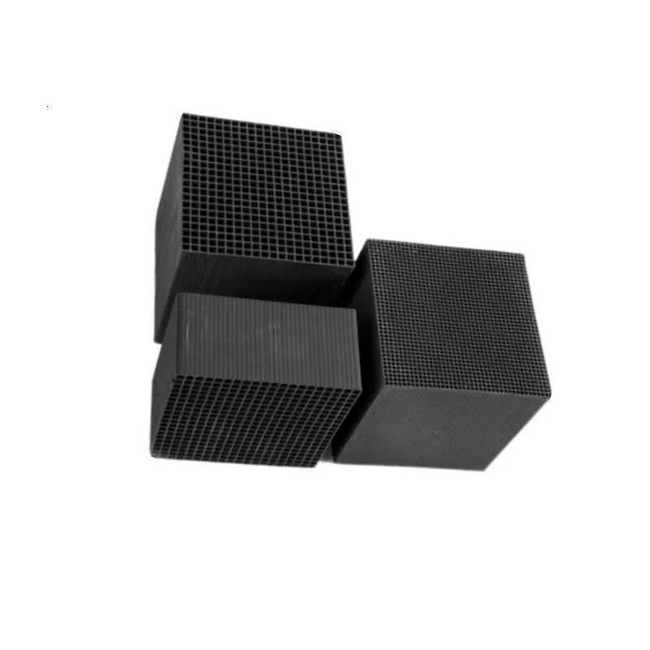
Honeycomb activated carbon has become a preferred solution for VOC gas treatment, paint shop exhaust, printing lines and chemical plant emissions because of its structured design and low pressure drop. Unlike loose granular or pelletized carbon, the monolithic honeycomb shape provides stable airflow, reduced fan energy consumption and consistent contact between gas and adsorbent. The three‑dimensional channels offer a very high internal surface area, enabling high adsorption efficiency for organic vapors and odorous gases even at relatively low inlet concentrations. [hongsencarbon]
For plant managers and environmental engineers, this allows the design of compact systems that meet emission standards while controlling operating costs and maintenance downtime. As regulations tighten, especially around VOCs in coating, printing and chemical processing, structured adsorbents like honeycomb carbon are increasingly viewed as an essential component of compliant exhaust treatment systems. [sciencedirect]
How This Ranking and Evaluation Was Built
Any ranking of "top honeycomb activated carbon manufacturers" should be transparent about how companies are evaluated. In this article, the assessment is based on a combination of:
- Product performance and technical specification (adsorption capacity, pressure drop, mechanical strength, regeneration potential). [heycarbons]
- Customer satisfaction and repeat orders, as reflected in case studies, testimonials and market feedback where available. [karbonous]
- Delivery reliability and global supply capability, including local stock, lead times and logistics networks. [tkcarbon.en.made-in-china]
- Engineering support and application know‑how, especially for VOC control, high‑temperature flue gas and complex multi‑pollutant scenarios. [patents.google]
- Compliance, certifications and quality systems, such as ISO‑based production, performance testing and documented QA procedures. [qizhongcarbon]
The companies discussed here (both US and Chinese manufacturers) are given as examples based on publicly available information; actual user experience will vary by project, industry and system design. [tkcarbon.en.made-in-china]
What Real Industrial Customers Care About Most
Interviews with environmental managers, EPC contractors and OEM equipment suppliers show several consistent priorities:
- Consistent adsorption performance over months or years of operation, not just on day one. [hongsencarbon]
- Low and predictable pressure drop, because fan power is a major operating cost in high‑airflow systems. [heycarbons]
- Mechanical strength and block integrity, especially in high‑temperature or high‑humidity exhaust streams. [qizhongcarbon]
- Technical guidance on sizing, breakthrough prediction, regeneration strategy and safety. [karbonous]
- Reliable delivery, so that line shutdowns are not caused by carbon shortages. [tkcarbon.en.made-in-china]
A typical VOC project in a large coating plant involves several design steps: defining air volume and VOC mix, selecting cell density (often 200–400 CPSI), calculating bed depth and contact time, and checking fan curves against pressure drop. Manufacturers that can participate in this process as engineering partners, not just material vendors, tend to receive the strongest long‑term feedback. [hongsencarbon]
Snapshot: Representative Honeycomb Activated Carbon Manufacturers
The table below provides a concise, non‑exhaustive overview of several representative manufacturers mentioned in public sources. It is intended as an illustration of how buyers compare suppliers, not as a definitive ranking.
| Manufacturer / Region | Core Honeycomb Focus | Key Strengths (from open sources) | Typical Applications | Notable Points |
| Guangdong Tongke Activated Carbon Co., Ltd. (China, exporting globally) (tkcarbon.en.made-in-china) | Honeycomb, granular, powdered carbon | Broad product portfolio (wood, coal, coconut shell, honeycomb), multiple production bases, on‑time delivery emphasis. (tkcarbon.en.made-in-china) | Air and gas purification, water treatment, decolorization, food processing, solvent recovery, power and chemical sectors. (tkcarbon.en.made-in-china) | Focus on real‑time testing, continuous quality improvement, and stable bulk supply for global customers. (tkcarbon.en.made-in-china) |
| Karbonous Inc. (USA) (karbonous) | Activated carbon (various forms) | Long experience in US filtration industry, wide product range for liquid and vapor‑phase treatment. (karbonous) | Industrial air and water treatment, municipal and commercial purification. (karbonous) | US‑based manufacturer, strong local presence and technical expertise. (karbonous) |
| Nature Technology (China, serving US) (naturecarbon) | Honeycomb and gas‑phase carbon | Custom honeycomb production using special formulations and high‑temperature activation. (naturecarbon) | Food, medical, mining, metallurgy, petrochemical and other gas‑phase applications. (naturecarbon) | Large‑scale supplier offering customized honeycomb blocks for different industries. (naturecarbon) |
| Qizhong Chemical (China) (qizhongcarbon) | Honeycomb activated carbon | Advanced monolithic structure, customizable cell density (200–400 CPSI), ISO‑certified production. (qizhongcarbon) | Large‑scale flue gas treatment, VOC abatement and air purification systems. (qizhongcarbon) | Emphasis on engineering support from system design to operation. (qizhongcarbon) |
| Heycarbons (China) (heycarbons) | Honeycomb activated carbon | Water‑resistant, high‑strength blocks, clear process from extrusion to activation and testing. (heycarbons) | Air and waste‑gas purification, water treatment, chemical filtration. (heycarbons) | Holds multiple production patents, positions itself as reliable and professional supplier. (heycarbons) |
For B2B buyers, such a comparison table highlights where each supplier truly adds value, beyond generic claims such as "high quality" or "competitive price."
Deep Dive: Product Performance and Technical Specifications
When ranking honeycomb activated carbon manufacturers, product performance under real operating conditions is critical. Strong suppliers can provide detailed data on:
- Cell density (CPSI) and channel geometry, which influence pressure drop and mass transfer. [heycarbons]
- Adsorption capacity, often indicated by parameters such as iodine number, CTC value, or specific VOC breakthrough curves. [naturecarbon]
- Mechanical strength and abrasion resistance, to prevent block damage during installation or thermal cycling. [qizhongcarbon]
- Micropore and mesopore distribution, which determines how well the carbon captures different VOC molecules. [hongsencarbon]
Qizhong, for example, highlights customizable cell densities from 200–400 CPSI and emphasizes high CTC adsorption values and thermal regeneration capability up to 400 °C, important for flue gas and high‑temperature VOC streams. Heycarbons explains its production steps from extrusion, shaping and drying to controlled activation and final testing, which supports confidence in the repeatability of block properties. Tongke describes its honeycomb carbon as having large surface area, developed microporosity, high adsorption capacity and small wind resistance, aligning closely with the needs of industrial VOC projects. [tongkeac]
For serious industrial buyers, any supplier that cannot provide structured data on these points should be treated cautiously, regardless of marketing claims.
Real Project Experience: VOC Gas Treatment with Honeycomb Carbon
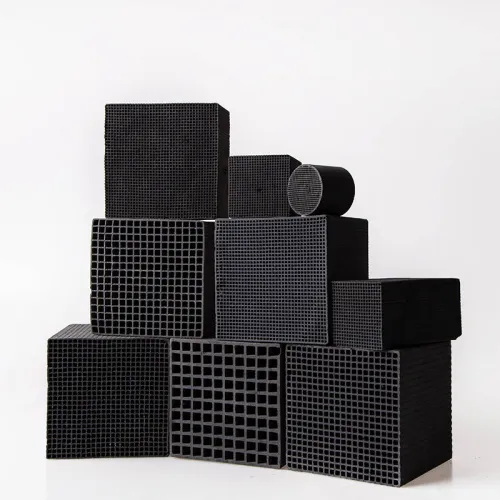
Honeycomb activated carbon is particularly successful in VOC removal from paint lines, printing shops and chemical production because it combines high adsorption efficiency with low pressure drop and easy modular replacement. A typical painting line generates large air volumes with relatively low VOC concentration; in such cases, monolithic carbon blocks keep fan power reasonable while still offering sufficient contact time. [hongsencarbon]
Industry reports indicate that:
- Honeycomb blocks can reduce pressure drop by more than 80 % compared with some packed‑bed designs, which directly cuts energy consumption. [patents.google]
- The rigid structure avoids common issues like channeling or settling that can occur with loose activated carbon beds. [hongsencarbon]
- Modular block installation simplifies replacement and allows partial upgrades without dismantling entire vessels. [hongsencarbon]
From an engineering standpoint, the best manufacturers support system designers in:
1. Selecting appropriate block geometry based on air volume and existing ductwork.
2. Choosing the right carbon formulation for the dominant VOC species.
3. Modeling breakthrough and replacement intervals using realistic operating data.
Global suppliers with deep VOC experience, including Chinese manufacturers exporting to the US and Europe, can be highly competitive when they combine strong products with accessible technical support in English and clear design tools or guidelines. [tongkeac]
Guangdong Tongke Activated Carbon as a Global Honeycomb Supplier
Guangdong Tongke Activated Carbon Co., Ltd. positions itself as an integrated manufacturer covering R&D, production and sales of wood‑based, coal‑based, honeycomb and coconut‑shell activated carbon products. With production and subsidiary bases in several Chinese provinces and multiple stock locations, the company emphasizes on‑time delivery and supply security, with a total capacity in the tens of thousands of tons per year. [tongkeac]
For honeycomb activated carbon specifically, Tongke highlights:
- Large contact area and developed microporous structure, enabling high adsorption capacity for gaseous pollutants. [tongkeac]
- Low wind resistance, which is critical for large exhaust gas volumes and energy‑efficient system design. [tongkeac]
- Application focus on factory exhaust gas, spray‑booth deodorization and VOC treatment projects. [tongkeac]
Beyond honeycomb products, Tongke's portfolio includes powdered activated carbon for decolorization, granular carbon for water treatment and specialized grades for food, beverage and pharmaceutical applications. This breadth allows international buyers to consolidate multiple activated carbon needs with a single supplier, simplifying qualification, audits and logistics. [tkcarbon.en.made-in-china]
Tongke also states that its products undergo real‑time testing according to relevant standards and that it invests continuously in product development and process improvement, including better pore control and strength enhancement. For international B2B customers, this combination of portfolio depth, production scale and documented quality control is a strong foundation for long‑term cooperation. [tongkeac]
How US Buyers Leverage Both Local and Global Manufacturers
In actual projects, many US environmental systems mix local engineering expertise with global material sourcing. US‑based companies such as Karbonous provide strong local knowledge of regulations, installation practices and after‑sales service, while large Chinese manufacturers contribute cost‑effective, high‑volume production across multiple activated carbon formats. [karbonous]
Common patterns in VOC and air‑treatment projects include:
- OEM equipment manufacturers developing systems and service contracts locally, but sourcing honeycomb blocks from specialized Chinese factories that can customize geometry and composition. [naturecarbon]
- Global brands maintaining regional warehouses and quality control labs in North America while producing core activated carbon blocks in Asia. [karbonous]
- End users in coatings, printing or chemicals prioritizing short delivery times, consistent quality and easy communication, even when the carbon itself is imported. [karbonous]
For a manufacturer like Tongke, this means that clear documentation, stable specifications and flexible logistics options (for example, bulk shipments combined with buffer stock near key markets) are essential to winning and retaining US customers. Customers also value responsiveness in technical discussions and the ability to adapt honeycomb designs to specific equipment constraints. [tongkeac]
How to Choose a Honeycomb Activated Carbon Supplier
From an engineer's or procurement manager's perspective, the following step‑by‑step approach can dramatically improve supplier selection quality:
1. Define your application clearly
- VOC control, solvent recovery, odor removal, or high‑temperature flue gas?
- Target pollutants, airflow, temperature and humidity range. [naturecarbon]
2. Request detailed technical data
- Cell density (CPSI), block dimensions, pressure drop at given face velocity. [heycarbons]
- Adsorption indicators (iodine, CTC, specific breakthrough data for your VOCs). [qizhongcarbon]
- Mechanical strength and regeneration limits for temperature and chemical exposure. [heycarbons]
3. Evaluate quality systems and track record
- ISO‑based production, documented testing methods, third‑party reports if available. [tkcarbon.en.made-in-china]
- References or case studies in similar industries and comparable air volumes. [qizhongcarbon]
4. Check engineering and after‑sales support
- Ability to assist with system design, sizing and troubleshooting, including remote or on‑site support. [qizhongcarbon]
- Responsiveness in communication and clarity of drawings, datasheets and manuals.
5. Assess logistics and long‑term supply stability
- Lead times for standard sizes and custom blocks, including safety stock strategies. [tkcarbon.en.made-in-china]
- Capacity to handle large orders, phased deliveries and emergency replenishment. [karbonous]
Suppliers that perform strongly in all five areas deserve to be on your short list, regardless of whether they are based in the US, China or elsewhere. When evaluating candidates, consider including at least one local manufacturer and one high‑capacity global producer such as Tongke to compare total cost of ownership and service level. [tkcarbon.en.made-in-china]
Structured Adsorbents, CFD and Advanced System Design
Recent research on structured adsorbents and 3D‑printed honeycomb‑like structures shows that combining CFD simulation with advanced manufacturing can optimize pressure drop and mass transfer simultaneously. This is highly relevant to honeycomb activated carbon because: [sciencedirect]
- Better‑designed channels can reduce energy use further while maintaining or improving VOC capture. [sciencedirect]
- Tailored pore structures and geometries can target specific VOC mixtures more effectively. [sciencedirect]
- Simulation‑driven design shortens development cycles for new block types and allows suppliers to offer more application‑specific solutions. [sciencedirect]
Manufacturers that actively invest in these directions are likely to offer more efficient and predictable systems in the future, which is particularly important for large‑scale projects where energy costs and uptime are critical. Buyers evaluating long‑term partners should pay attention to whether vendors communicate their R&D roadmap and are open to co‑development for strategic projects. [sciencedirect]
Clear Call to Action for Industrial Buyers
If you manage VOC control, air purification or solvent recovery systems, the most effective next step is to shortlist two or three qualified honeycomb activated carbon manufacturers and request application‑specific proposals. For complex or global projects, it is often beneficial to combine a US‑based engineering or OEM partner with a high‑capacity manufacturer such as Guangdong Tongke Activated Carbon that can deliver honeycomb blocks and other activated carbon formats at scale. [tongkeac]
When you contact suppliers, share as much process detail as possible (air flow, VOC types and concentrations, temperature, existing equipment) so that their engineers can propose technically sound and cost‑effective solutions tailored to your plant. This approach maximizes both immediate performance and long‑term reliability and helps you build a supplier base that can support future expansions and regulatory changes.
Contact us to get more information!
FAQs
1. What is honeycomb activated carbon used for?
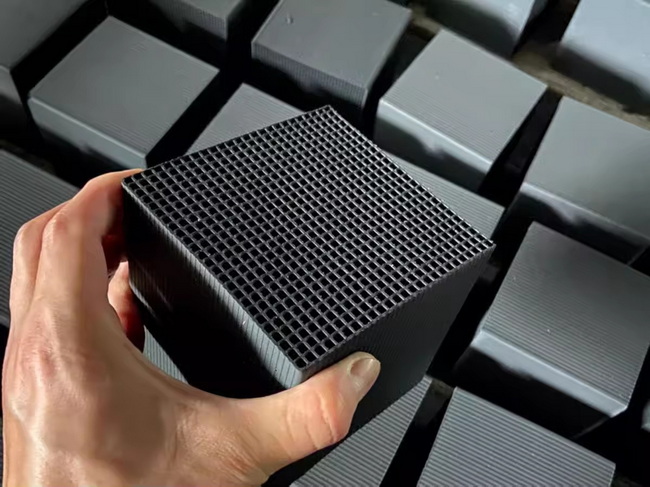
Honeycomb activated carbon is mainly used for VOC gas treatment, odor removal and industrial exhaust purification, especially in painting lines, printing workshops, chemical plants and similar facilities. It is also applied in some water treatment and filtration systems where low pressure drop and structured media bring advantages. [naturecarbon]
2. How do I compare honeycomb activated carbon suppliers?
Compare suppliers based on technical data, including cell density, adsorption capacity and pressure drop, plus quality systems, engineering support, delivery reliability and relevant project references. Request application‑specific proposals rather than generic datasheets so you can evaluate how well each supplier understands your process. [karbonous]
3. Can Chinese honeycomb activated carbon be used in US industrial projects?
Yes, many Chinese manufacturers export honeycomb activated carbon that is widely used in global VOC and exhaust treatment systems, including projects serving US markets. The key is to ensure that performance data, safety documentation and logistics arrangements meet your local regulatory and operational requirements. [tongkeac]
4. What are the main advantages of honeycomb vs. granular activated carbon?
Honeycomb activated carbon offers lower pressure drop, more stable airflow and easier modular replacement compared with loose granular carbon beds. It also avoids problems such as settling and channeling, which can reduce treatment efficiency over time. [patents.google]
5. How often do honeycomb activated carbon blocks need to be replaced?
Replacement intervals depend on VOC load, operating hours, temperature, humidity and whether regeneration is used. Many industrial systems operate blocks for months to years, but proper design requires breakthrough modeling and periodic monitoring of outlet concentrations to define safe replacement or regeneration cycles. [sciencedirect]
References
1. Karbonous Inc., "Activated Carbon Manufacturer and Supplier | USA." https://www.karbonous.com [karbonous]
2. Volatile organic compound treatment system using activated carbon honeycomb filter (patent description). https://patents.google.com/patent/CN221713930U/en [patents.google]
3. Guangdong Tongke Activated Carbon Co., Ltd. company profile. https://tkcarbon.en.made-in-china.com [tkcarbon.en.made-in-china]
4. Heycarbons, "Honeycomb Activated Carbon." https://heycarbons.com/honeycomb-activated-carbon [heycarbons]
5. "Applications of Honeycomb Activated Carbon in VOC Gas Treatment." https://www.hongsencarbon.com/news/honeycomb-activated-carbon-voc-gas-treatment-applications.html [hongsencarbon]
6. Tongke, "Activated Carbon Honeycomb." https://www.tongkeac.com/activated-carbon-honeycomb.html [tongkeac]
7. Qizhong Chemical, "Honeycomb Activated Carbon Supplier." https://qizhongcarbon.com/product/honeycomb-activated-carbon [qizhongcarbon]
8. "Experimental study and CFD simulation of VOC adsorption on 3D structured adsorbents." ScienceDirect. https://www.sciencedirect.com/science/article/pii/S1385894725045541 [sciencedirect]
9. Guangdong Tongke Activated Carbon Co., Ltd. official site. https://www.tongkeac.com [tongkeac]
10. Nature Technology, "Honeycomb Activated Carbon." https://www.naturecarbon.com/honeycomb-activated-carbon/ [naturecarbon]


