Content Menu
● What Is Activated Carbon Fiber?
>> Activated Carbon Fiber vs. Granular Activated Carbon
● Why High-End Systems Choose ACF
>> 1. Fast adsorption under short contact time
>> 2. High surface area in a compact filter format
>> 3. Low pressure-drop potential
>> 4. Cleaner, more stable filter construction
● Pollutants ACF Can Address
● The Engineering Advantage: Adsorption Is Only Part of the System
>> Five factors that determine real performance
● Regeneration: ACF's Potential Lifecycle Benefit
● How to Select ACF for Air Purification
>> Step 1: Define the contaminant profile
>> Step 2: Set the airflow conditions
>> Step 3: Choose the required filter format
>> Step 4: Establish performance targets
>> Step 5: Validate with representative testing
● When ACF Is the Better Choice
● Partner With a Custom ACF Manufacturer
● FAQ
>> 1. Is Activated Carbon Fiber better than granular activated carbon for air purification?
>> 2. Does Activated Carbon Fiber remove PM2.5?
>> 3. Can ACF remove formaldehyde?
>> 4. How long does an Activated Carbon Fiber filter last?
>> 5. Can Activated Carbon Fiber be regenerated?
>> 6. What information should I provide when requesting an ACF quotation?
● References
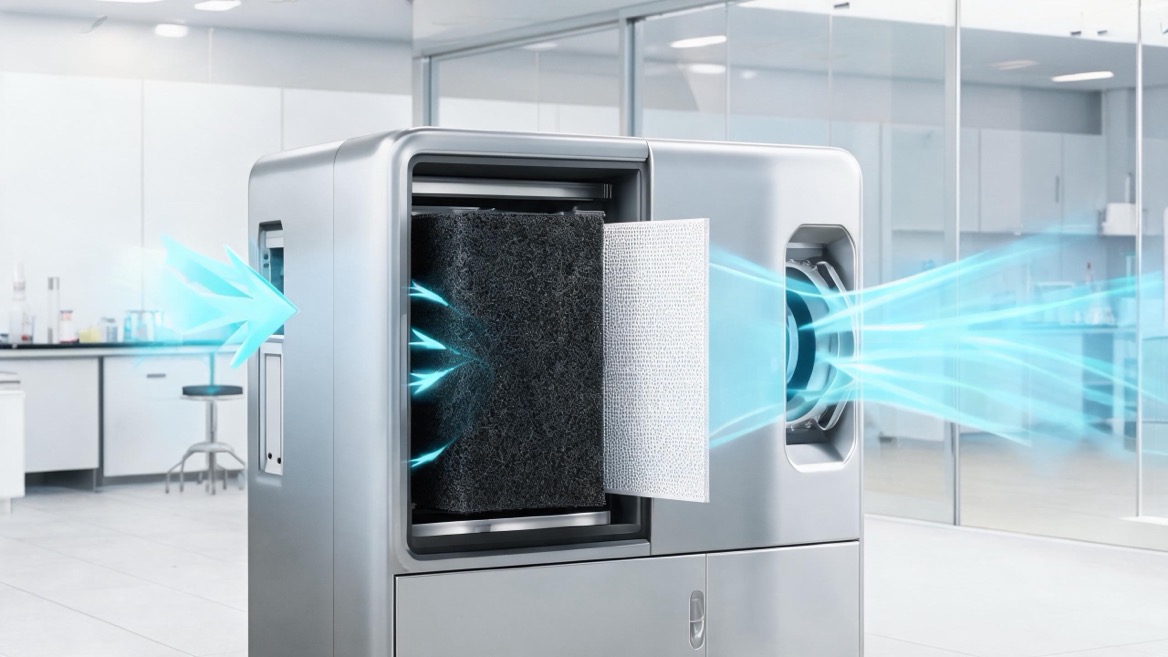
High-end air purification systems are designed to do more than capture dust. They must control odors, volatile organic compounds (VOCs), solvent vapors, and selected gaseous contaminants while maintaining stable airflow, compact equipment dimensions, and predictable service intervals. This is why Activated Carbon Fiber (ACF) is increasingly specified for premium air purification, HVAC, clean manufacturing, and industrial gas-treatment applications.
For system designers, the decisive advantage is not simply that Activated Carbon Fiber has a large surface area. Its fiber-based structure places a high proportion of adsorption pores close to the fiber surface. That shortens the path contaminants travel before adsorption occurs, supporting fast response in systems with limited contact time.
At Guangdong Tongke Activated Carbon Co., Ltd., we work with customers that need activated carbon solutions matched to their actual operating conditions—not a generic material chosen only by iodine value or cost per kilogram. For high-end air purification, selection should account for contaminant chemistry, humidity, temperature, airflow, pressure-drop limits, media geometry, and the planned replacement or regeneration process.
What Is Activated Carbon Fiber?
Activated Carbon Fiber is a highly porous adsorbent made from carbonized and activated precursor fibers. Depending on the precursor and activation process, it can be supplied as felt, cloth, paper, woven fabric, nonwoven media, yarn, or engineered composite material.
Like granular activated carbon (GAC), ACF removes gases primarily through adsorption. Pollutant molecules are attracted to and retained on the internal surfaces of the carbon structure. However, its physical form and pore accessibility are fundamentally different from loose carbon granules.
Many ACF materials provide very high specific surface area, sometimes reaching or exceeding 2,000 m²/g. More importantly, a substantial share of this area comes from micropores distributed near the external fiber surface.
This structure helps explain why Activated Carbon Fiber is valuable where air must move quickly through a thin, lightweight, low-resistance adsorbent layer.
Activated Carbon Fiber vs. Granular Activated Carbon
| Factor | Activated Carbon Fiber (ACF) | Granular Activated Carbon (GAC) |
| Physical form | Felt, cloth, paper, nonwoven, yarn, composite media | Loose granules or pellets |
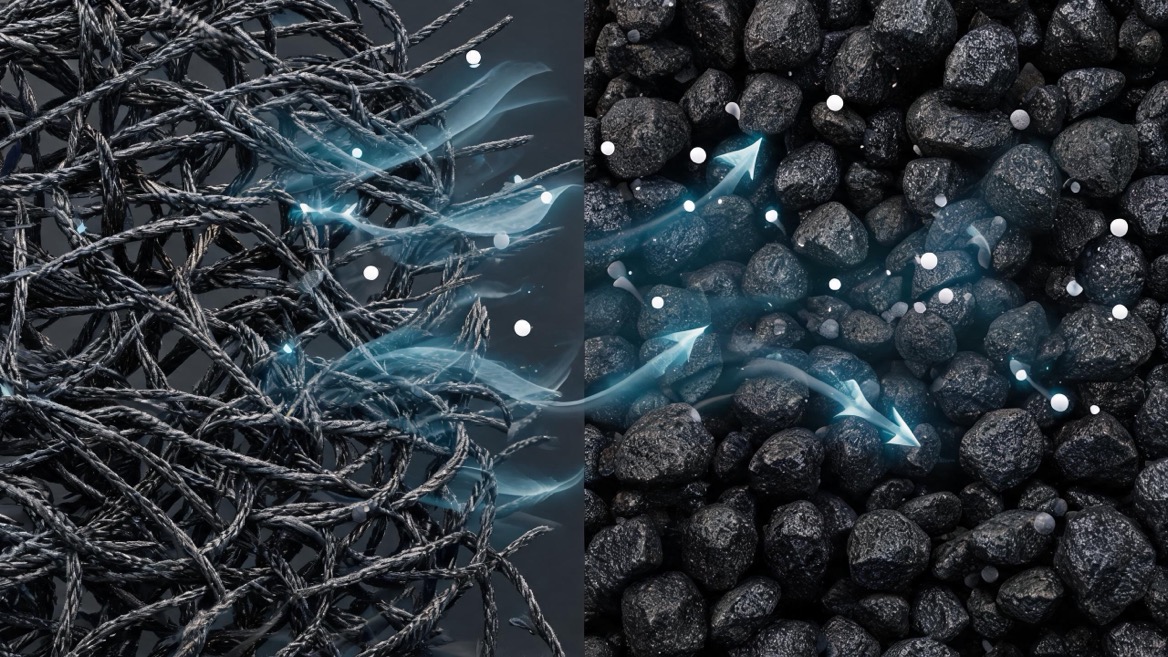
| Pore accessibility | Micropores are often close to the fiber surface | Molecules may travel deeper into granules |
| Adsorption kinetics | Typically fast | Often slower under short contact times |
| Media thickness | Can be engineered into thin layers | Usually needs a deeper packed bed |
| Airflow resistance | Can be low when properly designed | Depends on bed depth, particle size, packing, and velocity |
| Dust handling | Can be laminated or assembled into stable media | May release fines if poorly specified or handled |
| Regeneration potential | Can support electrical or thermal regeneration designs | Commonly regenerated externally or replaced |
| Typical use | Premium purifiers, respirators, compact HVAC, odor/VOC modules | Industrial beds, large gas treatment units, water treatment |
Neither material is automatically "better" in every application. GAC remains highly practical for deep-bed adsorption and high adsorbent mass requirements. ACF becomes particularly compelling when fast adsorption, compactness, clean media handling, and customized filter construction are central to system performance.
Why High-End Systems Choose ACF
1. Fast adsorption under short contact time
Air purifiers, HVAC modules, respirators, and recirculating industrial systems often have limited residence time. Air may pass through the adsorbent media in fractions of a second. In these conditions, adsorption speed matters as much as total theoretical capacity.
With ACF, contaminants can access adsorption sites through relatively short diffusion paths. This reduces mass-transfer resistance and can improve capture performance for appropriate vapor-phase contaminants in thin-media designs. Research evaluating ACF for respirator applications identifies high surface area, high adsorption capacity, and rapid adsorption kinetics as key advantages.
For a premium purifier manufacturer, this can translate into a thinner gas-phase filtration stage without automatically sacrificing response time.
2. High surface area in a compact filter format
A high-end air purification product must often balance several competing requirements:
- Strong gaseous pollutant removal
- Quiet fan operation
- Low energy consumption
- Compact product dimensions
- Attractive industrial design
- Easy filter replacement
- Consistent quality across production batches
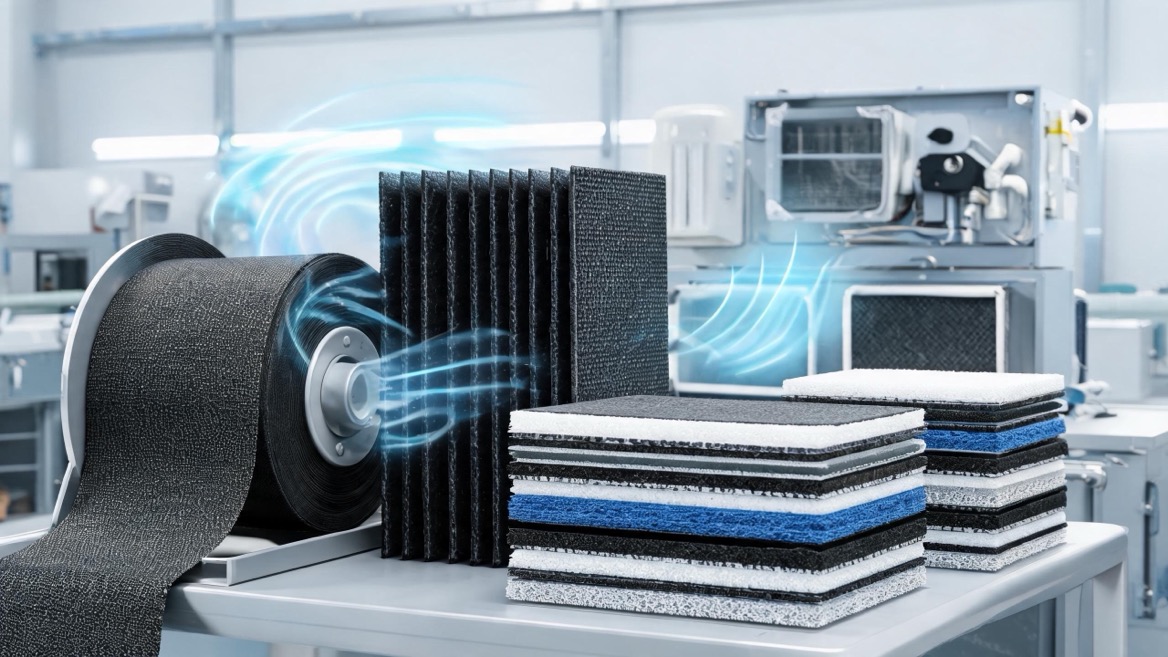
Activated Carbon Fiber supports this balance because it can be engineered into thin sheets, pleated components, layered filter packs, and composite structures. Instead of relying only on a thick loose-carbon bed, designers can use ACF as a functional adsorbent layer within a multi-stage filter.
A practical configuration may include:
1. A prefilter for hair, lint, and large dust.
2. A particle filter for fine particulate matter.
3. An ACF layer for odors and selected VOCs.
4. A chemically impregnated layer for contaminant-specific removal.
5. A protective downstream layer to prevent fiber shedding or material damage.
This modular approach gives manufacturers more control over airflow distribution, pressure drop, and performance positioning.
3. Low pressure-drop potential
Pressure drop directly affects fan selection, electricity use, noise, and user satisfaction. If an adsorbent stage is too restrictive, the system may require a larger fan, consume more power, or deliver a lower clean-air output.
Properly designed ACF media can offer high permeability to airflow while retaining strong adsorption properties. This characteristic has made it attractive for thin facepiece and respiratory applications, where breathing resistance and fast vapor capture are both important.
However, buyers should avoid treating ACF as a guaranteed low-pressure-drop solution. Final resistance depends on:
- Fiber basis weight
- Thickness and density
- Lamination layers
- Pleat geometry
- Filter face velocity
- Dust accumulation
- Housing design
- Supporting scrim or substrate
The right question is not, "Does ACF have low resistance?" It is: "What is the pressure drop at our actual airflow and filter geometry?"
4. Cleaner, more stable filter construction
Loose activated carbon granules are effective, but they require reliable containment. Poorly made carbon filters can suffer from channeling, uneven bed distribution, vibration-related settling, carbon dust, adhesive contamination, or inconsistent fill weight.
Activated Carbon Fiber offers a more controlled format. The adsorbent can be cut, folded, stitched, laminated, pleated, or integrated with other filter layers. This supports consistent assembly and can simplify automation for high-volume air-purifier manufacturing.
For premium product lines, this also enables more refined filter architectures. ACF sheets can be positioned exactly where gas contact is needed, rather than depending solely on a thick bulk-carbon chamber.
Pollutants ACF Can Address
Activated Carbon Fiber is primarily used for gas-phase pollutants, not as a replacement for a high-efficiency particle filter. Its effectiveness depends on the pollutant, inlet concentration, relative humidity, airflow, contact time, carbon surface chemistry, and total adsorbent mass.
ACF is commonly evaluated for:
- Odors from cooking, smoke, waste, pets, and commercial processes
- VOCs from paints, coatings, furniture, cleaning products, and solvents
- Aromatic compounds such as toluene, xylene, and benzene
- Solvent vapors in industrial production and laboratory environments
- Sulfur-containing odors, subject to appropriate media formulation
- Certain acidic or alkaline gases, when the carbon is chemically modified or impregnated
A key engineering point: standard physical adsorption media should not be assumed to remove every gas equally well. Formaldehyde, for example, can be challenging because of its small molecular size, polarity, humidity sensitivity, and reaction behavior. A Lawrence Berkeley National Laboratory study found that ACF was less effective for formaldehyde than for many other VOCs, with maximum removal of approximately 25–30% under its heated-regeneration test conditions.
For formaldehyde-focused applications, consider a tailored solution: ACF combined with a functional impregnation, catalytic material, or another chemical adsorption layer designed for aldehyde control.
The Engineering Advantage: Adsorption Is Only Part of the System
In industrial procurement discussions, it is common to compare activated carbon materials only by surface area, iodine number, or unit price. These indicators are useful, but they do not define real installed performance.
A high-end air purification system should be designed around the complete adsorption process.
Five factors that determine real performance
| Design factor | Why it matters | What to specify |
| Target contaminant | Different gases interact differently with carbon pores and surface groups | Contaminant list, concentration range, molecular characteristics |
| Airflow and face velocity | Faster airflow reduces contact time | Normal and peak airflow, filter area |
| Humidity and temperature | Water vapor can compete for adsorption sites and alter capacity | Operating RH and temperature range |
| Media mass and geometry | Thin media may respond quickly but can saturate sooner if under-dosed | Basis weight, thickness, total carbon mass |
| End-of-life requirement | Media must be replaced or regenerated before breakthrough becomes unacceptable | Target service life, breakthrough limit, maintenance plan |
This is where custom Activated Carbon Fiber selection creates value. A high-quality ACF solution is not just "more carbon." It is the right pore structure, fabric density, treatment, format, and carbon loading for a defined operating window.
Regeneration: ACF's Potential Lifecycle Benefit
Activated carbon captures contaminants, but adsorption sites are finite. Once the media approaches saturation, performance declines and breakthrough becomes more likely. For disposable consumer filters, replacement is usually the practical approach. For industrial systems, however, regeneration may offer operational and environmental benefits.
ACF can be especially attractive in electrically assisted regeneration concepts because the carbon fiber network may be heated by electrical current. In one study, heating ACF media to approximately 150°C for 15 minutes enabled subsequent removal efficiencies of 70–80% for most tested VOCs; the study also reported a maximum capacity of 90 mg VOC per gram of ACF for the tested media and conditions.
Separate research on activated carbon fiber cloth exposed to low-level toluene reported strong adsorption and regenerative behavior, including good durability after more than 300 heating and cooling cycles.
These results are application-specific—not a universal guarantee. Before adopting regenerative ACF, an engineering team should validate:
- Electrical resistance and heating uniformity
- Safe temperature limits for the housing and adjacent media
- Desorption exhaust routing
- Fire and thermal-protection design
- Energy consumed per regeneration cycle
- Retained adsorption capacity after repeated cycles
- Compliance requirements for the released contaminants
Regeneration is a system decision, not simply a material feature.
How to Select ACF for Air Purification
A disciplined specification process prevents underperforming filters and unnecessary overdesign.
Step 1: Define the contaminant profile
Identify the actual gases, odor sources, and concentration range. "VOC removal" is too broad for an engineering specification. Where possible, list representative compounds such as toluene, ethanol, acetone, limonene, ammonia, hydrogen sulfide, or formaldehyde.
Step 2: Set the airflow conditions
Provide rated airflow, peak airflow, face velocity, duty cycle, operating temperature, and relative humidity. These conditions determine the contact time available for adsorption.
Step 3: Choose the required filter format
Consider whether the system needs:
- ACF felt or cloth
- ACF paper
- Pleated composite media
- Laminated filter sheets
- Carbon-fiber and particle-filter combinations
- Impregnated ACF for specialized gases
- Custom-cut or framed panels
Step 4: Establish performance targets
Define the accepted pressure drop, desired initial removal efficiency, allowable breakthrough concentration, service interval, and filter replacement criteria.
Step 5: Validate with representative testing
Test the finished filter module—not only the raw material. Evaluate performance under realistic airflow, humidity, temperature, and contaminant conditions. This is especially important when comparing ACF with GAC, carbon foam, impregnated carbon, or multi-layer media.
When ACF Is the Better Choice
Activated Carbon Fiber is often the better option when the project requires:
- Rapid VOC or odor adsorption
- Thin and compact gas-filtration media
- Low-resistance filter construction
- Controlled, low-dust adsorbent integration
- Pleated, laminated, or custom-shaped adsorbent layers
- Potential electrical regeneration
- Premium purifier, HVAC, respirator, vehicle cabin, or process-air designs
Granular activated carbon may be more suitable when the project has sufficient installation space for a deep bed, needs a large adsorbent mass at lower initial material cost, or treats high contaminant loads over long contact times.
The best solution may also be a hybrid design. For example, ACF can provide fast front-end adsorption, while granular or pelletized carbon supplies additional capacity downstream.
Partner With a Custom ACF Manufacturer
High-end air purification performance depends on more than selecting a carbon grade from a catalog. It depends on aligning adsorbent chemistry and filter construction with the contaminant, airflow, humidity, service-life target, and manufacturing process.
Guangdong Tongke Activated Carbon Co., Ltd. supplies Activated Carbon Fiber and other activated carbon products for global industrial applications. We can help evaluate ACF formats, carbon properties, impregnation requirements, and customized filter-media solutions for air and gas purification projects.
Contact our technical team with your contaminant list, airflow, operating humidity, target pressure drop, and filter dimensions. We will help you identify an Activated Carbon Fiber solution designed for your actual application—not merely a generic carbon specification.
FAQ
1. Is Activated Carbon Fiber better than granular activated carbon for air purification?
Not in every system. ACF is often preferred for thin, compact filters that need fast adsorption and controlled media construction. GAC can be more economical for deep-bed systems requiring a large adsorbent mass and longer contact time.
2. Does Activated Carbon Fiber remove PM2.5?
ACF primarily targets gaseous pollutants and odors. PM2.5 is particulate matter, so it should be addressed by a suitable particle-filtration layer, such as a high-efficiency mechanical filter. ACF can be combined with that layer in a multi-stage filter.
3. Can ACF remove formaldehyde?
ACF may adsorb some formaldehyde, but untreated carbon should not be assumed to deliver strong or sustained formaldehyde removal in all conditions. For formaldehyde-specific projects, use a tested, application-matched composite or chemically modified media.
4. How long does an Activated Carbon Fiber filter last?
Service life depends on the contaminant concentration, airflow, humidity, temperature, carbon mass, target removal level, and operating hours. A laboratory result or a general replacement schedule cannot reliably predict performance in a different installation. Breakthrough testing is the best way to establish a replacement interval.
5. Can Activated Carbon Fiber be regenerated?
Yes, some ACF systems can be thermally or electrically regenerated. Whether this is practical depends on the contaminant, filter construction, safety design, energy use, and how the desorbed gases are managed.
6. What information should I provide when requesting an ACF quotation?
Provide the target gases, concentration range, airflow, temperature, humidity, required filter size, pressure-drop limit, expected service life, and whether the media will be disposable or regenerated. These details allow a supplier to recommend a suitable ACF structure and formulation.
References
1. [CDC/NIOSH — Filtration and Adsorption Performance of Activated Carbon Fiber]
2. [Taylor & Francis — Determination of Activated Carbon Fiber Adsorption Capacity for Respiratory Protection]
3. [PubMed — Adsorption and Regeneration on Activated Carbon Fiber Cloth for Indoor Air Purification]
4. [Lawrence Berkeley National Laboratory — Energy Efficient Indoor VOC Air Cleaning With Activated Carbon Fiber Media]
5. [ACS Publications — Indoor Air Purification Using Activated Carbon Adsorbers]


