Content Menu
● The Short Answer: ACF Adsorbs Faster
● Activated Carbon Fiber and GAC Defined
>> What Is Activated Carbon Fiber?
>> What Is Granular Activated Carbon?
● Why Activated Carbon Fiber Adsorbs Faster
>> Shorter Diffusion Distance
>> Higher Accessible Microporosity
>> Fiber Geometry Improves Contact
>> GAC Has Internal Transport Resistance
● Activated Carbon Fiber vs Granular Activated Carbon Comparison
● Adsorption Speed Is Not Adsorption Capacity
>> Adsorption Rate
>> Equilibrium Capacity
>> Working Capacity
● Which Material Performs Better by Application?
>> VOC and Solvent Vapor Control
>> Water Treatment
>> Food and Beverage Processing
>> Pharmaceutical and Fine Chemical Purification
● Five Factors That Determine Actual Adsorption Speed
>> 1. Target Contaminant Size and Chemistry
>> 2. Particle or Fiber Dimensions
>> 3. Flow Rate and Contact Time
>> 4. Humidity and Temperature
>> 5. Contaminant Concentration and Mixture Effects
● A Practical Selection Method
● Expert Insight: Measure Breakthrough, Not Just Surface Area
● Choose the Right Carbon for Your System
● FAQ
>> Is activated carbon fiber always faster than granular activated carbon?
>> Does faster adsorption mean ACF has higher capacity?
>> Is ACF suitable for VOC removal?
>> Why is GAC commonly used in water treatment?
>> Can activated carbon fiber be used for water purification?
>> What information should I provide when requesting a carbon recommendation?
>> Can GAC and ACF be combined in one system?
● References
Activated carbon fiber (ACF) generally adsorbs faster than granular activated carbon (GAC) because its adsorption pores are concentrated much closer to the fiber surface. This shortens the diffusion path for contaminants, making ACF especially effective when air or liquid has only a brief contact time with the adsorbent.
For industrial buyers, however, faster adsorption is not automatically the same as the best total solution. The right choice depends on the target contaminant, flow rate, required service life, regeneration plan, pressure-drop allowance, and system design. As a manufacturer of activated carbon fiber and activated carbon products for global industrial applications, Guangdong Tongke Activated Carbon Co., Ltd. helps customers evaluate these factors together rather than selecting a material by surface-area figures alone.
The Short Answer: ACF Adsorbs Faster
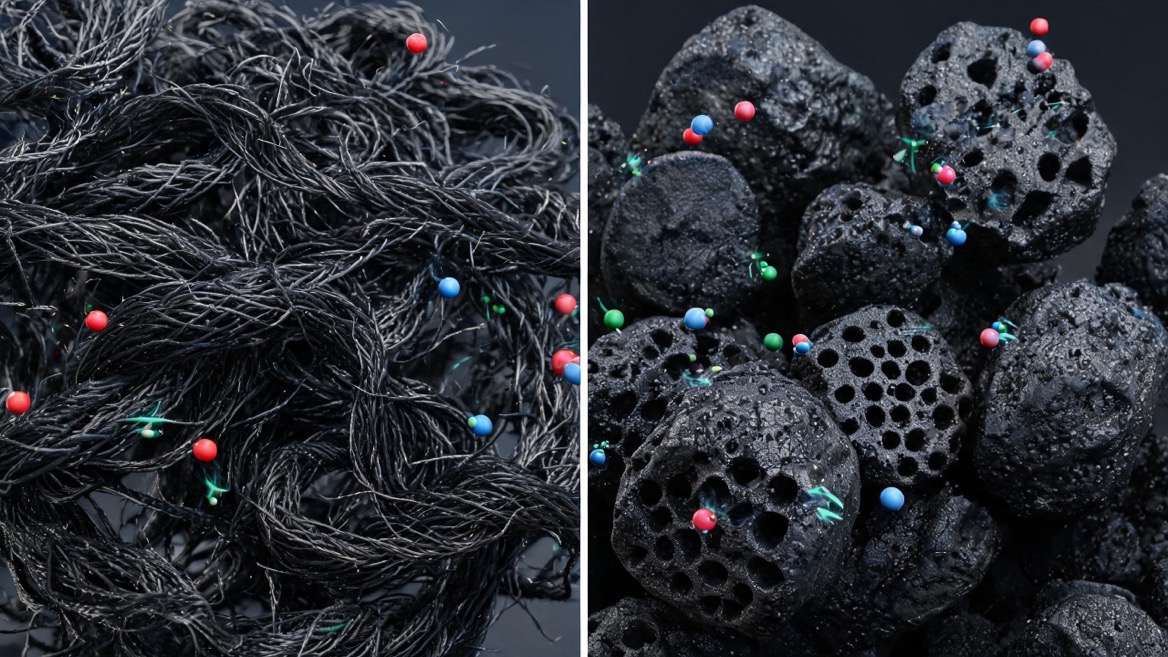
When comparing activated carbon fiber vs granular activated carbon, ACF usually delivers faster initial adsorption and faster mass transfer. Its fiber-based structure exposes a high proportion of micropores near the external surface, so contaminants can reach active adsorption sites with less internal travel.
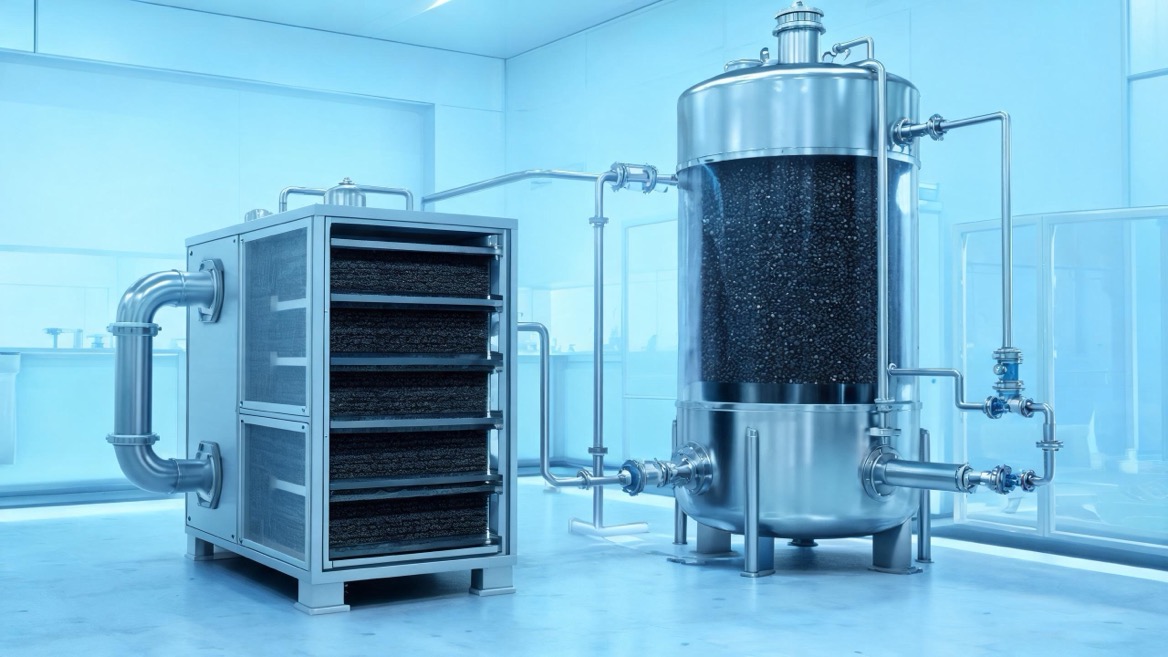
GAC remains a highly practical and proven choice for deep-bed, continuous-flow applications. It is commonly used in fixed-bed water-treatment filters, VOC adsorption vessels, gas purification systems, and large industrial treatment units.
The practical conclusion is simple:
- Choose activated carbon fiber when rapid adsorption, compact media design, low residence time, or thin adsorption layers are critical.
- Choose granular activated carbon when long service life, deep-bed operation, bulk handling, and economical large-scale treatment are the main priorities.
- Use pilot testing when the process involves mixed contaminants, high humidity, variable concentration, or strict outlet requirements.
Activated Carbon Fiber and GAC Defined
What Is Activated Carbon Fiber?
Activated carbon fiber is a porous carbon adsorbent produced from fibrous precursor materials such as polyacrylonitrile, viscose, pitch, or phenolic fibers. After carbonization and activation, the material can be supplied as felt, cloth, paper, woven fabric, chopped fiber, or customized composite media.
Its defining feature is not simply that it is "carbon in fiber form." It is the way its pore network is arranged. In many ACF products, a large share of the micropore structure is readily accessible from the fiber surface.
This can provide:
- Rapid adsorption kinetics
- High accessible surface area
- Thin and flexible media formats
- Low dust release compared with loose granular media
- Potential for engineered multilayer filtration and adsorption structures
Studies have reported that many ACF materials can reach or exceed 2,000 m²/g of specific surface area. More importantly, this surface area can be highly accessible during short-contact adsorption processes.
What Is Granular Activated Carbon?
Granular activated carbon consists of hard porous carbon particles, commonly made from coconut shell, coal, wood, or other carbonaceous feedstocks. It is typically installed as a packed bed in filters, adsorption columns, cartridges, or recovery systems.
GAC is widely used because it offers:
- Strong mechanical handling performance
- Compatibility with fixed-bed systems
- Longer operational cycles in properly designed columns
- Backwashing capability in many water-treatment applications
- Practical thermal reactivation options
- Cost-effective treatment at larger media volumes
In water treatment, GAC is commonly operated as a packed bed through which water flows. As contaminants move through the bed, adsorption develops along an adsorption front until breakthrough occurs.
Why Activated Carbon Fiber Adsorbs Faster
The answer lies in mass transfer, not surface area alone.
Adsorption occurs when contaminant molecules move from the bulk fluid to the carbon surface, enter the pore network, and attach to internal adsorption sites. The slowest step often determines the overall adsorption rate.
Shorter Diffusion Distance
In GAC, molecules may need to travel through a larger granule before reaching internal micropores. This intraparticle diffusion can limit adsorption speed, particularly when particle size is larger or contact time is short.
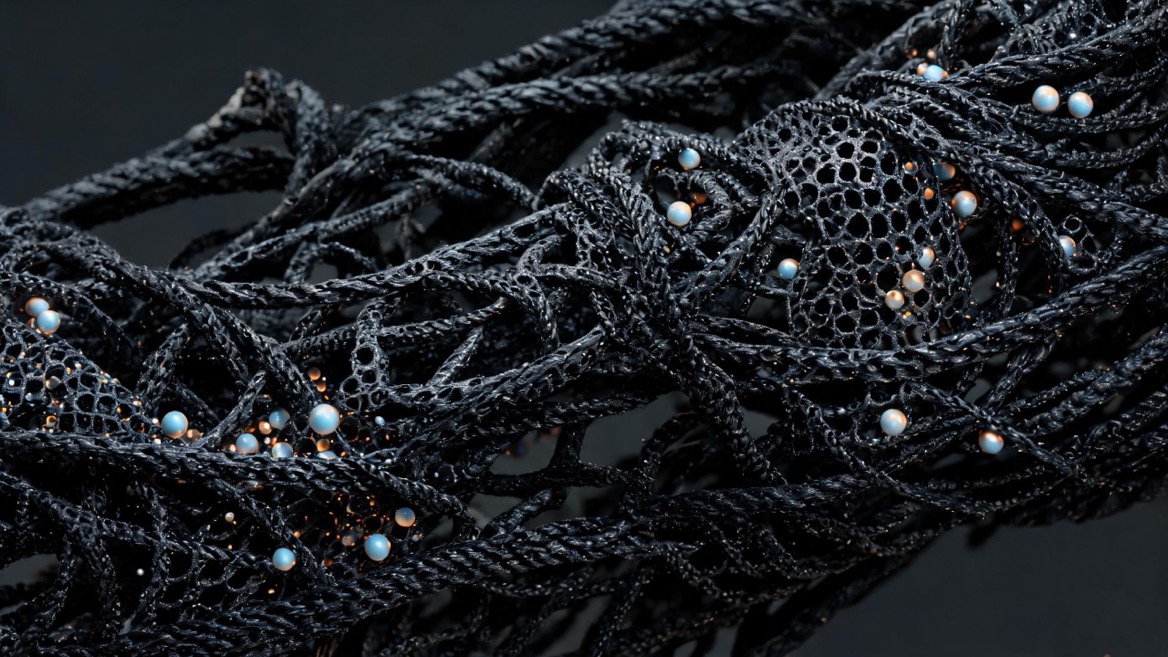
In ACF, micropores are often distributed close to the surface of individual fibers. The contaminant therefore travels a much shorter distance before reaching usable pore volume.
Think of GAC as a large building with rooms deep inside, while ACF is a long corridor with many doors close to the entrance. Both can hold contaminants, but ACF often lets molecules access available sites sooner.
Higher Accessible Microporosity
Micropores, generally defined as pores smaller than 2 nm, are especially important for adsorbing many small gas molecules and low-molecular-weight organic compounds. ACF commonly contains a high proportion of micropores, making it highly effective for many vapor-phase applications.
A research review of ACF performance notes that its microporosity is concentrated at the fiber surface, which shortens diffusion paths and supports rapid adsorption under short-residence-time conditions.
Fiber Geometry Improves Contact
The small diameter and high external surface area of fibers increase the contact between the adsorbent and the contaminant stream. This does not mean every ACF will outperform every GAC under every condition. But under equivalent conditions, fiber geometry often improves the rate at which molecules reach usable adsorption sites.
GAC Has Internal Transport Resistance
GAC has an interconnected network of macropores, mesopores, and micropores. This structure is valuable because larger pores act as transport routes and smaller pores provide adsorption sites. Yet molecules still need time to diffuse into the granule.
That internal travel is not necessarily a problem in a properly designed deep-bed system. It becomes important when the process demands fast response, such as high airflow, compact cartridges, sudden VOC peaks, or short liquid contact time.
Activated Carbon Fiber vs Granular Activated Carbon Comparison
| Property | Activated Carbon Fiber (ACF) | Granular Activated Carbon (GAC) |
| Adsorption rate | Usually faster initial adsorption | Usually slower initial adsorption |
| Main reason for kinetics | Short diffusion path and surface-accessible micropores | Contaminants diffuse into larger granules |
| Physical form | Felt, cloth, paper, fabric, chopped fiber, custom composites | Loose granules in columns, filters, and vessels |
| Best fit | Short contact time and compact systems | Continuous deep-bed treatment |
| Typical system format | Panels, filters, cartridges, thin layers | Packed beds, adsorbers, filters, columns |
| Pressure drop | Can rise if dense fiber layers are used | Depends on particle size, bed depth, and flow rate |
| Dust control | Usually low because media can be self-supporting | Requires appropriate handling and containment |
| Regeneration approach | Depends on fiber construction and contamination | Commonly suited to off-site or thermal reactivation |
| Water-treatment role | Specialized rapid-contact or polishing designs | Established option for large fixed-bed treatment |
| Selection priority | Fast response and compact footprint | Service life and bulk treatment economics |
Adsorption Speed Is Not Adsorption Capacity
A frequent purchasing mistake is to assume that the faster adsorbent always has the higher working capacity. In reality, adsorption rate, equilibrium capacity, and service life are different performance measures.
Adsorption Rate
Adsorption rate describes how quickly an adsorbent removes contaminants.
This is important when:
- Air moves rapidly through a filter
- Contact time is limited
- A system must respond quickly to contamination peaks
- A compact treatment unit is needed
- A process requires fast polishing before discharge or reuse
Equilibrium Capacity
Equilibrium capacity describes how much contaminant the carbon can hold under defined conditions. It depends on the carbon, contaminant chemistry, concentration, temperature, humidity, competing compounds, and contact time.
A high surface-area number alone does not guarantee the best working capacity. Pore-size compatibility matters. Small molecules may benefit from a micropore-rich carbon, while larger dye molecules or complex organics may require more mesopore access.
Working Capacity
Working capacity is what matters in a real operating system. It is the usable contaminant loading before the outlet concentration reaches the defined breakthrough limit.
For GAC, deep beds can use the adsorption zone efficiently over time. In water treatment, bed depth, flow velocity, background total organic carbon, and competitive adsorption all affect useful carbon capacity.
Which Material Performs Better by Application?
VOC and Solvent Vapor Control
For VOC removal, ACF is often a strong candidate when the gas stream has a short residence time or the system needs a compact, thin adsorption medium. Its rapid uptake can be beneficial for aromatic solvents, odor compounds, and selected low-concentration organic vapors.
GAC is often preferred for larger fixed-bed systems with stable operation, longer gas contact time, and a requirement for bulk media replacement or reactivation.
Choose ACF when:
- The equipment footprint is limited
- Rapid breakthrough protection is required
- The process uses thin panels or filter media
- The airflow pattern favors layered media
- Low dust shedding is important
Choose GAC when:
- The system uses a conventional adsorption tower
- Long operational cycles matter more than compactness
- Media reactivation is part of the operating model
- The gas flow is steady and a deep bed is practical
Water Treatment
GAC is the established choice for many municipal, commercial, and industrial water-treatment systems. It can operate as both a filtration medium and an adsorbent bed. It is commonly used after clarification and filtration stages to reduce dissolved organic contaminants, odor-causing compounds, trace organics, and selected industrial pollutants.
ACF can offer advantages in specialized water-treatment designs that require fast uptake, compact treatment modules, or high-performance polishing. However, water chemistry must be examined carefully. Natural organic matter, suspended solids, pH, temperature, and contaminant mixtures can change performance significantly.
For either product, testing should include the actual water source whenever possible.
Food and Beverage Processing
Activated carbon can be used for decolorization, odor reduction, purification, and removal of selected processing impurities. The choice between fiber and granular forms depends on whether the system is designed for rapid contact, filtration support, batch treatment, or continuous columns.
A food-contact application also requires strict control of product specifications, cleanliness, particle release, ash level, and applicable regulatory documentation.
Pharmaceutical and Fine Chemical Purification
In pharmaceutical and fine chemical production, treatment performance must be evaluated beyond adsorption speed. Buyers should consider extractables, particle control, contaminant selectivity, batch consistency, filtration compatibility, and product purity requirements.
ACF may be useful where rapid adsorption and custom media configurations are valuable. GAC remains practical for larger columns and bulk purification stages. A small-scale compatibility test should always be completed before full-scale implementation.
Five Factors That Determine Actual Adsorption Speed
The question "Which adsorbs faster?" cannot be answered accurately without defining the operating conditions. In our application discussions, we focus on the following variables.
1. Target Contaminant Size and Chemistry
A carbon must have pores that match the molecule being captured.
- Small VOCs may respond well to micropore-rich media
- Larger organic molecules need sufficient mesopore transport
- Polar molecules may behave differently from nonpolar molecules
- Competitive contaminants can occupy the most active sites first
2. Particle or Fiber Dimensions
Smaller diffusion distance generally supports faster adsorption. ACF gains an advantage because its pore structure is associated with fine fibers rather than millimeter-scale granules.
GAC particle size also matters. Smaller GAC granules can improve kinetics, but they may create higher pressure drop and require more careful hydraulic design.
3. Flow Rate and Contact Time
Higher flow rates reduce the time available for adsorption. If a system has only seconds of contact time, rapid mass transfer becomes more important.
For water systems, common design parameters include empty-bed contact time, bed depth, hydraulic loading, and influent concentration. For gas systems, face velocity, bed depth, relative humidity, temperature, and contaminant loading are central design inputs.
4. Humidity and Temperature
Water vapor can compete for pore volume, particularly in gas-phase applications. Temperature can also reduce the adsorption of many volatile compounds because adsorption is generally favored at lower temperatures.
A material that performs well in a dry laboratory test may behave differently in humid plant air.
5. Contaminant Concentration and Mixture Effects
Single-contaminant test results are useful but incomplete. Industrial streams often contain multiple VOCs, moisture, aerosols, oils, dust, and reactive compounds.
In water treatment, natural organic matter can compete with trace contaminants for adsorption sites and shorten GAC operating life.
A Practical Selection Method
Instead of choosing ACF or GAC from a brochure comparison, follow a structured evaluation.
1. Define the treatment target. Identify contaminants, concentration ranges, inlet variability, outlet target, temperature, humidity, pH, and flow rate.
2. Determine the required contact time. If the system requires a fast response in a compact space, ACF may offer a clear advantage. If there is room for a deep bed, GAC may provide better operating economics.
3. Match the pore structure to the molecule. Ask for pore-size distribution, iodine value where relevant, BET surface area, hardness, ash content, bulk density, and application-specific performance data.
4. Run a dynamic test. Batch adsorption data alone are not enough. Use breakthrough testing, a small column test, or a pilot unit under realistic flow conditions.
5. Evaluate the full life cycle. Compare initial media cost, replacement frequency, regeneration options, pressure drop, energy use, disposal, and downtime.
Expert Insight: Measure Breakthrough, Not Just Surface Area
For industrial design, breakthrough performance is more useful than a single surface-area value.
BET surface area helps describe the carbon structure, but it cannot independently predict operational life. A carbon with lower surface area may outperform a higher-surface-area product if its pore distribution better matches the target contaminant and operating conditions.
A reliable comparison should specify:
- Carbon grade and raw material
- Fiber basis weight or GAC mesh size
- Test contaminant and inlet concentration
- Temperature and relative humidity
- Gas flow rate or water flow rate
- Bed depth or media mass
- Defined breakthrough point
- Sampling method and analytical detection limit
Without these conditions, claims such as "faster adsorption" or "higher capacity" are incomplete.
Choose the Right Carbon for Your System
Activated carbon fiber is usually the faster adsorbent. Its accessible pore structure and short diffusion path make it highly suitable for rapid VOC capture, compact purification equipment, thin filter media, and short-contact applications.
Granular activated carbon remains the practical workhorse for deep-bed water treatment, large adsorption columns, long operating cycles, and systems designed around bulk carbon handling or thermal reactivation.
Guangdong Tongke Activated Carbon Co., Ltd. can help you compare ACF and GAC based on your actual process conditions. Share your target contaminant, flow rate, temperature, humidity or water chemistry, desired outlet level, and equipment configuration. Our team can recommend a suitable activated carbon fiber, granular activated carbon grade, or customized adsorption solution for trial evaluation.
FAQ
Is activated carbon fiber always faster than granular activated carbon?
Usually, ACF has faster initial adsorption because its micropores are more accessible and diffusion distances are shorter. However, real performance still depends on contaminant type, flow rate, humidity, temperature, pore structure, and media configuration.
Does faster adsorption mean ACF has higher capacity?
Not necessarily. Adsorption rate and capacity are different. ACF may adsorb contaminants faster, while GAC may provide longer service life in a deep-bed system. The best option depends on working capacity before breakthrough under actual operating conditions.
Is ACF suitable for VOC removal?
Yes. ACF is particularly useful for VOC removal in compact systems, thin adsorption layers, rapid-response filters, and applications with limited contact time. The carbon grade should be matched to the VOC composition and humidity level.
Why is GAC commonly used in water treatment?
GAC is durable, practical for packed-bed operation, and suitable for continuous water treatment. It can be used in filtration and adsorption processes, with bed depth and contact time designed to control breakthrough.
Can activated carbon fiber be used for water purification?
Yes. ACF can be used in specialized water-purification applications, especially where rapid adsorption or compact module design is valuable. Actual feedwater testing is important because suspended solids and natural organic matter can affect performance.
What information should I provide when requesting a carbon recommendation?
Provide the contaminant name, inlet concentration, target outlet concentration, gas or liquid flow rate, temperature, humidity or pH, operating hours, equipment dimensions, current carbon type, and any available breakthrough or laboratory data.
Can GAC and ACF be combined in one system?
Yes. A hybrid design can use GAC for bulk contaminant loading and ACF for rapid polishing or peak control. The configuration should be verified through engineering calculations and dynamic testing.
References
1. Summers, M. C. (2022). *Filtration and Adsorption Performance of Activated Carbon Fiber: Applications for Respiratory Protection*. University of Alabama at Birmingham. [View source]
2. National Research Council. *An Evaluation of Activated Carbon for Drinking Water Treatment*. National Academies Press. [View source]
3. SUEZ Water Technologies & Solutions. *Applied Activated Carbon Principles*. [View source]
4. Carrott, P. J. M., & Carrott, M. M. L. R. (2007). *Textural Characterization of Activated Carbon Adsorbents*. Journal of Chemical Engineering Data. [View source]
5. Bansal, R. C., & Goyal, M. (2005). *Activated Carbon Adsorption*. CRC Press. [View source]
6. Marsh, H., & Rodríguez-Reinoso, F. (2006). *Activated Carbon*. Elsevier. [View source]


