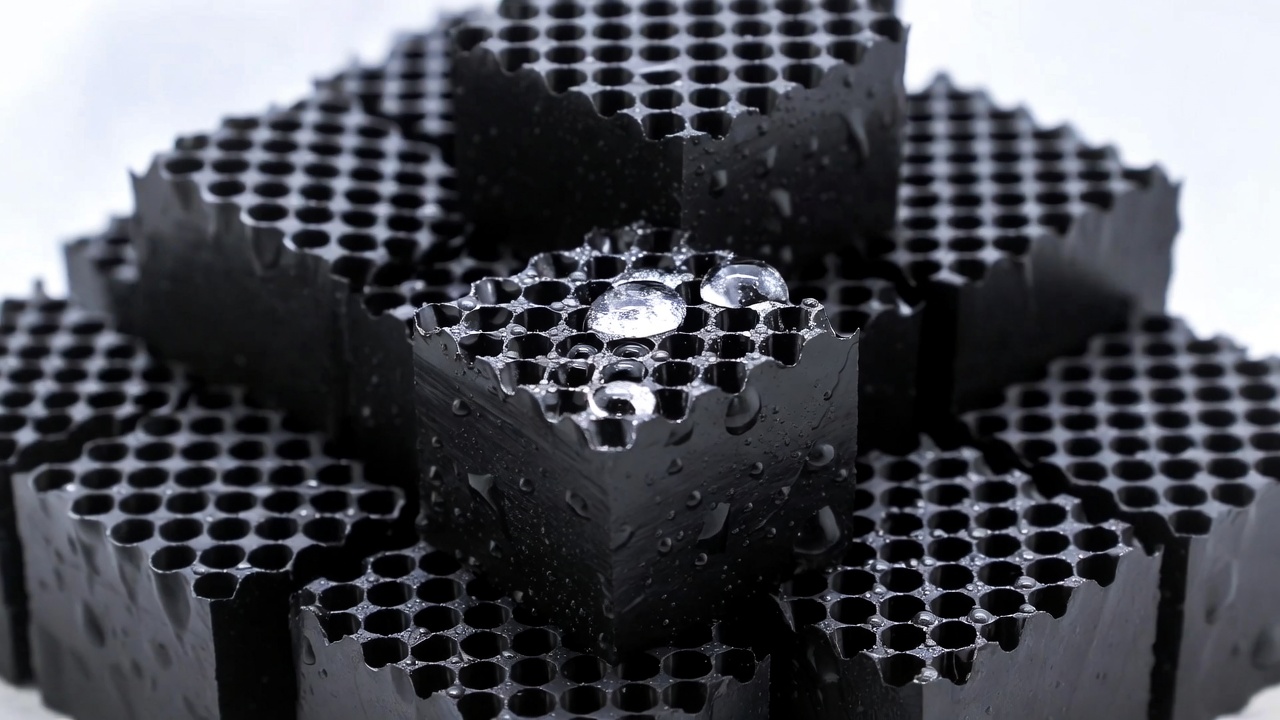
As South Korea intensifies its commitment to environmental sustainability through the "Green New Deal" and stricter air quality regulations, the demand for high-efficiency filtration media has reached an all-time high. For procurement managers in the semiconductor, automotive, and chemical sectors, finding the right Honeycomb Activated Carbon is no longer just about price—it is about gas adsorption efficiency, pressure drop management, and long-term operational costs.
In this comprehensive guide, we analyze the leading Honeycomb Activated Carbon Manufacturers and Suppliers in South Korea. Drawing from over a decade of experience in the global carbon filtration industry, I will break down the market landscape, evaluate the top players, and provide actionable insights into why choosing a direct Chinese manufacturer like Guangdong Tongke Activated Carbon Co., Ltd. is becoming the preferred strategy for Korean industrial leaders.
South Korea's industrial landscape is unique. With heavy concentrations of high-tech manufacturing—specifically Samsung, SK Hynix, and Hyundai—the requirement for ultra-pure air and gas treatment is non-negotiable. The South Korean Ministry of Environment has implemented the Clean Air Conservation Act, which mandates rigorous control over Volatile Organic Compounds (VOCs).
Honeycomb activated carbon (HAC) has become the gold standard here because of its geometric structure. Unlike traditional granular carbon, the "honeycomb" design allows for a massive surface area with minimal airflow resistance. In my experience, Korean facilities prioritize low pressure drop to save on energy costs associated with massive industrial fans and blowers.
Hanil Green Tec is a cornerstone of the Korean domestic filtration market. They specialize in a wide range of air purification products, including honeycomb-structured filters.
- Expert Insight: They are excellent for localized, small-to-medium-scale projects. Their strength lies in their integration of carbon into total HVAC filter systems. However, for bulk industrial VOC treatment, their pricing reflects the high cost of domestic Korean manufacturing.
Wintech focuses heavily on environmental equipment and chemical filtration. They provide customized activated carbon solutions for the domestic automotive and electronic sectors.
- Expert Insight: Wintech is highly regarded for its R&D. They often collaborate with Korean universities to optimize pore size distribution for specific gas molecules like Formaldehyde and H2S.
As a global powerhouse, Jacobi has a significant footprint in South Korea. They offer premium-grade carbons used in high-end pharmaceutical and chemical processes.
- Expert Insight: If your project requires strictly regulated international certifications (like NSF or specific ASTM standards) and budget is not a primary concern, Jacobi is a reliable choice. However, their lead times for the specialized honeycomb format can be longer due to global supply chain dependencies.
Following the acquisition of Calgon Carbon, Kuraray provides advanced carbon technologies to the Korean market, particularly for large-scale water treatment and industrial gas masks.
- Expert Insight: Their honeycomb products are top-tier in terms of consistency. They are often the "safe" choice for government-mandated infrastructure projects in Seoul and Busan.
Dongyang is a veteran in the Korean carbon industry, focusing on various formats including granular, powder, and honeycomb.
- Expert Insight: They offer a balanced portfolio. From my observations, they serve as a primary bridge for many Korean companies that require standard industrial grades of honeycomb carbon for general solvent recovery.
While domestic Korean suppliers offer proximity, a growing number of Korean industrial giants are moving toward a "Direct-from-Manufacturer" model with Guangdong Tongke Activated Carbon Co., Ltd. Here is why this shift is occurring from a strategic procurement perspective.
Manufacturing honeycomb activated carbon is energy-intensive and requires specialized molding technology. By leveraging China's advanced manufacturing infrastructure, Tongke provides honeycomb carbon that matches or exceeds Korean domestic specs (Iodine value >800 mg/g) at a 20-30% lower cost, even after logistics.
Most domestic suppliers in Korea offer "off-the-shelf" sizes (typically 100x100x100mm). In contrast, Tongke specializes in:
- Custom Cell Density: Offering 100, 150, or 200 holes per square inch (CPSI) to balance adsorption speed vs. air resistance.
- Impregnated Honeycomb Carbon: Adding KOH, NaOH, or KI to target specific gases like acid gases or ammonia—critical for Korean semiconductor cleanrooms.
Korean projects often require several hundred cubic meters of carbon for a single VOC abatement installation. Tongke’s high-capacity kilns ensure that large-scale orders are fulfilled in weeks, not months, which is a common pain point with smaller Korean distributors.
One "information gap" often found in basic supplier catalogs is the failure to explain when to use Waterproof Honeycomb Activated Carbon. In South Korea’s humid summer months or in coastal chemical plants in Ulsan, standard honeycomb carbon can absorb moisture, leading to structural softening and increased air resistance.
Feature
Standard Honeycomb AC
Waterproof (Moisture-Proof) Honeycomb AC
Humidity Resistance
Low (May crumble in high humidity)
High (Maintains shape in 90%+ humidity)
Best For
Dry air purification, indoor HVAC
Industrial VOCs, Organic solvent recovery
Surface Chemistry
Hydrophilic
Hydrophobic treatment
Regeneration
Difficult if wet
Can be dried and reused more effectively
Expert Tip: If your exhaust stream contains steam or the installation is outdoors, always opt for the waterproof version. It prevents the "mudding" effect that can destroy your filtration efficiency.
Based on my years of consulting for international B2B buyers, follow these steps to ensure you select the best manufacturer:
1. Define Your Gas Stream: Are you treating VOCs, H2S, or Ammonia? Different gases require different impregnation.
2. Calculate the Face Velocity: Ensure the honeycomb dimensions provided by the supplier won't cause your fans to overheat due to high backpressure.
3. Request a "TDS" (Technical Data Sheet): Do not settle for "Commercial Grade." Ask for specific Iodine and CTC values.
4. Audit the Manufacturing Process: For high-volume needs, ask for photos of the extrusion and carbonization process to ensure the "honeycomb" walls are uniform and free of cracks.
5. Logistics and Incoterms: For Korea, shipping from Guangzhou/Shenzhen to Busan or Incheon is remarkably fast (3-5 days). Ensure the manufacturer provides proper palletization to prevent breakage during transit.
A mid-sized automotive parts manufacturer in Gyeonggi-do was struggling with high maintenance costs using standard granular activated carbon. The high airflow requirements meant they were replacing the carbon every 3 months due to "channeling"—where the air finds a path of least resistance and bypasses the filter media.
The Solution:
They switched to Tongke's 100x100x100mm Honeycomb Activated Carbon with a CTC of 60%.
- Result 1: Airflow resistance dropped by 40%, leading to a significant reduction in electricity usage for the ventilation fans.
- Result 2: The structural integrity of the honeycomb meant no "channeling," increasing the effective service life to 8 months.
- Result 3: Total filtration costs dropped by 25% annually.
We are seeing a move toward Catalytic Honeycomb Carbon. This isn't just about trapping molecules; it's about breaking them down. As Korea pushes toward ESG (Environmental, Social, and Governance) goals, manufacturers who provide "Regenerative" carbon solutions will dominate the market. Guangdong Tongke is currently at the forefront of this, developing low-temperature regenerative honeycomb carbon that can be desorbed and reused, further reducing the carbon footprint of the industrial process itself.
South Korea remains one of the most sophisticated markets for air and water treatment. While local players like Hanil Green Tec and Wintech provide excellent service, the global nature of manufacturing means that the most competitive and technically advanced solutions often come from specialized manufacturers like Guangdong Tongke Activated Carbon Co., Ltd.
By focusing on high CTC values, customized cell densities, and robust waterproof options, we help Korean industries meet their strict environmental targets while optimizing their bottom line.
Ready to optimize your industrial filtration system?
Whether you are a wholesaler in Seoul or a plant manager in Busan, contact our technical team at Guangdong Tongke for a customized quote and technical consultation. Let us help you find the perfect honeycomb solution for your specific application.
The most common size used in South Korean industrial installations is 100mm x 100mm x 100mm. However, at Tongke, we can manufacture custom sizes (e. g., 50x50x100mm or 100x100x50mm) to fit specific existing filter frames without the need for expensive equipment modifications.
The iodine value is a measure of the micropore content (0 to 20 Å). A higher iodine value generally means a higher capacity to adsorb small molecular weight VOCs. For most Korean industrial applications, we recommend an iodine value of at least 800 mg/g to ensure long-term efficiency.
While honeycomb carbon is primarily designed for gas-phase applications due to its high airflow design, specialized versions can be used in low-pressure water filtration. However, for most water treatment (like removing chlorine or organics), granular activated carbon (GAC) or block carbon is typically more effective.
Shipping from our facility to major Korean ports like Busan, Incheon, or Pyeongtaek is very efficient. Typically, the sea freight transit time is only 3 to 5 days. Including customs clearance, you can expect door-to-door delivery within 10-14 days.
Yes, waterproof honeycomb carbon undergoes an additional chemical treatment process to make the carbon surface hydrophobic. While the unit price is slightly higher, the "Total Cost of Ownership" is often lower in humid environments because the carbon lasts significantly longer and does not lose its structural integrity.
We are activated carbon manufacturer integrating scientific research, development, production and sales. the product categories cover wood activated carbon, coal activated carbon, honeycomb activated carbon, coconut shell activated carbon, fruit shell activated carbon and other activated carbon product.
CONTACT US
Phone:+86-18928289566 Email: tongkecarbon@dghxt.com WhatsApp: +86-18928289566 Add:Room 12-11, Nancheng Street, Dongguan City, Guangdong Province, China