Content Menu
● ACF vs HEPA Filters at a Glance
● What Is an Activated Carbon Fiber Filter?
>> Pollutants ACF Can Address
● What Is a HEPA Filter?
>> Why 0.3 Microns Matters
● The Core Difference: Molecules vs Particles
● ACF Filter vs HEPA Filter Performance
>> 1. VOC and Odor Removal
>> 2. Fine Particle Removal
>> 3. Pressure Drop and Energy Use
>> 4. Service Life and Replacement
● How to Select the Right Filtration System
● Practical Application Example: Industrial Coating Line
● Why ACF Is Valuable in Compact Gas Filtration
● Choose the Right Filter Media
● FAQ
>> 1. Can an ACF filter replace a HEPA filter?
>> 2. Can HEPA filters remove VOCs?
>> 3. Is Activated Carbon Fiber better than granular activated carbon?
>> 4. How often should an ACF filter be replaced?
>> 5. Do I need both ACF and HEPA filtration?
>> 6. Does ACF remove formaldehyde?
>> 7. What information should I send to an ACF filter supplier?
● References
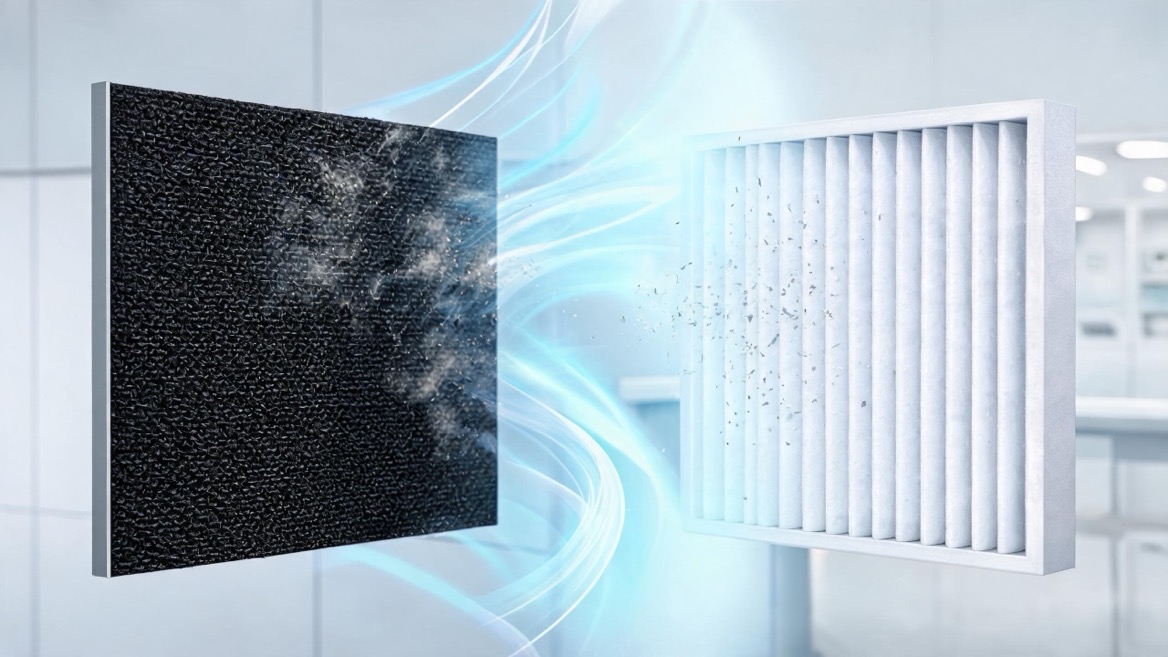
When industrial buyers compare ACF vs HEPA filters, the central question is not which technology is "better." It is which contaminant needs to be controlled. Activated Carbon Fiber (ACF) is designed primarily to adsorb gases, odors, and many volatile organic compounds (VOCs), while HEPA filters are engineered to capture airborne particles such as dust, smoke, pollen, spores, and fine particulate matter.
In real industrial air-treatment systems, ACF and HEPA filtration are often complementary rather than interchangeable. A properly designed multi-stage system can use a particulate filter or HEPA filter to protect downstream ACF media, while ACF handles gaseous pollutants that mechanical particle filters cannot effectively remove.
For manufacturers, facility engineers, environmental contractors, and procurement teams, understanding the difference between Activated Carbon Fiber filters and HEPA filters is essential for selecting the correct air purification solution, estimating replacement cycles, managing pressure drop, and meeting application-specific air-quality targets.
ACF vs HEPA Filters at a Glance
| Comparison Factor | Activated Carbon Fiber (ACF) Filter | HEPA Filter |
| Primary removal mechanism | Adsorption | Mechanical particle capture |
| Main target pollutants | VOCs, odors, solvent vapors, certain gaseous contaminants | Dust, PM2.5, smoke particles, pollen, mold spores, bacteria-containing particles |
| Best for | Gas-phase and odor control | Fine-particle control |
| Typical material structure | Activated carbon formed into fibrous fabric, felt, paper, or honeycomb media | Pleated fibrous filter media in a sealed frame |
| Can remove VOCs? | Yes, depending on compound, concentration, humidity, airflow, and media design | Generally no |
| Can remove fine dust? | Limited unless combined with particle-filter layers | Yes, when properly rated and installed |
| Key replacement trigger | Adsorption capacity is exhausted; contaminant breakthrough occurs | Pressure drop rises or particle-loading capacity is reached |
| Common system role | Molecular filtration stage | Particulate filtration stage |
| Typical industrial applications | Paint shops, chemical processing, solvent recovery, odor control, clean manufacturing | Cleanrooms, pharmaceutical production, hospitals, electronics, laboratories, dust-sensitive processes |
The practical takeaway is simple: HEPA captures particles; ACF adsorbs molecules. A facility dealing with welding fume or fine dust may prioritize HEPA filtration. A facility handling printing inks, coating solvents, formaldehyde, sulfur compounds, or unpleasant odors will usually need an activated carbon-based molecular filtration stage.
What Is an Activated Carbon Fiber Filter?
Activated Carbon Fiber is a high-surface-area adsorbent material produced from carbon-based fiber precursors and activated to create a network of microscopic pores. Unlike conventional granular activated carbon, ACF is manufactured in fibrous forms such as cloth, felt, paper, nonwoven media, or structured filter elements.
This fiber-based structure gives ACF several practical advantages in gas treatment:
- Fast adsorption kinetics because gas molecules can access adsorption sites over short diffusion paths
- High surface-area utilization in compact filter formats
- Flexible conversion options, including pleated panels, cartridges, rolls, honeycomb blocks, and customized composite filters
- Low dust generation potential when compared with poorly contained loose carbon media
- Easy integration with pre-filters, HEPA media, catalytic layers, or chemically impregnated adsorbents
ACF works through adsorption, not ordinary mechanical screening. Gas molecules move through the filter and are attracted to the internal pore surfaces of the activated carbon. The molecules are retained within the pore network until the adsorption sites become occupied.
This means an ACF filter does not "destroy" contaminants merely by trapping them. Instead, it retains them until the media reaches saturation, is regenerated where applicable, or is replaced.
Pollutants ACF Can Address
ACF filtration is commonly considered for:
- VOCs from paints, coatings, adhesives, inks, cleaning agents, and solvents
- Odors from wastewater treatment, food processing, waste handling, and industrial exhaust
- Hydrocarbon vapors
- Some sulfur-containing odor compounds
- Certain aldehydes and organic gases, depending on media chemistry and operating conditions
- Trace molecular contaminants in controlled production environments
However, adsorption performance varies substantially by contaminant. Molecular size, polarity, boiling point, inlet concentration, airflow rate, temperature, relative humidity, residence time, and competing gases all influence actual service life.
For example, a standard ACF media may perform well for many organic vapors but may require chemical impregnation or a specialized composite formulation for highly reactive, low-molecular-weight, or strongly polar gases.
What Is a HEPA Filter?
A HEPA filter is a high-efficiency pleated mechanical air filter designed to capture particulate contaminants from an air stream. In the commonly cited U.S. definition, HEPA filtration can theoretically remove at least 99.97% of particles at 0.3 microns, a particle size used as a demanding test point.
The key point is that HEPA filtration is designed for particles, not gases. Its media captures contaminants through several physical mechanisms, including interception, inertial impaction, diffusion, and electrostatic effects.
A correctly specified HEPA filter can be highly effective for:
- Fine dust
- PM2.5 and smoke particles
- Pollen
- Mold spores
- Animal dander
- Powder residues
- Bacteria-containing aerosols
- Process-generated particulates
In industrial settings, HEPA filters are used where particulate cleanliness is essential, including pharmaceutical production, medical environments, electronics manufacturing, laboratories, cleanrooms, food-processing areas, and high-control HVAC systems.
Why 0.3 Microns Matters
The 0.3-micron test point is often misunderstood as the smallest particle a HEPA filter can capture. It is commonly treated as the most penetrating particle size, meaning it is among the hardest particle sizes for the filter media to collect. Filters that meet the stated performance at this point can perform with high efficiency for many particles both larger and smaller than 0.3 microns.
Still, filtration performance in a real installation depends on more than the filter label. Housing integrity, gasket sealing, bypass leakage, airflow balance, maintenance discipline, and pressure-drop management all affect system-level results.
The Core Difference: Molecules vs Particles
The difference between ACF and HEPA filters becomes clear when contaminants are separated into two categories:
| Contaminant Type | Typical Examples | Preferred Technology |
| Particulate contaminants | Dust, soot, powder, pollen, PM2.5, smoke particles | HEPA or other particulate filtration |
| Gaseous contaminants | VOCs, solvent vapors, odors, hydrocarbons, gaseous chemicals | ACF or other activated-carbon-based media |
| Mixed contaminants | Paint-shop emissions, kitchen exhaust, chemical production air, laboratory exhaust | Multi-stage filtration with both technologies |
A HEPA filter may capture aerosolized droplets or particle-bound pollutants, but it is not a dependable solution for removing vapor-phase solvents or odors. Conversely, ACF should not be positioned as a stand-alone replacement for HEPA when the dominant risk is fine particulate contamination.
This is why many gas-phase filtration designs place a particulate filter upstream of carbon media. Removing dust first helps prevent blockage, protects the adsorbent surface, and supports more stable gas-removal performance. Industry guidance also commonly recommends a downstream particulate stage in recirculating systems to capture any particulate released from chemical media.
ACF Filter vs HEPA Filter Performance
1. VOC and Odor Removal
ACF is the stronger option for VOCs and odors. Its microporous structure provides adsorption sites for many organic molecules. It is especially relevant in environments where odor complaints, solvent exposure, or chemical vapor control are key operating concerns.
HEPA media may remove dust carrying odorous substances, but it does not reliably remove odor molecules or vapor-phase VOCs. A facility may therefore install HEPA filtration and still experience chemical smells if no gas-phase adsorption stage is included.
2. Fine Particle Removal
HEPA is the stronger option for fine particles. It is engineered to capture particulate contaminants with very high efficiency. This makes it suitable for clean manufacturing, sterile environments, powder-handling areas, and high-sensitivity production zones.
Standard ACF media is not intended to deliver HEPA-class particle efficiency. Some ACF composite filters can include nonwoven or mechanical filtration layers, but the actual particle-removal performance must be verified through product-specific testing rather than assumed from the presence of activated carbon.
3. Pressure Drop and Energy Use
Every filtration stage adds resistance to airflow. HEPA filters can create significant pressure drop as particulate loading increases. ACF filters also create pressure drop, particularly when dense, heavily pleated, multilayered, or combined with fine particulate media.
The best design is not necessarily the one with the most filter layers. It is the one that achieves the required contaminant control with a practical balance of:
- Removal efficiency
- Adsorbent capacity
- Airflow
- Contact time
- Initial and final pressure drop
- Replacement frequency
- Fan energy consumption
- Available installation space
For this reason, buyers should provide actual operating conditions instead of selecting filters based only on nominal dimensions or media weight.
4. Service Life and Replacement
HEPA filter life is often driven by particle loading and pressure drop. As dust accumulates, airflow resistance rises. A filter may need replacement even if its media still appears visually intact.
ACF filter life is driven mainly by adsorption capacity and breakthrough. A filter can look clean but already be saturated with contaminants. Once breakthrough occurs, outlet VOC or odor concentration can increase quickly.
This is a major operational distinction. Visual inspection is often more useful for particulate filters than for carbon adsorption media. For critical gas-control applications, replacement intervals should be based on contaminant data, operating history, breakthrough monitoring, or engineered capacity calculations.
How to Select the Right Filtration System
From an industrial design perspective, the best starting point is not "Do we need ACF or HEPA?" It is: What is in the air, at what concentration, and what is the required outlet condition?
Use the following selection process.
1. Identify the contaminant class.
Determine whether the problem is particulate, gaseous, or mixed. Collect information on dust type, VOC species, odor compounds, temperature, humidity, and concentration range.
2. Define the air-treatment objective.
Clarify whether the target is worker comfort, odor reduction, process protection, emission control, cleanroom performance, product quality, or regulatory compliance.
3. Measure airflow and installation conditions.
Filter dimensions alone are not enough. Airflow, face velocity, duct configuration, available space, and allowable pressure drop directly affect performance.
4. Choose the filtration sequence.
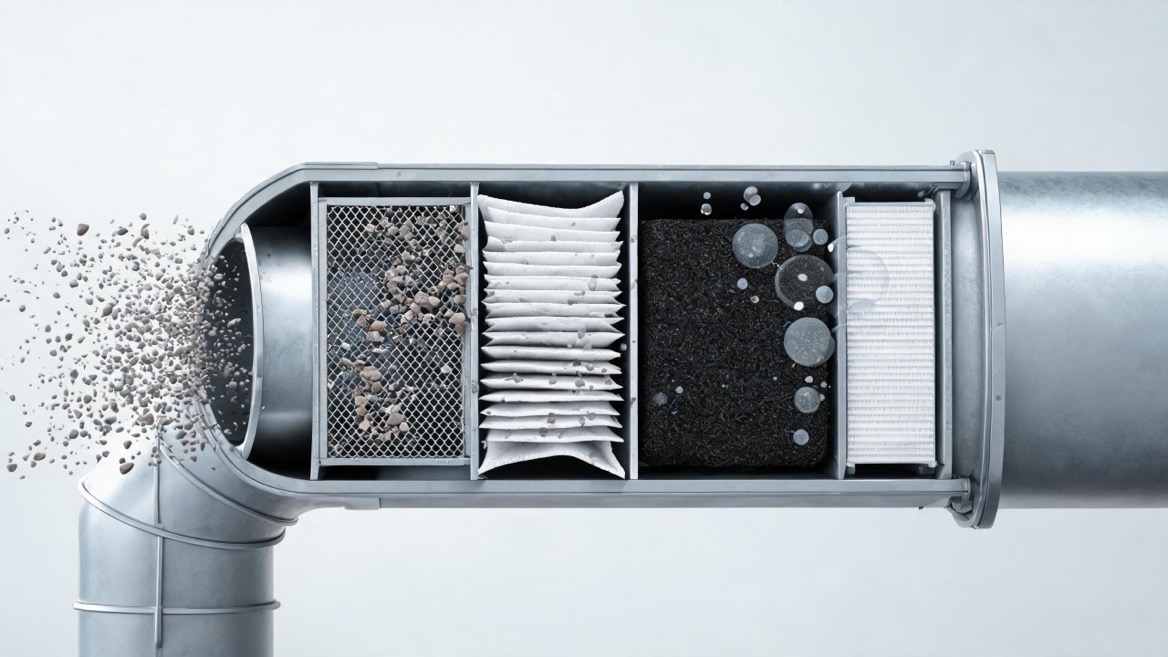
In many mixed-contaminant systems, a pre-filter removes coarse dust, a finer particulate stage protects the gas-phase media, and ACF handles VOCs or odors.
5. Evaluate media compatibility.
Confirm that the ACF grade is suitable for the target gases. Standard activated carbon may not be the right choice for every contaminant.
6. Set a maintenance plan before installation.
Establish pressure-drop limits for particle filters and a defined breakthrough-monitoring or replacement schedule for ACF filters.
Practical Application Example: Industrial Coating Line
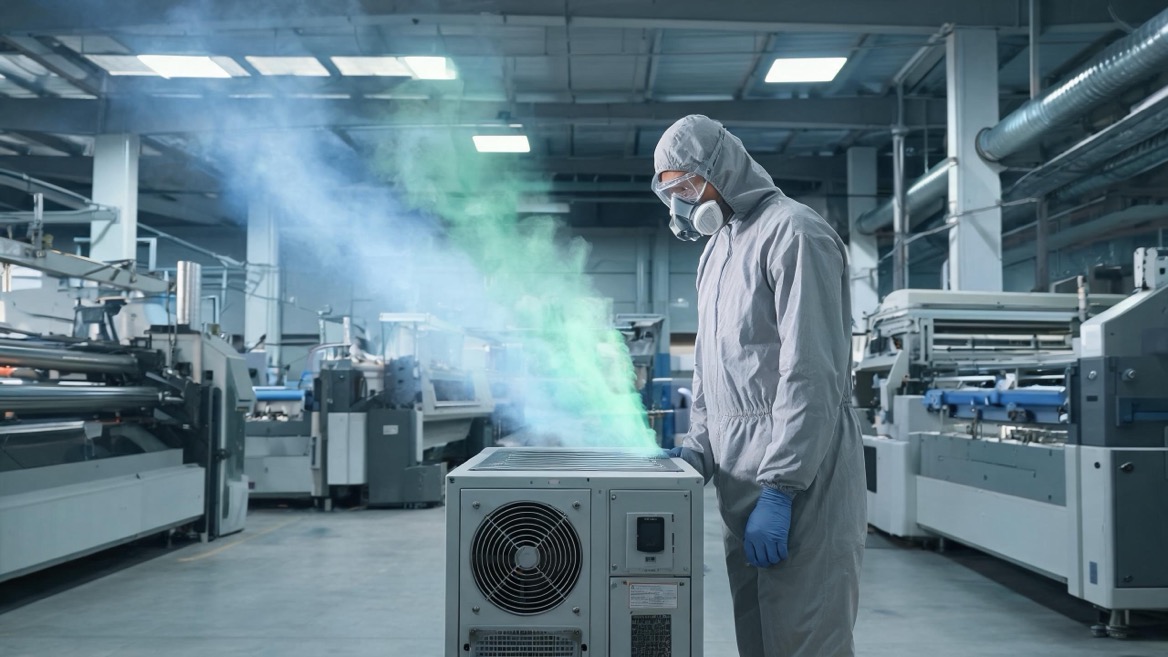
Consider a coating or printing line with two air-quality challenges:
- Fine overspray particles and dust
- Solvent vapors and persistent odors
Installing only a HEPA filter may improve particle cleanliness but leave solvent odors largely unresolved. Installing only ACF may reduce vapor-phase odors while allowing fine particulate matter to load or block the adsorbent media.
A more effective configuration may include:
1. A coarse pre-filter for larger dust and fibers
2. A fine particulate stage for smaller process particles
3. An ACF filter for solvent vapors and odor compounds
4. An optional final particulate stage where clean recirculated air is required
The exact arrangement depends on contaminant concentration, airflow, local exhaust design, fire-safety requirements, and the required air-quality outcome. The point is not to add layers automatically. It is to assign each filter technology to the contaminant type it is designed to manage.
Why ACF Is Valuable in Compact Gas Filtration
For buyers evaluating activated carbon solutions, ACF offers a meaningful advantage where rapid adsorption and compact media design matter. Its fibrous format allows manufacturers to develop customized filter assemblies for different airflow directions, housing sizes, contact-time targets, and composite filtration requirements.
At Guangdong Tongke Activated Carbon Co., Ltd., we work with industrial customers that need activated carbon solutions tailored to real conditions—not generic media selections. Depending on the application, an ACF solution can be developed as a filter cloth, felt, pleated panel, cartridge component, honeycomb structure, or integrated composite filter.
To recommend a suitable ACF product, the most useful information includes:
- Target gas or odor compound
- Inlet concentration and expected load
- Airflow rate and operating schedule
- Temperature and relative humidity
- Filter housing dimensions
- Required outlet concentration or odor-control target
- Existing pre-filtration stages
- Desired replacement interval
A well-matched ACF filter is selected by contaminant data and operating conditions, not by carbon weight alone.
Choose the Right Filter Media
If your application involves VOCs, odors, solvent vapors, or other gaseous pollutants, Guangdong Tongke Activated Carbon Co., Ltd. can help you evaluate ACF media and customized activated carbon filter solutions for your operating conditions.
Share your target contaminant, airflow, filter dimensions, and performance requirement with our technical team. We can help you determine whether an Activated Carbon Fiber filter, HEPA filter, or combined filtration system is the most practical solution for your industrial application.
FAQ
1. Can an ACF filter replace a HEPA filter?
Usually, no. ACF and HEPA filters serve different functions. ACF is primarily used for gaseous contaminants, VOCs, and odors, while HEPA filtration is designed for high-efficiency particle capture.
2. Can HEPA filters remove VOCs?
HEPA filters are not designed to remove vapor-phase VOCs effectively. ACF, granular activated carbon, impregnated carbon, or other molecular filtration media are typically needed for gas-phase contaminant control.
3. Is Activated Carbon Fiber better than granular activated carbon?
Neither is universally better. ACF can offer fast adsorption kinetics and flexible filter configurations, while granular activated carbon may offer high bulk capacity in certain beds or cartridges. The right choice depends on airflow, target contaminant, contact time, pressure drop, space, and replacement requirements.
4. How often should an ACF filter be replaced?
Replacement frequency depends on contaminant type, inlet concentration, airflow, humidity, temperature, media mass, and contact time. For critical applications, use breakthrough testing, monitoring data, or engineering calculations instead of relying only on a fixed calendar schedule.
5. Do I need both ACF and HEPA filtration?
You may need both if the air stream contains both particles and gases. This is common in coating, printing, chemical processing, laboratories, food production, and industrial ventilation systems.
6. Does ACF remove formaldehyde?
ACF may adsorb formaldehyde to some extent, but performance can be limited by formaldehyde's small molecular size, humidity, and operating conditions. A modified or chemically impregnated media may be more appropriate for demanding formaldehyde-control applications.
7. What information should I send to an ACF filter supplier?
Send the target pollutant, concentration, airflow, temperature, humidity, operating hours, filter size, current filtration stages, and required outlet target. This allows the supplier to recommend an appropriate ACF grade and filter configuration.
References
1. U.S. Environmental Protection Agency. "[What is a HEPA filter?]"
2. U.S. Environmental Protection Agency. "[Residential Air Cleaners: A Summary of Available Information]"
3. National Air Filtration Association. "[Molecular Filtration]"
4. National Institute for Occupational Safety and Health / Centers for Disease Control and Prevention. "[Filtration and Adsorption Performance of Activated Carbon Fiber]"
5. National Institute of Standards and Technology. "[Standards Development for Gas Phase Air Cleaning Equipment in General Ventilation]"
6. Industrial & Engineering Chemistry Research. "[Indoor Air Purification Using Activated Carbon Adsorbers]"
7. Chemical Engineering Journal. "[Development of a Novel Type Activated Carbon Fiber Filter for Indoor Air Purification]"
8. AAF International. "[Gas Phase Filtration]"


