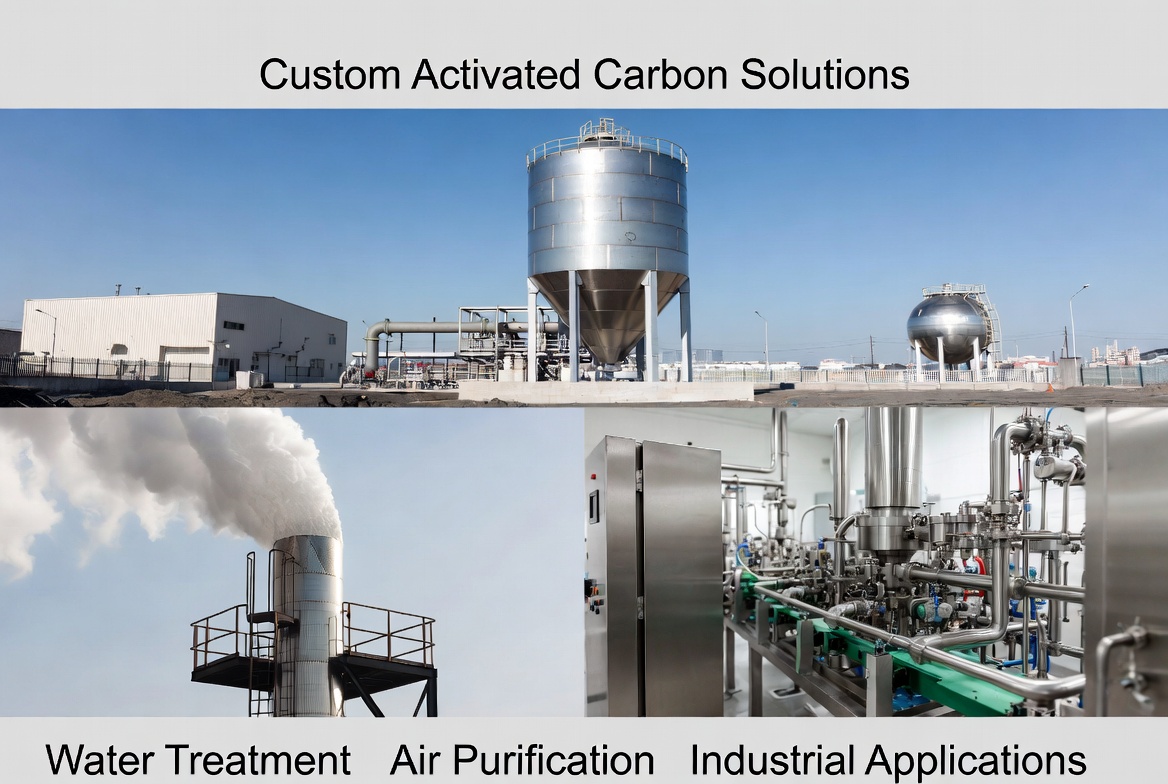
As an engineer-turned-sourcing consultant who has spent the last decade auditing filtration and environmental protection suppliers in Asia, Europe, and North America, I have seen how activated carbon selection directly determines system performance, operating cost, and regulatory compliance. In 2026, buyers are no longer just asking "Who can supply activated carbon?"—they are asking "Who can provide the right carbon, with data, traceability, and long-term support?".
This guide reviews the top 10 global activated carbon suppliers and adds on-the-ground insight into product strengths, application focus, and what to look for when you shortlist vendors. It also highlights how Chinese manufacturers such as Guangdong Tongke Activated Carbon Co., Ltd. are becoming key partners for global OEMs and industrial users that need reliable wood, coal, and honeycomb activated carbon for water, air, and process applications.
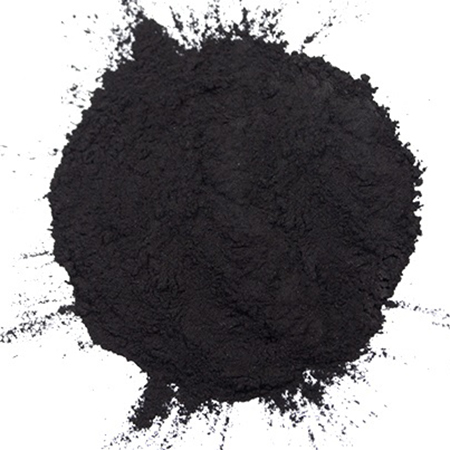
Why the Activated Carbon Supplier You Choose Matters
The global activated carbon market is projected to grow steadily thanks to increasingly strict regulations on drinking water, industrial wastewater, air emissions, and VOC control. Market analyses indicate that water treatment alone accounts for a very large share of global activated carbon value, with air purification as the fastest-growing end-use sector. This means your supplier must do more than just ship bags or pallets of carbon—they must help you meet performance targets under regulatory and cost pressure.
From field projects and user feedback, the most reliable suppliers generally have:
- Consistent raw material sourcing and stable quality specs (iodine value, hardness, ash, moisture).
- Application engineering support for column design, breakthrough prediction, and media selection.
- Capability to produce wood-based, coal-based, and specialty forms like honeycomb or pelletized carbon for integrated projects.
- Documented compliance and traceability to support audits & certifications.
When these elements are missing, plants often experience shorter bed life, pressure drop issues, or non-compliance with discharge limits, which leads to unplanned shutdowns and replacement costs.
Global Leaders: Top 10 Activated Carbon Suppliers in 2026
Below is an updated, expert-focused overview of the leading activated carbon suppliers worldwide (no strict ranking order), with Guangdong Tongke Activated Carbon Co., Ltd. presented first as a strong, export-ready Chinese manufacturer. Use this section as a shortlist starting point, but always match a supplier's strengths to your application (water vs air, liquid vs gas, bulk vs specialty).
1. Guangdong Tongke Activated Carbon Co., Ltd. (China)
Guangdong Tongke Activated Carbon Co., Ltd. is an integrated R&D, production, and sales manufacturer specializing in wood activated carbon, coal activated carbon, honeycomb activated carbon, coconut shell activated carbon, fruit shell activated carbon, activated carbon fiber, and related products.
- Headquarters in Dongguan, Guangdong, with production and stock bases in several provinces to support large-scale, stable supply.
- Main application areas include water treatment and wastewater treatment, gas and air purification (including VOC and odor control), food and beverage refining and decolorization, pharmaceuticals, household use, thermoelectric and nuclear power, and solvent recovery.
- Annual capacity around tens of thousands of tons, enabling both long-term framework contracts and customized batches for OEMs and industrial end users.
- Offers custom formulations, free sample testing, and technical support to help customers optimize adsorption performance and lifecycle cost.
Tongke is particularly attractive for overseas buyers who want one Chinese partner that can supply wood-based, coal-based, and honeycomb activated carbon in consistent quality with export-oriented logistics.
2. Jacobi Carbons Group (Sweden / Osaka Gas Chemicals)
Jacobi is widely recognized as one of the earliest large-scale developers of coconut shell-based activated carbon and now operates under Osaka Gas Chemicals.
- Portfolio spans coconut, coal, and wood-based carbons, plus specialty grades tailored for demanding applications.
- Strong in municipal and industrial water treatment, solvent recovery, and gold recovery.
- Global production and service footprint across Europe and Asia supports multinational users who need harmonized specifications.
3. Calgon Carbon Corporation (USA, Kuraray Group)
Founded in 1942 and now part of Kuraray, Calgon Carbon remains a benchmark name in premium granular, powdered, and pelletized activated carbon.
- Particularly strong in municipal water treatment, air and gas purification, and reactivation services that reduce lifetime cost.
- Extensive service centers and technical teams—important for utilities, EPCs, and large industrial users.
- Frequently selected where regulatory scrutiny and formal certifications are critical.
4. CPL Activated Carbons (United Kingdom)
CPL provides a complete range of granular, powdered, and pelletized carbons as well as mobile and fixed filtration solutions.
- Offers integrated packages of media supply, adsorption optimization, and system support, ideal for users without in-house process design capacity.
- Deep experience in industrial exhaust gas treatment, gas separation, and solvent recovery.
- Well suited for European plants seeking engineering-led service and on-site support.
5. Norit / Cabot Norit Activated Carbon (Netherlands)
Norit, now owned by Cabot, offers hundreds of activated carbon products for both conventional and advanced processes.
- Strong presence in drinking water, food and beverage, chemical, and pharmaceutical purification.
- Includes specialty carbons designed for modern challenges such as PFAS and specific organic contaminants.
- Global technical support makes it a solid choice for complex multi-contaminant streams.
6. Haycarb PLC (Sri Lanka)
Haycarb is a major manufacturer of coconut shell-based activated carbon, with a significant share of the global coconut-based carbon market.
- Focuses on sustainable coconut sourcing and high adsorption performance for both water and air purification.
- Strong presence in North America, Europe, and Asia for gas-phase and liquid-phase applications.
- Attractive partner for buyers prioritizing sustainability and premium coconut shell carbon.
7. Donau Carbon GmbH (Germany)
Donau Carbon is a long-established German producer with a strong focus on environmental and industrial markets.
- Produces granular, powdered, and pelletized carbons for exhaust gas, wastewater, and gas filtration.
- Known for German engineering quality and precise process control, preferred by demanding EU industrial users.
- Good fit for plants that value long-term stability, audited quality systems, and documented performance.
8. Carbon Activated Corporation (USA)
Carbon Activated Corporation is a key North American supplier with strong reliability and customization capabilities.
- Focuses on water treatment, industrial vapor adsorption, VOC control, and odor removal.
- Offers both media and turnkey systems, supporting customers who require more than loose carbon supply.
- Often used by OEMs, service companies, and end users needing short lead times and local stock.
9. Qizhong Chemical (China)
Qizhong Chemical is a recognized Chinese supplier serving both domestic and international markets.
- Provides activated carbons for water treatment, air purification, gold recovery, and chemical processes.
- Emphasizes production capacity and quality control for high-volume industrial buyers.
- Often selected when buyers require cost-effective yet stable supply within or from China.
10. General Carbon Corporation (USA)
General Carbon is a long-standing North American supplier with a wide range of standard and specialty carbons.
- Serves water treatment, air purification, and numerous industrial applications.
- Known for combining high adsorption capacity with low ash content in many products.
- Provides equipment and filters, making it convenient for smaller or newly configured facilities.
Key Activated Carbon Types and When to Use Them
A recurring question from plant managers and procurement teams is: "Which activated carbon type should we choose for our process?". Based on industry practice and the portfolios of the suppliers above, the following overview can help structure your decision.
Major Product Types
| Carbon type | Typical base | Best suited for |
| Wood activated carbon | Wood | Decolorization, fine organics removal in liquids |
| Coal activated carbon | Coal | General water treatment, industrial wastewater, flue gas |
| Coconut shell carbon | Coconut | Drinking water, high hardness, low dust applications |
| Honeycomb activated | Coal/other | VOC removal, industrial exhaust, large airflow systems |
| Powdered activated | Various | Batch treatment, polishing steps, emergency treatment |
| Granular activated | Various | Fixed-bed filters, continuous water and gas treatment |
Wood- and coal-based carbons are widely used in water treatment, gas purification, food processing, and chemical processes, while honeycomb activated carbon is increasingly preferred in VOC and exhaust treatment due to its high contact area and low pressure drop.
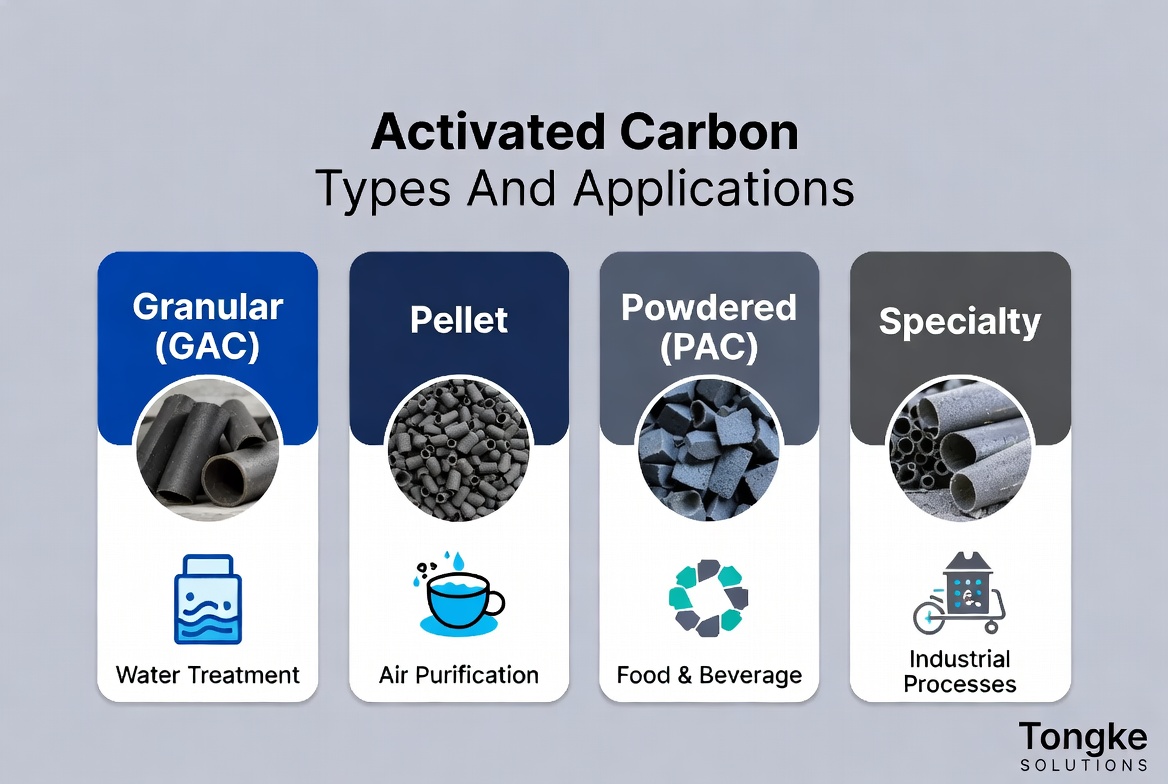
How the Activated Carbon Market Is Evolving (2025–2033)
When planning long-term sourcing, it is important to understand where the market is heading rather than only looking at current prices.
- The global activated carbon market is estimated in the multi‑billion‑dollar range, with projections to grow steadily toward the early 2030s.
- Asia-Pacific holds a major share of global revenue, with China as a key growth driver thanks to industrialization and stricter environmental regulations.
- By product type, powdered activated carbon holds a large revenue share due to its versatility in water and wastewater treatment, while granular and honeycomb carbons are growing in gas-phase and industrial filtration.
- Water treatment accounts for a significant portion of end-use value, while air purification is one of the fastest-growing segments.
For buyers, this suggests:
- Expect continued innovation in specialty grades targeting specific contaminants (for example, PFAS or specialized VOCs).
- Supply from Asia, particularly China-based producers like Guangdong Tongke Activated Carbon Co., Ltd., will remain a central part of the global supply chain.
- Long-term contracts and multi-year partnerships can help stabilize cost and availability as regulations tighten.
Practical Framework: How to Select the Right Activated Carbon Supplier
To support better decisions, buyers benefit from a structured, step-by-step supplier selection process. The framework below is based on real project work with industrial clients and OEMs.
Step 1: Define Application and Performance Targets
1. Clarify your medium (water, wastewater, solvent, exhaust gas, indoor air).
2. Identify key contaminants (for example, TOC, color, COD, VOCs, odor compounds, heavy metals).
3. Set clear targets: breakthrough time, residual concentration, bed life, pressure drop, and regeneration vs replacement strategy.
Step 2: Match Carbon Type to Application
- Choose wood-based carbons for decolorization and removal of large organic molecules, especially in food, beverage, and pharmaceutical applications.
- Choose coal-based or coconut shell-based granular carbons for continuous water treatment and general industrial purification.
- Choose honeycomb activated carbon for VOC and exhaust gas treatment with large air volumes and low allowable pressure drop.
Step 3: Evaluate Supplier Capabilities
When shortlisting suppliers such as Guangdong Tongke, Jacobi, Calgon, or Donau Carbon, focus on:
- Product range: Can they provide different carbon types and forms (wood, coal, honeycomb, powdered, granular) for your various units?
- Technical support: Do they help with media selection, column sizing, and performance testing?
- Quality and traceability: Are there clear specifications, batch tracking, and QA documentation?
- Logistics and stock: Can they maintain on-time delivery for your consumption pattern, including export shipments if needed?
Step 4: Pilot Testing and Data Review
- Request samples for pilot testing under your real process conditions.
- Compare iodine value, hardness, ash content, and actual adsorption performance between suppliers.
- Evaluate total lifecycle cost, not just price per kilogram, considering bed life and regeneration or replacement frequency.
Manufacturers like Guangdong Tongke typically support sample testing and customized solutions, allowing buyers to validate performance before committing to full-scale supply.
Why Buyers Are Increasingly Considering Tongke as a Strategic Partner
From the perspective of global industrial users, Guangdong Tongke Activated Carbon Co., Ltd. stands out in three practical ways.
1. Broad Product Coverage from One Source
Tongke's portfolio includes wood-based, coal-based, honeycomb, coconut shell, fruit shell activated carbon, and activated carbon fiber, as well as related products.
- This allows buyers to source multiple media types from a single supplier, simplifying procurement and technical communication.
- For OEMs, it enables matching different units—such as pretreatment filters, polishing units, and exhaust gas treatment systems—within one project.
2. Application Experience Across Industries
Tongke's activated carbon is used in:
- Water and wastewater treatment (municipal and industrial).
- Gas and air purification, including VOC and odor control in industrial exhaust systems.
- Food and beverage decolorization and refining processes.
- Pharmaceutical and fine chemical purification and decolorization.
- Power generation (including thermoelectric and nuclear) and solvent recovery systems.
This breadth is valuable if you operate multi-plant or multi-process facilities and prefer a single, technically capable partner.
3. Export Orientation and Logistics
With multiple production and stock bases and a substantial annual capacity, Tongke can support both small trial orders and large, long-term framework agreements.
- For overseas customers, this supports steady supply for containerized shipments and phased project delivery.
- As a manufacturer integrating R&D and production, Tongke can also adjust formulations and specifications to better align with export market standards.

Call to Action: Partner with a Technical-Driven Activated Carbon Manufacturer
If you are planning a new water treatment line, upgrading your VOC control system, or optimizing an existing adsorption process, it is critical to work with a supplier that can combine product availability with technical support.
Guangdong Tongke Activated Carbon Co., Ltd. offers:
- Custom wood, coal, and honeycomb activated carbon formulations tailored to your specific application and contaminants.
- Application support for water treatment, air and gas purification, food and beverage, chemical and pharmaceutical industries, and more.
- Sample testing, technical consultation, and export-ready logistics for global customers.
Contact the Tongke technical team today to discuss your project requirements, request trial samples, or schedule a technical consultation. A short discussion now can help you significantly improve adsorption performance, reduce operating costs, and lower the risk of future non-compliance.
Frequently Asked Questions (FAQ)
1. What is the most important parameter when choosing activated carbon?
Key parameters include iodine value or surface area, hardness, ash content, and particle size distribution. These influence adsorption capacity, bed life, and pressure drop. The best choice depends on your target contaminants and system design.
2. When should I use wood-based activated carbon?
Wood-based activated carbon is ideal for decolorization and removal of high molecular weight organic compounds, especially in food, beverage, and pharmaceutical processes. Its pore structure is particularly effective for color bodies and large organics.
3. Why is honeycomb activated carbon popular for VOC treatment?
Honeycomb activated carbon provides large contact area and low pressure drop, and it is easy to install in modular blocks. This makes it highly efficient for industrial exhaust and VOC treatment systems, such as paint shops, coating lines, and chemical plants.
4. How is the global activated carbon market expected to grow?
Recent industry reports indicate that the global activated carbon market is expected to continue growing steadily toward 2033 and beyond, driven mainly by water treatment and air purification demand and tighter environmental regulations worldwide.
5. What advantages does a Chinese manufacturer like Tongke offer to global buyers?
A manufacturer such as Guangdong Tongke Activated Carbon Co., Ltd. offers broad product coverage (wood, coal, honeycomb, coconut, fruit shell), competitive pricing, large-scale production capacity, and export-oriented logistics support. For many buyers, this combination provides a strong balance of performance, cost, and long-term supply security.


