
Language
Views: 279 Author: Tongke Activated Carbon Publish Time: 2026-08-31 Origin: Site


Content Menu
● What Makes Activated Carbon Fiber Different?
● Can Activated Carbon Fiber Be Regenerated Successfully?
● Activated Carbon Fiber Regeneration Methods
● Thermal Regeneration of Activated Carbon Fiber
>> Why ACF Needs More Conservative Control
● Steam Regeneration for VOC and Solvent Recovery
● Chemical and Solvent Regeneration
● How Many Times Can Activated Carbon Fiber Be Regenerated?
● ACF Regeneration Versus Replacement
● Practical Regeneration Workflow
● Expert Guidance for Industrial Buyers
● FAQ
>> 1. Can activated carbon fiber be regenerated at home?
>> 2. Is steam regeneration suitable for activated carbon fiber?
>> 3. Does regenerated activated carbon fiber perform like new material?
>> 4. Can activated carbon fiber remove and recover solvents?
>> 5. What is the biggest risk during ACF regeneration?
>> 6. When should spent activated carbon fiber not be regenerated?
>> 7. Is thermal regeneration better than chemical regeneration?
Yes—activated carbon fiber (ACF) can often be regenerated, but the achievable recovery, operating method, and service life depend heavily on the adsorbed contaminant, fiber form, binder or substrate, and process conditions. In practical industrial systems, regeneration should be treated as a controlled performance-recovery process—not simply "heating used carbon and using it again."
For manufacturers and end users of activated carbon fiber products, the key question is not only whether ACF can be regenerated, but also: Can it regain enough adsorption capacity safely, consistently, and economically for the intended application?
Activated carbon fiber is a fibrous adsorbent with a highly developed micropore structure. Compared with many granular activated carbon products, ACF commonly provides:
- Faster adsorption and desorption kinetics
- High accessible surface area
- Lower diffusion resistance
- Thin, flexible product formats, including felt, cloth, paper, and nonwoven materials
- Precise use in compact filters, cartridges, respirators, solvent-recovery units, and purification modules
These characteristics can make activated carbon fiber especially suitable for rapid removal of VOCs, odors, solvent vapors, selected chemicals, and trace contaminants. However, the same fine fiber structure also requires careful regeneration control.
Aggressive heat, oxygen exposure, steam conditions, chemical attack, or mechanical abrasion can damage fiber strength and alter pore structure. This means a regeneration method appropriate for granular activated carbon may not automatically be appropriate for activated carbon fiber.
Activated carbon fiber can be regenerated when the adsorbed substance is removable through desorption, evaporation, decomposition, displacement, or oxidation without unacceptable damage to the fiber.
In many cases, regeneration is possible for ACF used to capture:
- Volatile organic compounds (VOCs)
- Solvent vapors
- Odorous compounds
- Certain hydrocarbons
- Some low-to-medium boiling-point organic chemicals
- Selected dye molecules and organic pollutants in water treatment
- Gas-phase contaminants that can be desorbed by heat, vacuum, or purge gas
However, regeneration becomes more difficult when ACF is loaded with:
- Heavy oils, tars, and resins
- High-boiling or polymerizable compounds
- Inorganic salts that remain in pores
- Metals and metal complexes
- Biological fouling
- Strongly chemisorbed contaminants
- Unknown mixed industrial waste streams
- Hazardous materials requiring dedicated destruction or disposal controls
A regenerated ACF product rarely performs exactly like virgin material. The objective is normally to restore sufficient working capacity and adsorption rate for the next service cycle, while maintaining acceptable fiber integrity, pressure drop, emissions control, and operating cost.
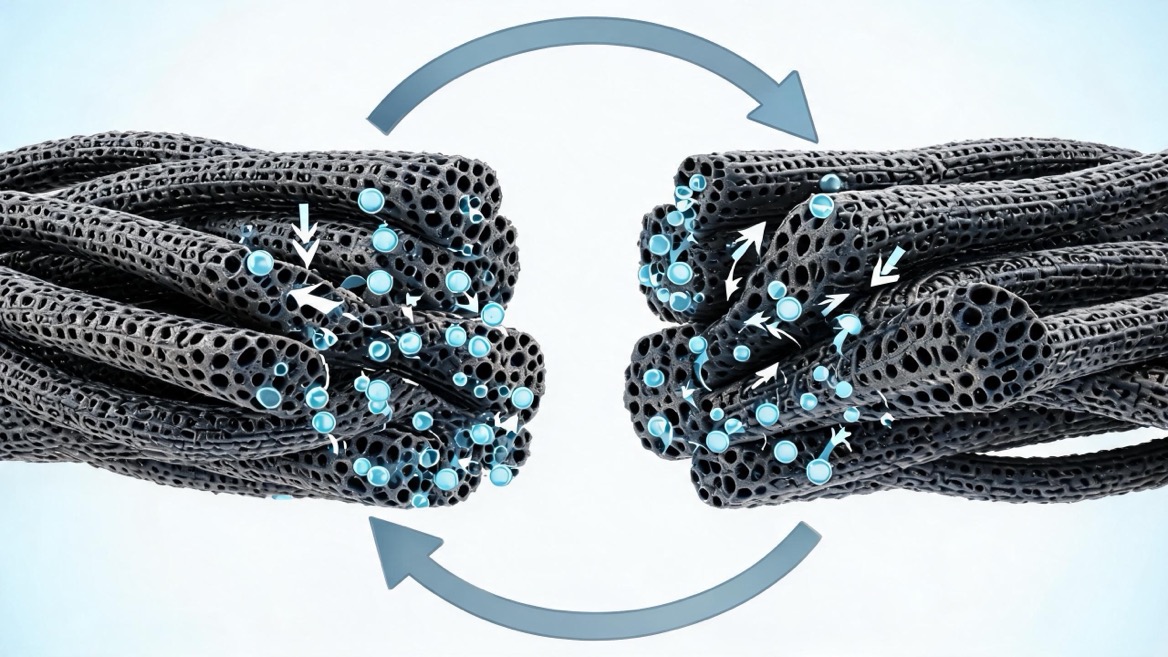
The right activated carbon fiber regeneration method depends on the contaminant and the product construction. The table below compares the most relevant approaches.
| Method | How It Works | Best-Fit Contaminants | Key Advantage | Main Limitation |
|---|---|---|---|---|
| Thermal regeneration | Controlled high-temperature treatment removes or decomposes adsorbates | Persistent organic contaminants, industrial gas and water applications | Deep restoration potential | High heat can reduce fiber strength and cause carbon loss |
| Steam regeneration | Steam strips volatile compounds from the pore structure | Solvents, VOCs, recoverable vapors | Can support solvent recovery | Less effective for heavy or strongly adsorbed compounds |
| Hot inert-gas regeneration | Nitrogen or another inert gas carries desorbed contaminants away | Oxygen-sensitive systems, VOC adsorption | Reduces oxidation risk | Requires gas handling and off-gas treatment |
| Vacuum regeneration | Reduced pressure lowers the desorption temperature | Heat-sensitive ACF systems, volatile contaminants | Lower thermal stress | May not remove strongly bound compounds |
| Solvent or chemical regeneration | A liquid chemical dissolves or displaces contaminants | Specific dyes, phenols, metals, or targeted chemicals | Useful for selected difficult adsorbates | Requires wastewater and chemical-residue management |
| Electrochemical regeneration | Electrical treatment promotes contaminant removal or oxidation | Research-led water-treatment applications | Potentially lower bulk heating demand | Process control and scale-up remain application-specific |
| Microwave regeneration | Rapid internal heating assists desorption or degradation | Selected carbon-based adsorbents | Fast heating potential | Risk of uneven heating and material damage |
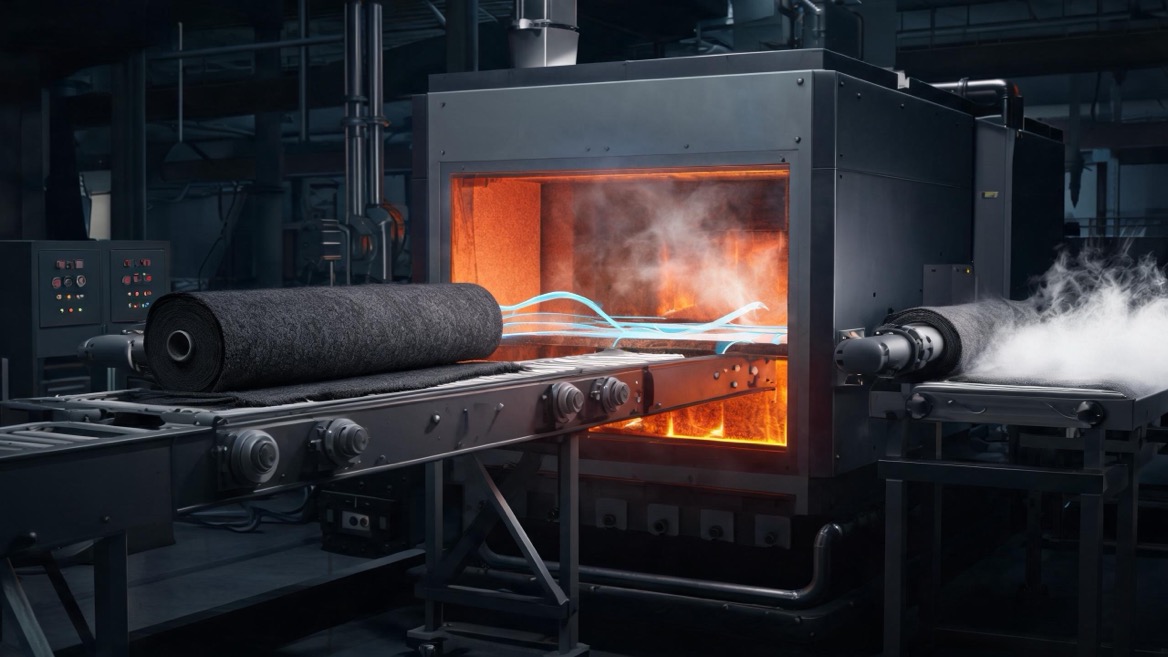
Thermal regeneration remains one of the most established routes for spent activated carbon because it combines drying, volatilization, decomposition, and reactivation under controlled conditions. Published technical guidance describes a staged process involving drying, pyrolysis or volatilization, followed by high-temperature activation.
For ACF, though, temperature alone is not the decision point. The process must also account for oxygen concentration, heating rate, residence time, vapor removal, fiber tension, material thickness, contaminant chemistry, and required post-treatment.
Thermal regeneration can be effective when ACF is used for demanding organic vapor or wastewater applications. But it should be performed in specialized equipment with appropriate containment and off-gas treatment.
A typical industrial thermal sequence includes:
1. Drying to remove retained water and reduce sudden vapor generation.
2. Desorption and volatilization to remove lower-boiling adsorbates.
3. Thermal decomposition of more persistent organic compounds.
4. Controlled reactivation, often using steam or another carefully managed activating atmosphere.
5. Cooling under low-oxygen conditions before exposure to ambient air.
For conventional activated carbon, high-temperature reactivation is often conducted in an oxygen-limited environment, commonly within a broad range of roughly 600–900°C depending on carbon type, contaminant loading, equipment, and process target.
Activated carbon fiber has a fine structure. If regeneration conditions are too severe, the fiber can suffer:
- Pore widening or micropore loss
- Lower adsorption capacity for small molecules
- Fiber embrittlement
- Reduced tensile strength
- Shrinkage or deformation of felt and cloth
- Higher ash concentration after repeated cycles
- Excess carbon burn-off
- Changes in surface functional groups
For this reason, Guangdong Tongke Activated Carbon Co., Ltd. recommends evaluating regenerated ACF through performance testing rather than assuming that a standard furnace recipe will work across all products.
A suitable test plan should compare virgin and regenerated samples for:
- Iodine value or an equivalent adsorption indicator
- Butane working capacity for vapor applications
- Target-contaminant breakthrough time
- BET surface area and pore-size distribution where available
- Ash content
- Moisture content
- Fiber appearance and mechanical integrity
- Weight loss after each regeneration cycle
- Pressure drop in the final filter configuration
For activated carbon fiber used in vapor adsorption, steam regeneration is often attractive when the captured compound is volatile and has commercial recovery value.
Steam passes through the loaded ACF bed or module, heating the adsorbate and helping release it from the carbon surface. The outgoing vapor stream may then be condensed and separated, allowing recovery of certain solvents.
This method can be relevant for applications involving:
- Acetone
- Ethyl acetate
- Alcohol-based solvents
- Aromatic solvents
- Chlorinated solvents, subject to dedicated safety and emissions controls
- Printing, coating, and chemical-processing vapors
The main advantage is that desorbed vapors can potentially be recovered rather than destroyed. Steam regeneration is widely used for solvent-recovery applications because volatile adsorbates can be driven off as vapor and condensed downstream.
Still, steam is not a universal solution. It may be unsuitable where moisture is undesirable, where the product contains moisture-sensitive components, or where high-boiling organic materials remain trapped in the pore network.
Chemical regeneration can be useful when thermal methods are impractical or when a particular contaminant responds well to dissolution, pH adjustment, oxidation, or displacement.
Potential approaches include:
- Acid washing
- Alkali washing
- Organic-solvent extraction
- Oxidative treatment
- Fenton-based oxidation
- pH-swing treatment
- Wet oxidation
Research on spent activated carbon identifies chemical, electrochemical, microwave, biological, and temperature-swing approaches as alternatives or complements to conventional heating.
For ACF, chemical regeneration must be assessed carefully because chemicals can change surface oxygen groups, damage fiber substrates, create wastewater, and leave residues that affect the next adsorption cycle. It is usually most appropriate when the process is designed for a specific contaminant, rather than as a general-purpose recovery method.
There is no universal number of regeneration cycles for activated carbon fiber. ACF service life is determined by its actual application conditions.
The number of feasible cycles may be limited by:
- Contaminant type and concentration
- Regeneration temperature and duration
- Carbon burn-off
- Fiber grade and precursor material
- Presence of oxygen during heating
- Water, oil, dust, and particulate pretreatment
- Physical compression or vibration
- Chemical exposure
- Required final purification standard
A filter used for nuisance odor control may tolerate some decline in capacity. A pharmaceutical, food and beverage, semiconductor, or high-purity chemical process may have far tighter performance requirements.
Regenerate activated carbon fiber when all of the following are true:
- The spent ACF contains a known and manageable contaminant.
- The regeneration process is technically compatible with the ACF form.
- Recovered adsorption capacity meets the required operating target.
- Mechanical condition remains acceptable.
- Off-gas, wastewater, and safety controls are in place.
- Regeneration costs are lower than replacement and disposal costs.
- The regenerated material passes quality-control testing before reuse.
Replace or dispose of the material when regeneration causes unacceptable capacity loss, fiber damage, contamination carryover, or regulatory risk.
| Decision Factor | Regenerate Activated Carbon Fiber | Replace with New ACF |
|---|---|---|
| Upfront material cost | Often lower over multiple cycles | Higher recurring purchase cost |
| Process equipment | Requires regeneration and emissions-control capability | Requires no on-site regeneration equipment |
| Quality consistency | Must be verified batch by batch | Generally more predictable |
| Environmental handling | Reduces spent-carbon disposal volume | May increase disposal requirements |
| Best application | Defined, repeatable contaminant streams | Unknown, mixed, toxic, or difficult loadings |
| Mechanical condition | Suitable only if fibers remain intact | Best when old ACF is brittle, torn, or distorted |
| Purity-sensitive applications | Requires rigorous validation | Often the lower-risk option |
The lowest-cost choice is not always the best lifecycle choice. For example, a solvent-recovery system with a repeatable vapor stream may justify a carefully designed regeneration process. By contrast, ACF exposed to complex industrial wastewater containing oil, salts, metals, and surfactants may be more reliably replaced after exhaustion.
Before committing to full-scale regeneration, use a controlled evaluation workflow.
1. Identify the adsorbate. Analyze the chemicals captured by the activated carbon fiber, including potential mixtures and by-products.
2. Inspect the spent ACF. Check for dust, oil fouling, physical damage, clogging, shrinkage, or loss of flexibility.
3. Choose a small-scale method. Evaluate steam, hot inert gas, vacuum, thermal, or chemical treatment based on contaminant behavior.
4. Measure recovery. Test regenerated ACF against virgin material using the actual target gas, liquid, or vapor whenever possible.
5. Evaluate safety and emissions. Design controls for desorbed VOCs, hazardous decomposition products, condensate, wastewater, and fire risk.
6. Set acceptance criteria. Define minimum adsorption performance, maximum ash level, allowable mass loss, and required mechanical quality.
7. Track every cycle. Record loading conditions, regeneration parameters, recovery results, and observed material changes.
The most useful indicator is not only laboratory surface area. In real production, breakthrough time against the target contaminant is often the performance measure that matters most.
When sourcing activated carbon fiber for a reusable adsorption system, buyers should discuss regeneration requirements before selecting the material. Product selection should consider both first-cycle adsorption performance and lifecycle behavior.
Provide your supplier with:
- Target contaminant and concentration range
- Operating temperature and humidity
- Airflow or liquid flow rate
- Required removal efficiency
- Expected operating cycle time
- Planned regeneration method
- Filter format and available installation space
- Safety requirements and applicable discharge limits
- Whether solvent recovery is required
At Guangdong Tongke Activated Carbon Co., Ltd., we help industrial customers evaluate activated carbon fiber and other activated carbon products for water treatment, air and gas purification, food and beverage processing, chemical production, pharmaceutical applications, and customized export projects.
Contact our technical team to discuss your contaminant profile, operating conditions, and regeneration target. We can help you select a suitable activated carbon fiber grade, adsorption format, and performance-testing approach for a more reliable long-term purification system.
It is not recommended. Regeneration can release concentrated VOCs, toxic vapors, flammable gases, or hazardous decomposition products. Effective regeneration also requires controlled temperature, atmosphere, vapor handling, and post-treatment testing.
It can be suitable for ACF loaded with volatile organic compounds or recoverable solvents. The method should be validated to ensure that moisture, heat, and flow conditions do not damage the fiber or reduce required adsorption performance.
Usually not exactly. A well-controlled process may restore useful adsorption capacity, but some loss of capacity, pore changes, carbon burn-off, or mechanical deterioration can occur after repeated cycles.
Yes. ACF can be used for solvent-vapor adsorption, and steam or inert-gas desorption may support downstream solvent recovery when the solvent, process design, and safety system are compatible.
The biggest risk is using a process that removes contaminants but damages the adsorbent. Excessive temperature, oxygen exposure, prolonged treatment, or poor vapor removal can reduce adsorption capacity and weaken the fiber.
Avoid regeneration when the contaminant is unknown, hazardous handling is not available, the ACF is physically damaged, mixed pollutants create high cross-contamination risk, or testing shows that recovered capacity no longer meets process requirements.
Neither is universally better. Thermal regeneration is often preferred for heavily loaded organic contaminants and large industrial systems, while chemical regeneration can be useful for specific contaminants that respond to solvents, acids, alkalis, or oxidation. The correct choice depends on the contaminant and ACF compatibility.
1. [U.S. Environmental Protection Agency: Thermal Regeneration of Activated Carbon]
2. [Santos et al.: Regeneration of Dye-Saturated Activated Carbon Through Sustainable Approaches]
3. [Sustainability: Thermal Regeneration of Activated Carbon Used as an Adsorbent]
4. [FEECO: A Look at Activated Carbon Thermal Regeneration]
5. [Carbotecnia: Activated Carbon Reactivation]
7. [Chemviron: PFAS Removal and Treatment With Thermal Reactivation]


