
Language
Views: 261 Author: Tongke Activated Carbon Publish Time: 2026-08-30 Origin: Site


Content Menu
● Why Activated Carbon Fiber Matters in Protective Equipment
● Activated Carbon Fiber vs. Granular Activated Carbon
● How Activated Carbon Fiber Captures Hazardous Vapors
● Activated Carbon Fiber for Military Respirators
>> Design Priorities for ACF Respiratory Systems
● Activated Carbon Fiber for Protective Clothing
>> ACF Cloth vs. ACF Felt for Wearable Protection
● When Impregnated Activated Carbon Is Necessary
● A Practical Material Selection Framework
>> Step 1: Define the actual exposure scenario
>> Step 2: Choose the correct activated carbon format
>> Step 3: Confirm the critical specifications
>> Step 4: Test the complete protective assembly
● Important Safety and Performance Limits
● Partner With Guangdong Tongke for Custom ACF Solutions
● FAQ
>> 1. What is activated carbon fiber used for in military protective equipment?
>> 2. Is activated carbon fiber better than granular activated carbon?
>> 3. Can activated carbon fiber protect against chemical warfare agents?
>> 4. How does humidity affect activated carbon fiber performance?
>> 5. What is breakthrough time in activated carbon fiber filters?
>> 6. Can ACF be sewn into protective garments?
>> 7. Which ACF specification is most important for respirators?
>> 8. Can Guangdong Tongke provide customized activated carbon fiber?
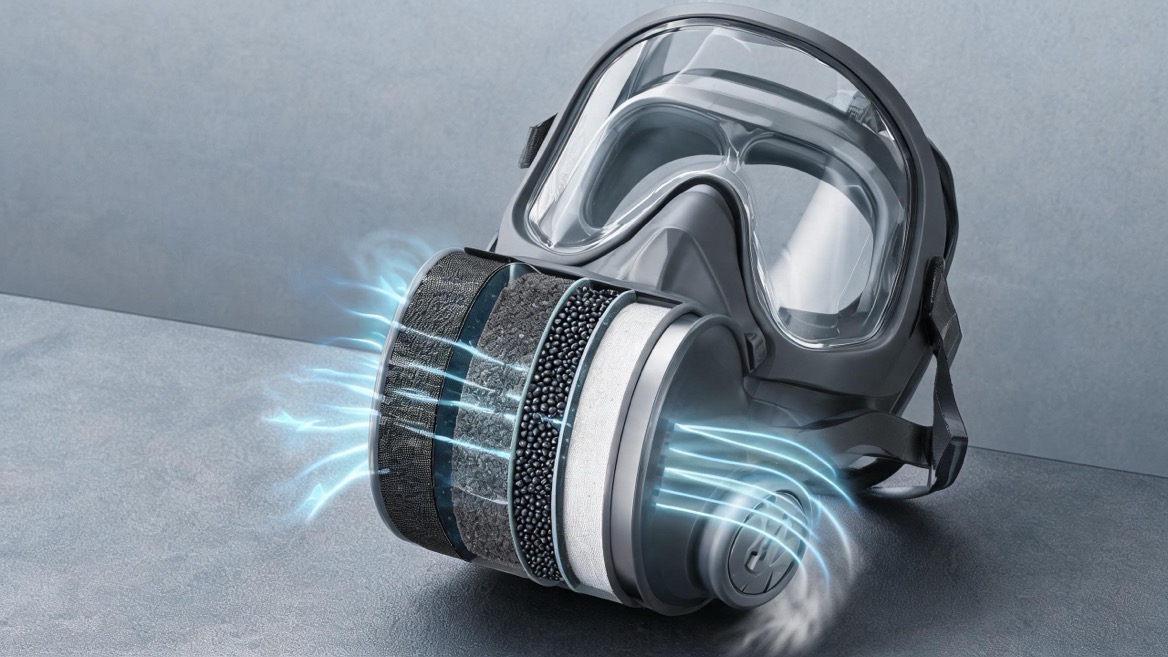
Activated carbon fiber (ACF) is increasingly evaluated for military and protective equipment because it can combine rapid vapor adsorption, lightweight construction, and flexible textile integration. Compared with conventional activated carbon products, ACF offers important design advantages for respirators, protective garments, filtration inserts, and portable protective systems—yet the right material format depends on the threat profile, operating duration, airflow, and certification requirements.
For Guangdong Tongke Activated Carbon Co., Ltd., the priority is not simply supplying activated carbon. It is helping protective-equipment manufacturers select and engineer the appropriate adsorbent format for demanding applications involving hazardous gases, volatile organic compounds (VOCs), chemical vapors, industrial emissions, and specialized protective environments.
Military and personal protective equipment must do more than capture contaminants. It must remain wearable, breathable, durable, and consistent under real operating conditions.
Traditional activated carbon granules remain widely used in filter cartridges and canisters. However, granular media generally require a rigid container, screens, sealing components, and a defined bed depth. This can add bulk and weight to masks, helmets, portable filtration units, and other protective systems.
Activated carbon fiber, by contrast, is produced in a fibrous form. It can be supplied as activated carbon cloth, activated carbon felt, nonwoven sheets, or engineered composites. This textile-compatible structure creates new possibilities for thinner and more ergonomic protective designs.
The most relevant advantages include:
- Fast adsorption kinetics due to directly accessible micropores
- High specific surface area for capturing vapor-phase contaminants
- Flexible material integration into masks, liners, garments, and layered filters
- Reduced dependence on heavy granular carbon beds
- Potentially lower profile designs for short-duration protection
- Customizable formats, including felt, woven cloth, cut sheets, rolls, and laminated composites
In protective applications, however, adsorption performance cannot be evaluated by surface area alone. A material with very high surface area may show strong capacity but create excessive airflow resistance. A lighter material may improve comfort but provide a shorter breakthrough time. Product development therefore requires a balanced evaluation of adsorption capacity, breakthrough behavior, pressure drop, mechanical handling, humidity response, and final-equipment compliance.
Both activated carbon fiber and granular activated carbon remove contaminants primarily through adsorption. Their physical formats, pore accessibility, integration options, and engineering limitations differ substantially.
| Performance Factor | Activated Carbon Fiber (ACF) | Granular Activated Carbon (GAC) |
|---|---|---|
| Physical form | Fiber, cloth, felt, fabric, nonwoven sheet | Granules, pellets, crushed particles |
| Equipment integration | Can be layered, sewn, laminated, or placed in thin filter structures | Normally packed into cartridges, canisters, or fixed beds |
| Adsorption kinetics | Often rapid because micropores are accessible from the fiber surface | May be slower because molecules travel through a more complex pore network |
| Weight and profile | Suitable for lightweight and thinner assemblies | Usually needs a deeper and more rigid carbon bed |
| Airflow resistance | Depends strongly on density, thickness, and layer count | Depends on particle size, bed depth, packing density, and flow rate |
| Mechanical containment | May require support layers to prevent fiber shedding | Requires screens, seals, and robust cartridge housings |
| Best-fit applications | Lightweight facepieces, protective textiles, odor/VOC control layers, hybrid media | Long-duration cartridges, large canisters, collective protection systems |
| Customization potential | High for shape, basis weight, thickness, and multilayer construction | High for pore structure and impregnation, but limited in textile integration |
The practical conclusion is not that ACF replaces granular activated carbon in every military filtration design. Instead, ACF and granular activated carbon can serve different roles in a layered protective system.
For example, a compact respirator may use ACF as a fast-responding front layer for selected organic vapors, while granular or impregnated activated carbon serves as the primary adsorbent bed for extended service life and chemically reactive contaminants. Protective clothing may use activated carbon cloth or felt in breathable zones, while heavier media are reserved for specialized filter modules.
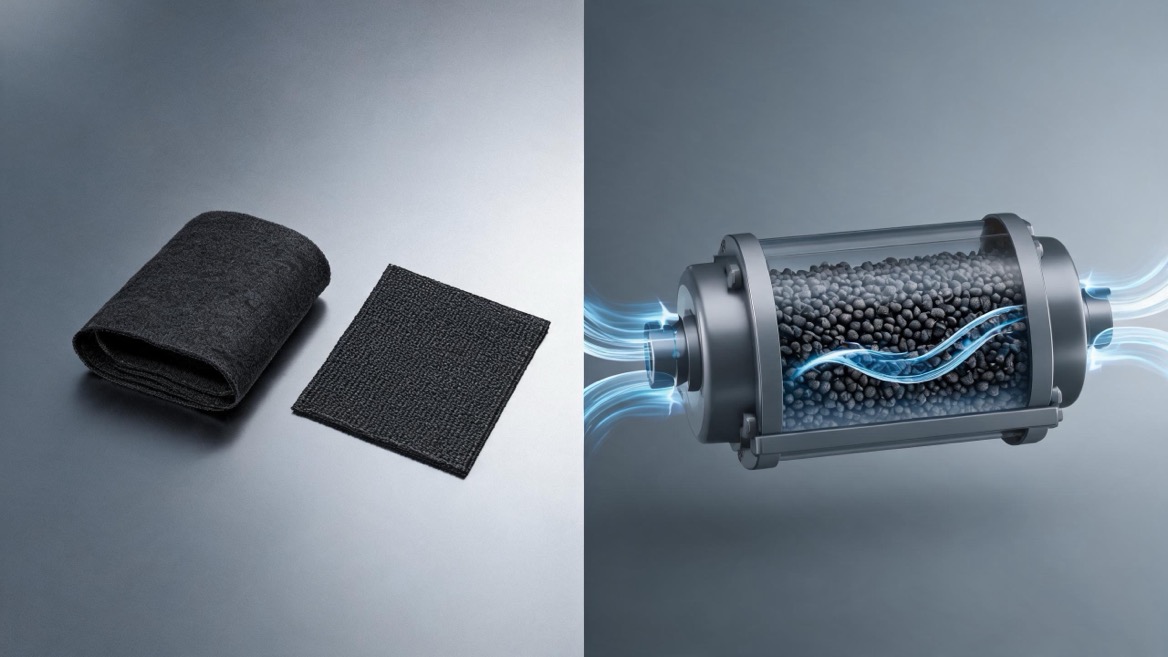
Activated carbon fiber contains an extensive network of very small pores, particularly micropores. These pores create a large internal surface where gas- and vapor-phase molecules can be retained.
The main mechanism is physical adsorption. Molecular attraction draws contaminants into the carbon pore structure, where they are held on the internal surface. This mechanism is particularly useful for many organic vapors.
Key variables that influence performance include:
- Contaminant type: Molecular size, volatility, polarity, and chemical reactivity all matter.
- Contaminant concentration: Higher concentrations typically shorten breakthrough time.
- Relative humidity: Water vapor can compete for available adsorption sites.
- Airflow rate: Faster airflow reduces contact time between contaminants and the carbon.
- ACF density and thickness: Greater media mass can extend protection time but may increase breathing resistance.
- Specific surface area and microporosity: These influence adsorption capacity, especially for low-concentration vapor exposure.
- Media configuration: Felt, cloth, hybrid layers, and composite structures perform differently.
Laboratory research illustrates the importance of these variables. In one study of ACF cartridge configurations challenged with toluene, denser activated carbon felt materials showed longer breakthrough times, while higher-surface-area ACF materials showed higher adsorption capacities. The tested materials had specific surface areas of approximately 1,204–2,028 m²/g, with predominantly microporous structures. The result is highly relevant for product designers: surface area supports capacity, while density and media mass can strongly affect service life.
Respiratory protection is one of the most technically demanding ACF applications. A respirator must capture contaminants without imposing unsafe breathing resistance, and the complete assembly—not only the carbon media—must meet applicable performance requirements.
ACF is attractive for military and tactical respirator development because its fabric form can support thinner and lighter designs. Research has found that ACF may offer potential for lighter facepiece respirators used for short-term vapor protection, especially where low-level VOC exposure is a concern.
In a controlled study, three layers of ACF with a nominal surface area of 2,000 m²/g achieved a 10% breakthrough time of 34 minutes against 200 ppm toluene, with an adsorption capacity of 380.59 mg/g. The same research showed that performance varied substantially by chemical challenge, confirming that carbon selection must be based on the specific target gas or vapor rather than general assumptions.
When specifying activated carbon fiber for respirators, buyers and engineering teams should evaluate:
1. Target chemical challenge
Define the expected organic vapors, acid gases, ammonia, formaldehyde, sulfur compounds, or other contaminants.
2. Required protection duration
Distinguish between emergency escape, short tactical operations, intermittent industrial tasks, and extended-duration deployment.
3. Media configuration
Compare activated carbon cloth, activated carbon felt, multilayer ACF structures, and hybrid ACF-plus-granular-carbon systems.
4. Breathing resistance
Test the final assembly at representative flow rates. More carbon is not automatically better if airflow becomes unacceptable.
5. Humidity and temperature conditions
Laboratory performance in controlled air may differ from performance in hot, humid, or variable environments.
6. Sealing and particulate control
ACF layers should be supported by appropriate nonwoven, mesh, or filtration layers to maintain physical integrity.
7. Compliance pathway
Material performance data cannot replace certification of the finished respirator or protective device.
A 2021 cartridge study reported that dense ACF felt types achieved approximately 250–270 minutes to a 5 ppm toluene breakthrough under pooled test conditions, while the highest-surface-area ACF felt types reached roughly 450–470 mg/g adsorption capacity. The study also found that raising carbon bed depth can compromise breathability, reinforcing the need for balanced engineering rather than simple material loading increases.
Protective clothing requires a different approach from respirator cartridges. The material must maintain flexibility, garment drape, mobility, thermal comfort, laundering compatibility where relevant, and resistance to abrasion.
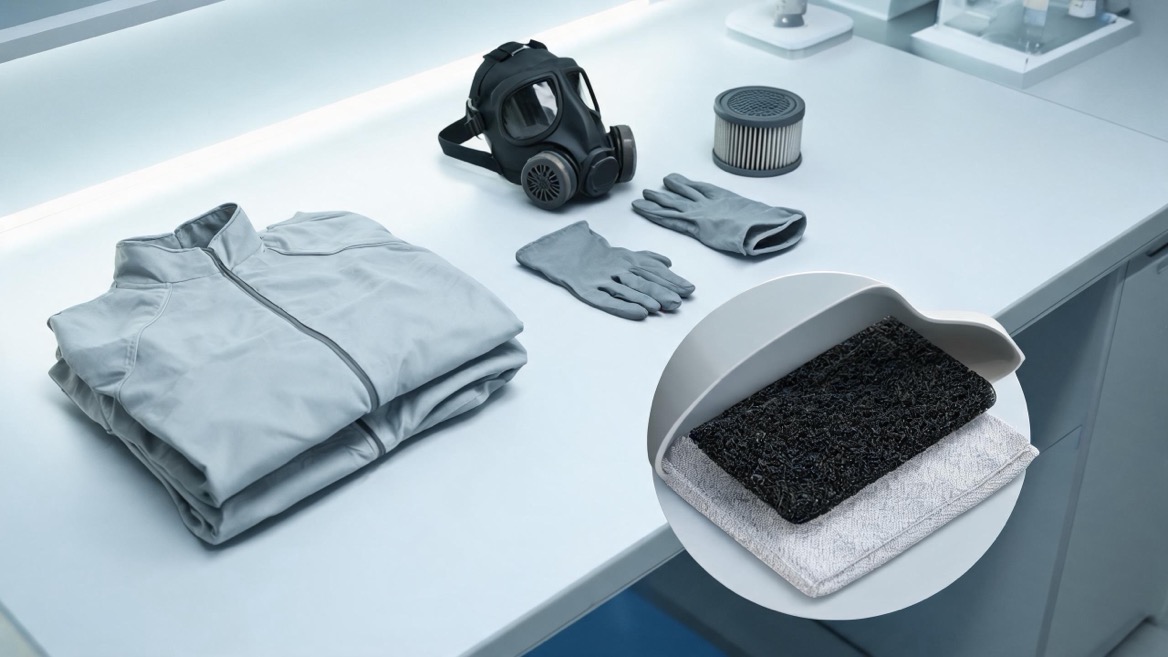
Activated carbon fiber fabric can be incorporated into protective suits, gloves, hoods, boot covers, equipment liners, and removable contamination-control panels. It may capture certain airborne vapors and reduce localized exposure, but it should not be described as universal protection against all chemical, biological, radiological, or nuclear threats.
For clothing systems, ACF is often best considered one functional layer in a multilayer construction:
- Outer shell for abrasion resistance and liquid repellency
- Barrier membrane or film where liquid penetration resistance is needed
- Activated carbon fiber layer for vapor adsorption
- Inner comfort liner for wearer comfort and moisture management
| Selection Factor | Activated Carbon Cloth | Activated Carbon Felt |
|---|---|---|
| Structure | Woven and relatively dense | Nonwoven and more open |
| Handling | Good dimensional stability and cut-edge control | Soft, conformable, easily layered |
| Adsorption potential | Can provide high mass per unit area | Can provide a favorable balance of permeability and media loading |
| Air permeability | May be lower when tightly woven | Often easier to engineer for airflow |
| Suitable uses | Inserts, panels, mask layers, structured garments | Liners, multilayer composites, flexible protective assemblies |
| Main design concern | Excessive density may increase pressure drop | Requires proper encapsulation and mechanical support |
For respirator-type applications, research has shown that fully dense activated carbon cloth may create higher pressure resistance than acceptable limits, while felt or cloth-felt combinations can offer more practical permeability. For garments, the same principle applies: adsorption efficiency must be weighed against comfort, air movement, flexibility, and system construction.
Physical adsorption alone may be insufficient for certain contaminants. Some gases are not strongly retained by untreated carbon under relevant conditions. In these cases, activated carbon can be chemically modified with selected impregnating agents.
Impregnated activated carbon can support both:
- Physical adsorption, where molecules are retained in pores
- Chemical interaction, where targeted contaminants react with impregnated active sites
This approach is especially important when a protective system must address a wider gas spectrum than typical organic vapor adsorption. Activated-carbon suppliers and equipment manufacturers should define the contaminant list before selecting impregnation chemistry.
For military and civil-defense applications, the material must be matched to the required performance specification and final-device validation protocol. A carbon sample that performs well against toluene cannot automatically be assumed to provide equivalent performance against other toxic industrial chemicals or chemical warfare agents.
The most effective purchasing process starts with application data, not a generic request for "high iodine value carbon" or "high surface area ACF."
Collect the following information:
- Target gases, vapors, or chemical mixtures
- Expected concentration range
- Temperature and relative humidity
- Airflow rate or wearer breathing rate
- Required protection duration
- Whether the application is a respirator, garment, fixed filter, or mobile unit
- Weight and thickness restrictions
- Required national, military, or customer-specific test criteria
Use activated carbon fiber when flexibility, rapid adsorption, low-profile construction, and textile compatibility are key requirements.
Use granular activated carbon when the priority is high carbon mass, long contact time, deep-bed filtration, and cartridge or canister installation.
Use a hybrid configuration when both rapid initial capture and extended capacity are required.
For ACF materials, relevant specifications may include:
- Specific surface area
- Micropore distribution
- Basis weight
- Thickness
- Density
- Tensile strength
- Ash content
- Moisture content
- Adsorption capacity for target contaminants
- Breakthrough time under defined conditions
- Air permeability or pressure drop
- Fiber shedding control
- Roll width, sheet size, and converting requirements
Material-level testing is essential, but final-device testing is decisive. The assembled product should be evaluated for:
- Contaminant breakthrough
- Inhalation and exhalation resistance
- Leakage and fit, where applicable
- Environmental aging
- Mechanical durability
- Storage stability
- Compatibility between ACF, adhesives, films, filters, and housings
Activated carbon fiber can be a highly capable adsorbent, but it is not a universal solution. Responsible protective-equipment design requires clear use limitations.
- No carbon medium captures every contaminant.
- Breakthrough time changes with concentration, humidity, airflow, and temperature.
- Particulate filtration and vapor adsorption are different functions. ACF may need to be paired with a particle-filter layer.
- Oxygen-deficient or immediately dangerous environments require the appropriate respiratory technology.
- Finished-product approval is mandatory where regulated protective equipment is involved.
- Do not mix components from different approved respiratory assemblies unless permitted under the relevant emergency or regulatory conditions.
For chemical, biological, radiological, and nuclear applications, equipment must be selected and used according to the exact approved configuration and manufacturer instructions. Authorities note that respirators with relevant protective approvals have specific service-life limits, storage requirements, and use restrictions; for example, air-purifying CBRN respirators must not be used in oxygen-deficient atmospheres.
Guangdong Tongke Activated Carbon Co., Ltd. supplies activated carbon fiber and other activated carbon products for international industrial applications. For manufacturers of military protective equipment, respirators, tactical gear, emergency-response products, and industrial PPE, we support material selection based on your actual contaminant challenge and product design requirements.
Our team can help evaluate:
- Activated carbon fiber cloth and felt options
- Custom roll widths, sheet formats, and converted pieces
- ACF density and thickness targets
- Granular activated carbon and impregnated carbon alternatives
- Hybrid adsorption-layer concepts
- Material samples for prototype development
- Export packaging and stable international supply
Contact Guangdong Tongke Activated Carbon Co., Ltd. today to discuss your protective-equipment project and request an activated carbon fiber material recommendation tailored to your filtration, weight, and durability requirements.
Activated carbon fiber can be used in respirator components, protective clothing layers, tactical masks, chemical-vapor adsorption panels, emergency escape products, and portable air-filtration systems. Its fiber form can support lightweight and flexible designs.
Neither material is universally better. ACF is often better for thin, flexible, and fast-adsorbing structures. Granular activated carbon is often more suitable for deep-bed canisters and longer-duration filtration. Many advanced systems use both materials in complementary layers.
ACF may be part of a properly engineered protective system, but the material alone should never be presented as certified protection against chemical warfare agents. The complete respirator, garment, or filtration unit must be tested and approved for the intended hazard and use conditions.
High humidity can reduce available adsorption sites because water vapor competes with target contaminants. Testing should therefore reflect the expected operating temperature and relative humidity.
Breakthrough time is the time it takes for a defined concentration of contaminant to appear downstream of the adsorbent. It depends on the contaminant, concentration, airflow, humidity, carbon mass, pore structure, and filter configuration.
Yes. Activated carbon cloth and felt can be integrated into garment panels, liners, and multilayer composites. The finished design must consider seam construction, fiber containment, flexibility, liquid barrier requirements, and wearer comfort.
There is no single decisive specification. Specific surface area, density, thickness, basis weight, pore distribution, adsorption capacity, breakthrough time, and pressure drop should be evaluated together against the intended chemical challenge.
Yes. Guangdong Tongke can discuss customized ACF format, thickness, density, roll size, sheet conversion, and complementary activated carbon products based on the customer's protective-equipment design and testing requirements.
4. [PubMed — Adsorption Characteristics of Activated Carbon Fibers for Toluene]
5. [Calgon Carbon — Personal Protection Equipment and Activated Carbon Solutions]


