Content Menu
● What Makes Activated Carbon Fiber Different?
>> Activated Carbon Fiber vs. Conventional Activated Carbon
● Activated Carbon Fiber for Advanced Water Treatment
>> Rapid Polishing of Industrial Wastewater
>> Trace Organic Contaminant Control
● Food and Beverage Process Purification
>> Where ACF Can Add Value
>> Important Quality Considerations
● Pharmaceutical and Fine-Chemical Processing
>> Purification Applications Beyond Vent Treatment
>> Do Not Treat Carbon as a Generic Commodity
● Chemical Manufacturing and Solvent Management
>> High-Value Chemical Applications
>> Practical Example: Deciding Between ACF and GAC
● Selecting the Right Activated Carbon Solution
>> A Five-Step Selection Process
>> Performance Metrics That Matter
● Working With a Custom Carbon Manufacturer
● Frequently Asked Questions
>> Is activated carbon fiber suitable for water treatment?
>> How does activated carbon fiber differ from granular activated carbon?
>> Can activated carbon fiber remove color from industrial liquids?
>> Is ACF appropriate for food, beverage, or pharmaceutical production?
>> Can activated carbon fiber replace powdered activated carbon?
>> What information should I provide for a carbon-selection recommendation?
● References
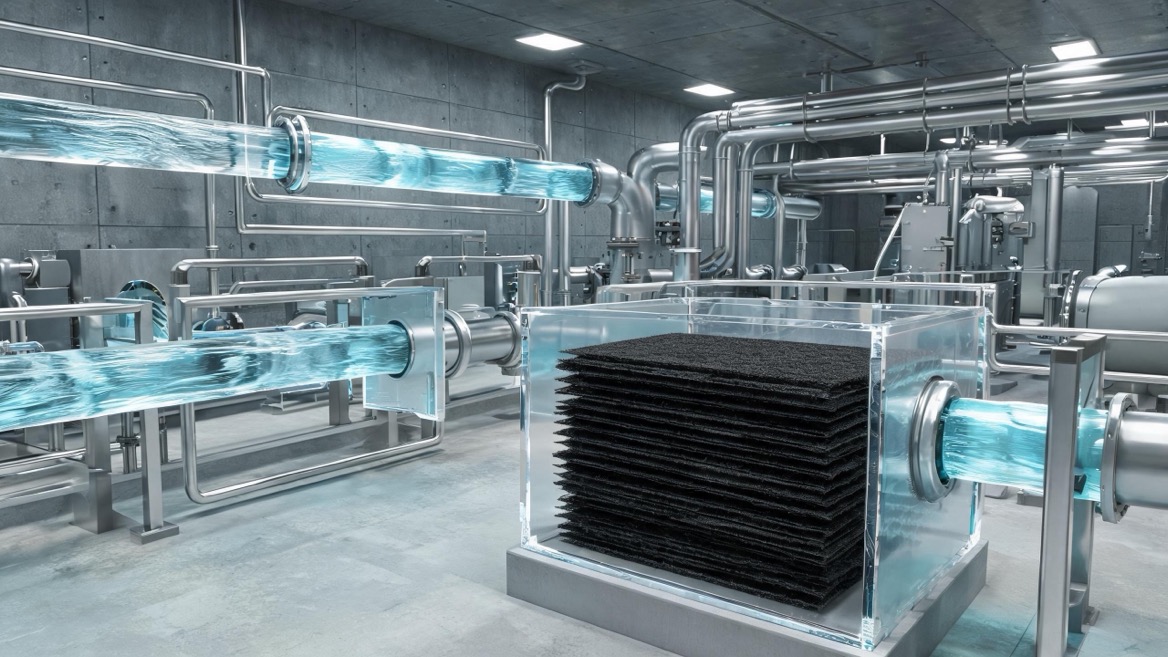
Activated carbon fiber (ACF) is widely recognized for fast vapor adsorption in air-treatment systems, but its industrial value extends far beyond air purification. For manufacturers managing liquid contaminants, trace organics, color bodies, solvent residues, and highly variable process streams, activated carbon fiber provides a high-performance adsorption platform with rapid mass transfer, a highly accessible pore structure, and flexible product formats.
At Guangdong Tongke Activated Carbon Co., Ltd., we work with industrial customers that need more than a standard carbon grade. The right solution depends on the contaminant, flow conditions, required effluent quality, contact time, regeneration strategy, and regulatory expectations. In many cases, ACF can complement granular activated carbon (GAC), powdered activated carbon (PAC), or specialty activated-carbon products rather than replace them outright.
What Makes Activated Carbon Fiber Different?
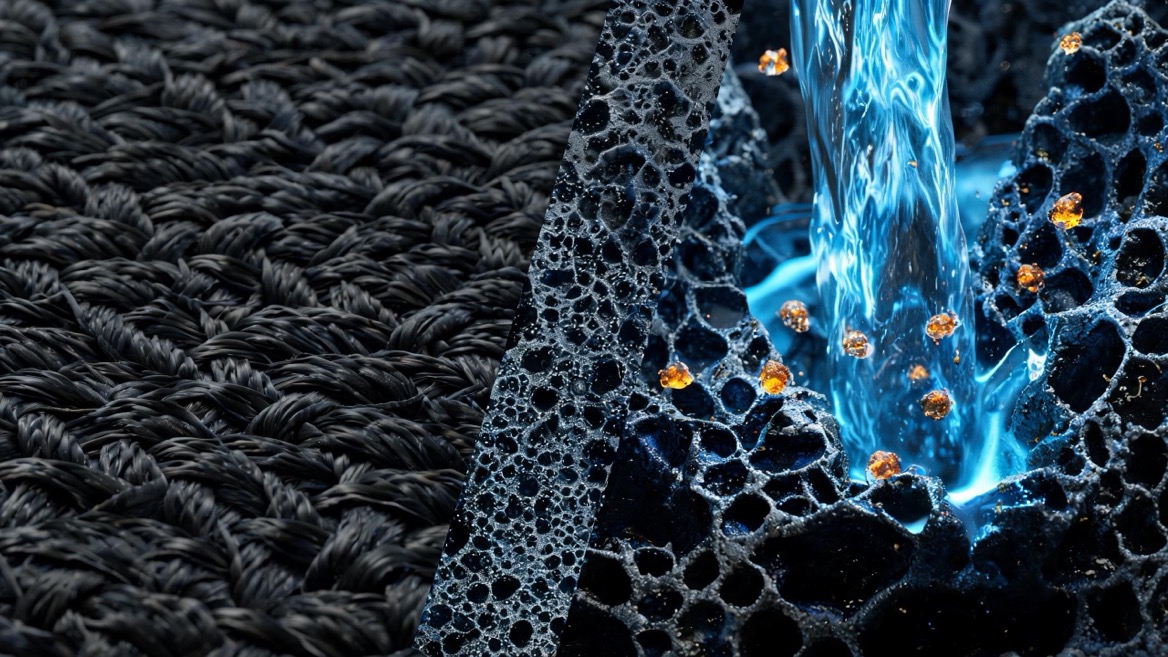
Activated carbon fiber is a porous carbon adsorbent produced in fiber form and activated to develop a large internal surface area and a network of adsorption pores. Unlike conventional granular media, ACF typically presents a greater proportion of its adsorption sites close to the external fiber surface.
This structural difference can produce faster adsorption kinetics, especially when the target compounds must be captured within a short contact time. Research evaluating ACF for vapor adsorption highlights its high specific surface area, high adsorption capacity, and rapid adsorption behavior.
Activated Carbon Fiber vs. Conventional Activated Carbon
| Factor | Activated Carbon Fiber | Granular Activated Carbon | Powdered Activated Carbon |
| Physical form | Felt, cloth, paper, yarn, or customized fiber structure | Granules or pellets | Fine powder |
| Adsorption speed | Often very fast due to accessible pore structure | Moderate; depends on particle size and diffusion | Fast when well dispersed |
| Typical handling | Can be built into cartridges, modules, sheets, and layered media | Commonly used in fixed-bed columns | Usually dosed into a treatment process |
| Separation after use | Simple when used as a fabric or cartridge | Straightforward in fixed beds | Requires downstream solid-liquid separation |
| Pressure-drop design | Can support thin, high-surface-area structures | Depends on bed depth and particle size | Not generally used as a standalone packed filter |
| Best-fit scenarios | Polishing, compact equipment, short contact time, specialty capture | Continuous bulk treatment and large-volume systems | Batch treatment, decolorization, intermittent polishing |
The key distinction is not that one format is universally superior. It is that each format solves a different process problem. GAC remains a practical choice for many high-flow, fixed-bed systems. PAC is widely used for batch clarification and decolorization. ACF becomes especially compelling where speed, compact design, clean handling, or precise placement of the adsorbent matters.
Activated Carbon Fiber for Advanced Water Treatment
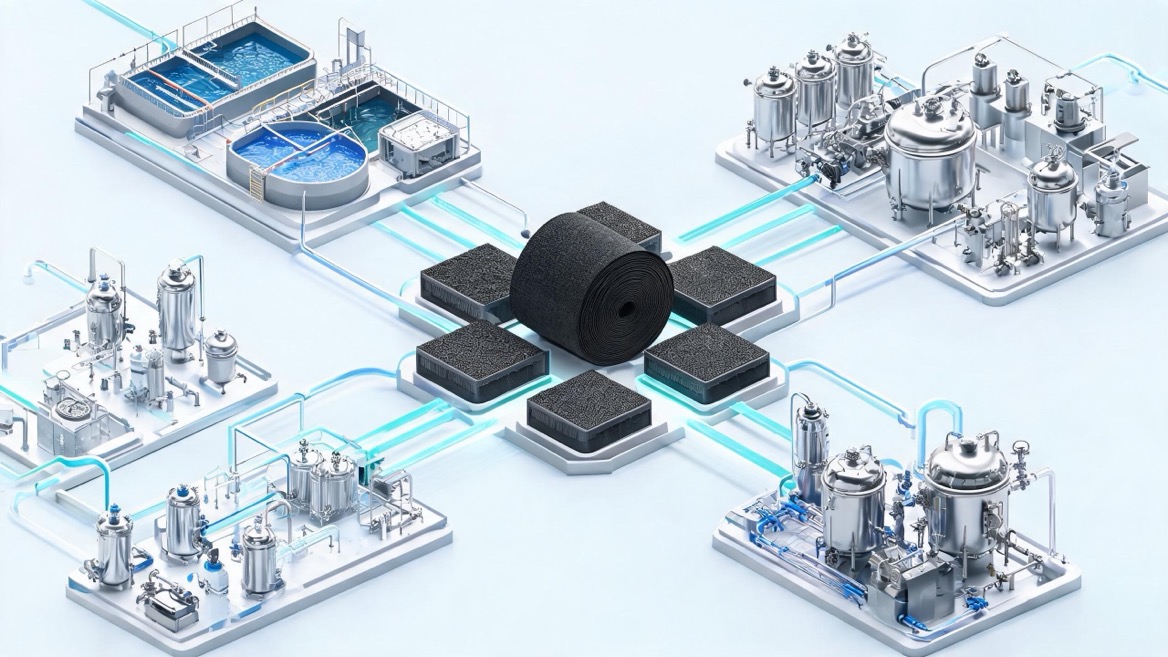
Water and wastewater treatment is one of the most important industrial applications of activated carbon fiber beyond air purification. Conventional activated carbon is already widely used to reduce color, odor, taste compounds, chlorine-related contaminants, and many dissolved organics. It can also help address dyes, pharmaceuticals and personal-care compounds, heavy metals, and other organic pollutants, depending on carbon chemistry and treatment conditions.
Rapid Polishing of Industrial Wastewater
Many industrial treatment systems achieve acceptable primary treatment but still struggle with residual dissolved organics, odor, color, or trace contaminants before discharge, reuse, or membrane polishing. ACF can serve as a high-speed polishing medium at this stage.
Potential applications include:
- Textile and dyeing wastewater polishing
- Chemical-process wastewater treatment
- Electronics and surface-treatment wastewater polishing
- Reclaimed-water treatment for industrial reuse
- Emergency treatment of unexpected organic contamination
- Final-stage treatment before reverse osmosis or other sensitive downstream equipment
In practical engineering terms, ACF is most valuable when a facility cannot simply add a larger carbon bed. A compact fiber-based module may provide a more accessible adsorption surface in a restricted footprint. However, the actual performance must be validated through water testing because pH, competing organics, suspended solids, temperature, and flow rate can strongly affect adsorption results.
Trace Organic Contaminant Control
Industrial and municipal water streams can contain low-concentration organic contaminants that are difficult to remove through settling, conventional biological treatment, or simple filtration. These may include residual dyes, phenolic compounds, pesticides, pharmaceutical residues, and certain endocrine-active compounds.
Activated-carbon media work by adsorption: molecules transfer from water to the carbon surface and become retained in its pore structure. The result depends on molecular size, polarity, solubility, carbon pore distribution, and the presence of competing compounds.
For this reason, a responsible carbon-selection program should never focus on only one laboratory number. Iodine value, methylene blue value, ash content, surface area, pore-size distribution, pH, hardness, particle retention, and adsorption testing all matter.
Food and Beverage Process Purification
In food and beverage manufacturing, activated carbon is used to remove compounds that negatively affect color, odor, and taste. Its porous internal structure allows organic compounds in liquids to be adsorbed, supporting product consistency and process-water quality.
Although PAC and GAC remain common choices for large-volume food applications, activated carbon fiber can offer useful advantages for specific processing and polishing tasks.
Where ACF Can Add Value
- Fine polishing of process water before sensitive production steps
- Removal of odor-active organic compounds from selected streams
- Compact treatment modules for beverage-water finishing
- Product-contact-adjacent filtration designs, subject to applicable compliance requirements
- Small-batch or high-value liquid purification where media handling needs to remain clean and controlled
- Pretreatment before membrane systems used in beverage, ingredient, or water production
For example, a beverage producer may use activated carbon to reduce chlorine or chloramine from incoming water, helping avoid unwanted flavor effects and protecting downstream treatment equipment. Activated-carbon media are also used in food and beverage operations for decolorization, deodorization, and removal of undesirable organic compounds.
Important Quality Considerations
Food and beverage applications require more than good adsorption capacity. Buyers should assess:
1. Raw-material suitability for the intended application
2. Low dust and low fines, particularly in cartridge or fabric-module designs
3. Ash and extractable content appropriate for the process
4. Clean manufacturing controls and lot traceability
5. Migration, rinse, and compatibility testing when the carbon contacts process liquids
6. Independent verification against the customer's destination-market requirements
A carbon product should be selected for the actual process, not simply described as "food grade" without supporting specifications and documentation.
Pharmaceutical and Fine-Chemical Processing
Pharmaceutical and fine-chemical manufacturers often manage process streams in which purity, reproducibility, and contamination control are central concerns. Activated carbon is commonly used to remove colored impurities, residual solvents, organic contaminants, pyrogens, and unwanted compounds from intermediates and process water.
Purification Applications Beyond Vent Treatment
Activated carbon fiber may be considered for selected pharmaceutical and chemical applications such as:
- Polishing process water before downstream purification
- Removing trace color or odor compounds from intermediate streams
- Capturing residual organic impurities in specialty chemical production
- Treating low-flow, high-value streams where clean media containment is important
- Recovering or reducing selected solvent vapors and liquid-phase organics
- Protecting membranes, ion-exchange resins, and catalyst systems from organic fouling
The primary advantage is process control. ACF can be fabricated into structured media, allowing engineers to build compact filtration or adsorption modules with a defined flow path. This can reduce loose-media handling compared with powdered carbon and may simplify replacement in certain applications.
Do Not Treat Carbon as a Generic Commodity
In regulated production, carbon selection must be linked to risk management. The supplier should be able to discuss specification consistency, batch identification, test methods, washing procedures, packaging integrity, and available quality documents.
For pharmaceutical production, material qualification should include customer-specific testing. It may include leachables and extractables evaluation, microbial controls where relevant, particle-release assessment, compatibility with solvents or pH conditions, and validation of impurity-removal performance.
The most economical carbon is not always the lowest-priced carbon. A lower-cost grade that causes filtration problems, inconsistent decolorization, excessive fines, or unexpected product losses can become the more expensive option.
Chemical Manufacturing and Solvent Management
Chemical plants use activated carbon across purification, decolorization, solvent handling, catalyst protection, wastewater polishing, and product finishing. Activated carbon is widely used for solvent recovery, impurity removal in refining, waste-oil decolorization, gas purification, and industrial wastewater treatment.
High-Value Chemical Applications
Activated carbon fiber can be engineered into systems designed for:
- Removal of aromatic compounds and other organic contaminants
- Final polishing of specialty chemicals
- Color removal from selected liquid intermediates
- Adsorption of residual reactants or by-products
- Treatment of low-volume, high-concentration side streams
- Protection of analytical, membrane, or catalyst equipment
- Compact capture modules for intermittent process events
In chemical processing, the adsorption target may compete with many other molecules in the stream. Therefore, it is essential to test the real liquid or gas, not just a simplified laboratory solution. A carbon grade that performs well with a single model compound may behave differently in a complex industrial mixture.
Practical Example: Deciding Between ACF and GAC
Consider a specialty-chemical producer with a small polishing stream containing color bodies and trace aromatic impurities. The plant has limited space and needs rapid improvement in product appearance before final filtration.
A structured ACF module may be worth evaluating because it can offer quick access to adsorption sites in a compact configuration. By contrast, a high-flow wastewater stream with longer available residence time may be more economically treated in a conventional GAC bed.
The correct answer comes from a pilot trial that compares:
- Treated volume before breakthrough
- Removal efficiency over time
- Pressure drop
- Product yield impact
- Filtration performance
- Media replacement cost
- Spent-carbon handling or regeneration options
Selecting the Right Activated Carbon Solution
The best activated carbon product begins with a clear definition of the process challenge. ACF, GAC, PAC, and pelletized carbon should be selected based on performance requirements rather than habit.
A Five-Step Selection Process
1. Define the contaminant profile
Identify the target molecules, concentrations, flow rate, pH, temperature, and presence of competing substances.
2. Set the treatment objective
Determine whether the priority is color reduction, odor control, dechlorination, solvent capture, trace-organic removal, product polishing, or regulatory discharge compliance.
3. Choose the right carbon format
Consider ACF for compact, rapid-response, structured-media needs; GAC for bulk continuous treatment; PAC for dosing and batch clarification.
4. Run laboratory and pilot tests
Test the actual process stream whenever possible. Measure removal efficiency, breakthrough behavior, carbon consumption, pressure drop, and downstream compatibility.
5. Plan the full carbon lifecycle
Include installation, media changeout, spent-carbon classification, regeneration feasibility, safety controls, and documentation requirements.
Performance Metrics That Matter
| Metric | Why It Matters |
| Adsorption capacity | Indicates how much target contaminant the carbon may retain under defined conditions |
| Adsorption rate | Determines whether the media can work within the available contact time |
| Pore-size distribution | Helps match the carbon structure to the molecular size of the target contaminant |
| Ash content | Can affect purity-sensitive and high-performance applications |
| Mechanical integrity | Influences dust generation, handling, pressure drop, and service life |
| Particle or fiber retention | Important for clean liquid processing and downstream equipment protection |
| Breakthrough curve | Shows how performance changes over actual operating time |
| Regeneration potential | Affects lifecycle cost and waste-management planning |
Working With a Custom Carbon Manufacturer
Industrial buyers increasingly need a supplier that can do more than provide a catalog specification. A useful technical partner should help translate a process problem into a fit-for-purpose adsorbent solution.
Guangdong Tongke Activated Carbon Co., Ltd. supplies activated carbon fiber and other activated carbon products for industrial purification needs. For project evaluation, our technical team can help review your target contaminants, media format, operating conditions, desired treatment outcome, and available testing data.
Send us your water, liquid, or gas treatment challenge to discuss a customized activated-carbon solution. We can help you compare activated carbon fiber, granular activated carbon, powdered activated carbon, and other formats based on your actual process requirements.
Frequently Asked Questions
Is activated carbon fiber suitable for water treatment?
Yes. Activated carbon fiber can be used in water-treatment applications, particularly where rapid adsorption, compact equipment, or structured filter media are beneficial. Suitability depends on the target contaminants, flow rate, water chemistry, and required treated-water quality.
How does activated carbon fiber differ from granular activated carbon?
ACF is a fiber-based adsorbent with a highly accessible pore structure and can be configured as felt, cloth, paper, or modules. GAC is a particulate material commonly used in fixed-bed vessels. ACF may provide faster adsorption in certain applications, while GAC is often more economical for large-volume, continuous treatment.
Can activated carbon fiber remove color from industrial liquids?
It can be evaluated for color-body removal in specialty liquid streams. Actual results depend on the chemistry and molecular size of the color compounds, as well as contact time, carbon properties, temperature, and competing impurities. Bench-scale and pilot testing are recommended.
Is ACF appropriate for food, beverage, or pharmaceutical production?
It may be appropriate when the selected product, process controls, documentation, and validation meet the customer's specific requirements. Buyers should verify material suitability, purity-related specifications, extractables, particle release, and compliance obligations for their intended market and process.
Can activated carbon fiber replace powdered activated carbon?
Not always. PAC is often efficient for batch dosing and bulk decolorization, while ACF may be preferable when a structured, contained, and easily replaceable adsorption medium is needed. The decision should be based on process design and total operating cost.
What information should I provide for a carbon-selection recommendation?
Provide the contaminant list, concentration range, flow rate, temperature, pH, suspended-solids level, desired treatment target, operating hours, available footprint, and any test data. A sample of the actual stream can also support more reliable performance testing.
References
1. Centers for Disease Control and Prevention. "[Filtration and Adsorption Performance of Activated Carbon Fiber]."
2. U.S. National Library of Medicine, PubMed Central. "[A Review of Bio-Based Activated Carbon Properties Produced From Agricultural Waste]."
3. Taylor & Francis Online. "[Determination of Activated Carbon Fiber Adsorption Capacity for Organic Vapors]."
4. IntechOpen. "[Role of Activated Carbon in Water Treatment]."
5. Pall Corporation. "[Activated Carbon Media for Food and Beverage Processing]."
6. Ion Exchange. "[How to Choose the Right Activated Carbon for Your Industry]."
7. Sutong Carbon Fiber. "[The Role of Activated Carbon in Water Treatment]."
8. Qizhong Carbon. "[What Is Activated Carbon? Types, Applications and Principles]."


