Content Menu
● What Is Impregnated Activated Carbon?
● Why Industries Are Shifting to Impregnated Carbons
● Core Classifications by Raw Material
● Classifications by Impregnant Chemistry
● Application-Specific Types and Use Cases
● Production Methods: Wet vs. Dry Impregnation
● Activated Carbon as a Catalyst Carrier: Expert Perspective
● Real-World Example: Acid-Supported Catalysts
● Metal-Supported Carbons for Flue Gas Desulfurization
● Selecting Impregnated Carbon for Your Application
● Industry Trends and Future Directions
● Why Work with a Customized Solutions Provider
● Practical Checklist Before Purchasing Impregnated Carbon
● Call to Action: Tailored Impregnated Carbon Solutions
● Frequently Asked Questions (FAQ)
● References
Impregnated activated carbon has become a critical technology for modern industrial pollution control and resource efficiency, and global demand is growing steadily across water treatment, air and gas purification, and specialized chemical processes. As a manufacturer, I have seen that the most successful projects combine the right impregnant chemistry with customized particle size and pore structure to precisely match each customer's process conditions. [indexbox]
What Is Impregnated Activated Carbon?
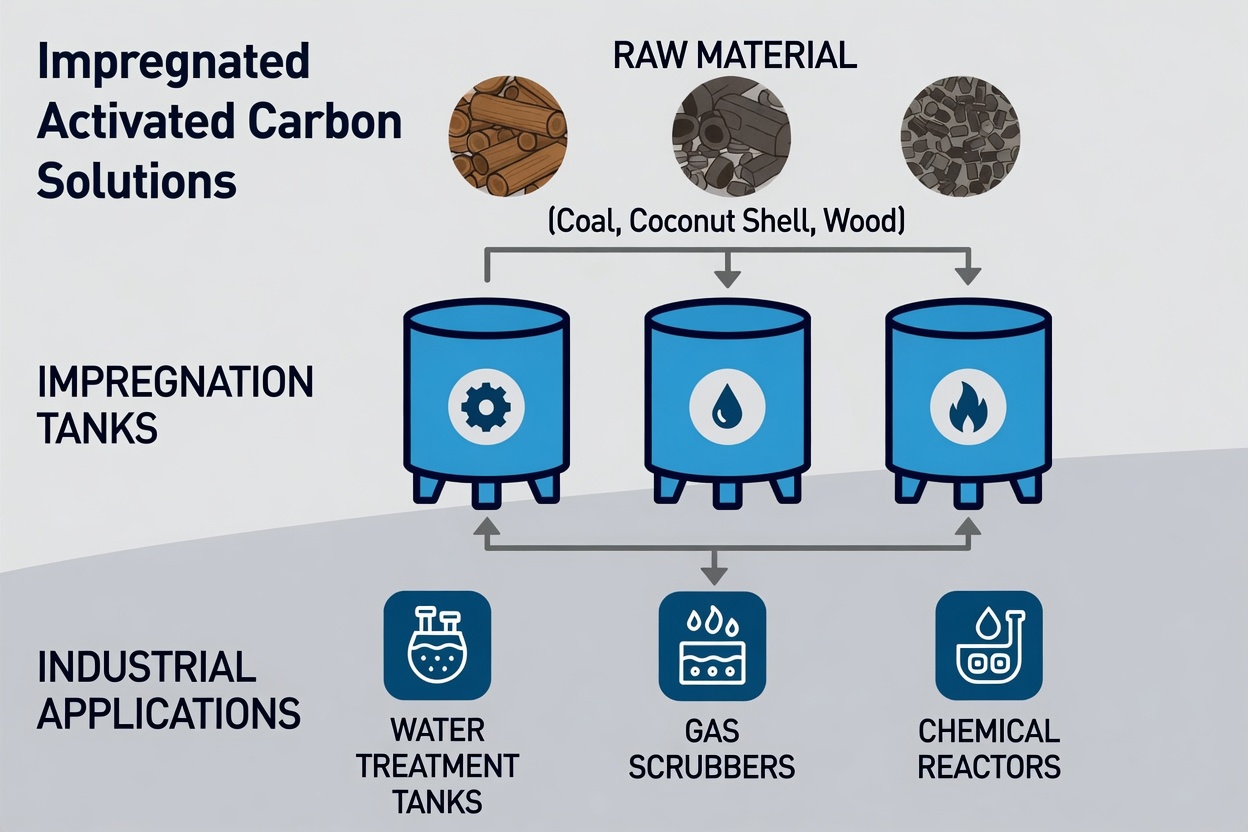
Impregnated activated carbon is activated carbon that has been treated with specific chemicals, such as metal salts, acids, alkalis, or oxidants, to enhance its ability to capture targeted contaminants. Unlike standard activated carbon, which mainly relies on physical adsorption, impregnated grades provide chemisorption and catalytic reactions, allowing them to remove gases like hydrogen sulfide, ammonia, mercury vapor, and volatile organic compounds more efficiently. [futuremarketinsights]
From an industrial perspective, impregnated activated carbon sits at the intersection of adsorbent and catalyst, which is why it is now widely used in gas-phase emission control, biogas purification, chemical synthesis, and protective applications such as respirators and cabin air filters. In my experience working with global buyers, the key advantage is not only higher removal efficiency, but also longer bed life and more stable performance under harsh conditions such as high acidity or corrosive gases. [haycarb]
Why Industries Are Shifting to Impregnated Carbons
Over the last few years, tightening regulations on drinking water safety, industrial air emissions, and workplace exposure limits have driven strong growth in impregnated activated carbon. Recent market analyses indicate that catalytic and impregnated grades are a major contributor to the global activated carbon market, which is projected to exceed 9 billion USD in 2026 and continue growing on the back of investments in clean water and air infrastructure. [mordorintelligence]
In practice, the shift is also driven by operational economics: impregnated carbons often enable smaller systems, reduced chemical consumption, and lower maintenance compared with conventional scrubbers or non-impregnated carbons. For buyers in industries such as petrochemicals, food and beverage, and pharmaceuticals, this translates directly into lower lifecycle cost per unit of contaminant removed. [haycarb]
Core Classifications by Raw Material
Choosing the right base carbon is the foundation of any successful impregnated product, because the pore structure, hardness, and purity vary with raw material. [indexbox]
Coal-based pelletized impregnated carbon
Coal pelletized impregnated carbon is typically produced in cylindrical pellets, offering high mechanical strength and low dust, which is essential for high-pressure gas-phase systems. These products are widely used in industrial gas purification and protective filters, where resistance to attrition and pressure drop stability are key. [haycarb]
Coconut shell granular impregnated carbon
Coconut shell-based impregnated carbon has a high micro-pore volume and excellent hardness, making it a preferred choice for water purification, gas masks, and catalyst carrier applications. Its renewable origin also aligns with sustainability trends, and leading manufacturers now highlight coconut-based products as a low-footprint solution for drinking water and industrial wastewater treatment. [globenewswire]
Wood-based granular impregnated carbon
Wood-based impregnated carbons tend to have more mesopores and are commonly used in decolorization and specialized adsorption, for example copper- or magnesium-impregnated grades for color and impurity removal in chemicals or food intermediates. These products are often selected when high adsorption rates for larger molecules are required, such as pigments, resins, or specific organic contaminants. [haycarb]
Classifications by Impregnant Chemistry
From a process engineer's point of view, the impregnant chemistry is what turns activated carbon into a targeted tool for a specific contaminant.
Metal-impregnated activated carbon
Metals such as silver, copper, and manganese are frequently used to impart catalytic or antibacterial functions. [indexbox]
- Silver-impregnated carbon is applied in antibacterial filters and catalytic oxidation processes, especially where microbiological control and oxidation of organics are both required. [haycarb]
- Copper-impregnated carbon is widely used to adsorb ammonia and cyanide in industrial off-gas or wastewater streams. [indexbox]
- Manganese-impregnated carbon participates in redox reactions to remove iron and manganese ions from water, improving taste, color, and stability. [haycarb]
Acid and alkali impregnated activated carbon
Alkali-impregnated carbons using NaOH, KOH, KI, Na₂CO₃ or NH₄HCO₃ are designed to capture acidic gases such as sulfur dioxide and hydrogen sulfide, often in biogas and flue-gas environments. In contrast, acid-impregnated carbons with reagents like phosphoric acid or sulfuric acid are used to remove alkaline gases such as ammonia, especially in fertilizer, chemical, and waste treatment facilities. [futuremarketinsights]
Oxidant-impregnated activated carbon
Carbons impregnated with oxidants like KMnO₄ or H₂O₂ provide strong oxidative degradation of organic and inorganic contaminants. For example, KMnO₄-impregnated carbon is widely used for removing sulfides and certain VOCs in air treatment, while H₂O₂ impregnation enhances oxidation capacity in advanced treatment systems. [futuremarketinsights]
Composite impregnated activated carbon
Composite grades combine multiple reagents—such as KI plus NaOH—to remove complex or mixed pollutants, including elemental mercury vapor in gas streams. In my experience, these composite formulations are especially powerful in applications with variable feed gas composition, where single-impregnant carbons would quickly exhaust or fail to meet emission limits. [futuremarketinsights]
Application-Specific Types and Use Cases
To design an effective solution, it is essential to align impregnation type with the specific application and regulatory requirements.
Impregnated carbons for air purification
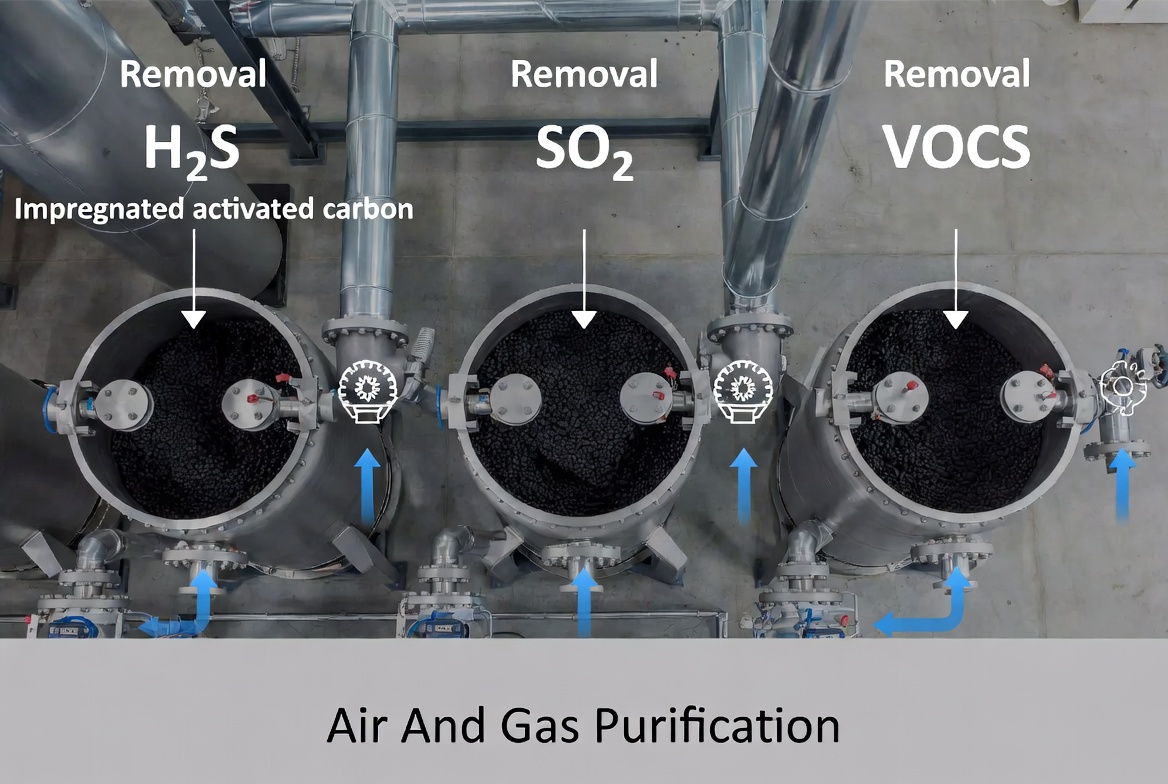
Antibacterial grades impregnated with silver or copper ions are used in air purifiers, HVAC filters, and masks, where they inhibit microbial growth and remove odors simultaneously. Desulfurization grades impregnated with alkaline compounds are deployed in industrial exhaust systems to remove H₂S and SO₂, ensuring compliance with odor and emission standards. [haycarb]
Impregnated carbons for water treatment
Heavy-metal-specific carbons impregnated with sulfides or sulfates can selectively adsorb lead, mercury, and other toxic metals from water, making them valuable in industrial wastewater and mining effluent treatment. Other grades are optimized for residual chlorine removal, using reducing compounds to protect downstream membranes, resins, and product quality in drinking water and process water plants. [globenewswire]
Carbons for chemical and gas adsorption
In chemical plants, impregnated carbons are tailored for gas-phase adsorption of ammonia, sulfur dioxide, and organic vapors, using acid/alkali or oxidant impregnants. Organic adsorption grades, often oxidant-impregnated, can both capture and transform VOCs, making them suitable for off-gas polishing and solvent recovery pre-treatment. [haycarb]
Catalyst carrier and catalytic carbons
Impregnated carbons loaded with metal oxides or precious metals act as catalytic carriers in reactions such as hydrogenation, dehydrogenation, and selective oxidation. These catalysts are used in pesticide and pharmaceutical synthesis, polymer intermediates, and flue gas treatment, where the carbon support offers high surface area, adjustable pore structure, and resistance to harsh acid–base environments. [indexbox]
Production Methods: Wet vs. Dry Impregnation
At plant level, impregnated activated carbon is produced through wet or dry impregnation methods, each optimized for certain chemicals and performance requirements. [indexbox]
Wet impregnation
In solution impregnation, activated carbon is immersed in a liquid solution containing the desired impregnant, then dried and activated to achieve uniform distribution. This method is widely used for metal salts and oxidants, allowing precise control of loading levels and penetration into the pore structure. Spray impregnation coats the impregnant onto the carbon surface and is suitable when lower impregnation levels or surface-focused reactions are required. [haycarb]
Dry impregnation
In gas-phase impregnation, the carbon is exposed to vapor-phase chemicals, which are adsorbed onto the surface—this is useful for volatile impregnants and for avoiding excess moisture in the product. Another approach, the solid-mixing method, blends activated carbon with solid impregnants, and through heating or mechanical action, the impregnant distributes and adheres to the carbon surface. From a production engineering standpoint, dry processes can offer better stability for moisture-sensitive reagents and shorter drying cycles. [indexbox]
Activated Carbon as a Catalyst Carrier: Expert Perspective
In many advanced chemical and environmental processes, activated carbon functions as an ideal catalyst carrier thanks to its low cost, high acid–alkali resistance, and tunable surface chemistry. It can support a wide variety of active components, including precious metals (Pt, Pd, etc.), sulfides, halides, and inorganic acids, enabling reactions from hydrogenation to carbonylation and isomerization. [indexbox]
One practical benefit I emphasize to industrial clients is the ease of precious-metal recovery: spent carbon-supported catalysts can be incinerated, and the metals recovered from ash, reducing total catalyst cost over multiple cycles. Additionally, the carrier's surface functional groups, pore size, and specific surface area can be modified via physical or chemical treatments, giving process engineers a wide adjustment range to optimize selectivity and activity. [indexbox]
Real-World Example: Acid-Supported Catalysts
Activated carbon-supported acid catalysts illustrate how impregnated carbons can improve both performance and environmental footprint. For instance, p-toluenesulfonic-acid-supported carbon catalysts have been shown to achieve higher ester yields (above 90%) in reactions such as triacetin synthesis, while reducing equipment corrosion and simplifying post-treatment compared with traditional sulfuric acid systems. [indexbox]
In desulfurization of FCC gasoline, nitric-acid-treated activated carbon carriers demonstrated desulfurization rates above 90% under optimized conditions, with minimal impact on pore structure and high stability. In my view, these examples highlight how impregnated carbons can replace conventional homogeneous acids, combining higher efficiency, reusability, and lower environmental risk in industrial operations. [indexbox]
Metal-Supported Carbons for Flue Gas Desulfurization
Metal-loaded carbons, such as Fe/AC and CuO/AC, play a critical role in low-temperature flue gas desulfurization and denitrification. Studies have shown that iron-loaded carbons significantly increase SO₂ adsorption capacity, particularly when iron is well dispersed and applied under elevated temperature conditions, with strong regeneration capability and long service life. [indexbox]
Copper-loaded carbons (CuO/AC) and mixed CuO–ZnO systems have proven effective in adsorptive desulfurization of diesel, selectively removing thiophene and benzothiophene compounds while maintaining thermal stability and favorable pore structures. These results underpin today's use of copper- and zinc-impregnated carbons in refinery and fuel-cleaning applications, where high sulfur-removal efficiency and regenerability are essential. [globenewswire]
Selecting Impregnated Carbon for Your Application
From a buyer's standpoint, the most common failure in impregnated carbon projects is misalignment between product specification and actual process conditions. Based on project work with industrial clients, I recommend the following step-by-step approach:
1. Define the primary contaminant(s)
Identify whether the main target is H₂S, SO₂, mercury vapor, ammonia, VOCs, or heavy metals, and gather concentration and flow data. [futuremarketinsights]
2. Clarify operating conditions
Record temperature range, humidity, pressure, pH, presence of co-contaminants, and expected pressure drop limits in the system. [haycarb]
3. Match impregnant chemistry
- Acidic gases (H₂S, SO₂): select alkali-impregnated carbons (NaOH, KOH, KI, etc.). [futuremarketinsights]
- Alkaline gases (NH₃): select acid-impregnated carbons (H₃PO₄, H₂SO₄). [indexbox]
- Heavy metals: use sulfide/sulfate-impregnated carbons tailored to Pb, Hg, etc. [globenewswire]
- Mercury: choose composite impregnants (e.g., KI + NaOH) for elemental Hg capture. [futuremarketinsights]
4. Select base carbon and format
Decide between coal pellets, coconut-shell granules, or wood-based granules, and between granular, pelletized, or powdered forms, balancing mechanical strength, pressure drop, and contact time. [haycarb]
5. Validate through pilot testing
Before full-scale deployment, run on-site pilot tests or lab simulations to verify breakthrough time, bed life, and regeneration behavior under real operating conditions. [haycarb]
By following this structured approach, plant engineers can dramatically reduce the risk of premature breakthrough or unexpected pressure drop issues, while maximizing adsorption capacity and operating life. [futuremarketinsights]
Industry Trends and Future Directions
The future of impregnated activated carbon is closely linked to global environmental policies and advanced manufacturing. Market research indicates that gas-phase impregnated carbon applications alone are expected to grow from around 409 million USD in 2026 to over 746 million USD by 2036, driven by stricter gas emissions control in power, chemical, and waste sectors. [globenewswire]
At the same time, manufacturers are focusing on sustainable feedstocks and high-adsorption materials, including coconut-shell-based carbons and engineered pore structures for next-generation energy storage and filtration systems. For end-users, this means greater access to customized, lower-footprint solutions that meet both environmental compliance and ESG goals without sacrificing performance. [mordorintelligence]
Why Work with a Customized Solutions Provider
As a Chinese manufacturer specializing in impregnated and other activated carbon products for export, we have found that international customers increasingly value custom tailoring over generic grades. They expect technical support in selecting raw materials, impregnant systems, and production methods that reflect their specific industry—whether water treatment, air and gas purification, food and beverage, chemicals, or pharmaceuticals. [haycarb]
A full-solution approach typically includes application analysis, lab testing, on-site trials, and ongoing performance monitoring, rather than just selling a standard catalog product. This partnership model allows us to optimize the total cost of ownership for each project, including carbon selection, system design support, and regeneration or replacement strategies. [globenewswire]
Practical Checklist Before Purchasing Impregnated Carbon
To make your procurement and engineering process smoother, use this quick checklist before finalizing any impregnated carbon order:
- Confirm target contaminants and emission or discharge limits.
- Verify temperature, humidity, and gas or liquid composition.
- Choose appropriate base carbon (coal, coconut, wood) and form (GAC, pellets, PAC).
- Match impregnant type to contaminant chemistry.
- Request technical datasheets and typical breakthrough curves.
- Plan for pilot testing and regeneration or disposal routes.
By addressing these points in advance, you significantly increase the likelihood that your chosen impregnated carbon will perform as expected in full-scale operation. [futuremarketinsights]

Call to Action: Tailored Impregnated Carbon Solutions
If you are planning a new water or air treatment project, upgrading an existing system, or troubleshooting underperforming media, now is an ideal time to evaluate whether a custom impregnated activated carbon solution can deliver better performance and lower lifecycle costs. Our team can help you analyze your process, select the right base carbon and impregnant chemistry, and supply consistent products at industrial scale to support your global operations. [haycarb]
To move forward, prepare your basic process data—target pollutants, flow rates, temperature, and existing equipment design—and reach out for a technical consultation and quotation tailored to your specific application. [haycarb]
Frequently Asked Questions (FAQ)
1. What is the difference between impregnated and standard activated carbon?
Standard activated carbon relies mainly on physical adsorption, while impregnated carbon incorporates chemicals such as metals, acids, alkalis, or oxidants to provide chemisorption and catalytic reactions for specific contaminants. This targeted functionality allows impregnated carbon to achieve higher efficiency and longer bed life in demanding industrial applications. [futuremarketinsights]
2. Can impregnated activated carbon be regenerated and reused?
Many impregnated carbons—especially those used as catalyst carriers or in gas-phase desulfurization—can be thermally regenerated or re-impregnated, depending on the contaminant and impregnant stability. In the case of precious-metal-loaded carbons, regeneration also facilitates valuable metal recovery, improving overall economics. [globenewswire]
3. Is impregnated carbon safe for food and beverage applications?
Yes, specific grades of impregnated carbon are formulated and produced under strict purity and safety requirements for food and beverage processing, including decolorization and taste/odor control. It is important to select food-grade certified products and work with a supplier who can provide documentation and testing data for compliance. [haycarb]
4. How do I know if I need an alkali or acid impregnated carbon for my gas stream?
As a general rule, acidic gases like H₂S and SO₂ require alkali-impregnated carbons, while alkaline gases like NH₃ require acid-impregnated carbons. A detailed gas analysis and pH assessment of any condensate will help your supplier recommend the correct impregnant system. [haycarb]
5. What information should I provide when requesting a quotation for impregnated carbon?
You should share contaminant type and concentration, flow rate, temperature, humidity, current system design, and performance targets such as outlet concentration or breakthrough time. This data allows us to propose a tailored impregnated carbon grade, estimate bed life, and provide a realistic cost–performance evaluation. [haycarb]
References
1. IndexBox – World Impregnated Activated Carbon Market Analysis & Insights (2026). https://www.indexbox.io/store/world-impregnated-activated-carbon-market-analysis-forecast-size-trends-and-insights/
2. Haycarb PLC – Activated Carbon for Specialized Applications. https://www.haycarb.com/activated-carbon-solutions/speciality/
3. Haycarb PLC – Activated Carbon Solutions for Diverse Industries. https://www.haycarb.com/activated-carbon-solutions/
4. Global news release – Activated Carbon Industry Research Report 2026: Market Size & Trends. https://www.globenewswire.com/news-release/2026/04/24/3280673/28124/en/activated-carbon-industry-research-report-2026-15-71-bn
5. Future Market Insights – Gas-Phase Activated Carbon Impregnations Market, 2026–2036. https://www.futuremarketinsights.com/reports/gas-phase-activated-carbon-impregnations-market
6. Mordor Intelligence – Activated Carbon Market Size, Trends, Share & Global Report 2031. https://www.mordorintelligence.com/industry-reports/activated-carbon-market
7. Original technical content – Impregnated activated carbon: classification, uses, production and application. https://heycarbons.com/impregnated-activated-carbons/


