Content Menu
● What Is Impregnated Activated Carbon?
● How Impregnation Works: Process Overview
● Key Impregnating Agents and Their Functions
>> Alkali-Impregnated Activated Carbon (e.g., KOH)
>> Phosphoric Acid (H₃PO₄) Impregnated Carbon
>> Copper Oxide (CuO) Impregnated Carbon
>> Silver-Impregnated Activated Carbon
>> Iodine-Impregnated Pelletized Carbon
● Typical Industrial Applications by Sector
>> Water Treatment and Process Liquids
>> Air and Gas Purification
>> Food, Beverage and Pharmaceutical Sectors
● How Impregnated Activated Carbon Is Manufactured (Step-by-Step)
● Practical Selection Guidelines for Engineers and Buyers
● Maintenance, Replacement and Safety Considerations
● Why Impregnated Activated Carbon Matters for Modern Industry
● Frequently Asked Questions (FAQ)
● References
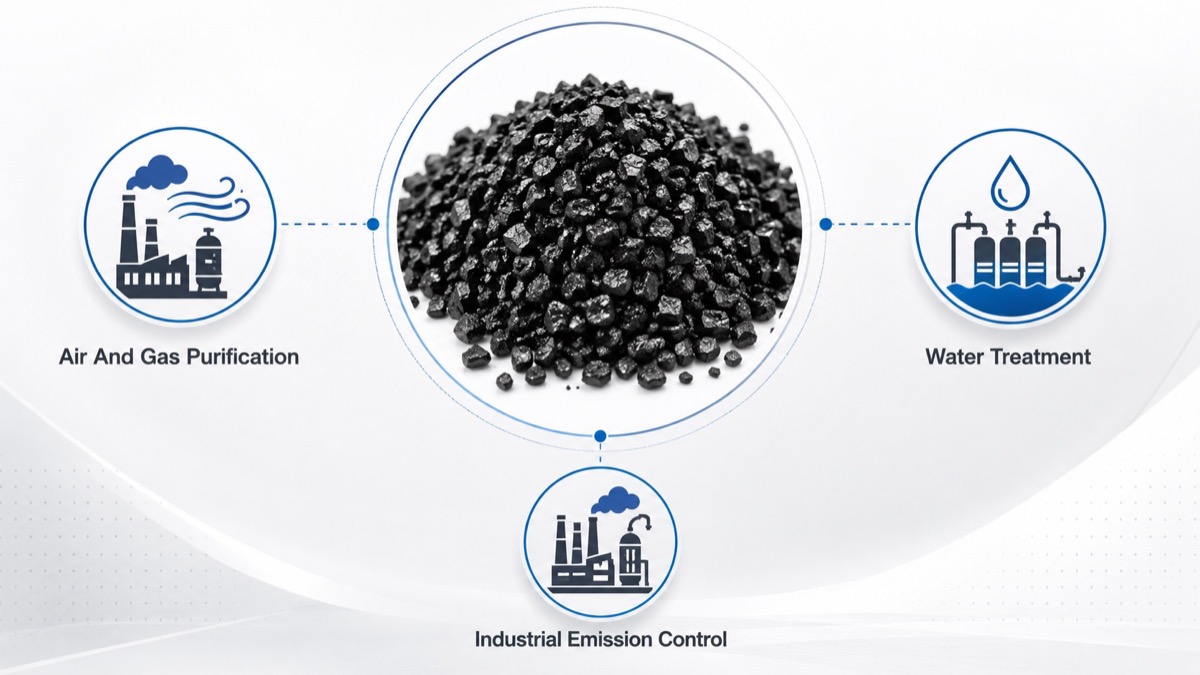
Impregnated activated carbon is a highly engineered adsorbent where specific chemical agents are loaded into the carbon's pore structure to target particular contaminants in air, gas and liquid streams. When it is correctly specified, produced and maintained, it can significantly extend system life, stabilize process performance, and reduce environmental and compliance risks across industrial applications. [growandconvert]
What Is Impregnated Activated Carbon?
Impregnated activated carbon is a form of activated carbon whose internal pore surfaces are treated with chemicals, metals or functional substances to enhance its affinity for selected pollutants. These impregnants are deposited inside the pore network rather than just on the external surface, so they can react with or strongly adsorb contaminants that plain activated carbon struggles to remove, such as inorganic gases, acidic or alkaline vapors, and certain heavy metals. [generalcarbon]
Compared with standard coal-based or coconut-based activated carbon, impregnated grades are "tuned" for specific contaminants, which makes them ideal for critical environmental and process control applications rather than generic odor removal only. This targeted performance is particularly valuable when emission limits are tightening or when process uptime is more important than media cost alone. [sciencedirect]
How Impregnation Works: Process Overview
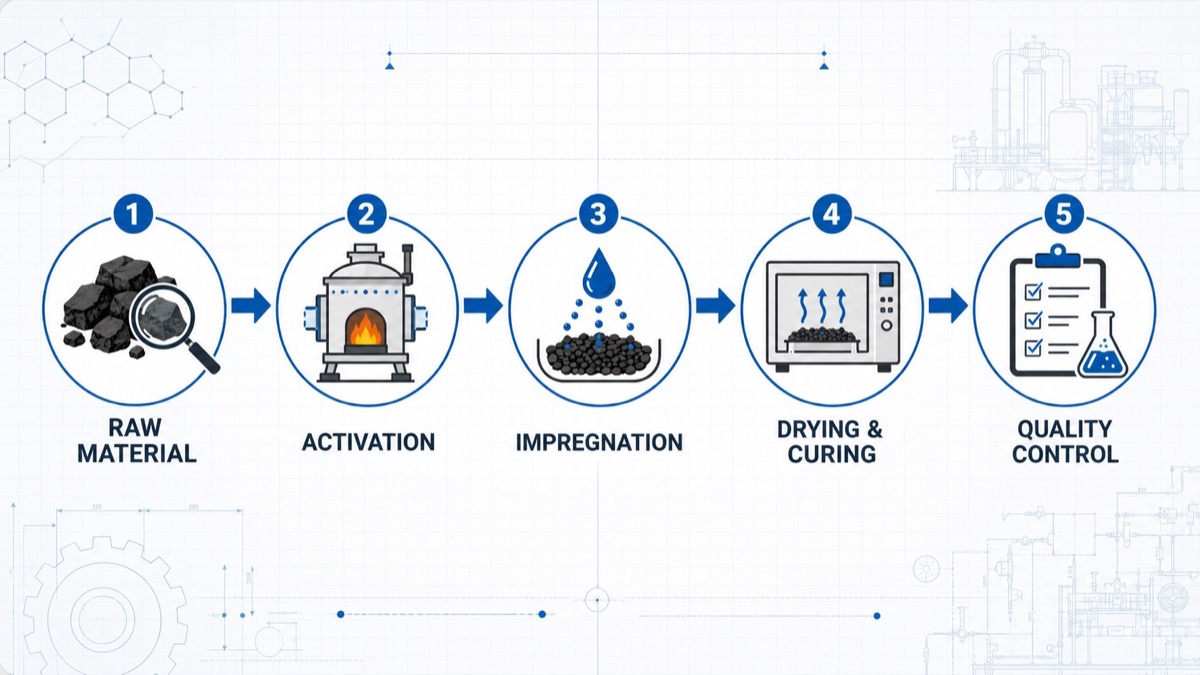
From a production standpoint, impregnation is a controlled surface-modification process applied to a pre‑activated carbon substrate. Although detail varies by manufacturer and end use, the core steps generally include: [growandconvert]
1. Carbon substrate selection – Coal, coconut shell, wood or specialty carbons are chosen based on hardness, pore size distribution, and application (e.g., flue gas vs. potable water). [sciencedirect]
2. Impregnating agent selection – Chemicals such as KOH, H₃PO₄, CuO, silver compounds, or iodine are selected to provide catalytic, antimicrobial, acid/alkali neutralization, or gas-specific capture functions. [generalcarbon]
3. Preparation of the impregnating solution – The agent is dissolved or dispersed in a compatible solvent so it can penetrate the pore structure without collapsing or blocking it. [growandconvert]
4. Immersion or soaking – The activated carbon is fully immersed or uniformly coated with the solution and held for a controlled impregnation time so the agent can diffuse into the pore system. [sciencedirect]
5. Drying and curing – After soaking, the carbon is dried by air, vacuum, or controlled heating, and in some cases cured at elevated temperature so the impregnant is fixed, activated or converted into its final functional form. [growandconvert]
Industrial impregnation often requires tight control of temperature, pH, concentration and agitation to achieve a consistent loading level and to avoid pore blockage or uneven distribution. For critical filtration systems, manufacturers will usually validate every batch against internal QC standards such as impregnant loading, hardness, ash content, and adsorption capacity curves. [pmc.ncbi.nlm.nih]
Key Impregnating Agents and Their Functions
Different industries rely on different impregnation systems. Below is a practical overview of common formulations and where they are typically used.
Alkali-Impregnated Activated Carbon (e.g., KOH)
- Primary function: Capture and conversion of acidic gases such as NOx and certain acid vapors. [generalcarbon]
- Mechanism: Flue gas passes through a bed of KOH-impregnated carbon; NOx species are adsorbed and react on the surface, where KOH acts as a catalyst in selective reduction reactions, converting NOx to nitrogen and water. [generalcarbon]
- Typical use cases: Coal-fired boiler flue gas polishing, industrial incinerators, tail-gas treatment in chemical plants. [sciencedirect]
Phosphoric Acid (H₃PO₄) Impregnated Carbon
- Primary function: Removal of alkaline gases, especially ammonia (NH₃). [growandconvert]
- Mechanism: Ammonia molecules are adsorbed and then chemically react with the acidic groups formed by phosphoric acid within the pore structure, enabling high removal efficiency in demanding operating conditions. [growandconvert]
- Typical use cases: Ammonia scrubbing in fertilizer plants, waste gas treatment in livestock operations, odor control in wastewater facilities and industrial exhaust lines. [sciencedirect]
Copper Oxide (CuO) Impregnated Carbon
- Primary function: Catalytic removal of SO₂, NOx, O₃, H₂S and VOCs in air and gas streams. [growandconvert]
- Mechanism: CuO sites promote redox reactions on the carbon surface, converting reactive pollutants into less harmful species while maintaining adsorption capacity for organics. [sciencedirect]
- Typical use cases: Industrial gas purification, VOC abatement systems, ozone removal in electronics manufacturing, emission control for chemical and petrochemical plants. [sciencedirect]
Silver-Impregnated Activated Carbon
- Primary function: Broad-spectrum antimicrobial protection alongside standard adsorption. [growandconvert]
- Mechanism: Silver species embedded in the carbon matrix inhibit the growth of bacteria and other microorganisms that would otherwise colonize wet filters or stagnant water systems. [pmc.ncbi.nlm.nih]
- Typical use cases:
- Water purification cartridges targeting bacteria such as *E. coli* and *Legionella*
- Air filtration in hospitals, laboratories and cleanrooms
- Odor control systems where biofilm formation is a risk
- Medical dressings and protective equipment where antimicrobial surfaces are critical [pmc.ncbi.nlm.nih]
Iodine-Impregnated Pelletized Carbon
- Primary function: Removal of H₂S and certain organic species in demanding gas-phase applications. [growandconvert]
- Mechanism: Iodine species enhance the reaction and adsorption of hydrogen sulfide and various organic compounds, improving both capacity and kinetics. [sciencedirect]
- Typical use cases: Biogas desulfurization, sewage and landfill gas treatment, and other gas streams where H₂S and siloxanes must be controlled to protect engines and downstream equipment. [sciencedirect]
Typical Industrial Applications by Sector
Impregnated activated carbon plays a critical role wherever selective contaminant control is required instead of generic odor polishing. Below is a structured view of where different types are commonly deployed.
Water Treatment and Process Liquids
In water purification systems, coal-based and silver-impregnated activated carbon is widely used to combine chemical adsorption with microbiological control. Antimicrobial grades reduce the risk of bacterial growth inside filters and distribution lines, while the base carbon matrix removes organics, residual disinfectants and taste/odor compounds. [generalcarbon]
Industrial users deploy impregnated carbons in:
- Drinking water cartridges and point-of-use systems
- Process water in food and beverage plants
- High-purity water for electronics and pharmaceutical operations [pmc.ncbi.nlm.nih]
Air and Gas Purification
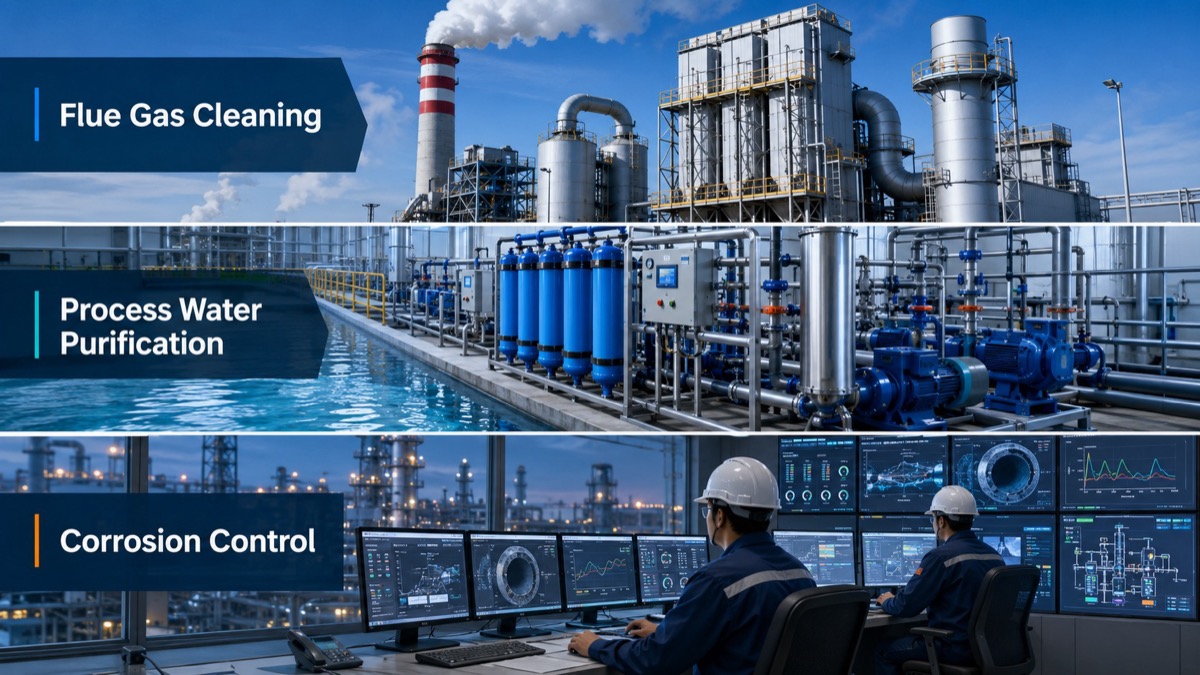
In air handling units and gas scrubbers, impregnated activated carbon provides high-efficiency removal of corrosive and toxic gases that normal carbons cannot reliably control. CuO, KOH, H₃PO₄, and iodine systems are especially common in: [generalcarbon]
- Flue gas polishing for power plants and incinerators (SO₂, NOx, HCl, HF)
- Corrosion control in control rooms and MCCs (acid gases and sulfur species)
- VOC and ozone removal in electronics, printing and coating operations
- Biogas and landfill gas upgrading (H₂S, siloxanes). [generalcarbon]
Food, Beverage and Pharmaceutical Sectors
In regulated sectors such as food, beverage and pharma, impregnated activated carbon is often used where standard grades cannot meet safety or stability requirements. Silver-impregnated carbons, for example, support hygienic water treatment and prevent microbial growth in bottling and CIP water loops. [pmc.ncbi.nlm.nih]
In pharmaceutical production, carefully selected impregnated carbons are used for:
- Solvent recovery and purification
- Odor and trace contaminant control in API manufacture
- Controlled removal of specific process impurities without affecting the desired molecule. [pmc.ncbi.nlm.nih]
How Impregnated Activated Carbon Is Manufactured (Step-by-Step)
From an operations perspective, understanding the high-level manufacturing workflow helps engineering and procurement teams evaluate suppliers and risk. A simplified process is:
1. Raw material selection – Coal, coconut shell, wood or other carbonaceous feedstocks are chosen based on availability, cost and required performance, such as hardness for gas-phase pellets or pore size for liquid-phase granules. [growandconvert]
2. Carbonization – The feedstock is heated in an oxygen-limited environment to drive off volatiles and produce a carbon-rich char. [growandconvert]
3. Activation – The char is activated chemically (e.g., with KOH or H₃PO₄) or physically (high-temperature steam or CO₂) to develop an extensive pore network and high internal surface area. [sciencedirect]
4. Washing and drying – After activation, residual chemicals are washed out and the carbon is dried to a stable moisture level. [growandconvert]
5. Impregnation – The clean activated carbon is immersed in a solution of the chosen impregnant (KOH, CuO precursor, silver salt, etc.) and held for controlled time and conditions. [sciencedirect]
6. Final drying, curing and sizing – The impregnated carbon is dried, optionally cured at elevated temperature, then crushed, pelletized or screened to the particle size required by the end application. [sciencedirect]
Each of these stages can be adapted—through temperature profiles, activation agents, or impregnant chemistry—to create application-specific products for industrial customers. [growandconvert]
Practical Selection Guidelines for Engineers and Buyers
When you specify impregnated activated carbon for a project or retrofit, aligning impregnant chemistry, pore structure and physical form with real operating conditions is essential for both performance and lifecycle cost. Industry practice typically considers:
- Target contaminants and concentration range – Identify primary and secondary pollutants (e.g., H₂S + VOCs, NOx + SO₂) and their expected loading to choose a suitable impregnation system. [generalcarbon]
- Temperature and humidity – Gas-phase performance of impregnated carbons is sensitive to moisture; some chemistries require a minimum humidity while others lose capacity when too wet. [sciencedirect]
- Pressure drop and contact time – Pellet or granular size, bed depth and system airflow determine how effectively contaminants are removed before breakthrough. [cellainc]
- Regulatory and safety constraints – Water-contact applications may require specific certifications; food and pharma uses demand controlled leaching and strict QC documentation. [pmc.ncbi.nlm.nih]
Experienced suppliers will often co-develop specifications and offer lab testing (e.g., breakthrough curves, accelerated loading tests) to match impregnated carbon grades to the customer's process window, rather than relying on generic catalog data. [cellainc]
Maintenance, Replacement and Safety Considerations
Even the best impregnated activated carbon will eventually reach saturation or lose reactivity, so ongoing monitoring is crucial. Depending on application, best practices include:
- Regular pressure-drop and outlet concentration checks to identify early signs of bed fouling or breakthrough. [cellainc]
- Scheduled replacement intervals based on historical loading data and safety factors, especially for toxic gas or critical emission control systems. [sciencedirect]
- Proper handling and disposal – Spent impregnated carbons may contain captured heavy metals or hazardous compounds and should be managed under applicable regulations using licensed recyclers or disposal partners. [pmc.ncbi.nlm.nih]
In water and medical applications, manufacturers recommend adhering strictly to maximum service life and performing microbiological checks when using antimicrobial grades, to ensure filters continue to deliver the expected protection level. [pmc.ncbi.nlm.nih]
Why Impregnated Activated Carbon Matters for Modern Industry
For many plant operators, impregnated activated carbon is no longer a "nice to have"; it is a core enabling technology for meeting modern environmental, safety and product-quality standards. Compared to unmodified carbon, impregnated grades can: [generalcarbon]
- Extend media life in demanding applications
- Improve removal efficiency for difficult gases and metals
- Reduce corrosion and unplanned downtime
- Support compliance with tightening emission and hygiene regulations. [generalcarbon]
When paired with proper system design, monitoring and supplier support, impregnated activated carbon becomes a strategic asset rather than a consumable commodity, especially for high-value sectors such as power generation, chemicals, pharma, and high-purity manufacturing. [cellainc]
Frequently Asked Questions (FAQ)
1. How is impregnated activated carbon different from standard activated carbon?
Standard activated carbon relies primarily on physical adsorption to capture contaminants, whereas impregnated activated carbon combines this with chemical or catalytic reactions provided by the impregnant, enabling efficient removal of gases and compounds that standard grades cannot handle effectively. [generalcarbon]
2. Can impregnated activated carbon remove nitrogen oxides (NOx) from flue gas?
Yes. Coal-based pelletized carbon impregnated with KOH is commonly used for NOx control; NOx species are adsorbed and catalytically converted on the carbon surface into nitrogen and water under suitable operating conditions. [generalcarbon]
3. Will activated carbon remove ammonia, and which type should I use?
Ammonia is an alkaline gas, and phosphoric-acid-impregnated carbon is typically selected for its ability to adsorb and chemically react with NH₃, delivering strong performance under industrial exhaust conditions. [growandconvert]
4. Where is silver-impregnated activated carbon typically used?
Silver-impregnated carbons are used in water purification, air filtration, odor control and medical applications where both adsorption and antimicrobial protection are required, such as cartridges, hospital filters and wound dressings. [pmc.ncbi.nlm.nih]
5. What is iodine-impregnated pelletized activated carbon used for?
Iodine-impregnated carbons are mainly applied for H₂S removal from biogas, sewage and landfill gas streams, and can also capture siloxanes and other organic compounds that would otherwise damage engines and downstream equipment. [growandconvert]
References
1. Zhulin Carbon. "How to make Impregnated activated carbon?" (Application page content on impregnated activated carbon.)
https://www.zhulincarbon.com/application/activated-carbon/impregnated-activated-carbon.html [growandconvert]
2. General Carbon. "A Guide To Impregnated Activated Carbon." Overview of impregnated carbon types, mechanisms and applications.
https://generalcarbon.com/a-guide-to-impregnated-activated-carbon/ [generalcarbon]
3. ScienceDirect. "Recent trends in surface impregnation techniques on activated carbon." Technical review of impregnation methodologies and performance.
https://www.sciencedirect.com/science/article/pii/S1944398624005964 [sciencedirect]
4. National Center for Biotechnology Information (NCBI). "Synthesis and Analysis of Impregnation on Activated Carbon…" Discussion of impregnation for contaminant removal in water and environmental applications.
https://pmc.ncbi.nlm.nih.gov/articles/PMC9357786/ [pmc.ncbi.nlm.nih]
5. WG Content. "E-E-A-T for content quality." Guidance on integrating experience, expertise, authority and trust into technical content.
https://wgcontent.com/blog/eeat-content-quality-seo-geo/ [wgcontent]
6. seoClarity. "How to Create a Winning SEO Content Strategy in 9 Steps." Best practices on headings, keyword placement and on-page optimization.
https://www.seoclarity.net/blog/seo-content-strategy [seoclarity]


