Content Menu
● Understanding GAC and PAC in Municipal Water Treatment
● Performance in Removing Micropollutants and Pharmaceuticals
● PFAS and Other Persistent Pollutants
● Operational Characteristics and Plant Integration
>> Contact Time and Hydraulic Configuration
>> Residuals and Sludge Handling
● Cost, Regeneration, and Lifecycle Economics
>> Media Pricing and Usage
>> Regeneration and Replacement Cycles
● Typical Use Cases in Municipal Systems
>> Where GAC Usually Fits Best
>> Where PAC Provides the Most Value
● Side‑by‑Side Technical Comparison
● Practitioner Insights from Municipal Projects
>> Combined Use of GAC and PAC
>> Importance of Testing and Monitoring
● Practical Framework for Choosing Between GAC and PAC
>> Step‑By‑Step Decision Process
● Matching Carbon Form to Municipal Needs
● FAQs
● References
Municipal drinking water plants increasingly depend on activated carbon to deal with trace organic contaminants, taste and odor events, and new risk drivers such as PFAS and pharmaceuticals. In practice, granular activated carbon (GAC) and powdered activated carbon (PAC) are not simple substitutes, but two distinct tools that serve different roles within the same treatment train. Engineers and operators who understand these differences can design more robust processes, justify investment decisions, and maintain consistent finished water quality over the long term.
Understanding GAC and PAC in Municipal Water Treatment
From a plant's point of view, GAC and PAC share the same basic function: they offer a highly porous, high‑surface‑area medium that adsorbs dissolved contaminants from water. The differences lie in how they are formed, handled, and integrated into full‑scale systems.
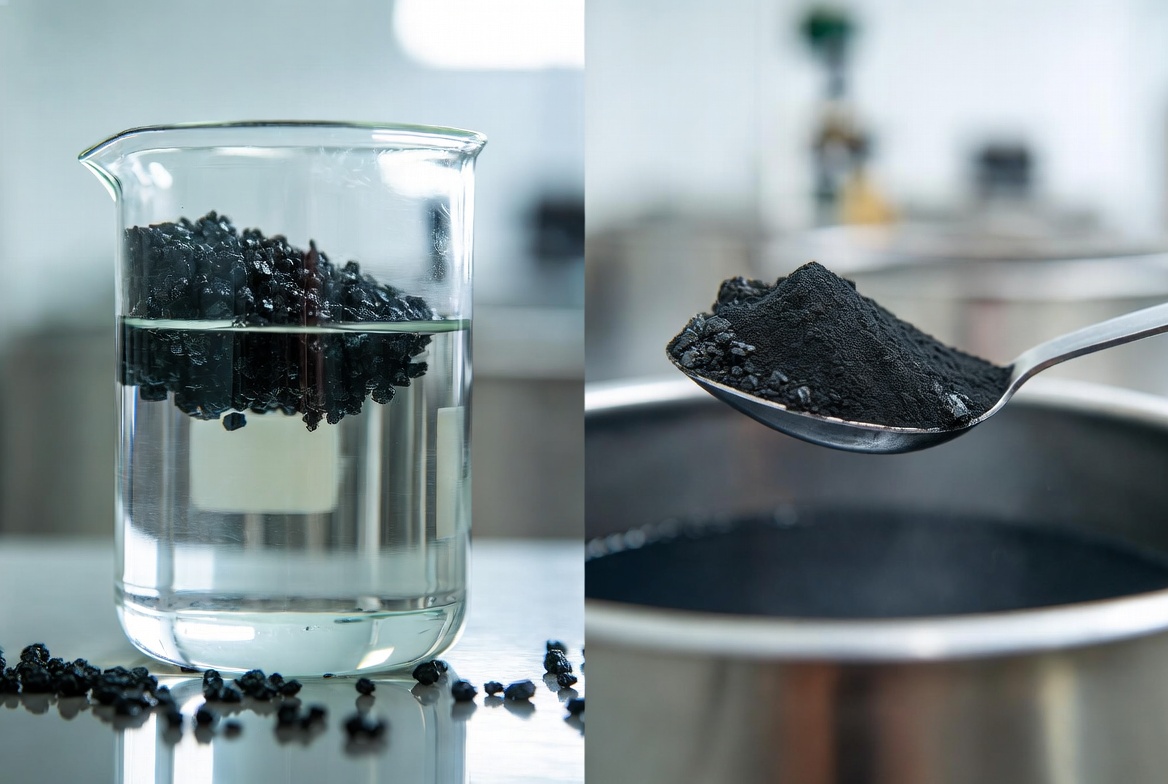
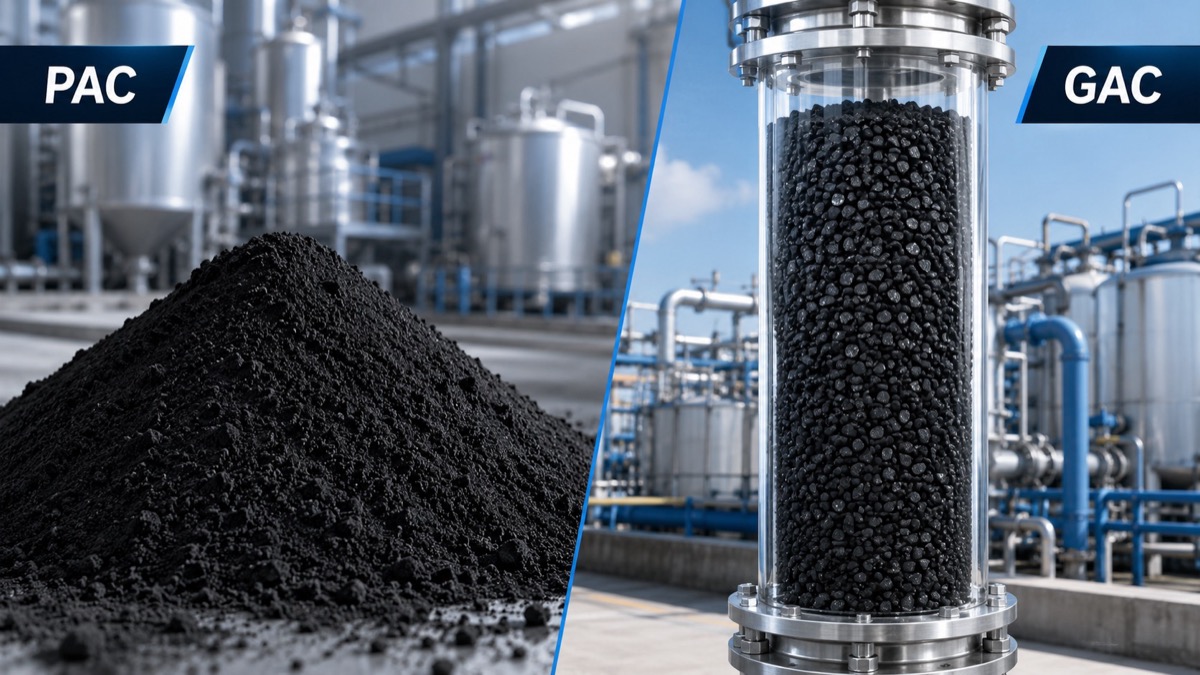
- Granular activated carbon (GAC) is produced as irregular granules, typically in the range of about 0.5–4 mm. It is used in fixed beds, such as gravity filters or pressure vessels, where water passes continuously through a packed layer of media.
- Powdered activated carbon (PAC) is a fine powder, often with most particles below 50–100 μm. It is dosed as a slurry into the water stream, mixed for a short contact time, and then removed together with coagulated solids in sedimentation or filtration steps.
Both forms can be manufactured from coal, coconut shell, wood, or other carbonaceous raw materials, with pore structures tailored to target specific classes of contaminants. What changes in municipal practice is how each form fits into hydraulic design, residuals handling, and long‑term operating strategy.
Performance in Removing Micropollutants and Pharmaceuticals
A core question for many utilities is how GAC and PAC compare when removing low‑level organic micropollutants, including pharmaceuticals and personal care products.
Pilot‑scale research at multiple wastewater and drinking water plants has shown that both GAC and PAC can achieve very high removal efficiencies when systems are properly designed. In one multi‑plant study on pharmaceutical removal, GAC and PAC treatments both reached around 95% removal for the selected compounds under optimized conditions, although carbon usage rates and sensitivity to process conditions differed between products and forms.
For utilities planning advanced treatment upgrades, this means neither GAC nor PAC is inherently "too weak" for modern contaminant targets. Instead, the choice revolves around achievable contact time, variability of the raw water, and how much flexibility operators need to adjust dosing or bed operation when contaminant loads shift.
PFAS and Other Persistent Pollutants
PFAS has become one of the most important drivers for installing advanced adsorption steps in municipal plants. Here, the differences between GAC and PAC become more visible, especially for long‑chain PFAS compounds that are difficult to remove at low concentrations.
Recent work comparing the two forms in drinking water treatment plants reports that a conventional PAC dose in the range of about 10 mg/L removed roughly 40% of total PFAS and about a quarter of long‑chain PFAS after short‑term contact. A comparable GAC application achieved a similar total PFAS reduction but was able to remove around 80% of long‑chain PFAS under fixed‑bed conditions with appropriate bed volumes and contact time.
To drive PAC performance closer to that long‑chain PFAS removal target, much higher doses were required, which in turn increased dry sludge production by nearly half and pushed operating costs into the same range as installing multiple GAC columns. These results suggest that PAC is well suited for fast, interim PFAS control, while GAC is better positioned as a primary, long‑term solution once the plant commits to structural upgrades.
Operational Characteristics and Plant Integration
Beyond pure adsorption performance, day‑to‑day operation is often the deciding factor when utilities choose between GAC and PAC.
Contact Time and Hydraulic Configuration
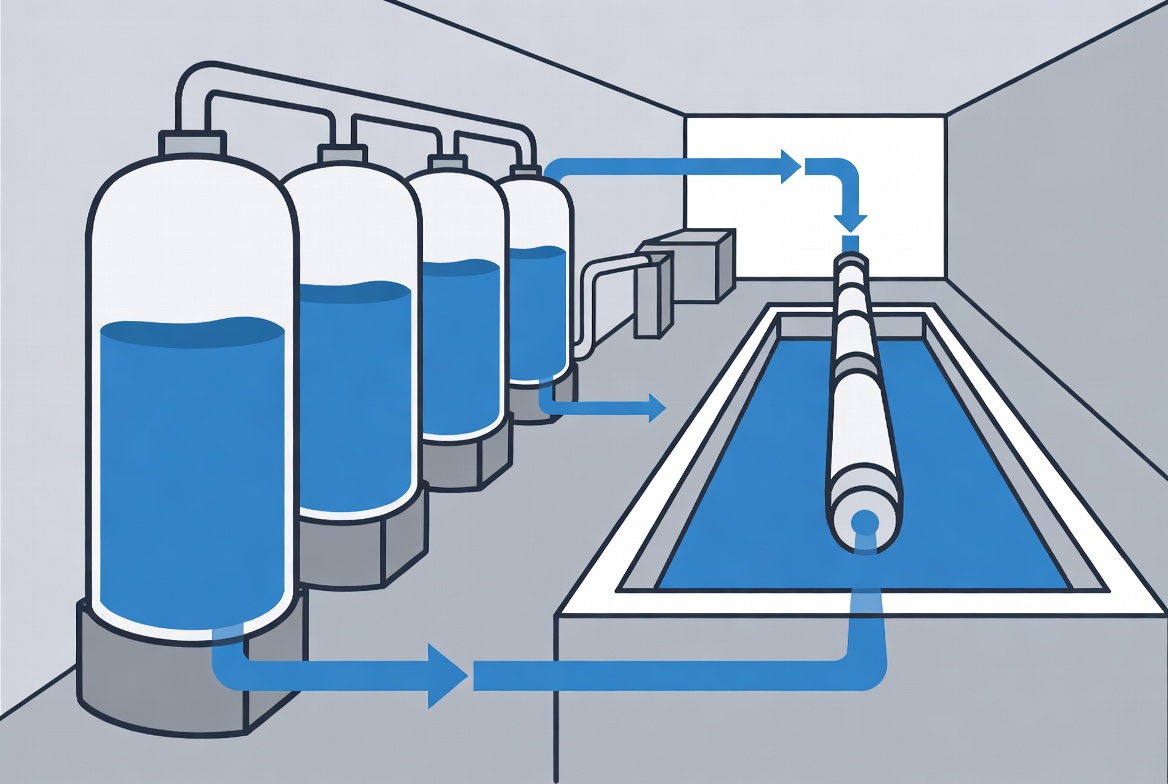
GAC is typically installed in dedicated contactors or as a cap on dual‑media filters, where operators can control empty bed contact time (EBCT) and flow rate. This setup supports continuous treatment, straightforward headloss monitoring, and predictable breakthrough behavior.
PAC, on the other hand, is introduced into existing basins or rapid‑mix tanks, then travels with the water through flocculation and clarification stages. Contact time is usually much shorter and less controlled, but PAC systems can be built with relatively simple dosing and mixing equipment, often with minimal civil modifications.
Residuals and Sludge Handling
PAC doses become part of the plant's sludge stream. Every additional milligram of PAC added to the process eventually appears in sludge or filter backwash residuals, which must be thickened, dewatered, and disposed of or reused in compliance with local regulations.
GAC remains confined within fixed beds. When beds reach exhaustion, the spent granules are removed and either replaced with fresh media or sent for thermal reactivation. This reduces the burden on existing sludge systems, an important factor for plants that are already close to their solids handling limits or rely on land application programs with strict quality requirements.
Cost, Regeneration, and Lifecycle Economics
Initial media prices can be misleading when comparing GAC and PAC. A more realistic view looks at the full lifecycle cost over several years of operation.
Media Pricing and Usage
On a pure purchase basis, PAC is usually cheaper per ton than GAC. Typical market ranges often cited for water treatment applications place GAC in the approximate range of 800–2500 USD per ton, while PAC commonly falls between about 600–1200 USD per ton, depending on raw material, quality, and specification.
However, PAC is used once and then leaves the system with the sludge. GAC, by contrast, can often be reactivated thermally and reused multiple times. When the cost of reactivation, transport, and replacement is averaged over several cycles, the effective cost per unit volume of water treated can drop significantly for GAC, especially in stable, high‑throughput plants.
Regeneration and Replacement Cycles
In drinking water service, GAC beds are typically operated until a defined breakthrough threshold is reached for target contaminants or surrogate indicators such as TOC or UV254. Depending on influent quality and design EBCT, GAC bed life can range from several months to multiple years.
Once exhausted, GAC can be removed and sent to a reactivation facility, where high‑temperature treatment restores its adsorption capacity. Many systems are designed with the expectation of several reactivation cycles from a single initial carbon batch, which spreads the capital and environmental cost of media production over a longer operating life.
PAC, being single‑use, offers no comparable regeneration route in the plant itself. Its cost profile is therefore heavily driven by ongoing chemical procurement and residuals disposal.
Typical Use Cases in Municipal Systems
Experience from a wide range of utilities and published case studies shows clear patterns in how GAC and PAC are typically applied.
Where GAC Usually Fits Best
GAC tends to be the preferred option when a plant needs stable, long‑term control of a broad contaminant spectrum or when regulations demand a robust barrier:
- Continuous reduction of natural organic matter to support control of disinfection by‑products
- Long‑term PFAS control and reduction of other persistent synthetic organics
- Combined filtration and adsorption in dual‑media or GAC‑capped filters to improve both turbidity and dissolved contaminant removal
In such roles, GAC becomes a structural element of the treatment plant, backed by regular performance testing, bed profiling, and scheduled media reactivation.
Where PAC Provides the Most Value
PAC is often favored when rapid response or high flexibility is the main priority rather than long‑term infrastructure change:
- Seasonal taste and odor events driven by algal blooms or source water turnover
- Short‑term response to accidental spills or upstream contamination episodes
- Interim upgrades that provide additional protection while long‑term capital projects are still being planned, piloted, or constructed
By adjusting PAC dosage, operators can quickly respond to changes in raw water quality without waiting for major construction work. Once new GAC systems or other advanced treatments are in place, PAC systems can be retained as an additional safety net.
Side‑by‑Side Technical Comparison
The table below summarizes key aspects that municipal engineers typically review when deciding between granular and powdered activated carbon.
| Aspect | Granular Activated Carbon (GAC) | Powdered Activated Carbon (PAC) |
| Physical form | Granules, typically about 0.5–4 mm | Fine powder, often below about 50–100 μm |
| Installation | Fixed beds in filters or contactors | Dosed into basins, removed with sludge |
| Contact mode | Continuous flow with defined EBCT | Short contact during mixing and clarification |
| Main strengths | Stable long‑term operation, regenerable, predictable breakthrough | Fast deployment, easy dosage adjustment, limited structural changes |
| Micropollutant removal | High removal possible with designed bed depth and contact time | High removal possible at optimized doses and mixing conditions |
| PFAS control | Strong for long‑chain PFAS with appropriate design | Moderate at conventional doses, higher doses required for similar PFAS reduction |
| Capital intensity | Higher, due to vessels, filter upgrades, and piping | Lower, mainly pumps, storage tanks, and dosing systems |
| Operating profile | Periodic bed replacement or reactivation, lower sludge load | Continuous chemical purchase, increased sludge production |
| Best suited for | Long‑term compliance and integrated advanced treatment | Seasonal events, incident response, interim solutions |
Practitioner Insights from Municipal Projects
Utilities and technical teams that have implemented both GAC and PAC often report consistent practical observations that go beyond pure laboratory data.
Combined Use of GAC and PAC
Larger and more complex plants increasingly design treatment trains where both forms of activated carbon coexist. In these schemes, GAC takes care of baseline contaminant removal, while PAC is kept available for fine‑tuning:
- GAC handles the constant "background" load of natural organic matter, pharmaceuticals, and synthetic organics, providing a stable barrier.
- PAC is brought online or ramped up when unusual source water conditions occur, such as sudden taste and odor spikes, short‑term industrial discharges, or temporary regulatory tightening.
This layered approach offers resilience. The plant relies on GAC as the core barrier while PAC functions as a flexible, rapidly adjustable tool to cope with unexpected changes.
Importance of Testing and Monitoring
Successful utilities invest in systematic testing and monitoring programs for both forms of activated carbon:
- Bench‑scale tests and rapid small‑scale column tests are used to compare different GAC products, estimate bed life, and identify optimal EBCT.
- Jar tests, adsorption isotherms, and trial dosing programs support PAC selection and help define the dose–response relationship for local raw water conditions.
In parallel, ongoing monitoring of surrogate parameters such as UV254, TOC, and specific target contaminants provides early warning signals of performance decline. This enables operators to schedule GAC bed change‑outs in advance and adjust PAC dosing proactively rather than reacting only after finished water quality drops.
Practical Framework for Choosing Between GAC and PAC
For plant managers and design engineers planning upgrades, a structured evaluation often helps align technology choices with long‑term goals and local constraints.
Step‑By‑Step Decision Process
1. Clarify treatment objectives
Define which contaminants must be addressed, target concentrations at the plant outlet, and any secondary goals such as taste and odor improvement or disinfection by‑product reduction.
2. Review existing infrastructure
Map current process units, available hydraulic head, spare footprint, and the flexibility of basins or filters. Assess whether there is realistic space for GAC contactors or GAC‑capped filters, or whether PAC dosing will better fit existing basins.
3. Conduct pilot and bench testing
Compare candidate GAC and PAC products using representative raw water, focusing on contaminants of concern as well as surrogate parameters. Use column tests for GAC and jar tests or batch adsorption tests for PAC.
4. Evaluate lifecycle cost and residuals
Include capital expenses, media costs, reactivation cycles, sludge treatment, transport, and disposal in the economic model. Consider potential changes in sludge classification or reuse options if PAC doses are high.
5. Plan monitoring and adaptation strategies
Decide how the plant will track performance over time, when media replacement or reactivation will be triggered, and how PAC dosing will be adjusted based on raw water quality indicators.
By following such a framework, municipal teams can choose a combination of GAC and PAC that matches local water quality, regulatory pressure, budget constraints, and operational capacity.
Matching Carbon Form to Municipal Needs
In modern municipal water treatment, both granular and powdered activated carbon are proven, mature technologies. GAC excels as a core, long‑term element of advanced treatment trains, providing stable performance, the possibility of regeneration, and strong control over persistent contaminants such as long‑chain PFAS and a broad range of organics. PAC, by contrast, shines as a flexible and rapid‑response option that leverages existing infrastructure and allows operators to react quickly to seasonal events and short‑term contamination episodes.
Rather than framing the choice as an either‑or decision, many utilities now view GAC and PAC as complementary. By combining solid design, targeted testing, and ongoing performance monitoring, plants can build resilient systems that protect public health while balancing capital investments and operating costs.
FAQs
Q1: Can a municipal plant rely only on PAC for long‑term advanced treatment?
Some plants do operate with PAC as their main adsorption barrier, but over time this can result in higher chemical consumption, increased sludge volumes, and more complex residuals management. For persistent contaminants and long‑term compliance, many utilities eventually adopt GAC as the backbone of their adsorption strategy, while keeping PAC available as a support tool for special situations.
Q2: How often should GAC be replaced or reactivated in drinking water service?
The replacement or reactivation interval depends on influent characteristics, target contaminants, and design EBCT. In practice, many plants see GAC bed lives ranging from several months to a few years before breakthrough indicators or performance criteria trigger change‑out or reactivation.
Q3: What are the most useful parameters for monitoring GAC performance in a municipal plant?
Operators often track surrogate parameters such as TOC, DOC, and UV254 absorbance across GAC beds, combined with periodic analysis of specific target contaminants. Trends in these indicators can signal approaching breakthrough and help schedule media replacement before finished water quality is affected.
Q4: Is there a clear winner between GAC and PAC for taste and odor control?
Both forms can be very effective against taste and odor compounds like geosmin and MIB when correctly applied. GAC in filters or contactors provides a stable baseline of control, while PAC offers the ability to rapidly increase doses during seasonal taste and odor episodes and then reduce them again when the event subsides.
Q5: How do regulatory trends influence the choice between GAC and PAC?
Tightening standards for PFAS, pharmaceuticals, and disinfection by‑product precursors tend to push utilities toward permanent advanced treatment solutions, where GAC plays a central role. At the same time, rules governing sludge quality and disposal make it important to consider how PAC dosing will affect residuals and long‑term sludge management strategies.
References
1. National Research Council. *An Evaluation of Activated Carbon for Drinking Water Treatment*. [https://www.ncbi.nlm.nih.gov/books/NBK234593/]
2. Kårelid, V., et al. *Pilot-scale removal of pharmaceuticals in municipal wastewater: Comparison of granular and powdered activated carbon treatment at three wastewater treatment plants*. [https://www.sciencedirect.com/science/article/abs/pii/S0301479717301603]
3. Alameddine, M., et al. *Comparative Assessment of Powdered versus Granular Activated Carbon for PFAS Removal in Drinking Water Treatment Plants*. [https://pubs.acs.org/doi/full/10.1021/acsestwater.4c00901]
4. U.S. EPA. *Appraisal Of Powdered Activated Carbon Processes For Municipal Wastewater Treatment*. [https://nepis.epa.gov/Exe/ZyPURL.cgi?Dockey=2000WNKP.TXT]
5. General Carbon. *Granular vs. Powdered Activated Carbon: Key Differences, Use Cases, and Sustainability*. [https://generalcarbon.com/granular-vs-powdered-activated-carbon/]
6. YRD Carbon. *Differences Between Granular and Powdered Activated Carbon*. [https://www.yrdcarbon.com/news/differences-granular-powdered-activated-carbon.html]
7. Nature. *Technology status to treat PFAS-contaminated water and limiting factors for their effective full-scale application*. [https://www.nature.com/articles/s41545-025-00457-3]
8. ScienceDirect. *Long-term removal of perfluoroalkyl substances via activated carbon process for general advanced treatment purposes*. [https://www.sciencedirect.com/science/article/abs/pii/S0043135423009995]
9. ScienceDirect. *Comparing powdered and granular activated carbon...* [https://www.sciencedirect.com/science/article/abs/pii/S0960852419313677]
10. PubMed. *Toward systematic understanding of adsorptive removal of legacy and emerging PFASs by various activated carbons (ACs)*. [https://pubmed.ncbi.nlm.nih.gov/37364627/]


