
Language
Views: 222 Author: Tongke Activated Carbon Publish Time: 2026-06-05 Origin: Site


Content Menu
● What "Iodine Value" Really Means
● Why Price Alone Misleads Activated Carbon Buyers
>> How Price and Iodine Value Are Connected
>> "Cheap" Carbon Can Become Expensive
● Iodine Value vs Price: A Practical Comparison
● How Different Applications Use Iodine Value
>> Water Treatment (Municipal, Industrial, Beverage)
>> Food & Beverage, Pharmaceuticals
>> Gold Recovery and High‑Value Metals
● Expert Step‑by‑Step Method: How to Choose Activated Carbon by Iodine Value
>> Step 1 – Define Your Target Application Clearly
>> Step 2 – Set a Reasonable Iodine Value Range
>> Step 3 – Check Supporting Quality Indicators
>> Step 4 – Compare Total Cost of Ownership, Not Just Price
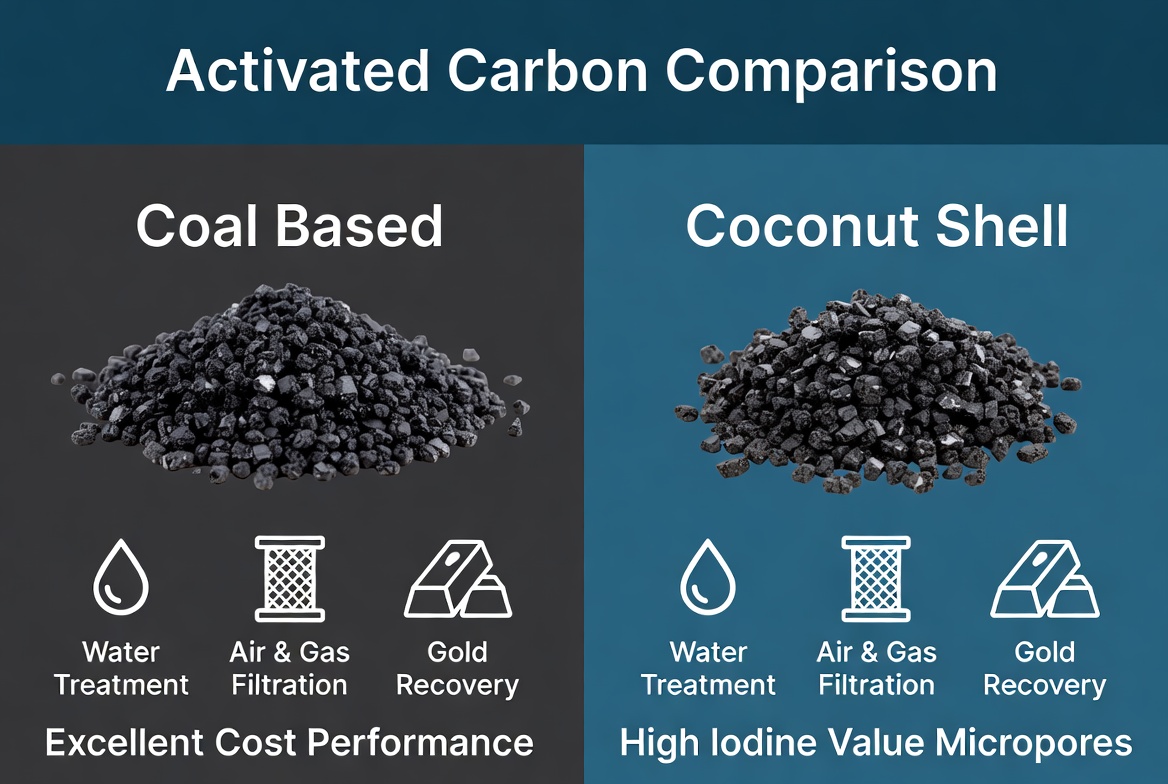
● Coal vs Coconut Shell Activated Carbon: Where Iodine Value Fits In
● Common Mistakes When Using Iodine Value
● Real‑World Example: Avoiding the "Cheap Carbon Trap"
● How Guangdong Tongke Activated Carbon Can Help
● FAQs on Iodine Value vs Price
Choosing activated carbon by iodine value instead of price helps you protect process performance, compliance, and lifetime cost across water, air, food, and chemical applications. As a manufacturer and exporter of coal‑based and coconut‑shell activated carbon, Guangdong Tongke Activated Carbon has seen that buyers who focus only on price often end up paying more through higher consumption, downtime, and quality risks. [qizhongcarbon]
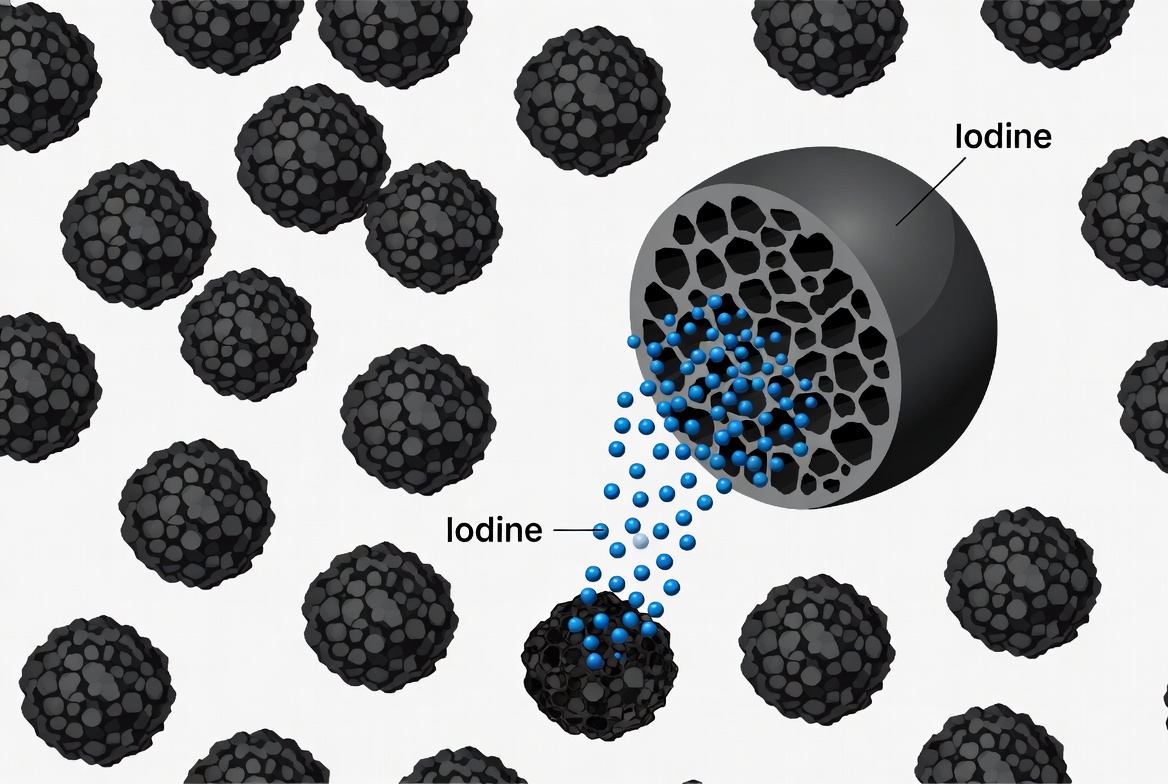
Iodine value (often called iodine number) measures how many milligrams of iodine 1 gram of activated carbon can adsorb, typically in a range of about 500–1200 mg/g. It is widely used as a quick indicator of micropore volume and adsorption capacity for small molecules in liquids and gases. [yanshancarbon]
In practice, a higher iodine value usually indicates:
- Larger internal surface area and more micropores
- Stronger adsorption of small organics in water (COD, VOC traces, off‑flavors)
- Better performance in critical industries like gold recovery and high‑purity water treatment [huameicarbon]
However, iodine value is not a perfect proxy for all performance: in scientific evaluation, it correlates only partially with surface area and does not fully predict capacity for every target molecule family. This is why experienced suppliers always interpret iodine value together with pore structure, ash, hardness, and the actual application. [carbotecnia]
Many procurement teams still benchmark activated carbon mainly on price per kilogram, assuming "cheaper carbon, lower treatment cost". In reality, this is often backwards.
Producing high‑iodine‑value carbon usually requires better raw materials and more intensive activation, which increases manufacturing cost and market price. As a result: [qizhongcarbon]
- Low‑price carbons typically have lower iodine value and weaker adsorption
- High‑iodine carbons tend to cost more per kg, but can last longer and remove more contaminants per unit mass [huameicarbon]
One industry analysis notes that the price of many standard activated carbons "depends largely" on the iodine number, because the market recognizes it as a practical quality indicator. At the same time, iodine value alone does not fully describe operational performance, so "buying the highest iodine at any price" is also not optimal. [carbotecnia]
Inferior carbons often look attractive on a price list but lead to hidden costs:
- Higher dosage and more frequent change‑outs
- More waste carbon to handle and dispose
- Risk of non‑compliance (odor complaints, discharge limits, food quality issues)
For example, some suppliers highlight that high‑quality activated carbon typically has iodine values above about 800 mg/g and ash below about 15%, while low‑quality products often fall below 500 mg/g iodine and have much higher ash. That low‑iodine, high‑ash carbon may be cheap per kg, but you may need 1.5–2× as much to reach the same outlet quality, erasing any upfront savings. [huameicarbon]
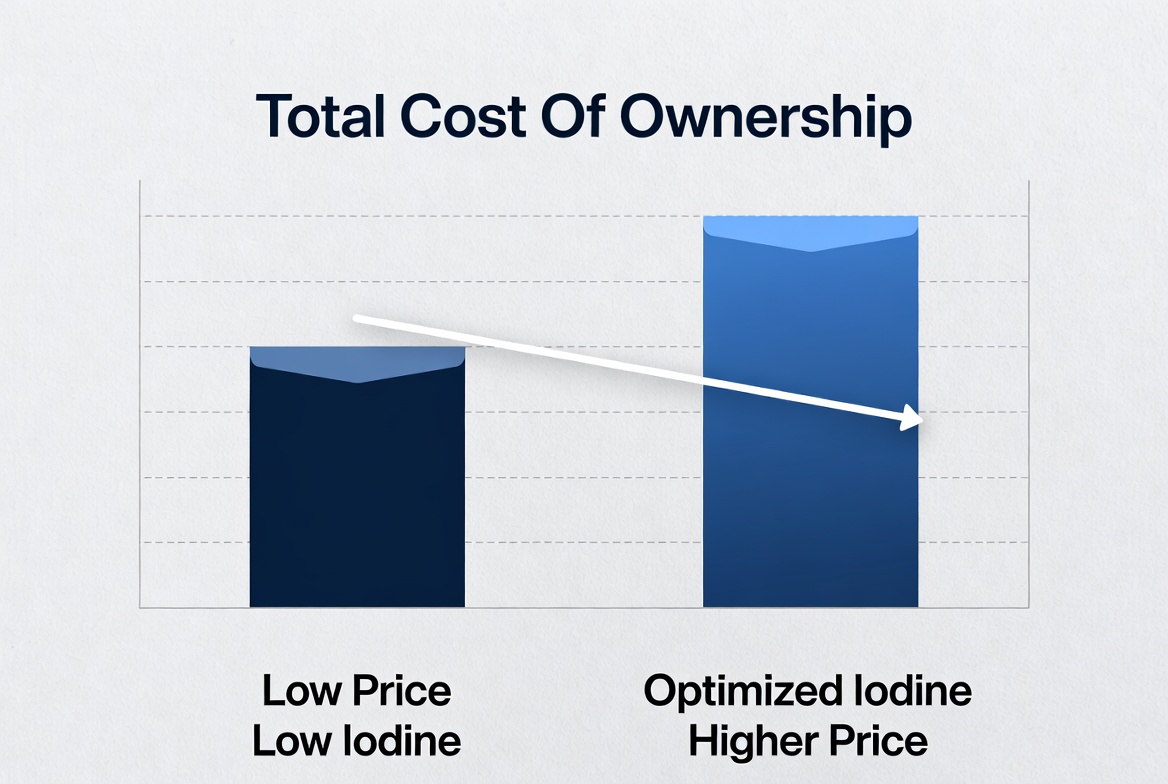
From an expert buyer's perspective, you should treat iodine value and price as two different levers: one indicates technical capability, the other financial cost.
Typical trade‑offs
| Factor | Low Price Focus (kg cost) | Iodine Value Focus (performance) |
|---|---|---|
| Upfront cost per kg | Lower (huameicarbon) | Higher (qizhongcarbon) |
| Typical iodine value | Often < 700 mg/g [huameicarbon] | 800–1200 mg/g range (yanshancarbon) |
| Adsorption capacity per kg | Lower (huameicarbon) | Higher for small molecules (yanshancarbon) |
| Change‑out frequency | More frequent | Less frequent (yanshancarbon) |
| Risk of non‑compliance | Higher | Lower, if correctly specified |
| Total cost of ownership (TCO) | Often higher | Often lower over lifecycle |
In other words: do not compare prices without comparing iodine values and application fit at the same time.
Different industries and processes benefit from different iodine ranges; picking "the highest number" is rarely necessary or economical.
For drinking water polishing, beverage production, and many industrial wastewaters, iodine value correlates reasonably well with removal of low‑molecular‑weight organics and trace pollutants. Typical patterns: [yanshancarbon]
- Polishing and high‑purity water: medium‑to‑high iodine value to ensure effective removal of taste, odor, and trace organics
- General industrial wastewater: mid‑range iodine value with appropriate pore distribution, plus focus on regeneration or disposal strategy
In many small‑molecule water applications, coconut‑shell activated carbon with higher iodine values is often preferred for its dense micropore structure and strong adsorption efficiency. [xuyemachine]
For VOC control and gas‑phase adsorption, iodine value still reflects microporosity, but pore size distribution and surface chemistry (e.g., impregnation) can be equally important.
- Exhaust and flue gas: coal‑based carbons can offer excellent cost–performance with suitable iodine value and mesopore structure. [xuyemachine]
- Solvent recovery and odor control: target‑specific capacity and working capacity across cycles matter more than iodine alone.
These sectors require consistent quality and strict contamination control. Iodine value is a useful baseline indicator, but the final choice also depends on:
- Certification, traceability, and batch consistency
- Ash and metal content and potential leaching
- Regulatory and quality standards (e.g., pharmacopoeia, food‑contact rules)
In gold CIP/CIL operations, iodine number is considered a "fundamental parameter" because it reflects the micropore structure needed to adsorb gold‑cyanide complexes from leach solution. Typical values: [yanshancarbon]
- Many gold recovery carbons fall in the 1000–1200 mg/g range, with high hardness and low ash. [yanshancarbon]
- One industry recommendation is to start with coconut‑shell carbon in the 1000–1200 mg/g range and adjust based on site performance. [yanshancarbon]
Case‑style illustration: An operation using a lower‑iodine, cheaper carbon may see lower gold loading and more frequent carbon replacement; switching to a higher‑iodine, optimized carbon can improve recovery and reduce total cost even if price per kg increases.
Below is a practical selection framework we often use with international clients when specifying coal‑based and coconut‑shell activated carbons.
Before looking at any data sheet, clarify:
1. What contaminants or compounds must be removed?
2. What quality or discharge limits must you meet?
3. What are the operating conditions (temperature, pH, flow, phase)?
This context determines how strongly iodine value should influence your decision versus other parameters like hardness or particle size.
Use known industry benchmarks as a starting point, then fine‑tune with your supplier:
- General water treatment: mid‑range iodine values around the 800 mg/g level can provide solid performance at good cost–performance. [huameicarbon]
- High‑purity water, beverage, or small‑molecule gas adsorption: higher iodine values approaching or exceeding 900–1000 mg/g may be justified.
- Gold recovery: iodine values around 1000–1200 mg/g, combined with hardness above about 97%, are commonly targeted. [yanshancarbon]
Avoid specifying "the highest iodine on the market" without a clear benefit, as this can add cost without proportional performance gains. [carbotecnia]
Do not evaluate iodine value in isolation. Ask for and compare at least:
- Ash content – lower ash (often below about 10%, ideally near or below 5% in demanding applications) increases effective adsorption capacity and reduces interference. [huameicarbon]
- Hardness / abrasion resistance – important for CIP/CIL, moving beds, and backwashing; for example, many gold recovery carbons target hardness above about 97%. [yanshancarbon]
- Pore size distribution – micropore vs mesopore balance, especially for larger molecules or gas‑phase VOCs. [carbotecnia]
- Moisture and apparent density – impact shipping cost, dosing, and handling.
When you compare offers from multiple suppliers, calculate an estimated cost per volume or mass of pollutant removed, not just per kg of carbon.
Simple evaluation steps
1. Request iodine value and key parameters for each candidate carbon.
2. Run small‑scale or pilot tests to measure bed life or breakthrough time.
3. Estimate annual carbon consumption for each candidate.
4. Multiply consumption by price to compare annual cost.
You will often find that a slightly higher‑priced, higher‑iodine carbon delivers a lower annual cost because you use less and change it less frequently.
As a producer of both coal‑based and coconut‑shell activated carbon, Guangdong Tongke Activated Carbon helps customers select the right base material and iodine value combination for their process. [tkcarbon.en.made-in-china]
- Coconut shell activated carbon
- Naturally rich in micropores, ideal for small organic molecules in water and gas. [xuyemachine]
- Often offers high iodine values in the 1000–1200 mg/g range in demanding applications like gold recovery and high‑purity water. [yanshancarbon]
- Coal‑based activated carbon
- Flexible pore structure and strong cost–performance, especially for large‑molecule or bulk industrial gas treatment. [xuyemachine]
- Iodine value can be tailored to match your performance and budget, making it attractive where ultra‑high iodine is not necessary.
In many projects, we recommend starting from the application, then combining the right raw material with a target iodine range, instead of simply picking "coconut" or "coal" based only on price.
Even experienced engineers can misuse iodine value during procurement and specification.
Typical pitfalls include:
- Treating iodine number as a universal predictor of performance for all contaminants and conditions. [carbotecnia]
- Assuming that increasing iodine value will always produce proportional gains in removal efficiency. [carbotecnia]
- Ignoring surface chemistry, ash, or pore distribution, which can dramatically affect adsorption of specific molecules. [huameicarbon]
- Specifying an overly narrow iodine range that excludes cost‑effective options without adding real benefit.
Technical literature emphasizes that the iodine number is "far from" fully reflecting surface area and operational capacity for many systems. It remains a valuable parameter, but only when interpreted within the broader carbon specification and application context. [carbotecnia]
Industry cases show that mis‑specification of activated carbon can lead to regulatory penalties and forced shutdowns when key technical indicators are not met. In one documented example, a company using inappropriate carbon with unqualified indicators faced environmental non‑compliance and financial penalties. [xuyemachine]
From a seasoned buyer's standpoint, the lesson is clear:
- Always verify iodine value and other critical parameters for your application.
- Do not rely on price or generic product names alone.
- Work with a manufacturer who can provide technical guidance, data, and testing support.
Guangdong Tongke Activated Carbon Co., Ltd. manufactures granular, powdered, pellet, and honeycomb activated carbons from coal, coconut shell, and other raw materials for water, air, gas, food, chemical, and pharmaceutical applications. With production and application experience across multiple regions and industries, we can help you: [tongkeac]
- Define realistic iodine value ranges for each specific process
- Balance iodine value, ash, hardness, and pore structure for your performance and budget targets
- Run lab or pilot tests to optimize dosage and predict lifecycle cost
If you are currently buying on price alone or experiencing unstable performance, this is the moment to re‑evaluate your specification around iodine value and total cost.
Need help matching iodine value to your process? Contact Guangdong Tongke Activated Carbon's technical team for a tailored carbon selection proposal and cost‑of‑ownership analysis.
1. Is a higher iodine value always better for my application?
Not always. A higher iodine value indicates more micropores and greater capacity for small molecules, but it may not improve performance for larger molecules or differently charged species and can add unnecessary cost if your process does not require it. [carbotecnia]
2. Can I use iodine value alone to select activated carbon?
No. Iodine value is a useful indicator but should be combined with ash content, hardness, pore size distribution, and application testing to ensure reliable performance and predictable lifetime. [huameicarbon]
3. Why does some cheap activated carbon fail so quickly?
Low‑priced carbons often have low iodine values and high ash, which reduce effective adsorption capacity and lead to rapid breakthrough and frequent replacement, raising your true cost despite the low purchase price. [huameicarbon]
4. How do I set an appropriate iodine value range?
Start from your application (water, air, gold recovery, food, etc.), then use industry benchmarks—for example, around 800 mg/g for many general water applications and 1000–1200 mg/g for gold recovery—and refine the range with test data and supplier input. [yanshancarbon]
5. What data should I request from my activated carbon supplier?
Ask for iodine value, ash, hardness, moisture, density, pore size distribution, and typical application cases for similar processes, then compare not only price per kg but estimated consumption and replacement intervals. This approach helps you minimize total cost of ownership rather than just purchase cost. [huameicarbon]
1. Qizhong Carbon – "Activated Carbon Iodine Value: What It Is and How to Use It" – explanation of iodine value and its relationship to pore structure and cost. [https://qizhongcarbon.com/resources/parameter-definitions/activated-carbon-iodine-value/] [qizhongcarbon]
2. Yanshan Carbon – "High Iodine Value Gold Carbon: What Makes It Work for Gold Recovery?" – discussion of iodine number ranges, gold CIP/CIL recommendations, hardness, and ash requirements. [https://yanshancarbon.com/high-iodine-value-gold-carbon-what-makes-it-work-for-gold-recovery/] [yanshancarbon]
3. Carbotecnia – "What Is the Iodine Number of Activated Carbon?" – critical analysis of iodine number, its limitations, and commercial relevance. [https://www.carbotecnia.info/en/learning-center/activated-carbon-theory/iodine-number-activated-carbon/] [carbotecnia]
4. Huamei Carbon – "Activated Carbon Price, Why Is The Cheaper Activated Carbon More Expensive?" – practical guidance on quality indicators such as iodine value and ash, and how low‑quality carbon increases true cost. [https://www.huameicarbon.com/activated-carbon-price-why-is-the-cheaper-activated-carbon-more-expensive/] [huameicarbon]
5. Xuye Machine – "Don't know how to choose activated carbon? Choose the right one to double your efficiency!" – application‑oriented advice on choosing between coconut shell, coal‑based, and other carbons for different molecule sizes and processes. [https://www.xuyemachine.com/ko/how-to-choose-activated-carbon/] [xuyemachine]
6. Guangdong Tongke Activated Carbon Co., Ltd. – official site and company profile, including applications and product overview. [https://www.tongkeac.com] [tongkeac]
7. Guangdong Tongke Activated Carbon Co., Ltd. – export profile and product categories. [https://tkcarbon.en.made-in-china.com] [tkcarbon.en.made-in-china]


