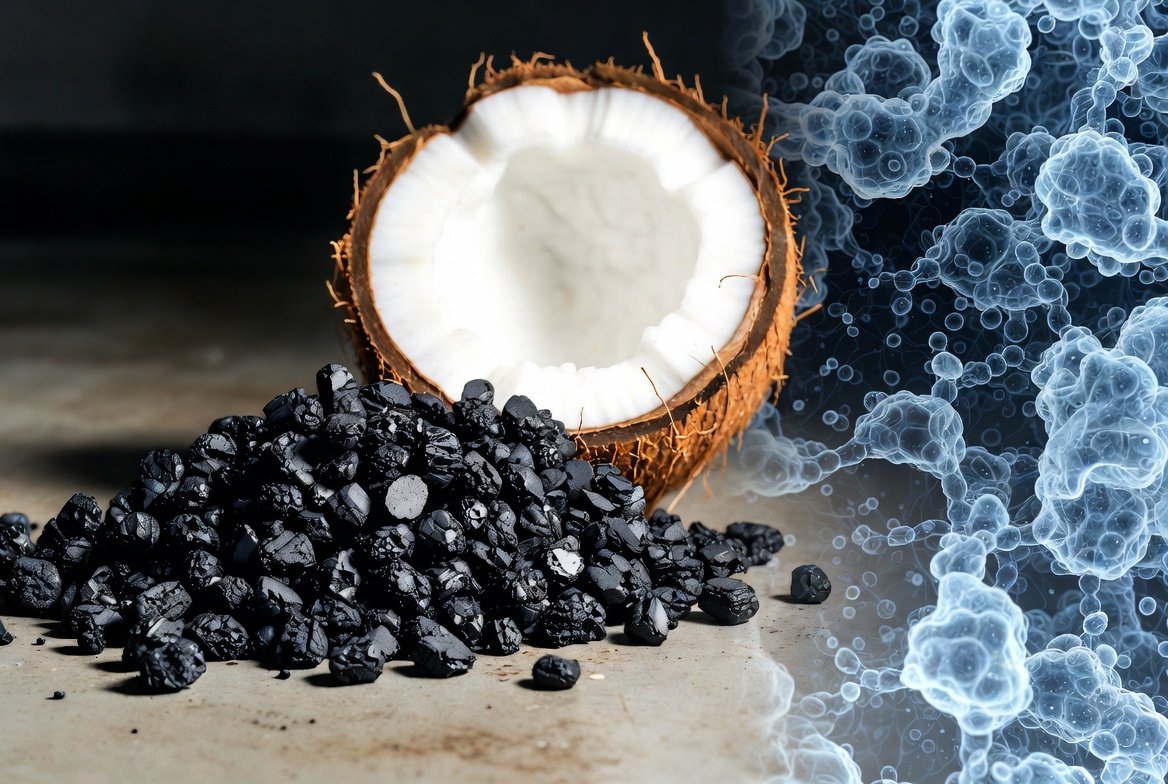
Content Menu
● Coconut Shell Activated Carbon in Modern Gold Plants
● Why Coconut Shell Activated Carbon Leads in Gold Recovery
● Sixteen Practical Criteria to Judge Gold‑Grade Coconut Shell Carbon
>> 1. Shell Thickness and Raw Material Origin
>> 2. Iodine Value
>> 3. Ash Content
>> 4. Moisture Content
>> 5. Mechanical Strength
>> 6. Bulk Density
>> 7. Attrition Loss
>> 8. R Value: Adsorption Rate
>> 9. K Value: Adsorption Capacity
>> 10. Particle Size Uniformity
>> 11. Cleanliness and External Dust
>> 12. Bubbling Behavior in Water
>> 13. Laboratory Gold Absorption Tests
>> 14. Production Process and Furnace Type
>> 15. Platelets (Flake Content)
>> 16. Post‑Polishing of Finished Carbon
● Slep Furnace vs Rotary Furnace in Gold Recovery Carbon
>> Process Principle and Structure
>> Product Performance Differences
>> Efficiency, Cost, and Application
● Field Experience From International Gold Producers
● Gold Recovery Optimization With Coconut Shell Carbon
>> Focus on Adsorption Kinetics and Mixing
>> Control Carbon Size and Inventory
>> Manage Organic and Inorganic Poisons
>> Monitor Carbon Condition and Circuit Health
● Key Technical Parameters at a Glance
● Frequently Asked Questions
● References
As someone who has spent years walking gold plants, talking with process engineers, and troubleshooting carbon circuits, I have seen firsthand how coconut shell activated carbon can make or break gold recovery performance. The difference between an average carbon and a well‑engineered product is often the difference between marginal and highly profitable operations.
Coconut Shell Activated Carbon in Modern Gold Plants
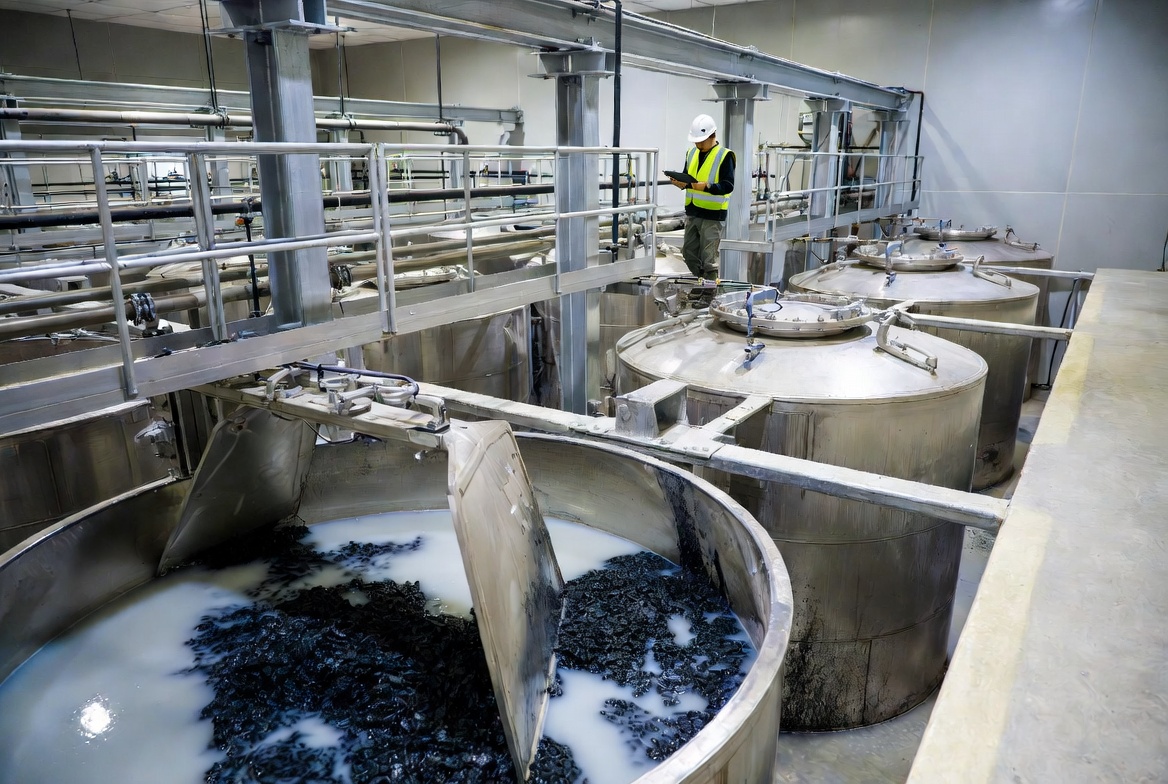
In today's gold plants, three carbon‑based methods dominate: Carbon‑in‑Pulp (CIP), Carbon‑in‑Leach (CIL), and Carbon‑in‑Column (CIC).
- In CIP, gold ore is leached first, then slurry is contacted with granular activated carbon in a train of tanks where gold is adsorbed onto the carbon. This method is robust and widely used for low‑grade ores where high overall recovery is needed.
- In CIL, leaching and adsorption take place simultaneously in the same tanks, which simplifies flowsheets and shortens total residence time, especially for ores containing natural carbon or organic matter.
- In CIC, gold‑bearing solution passes through fixed columns filled with activated carbon and is particularly useful for low‑concentration solutions, heap‑leach operations, and tailings reprocessing circuits.
In all three flowsheets, the core mechanism is the same: gold is dissolved as a gold–cyanide complex and then selectively adsorbed onto activated carbon. The carbon's internal micropore structure, surface area, and strength determine how effectively and how fast it can capture gold under real plant conditions.
Why Coconut Shell Activated Carbon Leads in Gold Recovery
Over time, many plants have tested coal‑based and wood‑based carbons, but coconut shell remains the preferred raw material for precious metals recovery.
Key reasons from an operational perspective:
- Highly microporous structure: Coconut shell carbons develop a pore system dominated by micropores (<2 nm), which match the size of gold cyanide species and deliver high equilibrium loading.
- Superior hardness and abrasion resistance: High mechanical strength minimizes carbon attrition, reduces fines in the circuit, and lowers gold losses by carbon breakage.
- Low ash content and high purity: Low mineral ash improves adsorption performance, reduces interference in solution handling, and supports stable electrowinning and refining.
- Consistent density: Adequate apparent density ensures that carbon is properly suspended in slurry, supporting good mixing and film diffusion in CIP/CIL tanks.
In practice, the coconut shell carbons that perform best in gold circuits typically have:
- Iodine value in the range of 1000–1100 mg/g, balancing adsorption capacity and strength.
- High ball‑pan hardness (often 95–99%) to withstand multiple adsorption–elution–regeneration cycles.
From feedback across Asia, Africa, and South America, the consensus is that when carbon hardness and pore structure are optimized together, gold recovery becomes more stable, even under fluctuating ore conditions.

Sixteen Practical Criteria to Judge Gold‑Grade Coconut Shell Carbon
When a site sends a carbon sample and asks, "Is this suitable for gold recovery?", a structured checklist is essential. Below is a practitioner‑oriented interpretation of sixteen key criteria, combining laboratory indicators with field experience.
1. Shell Thickness and Raw Material Origin
Coconut trees with longer growth cycles produce thicker shells, which translate into stronger, more durable activated carbon granules. Thicker shells reduce the risk of breakage and fines formation, directly lowering gold losses associated with mechanical attrition.
2. Iodine Value
Iodine value reflects total micropore volume and is a primary indicator of adsorption capacity. For gold recovery, an iodine value of 1000–1100 mg/g is often optimal: high enough for strong capacity, but not so high that hardness drops sharply.
3. Ash Content
Excessive ash dilutes active carbon, blocks pores, and can increase solution conductivity. Lower ash means higher carbon purity and more available surface for gold adsorption, as well as fewer inorganic contaminants introduced into the circuit.
4. Moisture Content
Moisture in carbon competes with adsorbates for pore space and reduces effective capacity per unit mass. Moisture must be controlled tightly; overly wet carbon increases transport costs and complicates dosing, while overly dry material can be fragile.
5. Mechanical Strength
High mechanical strength is critical in CIP and CIL, where carbon experiences intense agitation and frequent transfers. A simple desk test—rubbing samples on white paper to compare dust generation—is still commonly used as a quick strength check in the absence of lab equipment.
6. Bulk Density
Higher bulk density (at similar iodine value and moisture) usually indicates a denser texture and stronger granules. In design calculations, bulk density determines how much carbon can be packed into each tank or column and influences overall adsorption capacity per volume of equipment.
7. Attrition Loss
Attrition measures the percentage of carbon converted into fines during use. Every extra percent of fines can translate into significant soluble gold losses, especially when loaded fines bypass screens and report to tailings.
8. R Value: Adsorption Rate
The R value is a kinetic index describing how fast gold is adsorbed per unit mass of carbon per unit time. In multi‑stage CIP systems, a high R value allows lower carbon inventory or shorter contact times without sacrificing recovery.
9. K Value: Adsorption Capacity
The K value represents equilibrium capacity—how much gold a carbon can ultimately hold. However, chasing an extremely high K value by aggressively increasing microporosity can reduce hardness, generate more debris, and indirectly increase gold losses through carbon breakage.
10. Particle Size Uniformity
Granules should be rounded, uniform, and with controlled size distribution (e.g., 6×12 or 8×16 mesh) to balance screening efficiency and adsorption kinetics. Irregular particles with sharp edges break more easily, plug screens, and create uneven flow patterns in columns.
11. Cleanliness and External Dust
Dusty carbon requires more intensive rinsing and can introduce fines directly into the adsorption circuit. Cleaner material reduces plant start‑up time after carbon changes and improves the stability of carbon inventory in the long term.
12. Bubbling Behavior in Water
A practical field test: when carbon is immersed in water, observe bubbling intensity and duration. Different densities and pore structures produce different bubbling profiles; stronger carbons may bubble less violently at first but sustain bubbling longer, indicating a well‑developed internal pore network.
13. Laboratory Gold Absorption Tests
Where possible, bench‑scale tests with standard gold solutions provide direct evidence of capacity and kinetics under controlled conditions. Experienced labs correlate these tests with plant performance to build predictive models for new carbon lots.
14. Production Process and Furnace Type
Slep furnace activation usually yields very high strength and well‑developed micropores, though iodine values are typically capped around a certain level. Rotary kiln activation can achieve higher iodine values but often at the cost of somewhat lower mechanical strength and more variable pore distribution.
15. Platelets (Flake Content)
Thin flakes or platelets have poor strength and are prone to rapid attrition, becoming a major source of carbon fines. Keeping platelet content low directly reduces gold losses associated with particle fragmentation in the circuit.
16. Post‑Polishing of Finished Carbon
Polishing and controlled grinding round off sharp edges and remove weak fragments. The result is smoother, more spherical granules that generate fewer fines during handling and agitation, lowering both wear and gold loss.
Slep Furnace vs Rotary Furnace in Gold Recovery Carbon
When specifying coconut shell carbon for gold plants, the activation technology—Slep furnace or rotary kiln—has real implications for performance and cost.
Process Principle and Structure
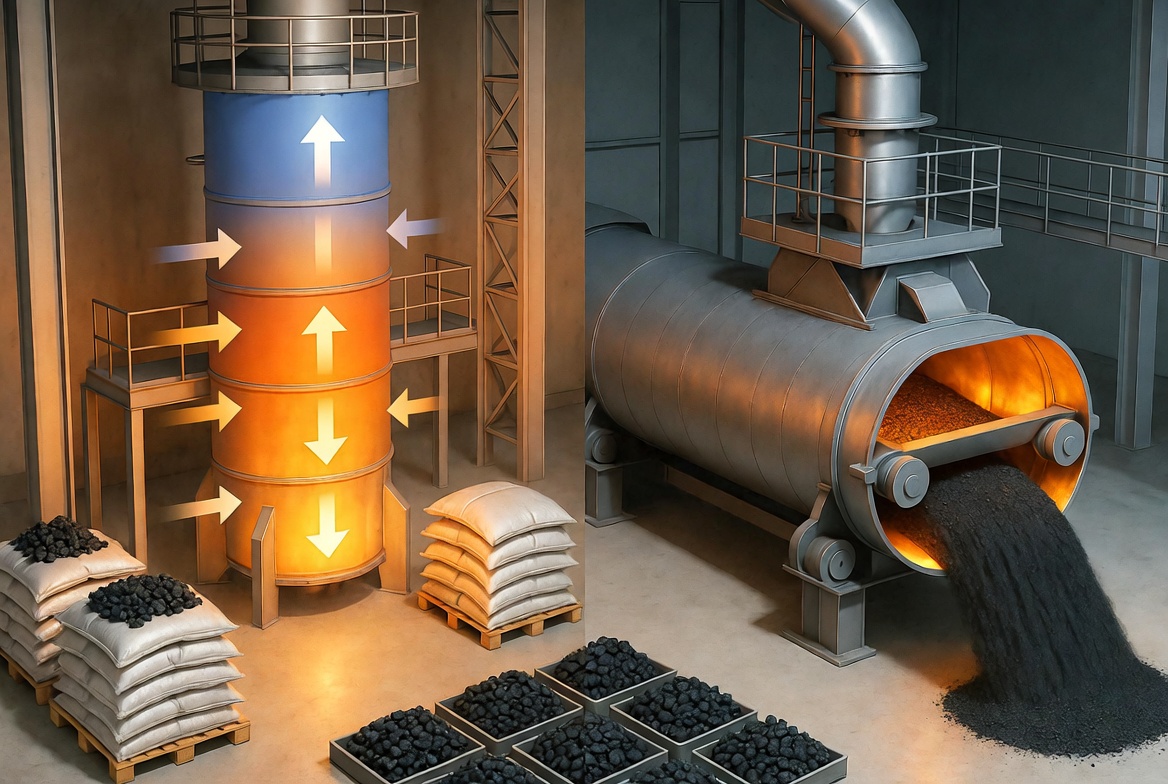
In a rotary kiln, a slowly rotating horizontal drum exposes char to high‑temperature steam or flue gas, typically within 600–900°C. It is continuous and efficient, but precise control of temperature and residence time can be challenging, leading to occasional over‑burning or under‑activation.
A Slep furnace is a vertical, multi‑chamber design with staged temperature zones for preheating, activation, and cooling, often between about 800–950°C. Gas flow direction alternates, improving activation uniformity though production is more intermittent.
Product Performance Differences
Rotary furnace carbon tends to have a broader pore size distribution with more mesopores and somewhat lower uniformity in activation. Slep furnace carbon typically shows strongly developed micropores, high specific surface area, and excellent gold adsorption performance, making it well‑suited to CIP/CIL gold recovery.
Efficiency, Cost, and Application
Rotary kilns:
- Higher throughput and lower specific energy consumption per ton of product.
- Higher raw material loss and more variability, which is acceptable for less demanding applications such as general water treatment and industrial filtration.
Slep furnaces:
- Longer cycle times and higher energy input per ton.
- Higher raw material utilization, more consistent quality, and superior performance in high‑value applications such as gold extraction, gas filtration, and advanced adsorption processes.
For gold producers, the slightly higher unit cost of Slep‑activated coconut shell carbon is often offset by higher recovery, lower fines losses, and better performance under repeated regeneration cycles.
Field Experience From International Gold Producers
One illustrative case comes from an overseas customer who had long sourced coconut shell carbon from another market before evaluating modern Slep‑furnace products. After visiting a plant and comparing samples, they observed:
- Higher apparent hardness and lower visible dust when handling the carbon.
- More uniform particle shape after polishing and wind‑selection to remove flakes.
- Improved cost‑performance, even though unit price was slightly higher, because of lower carbon loss and more stable gold loading in their CIP circuit.
On that basis, the mine committed to a trial order of around 55 tons, with the intention of migrating to a long‑term supply if performance remained consistent in operation. Similar feedback has been reported by many plants switching from generic rotary‑kiln product to carefully processed Slep‑furnace coconut shell carbon.
Gold Recovery Optimization With Coconut Shell Carbon
Beyond carbon specification itself, gold recovery results depend heavily on how the carbon is used, regenerated, and protected in the circuit.
Focus on Adsorption Kinetics and Mixing
Good agitation minimizes the boundary layer around carbon granules and supports rapid film diffusion. Matching slurry density to wet carbon density helps keep particles properly suspended and avoids either sinking or floating in tanks, which improves contact efficiency.
Control Carbon Size and Inventory
Using mesh sizes that balance kinetics and screenability (for example, 6×12 or 8×16) and monitoring size degradation over time helps maintain performance. Keeping carbon inventory and residence time consistent across the adsorption train avoids sharp fluctuations in loading and tails values.
Manage Organic and Inorganic Poisons
Minimizing introduction of oils, reagents, and other organic species upstream reduces competition with gold for adsorption sites. Appropriate acid washing and regeneration regimes remove base‑metal cyanides and scale, which otherwise block pores and lower effective capacity.
Monitor Carbon Condition and Circuit Health
Tracking loading profiles, attrition indices, and elution performance regularly allows early detection of carbon quality changes. Adjusting make‑up carbon rates and regeneration temperatures helps maintain both activity and strength, especially when ore feed changes or reagent optimization is underway.
Key Technical Parameters at a Glance
The table below summarizes critical technical parameters that mining operators typically review when selecting coconut shell activated carbon for gold recovery.
| Parameter | Typical target range or requirement for gold recovery |
| Raw material | Coconut shell with thick, mature shells |
| Iodine value | About 1000–1100 mg/g for balanced capacity and strength |
| Hardness (ball‑pan) | Commonly 95–99% minimum for gold service |
| Ash content | Generally low, often below a few percent by mass |
| Moisture | Controlled, often below about 5–10% at shipment |
| Apparent density | Around 0.5–0.6 g/cm³ for granular grades |
| Attrition loss | Designed to be low, typically near or below 1% |
| Platelet (flake) content | Intentionally reduced to a low fraction |
| Surface area | Often roughly 1000–1500 m²/g for high‑grade products |
| Suitable processes | CIP, CIL, CIC gold recovery circuits in mining plants |
Frequently Asked Questions
1. Why is coconut shell activated carbon preferred over coal‑based carbon in many gold plants?
Coconut shell carbon offers a dominant microporous structure, very high hardness, and low ash levels, which together support high gold loading, low attrition, and stable performance over multiple regeneration cycles.
2. How important is iodine value when choosing carbon for gold recovery?
Iodine value is a convenient indicator of micropore volume and adsorption capacity, but it must be balanced with mechanical strength; values around 1000–1100 mg/g are widely used because they deliver strong performance without making the carbon too fragile.
3. What are the main operational risks if carbon attrition is too high?
High attrition generates more fines that are difficult to screen and often leave the circuit with tailings; these fines may carry significant gold loading, leading to hidden metal losses and higher effective carbon consumption.
4. Can Slep furnace and rotary kiln products be used in the same plant?
Yes, but operators should be aware that the two products may differ in pore structure, hardness, and attrition behavior; mixing them can make it harder to interpret performance trends and optimize regeneration parameters.
5. How often should carbon be regenerated in a typical CIP or CIL operation?
Frequency depends on ore type, reagent regime, and loading targets, but many plants thermally regenerate carbon after each complete cycle up the adsorption train to remove organic and inorganic fouling and restore activity.
References
1. Heycarbons – Coconut Shell Activated Carbon for Gold Recovery. https://heycarbons.com/coconut-shell-activated-carbon-for-gold-recovery/
2. Kemix – Activated Carbon in Gold Recovery (PDF). https://www.kemix.com/brochures/Kemix_Activated-Carbon-In-Gold-Recovery.pdf
3. United Chemical – Coconut Shell Activated Carbon Gold Recovery. https://www.unitedchemicalcn.com/industry-news/coconut-shell-activated-carbon-gold-recovery.html
4. Qizhong Carbon – Coconut Shell Activated Carbon Guide. https://www.qizhongcarbon.com/blog/coconut-shell-activated-carbon-guide/
5. Kalpaka Chemicals – Coconut Shell Activated Carbon. https://www.kalpakachemicals.com/products/coconut-shell-activated-carbon/
6. Coconut Shell Based Activated Carbon (PDF). https://5.imimg.com/data5/VX/GE/MY-661551/coconut-shell-based-activated-carbon.pdf
7. Haycarb – How Activated Carbon Supports Gold Recovery in CIP, CIL & CIC Processes. https://www.haycarb.com/fr/media/how-activated-carbon-supports-gold-recovery-in-cip-cil-cic-processes/
8. Sinotech Carbon – Activated Carbon for Gold Recovery. https://www.sinotechcarbon.com/application2/gold-recovery/
9. Activated Carbon – Coconut Shell Activated Carbon. https://www.activatedcarbon.com/products/coconut-shell-activated-carbon
10. Ecologix Systems – Coconut Based Activated Carbon. https://www.ecologixsystems.com/activated-carbon/coconut


