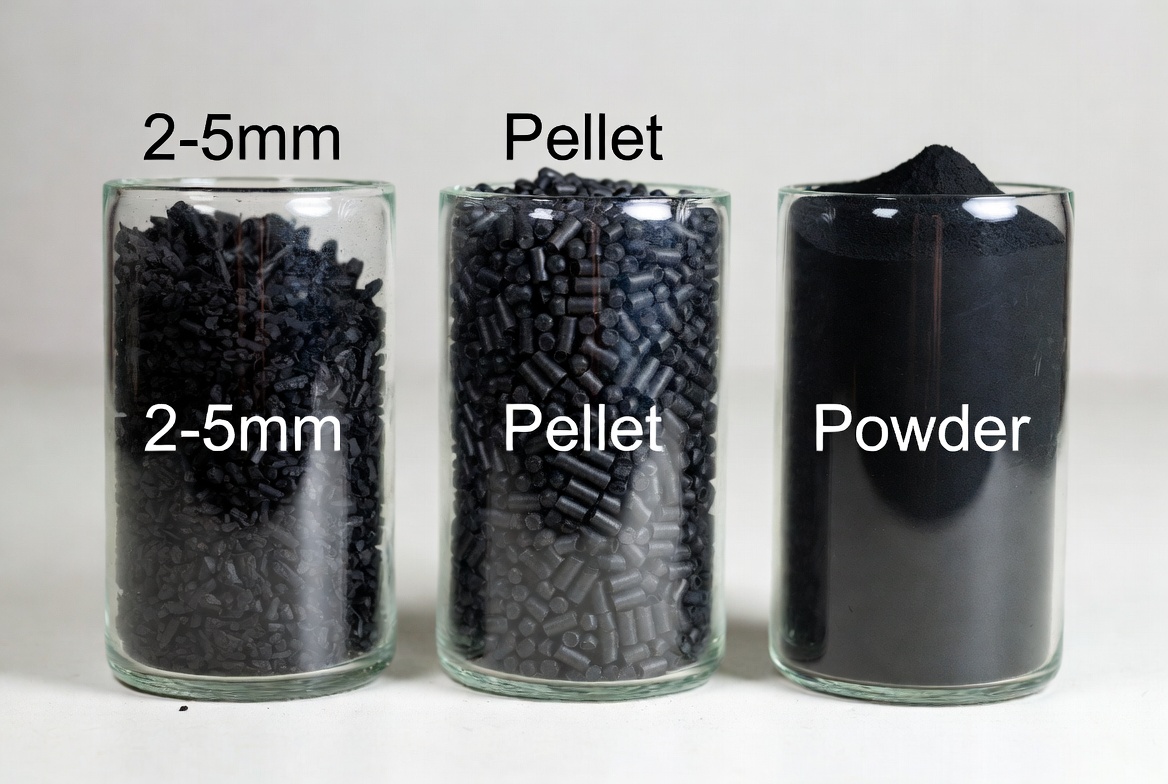
Selecting the right activated carbon format can reduce your operational costs by up to 40% while maximizing contaminant removal efficiency. As a manufacturer specializing in wood and coal-based activated carbon production for over a decade, Guangdong Tongke Activated Carbon Co., Ltd. produces 30,000 tons annually across our facilities in Shandong, Sichuan, and Hunan, serving water treatment plants, pharmaceutical manufacturers, and air purification systems globally. This comprehensive guide draws from our practical manufacturing experience and field applications to help industrial decision-makers choose the optimal activated carbon form for their specific purification challenges. [theinsightpartners]
Understanding Activated Carbon Forms: Physical Structure Drives Performance
Activated carbon's exceptional adsorption capacity stems from its highly porous structure, with surface areas reaching 800-1200 m²/g for coal-based variants and 500-1000 m²/g for wood-based materials. The global activated carbon market is projected to grow from $6.04 billion in 2026 to $11.9 billion by 2034, driven primarily by water treatment demands and air purification requirements. The three primary forms—granular (GAC), pellet/extruded (EAC), and powdered (PAC)—differ fundamentally in particle geometry, which directly impacts adsorption kinetics, hydraulic resistance, and regeneration economics. [fortunebusinessinsights]
Granular Activated Carbon (GAC): The Versatile Workhorse
Manufacturing Process and Quality Control
At our production facilities, GAC manufacturing begins with careful raw material selection—coconut shells for high hardness applications, coal for gas-phase adsorption, or wood for liquid-phase purification. The two-stage process involves carbonization at 600-800°C in oxygen-free environments, followed by steam or CO₂ activation at 900-1100°C. We implement real-time quality testing according to national standards, ensuring consistent iodine numbers (500-1000 mg/g) and moisture content below 8%. [tingyuancarbon]
Technical Specifications and Performance Characteristics
GAC particles range from 0.2-5 mm, typically classified by mesh sizes such as 4×8, 8×16, or 12×40. Our wood-based GAC exhibits 70-85% hardness with faster adsorption kinetics due to higher mesopore proportions, making it ideal for removing pigments and macromolecular organic compounds. Coal-based GAC achieves superior mechanical strength (≥90%) and density (0.45-0.55 g/cm³), providing extended service life in continuous industrial operations. [naturecarbon]
Key performance advantages include:
- Well-developed tri-modal pore structure: Micropores (<2 nm) adsorb small molecules, mesopores (2-50 nm) facilitate mass transfer, and macropores (>50 nm) provide access pathways
- High mechanical strength: Resists attrition in fixed-bed reactors and fluidized systems, minimizing carbon fines and equipment fouling
- Multiple regeneration cycles: Thermal regeneration at 500-850°C in rotary kilns or multiple hearth furnaces restores 85-95% of original adsorption capacity [sciencedirect]
- Predictable pressure drop: Uniform particle sizing ensures consistent hydraulic characteristics in column operations
Industrial Applications Where GAC Excels
Through our client partnerships, we've optimized GAC applications across diverse sectors:
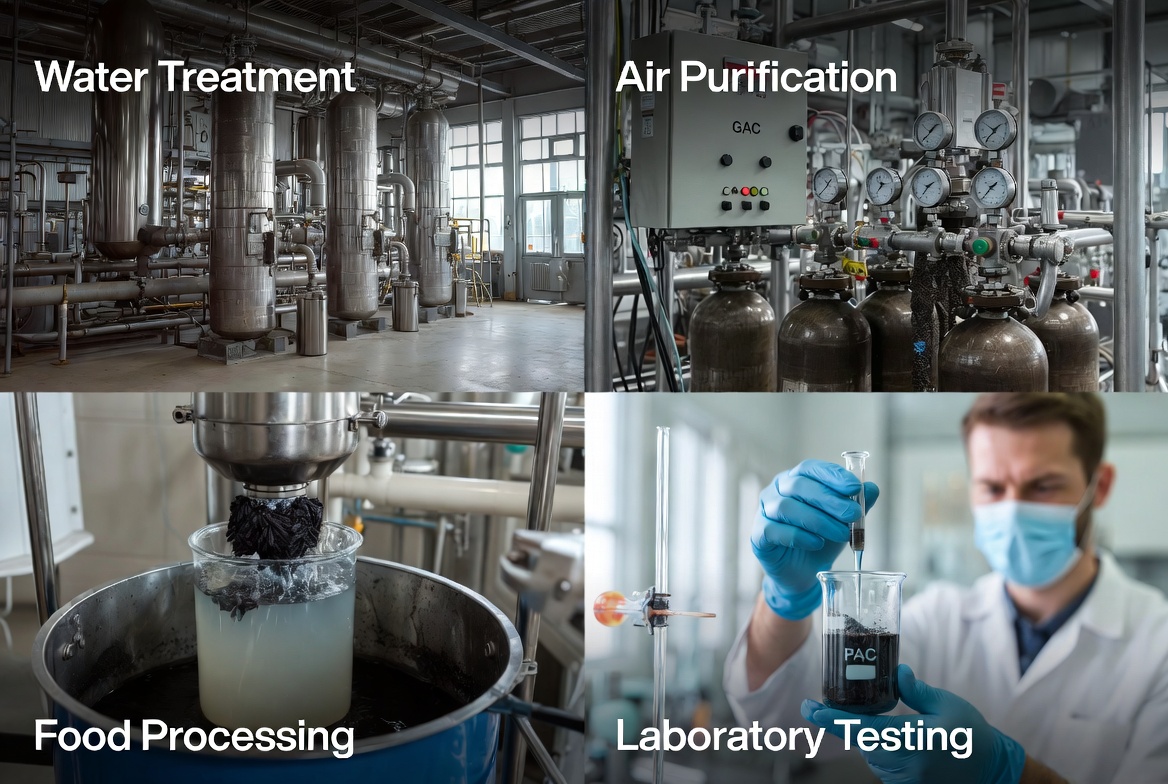
- Municipal drinking water treatment: Removes chlorine, trihalomethanes (THMs), taste and odor compounds (geosmin, MIB), and emerging contaminants like PFAS
- Industrial wastewater purification: Textile dyehouse effluent decolorization, petrochemical wastewater COD reduction, and heavy metal adsorption in mining operations
- Gold recovery: Carbon-in-pulp (CIP) and carbon-in-leach (CIL) processes utilize 6×12 mesh GAC to adsorb gold-cyanide complexes with loading capacities exceeding 3,000 g/ton
- Food and beverage processing: Sugar decolorization, wine clarification, and edible oil refining require food-grade wood-based GAC meeting strict purity standards
- VOC capture: Vapor-phase applications in chemical manufacturing and solvent recovery systems
Pellet (Extruded) Activated Carbon: Engineered for Gas-Phase Applications
Manufacturing Excellence and Shape Benefits
Pellet activated carbon undergoes extrusion through precision dies before carbonization and activation, creating uniform cylindrical structures (typically 1-5 mm diameter, 3-10 mm length). This regular geometry provides critical advantages in gas-phase systems where pressure drop and bed stability are paramount. Our quality control focuses on crush strength (>95%), low ash content (<8%), and optimized pore distribution favoring gas molecule adsorption. [tingyuancarbon]
Superior Performance in Gas Treatment Systems
The cylindrical shape ensures optimal packing density and minimal channeling in adsorption vessels. Coal-based pellet carbon's predominantly microporous structure (800-1200 m²/g surface area) delivers exceptional performance for gaseous contaminants. In our client installations, EAC has demonstrated: [naturecarbon]
- Low pressure drop characteristics: 20-30% lower than equivalent GAC beds, reducing blower energy consumption
- High bulk density: 0.50-0.60 g/cm³ enables compact vessel design
- Excellent abrasion resistance: Minimal dust generation during handling and operation
- Chemical stability: Performs reliably in acidic or alkaline gas streams
Target Applications for Pellet Activated Carbon
Based on field performance data from our installations:
- Industrial air purification: Removes formaldehyde, benzene, toluene, xylene (BTEX compounds), and other VOCs from manufacturing facilities, achieving >95% removal efficiency
- Solvent recovery systems: Benzene, acetone, ethanol, and methanol recovery in pharmaceutical and chemical plants, with economic payback periods of 12-18 months
- Flue gas desulfurization: SO₂ and NOx removal in power generation and steel manufacturing, often combined with catalytic components
- Catalyst support applications: Serves as high-surface-area carrier for catalysts in organic synthesis and exhaust treatment
- Automotive emission control: Canister applications for evaporative emissions capture in fuel systems
Powdered Activated Carbon (PAC): Rapid Response for Critical Applications
Ultra-Fine Particles for Maximum Surface Exposure
PAC consists of particles smaller than 0.18 mm (80 mesh or finer), typically 200-325 mesh in our production lines. This extreme fineness maximizes external surface area accessibility, enabling adsorption kinetics 5-10 times faster than GAC. We produce both wood-based PAC for liquid-phase applications and coal-based variants for specialized gas treatment. [tongkeac]
Operational Characteristics and Limitations
PAC's fine particle size creates unique operational considerations:
- Rapid adsorption kinetics: Achieves equilibrium within minutes rather than hours, critical for emergency response
- Excellent dispersion: Easily mixed into liquid streams using minimal agitation
- Flexible dosing: Can be applied at variable rates to match contaminant fluctuations
- Single-use limitation: Fine particles are difficult to recover; regeneration is typically impractical
- Requires separation: Necessitates sedimentation, filtration, or flotation for removal after treatment
Strategic Applications for Powdered Activated Carbon
Our clients deploy PAC in scenarios requiring rapid response or temporary treatment:
- Emergency water treatment: Algal bloom management, industrial spill response, and seasonal taste/odor control in surface water sources
- Advanced wastewater treatment: Tertiary treatment for trace organic removal ahead of membrane systems or discharge to sensitive receiving waters
- Food and pharmaceutical processing: Decolorization of glucose syrups, citric acid purification, antibiotic refining, and vitamin concentration—applications demanding food-grade or pharmaceutical-grade purity
- Batch process industries: Wine fining, beer stabilization, and edible oil bleaching where product contact time is controlled
- Soil remediation: In-situ treatment of contaminated soils for organic pollutants and heavy metal immobilization
Comparative Performance Analysis: Selecting the Right Form
Technical Comparison Matrix
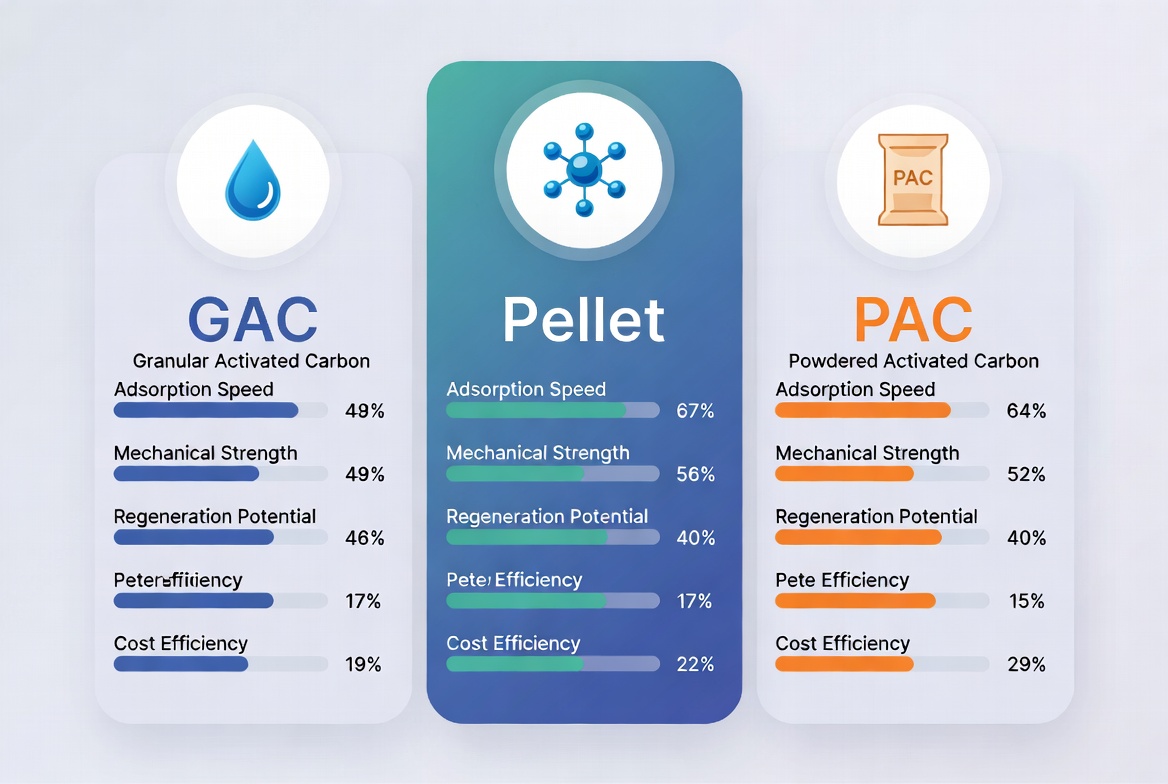
| Performance Parameter | Granular Activated Carbon | Pellet Activated Carbon | Powdered Activated Carbon |
| Particle Size Range | 0.2-5 mm (4×8 to 12×40 mesh) | 1-5 mm diameter, cylindrical | <0.18 mm (80+ mesh) |
| Surface Area | 500-1200 m²/g | 800-1200 m²/g | 600-1000 m²/g |
| Adsorption Kinetics | Moderate (hours to equilibrium) | Moderate to slow (gas-optimized) | Very rapid (minutes to equilibrium) |
| Mechanical Strength | High (70-90% hardness) | Highest (>95% crush strength) | Low (powder form) |
| Pressure Drop | Moderate | Lowest (optimized flow) | Not applicable (slurry) |
| Regeneration Potential | Excellent (10-15 cycles) | Excellent (12-20 cycles) | Impractical |
| Capital Cost/kg | Medium | Medium-High | Low |
| Operating Cost | Low (reusable) | Low (reusable) | High (single-use) |
| Preferred Phase | Liquid and gas | Gas | Liquid |
| Typical Residence Time | 15-45 minutes (EBCT) | 2-8 seconds (gas) | 30-120 minutes (contact) |
Decision Framework for Industrial Selection
From our technical consultation experience with clients across 50+ countries:
Choose GAC when:
- Continuous liquid-phase treatment is required (drinking water, wastewater)
- Long-term operation with periodic regeneration is economically attractive
- Space permits installation of adsorption columns or contactors
- Effluent quality requirements are moderate to stringent
- Multi-contaminant removal is needed (organics, chlorine, metals)
Choose Pellet/Extruded AC when:
- Gas-phase adsorption is the primary application (air purification, solvent recovery)
- Low pressure drop is critical to minimize energy costs
- High-temperature or chemically aggressive environments are present
- Catalyst support functionality is required
- Maximum mechanical durability is essential
Choose PAC when:
- Emergency or temporary treatment is needed
- Seasonal contaminant variations require flexible dosing
- Existing infrastructure permits slurry addition (rapid mix, flocculation)
- Capital budget constraints favor low upfront costs
- Process is batch-oriented rather than continuous
- Extremely rapid adsorption is critical
Economic Considerations and Life-Cycle Costs
Our clients typically evaluate total cost of ownership over 3-5 year periods:
GAC/Pellet Economics: Initial carbon cost $1,200-2,500/ton, regeneration cost $400-800/ton, achievable service life of 5-8 years with proper regeneration. Operational costs are dominated by regeneration frequency and carbon makeup requirements (5-10% loss per cycle). [sciencedirect]
PAC Economics: Lower initial cost ($800-1,500/ton) but no regeneration benefit. Consumption rates of 5-50 mg/L in water treatment create ongoing operating expenses. Break-even analysis typically favors PAC for applications requiring <100 days/year of treatment. [tingyuancarbon]
Raw Material Impact: Wood vs. Coal Activated Carbon
Performance Differentiation by Feedstock
Our manufacturing capabilities span both wood-based and coal-based activated carbon production, each offering distinct advantages:
Wood Activated Carbon (from sawdust, coconut shell, fruit shells):
- Higher mesopore proportion enhances liquid-phase adsorption of larger molecules
- Lower ash content (<5%) meets food-grade and pharmaceutical requirements
- Faster adsorption kinetics for decolorization and taste/odor removal
- Renewable feedstock aligns with sustainability initiatives
- Surface area typically 500-1000 m²/g
Coal Activated Carbon (from anthracite, lignite):
- Predominantly microporous structure optimized for small gas molecules and VOCs
- Superior mechanical strength and abrasion resistance
- Higher bulk density reduces vessel size requirements
- Lower cost per kilogram in most markets
- Surface area typically 800-1200 m²/g
Application-Specific Raw Material Selection
Based on performance testing in our laboratories and client installations:
- Drinking water purification: Wood-based preferred for taste, odor, and chlorine removal
- Industrial VOC control: Coal-based preferred for benzene, toluene, and solvent vapors
- Food processing: Wood-based required for food-grade certification
- Wastewater treatment: Either type suitable; selection based on economics
- Gold recovery: Coconut shell (wood-based) preferred for high hardness and loading capacity
Advanced Regeneration Technologies and Sustainability
Thermal Regeneration: Industry Standard
Thermal regeneration in rotary kilns or multiple hearth furnaces at 500-850°C remains the most cost-effective method for large-scale operations. The process involves three stages: drying (100-150°C), pyrolysis (400-600°C), and reactivation (700-850°C in steam). Our clients achieve: [sciencedirect]
- 85-95% capacity restoration after regeneration
- 5-10% carbon loss per cycle due to oxidation
- 10-15 regeneration cycles before replacement
- Significantly lower environmental impact than virgin carbon production
Emerging Chemical and Microwave Methods
Recent innovations include subcritical water regeneration (200-300°C under pressure) and microwave-assisted regeneration, offering lower energy consumption and reduced emissions. Chemical regeneration using solvents, acids, or bases achieves 70-90% desorption efficiency for specific contaminants but generates spent regenerant requiring treatment. These methods are gaining adoption for PFAS-loaded carbon and pharmaceutical applications where thermal methods may destroy valuable adsorbates. [sciencedirect]
Sustainability Considerations in Carbon Selection
With increasing focus on circular economy principles, consider:
- Carbon footprint: Regeneration produces 60-70% lower CO₂ emissions than virgin production
- Waste reduction: Multiple regeneration cycles minimize landfill disposal
- Resource conservation: Coal-based carbon offers lower cost but depletes non-renewable resources
- Bio-based alternatives: Wood-based carbon from agricultural waste (coconut shells, nut shells) supports sustainability goals
Implementation Best Practices from Field Experience
System Design Considerations for GAC
- Empty bed contact time (EBCT): 10-20 minutes for municipal water, 20-45 minutes for industrial applications
- Loading rate: 2-10 gpm/ft⊃2; for downflow columns
- Bed depth: Minimum 3-4 feet to establish adsorption zone
- Backwash frequency: Every 1-3 days to prevent biological growth and remove particles
Optimizing Pellet Carbon Performance
- Bed configuration: Radial flow designs reduce pressure drop by 40-60% versus axial flow
- Pre-filtration: Remove particulates >50 microns to prevent pore blockage
- Humidity control: Maintain 40-60% RH for optimal VOC adsorption
- Temperature management: Adsorption capacity increases ~2% per °C reduction below 25°C
PAC Dosing and Application Strategies
- Feed point location: Ahead of rapid mix for 30+ minute contact time
- Dosage optimization: Jar testing to determine minimum effective dose (typically 5-20 mg/L)
- Slurry preparation: 5-10% concentration to ensure uniform dispersion
- Settling time: 60-90 minutes in clarifiers or dissolved air flotation
Quality Assurance and Testing Protocols
As an ISO 9001-certified manufacturer, Guangdong Tongke Activated Carbon implements rigorous testing: [tkcarbon.en.made-in-china]
- Iodine number: Indicates total surface area and micropore development (ASTM D4607)
- Methylene blue index: Measures mesopore volume for liquid-phase applications
- CTC number: Evaluates gas-phase adsorption capacity (ASTM D3467)
- Hardness/abrasion: Ensures mechanical integrity during handling and operation
- Ash content: Critical for food-grade and pharmaceutical applications (<5% required)
- Moisture: Affects shipping weight and storage stability (<10% typical)
Future Trends and Industry Outlook
The activated carbon market faces several transformative trends through 2034: [theinsightpartners]
- Water scarcity driving demand: Global water treatment applications growing at 8.2% CAGR as municipalities upgrade infrastructure
- Emerging contaminants: PFAS, microplastics, and pharmaceutical compounds require specialized activated carbons with tailored pore structures
- Air quality regulations: Tightening VOC emission standards in Asia-Pacific and Europe expanding industrial air purification markets
- Bio-based production: Shift toward agricultural waste feedstocks (rice husks, bamboo, palm shells) for sustainability
- Smart regeneration: IoT-enabled monitoring systems optimizing regeneration timing based on breakthrough curves
Conclusion
Selecting among granular, pellet, and powdered activated carbon requires careful analysis of adsorption kinetics requirements, regeneration economics, and system constraints. GAC offers the most versatile solution for continuous liquid-phase treatment with excellent regeneration economics. Pellet carbon delivers superior performance in gas-phase applications where low pressure drop and mechanical strength are paramount. PAC provides unmatched speed for emergency response and batch processing despite single-use limitations. [tingyuancarbon]
Guangdong Tongke Activated Carbon Co., Ltd. leverages decades of manufacturing expertise and global application experience to provide customized solutions across water treatment, air purification, food processing, chemical production, and pharmaceutical manufacturing. Our technical team offers comprehensive support from carbon selection through system optimization and regeneration management. [tkcarbon.en.made-in-china]
Contact our technical specialists for detailed product specifications, application engineering assistance, and customized activated carbon solutions tailored to your specific purification challenges.
Frequently Asked Questions (FAQ)
Q1: How many times can granular activated carbon be regenerated before replacement?
Properly managed GAC can undergo 10-15 thermal regeneration cycles before adsorption capacity degrades below economically viable levels. Each regeneration cycle results in 5-10% carbon loss due to oxidation, requiring makeup carbon addition. Factors affecting regeneration life include contaminant type, operating temperature, and regeneration furnace conditions. Chemical regeneration typically allows 8-12 cycles with higher losses per cycle. [sciencedirect]
Q2: What is the cost difference between wood-based and coal-based activated carbon?
Coal-based activated carbon typically costs 15-30% less than wood-based variants of comparable specifications ($1,200-1,800/ton vs. $1,500-2,500/ton). However, total cost of ownership must consider application-specific performance—wood-based carbon's superior liquid-phase adsorption may reduce required dosage by 20-40% in water treatment applications, offsetting the higher unit price. Food-grade and pharmaceutical applications mandate wood-based carbon regardless of cost premium. [naturecarbon]
Q3: Can powdered activated carbon be used in the same systems as granular carbon?
PAC and GAC require fundamentally different application systems and are not interchangeable. GAC functions in fixed-bed columns or moving-bed contactors where water flows through the carbon bed. PAC requires slurry mixing equipment, contact basins, and downstream separation (sedimentation, filtration, or flotation). Some utilities maintain both systems—GAC for continuous baseline treatment and PAC for seasonal challenges like algal blooms or taste/odor events. [tingyuancarbon]
Q4: How does activated carbon compare to other water treatment technologies like reverse osmosis or ion exchange?
Activated carbon excels at removing organic compounds, chlorine, taste, odor, and certain pesticides through physical adsorption, with capital costs 40-60% lower than membrane systems. Reverse osmosis provides broader contaminant removal including dissolved salts and ions but requires higher energy input and generates concentrate waste. Ion exchange targets specific ionic contaminants (hardness, nitrate, arsenic) but is ineffective for organic compounds. Many advanced treatment trains combine these technologies—activated carbon pre-treatment protects RO membranes from organic fouling while removing chlorine that would damage polyamide membranes. [theinsightpartners]
Q5: What safety precautions are necessary when handling and storing activated carbon?
Activated carbon presents fire and dust explosion hazards if improperly stored. Key safety measures include: (1) Store in cool, dry locations away from oxidizing agents and heat sources—wet activated carbon can spontaneously heat due to exothermic wetting; (2) Ensure adequate ventilation during loading operations to prevent carbon dust accumulation; (3) Ground all transfer equipment to prevent static discharge ignition; (4) Seal containers to prevent moisture absorption that increases shipping weight and reduces adsorption capacity; (5) Use appropriate PPE including dust masks during handling to avoid respiratory irritation. Our packaging in 25 kg or 500 kg bags with moisture barriers ensures safe transport and storage. [tongkeac]
References
1. The Insight Partners. (2024). "Activated Carbon Market Growth, Trends & Forecast by 2034." https://www.theinsightpartners.com/reports/activated-carbon-market
2. Fortune Business Insights. (2026). "Activated Carbon Market Size, Share | Growth Report ." https://www.fortunebusinessinsights.com/activated-carbon-market-102175
3. Made-in-China. (2023). "Guangdong Tongke Activated Carbon Co., Ltd.: Company Profile." https://tkcarbon.en.made-in-china.com
4. Nature Carbon. (2025). "The Difference Between Coal-based Activated Carbon And Wood Activated Carbon." https://www.naturecarbon.com/news/the-difference-between-coal-based-activated-ca-85015093.html
5. ScienceDirect. (2021). "Insights into chemical regeneration of activated carbon for water treatment: A critical review." https://www.sciencedirect.com/science/article/abs/pii/S2213343721005327
6. Tongke Activated Carbon. (n.d.). "Lignite Activated Carbon Product Specifications." https://www.tongkeac.com/lignite-activated-carbon.html
7. Intel Market Research. (2026). "Granular Activated Carbon Cartridge Market Outlook 2026-2034." https://www.intelmarketresearch.com/granular-activated-carbon-cartridge-market-33047
8. National Center for Biotechnology Information. (2020). "Pre-Treatment Methods for Regeneration of Spent Activated Carbon." https://pmc.ncbi.nlm.nih.gov/articles/PMC7584032/
9. ScienceDirect. (1995). "A new method for regenerating activated carbon by thermal desorption with liquid water under subcritical conditions." https://www.sciencedirect.com/science/article/abs/pii/0008622395002111
10. Tingyuan Carbon. (2025). "Comprehensive Comparative Analysis of Granular Pellet and Powdered Activated Carbon." https://tingyuancarbon.com/comprehensive-comparative-analysis-of-granular-pellet-and-powdered-activated-carbon/


