
Language
Views: 277 Author: Tongke Activated Carbon Publish Time: 2026-08-07 Origin: Site


Content Menu
● Why This Comparison Matters for Industrial Buyers
● Company Backgrounds: Heritage vs. Manufacturing Scale
● Product Line Comparison by Application
● Key Differences Beyond the Product Catalog
● Industry Data: What's Driving Demand in 2026
● Practical Steps for Choosing the Right Supplier
● Ready to Compare Carbon Grades for Your Project?
Choosing between Jacobi activated carbon and Huamei activated carbon comes down to matching product specifications, application needs, and supply reliability to your operational goals — and this guide breaks down exactly how the two brands compare across water treatment, air purification, gold recovery, and more.
Procurement teams sourcing activated carbon for water treatment, gas purification, or metal recovery face a crowded global market. Jacobi Carbons, headquartered in the Netherlands and founded in 1916, has built its reputation over more than a century as one of the world's largest coconut-shell-based activated carbon producers. Huamei Carbons, based in Guangdong, China, brings over 20 years of dedicated production and R&D experience, positioning itself as a cost-competitive alternative backed by China's abundant coal resources and manufacturing infrastructure.
This distinction matters because the global activated carbon market is projected to grow from USD 6 billion in 2026 to USD 11 billion by 2034, at a compound annual growth rate of roughly 8.5%, driven largely by water scarcity concerns and stricter emissions regulations. Asia Pacific already commands 48% of global market share, with China recognized as the world's leading producer and exporter of activated carbon. Understanding how established European brands stack up against experienced Chinese manufacturers helps buyers make cost-effective, performance-driven sourcing decisions.
Jacobi Carbons built its identity on coconut-shell-based granular, extruded, and powdered activated carbon, serving water treatment, air purification, food and beverage, chemical, and oil and gas sectors worldwide. Its century-long operating history has produced deep application expertise and an extensive global distribution network.
Huamei Carbons, by contrast, leverages China's coal and wood-based feedstock advantages to manufacture granular, pellet, coconut shell, coal-based, wood powder, and honeycomb activated carbon at competitive price points. The company positions itself around effective solutions, fast sample turnaround, and export-ready logistics for global buyers across water treatment, gold mining, wine production, chemical processing, and air filtration industries.
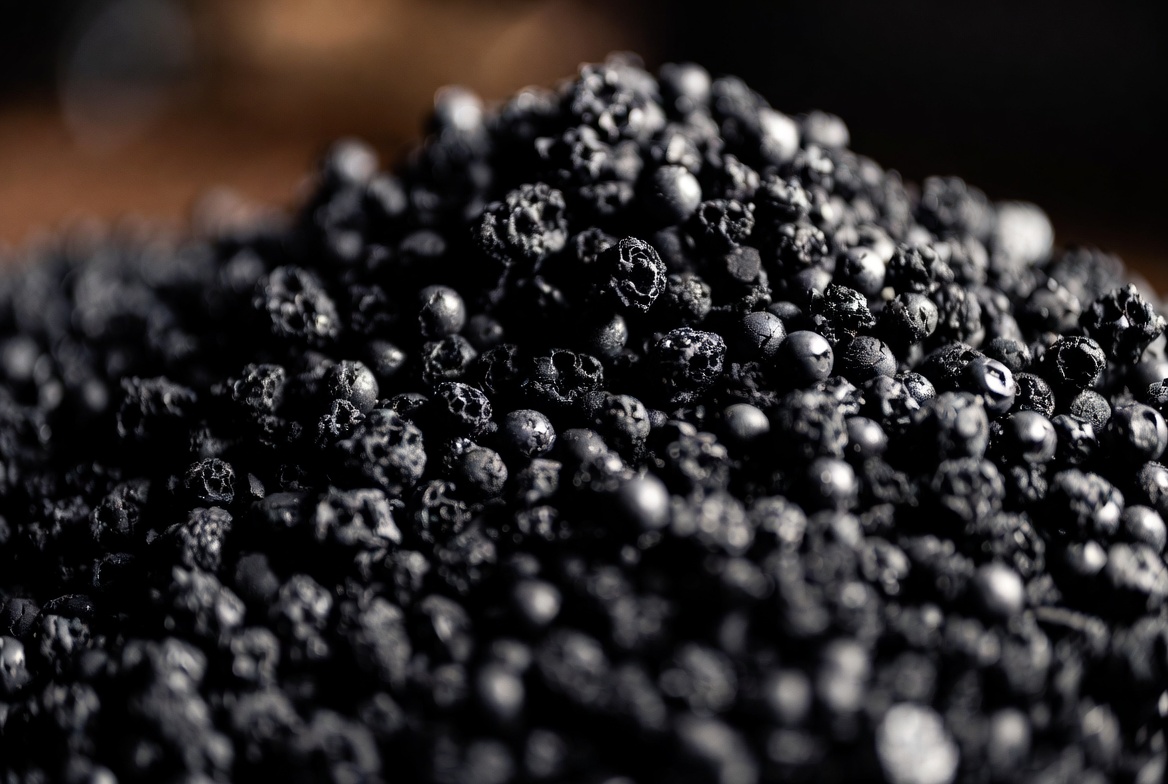
The most practical way to compare these two manufacturers is model-by-model, since each brand assigns proprietary series names to carbon grades engineered for specific uses.
| Application | Jacobi Carbons Models | Huamei Carbons Models |
|---|---|---|
| Air and gas treatment | EcoSorb™, AddSorb™ | HMEAC™, HMCUO™ |
| Water treatment | AquaSorb™ 1000/1200/2000/CS | HMG-A™500, HMG-BC™700–1000, HM-FM™ |
| Biogas purification | EcoFlow™, AddSorb™ VA/VA6, EcoSorb™ GX | HMKOH™440–460, HMNaOH™460 |
| Gold recovery | GoldSorb™ 4500/5500, PICAGOLD™ series | HMGOLD™6000/7000/7500/PLUS |
| Oil and gas | PetroSorb™ CS/HS/HSD/1000–2000 | HME-AC™450–470, HMG-BC™950–1000, HME-AY™950, HMC-AW™830 |
| Solvent recovery | EcoSorb BX/GX/C/H | HMEAC-600™, HME-W80 |
| Food and beverage | ColorSorb™ H620/HP/CP/G/C/H600/H100 series | HMG-BC™1000, HMG-CS™1000/1100, HMP-WS™200/325, HMP-W™200 |
This side-by-side view shows both companies cover nearly identical application segments, meaning the real differentiators lie in raw material sourcing, quality consistency, and pricing structure rather than market coverage.
Raw material base shapes performance characteristics significantly. Jacobi's coconut-shell carbons typically offer higher hardness and micro-porosity, favoring gas-phase and potable water applications, while Huamei's coal-based and wood-based options often deliver stronger macro-porosity suited to decolorization and larger molecule adsorption.
Certification and testing rigor also separate suppliers in this space. Buyers should verify compliance with recognized frameworks such as ASTM International standards, ANSI/AWWA B600 and B604 for powdered and granular carbon, or China's GB/T 7701 and GB/T 12496 series covering coal-based and wood-based activated carbon testing. A manufacturer's willingness to share third-party lab results for iodine number, ash content, and hardness is a practical indicator of manufacturing discipline.
Regional logistics and lead time frequently tip decisions for export-focused buyers. Chinese manufacturers based in coastal provinces like Guangdong often provide shorter shipping windows to Southeast Asia, Africa, and parts of Europe compared with European-headquartered suppliers, while European brands may hold an edge for buyers requiring EU-based warehousing or regulatory documentation.
Several market shifts are reshaping how buyers evaluate activated carbon suppliers this year.
- Water purification remains the largest application segment, accounting for roughly 40% of global consumption, driven by tightening drinking water regulations and industrial wastewater reuse mandates.
- Air purification is the fastest-growing use case, expected to post a 14% CAGR as VOC removal, automotive cabin filtration, and HVAC emission control adoption accelerates.
- Extruded activated carbon (EAC) is gaining share, projected at a 15% CAGR, thanks to its mechanical strength in high-pressure gas purification and chemical reactor settings.
- Sustainability-driven feedstock innovation is emerging as a competitive differentiator, with manufacturers converting agricultural waste and biomass byproducts into carbon to meet eco-friendly sourcing demands.
- Major producers are expanding capacity, including Calgon Carbon's near USD 100 million investment in reactivation capacity and Kuraray's 2026 portfolio expansion into advanced water and air treatment carbons.
These trends suggest that buyers evaluating any supplier — Jacobi, Huamei, or otherwise — should prioritize partners actively investing in capacity, sustainable sourcing, and application-specific engineering rather than relying solely on brand legacy.
Selecting an activated carbon partner requires more than comparing product names. Follow this sequence when evaluating suppliers for a new project.
1. Define your target contaminant or application — chlorine removal, VOC capture, decolorization, or precious metal recovery each demand different pore structures.
2. Request third-party test certificates covering iodine number, methylene blue value, ash content, and hardness relevant to your standard (ASTM, AWWA, or GB/T).
3. Ask for free samples and a small trial batch before committing to bulk orders, since real-world adsorption performance can vary from datasheet values.
4. Compare total landed cost, not just unit price — factor in shipping lead time, minimum order quantities, and regeneration or disposal costs.
5. Verify production capacity and export history to confirm the supplier can reliably fulfill recurring or large-volume contracts.
Contact a specialized activated carbon manufacturer directly to request free samples, technical datasheets, and pricing tailored to your specific water treatment, air purification, or industrial processing requirements before placing a bulk order.
- What is the main difference between Jacobi and Huamei activated carbon?
Jacobi is a century-old Dutch manufacturer known primarily for coconut-shell-based carbon with strong global brand recognition, while Huamei is a Chinese manufacturer with over 20 years of experience offering a broader range of coal, wood, and coconut shell-based carbons at competitive pricing.
- Which type of activated carbon is better for drinking water treatment?
Coconut shell-based granular activated carbon generally performs well for potable water due to its fine micro-porosity, though coal-based granular carbon can also meet ANSI/AWWA B604 standards depending on the target contaminants.
- How is activated carbon tested for quality before shipment?
Reputable manufacturers test parameters including iodine adsorption value, methylene blue adsorption, ash content, moisture, hardness, and particle size distribution using standards such as ASTM D4607, GB/T 7702, or ANSI/AWWA B600.
- Why is China considered a major hub for activated carbon manufacturing?
China combines abundant coal and wood feedstock with developed manufacturing infrastructure, making it the world's largest producer and exporter of activated carbon as of recent industry assessments.
- Which activated carbon application segment is growing fastest in 2026?
Air purification is currently the fastest-growing application, expected to register a 14% compound annual growth rate through 2034 due to stricter emission regulations and rising indoor air quality awareness.
- Can activated carbon be customized for specific industrial contaminants?
Yes, activated carbon can be engineered or impregnated to target specific contaminants such as heavy metals, micro-pollutants, or pharmaceutical residues, and manufacturers increasingly offer functionalized grades for specialized applications.
1. Huamei Activated Carbon — [Difference between Jacobi Activated Carbon and Huamei Activated Carbon]
2. Heycarbons — [Activated Carbon Testing Standards]
3. Straits Research — [Activated Carbon Market Size, Share, Growth, Forecast, 2034]
4. LinkedIn — [The Top 10 Activated Carbon Companies In The Global Market]


