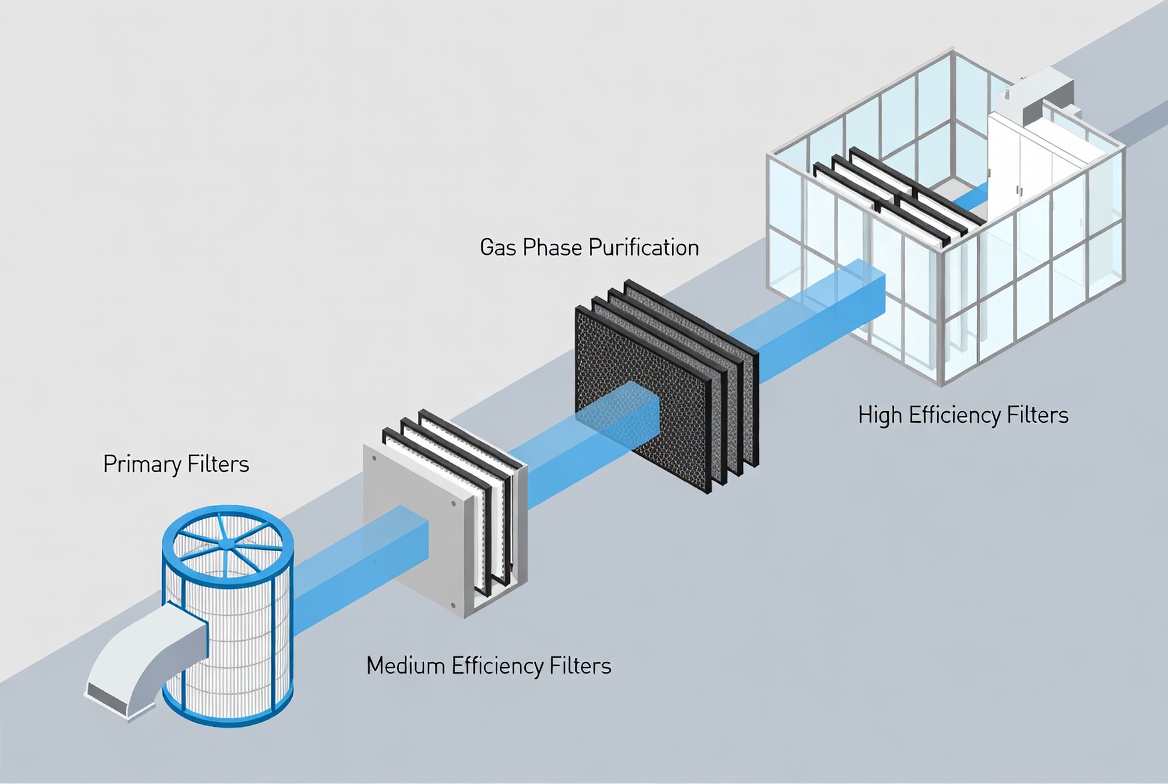
For modern industrial facilities, choosing the right primary, medium, and high‑efficiency filters is critical to protect equipment, ensure product quality, and safeguard worker health. This guide explains how these three filtration stages work together, how they differ, and how to select the right filter combination for your process air systems, cleanrooms, and HVAC installations. [grandviewresearch]
What Are Primary, Medium, and High‑Efficiency Filters?
In most industrial air and HVAC systems, filtration is not handled by a single "universal" filter. Instead, air passes through a multi‑stage filtration system:
- Primary (pre) filters – first line of defense, capturing large particles and extending the service life of downstream filters.
- Medium‑efficiency filters – handle smaller particles and stabilize air cleanliness.
- High‑efficiency filters – provide fine or ultra‑fine filtration for critical environments (e.g., cleanrooms, pharma, electronics).
This staged approach prevents premature clogging, improves overall performance, and optimizes lifecycle cost. [grandviewresearch]
Why Multi‑Stage Filtration Matters for Industry
In industrial environments, airborne dust, fumes, and aerosols can come from raw materials, production processes, and external ambient air. If not properly filtered, these contaminants can:
- Damage sensitive equipment (e.g., compressors, turbines, electronics).
- Compromise product quality in food, beverage, chemical, or pharmaceutical production.
- Increase health and safety risks for workers exposed to fine dust or harmful gases.
- Raise operating costs due to higher energy use and frequent filter replacements.
A well‑designed combination of primary, medium, and high‑efficiency filters – combined where necessary with honeycomb activated carbon for gas‑phase purification – helps you achieve compliant, energy‑efficient, and safe operations.

Primary Filters: First Line of Defense
Role and Typical Applications
Primary air filters (often called pre‑filters or coarse filters) are installed at the air intake or early in the system. Their main functions are to:
- Capture large particles such as dust, fibers, insects, and coarse aerosols.
- Extend the service life of medium and high‑efficiency filters by reducing their loading.
- Protect fans, heat exchangers, and ductwork from heavy contamination.
Primary filters are widely used in:
- Industrial HVAC supply air in manufacturing plants.
- Pre‑filtration for paint booths and surface treatment lines.
- Air handling units in food and beverage facilities (non‑critical zones).
- Commercial buildings and warehouses.
Common Types and Efficiency Levels
Typical primary filter formats include:
- Panel filters (synthetic fiber or glass fiber mats).
- Pleated filters with increased surface area.
- Washable metal filters for coarse dust and oil mist.
They are often rated in coarse efficiency classes (for example, according to EN ISO 16890 as ePM10 or coarse ranges), focusing on removal of larger particles rather than sub‑micron dust.
When to Upgrade or Replace Primary Filters
From a practical, plant‑engineer perspective, you should consider upgrading or replacing primary filters when:
- Pressure drop reaches the recommended final resistance from the manufacturer.
- Visible dust accumulation significantly reduces airflow.
- Downstream filters are clogging faster than expected (indicating poor pre‑filtration).
- Your facility is located in a high‑dust region or near construction, mining, or heavy traffic.
Scheduling regular inspections and pressure‑drop monitoring helps keep primary filters working effectively and avoids costly, unplanned downtime.
Medium‑Efficiency Filters: Stabilizing Air Cleanliness
Role in the Filtration Chain
Medium‑efficiency filters sit downstream of primary filters, taking over once coarse contaminants are removed. Their key roles are to:
- Capture smaller particles (fine dust, spores, some aerosols).
- Maintain more stable indoor air quality in production and packaging areas.
- Reduce the dust load reaching high‑efficiency or terminal filters, minimizing their replacement costs.
Medium‑efficiency filters are widely used in:
- Air handling units for food and beverage processing zones.
- Electronics assembly lines where basic clean conditions are required.
- Pharmaceutical secondary areas (non‑aseptic rooms).
- Central HVAC systems in offices and laboratories attached to plants.
Common Designs and Ratings
Common medium‑efficiency filter constructions include:
- Bag filters (multi‑pocket) with synthetic or glass fiber media.
- Rigid box or cartridge filters with pleated media.
- V‑bank filters for high airflow systems.
These filters usually target finer particle size ranges, often equivalent to mid‑range ePM1/ePM2.5 ratings in ISO standards. They serve as a bridge between coarse pre‑filtration and final high‑efficiency filtration.
Practical Selection Tips
From an operational point of view, consider the following when selecting medium‑efficiency filters:
- Dust load and particle size distribution in your process air.
- Required cleanliness level in production or packaging zones.
- Available fan capacity and static pressure budget.
- Integration with gas‑phase filters, such as honeycomb activated carbon, when you also need odor or VOC control.
Balancing filter efficiency with pressure drop and service life is key to optimizing total cost of ownership.
High‑Efficiency Filters: Protecting Critical Processes
Where High‑Efficiency Filters Are Essential
High‑efficiency filters (often HEPA or similar grade) are used where even very small particles can cause product defects or health risks. These include:
- Pharmaceutical cleanrooms and sterile manufacturing.
- Biotech and medical device production.
- Electronics and semiconductor manufacturing (cleanrooms and clean zones).
- Critical zones in food and beverage production where microbial control is essential.
In these applications, high‑efficiency filters often serve as terminal filters mounted near the point of air delivery to the room or process.
Performance Characteristics
High‑efficiency filters are designed to:
- Capture fine particles and microorganisms at very high efficiency.
- Operate with stable efficiency over their service life, when properly protected by upstream stages.
- Provide defined leak‑tight construction and uniform airflow.
Because these filters are relatively expensive, it is vital to pair them with correctly sized primary and medium‑efficiency filters to extend their lifetime and maintain consistent performance.
Integration With Honeycomb Activated Carbon
In many industrial and commercial clean air systems, high‑efficiency particle filtration is combined with gas‑phase filtration to remove odors, VOCs, and hazardous gases. Honeycomb activated carbon modules can be installed upstream or in parallel with high‑efficiency particle filters to:
- Protect sensitive products (e.g., food, beverages, pharmaceuticals) from off‑odors and reactive gases. [insightaceanalytic]
- Improve worker comfort by absorbing nuisance odors from chemicals or solvents. [insightaceanalytic]
- Reduce corrosion on electronics and control systems by removing corrosive gases. [linkedin]
As a specialist manufacturer of honeycomb activated carbon and related activated carbon products, Guangdong Tongke Activated Carbon Co., Ltd. can help design custom gas‑phase filtration stages tailored to your application and airflow. [tongkeac]
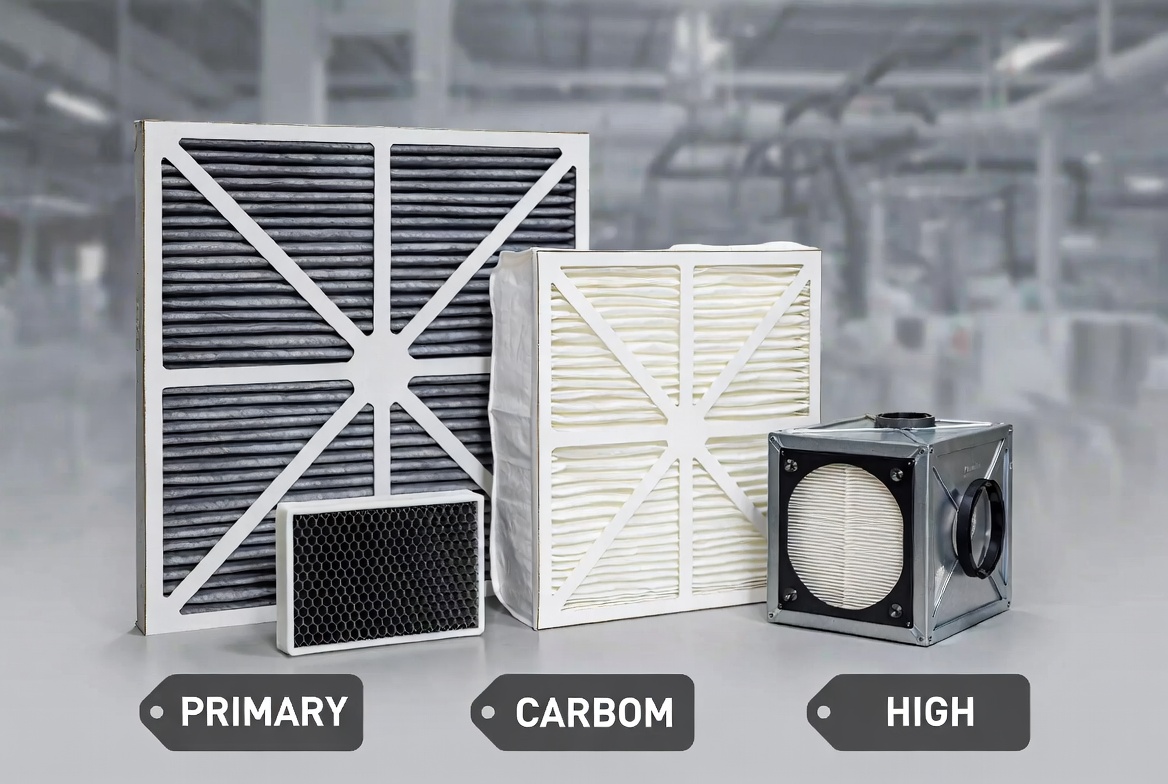
How Primary, Medium, and High‑Efficiency Filters Work Together
A typical industrial air filtration train might look like this:
1. Primary filter stage – coarse panel or pleated filters capture large dust and debris.
2. Medium‑efficiency stage – bag or box filters remove smaller particles and stabilize air quality.
3. Gas‑phase stage (optional) – honeycomb activated carbon blocks remove odors and gases.
4. High‑efficiency stage – terminal HEPA‑grade filters ensure final cleanliness for critical zones.
This staged configuration offers several practical benefits:
- Extended filter life – each stage handles a specific particle size range.
- Energy efficiency – properly sized filters keep pressure drop under control.
- Better compliance with relevant industry guidelines and standards for indoor air quality and process cleanliness.
From an operations perspective, a clear maintenance plan that defines inspection intervals, pressure‑drop thresholds, and replacement criteria for each stage is essential.
Industrial Use Cases for Multi‑Stage Filtration and Activated Carbon
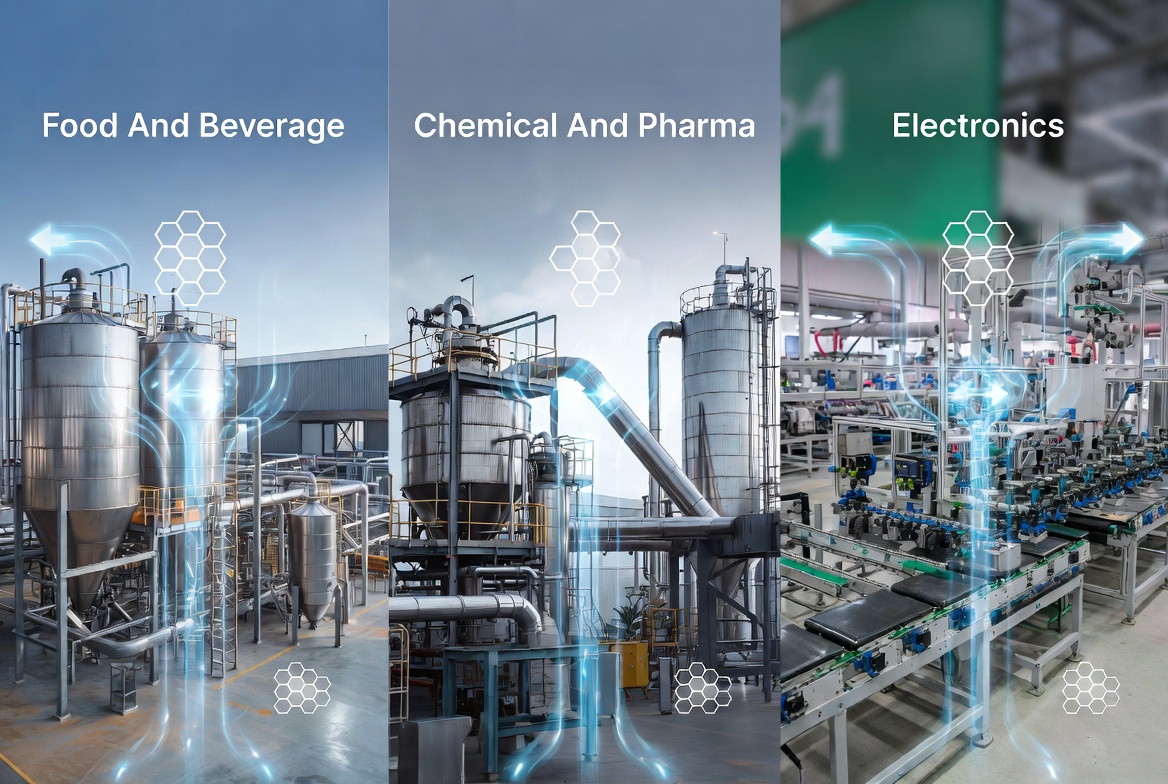
To illustrate how primary, medium, and high‑efficiency filters – plus honeycomb activated carbon – work in real industry, consider three typical scenarios.
1. Food and Beverage Production
- Primary filters at the air intake protect coils and ducts from heavy dust.
- Medium‑efficiency filters stabilize particulate levels in processing rooms.
- Honeycomb activated carbon is added to control odors and volatile compounds, especially when handling spices, flavorings, or smoke. [insightaceanalytic]
- High‑efficiency filters are installed for packaging and high‑hygiene zones to reduce microbial load and particulate contamination.
2. Chemical and Pharmaceutical Plants
- Primary and medium‑efficiency filters protect HVAC and process equipment from dust.
- Honeycomb activated carbon modules remove solvent vapors, VOCs, and toxic gases from exhaust or recirculated air. [linkedin]
- High‑efficiency filters in cleanrooms or laboratories ensure stable conditions for sensitive reactions and aseptic operations.
3. Electronics and Precision Manufacturing
- Pre‑filters and medium filters maintain clean air in general production spaces.
- High‑efficiency filters installed at the tool level or in mini‑environments protect sensitive processes from micro‑particles.
- Activated carbon filters mitigate corrosive gas effects that can damage PCBs or connectors. [linkedin]
These examples highlight why a system‑level approach – rather than thinking in terms of a single filter type – is essential for robust industrial air quality management.
Expert Checklist for Selecting Primary, Medium, and High‑Efficiency Filters
From an industrial filtration specialist's perspective, a structured selection process reduces risk and avoids over‑ or under‑specification. Use this practical checklist when designing or upgrading your system:
1. Define your cleanliness targets
- What are the particle and, if relevant, gas‑phase limits for your process or product?
- Are there regulatory or customer standards to meet?
2. Analyze your contaminant profile
- Measure or estimate particle size distribution and concentration in intake and process air.
- Identify key gas‑phase contaminants (VOCs, odors, corrosive gases).
3. Map your airflow and system constraints
- Total airflow volume and velocity.
- Available space for filter banks.
- Maximum allowable pressure drop.
4. Design your filtration stages
- Choose primary filters to match coarse load and protect downstream stages.
- Specify medium‑efficiency filters to achieve intermediate cleanliness.
- Add honeycomb activated carbon where gas‑phase removal is required. [tongkeac]
- Select high‑efficiency filters for critical points, considering local standards.
5. Plan maintenance and monitoring
- Define pressure‑drop limits for each stage.
- Set inspection and replacement intervals based on operating conditions.
- Consider differential pressure sensors and remote monitoring.
Working with a dedicated manufacturer and solution provider allows you to fine‑tune each step with actual operating data and field experience.
Market Trends and Why Filter Choices Matter More Today
Global demand for high‑performance filtration and adsorption materials is growing steadily, driven by stricter environmental regulations and rising expectations for indoor air quality. The activated carbon market alone is projected to grow at around 4% CAGR from 2026 to 2033, reflecting rising needs in water treatment, air purification, and food and beverage applications. The honeycomb activated carbon segment in North America, for example, is expected to grow at a CAGR of about 4.8% in the coming years. [grandviewresearch]
For industrial operators, these trends mean:
- More attention from regulators and customers on emissions and air quality. [insightaceanalytic]
- Higher expectations for efficiency, sustainability, and traceability in filtration solutions. [insightaceanalytic]
- Greater value in partnering with specialized manufacturers that can provide customized, integrated filtration systems rather than stand‑alone products. [tongkeac]
Guangdong Tongke Activated Carbon Co., Ltd., as a professional manufacturer and exporter of honeycomb activated carbon and related products, is positioned to support industry in meeting these evolving requirements through tailored adsorption and filtration solutions. [tongkeac]
Structured Overview Table
You can integrate a table like the one below into the article to help users quickly compare filter stages:
| Filter stage | Main function | Typical location in system | Particle/gas focus | Key benefits for industry |
| Primary (pre) | Capture large particles and debris | Air intake, early in AHU | Coarse dust, fibers | Protects equipment and extends life of later stages |
| Medium‑efficiency | Remove smaller particles, stabilize IAQ | Mid‑stage in AHU or duct | Fine dust, spores | Improves air quality, protects high‑efficiency stage |
| Honeycomb activated carbon | Remove gases, odors, VOCs | After dust removal, before terminal filters | Gas‑phase contaminants | Controls odors, protects products and electronics insightaceanalytic |
| High‑efficiency | Final fine or ultra‑fine filtration | Terminal filters near clean zones | Fine particles, microbes | Critical for cleanrooms and sensitive processes |
Clear Call to Action (CTA)
If you are planning a new filtration system or upgrading existing equipment, it pays to get expert input early. By combining primary, medium, and high‑efficiency filters with customized honeycomb activated carbon solutions, you can significantly improve air quality, extend equipment life, and reduce total operating cost.
To discuss your specific application – from water treatment and air purification to food, chemical, and pharmaceutical environments – you can contact Guangdong Tongke Activated Carbon Co., Ltd. for a tailored solution proposal and technical support. [tongkeac]
Frequently Asked Questions (FAQ)
1. Why do I need all three stages: primary, medium, and high‑efficiency filters?
Using all three stages allows each filter to target a specific particle size range, which extends service life and reduces overall operating costs, especially in dusty or demanding environments. [grandviewresearch]
2. When should I add honeycomb activated carbon to my air system?
You should add honeycomb activated carbon when you need to control odors, VOCs, or corrosive gases in addition to particles, such as in chemical processing, food production, or electronics manufacturing. [linkedin]
3. How often should filters be replaced?
Replacement intervals depend on dust load, airflow, and process conditions, but best practice is to monitor pressure drop and change filters when they reach the manufacturer's recommended final resistance or when air quality starts to decline. [innovationvisual]
4. Can I retrofit existing HVAC systems with honeycomb activated carbon modules?
In many cases, yes. Honeycomb activated carbon blocks can often be integrated into existing filter banks or dedicated gas‑phase stages, provided there is enough space and acceptable pressure drop. [tongkeac]
5. How do filtration and adsorption trends affect my long‑term planning?
With activated carbon and filtration markets growing steadily under stricter environmental and quality standards, investing in efficient, multi‑stage particle and gas‑phase filtration now will help you stay compliant and competitive over the coming years. [insightaceanalytic]
References
1. Grand View Research – *Activated Carbon Market Size & Share | Industry Report 2033*. [grandviewresearch]
2. InsightAce Analytic – *Activated Carbon Fiber Market Size, Trend and Growth Report 2026–2035*. [insightaceanalytic]
3. LinkedIn – *Forecasting North America Honeycomb Activated Carbon Market*. [linkedin]
4. Guangdong Tongke Activated Carbon Co., Ltd. – *Application – Guangdong Tongke Activated Carbon Co., Ltd.* [tongkeac]
5. Guangdong Tongke Activated Carbon Co., Ltd. – *China Activated Carbon Honeycomb Manufacturers & Suppliers*. [tongkeac]
6. HubSpot – *Is Your Website EEAT‑compliant? What Developers Should Keep In Mind*. [blog.hubspot]
7. Innovation Visual – *Google's EEAT Guidelines – How To Remain Compliant*. [innovationvisual]


