Content Menu
● Why Mesh Size Matters in GAC Selection
● Particle Size and Physical Differences
● Adsorption Rate vs Pressure Drop: The Core Trade-Off
● Fluidization Behavior in Backwash and Expansion Systems
● Application-Specific Recommendations
● A Practical Framework for Choosing Your Mesh Size
● Industry Data Snapshot
● Sourcing Considerations for Bulk and Export Orders
● Frequently Asked Questions
● References
Choosing between 8x30 and 12x40 granular activated carbon comes down to a single trade-off: adsorption speed versus pressure drop. This guide breaks down that trade-off across particle size, flow dynamics, and application fit so you can select the right grade with confidence.
Why Mesh Size Matters in GAC Selection
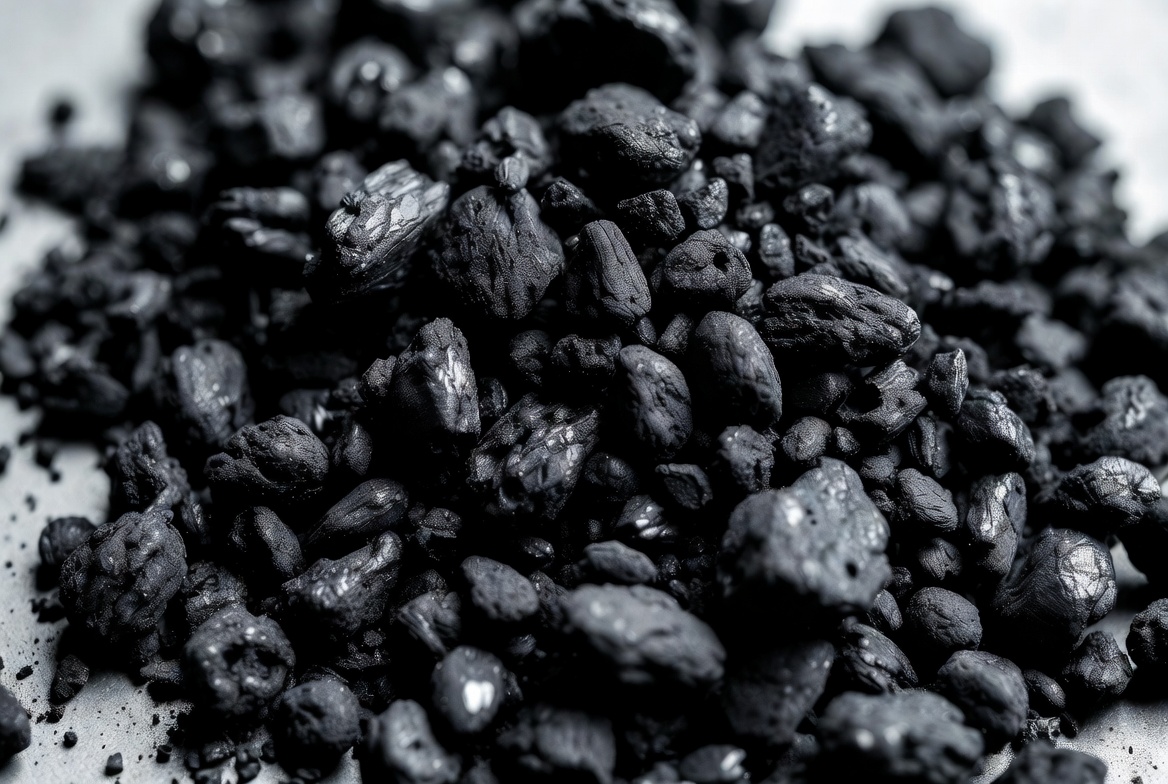
Mesh size describes how granular activated carbon particles are sized after passing through calibrated sieve screens, with the first number representing the coarser retaining screen and the second the finer passing screen. An 8x30 designation means particles pass through an 8-mesh screen but are retained on a 30-mesh screen, while 12x40 particles are correspondingly finer. This distinction is not cosmetic — particle diameter directly governs how fast contaminants diffuse into the carbon's internal pore structure and how much resistance the bed creates against fluid flow.
At Guangdong Tongke Activated Carbon Co., Ltd., we manufacture and export both grades daily for water treatment, air and gas purification, food and beverage processing, chemical processing, and pharmaceutical clients worldwide. That hands-on production experience — from raw material selection through activation and screening — informs every recommendation below.
Particle Size and Physical Differences
The core physical distinction between these two grades lies in their diameter ranges:
- 8x30 GAC: particle diameter between 2.36 mm and 0.60 mm
- 12x40 GAC: particle diameter between 1.70 mm and 0.425 mm
This means 12x40 particles are noticeably smaller and lighter than 8x30 particles. Smaller particles create a shorter diffusion path for contaminant molecules to travel before reaching an active adsorption site inside the carbon matrix.
Adsorption Rate vs Pressure Drop: The Core Trade-Off
This is the single most important comparison for buyers to understand. The shorter diffusion path in 12x40 GAC translates into nearly twice the adsorption rate compared to 8x30 GAC. Contaminants get captured faster per unit of contact time, which matters in systems with limited retention time or high removal-efficiency requirements.
However, that speed advantage comes at a cost. Finer 12x40 particles pack more densely and restrict fluid movement, producing a 100% to 150% higher pressure drop across the filter bed compared to 8x30 GAC. Higher pressure drop means pumps work harder, energy consumption rises, and mechanical wear on system components accelerates over time.
| Factor | 8x30 GAC | 12x40 GAC |
| Particle size range | 2.36 mm – 0.60 mm | 1.70 mm – 0.425 mm |
| Adsorption rate | Moderate | Fast, ~2x faster |
| Pressure drop | Low | Moderate to high (100–150% greater) |
| Flow suitability | High-flow systems | Medium-flow systems |
| Bed depth requirement | Deeper beds tolerated efficiently | Shallower beds achieve target removal |
| Fluidization threshold | Requires higher upward velocity to expand | Fluidizes at lower upward velocity |
Fluidization Behavior in Backwash and Expansion Systems
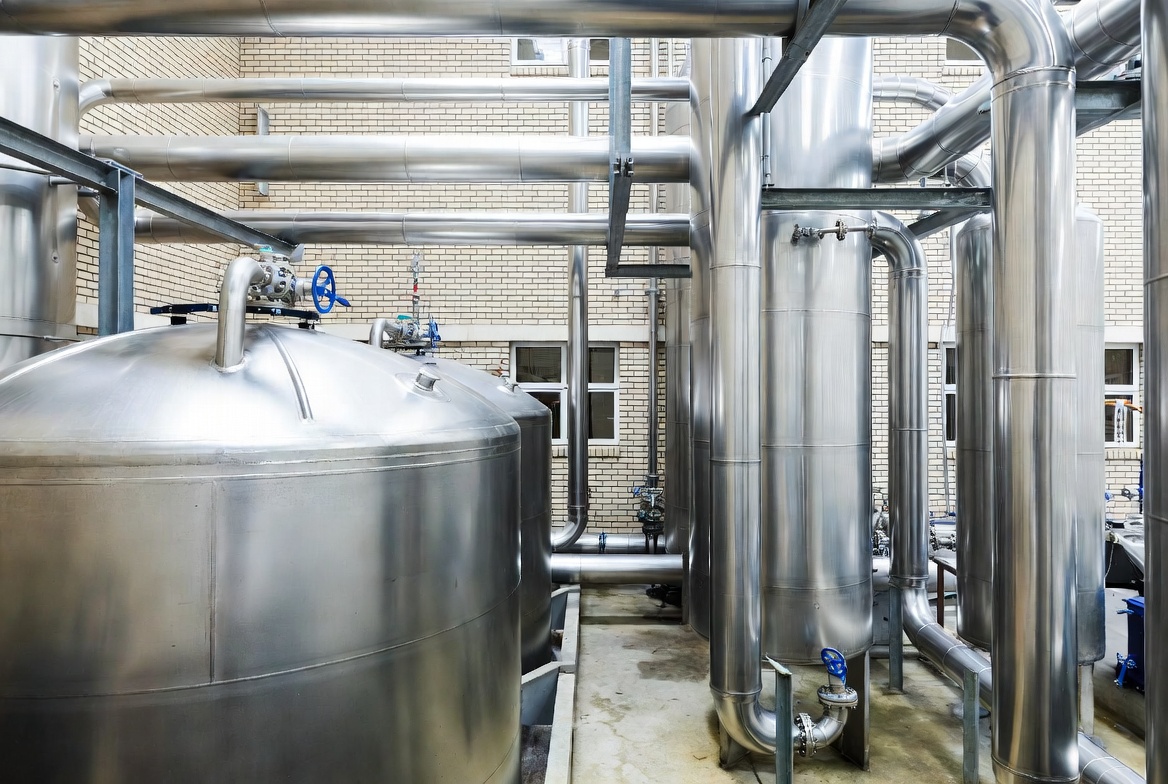
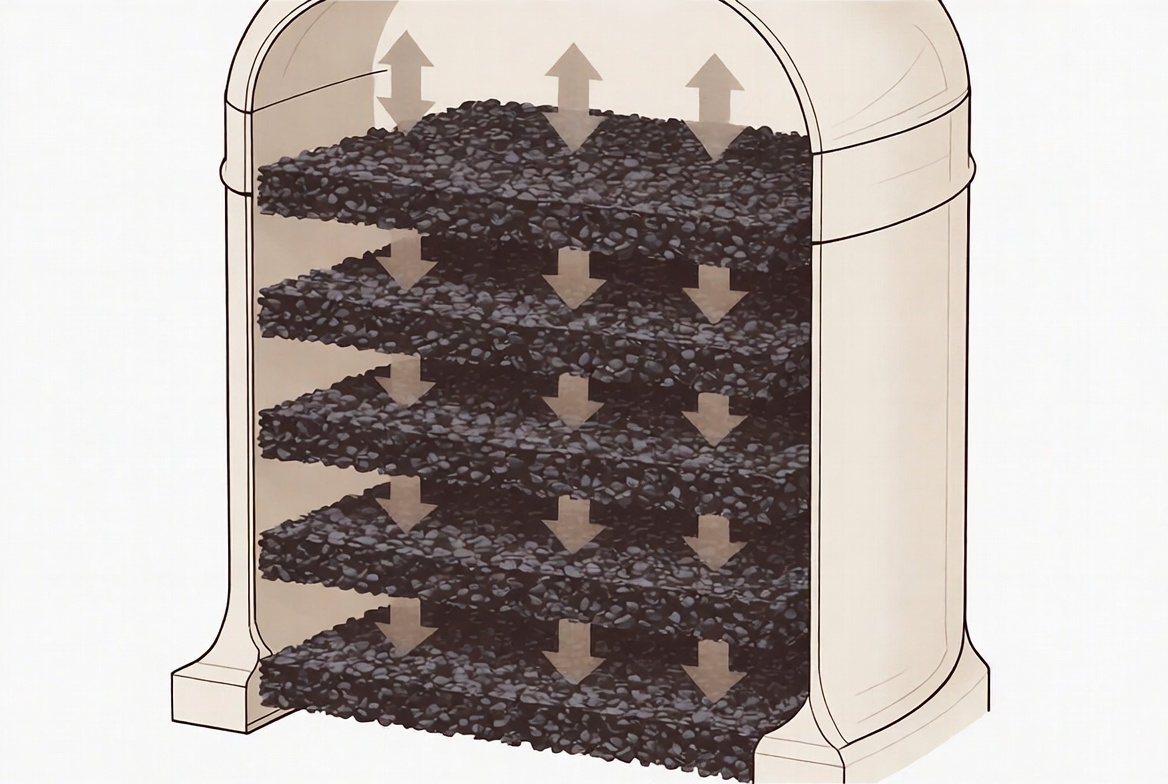
An often-overlooked operational detail is how each grade behaves during backwashing. Because 12x40 particles are lighter, they fluidize and expand at much lower upward water velocities than the coarser 8x30 grade. For engineers designing backwash cycles, this means 12x40 beds require gentler flow rates to avoid carbon loss or bed disruption, while 8x30 beds can tolerate more aggressive hydraulic cycling without lifting the media out of the vessel. Getting this wrong in system design can lead to premature carbon loss and increased replacement costs — a detail we routinely flag for clients scaling up pilot systems to full industrial installations.
Application-Specific Recommendations
Different industries lean toward different grades based on their flow, contact time, and purity requirements:
- Industrial water treatment and gas purification: 8x30 GAC is preferred for deep-bed pressure vessels and high-flow systems where minimizing energy consumption and pump wear is critical
- Drinking water filtration and VOC removal: 12x40 GAC is favored where faster adsorption kinetics and higher removal efficiency per unit volume matter more than flow resistance
- Wastewater treatment: Either grade can work, with the choice depending on existing bed depth and flow rate constraints
- Aquarium and specialty filtration: Both 8x30 and 12x40 are common, chosen based on filter housing size and desired flow-through rate
- Food and beverage and pharmaceutical processing: Finer grades closer to 12x40 are often specified when strict contaminant removal thresholds and shorter processing windows are required
A Practical Framework for Choosing Your Mesh Size
Rather than defaulting to habit or supplier availability, evaluate these four factors before finalizing a specification:
1. Available bed depth: Shallow vessels benefit from 12x40's faster kinetics; deep vessels can leverage 8x30's lower resistance
2. Contact time in your system: Short residence times favor 12x40; longer residence times let 8x30 achieve comparable removal without the pressure penalty
3. Pump and energy budget: If minimizing operating cost is the priority, 8x30's lower pressure drop reduces long-term energy expenditure
4. Contaminant load and removal target: Stringent purity thresholds, such as those in pharmaceutical or beverage-grade water, often justify 12x40's faster capture rate despite higher hydraulic cost
Industry Data Snapshot
Broader mesh classifications used across the activated carbon industry reinforce where 8x30 and 12x40 sit on the performance spectrum. Coarser grades like 4x8 mesh are reserved for vapor-phase applications demanding minimal pressure drop, while grades finer than 20x50 mesh serve laboratory-scale or low-flow domestic cartridges. Both 8x30 and 12x40 occupy the middle of this spectrum, which is precisely why they dominate industrial and commercial drinking water treatment specifications globally. This positioning explains their widespread adoption: they balance adsorption performance with practical, scalable hydraulics better than either coarser or finer alternatives.
Sourcing Considerations for Bulk and Export Orders
For manufacturers and distributors sourcing at scale, consistency in particle size distribution matters as much as the mesh classification itself. Batch-to-batch variation in screening quality can shift the effective performance of a nominal "8x30" or "12x40" shipment, affecting downstream system calibration. Requesting sieve analysis certificates alongside iodine number and hardness data helps buyers verify that a supplier's product consistently meets the stated mesh specification before committing to large-volume export orders.
If your system requirements sit between these two grades, or if you're unsure which specification fits your flow rate, contact Guangdong Tongke Activated Carbon Co., Ltd. for a tailored recommendation and sample evaluation based on your exact application parameters.
Frequently Asked Questions
Q1: Can I substitute 12x40 GAC in a system originally designed for 8x30?
Not without adjustment. The higher pressure drop of 12x40 may overload existing pumps, and backwash velocities will need to be reduced to prevent media loss.
Q2: Which grade lasts longer before replacement is needed?
Neither grade is inherently longer-lasting; service life depends more on contaminant load and iodine number than mesh size, though 8x30's larger particles resist channeling and premature exhaustion in deep beds slightly better.
Q3: Is 12x40 GAC suitable for high-flow industrial water treatment?
It can be used, but its higher pressure drop makes it less efficient than 8x30 for large-scale, high-flow systems where energy cost is a major factor.
Q4: Does mesh size affect the raw material (coconut shell vs coal-based) choice?
Mesh size and raw material are independent specifications; both 8x30 and 12x40 are produced from coconut shell, coal, or wood-based carbon depending on the target application.
Q5: How do I know if my current filtration issue is caused by mesh size rather than carbon exhaustion?
Check pressure gauge readings across the bed and compare contact time against manufacturer specifications; a mismatch between mesh grade and flow rate often shows up as inconsistent effluent quality despite fresh carbon.
Q6: What sieve standard is used to certify 8x30 and 12x40 GAC internationally?
Most exporters certify against ASTM D2862 particle size distribution testing, which measures the percentage retained on each screen size to confirm compliance with the stated mesh grade.
References
1. Understanding Granular Activated Carbon Mesh Sizes: 8x30 vs 12x40 — Moonbright Resources https://moonbrightresources.com/understanding-granular-activated-carbon/
2. Common Mesh Size Standards (8x30, 12x40, 20x50) Explained — Hongsen Carbon https://www.hongsencarbon.com/news/common-mesh-size-standards-8x30-12x40-20x50.html
3. How Mesh Size Influences Activated Carbon Performance — Hongsen Carbon https://www.hongsencarbon.com/news/how-mesh-size-influences-activated-carbon-performance.html
4. Activated Carbon Mesh Size: How Particle Size Affects Performance — Activated Carbon Depot https://activatedcarbondepot.com/blogs/news/understanding-mesh-size-in-activated-carbon-how-it-affects-performance
5. Understanding Mesh Size and Particle Size of Activated Carbon — General Carbon https://generalcarbon.com/understanding-mesh-size-and-particle-size-of-activated-carbon/
6. Activated Carbon: Mesh Size — Res-Kem Blog http://blog.reskem.com/2008/06/activated-carbon-mesh-size.html
7. Adequate Particle Size for Activated Carbon — Carbotecnia https://www.carbotecnia.info/en/learning-center/activated-carbon-theory/particle-size/


