Content Menu
● What Are Wood and Coal Activated Carbons?
● Raw Materials, Pore Structure, and Adsorption Mechanism
>> Raw Material Origin and Sustainability
>> Pore Size Distribution and Adsorption Behavior
● Physical Forms and Typical Product Types
>> Common Commercial Forms
● Application Comparison by Industry
>> Water and Wastewater Treatment
>> Air and Gas Purification
>> Food, Beverage, and Pharmaceuticals
● Performance, Cost, and Regeneration
>> Adsorption Efficiency and Selectivity
>> Cost and Lifecycle Considerations
>> Regeneration and Disposal
● Quick Side‑by‑Side Overview
● Practical Selection Framework (Engineer's Checklist)
● Case Insight: VOC Control vs. Beverage Decolorization
● How Guangdong Tongke Supports Custom Solutions
● CTA for Buyers and Engineers
● FAQs About Wood vs Coal Activated Carbon
● References
Wood activated carbon and coal activated carbon offer very different performance profiles, especially when you look at pore structure, adsorption behavior, sustainability, and lifecycle cost in real industrial applications. As a manufacturer of coal-based and honeycomb activated carbons, Guangdong Tongke Activated Carbon Co., Ltd. can help buyers combine both materials strategically instead of treating them as simple substitutes. [rajahfiltertechnics]
What Are Wood and Coal Activated Carbons?
Wood activated carbon is produced from selected wood, sawdust, or other lignocellulosic biomass, then carbonized and activated (usually by steam or chemical activation). It is typically rich in mesopores and macropores, making it effective for adsorbing larger molecules and for decolorization processes. [kalpakachemicals]
Coal activated carbon is produced from anthracite, bituminous, or lignite coal, then activated to create a porous structure dominated by micropores and mesopores. It is widely used in odor removal, VOC control, and cost‑sensitive water and wastewater applications. [coral]
> From an engineer's perspective, I treat wood carbon as a "macro-molecule sponge" and coal carbon as a "workhorse adsorbent" for a wide range of mid-size organic contaminants.
Raw Materials, Pore Structure, and Adsorption Mechanism
Raw Material Origin and Sustainability
- Wood Activated Carbon
- Derived from renewable biomass such as wood chips, sawdust, or forest by‑products. [rajahfiltertechnics]
- Often preferred in sustainability‑driven projects and food/pharma decolorization where biogenic origin is valued. [rajahfiltertechnics]
- Coal Activated Carbon
- Derived from fossil coal (anthracite, bituminous, lignite), with well‑established large‑scale supply chains. [rajahfiltertechnics]
- Typically offers lower unit cost compared with coconut shell and many wood‑based carbons, making it attractive for large‑volume treatment systems. [kalpakachemicals]
From an ESG point of view, wood carbons are easier to position in "low‑carbon" or "renewable" narratives, while coal carbons win on availability and cost‑effectiveness for many high‑volume projects. [kalpakachemicals]
Pore Size Distribution and Adsorption Behavior
- Wood Activated Carbon
- Dominated by mesopores and macropores. [kalpakachemicals]
- Particularly effective for large organic molecules, such as color bodies in sugar, beverages, and some pharmaceutical intermediates. [rajahfiltertechnics]
- Often supplied as powdered activated carbon (PAC) for batch decolorization. [kalpakachemicals]
- Coal Activated Carbon
- Contains a mix of micropores and mesopores, offering a broad adsorption spectrum. [krakensense]
- Well suited for odor removal, many VOCs, and mid‑size organic contaminants in water and gas. [coral]
- Commonly supplied as granular (GAC), extruded pellets, or honeycomb blocks for continuous filtration. [qizhongcarbon]
In practice, I often specify wood PAC when the primary KPI is "color reduction index," and coal GAC or honeycomb blocks when the KPI is "odor/VOC reduction at the lowest cost per cubic meter treated." [coral]
Physical Forms and Typical Product Types
Common Commercial Forms
- Wood Activated Carbon
- Mainly powdered activated carbon (PAC) used in mixing tanks and batch reactors. [rajahfiltertechnics]
- Available in specialty grades for syrup, sugar, beverage, and fine chemical decolorization. [rajahfiltertechnics]
- Coal Activated Carbon
- Granular Activated Carbon (GAC) for water filters, groundwater remediation, and industrial wastewater treatment. [krakensense]
- Extruded pellets and honeycomb activated carbon for industrial air and gas purification systems, especially VOC and odor control. [qizhongcarbon]
- Powdered grades for wastewater polishing and emergency spill treatment. [krakensense]
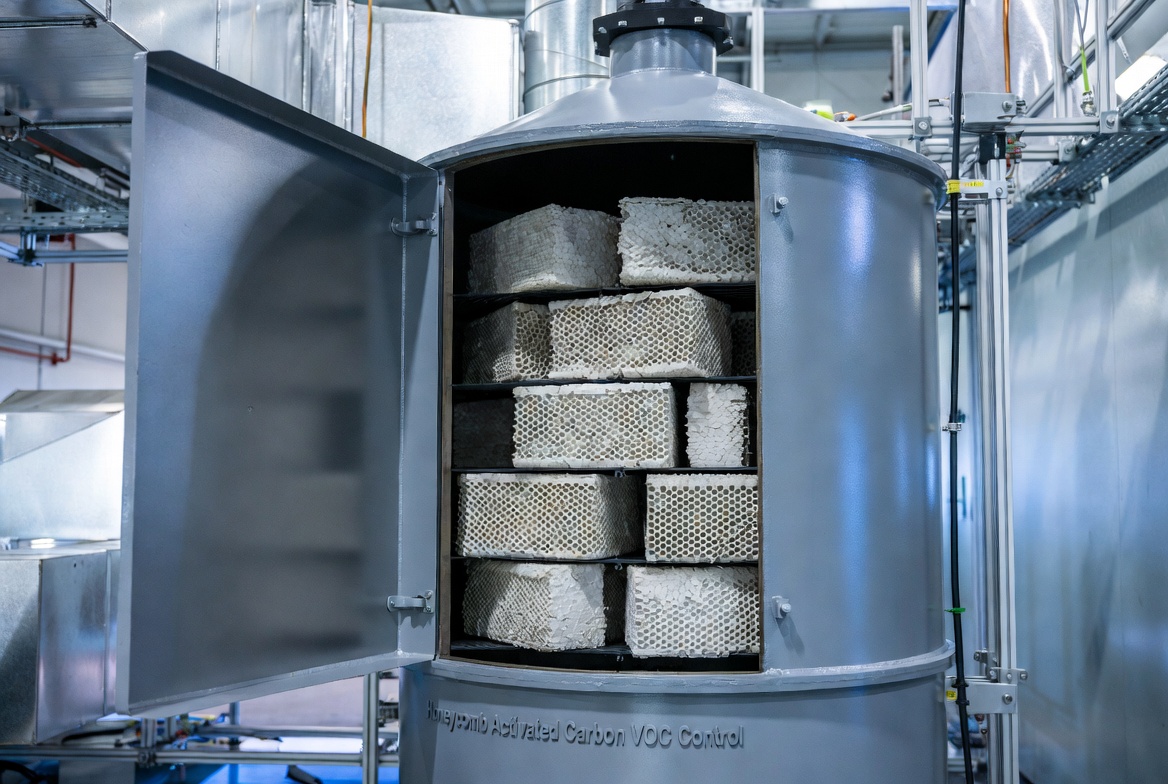
For Guangdong Tongke, coal‑based products and honeycomb activated carbon can be engineered to specific geometries (e.g., 200–400 CPSI honeycomb blocks) to maximize contact efficiency in compact air treatment units. [qizhongcarbon]
Application Comparison by Industry
Water and Wastewater Treatment
- Coal Activated Carbon
- Widely used in groundwater remediation, municipal drinking water, and industrial wastewater. [krakensense]
- GAC excels at removing a wide range of organic chemicals, chlorine, hydrogen sulfide, and many taste‑ and odor‑producing compounds. [generalcarbon]
- Frequently integrated with RO, ion exchange, and biological treatment as a polishing step. [generalcarbon]
- Wood Activated Carbon
- Popular in decolorization of process liquids (sugar, glucose, syrups, organic intermediates), where large color molecules must be removed. [kalpakachemicals]
- Used in batch or stirred reactors where PAC can be dosed, mixed, and separated.
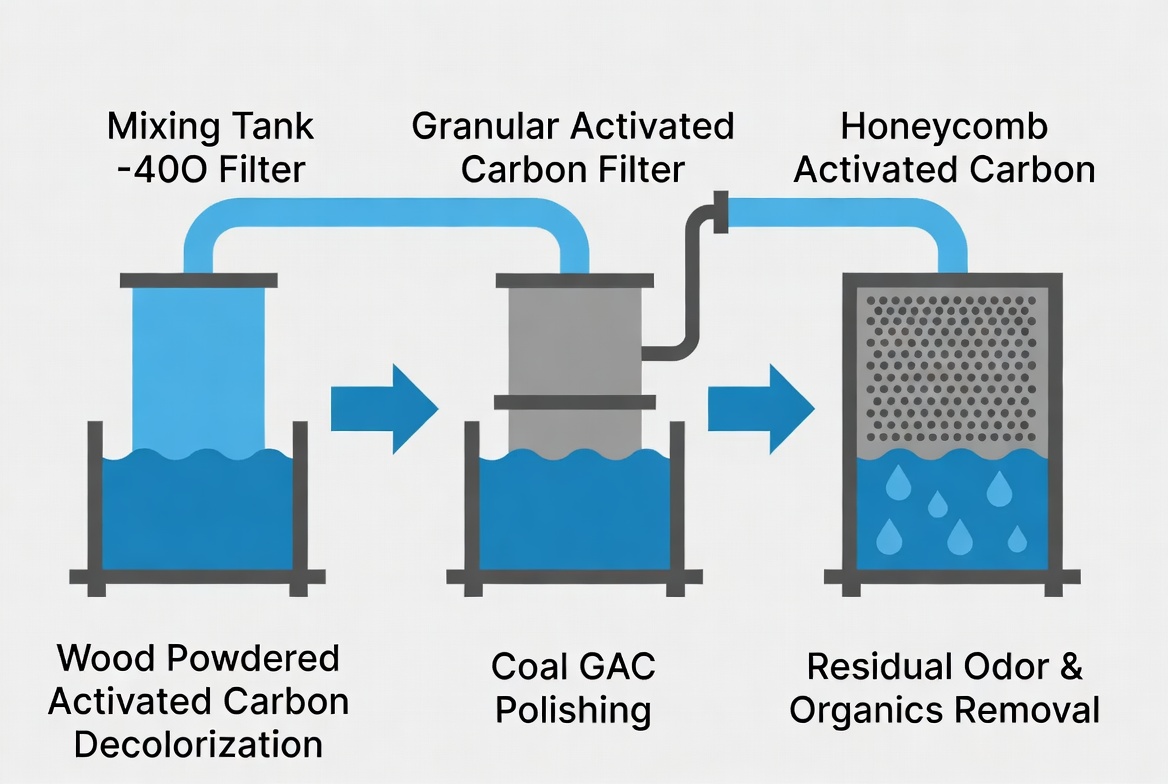
From field projects, an effective strategy is: wood PAC upstream for color removal and coal GAC downstream for polishing taste, odor, and residual organics, achieving a better balance of performance and cost. [kalpakachemicals]
Air and Gas Purification
- Coal Activated Carbon
- Standard choice for industrial air filtration, especially for VOCs, odors, and toxic gases like sulfur dioxide and ammonia. [coral]
- Honeycomb and pelletized forms provide low pressure drop and high contact efficiency in compact systems. [qizhongcarbon]
- Wood Activated Carbon
- Can be used for certain vapor and solvent recovery tasks, but is less common than coal or coconut shell in continuous gas‑phase systems. [coral]
Given Tongke's honeycomb product line, coal‑based honeycomb activated carbon is particularly attractive for industrial exhaust VOC control where system designers must balance airflow, pressure drop, and adsorption capacity. [qizhongcarbon]
Food, Beverage, and Pharmaceuticals
- Wood Activated Carbon
- Often preferred for sugar refining, beverage clarification, and pharmaceutical decolorization, where large organic color bodies dominate and color index is critical. [rajahfiltertechnics]
- Its meso/macroporous structure makes it efficient for removing pigments and high‑molecular organic impurities. [kalpakachemicals]
- Coal Activated Carbon
- Used in odor and off‑taste correction, or as a polishing step after primary treatment. [generalcarbon]
- Suitable where regeneration and continuous columns are preferred over batch decolorization.

Performance, Cost, and Regeneration
Adsorption Efficiency and Selectivity
- Coal GAC/Pellets
- Offers high adsorption capacity per unit volume due to dense microporous structure. [krakensense]
- Works well in both liquid and gas phases, especially for medium‑size organic molecules. [coral]
- Wood PAC
- Exhibits excellent performance for large molecules and color bodies, often achieving rapid decolorization in batch systems. [rajahfiltertechnics]
- Less efficient than coal or coconut for very small molecules where micropores dominate removal. [kalpakachemicals]
Cost and Lifecycle Considerations
- Coal Activated Carbon
- Generally more cost‑effective than coconut and many specialized wood grades on a per‑volume basis. [rajahfiltertechnics]
- Suitable for large‑scale, price‑sensitive projects in water and wastewater treatment. [rajahfiltertechnics]
- Wood Activated Carbon
- Can be more expensive in some high‑purity grades, but high decolorization efficiency may reduce the required dosage per batch. [kalpakachemicals]
- Attractive when renewable origin and high decolorization yield justify the cost.
Regeneration and Disposal
- Coal GAC / Honeycomb
- Well‑established thermal regeneration practices; material can withstand multiple cycles, reducing total cost of ownership. [krakensense]
- Honeycomb structures can often be regenerated in situ with controlled heating or hot air streams in industrial systems. [qizhongcarbon]
- Wood PAC
- Typically not regenerated in practice; spent PAC is disposed or co‑processed (e.g., as fuel) due to fine particle size and process design. [kalpakachemicals]
For long‑term, high‑flow systems, coal‑based GAC or honeycomb usually provides better lifecycle economics than wood PAC, despite the latter's strong performance in batch decolorization steps. [krakensense]
Quick Side‑by‑Side Overview
| Dimension | Wood Activated Carbon | Coal Activated Carbon |
| Raw material | Renewable wood / biomass (rajahfiltertechnics) | Fossil coal (anthracite, bituminous, lignite) (rajahfiltertechnics) |
| Pore structure | Mesopores & macropores (kalpakachemicals) | Micropores & mesopores (kalpakachemicals) |
| Typical forms | PAC for batch decolorization (kalpakachemicals) | GAC, pellets, honeycomb blocks (rajahfiltertechnics) |
| Best at | Decolorization, large organic molecules (kalpakachemicals) | Odor/VOC removal, broad organics range (kalpakachemicals) |
| Main industries | Sugar, beverage, pharma liquids (rajahfiltertechnics) | Water/wastewater, air & gas, general industry (rajahfiltertechnics) |
| Regeneration | Rarely regenerated (PAC) (kalpakachemicals) | Well‑established thermal regeneration (krakensense) |
| Sustainability angle | Strong (renewable feedstock) (rajahfiltertechnics) | Strong on cost and availability (rajahfiltertechnics) |
Practical Selection Framework (Engineer's Checklist)
When I help industrial clients choose between wood and coal activated carbons, I typically walk through a simple, evidence‑based framework:
1. Define the primary contaminants.
- Large color molecules or high‑molecular organics → favor wood PAC for batch decolorization. [rajahfiltertechnics]
- Odor, VOCs, medium‑size organics in water or air → favor coal GAC, pellets, or honeycomb. [coral]
2. Clarify process mode.
- Batch stirred tanks (e.g., sugar syrup) → wood PAC.
- Continuous filters or towers → coal‑based GAC or structured honeycomb blocks. [qizhongcarbon]
3. Evaluate regeneration strategy.
- If regeneration is planned and capacity is high → coal GAC/honeycomb with thermal regeneration. [coral]
- If single‑use dosing is acceptable → wood PAC is viable in many cases. [kalpakachemicals]
4. Consider sustainability and certifications.
- Projects with renewable/biobased targets may prefer wood carbons, especially in food and beverage. [rajahfiltertechnics]
- For large‑volume utilities, cost and operational stability often make coal‑based products the default choice. [kalpakachemicals]
Guangdong Tongke, as a specialist in coal‑based and honeycomb activated carbons, can map this framework to tailored product grades, particle sizes, and column or honeycomb designs for each customer's application. [activatedcarbons]
Case Insight: VOC Control vs. Beverage Decolorization
To illustrate how the choice plays out in real projects:
- Industrial VOC Exhaust Line
- Problem: A coating plant needs to reduce VOC emissions and odors to comply with local regulations.
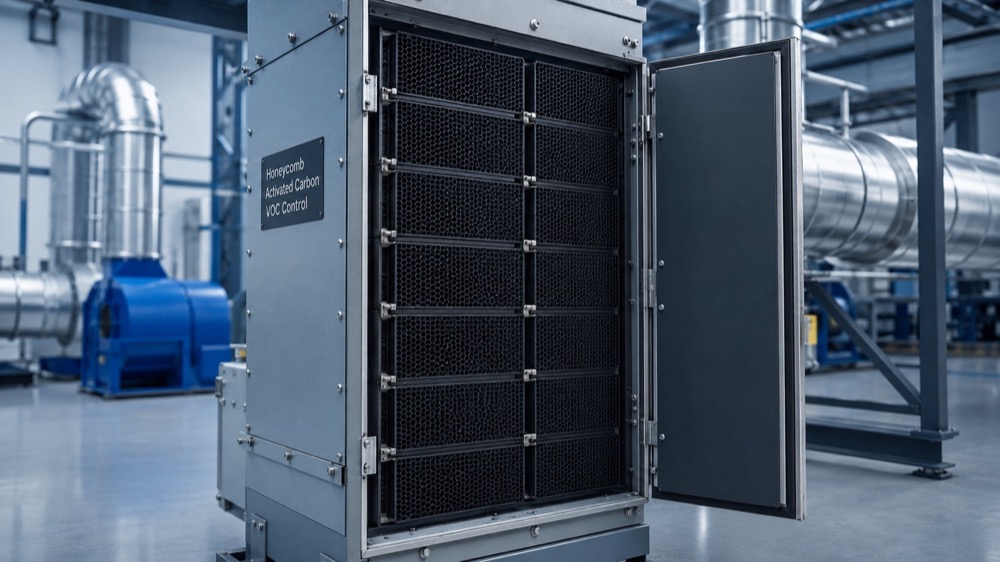
- Solution: Engineers select coal‑based honeycomb activated carbon (200–400 CPSI) to maximize surface area while keeping pressure drop low. [qizhongcarbon]
- Why not wood? The process is continuous gas‑phase adsorption, and the client plans periodic thermal regeneration, where coal honeycomb is more robust. [coral]
- Beverage Ingredient Decolorization
- Problem: A beverage producer must remove color bodies from a plant extract without changing taste.
- Solution: Process designers use wood‑based powdered activated carbon in a stirred tank, then filter it out before bottling. [rajahfiltertechnics]
- Why not coal? The target molecules are large and color‑forming; wood PAC's meso/macropores provide faster and deeper decolorization per unit dose. [kalpakachemicals]
These two examples show that neither material is "better" in all cases; instead, each has a natural "sweet spot" defined by contaminant size, process mode, and regeneration strategy. [rajahfiltertechnics]
How Guangdong Tongke Supports Custom Solutions
Even though Tongke's core strength is coal‑based and honeycomb activated carbon, the company can design solutions that cooperate with wood‑based carbons in the overall treatment train:
- Upstream–downstream pairing.
- Use wood PAC upstream (supplied by the customer or third parties) to remove color, then Tongke coal GAC or honeycomb downstream for polishing and odor control. [qizhongcarbon]
- Customized honeycomb designs.
- Tailored cell density, wall thickness, and block size for different gas‑phase VOC profiles and airflow rates. [coral]
- Industry‑specific engineering support.
- Water treatment: bed depth, EBCT (empty bed contact time), and regeneration strategy optimization.
- Air & gas: breakthrough curve design, pressure drop calculations, and thermal regeneration protocols, drawing on established industrial filtration knowledge. [krakensense]
By combining product customization with process engineering, Tongke helps buyers move from "choosing a material" to optimizing a complete adsorption system.
CTA for Buyers and Engineers
If you are evaluating wood activated carbon vs coal activated carbon for a new project, the most reliable approach is to move from theory to data. A practical next step is:
- Share your water, air, or process liquid analysis with Guangdong Tongke Activated Carbon Co., Ltd.
- Request a side‑by‑side adsorption test plan using coal‑based GAC or honeycomb grades tailored to your application, and, where relevant, combined with wood‑based PAC in upstream steps.
- Based on test results, Tongke can recommend a complete, data‑driven adsorption solution, including media selection, system design parameters, and regeneration or replacement schedules.
This data‑backed workflow lets you confidently justify your choice to internal stakeholders on the basis of performance, lifecycle cost, and compliance.
FAQs About Wood vs Coal Activated Carbon
1. Is wood activated carbon always more sustainable than coal activated carbon?
Wood activated carbon is derived from renewable biomass and therefore fits well into many sustainability frameworks. However, overall sustainability also depends on energy use, regeneration, and logistics, where long‑lasting coal GAC with efficient regeneration can still offer competitive lifecycle footprints. [krakensense]
2. Which type is better for drinking water treatment?
Coal‑based GAC is widely used in municipal and industrial drinking water systems because of its strong adsorption capacity, broad contaminant range, and regenerability. Wood carbon may be used in specific decolorization steps, but coal and coconut shells are usually preferred for final polishing filters. [generalcarbon]
3. Why is wood activated carbon so popular in sugar and beverage industries?
Wood activated carbon provides a pore structure rich in mesopores and macropores, making it very efficient at adsorbing large color molecules found in sugar, syrups, and certain beverage ingredients. This allows producers to achieve high color reduction without excessive dosage. [kalpakachemicals]
4. When should I choose honeycomb activated carbon instead of granular carbon?
Honeycomb activated carbon is ideal for gas‑phase VOC and odor control where low pressure drop and high contact efficiency are critical. It is particularly useful in compact industrial exhaust systems and can be designed with specific cell densities (e.g., 200–400 CPSI) to match airflow and removal targets. [qizhongcarbon]
5. Can I combine wood and coal activated carbons in one system?
Yes. A very effective design is to use wood PAC upstream for decolorization or removal of large molecules, followed by coal GAC or honeycomb downstream for polishing and odor control. This hybrid approach often improves both performance and cost compared with relying on a single material. [qizhongcarbon]
References
1. Kalpaka Chemicals. "Coal (vs) Coconut (vs) Wood Activated Carbon."
https://www.kalpakachemicals.com/blog/coal-vs-coconut-vs-wood-activated-carbon/ [kalpakachemicals]
2. Rajah Filter Technics. "Choosing the Right Activated Carbon for Your Needs."
https://rajahfiltertechnics.com/water-filtration/choosing-activated-carbon-filter/ [rajahfiltertechnics]
3. Kraken Sense. "Granular Activated Carbon Water Filter – What you Need to Know."
https://krakensense.com/blog/granular-activated-carbon-water-filter [krakensense]
4. Coral Engineering. "Activated carbon in industrial air filtration systems."
https://www.coral.eu/en/insight/i-carboni-attivi-negli-impianti-di-filtrazione-dellaria-industriale/ [coral]
5. Qizhong Carbon. "Honeycomb Activated Carbon – Integral Activated Carbon for VOCs and Gas Treatment."
https://qizhongcarbon.com/zh/product/honeycomb-activated-carbon/ [qizhongcarbon]
6. General Carbon. "Understanding Granular Activated Carbon for Water Treatment."
https://generalcarbon.com/understanding-granular-activated-carbon-for-water-treatment/ [generalcarbon]
7. Rotary Kiln Supplier. "Comparison of Wood-Based Activated Carbon and Coal-Based Activated Carbon."
https://rotarykilnsupplier.com/faq/comparison-of-wood-based-activated-carbon-and-coal-based-activated-carbon/ [rotarykilnsupplier]
8. Ecofriend Carbon. "Difference Between Wood, Coconut, and Coal Activated Carbon."
https://ecofriendcarbon.com/blogs/difference-between-wood-coconut-and-coal-activated-carbon [ecofriendcarbon]
9. Carbon Solutions LLC. "Activated Carbon Manufacturers."
https://activatedcarbons.net [activatedcarbons]


