Content Menu
● Why "Cheap" Activated Carbon Becomes Expensive Over Time
● How Cheap Activated Carbon Increases Long‑Term Operating Costs
>> Shorter Service Life and More Frequent Change‑Outs
>> Higher Energy Consumption Due to Pressure Drop
>> Downtime, Labor, and Maintenance Overheads
● Technical Performance Gaps: Cheap vs High‑Quality Activated Carbon
>> Surface Area, Pore Structure, and Adsorption Efficiency
>> Mechanical Strength, Dust, and System Cleanliness
>> Regeneration Behavior and Lifecycle Cost
● Industry Case Insight – Honeycomb Activated Carbon in Air and Gas Treatment
● Cost Comparison – Cheap vs High‑Quality Activated Carbon
● Application‑Specific Risks of Cheap Activated Carbon
>> Water Treatment and Wastewater Applications
>> Air and Gas Purification
>> Food, Beverage, and Pharmaceutical Use
● How to Evaluate Activated Carbon Beyond Price – A Practical Checklist
● Why Work with Guangdong Tongke Activated Carbon Co., Ltd.?
● Expert Recommendations for Reducing Long‑Term Operating Costs
● Clear Call to Action
● FAQs
● References
Cheap activated carbon almost always looks attractive at the purchasing level, but it quietly drives up your long‑term operating costs through shorter service life, higher energy use, compliance risks, and unplanned downtime. As a Chinese manufacturer specialized in honeycomb activated carbon and other advanced grades for global industrial applications, Guangdong Tongke Activated Carbon Co., Ltd. has seen this pattern repeat across water, air, and process purification lines worldwide. [tongkeac]
Why "Cheap" Activated Carbon Becomes Expensive Over Time
Buying low‑cost activated carbon is usually driven by one expectation: reduce unit cost per kilogram. Yet in real industrial environments, total cost of ownership (TCO) is driven by many other factors. [allcarbon.com]
- Replacement frequency and media lifetime
- Adsorption efficiency per cycle
- Energy consumption and pressure drop
- Labor, downtime, and change‑out logistics
- Compliance, product quality, and brand risk
When you factor in these elements, cheap activated carbon can multiply your operating costs over a 1–3 year horizon, even if the initial material price is 10–30% lower. [allcarbon.com]
How Cheap Activated Carbon Increases Long‑Term Operating Costs
Shorter Service Life and More Frequent Change‑Outs
One of the largest hidden cost drivers is media life.
- Low‑grade products often have uneven activation and lower iodine or methylene blue values, meaning less effective adsorption capacity per unit mass. [allcarbon.com]
- This leads to faster saturation, earlier breakthrough, and more frequent replacement cycles.
A plant that saves 15% on purchase price but changes media twice as often ends up spending more on:
- Material procurement
- Maintenance labor
- System shutdowns and restart procedures
Over several years, the lifetime cost per cubic meter of treated water or gas is typically higher with cheap carbon, even if individual shipments look economical on paper. [allcarbon.com]
Higher Energy Consumption Due to Pressure Drop
Cheap granular or pelletized carbons are often inconsistently sized, have more fines, and exhibit higher dust content. These characteristics increase bed compaction and pressure drop over time. [zhulincarbon]
- Fans and pumps must work harder to maintain the same flow.
- Energy use rises, especially in large industrial air or water treatment lines.
In contrast, engineered honeycomb activated carbon structures provide large geometric surface area and low pressure drop, enabling efficient treatment at lower fan power. Over thousands of operating hours, this energy delta alone can offset the price difference between low‑ and high‑quality media. [qizhongcarbon]
Downtime, Labor, and Maintenance Overheads
Every time you change out activated carbon, there is a hidden operational cost.
- System isolation and safety procedures
- Mechanical work to remove spent media
- Refilling, re‑sealing, and performance checks
Cheap carbon that fails early increases:
- Number of maintenance interventions per year
- Probability of unplanned shutdowns when breakthrough happens faster than expected
- Overtime labor and lost production slots
For continuous processes in chemical, pharmaceutical, or food applications, a single unscheduled stop often costs more than the annual savings from buying cheaper media. [allcarbon.com]
Technical Performance Gaps: Cheap vs High‑Quality Activated Carbon
Surface Area, Pore Structure, and Adsorption Efficiency
Effective adsorption depends on total surface area and the distribution of micro, meso, and macropores. Lower‑cost carbons commonly show: [allcarbon.com]
- Reduced surface area per gram
- Poorly controlled pore distribution
- Higher ash content that blocks active sites
High‑performance carbons, including advanced honeycomb designs, are optimized to target specific contaminants such as VOCs, SOx, NOx, chlorine, or organic micro‑pollutants in water. This means: [zhulincarbon]
- Higher loading per cycle
- More stable performance between regenerations or replacements
- Reliable achievement of outlet concentration targets
Mechanical Strength, Dust, and System Cleanliness
Cheap activated carbon is often pressed or granulated with inadequate mechanical strength, which leads to:
- Abrasion and fragmentation during handling and backwashing
- Dust generation that can contaminate downstream equipment, valves, and instruments
- Faster pressure drop increase as fines accumulate in the bed
Honeycomb activated carbon blocks and other robust formats are manufactured for high compressive strength and low dust emission, which helps maintain stable operating conditions and reduce mechanical wear. [tongkeac]
Regeneration Behavior and Lifecycle Cost
In many industrial systems, activated carbon is thermally or chemically regenerated instead of being discarded after one cycle. Cheap carbon typically offers: [allcarbon.com]
- Lower regeneration yield
- Faster loss of capacity after each regeneration cycle
- Higher risk of structural damage at regeneration temperatures
By contrast, high‑quality carbons are designed to maintain capacity over multiple regeneration cycles, which reduces both waste and lifecycle cost per unit of treated media. [qizhongcarbon]
Industry Case Insight – Honeycomb Activated Carbon in Air and Gas Treatment
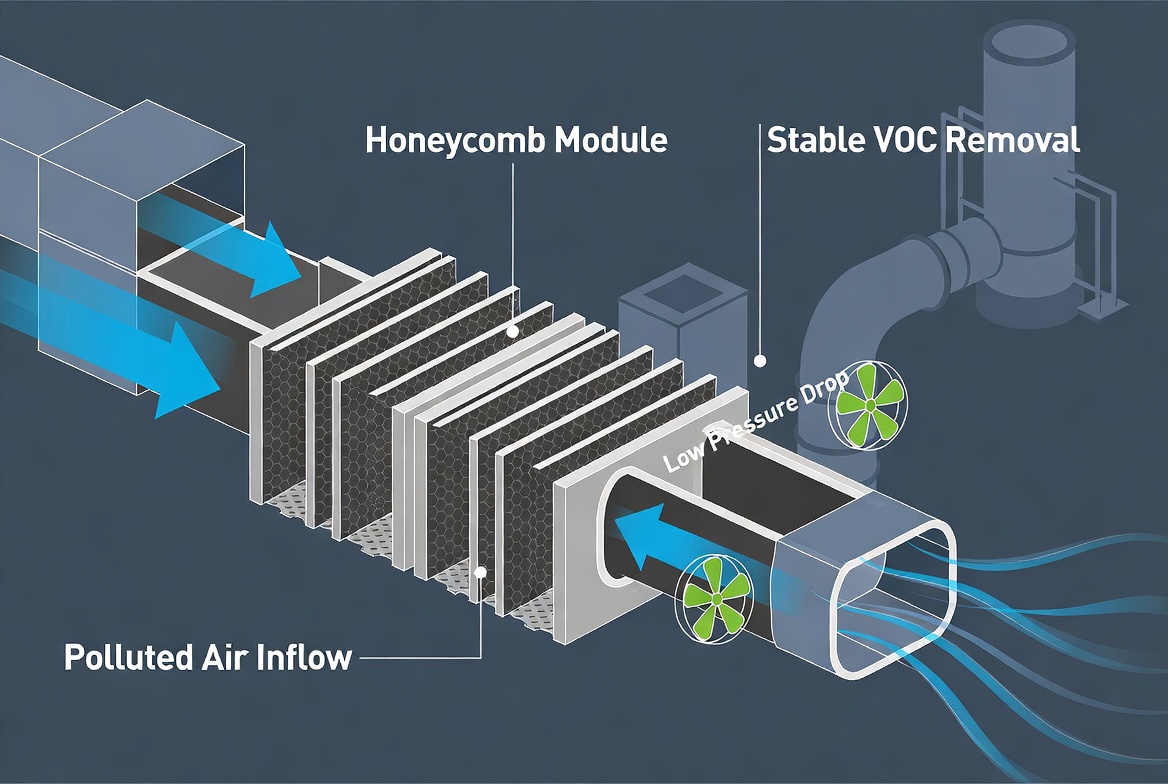
Honeycomb activated carbon is widely used in industrial exhaust gas treatment, VOC control, and solvent recovery, thanks to its monolithic structure and high geometric surface area. [zhulincarbon]
A typical scenario:
- A plant replaces cheap loose‑fill carbon beds with honeycomb activated carbon modules designed for its VOC mix.
- The result is lower pressure drop, more uniform gas distribution, and longer service intervals. [qizhongcarbon]
- Maintenance inspections become more predictable, and emissions are more reliably kept within regulatory limits.
Even if the upfront cost per cubic meter of honeycomb carbon is higher, operators report:
- Reduced fan energy consumption
- Fewer emergency interventions
- Better alignment with environmental and ESG targets [zhulincarbon]
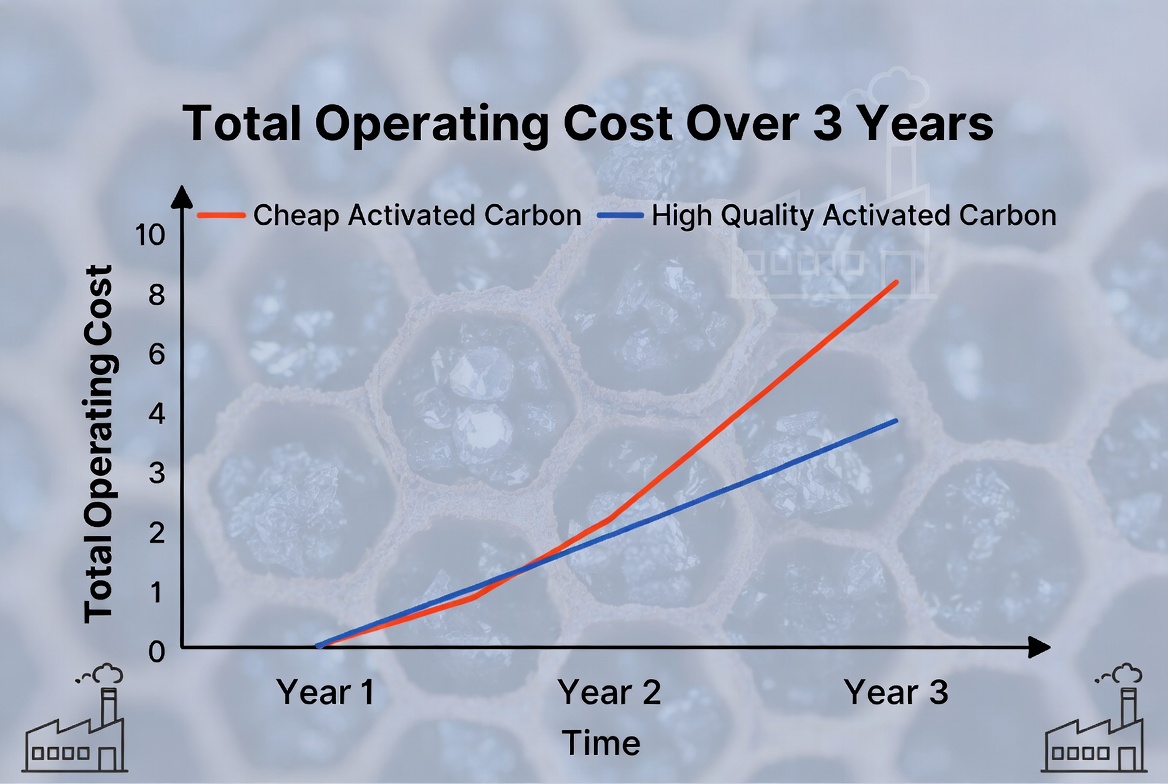
Cost Comparison – Cheap vs High‑Quality Activated Carbon
The illustrative table below shows how different cost components accumulate over three years in a mid‑size industrial application. Values are conceptual but reflect common patterns observed across projects. [allcarbon.com]
| Cost dimension | Cheap activated carbon (3 yrs) | High‑quality activated carbon (3 yrs) |
| Media purchase cost | 1.0 × baseline | 1.2 × baseline |
| Replacement frequency | 4–6 times | 2–3 times |
| Labor and maintenance hours | High | Moderate |
| Planned + unplanned downtime | Higher risk | Lower risk |
| Energy consumption (due to pressure) | Higher | Lower |
| Compliance / quality risk | Elevated | Controlled |
| Total cost of ownership (estimated) | 1.3–1.6 × baseline | 1.0–1.1 × baseline |
[tongkeac]
This is why procurement teams focused only on price per ton frequently underestimate the actual financial impact of their media choice.
Application‑Specific Risks of Cheap Activated Carbon
Water Treatment and Wastewater Applications
In water and wastewater treatment, cheap carbon increases risks around:
- Breakthrough of organics, micro‑pollutants, or residual disinfectants
- Taste and odor issues in potable and beverage applications
- Sludge handling challenges due to fines and spent media disposal
Operators may then face regulatory violations, customer complaints, or additional polishing steps, all of which erode any initial price advantage. [allcarbon.com]
Air and Gas Purification
For air and gas purification, especially with VOCs, solvents, and acid gases, unstable carbon performance can cause:
- Variable removal efficiency and erratic outlet concentrations
- Inability to consistently meet stack emission limits
- Increased risk of odor complaints and environmental penalties
Honeycomb activated carbon modules designed for specific industrial exhausts help maintain stable removal efficiency and simplified handling, as modules are easy to install, inspect, and replace. [tongkeac]
Food, Beverage, and Pharmaceutical Use
In highly regulated industries, activated carbon is not just a filtration media; it is part of the quality and safety control chain. Cheap carbon may introduce: [allcarbon.com]
- Uncontrolled impurities, high ash, or heavy metal traces
- Off‑flavors or color variations due to inconsistent adsorption behavior
- Documentation gaps that complicate audits and certifications
Premium carbons with traceability, consistent specifications, and compliance documentation help safeguard product integrity and brand reputation. [allcarbon.com]
How to Evaluate Activated Carbon Beyond Price – A Practical Checklist
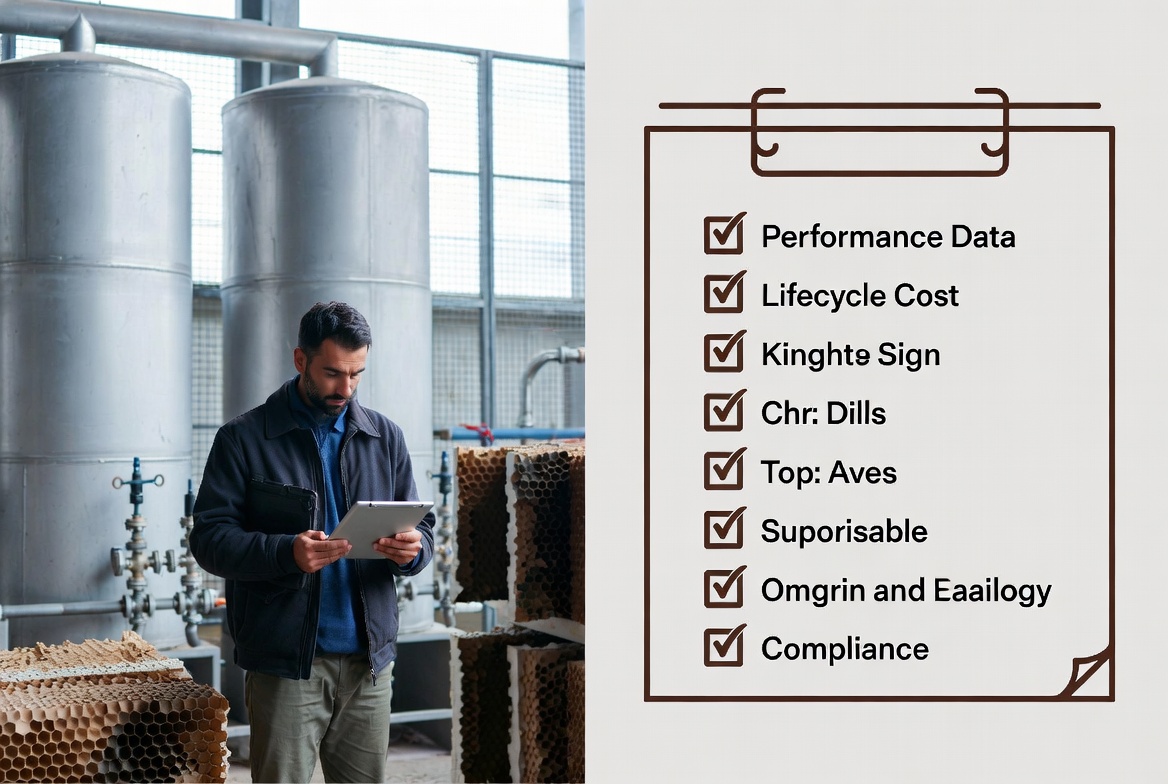
To move beyond simple price comparison, procurement and engineering teams can adopt a structured evaluation approach.
1. Define your critical performance metrics
- Target contaminants and outlet concentrations
- Maximum acceptable pressure drop
- Minimum required bed life or regeneration cycles
2. Request detailed technical data
- Iodine number / methylene blue value
- Pore size distribution and surface area
- Ash content, hardness, and attrition resistance
3. Ask for application‑specific references and case data
- Similar industries and contaminants
- Typical service life and energy implications
4. Include lifecycle cost evaluation in RFQs
- Estimate media, labor, energy, and downtime over 2–3 years
- Compare total cost per unit volume of treated water or gas
5. Evaluate supplier capabilities
- Production capacity, quality management, and customization options
- Support for pilot tests, data analysis, and process optimization
Following this checklist shifts the conversation from "Who is the cheapest?" to "Who delivers the lowest total cost and highest process reliability?" [allcarbon.com]
Why Work with Guangdong Tongke Activated Carbon Co., Ltd.?
As a specialized manufacturer of honeycomb activated carbon and other advanced activated carbon products in China, Guangdong Tongke Activated Carbon Co., Ltd. supplies tailored solutions for water treatment, air and gas purification, food and beverage, chemical, pharmaceutical and other industrial applications. [tongkeac]
Key strengths include:
- Application‑specific product engineering for targeted contaminants and process conditions
- Honeycomb, granular, pellet, and powdered carbons to match system design and retrofits [tongkeac]
- Support for pilot testing, performance evaluation, and optimization of operating parameters
Instead of simply quoting a price per kilogram, the company works with customers to optimize long‑term operating costs, reliability, and environmental performance. [tongkeac]
Expert Recommendations for Reducing Long‑Term Operating Costs
From a long‑term perspective, the most cost‑effective strategy is to combine high‑quality activated carbon with process optimization and data‑driven monitoring. Practical steps include: [allcarbon.com]
- Use honeycomb activated carbon for exhaust gases and VOC control where low pressure drop and structural stability matter most. [qizhongcarbon]
- Select granular or pellet carbons with proven mechanical strength and low ash for water and process streams.
- Implement breakthrough monitoring (e.g., online analyzers or regular sampling) to optimize change‑out timing.
- Consider regeneration options and design around carbons that maintain capacity over multiple cycles.
By adopting these practices, operators typically see lower lifecycle costs and improved compliance stability, even if the initial media appears more expensive. [zhulincarbon]
Clear Call to Action
If you are currently buying on lowest price and experiencing frequent media changes, unstable performance, or increasing energy consumption, it is time to reassess your activated carbon strategy.
Contact Guangdong Tongke Activated Carbon Co., Ltd. to:
- Discuss your specific water, air, or process purification challenges
- Evaluate whether honeycomb activated carbon or other tailored media can reduce your total operating costs
- Arrange technical consultation, sample evaluation, or a pilot test to compare real performance over time [tongkeac]
Shifting from cheap carbon to optimized, application‑specific solutions can transform your filtration system from a recurring cost center into a predictable, efficient, and compliant part of your operation.
FAQs
1. How can I tell if my current activated carbon is too cheap to be cost‑effective?
Typical warning signs include shorter than expected media life, rising pressure drop, frequent change‑outs, and difficulty meeting outlet concentration targets. If you see these symptoms, a lifecycle cost review is recommended. [allcarbon.com]
2. Why is honeycomb activated carbon often preferred for industrial exhaust gas treatment?
Honeycomb activated carbon offers high geometric surface area, low pressure drop, and easy module handling, making it especially suitable for VOC and exhaust gas control in continuous operations. [tongkeac]
3. Does higher‑quality activated carbon always mean higher initial cost?
Not always. When supplier capabilities and production scale are optimized, high‑performance carbons can be competitively priced, and their longer life and lower energy use typically reduce TCO. [allcarbon.com]
4. Can activated carbon be regenerated to improve cost efficiency?
Yes. Many industrial applications use thermal or chemical regeneration, and carbons designed for regeneration retain a higher percentage of their original capacity for multiple cycles, reducing waste and replacement frequency. [allcarbon.com]
5. What information should I share with a supplier to get the right activated carbon grade?
You should provide contaminant types and concentrations, flow rate, temperature, existing system design, and performance targets so the supplier can recommend an application‑specific product rather than a generic, low‑grade carbon. [tongkeac]
References
1. AllCarbon – *Activated Carbon: Products and Applications* – overview of activated carbon types, properties, and uses in water and air treatment. [https://www.zhulincarbon.com/zh-CN/products/special-activated-carbon/honeycomb-activated-carbon.html] [zhulincarbon]
2. Qizhong Carbon – *Honeycomb Activated Carbon for VOC and Gas Treatment* – technical description of honeycomb structures, pore design, and application fields. [https://qizhongcarbon.com/zh/product/honeycomb-activated-carbon/] [qizhongcarbon]
3. AllCarbon – *Activated Carbon* – general information about adsorption capacity, regeneration, and industrial use cases. [https://allcarbon.com.cn/activated-carbon] [allcarbon.com]
4. Guangdong Tongke Activated Carbon Co., Ltd. – *Activated Carbon Product Portfolio* – company introduction and range of activated carbon products for industrial applications. [https://www.tongkeac.com/activated-carbon.html] [tongkeac]
5. Guangdong Tongke Activated Carbon Co., Ltd. – *Activated Carbon Honeycomb* – details on honeycomb activated carbon products for air and gas purification and customization options. [https://www.tongkeac.com/activated-carbon-honeycomb.html] [tongkeac]


