Content Menu
● What Does PAC Mean in Activated Carbon?
● How Powdered Activated Carbon Works
● Why PAC Activated Carbon Adsorbs Contaminants Quickly
● PAC Activated Carbon vs. GAC
● Key Applications of PAC Activated Carbon
>> Water and Wastewater Treatment
>> Food and Beverage Processing
>> Chemical and Pharmaceutical Manufacturing
>> Air, Gas, and Vapor Treatment
● Choosing the Right PAC Grade
● A Practical PAC Selection Process
● PAC Dosage: Why There Is No Universal Number
● Important Limitations of Powdered Activated Carbon
>> PAC Does Not Destroy Contaminants
>> PAC Increases Sludge Load
>> Poorly Adsorbed Compounds Need Other Methods
>> Powder Handling Requires Controls
● Why Customized PAC Matters
● Request a PAC Activated Carbon Sample
● Frequently Asked Questions
>> What is the difference between PAC and activated charcoal?
>> Is powdered activated carbon better than granular activated carbon?
>> Can PAC remove color from wastewater?
>> How is PAC removed after treatment?
>> Can PAC be regenerated?
>> Does a higher iodine number always mean better PAC performance?
>> Is PAC suitable for food and beverage applications?
● References
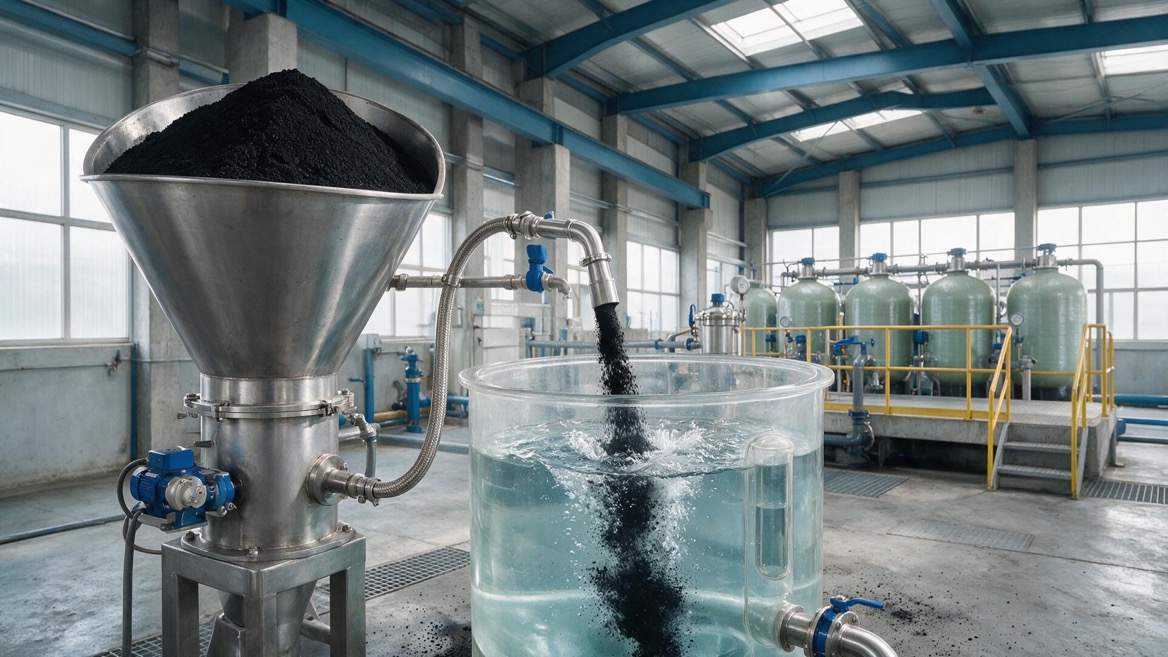
PAC activated carbon, also called powdered activated carbon, is a fine adsorbent powder used to remove unwanted color, odor, taste compounds, dissolved organic contaminants, and selected process impurities from water and liquid streams. Its small particle size gives it rapid access to contaminants, making it especially useful when treatment conditions change quickly or when an existing system needs flexible adsorption support.
For industrial buyers, PAC is not simply "carbon in powder form." The right product depends on the contaminant, the treatment target, water chemistry, contact time, separation method, and disposal route for spent carbon. A well-matched powdered activated carbon can improve product quality, stabilize treatment performance, and help operators respond to seasonal or unexpected contamination events.
What Does PAC Mean in Activated Carbon?
PAC means powdered activated carbon. It is activated carbon milled into fine particles, commonly used as a slurry or dry powder in batch, continuous, and emergency treatment processes.
Activated carbon is produced from carbon-rich raw materials such as:
- Coconut shell
- Bituminous coal
- Wood
- Lignite or other selected carbonaceous feedstocks
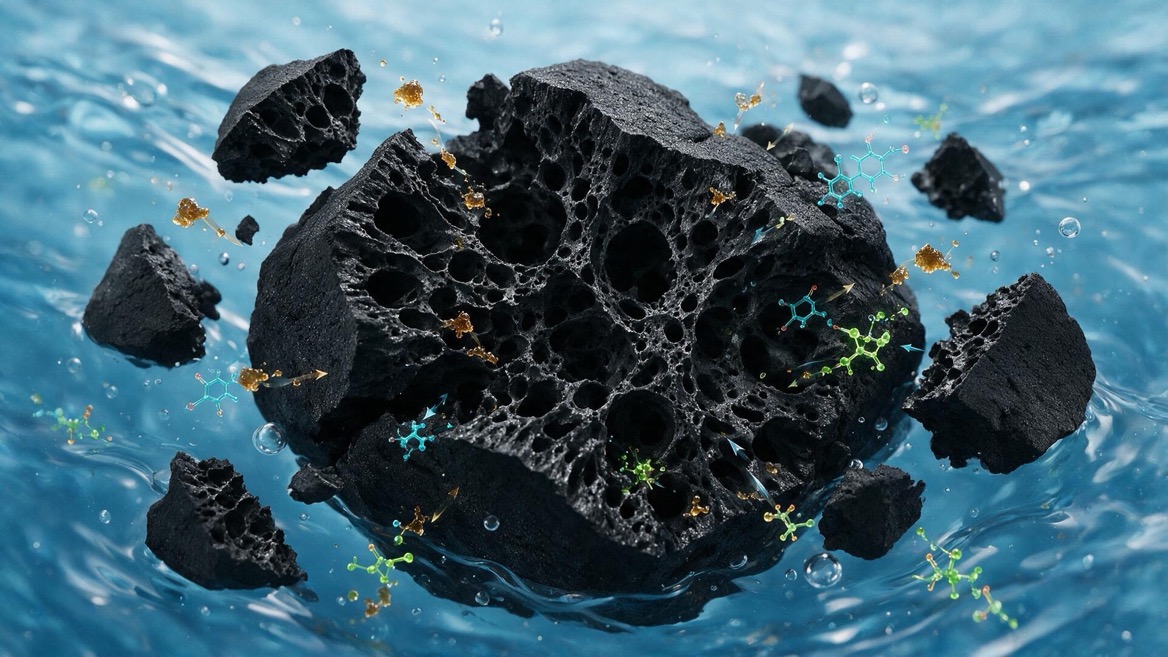
During activation, a controlled thermal or chemical process develops an interconnected network of pores. These pores create a large internal surface where certain dissolved molecules can be attracted and retained.
The process is known as adsorption, not absorption. In adsorption, contaminants attach to the internal surface of the carbon. In absorption, a substance enters the bulk structure of another material, like water entering a sponge.
How Powdered Activated Carbon Works
Powdered activated carbon works by bringing a highly porous carbon surface into contact with contaminated water, process liquid, or slurry. Molecules move from the liquid phase toward available adsorption sites inside the carbon pore network.
Its performance is influenced by several variables:
- Contaminant molecular size and chemical properties
- PAC pore-size distribution
- Carbon surface chemistry
- Dosage level
- Contact time
- pH and temperature
- Natural organic matter or other competing substances
- Mixing intensity
- The efficiency of downstream filtration, clarification, or membrane separation
PAC is often added directly into a treatment stream, rapid-mix tank, flocculation basin, contact tank, biological system, or membrane process. After adsorption, the spent PAC is generally removed together with sludge by sedimentation, flotation, filtration, or another solids-separation step.
Unlike fixed-bed carbon systems, PAC provides a flexible dosing approach. Operators can increase or reduce addition rates according to influent quality, production needs, or seasonal changes.
Why PAC Activated Carbon Adsorbs Contaminants Quickly
The fine particle size of powdered activated carbon shortens the distance contaminants must travel to reach internal pores. This can support relatively fast adsorption kinetics when the carbon is properly dispersed and given sufficient contact time.
However, rapid adsorption does not mean every contaminant will be removed equally well. The outcome depends on the match between the molecule and the PAC.
For example:
- Small organic molecules may require abundant micropores.
- Larger color bodies may require more mesopore volume.
- Hydrophobic compounds often adsorb more readily than highly polar compounds.
- Dissolved natural organic matter can compete for adsorption sites.
- Ionized contaminants may respond differently as pH changes.
A 2025 evaluation of six commercial PAC products found that adsorption performance varied substantially between carbon types, with pH and natural organic matter affecting removal results. This is why a laboratory test using the actual process water remains more reliable than selecting PAC based on a single specification alone.
PAC Activated Carbon vs. GAC
Both powdered activated carbon and granular activated carbon are widely used adsorbents, but they operate differently. Choosing between them should begin with the treatment objective rather than product price alone.
| Factor | Powdered Activated Carbon | Granular Activated Carbon |
| Physical form | Fine powder | Larger granules |
| Typical use | Flexible, intermittent, batch, or dosing-based treatment | Continuous fixed-bed treatment |
| Installation | Can often be added to existing treatment stages | Usually requires columns, vessels, and supporting equipment |
| Response to changing influent | Highly adjustable through dosage changes | Less flexible once bed design is established |
| Carbon recovery | Usually removed with sludge | Can often be thermally regenerated |
| Main operational concern | Dust control, slurry handling, spent sludge | Breakthrough monitoring, backwashing, regeneration |
| Best fit | Peak events, odor episodes, color removal, process support | Long-term continuous polishing and larger-volume streams |
PAC is commonly used when a plant needs a rapid and adjustable response. GAC is often selected when a continuous fixed-bed adsorption stage is appropriate and regeneration logistics are available.
Neither format is automatically superior. The correct decision depends on flow rate, contaminant loading, target residual concentration, space, infrastructure, sludge strategy, and operating cost.
Key Applications of PAC Activated Carbon
Water and Wastewater Treatment
Powdered activated carbon is widely used in municipal and industrial water treatment to address taste, odor, color, dissolved organic compounds, pesticides, selected pharmaceutical residues, and other trace contaminants.
It can be dosed before sedimentation or filtration so that PAC containing adsorbed contaminants is captured with the solids. In wastewater applications, it may also be used with biological treatment or membrane systems.
Research has shown that PAC can reduce loads of selected organic micropollutants, but removal varies significantly by contaminant type and carbon grade. Highly polar compounds are often more challenging than non-polar or moderately polar compounds.
Food and Beverage Processing
In food and beverage manufacturing, powdered activated carbon can support purification, decolorization, deodorization, and the removal of selected organic impurities from liquid process streams.
Common applications include:
- Sugar syrup decolorization
- Edible oil purification
- Beverage ingredient processing
- Gelatin and amino-acid production
- Citric acid and fermentation-derived products
- Removal of unwanted odor compounds from process water
For these uses, buyers should evaluate food-contact requirements, ash content, particle-size distribution, filtration behavior, acid-soluble matter, and product-specific purity criteria. A carbon that performs well in wastewater decolorization may not be suitable for a sensitive food-processing application.
Chemical and Pharmaceutical Manufacturing
Chemical and pharmaceutical production can involve impurities that affect color, odor, product stability, catalyst performance, or downstream purification efficiency. PAC can be used as a polishing adsorbent during intermediate and final purification steps.
Typical treatment goals include:
- Decolorization of reaction mixtures
- Removal of trace organic impurities
- Catalyst residue reduction
- Odor control
- Solvent or aqueous-stream purification
- Reduction of unwanted by-products before crystallization or filtration
For critical production processes, plant teams should validate PAC through bench-scale testing. The test should consider yield loss, adsorption selectivity, filtration speed, residual fines, and compatibility with the full process sequence.
Air, Gas, and Vapor Treatment
Powdered activated carbon can also be used in selected air and gas purification systems, particularly where carbon is injected into a gas stream or incorporated into a treatment medium.
Potential uses include:
- Odor control
- Selected volatile organic compound reduction
- Flue-gas treatment support
- Mercury-control applications in appropriate systems
- Emergency odor treatment in enclosed industrial environments
For gas-phase treatment, the carbon's particle size, ignition risk, dust-control requirements, humidity conditions, gas velocity, and retention mechanism should be carefully reviewed. PAC is not a universal substitute for pelletized or granular carbon in fixed-bed vapor systems.
Choosing the Right PAC Grade
Selecting PAC solely by "high iodine number" is a common mistake. Iodine number can be useful as one comparative indicator, but it does not fully predict treatment performance for every target contaminant.
A practical evaluation should include the following indicators.
| Parameter | Why It Matters |
| Raw material | Influences pore structure, hardness, ash level, and adsorption behavior |
| Particle size | Affects adsorption rate, mixing, filtration, and dust control |
| Iodine number | Often used as an indicator of micropore-related adsorption capacity |
| Methylene blue value | Can help indicate adsorption performance for larger molecules and color bodies |
| Ash content | Important for purity, residue management, and sensitive applications |
| Moisture content | Affects handling weight, storage, and dosing consistency |
| pH of slurry | Can influence compatibility with process chemistry |
| Surface area and pore volume | Useful for understanding pore development, but should not replace application testing |
| Filtration behavior | Critical in food, chemical, and pharmaceutical production |
| Heavy metals and impurities | Important where strict purity requirements apply |
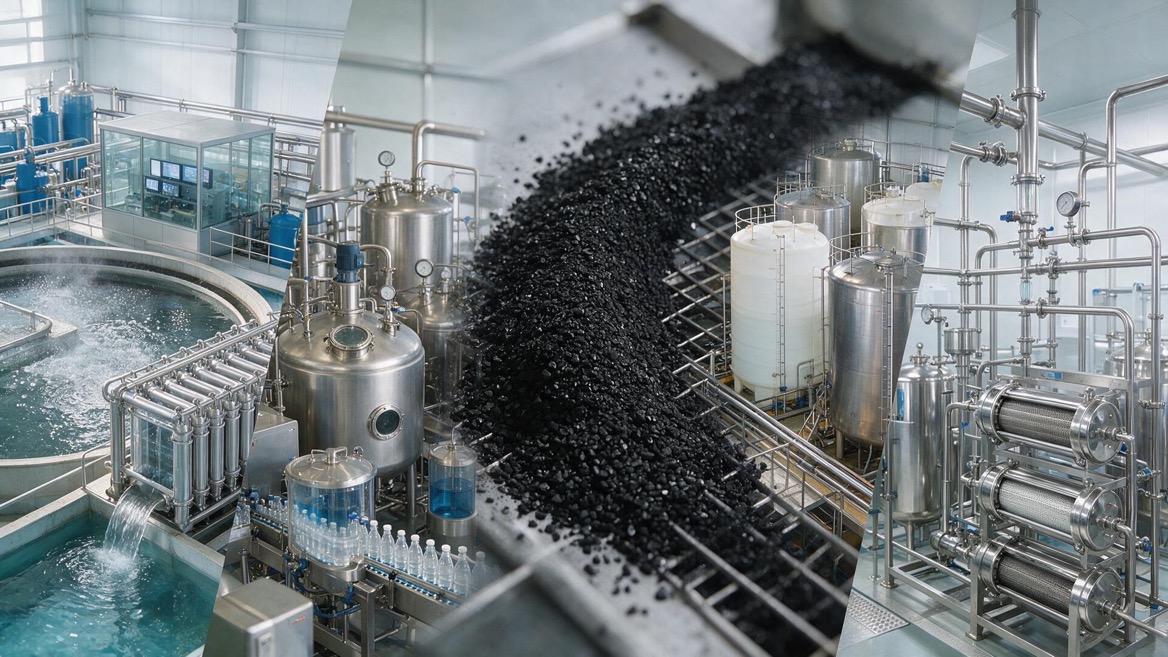
The best PAC grade is the one that reaches the required treatment target at an acceptable total operating cost. That calculation should include carbon dosage, contact time, mixing energy, filtration load, sludge volume, disposal, and any effect on product yield.
A Practical PAC Selection Process
A structured evaluation reduces the risk of choosing an unsuitable powder.
1. Define the treatment objective. Identify the contaminant, target reduction, influent concentration range, and required final quality.
2. Characterize the actual stream. Test pH, temperature, turbidity, conductivity, organic loading, color, and competing contaminants.
3. Select candidate PAC grades. Consider feedstock type, particle size, ash, pore profile, and application requirements.
4. Run jar tests or bench-scale adsorption trials. Compare dosage-response curves, contact times, residual contaminant levels, and filtration performance.
5. Assess solids separation. Confirm whether the existing clarification, filtration, or membrane stage can remove PAC effectively.
6. Review spent-carbon management. Determine sludge classification, disposal route, transport requirements, and associated cost.
7. Conduct a controlled site trial. Use real operating conditions before finalizing commercial consumption rates.
This approach is especially important when treating complex wastewater, highly colored process streams, or water with elevated natural organic matter. Background organics can compete for adsorption sites and reduce the available capacity for the compounds that matter most.
PAC Dosage: Why There Is No Universal Number
PAC dosage is application-specific. A dose that performs well for temporary odor control may be insufficient for persistent industrial color, trace organics, or high-COD wastewater.
The correct dosage depends on:
- Initial contaminant concentration
- Target outlet concentration
- Water matrix complexity
- Carbon grade
- Contact time
- Mixing conditions
- Temperature and pH
- The presence of competing dissolved organics
- Performance of downstream solids removal
A lower dose may be effective in relatively clean water with a clearly adsorbable target compound. A much higher dose may be required in wastewater with fluctuating organic loads or high color intensity.
Published studies can provide useful technical context, but they should not be treated as direct operating guarantees. In one study, PAC treatment at 23 mg/L after membrane bioreactor treatment removed 62% of the load of 56 measured compounds in hospital wastewater; results depended on compound properties and treatment conditions.
Important Limitations of Powdered Activated Carbon
PAC is effective, but it is not a complete treatment solution for every contaminant or process.
PAC Does Not Destroy Contaminants
PAC transfers adsorbable contaminants from the liquid phase onto carbon. The contaminants remain on the spent PAC and must be managed responsibly through the downstream sludge-handling route.
PAC Increases Sludge Load
Because PAC is removed with solids, its use can increase sludge volume and affect dewatering, disposal, or incineration costs. These costs should be included in the treatment evaluation.
Poorly Adsorbed Compounds Need Other Methods
Highly polar, low-molecular-weight, or strongly ionized compounds may have limited adsorption affinity. PAC may need to be combined with oxidation, biological treatment, ion exchange, membranes, precipitation, or other processes.
Powder Handling Requires Controls
Fine carbon powder can generate dust. Proper storage, enclosed conveying, wetting systems, local extraction, personal protective equipment, and housekeeping procedures are important for safe operation.
Why Customized PAC Matters
Industrial streams are rarely identical. A textile wastewater, beverage syrup, pharmaceutical intermediate, refinery effluent, and municipal source water may all require different pore structures and operating approaches.
At Guangdong Tongke Activated Carbon Co., Ltd., we work with international industrial customers to help match activated carbon products to the practical demands of their applications. This may include evaluating raw-material options, particle-size requirements, adsorption indicators, impurity limits, packing requirements, and sample-testing plans.
A customized PAC solution should focus on measurable outcomes:
- Lower color or odor levels
- Better removal of target organic compounds
- Stable quality across deliveries
- Reliable filtration or solids separation
- Lower total treatment cost per unit of purified water or product
- Clear technical documentation for purchasing and operations teams
Request a PAC Activated Carbon Sample
Choosing powdered activated carbon should be based on your actual treatment conditions—not on a generic specification sheet alone. Send us your water-analysis data, target contaminants, process flow, and required quality standard.
Contact Guangdong Tongke Activated Carbon Co., Ltd. to request a PAC sample, technical data sheet, and application-focused recommendation for your water treatment, food processing, chemical, pharmaceutical, or industrial purification project.
Frequently Asked Questions
What is the difference between PAC and activated charcoal?
PAC is an industrial form of activated carbon manufactured as a fine powder for adsorption applications. "Activated charcoal" is often used as a general term, but product specifications, purity, particle size, and intended use can vary widely.
Is powdered activated carbon better than granular activated carbon?
Neither is universally better. PAC is often preferred for flexible dosing and short-term treatment needs, while GAC is commonly used in continuous fixed-bed systems. The right choice depends on the stream, contaminant, operating mode, and recovery strategy.
Can PAC remove color from wastewater?
Yes, PAC can reduce many color-causing organic compounds, especially when the pore structure and dosage are matched to the wastewater. Jar testing is necessary because dye chemistry and competing organics can change performance substantially.
How is PAC removed after treatment?
PAC is normally removed with solids through sedimentation, dissolved-air flotation, filtration, membrane separation, or sludge-handling equipment. The appropriate method depends on the treatment process.
Can PAC be regenerated?
PAC is generally used as a one-pass adsorbent and removed with sludge. Regeneration is less common than with GAC because fine powder is more difficult to recover and handle economically.
Does a higher iodine number always mean better PAC performance?
No. Iodine number is useful, but it is not a complete predictor of real treatment results. Pore-size distribution, raw material, particle size, surface chemistry, contaminant type, and water quality can all affect performance.
Is PAC suitable for food and beverage applications?
It can be suitable when the selected grade meets the required purity and process standards. Buyers should verify applicable specifications, documentation, impurity limits, filtration behavior, and suitability for the intended product stream.
References
1. [Huamei Carbon — What Exactly Is PAC Activated Carbon?] [huameicarbon]
2. [Minkus, Bieber & Letzel — Characterizing Powdered Activated Carbon Treatment of Surface Water Samples] [pmc.ncbi.nlm.nih]
3. [Zhang, Shen & Li — Evaluating Powdered Activated Carbon for Adsorption of Nitrogenous Organics in Water] [pubs.acs]
4. [National Research Council — An Evaluation of Activated Carbon for Drinking Water Treatment] [ncbi.nlm.nih]
1. [Huamei Carbon — What Exactly Is PAC Activated Carbon?] [huameicarbon]
2. [Minkus, Bieber & Letzel — Characterizing Powdered Activated Carbon Treatment of Surface Water Samples] [pmc.ncbi.nlm.nih]
3. [Zhang, Shen & Li — Evaluating Powdered Activated Carbon for Adsorption of Nitrogenous Organics in Water] [pubs.acs]
4. [National Research Council — An Evaluation of Activated Carbon for Drinking Water Treatment] [ncbi.nlm.nih]


