Content Menu
● How We Evaluated Suppliers
● Why the U.S. Market Matters
● Leading Activated Carbon Suppliers Serving the U.S.
>> 1. Guangdong Tongke Activated Carbon Co., Ltd.
>> 2. Calgon Carbon Corporation
>> 3. Carbon Activated Corporation
>> 4. Jacobi Carbons
>> 5. General Carbon Corporation
>> 6. Haycarb USA, Inc.
● Technical Requirements for Activated Carbon for Ponds
>> Recommended Specification Checklist
>> Coconut Shell vs. Coal vs. Wood Carbon
● An Often-Missed Pond Carbon Risk
● Buyer's Guide: From Sample to Repeat Order
>> 1. Verify the Supplier's Identity
>> 2. Verify Certifications Properly
>> 3. Create a Proper Sample Protocol
>> 4. Control Freight and Packaging Risk
>> 5. Plan for Carbon Replacement
● Conclusion
● Frequently Asked Questions
>> 1. How can I verify whether a supplier's ISO certificate has expired?
>> 2. Is coconut-shell activated carbon always better for ponds?
>> 3. What is a reasonable MOQ for private-label activated carbon for ponds?
>> 4. Why does newly installed activated carbon sometimes turn pond water black?
>> 5. Can activated carbon remove all contaminants from pond water?
● References
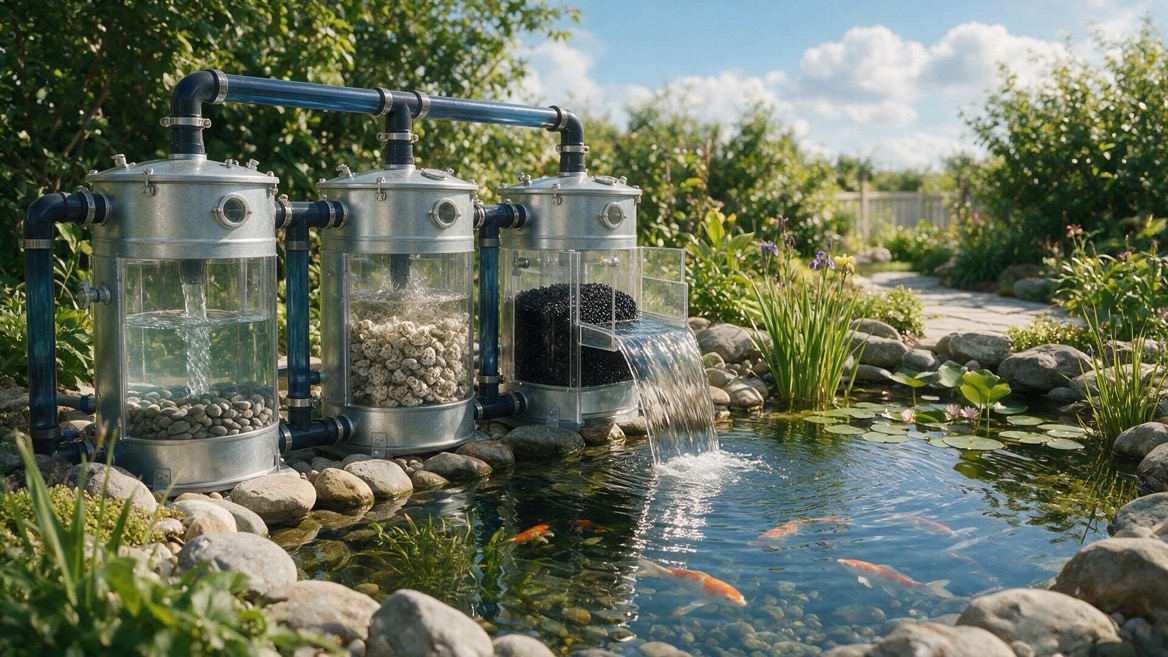
Choosing activated carbon for ponds is not simply a matter of buying the highest iodine-number material at the lowest price. For pond-care brands, aquatic distributors, filtration-equipment manufacturers, and private-label sellers, the right supplier must provide consistent pore structure, low dust, stable particle size, traceable raw materials, and reliable delivery.
This guide reviews six notable activated-carbon manufacturers and suppliers serving the U.S. market. It is designed for professional buyers looking for long-term partners for pond filtration media, water-polishing cartridges, fish-pond maintenance products, decorative-water-feature systems, and OEM/private-label programs.
How We Evaluated Suppliers
The companies below were selected based on practical purchasing criteria rather than brand visibility alone:
- Product suitability: Ability to supply granular activated carbon (GAC), coconut-shell carbon, coal-based carbon, wood-based carbon, or application-specific filtration media suitable for pond-water polishing.
- Quality-control capability: Availability of routine testing for iodine number, moisture, ash, particle-size distribution, hardness/abrasion resistance, apparent density, and water-rinse cleanliness.
- Technical support: Ability to advise on carbon selection, filtration-bed design, replacement intervals, and treatment of color, odor, dissolved organics, and residual medications.
- Supply-chain resilience: Warehouse capacity, stock availability, packaging options, global logistics experience, and consistency across repeat orders.
- Compliance documentation: Availability of relevant product data sheets, test reports, and, where the use case requires it, certifications such as NSF/ANSI 61, AWWA compliance, Kosher, Halal, or food-contact documentation.
- Customization support: Flexibility for mesh size, acid-washed grades, low-ash grades, private-label packaging, mixed media, and small-to-mid-volume orders.
Why the U.S. Market Matters
The United States remains an important market for activated-carbon applications because of its mature municipal-water, industrial-treatment, aquarium, pond, aquaculture, and outdoor-living sectors. North America accounted for an estimated 25.7% of global activated-carbon demand in 2025, supported by water-treatment infrastructure, air-quality controls, and high-purity industrial applications.
Although pond filtration is a smaller segment than municipal water treatment, the same technical principles apply: activated carbon adsorbs dissolved organic compounds, color-causing substances, odor compounds, residual treatments, and selected chemical contaminants. Granular activated carbon is widely used as a flow-through adsorption medium after suspended solids have been removed.
For commercial pond-product buyers, the strongest supply chains often combine:
- U.S.-based inventory, field support, and local logistics.
- Global manufacturing access for raw-material diversity and price flexibility.
- Reliable laboratory testing and batch-level documentation.
- Custom packaging suitable for retail, private-label, and distribution programs.
Leading Activated Carbon Suppliers Serving the U.S.
| Company | Established | Market Position | Typical Activated Carbon Focus | Published Capacity / MOQ | Relevant Documentation |
| Guangdong Tongke Activated Carbon Co., Ltd. | More than 20 years of industry experience | China-based manufacturer exporting to North America | Coconut shell, coal, wood, honeycomb, pellets, fiber, anthracite media | 30,000 MT annual capacity; small MOQ available | NSF, Kosher, Halal stated by supplier |
| Calgon Carbon Corporation | 1942 | U.S. purification and reactivation specialist | Municipal/industrial GAC, PAC, reactivated carbon | Quote required | NSF/ANSI 61 and AWWA-related product documentation |
| Carbon Activated Corporation | 1993 | U.S.-headquartered global carbon supplier | Coconut, coal, wood, granular, powdered, pelletized carbons | Quote required | NSF-61 products; AWWA standards; ISO 9001 system reported |
| Jacobi Carbons | 1916 | Global activated-carbon group serving North America | Coconut-shell and specialty activated carbons | Quote required | Application-specific documentation to verify by grade |
| General Carbon Corporation | 1958 | U.S. supplier of carbon and filtration equipment | Air and water treatment carbon; changeout support | Quote required | Product-specific documentation to verify |
| Haycarb USA, Inc. | U.S. presence since 1984 | North American distributor within a coconut-shell carbon group | Coconut-shell activated carbon and industrial carbon solutions | Quote required | Grade-specific documentation to verify |
Note: "Quote required" does not indicate limited capability. It means the supplier does not publicly disclose a comparable annual capacity or standardized MOQ for pond-grade carbon. Buyers should request current commercial terms directly and compare them on the same specification basis.
1. Guangdong Tongke Activated Carbon Co., Ltd.
Best fit for: Private-label pond-care brands, e-commerce sellers, regional distributors, filter-media assemblers, and small-to-mid-sized buyers needing flexible specifications and export support.
Guangdong Tongke Activated Carbon Co., Ltd. is a Dongguan-based manufacturer with more than 20 years of activated-carbon industry experience. Its portfolio includes coconut-shell, coal-based, wood-based, honeycomb, pelletized, powdered, granular, and fiber activated carbon, as well as anthracite filter media. The company states an annual production capacity of 30,000 metric tons and exports to Southeast Asia, Europe, and North America.
For pond applications, Tongke's key value is not simply broad product coverage. It is its suitability for buyers who need a supplier willing to discuss particle size, ash limits, washing requirements, packing format, and private-label needs before production begins.
Core strengths
- Broad raw-material options, including coconut shell, coal, wood, and fruit/nut shell sources.
- Flexible support for granular grades used in pond filters, filter bags, canisters, and multi-media filtration systems.
- Small-MOQ positioning, which can reduce entry barriers for new pond-care brands and test-market launches.
- 3,000-square-meter warehouse and stated mature logistics system supporting stable dispatch planning.
- Quality checks from incoming raw materials through final inspection before shipment.
- Ability to support customized packaging, mesh size, moisture targets, and OEM labeling discussions.
Recommended buyer questions
- Can the supplier provide a washed, low-dust 8×16, 8×30, 12×40, or customized mesh grade?
- What are the guaranteed iodine number, ash, moisture, hardness, and particle-size specifications?
- Is the carbon acid-washed or water-washed, and what rinse-water standard is used?
- Can the supplier provide batch-specific COA results before loading?
- Can retail pouches, printed bags, neutral packaging, or private-label cartons be supplied?
OEM/ODM suitability: High. Tongke is particularly relevant for buyers that need communication flexibility, custom product development, small-to-medium commercial quantities, and integrated export support rather than only standard bulk grades.
2. Calgon Carbon Corporation
Best fit for: Municipal-grade, industrial-water, high-compliance, and lifecycle-service projects.
Calgon Carbon is one of the longest-established activated-carbon companies serving North America. Its history traces back to 1942, when Pittsburgh Coke and Chemical developed activated carbon from bituminous coal as a substitute for coconut-shell carbon used in military gas-mask applications.
The company is especially relevant to procurement teams that value well-documented granular activated carbon, reactivation services, and large-scale water-treatment experience. Its FILTRASORB® 400 product documentation states compliance with applicable AWWA B604 provisions and certification to NSF/ANSI 61 requirements for municipal water-treatment facilities.
Core strengths
- Long operating history in activated carbon and purification systems.
- Strong relevance for municipal and industrial-water applications.
- Documented NSF/ANSI 61 product options for specific grades.
- Expertise in virgin and reactivated carbon programs.
- Product portfolio spanning GAC and PAC grades.
Pond-market relevance
Calgon Carbon is generally better aligned with technically demanding, larger-volume filtration projects than entry-level retail pond-carbon programs. However, its products and technical approach provide useful performance benchmarks for professional pond-system designers, large aquaculture operators, and commercial water-feature contractors.
OEM/ODM suitability: More suitable for engineered filtration programs and specification-driven projects than small private-label retail programs. Confirm packaging, minimum quantities, and channel availability directly.
3. Carbon Activated Corporation
Best fit for: Buyers needing a U.S.-based commercial contact with global sourcing, activated-carbon services, and multiple carbon feedstocks.
Carbon Activated Corporation was founded in Los Angeles in 1993 and has expanded into a global activated-carbon manufacturer and supplier. It serves water, air and gas, gold recovery, food and beverage, and related purification applications.
The company offers coconut-shell, coal-based, and wood-based activated carbon in granular, powdered, pelletized, catalytic, and impregnated forms. It also provides changeout services, laboratory testing, and reactivation support.
Core strengths
- U.S. corporate presence and distribution infrastructure.
- Broad selection of carbon types and physical forms.
- NSF-61 certified products and manufacturing to AWWA standards are stated by the company.
- Global facilities and distribution reach across the Americas, Europe, Asia, and Australia.
- Suitable for buyers who need carbon supply plus service support.
Pond-market relevance
Carbon Activated Corporation may be a practical partner for commercial pond installers, distributors, and water-treatment businesses requiring both activated carbon and related service support. Buyers should specify that the material is intended for aquatic or ornamental-pond filtration and request a low-dust, water-rinsed grade with controlled particle size.
OEM/ODM suitability: Potentially suitable for custom specifications and bulk supply. Private-label and retail-packaging requirements should be confirmed early, as they can vary by location, product grade, and order volume.
4. Jacobi Carbons
Best fit for: Buyers requiring global scale, specialty adsorption expertise, and access to coconut-shell activated-carbon programs.
Jacobi Group was founded in 1916 and has developed into one of the world's largest activated-carbon businesses. It is widely known in industrial purification markets for activated-carbon solutions covering water treatment, air treatment, gold recovery, food and beverage, and specialty adsorption applications.
For pond filtration, Jacobi's relevance lies in its global experience with coconut-shell activated carbon. Coconut-shell carbon is often considered for water-polishing applications because its microporous structure can perform well for lower-molecular-weight dissolved organics and odor-related contaminants. However, performance always depends on the specific contaminant profile, contact time, hydraulic loading, and pre-filtration quality.
Core strengths
- Long company history and global activated-carbon expertise.
- Strong specialty-carbon and coconut-shell-carbon positioning.
- Experience across multiple industrial and water-treatment sectors.
- Suitable for technical buyers requiring application guidance and robust documentation.
Pond-market relevance
Jacobi can be a strong candidate for established pond-equipment brands, professional distributors, or commercial aquatic-system providers with consistent demand and defined specifications. It may be less suited to buyers who require highly flexible small-MOQ private-label development, depending on the regional channel and grade selected.
OEM/ODM suitability: More appropriate for specification-led commercial programs. Confirm private-label packaging, minimum production run, and technical-data availability with the local sales channel.
5. General Carbon Corporation
Best fit for: Buyers needing activated carbon, filtration equipment, and carbon-changeout support for water or air applications.
General Carbon Corporation was established in 1958 and has supplied activated carbon, activated charcoal, filtration equipment, and carbon-changeout services for more than six decades.
The company inventories activated carbon and filtration equipment for air and water treatment, making it relevant to buyers that require more than loose carbon media. For example, a pond contractor may need carbon, vessels, filter bags, and replacement support within one supply relationship.
Core strengths
- Established U.S. business with long-term activated-carbon experience.
- Coverage of both carbon media and filtration equipment.
- Carbon-changeout service capability.
- Relevant to commercial water-treatment and filtration-maintenance requirements.
Pond-market relevance
General Carbon can be considered by commercial pond-maintenance companies, institutional water-feature operators, and filtration contractors. It may be more appropriate for operational supply and treatment support than for consumer-facing private-label pond-carbon launches.
OEM/ODM suitability: Confirm directly. The company's apparent strengths are filtration supply and service rather than mass-market branded pond-product manufacturing.
6. Haycarb USA, Inc.
Best fit for: Buyers specifically prioritizing coconut-shell activated carbon and global coconut-carbon supply chains.
Haycarb was incorporated in 1973, and its first activated-carbon manufacturing facility began with a 700-MT annual capacity. The company exported activated carbon to the United States in 1977 and established its first overseas investment in the U.S. in 1984, later operating as Haycarb USA, Inc.
Haycarb USA functions as a North American distributor of activated-carbon products and supports industrial customers with tailored solutions.
Core strengths
- Strong association with coconut-shell activated carbon.
- Long international export history.
- U.S. market presence supported by a global supply network.
- Suitable for applications where carbon feedstock origin and micropore-oriented adsorption behavior are important purchasing considerations.
Pond-market relevance
Haycarb is worth evaluating for pond-filtration products positioned around premium coconut-shell carbon, particularly for brands seeking lower-ash carbon and a cleaner visual appearance after proper rinsing. Buyers should still compare dust, ash, particle durability, water rinse requirements, and batch consistency rather than selecting solely based on feedstock.
OEM/ODM suitability: Better suited to buyers with stable, repeat demand and defined specifications. Confirm private-label packaging, warehouse availability, and order quantities with the U.S. commercial team.
Technical Requirements for Activated Carbon for Ponds
A pond-carbon specification should be written around the actual filtration system—not copied from a drinking-water or air-purification data sheet.
Recommended Specification Checklist
| Parameter | Why It Matters in Pond Filtration | Practical Buyer Requirement |
| Raw material | Influences pore-size distribution, ash, hardness, and adsorption profile | Compare coconut shell, coal, and wood grades using actual test data |
| Particle size | Affects pressure drop, contact time, and risk of media escape | Common ranges include 8×16, 8×30, 12×40 mesh, subject to filter design |
| Iodine number | Indicates a portion of micropore adsorption capacity | Use as a screening metric, not the only selection criterion |
| Ash content | High ash can reduce usable adsorption capacity and increase residue | Specify a maximum ash level appropriate to the product category |
| Moisture | Excess moisture means buyers pay freight for water and may receive less active media | Set a maximum moisture level and verify on COA |
| Hardness / abrasion resistance | Determines whether carbon breaks down into fines during transport and backwashing | Request abrasion or hardness data for granular grades |
| Dust and fines | Excess fines can blacken pond water temporarily and clog filter media | Require pre-washed or low-dust carbon where appropriate |
| pH / water extract | Important for fish-sensitive ponds and ornamental systems | Request water-extract pH and rinse instructions |
| Heavy metals / leachables | Important for sensitive aquatic applications | Request third-party testing when needed |
| Packaging | Protects against moisture uptake, contamination, and retail damage | Define net weight, inner liner, carton/pallet standards, and label requirements |
Coconut Shell vs. Coal vs. Wood Carbon
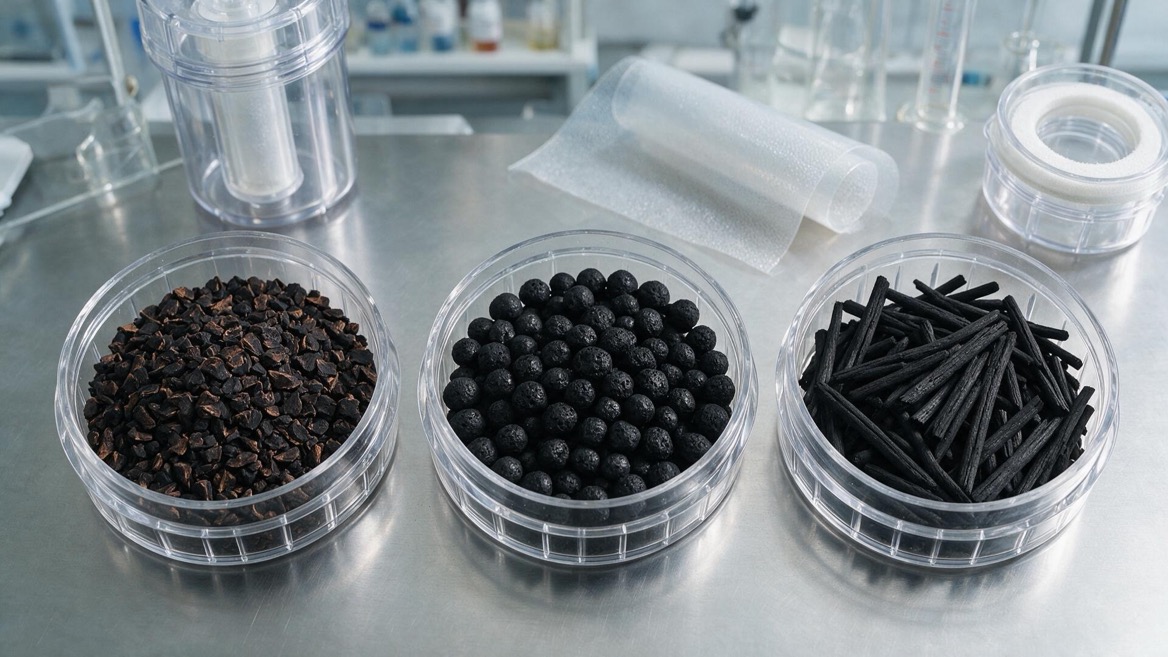
- Coconut-shell activated carbon: Often selected for high hardness, lower ash potential, and microporous adsorption behavior. It is commonly used in water-polishing systems but should be properly rinsed before use.
- Coal-based activated carbon: Offers a broader pore-size distribution and can be effective for a range of dissolved organics, color, and odor applications. Quality varies significantly by coal source and activation process.
- Wood-based activated carbon: Usually has more mesopores and can be useful where larger organic molecules, color bodies, and decolorization performance are priorities. It can be softer than coconut-shell grades, depending on production method.
An Often-Missed Pond Carbon Risk
A common but under-discussed sourcing problem is that two carbons with similar iodine numbers can perform very differently in an operating pond filter.
Why? Iodine number mainly reflects adsorption related to small molecules and micropores. Pond water often contains a complex mixture of humic substances, algae-derived organics, tannins, proteins, treatment residues, and colloidal matter. If the pore-size distribution does not match these compounds, the carbon may look strong on paper but exhaust quickly in real use.
How to avoid this problem
- Do not approve a supplier based only on iodine number.
- Ask for molasses number, methylene-blue number, or other pore-structure indicators where relevant.
- Run a side-by-side pilot test using actual pond water.
- Compare treated-water color, odor, turbidity, pH, and carbon life—not only initial adsorption results.
- Use mechanical pre-filtration before carbon to reduce clogging and preserve adsorption sites.
EPA guidance for water treatment similarly notes that granular activated carbon performance depends on carbon type, bed depth, flow rate, temperature, organic matter, and other water constituents.
Buyer's Guide: From Sample to Repeat Order
1. Verify the Supplier's Identity
Before placing a commercial order, request:
- Business registration and factory address.
- Product data sheet and current COA template.
- Recent factory photos or video inspection.
- Raw-material source explanation.
- Production-process summary: carbonization, activation, washing, drying, screening, and packing.
- Recent export documentation with commercially sensitive information redacted if necessary.
- Third-party audit report, if your procurement volume justifies it.
2. Verify Certifications Properly
Do not accept a certificate image without verification.
- Check whether the company name and production site match the supplier you are negotiating with.
- Confirm the scope: a general ISO 9001 certificate does not automatically certify every activated-carbon grade for pond, food, or drinking-water use.
- Check expiration dates, certificate numbers, and the issuing body.
- Search the certification body's official database when available.
- For drinking-water-related claims, confirm the exact product grade on the NSF database or request documentation showing the relevant product is covered.
For example, Calgon Carbon listings are available in NSF certification records, including NSF/ANSI/CAN 61-related entries.
3. Create a Proper Sample Protocol
Do not assess pond carbon only by appearance.
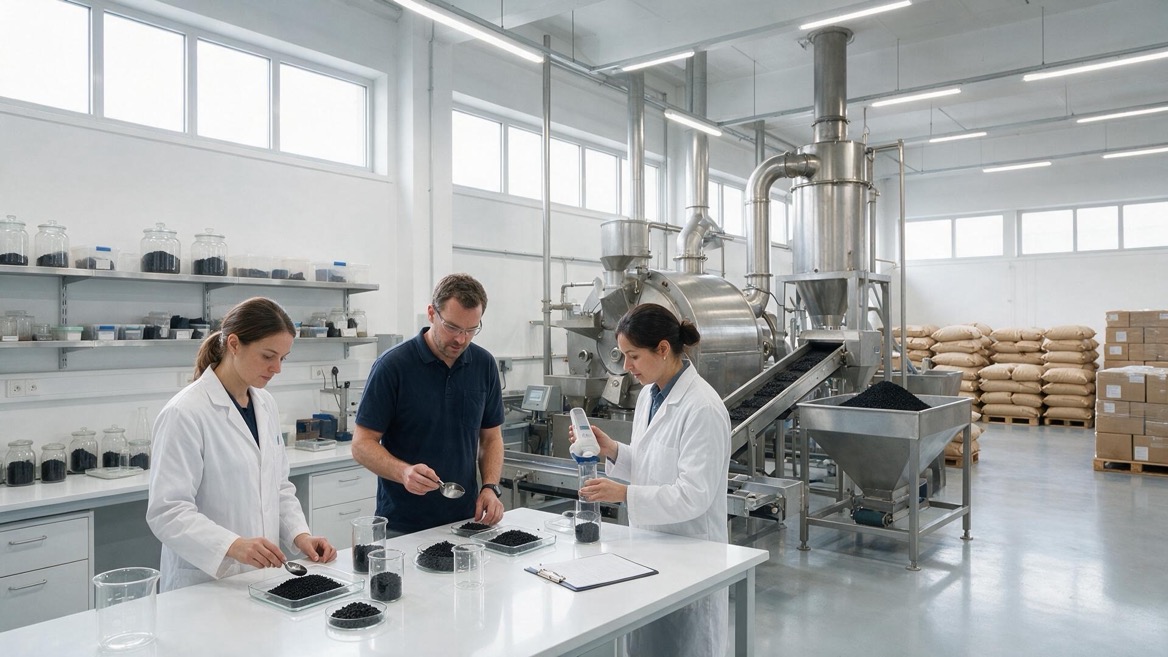
A practical sample-testing process should include:
1. Obtain 2–5 kg samples from at least two candidate suppliers.
2. Test particle size, dust level, moisture, ash, and water-extract pH.
3. Rinse each sample using the same procedure.
4. Operate samples in identical small filter columns or mesh bags.
5. Use real pond water rather than only laboratory water.
6. Compare odor reduction, visual color reduction, pressure drop, fines release, and useful service life.
7. Keep retained samples from the approved batch for later dispute resolution.
4. Control Freight and Packaging Risk
Activated carbon is hygroscopic and can absorb moisture and odors during storage and transport.
- Use moisture-resistant inner liners.
- Define acceptable net-weight tolerances.
- Require pallet wrapping and corner protection for retail cartons.
- Avoid shipping with strong-smelling chemicals or materials that may contaminate the cargo environment.
- Clarify Incoterms, insurance, destination port charges, customs clearance responsibilities, and demurrage risk before shipment.
- For ocean shipments, consider container desiccants and clear container-loading photos.
5. Plan for Carbon Replacement
Activated carbon is not permanent filtration media. It becomes exhausted as adsorption sites fill.
Replacement frequency depends on:
- Pond volume.
- Fish loading and feeding rate.
- Organic contamination.
- Algae and tannin load.
- Carbon quantity.
- Flow rate and contact time.
- Whether the carbon is protected by mechanical pre-filtration.
A good supplier should help buyers estimate a starting dosage and replacement schedule, then refine it based on actual operating results.
Conclusion
The right activated carbon for ponds should be selected as a filtration component, not as a generic commodity. Professional buyers should compare feedstock, pore structure, particle size, ash, dust, hardness, rinse quality, batch consistency, packaging capability, and supplier responsiveness before committing to a long-term program.
For brands and distributors that require flexible MOQ, custom mesh sizing, tailored packaging, responsive export communication, and support for OEM pond-filtration products, Guangdong Tongke Activated Carbon Co., Ltd. is a practical manufacturer to include in the supplier-evaluation process. Its stated 30,000-MT annual capacity, multi-material product range, warehouse resources, and customized-service orientation make it particularly relevant for growing pond-care and filtration-media programs.
Request a technical specification sheet, COA template, and product sample before placing a commercial order. A controlled side-by-side trial is usually the fastest way to identify the carbon grade that offers the best balance of water clarity, service life, cost, and customer satisfaction.
Frequently Asked Questions
1. How can I verify whether a supplier's ISO certificate has expired?
Ask for the certificate number, issuing certification body, scope, and validity dates. Then search the issuer's official certificate database or contact the issuer directly. Confirm that the legal company name and factory address match the actual production site, not only a trading office.
2. Is coconut-shell activated carbon always better for ponds?
No. Coconut-shell carbon can offer high hardness and strong micropore structure, but the best carbon depends on the contaminants being removed. For tannin-heavy, color-heavy, or larger-molecule organic loads, a coal-based or wood-based grade may perform better. Pilot testing with real pond water is the safest method.
3. What is a reasonable MOQ for private-label activated carbon for ponds?
MOQ depends on packaging, printing, carbon grade, and destination. Bulk or neutral packaging can often start at lower quantities than custom printed retail bags. Buyers should separate the MOQ for carbon production from the MOQ for printed packaging, cartons, and artwork setup.
4. Why does newly installed activated carbon sometimes turn pond water black?
This usually results from carbon fines or dust. The risk is higher when carbon is insufficiently screened, poorly washed, damaged during transport, or installed without rinsing. Specify a low-dust grade, request mesh-distribution data, and provide clear rinse instructions on the label.
5. Can activated carbon remove all contaminants from pond water?
No. Activated carbon is effective for many dissolved organic compounds, odors, colors, residual medications, and certain chemicals, but it is not a universal treatment solution. It does not replace mechanical filtration, biological filtration, aeration, UV treatment, or proper pond maintenance. Performance also varies by contaminant, contact time, and carbon grade.
References
- [U.S. Environmental Protection Agency: Activated Carbon and PFAS Treatment]
- [U.S. Environmental Protection Agency: PFAS Drinking Water Treatment Options]
- [U.S. Geological Survey: Mineral Commodity Summaries]
- [NSF Certified Product and Systems Search]
- [American Water Works Association]
- [Calgon Carbon FILTRASORB® 400 Product Documentation]


