Content Menu
● Why Granular Activated Carbon Matters Before RO
● The Most Common Selection Mistakes
>> Mistake 1: Selecting by iodine number alone
>> Mistake 2: Ignoring empty-bed contact time
>> Mistake 3: Treating all carbon raw materials as interchangeable
>> Mistake 4: Overlooking particle-size distribution
>> Mistake 5: Forgetting that GAC beds can support biological growth
● Selecting GAC for Actual Feed Water
>> Build a practical feed-water profile
>> Match the carbon to the target
● Design and Operating Checklist
>> Avoid channeling and short-circuiting
>> Flush carbon fines before startup
>> Monitor breakthrough rather than relying on calendar replacement
● A Better Purchasing Specification
● Work With a Carbon Partner
● FAQ
>> 1. Why is granular activated carbon used before RO membranes?
>> 2. Is a high iodine number enough for RO pretreatment?
>> 3. What is the best activated carbon for chlorine removal before RO?
>> 4. Can activated carbon remove chloramine?
>> 5. Why does black water appear after a carbon filter?
>> 6. How often should GAC be replaced in RO pretreatment?
>> 7. Does GAC remove salt from water?
● References
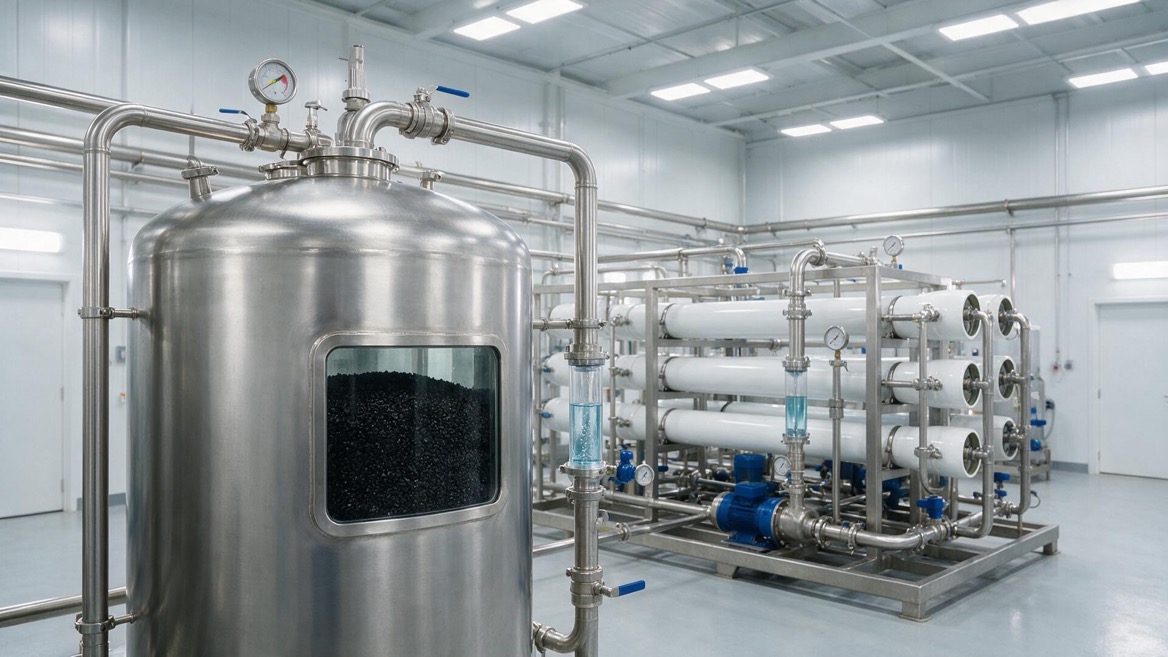
Granular activated carbon for RO pretreatment is often purchased as a standard filtration material. In practice, it is a critical protective layer between variable feed water and expensive reverse osmosis membranes. A poor choice can lead to chlorine breakthrough, carbon fines, rising pressure drop, unstable cartridge-filter consumption, organic fouling, and avoidable membrane cleaning.
At Guangdong Tongke Activated Carbon Co., Ltd., we view activated carbon selection as a system decision rather than a catalogue decision. The correct grade must match the source-water profile, target contaminants, flow rate, contact time, vessel design, backwash conditions, and downstream membrane requirements.
Why Granular Activated Carbon Matters Before RO
RO membranes are highly effective at separating dissolved salts and many contaminants. However, they are vulnerable to oxidants, suspended particles, and certain dissolved organic compounds.
Granular activated carbon (GAC) is commonly installed upstream of RO to reduce residual chlorine or chloramines and adsorb a portion of dissolved organic matter. It can also help stabilize changes in feed-water quality.
The most important distinction is simple:
| Granular activated carbon function | RO membrane function |
| Removes or reduces chlorine, organics, odor compounds, and some trace contaminants | Separates dissolved salts and produces purified permeate |
| Protects downstream equipment | Delivers final desalination or purification |
| Operates through adsorption and catalytic reduction | Operates through pressure-driven membrane separation |
| Requires backwashing, monitoring, and replacement | Requires stable pretreatment and periodic chemical cleaning |
A carbon bed does not reduce salinity in the way an RO membrane does. It should therefore not be selected for "better desalination." Its value is in reducing avoidable damage before water reaches the membrane elements.
For many industrial systems, the immediate target is dechlorination. Yet the broader value may be organic-load reduction, lower fouling potential, and a more stable RO feed profile.
The Most Common Selection Mistakes
Mistake 1: Selecting by iodine number alone
Iodine number is widely used as a comparative indicator of adsorption capacity. It is useful, but it is not a complete purchasing specification for granular activated carbon for RO pretreatment.
A high iodine number does not automatically guarantee:
- Fast chlorine removal
- Suitable pore-size distribution for the actual contaminants
- Good mechanical strength
- Low carbon-fines release
- Stable hydraulic performance
- Long operating life under backwashing
For example, water containing small organic molecules may benefit from a carbon with strong micropore development. However, feed water containing larger natural organic matter fractions may need a more balanced pore structure with useful mesopore volume.
Better approach: evaluate iodine number together with hardness, ash content, particle-size distribution, apparent density, pore structure, abrasion resistance, and application-specific dechlorination performance.
Mistake 2: Ignoring empty-bed contact time
A common issue is choosing a good carbon grade but installing too little media volume. The result is insufficient empty-bed contact time, often called EBCT.
EBCT=Empty bed volume/Flow rate
If flow increases while vessel size and carbon volume remain unchanged, contact time falls. Chlorine removal and organic adsorption may decline even when the activated carbon itself meets the original specifications.
The required contact time depends on the contaminant. Free chlorine is generally easier to reduce than chloramines or dissolved organic compounds. Organic removal usually needs considerably more contact time than basic dechlorination.
A practical selection discussion should include:
1. Normal and peak flow rate.
2. Required treated-water quality.
3. Influent chlorine or chloramine concentration.
4. Feed-water temperature and pH.
5. Carbon-bed volume and usable bed depth.
6. Required service interval before replacement or reactivation.
Do not size GAC only for average flow. Peak-flow operation is often when chlorine breakthrough begins.
Mistake 3: Treating all carbon raw materials as interchangeable
Coconut shell, coal-based, wood-based, and other activated carbons have different physical and adsorption characteristics. None is universally best. The right choice depends on the water and the operating objective.
| Carbon type | Typical strengths | Selection considerations |
| Coconut shell activated carbon | High hardness, low fines generation, strong micropore structure | Often suitable when mechanical durability and small-molecule adsorption are priorities |
| Coal-based activated carbon | Balanced micro- and mesopore structure, broad adsorption range | Can be suitable for more complex organic mixtures when quality is controlled |
| Wood-based activated carbon | More macropore volume and relatively open structure | May suit larger organic molecules or specialized treatment duties |
| Catalytic activated carbon | Enhanced reduction of chloramines and certain sulfur compounds | Should be considered when chloramine removal is a defined requirement |
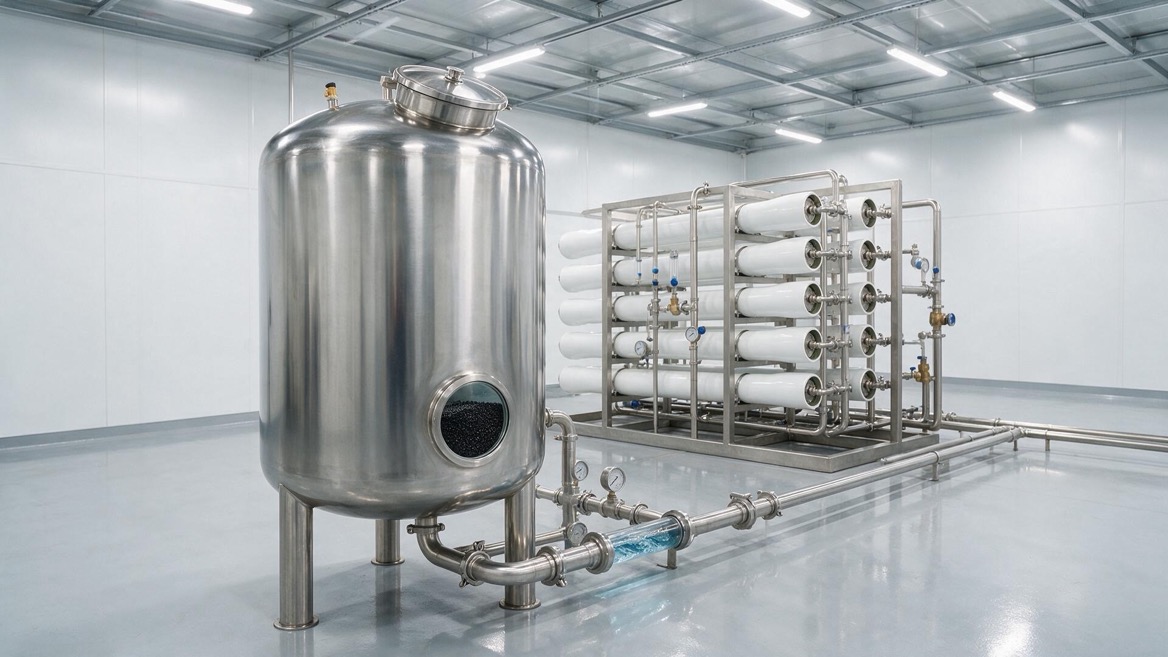
For RO pretreatment, hardness deserves special attention. Carbon that breaks down during transport, loading, backwashing, or hydraulic stress can release black fines. These fines may increase downstream filter loading and create operational problems before the membranes.
Mistake 4: Overlooking particle-size distribution
Mesh size affects adsorption kinetics, pressure drop, backwash behavior, and the risk of media loss.
Smaller particles offer shorter diffusion paths and can improve adsorption kinetics. However, they may also create higher pressure drop and demand tighter control of underdrain design and backwash expansion. Larger particles may reduce pressure loss but can provide less surface-area accessibility at the same operating conditions.
The key is not merely choosing "fine" or "coarse" activated carbon. It is choosing a uniform and appropriate particle-size distribution.
Ask the supplier for:
- Nominal mesh size.
- Uniformity coefficient.
- Oversize and undersize limits.
- Fines content before shipment.
- Recommended backwash expansion.
- Hydraulic loading guidance.
A carbon bed with excessive fines may look acceptable at commissioning but become unstable after repeated backwashing. This is why abrasion resistance and particle-size consistency should be evaluated together.
Mistake 5: Forgetting that GAC beds can support biological growth
Activated carbon adsorbs organics. Over time, those organics can become a nutrient source for microorganisms. In some water-treatment applications, biological activity can contribute to contaminant removal. Before RO, uncontrolled biological growth can become a risk.
A neglected carbon vessel may develop:
- Biofilm accumulation.
- Channeling.
- Odor formation.
- Rising differential pressure.
- Higher microbial loading downstream.
- Faster cartridge-filter blockage.
This does not mean GAC should be avoided. It means the system must include operational discipline.
A well-managed RO pretreatment line normally considers:
- Upstream solids removal.
- Suitable backwashing capacity.
- Air scour where appropriate.
- Periodic sanitation strategy.
- Differential-pressure monitoring.
- Sampling points before and after the carbon bed.
- Final cartridge filtration before RO feed pumps.
Selecting GAC for Actual Feed Water
The strongest activated carbon specification begins with a water analysis, not a price request.
Build a practical feed-water profile
Before comparing grades, collect representative data over time. A one-time sample may miss seasonal changes, well-water fluctuations, municipal-supply changes, production discharges, or cleaning-cycle effects.
The evaluation should include:
- Free chlorine and total chlorine.
- Chloramine concentration, where relevant.
- Turbidity and suspended solids.
- Total organic carbon or chemical oxygen demand.
- Iron and manganese.
- Oil, surfactants, or process chemicals.
- pH and temperature.
- Flow-rate range.
- Conductivity and total dissolved solids.
- Microbiological indicators where required.
Water variability matters as much as average water quality. A system designed only for normal conditions may fail during upstream dosing changes or peak demand.
Match the carbon to the target
For dechlorination-dominated duty, prioritize rapid and consistent chlorine reduction, adequate contact time, and mechanical stability. If chloramines are present, confirm that the selected grade and vessel design can provide enough contact time for that specific duty.
For organic-fouling control, determine what type of organics are present. Natural organic matter, color bodies, humic substances, solvents, surfactants, and process residues do not behave identically on activated carbon.
A pilot trial is particularly valuable when:
- Feed water is industrial wastewater or reuse water.
- Organic load changes frequently.
- The water contains proprietary process chemicals.
- Membrane fouling has occurred repeatedly.
- The project requires a long media service life.
- The cost of membrane downtime is high.
A published pilot study using membrane bioreactor effluent found that GAC pretreatment reduced dissolved organic matter substantially and improved membrane permeability. Such findings are promising, but they should not be transferred directly to every project because influent composition, hydraulic conditions, and carbon properties vary widely.
Design and Operating Checklist
Avoid channeling and short-circuiting
Even a high-quality activated carbon cannot compensate for poor vessel hydraulics. Uneven water distribution can create preferential flow paths, reducing actual contact time.
Review the following before commissioning:
- Inlet distributor design.
- Underdrain suitability.
- Freeboard for backwash expansion.
- Bed-depth consistency.
- Proper media loading method.
- Air-release and venting arrangement.
- Accessible sampling points.
- Flow-meter accuracy.
- Differential-pressure gauges.
A vessel without effective distribution may show apparently normal flow while part of the carbon bed receives very little water. The measured contact time can then be misleading.
Flush carbon fines before startup
New granular activated carbon should be flushed carefully before connecting the RO membranes. The goal is to remove transport dust and loose fines without disturbing the bed structure.
A practical startup sequence is:
1. Inspect the vessel, underdrain, valves, and sampling ports.
2. Load the specified carbon volume using controlled handling.
3. Fill the vessel slowly to prevent media disturbance.
4. Backwash according to the carbon grade and water temperature.
5. Rinse until effluent runs clear.
6. Record initial pressure drop and treated-water quality.
7. Confirm chlorine reduction before sending water to RO membranes.
The initial pressure-drop reading is important. It provides a baseline for identifying fouling, compaction, bed blockage, or hydraulic changes later.
Monitor breakthrough rather than relying on calendar replacement
Replacing activated carbon every fixed number of months can be convenient, but it is not always technically sound. Carbon life depends on contaminant loading, flow, contact time, water temperature, competing organics, backwash quality, and upstream treatment stability.
A more reliable program tracks:
- Free chlorine after GAC.
- Total chlorine where chloramines may be present.
- Differential pressure across the vessel.
- Turbidity before and after the bed.
- TOC, UV absorbance, or another agreed organic indicator.
- Cartridge-filter replacement frequency.
- RO normalized permeate flow and differential pressure.
Breakthrough monitoring allows replacement planning before membranes are exposed to oxidants or a sudden loss of pretreatment performance.
The U.S. Environmental Protection Agency notes that carbon adsorption performs best with relatively uniform feed conditions and low suspended-solids loading. It also identifies flow, pH, temperature, and solids as operating factors that affect performance.
A Better Purchasing Specification
Instead of requesting only "8×30 mesh activated carbon" or "high iodine value GAC," prepare an application-based specification.
Include these requirements in the purchase inquiry:
| Specification area | Information to provide or request |
| Application | RO pretreatment, dechlorination, organics reduction, chloramine removal, or combined duty |
| Feed water | Source, water analysis, variability, and upstream chemicals |
| Hydraulic conditions | Average flow, peak flow, operating pressure, vessel dimensions, and bed depth |
| Carbon properties | Raw material, mesh size, iodine number, hardness, ash, moisture, density, and fines limits |
| Performance target | Required chlorine level after GAC and organic-removal objective |
| Operation | Backwash flow, expansion requirement, expected run length, and sanitation method |
| Quality control | Batch consistency, certificate of analysis, packaging, traceability, and third-party testing where required |
| Lifecycle plan | Replacement threshold, reactivation options, disposal route, and emergency inventory |
The cheapest carbon per tonne is not always the lowest-cost option. A lower-priced grade can become expensive if it causes frequent cartridge replacement, higher pressure loss, shortened membrane life, or unplanned shutdowns.
For large or sensitive installations, compare total operating cost rather than media purchase cost alone.
Work With a Carbon Partner
Granular activated carbon for RO pretreatment should be selected around your water, vessel, operating targets, and membrane-protection requirements. The right product is not simply the carbon with the highest single test value. It is the grade that delivers stable performance under your actual conditions.
Guangdong Tongke Activated Carbon Co., Ltd. supplies customized granular activated carbon solutions for industrial water treatment, air and gas purification, food and beverage, chemical, pharmaceutical, and other export-oriented applications. Share your water analysis, flow rate, vessel dimensions, and treatment target with our technical team to evaluate a suitable carbon grade and specification.
FAQ
1. Why is granular activated carbon used before RO membranes?
It is primarily used to reduce chlorine or chloramines that may damage RO membranes. It can also reduce some dissolved organic compounds that contribute to organic fouling.
2. Is a high iodine number enough for RO pretreatment?
No. Iodine number is only one indicator. Hardness, particle-size distribution, ash content, pore structure, contact time, and actual dechlorination performance are also important.
3. What is the best activated carbon for chlorine removal before RO?
The best option depends on chlorine type, flow rate, required contact time, water quality, and vessel design. Coconut shell carbon, coal-based carbon, and catalytic grades can each be suitable under different conditions.
4. Can activated carbon remove chloramine?
Yes, but chloramine removal generally requires more contact time than free chlorine removal. The carbon grade and treatment design should be evaluated specifically for chloramine duty.
5. Why does black water appear after a carbon filter?
Black water usually indicates carbon fines. Causes may include weak carbon, excessive abrasion during handling, poor backwashing, damaged internals, or improper media retention.
6. How often should GAC be replaced in RO pretreatment?
There is no universal replacement schedule. Replace or reactivate media based on chlorine breakthrough, organic-removal decline, rising pressure drop, and overall treatment performance.
7. Does GAC remove salt from water?
No. Activated carbon is not a desalination medium. RO membranes remove dissolved salts; GAC protects the membrane system from certain upstream contaminants.
References
1. [U.S. Environmental Protection Agency — *Wastewater Technology Fact Sheet: Granular Activated Carbon Adsorption and Regeneration*] [nepis.epa]
2. [Water Conditioning & Purification International — *Activated Carbon: Filtration, Contactor or Both?*] [wqa]
3. [Journal of Membrane Science — *Removal of dissolved organic matter by granular-activated carbon adsorption as a pretreatment to reverse osmosis of membrane bioreactor effluents*] [sciencedirect]
4. [Activated Carbon Technologies — *Industrial Water Treatment Applications*] [acticarb]
5. [Calgon Carbon — *Carbon Adsorption and Reactivation for Industrial Applications*] [calgoncarbon]
6. [Water Quality Association — Activated carbon treatment resources] [wqa]


