Content Menu
● Understanding Industrial-Grade Activated Carbon
● Who Counts as an Industrial Buyer?
● What Industrial Buyers Prioritize
● Why China Is a Strategic Source
● Risk Dimensions in Cross-Border Sourcing
● Technical Checks Before Importing Activated Carbon
>> Matching Activated Carbon Type to Application
>> Key Technical Parameters to Request
● Supplier Capability and E‑E‑A‑T Considerations
>> Evaluating Manufacturer Experience and Scale
>> Quality Systems, Certifications, and Documentation
● Regulatory Compliance and Risk Management
>> Aligning Chinese Production with Local Regulations
>> Contractual and Operational Risk Controls
● Logistics, Packaging, and Handling Considerations
>> Shipping Formats and Packaging
>> Storage, Safety, and Environmental Issues
● Unique Expert Insights – How Experienced Buyers Benchmark Suppliers
>> Three Practical Benchmarks from Industrial Sourcing Practice
● How Guangdong Tongke Activated Carbon Co., Ltd. Fits Industrial Buyer Expectations
>> Product Portfolio and Application Coverage
>> Practical Checklist Aligned to Tongke's Capabilities
● Clear CTA – Talk to a Technical Expert Before You Import
● FAQs
● References
Industrial buyers importing activated carbon from China should systematically check supplier capability, product specifications, compliance, logistics, and long‑term support before placing orders. This article uses real manufacturing and sourcing experience to benchmark what "good" looks like and how Guangdong Tongke Activated Carbon Co., Ltd. can meet these expectations. [tongkeac]
Importing activated carbon from China offers compelling cost and technical advantages, but only if buyers manage specification risk, regulatory compliance, and supply chain reliability with discipline. From my perspective as a B2B sourcing consultant working with industrial clients, the biggest gaps usually appear not in price negotiation, but in how carefully buyers validate product fit and supplier processes before issuing a PO. [tongkeac]
Understanding Industrial-Grade Activated Carbon
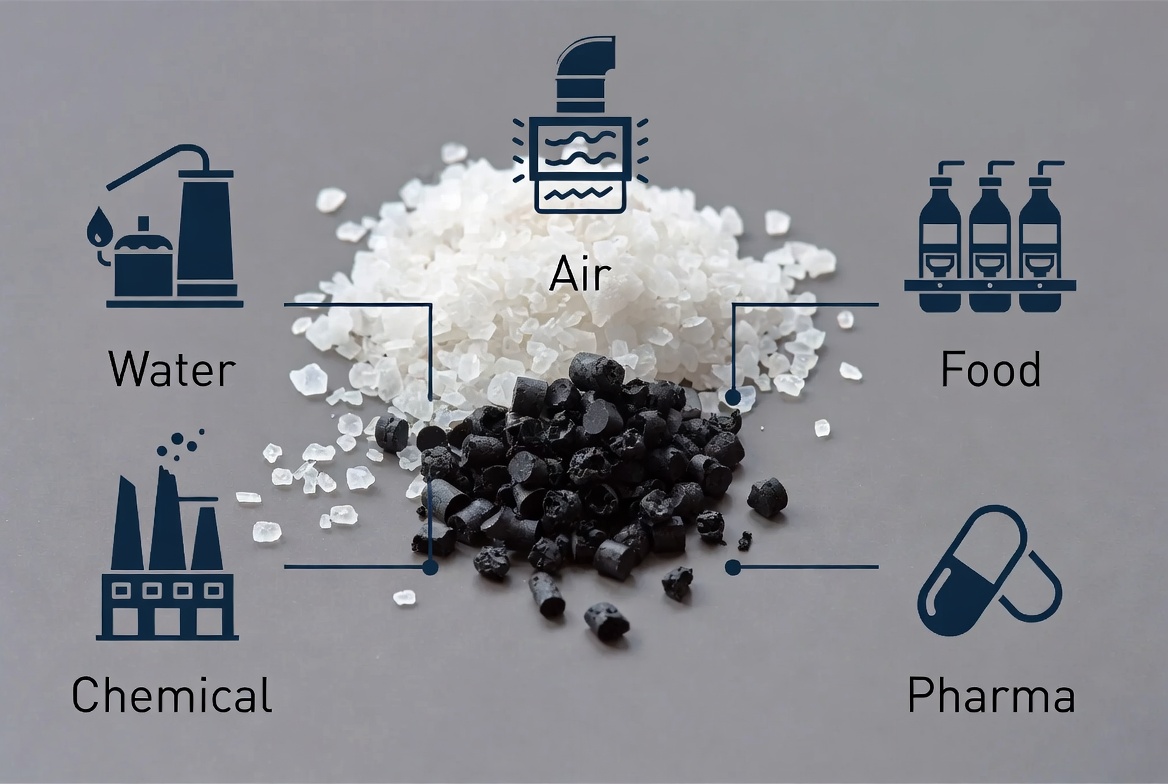
Industrial buyers should start by clarifying what "industrial-grade activated carbon" really means in their own context. It is not a commodity; it is an engineered adsorption medium whose pore structure, raw material, and activation method directly drive performance in water treatment, air purification, chemicals, food, and pharmaceuticals. [tongkeac]
Key performance drivers include:
- Raw material base (coal, wood, coconut shell, fruit shell) and its impurity profile. [tongkeac]
- Pore size distribution (micro/meso/macro pores) aligned to target molecules.
- Iodine number, methylene blue value, and surface area, which strongly correlate with adsorption capacity in typical industrial applications. [tongkeac]
When you import from China, your evaluation should treat activated carbon as a critical process medium, not as a generic filter media.
Who Counts as an Industrial Buyer?
In practice, industrial buyers of activated carbon include:
- Municipal and private water & wastewater treatment operators.
- Manufacturers in chemical processing, food and beverage, pharmaceuticals, and gold recovery. [tongkeac]
- OEMs and integrators designing air, gas, and solvent purification systems. [tongkeac]
From an expert sourcing viewpoint, these buyers share some traits: they purchase in bulk, they depend on stable quality, and they usually operate under strict regulatory regimes (e.g., food-grade, pharma-grade, environmental discharge limits).
What Industrial Buyers Prioritize
Compared with small distributors, industrial buyers tend to focus on:
- Regulatory compliance (e.g., meeting local drinking water, food-contact, or emissions standards).
- Consistency of batches for process reproducibility.
- Total cost of ownership, not just FOB price: life cycle, change-out frequency, disposal cost, and operational risk.
If you are in any of these segments, your checklist should emphasize risk management and documented proof, rather than catalog descriptions.
Why China Is a Strategic Source
China has become a strategic hub for activated carbon because it combines raw material availability, mature processing infrastructure, and large-scale export experience. Buyers benefit from competitive pricing and broad product coverage, including powdered activated carbon, granular activated carbon, pelletized (extruded) activated carbon, honeycomb, wood-based, coal-based, coconut shell, and fruit shell carbons. [madeinchina]
For example, Guangdong Tongke Activated Carbon Co., Ltd. integrates R&D, production, and sales, and offers different product types tailored for water treatment, air purification, food processing, gas treatment, gold recovery, and other industrial uses. This breadth is valuable for buyers seeking portfolio consolidation with one supplier. [tkcarbon.en.made-in-china]
Risk Dimensions in Cross-Border Sourcing
Importing from China adds extra layers of risk that industrial buyers must actively manage:
- Specification alignment across languages and standards.
- Quality consistency across different plants or subsidiaries.
- Lead time, logistics, and containerized shipping constraints for bulk materials.
- Customs, documentation, and HS classification accuracy.
A robust pre‑import checklist should explicitly address each of these dimensions.
Technical Checks Before Importing Activated Carbon
Matching Activated Carbon Type to Application
One critical mistake I see buyers make is treating all activated carbon types as interchangeable. In reality, you need to map product type to application:
| Application (Industrial Use) | Recommended Carbon Types | Key Parameters to Check |
| Water & wastewater treatment | Granular, powdered wood or coal carbon | Iodine number, ash, hardness, particle size distribution. (tongkeac) |
| Air & gas purification | Pelletized / extruded, honeycomb, coconut shell carbon | CTC activity, bulk density, bed pressure drop, VOC adsorption profile. (tongkeac) |
| Food & beverage | High‑purity wood or coconut shell powdered carbon | Decolorization efficiency, heavy metals, off‑odor potential. (tongkeac) |
| Chemical processing | Tailored granular or pelletized carbon | Surface area, pore size distribution, chemical stability. (tongkeac) |
| Pharmaceuticals & healthcare | Highly controlled, low‑impurity grades | Extractables, endotoxin risk, supporting validation documentation. (tongkeac) |
When evaluating a Chinese supplier, insist on application-specific data and cross-check it against your process conditions (pH, temperature, target contaminants, flow rates).
Key Technical Parameters to Request
Industrial buyers should request at minimum:
- Iodine number / methylene blue value for adsorption capacity. [tongkeac]
- BET surface area and pore volume for understanding available adsorption surface.
- Ash content and heavy metals for applications in food, pharma, and drinking water.
- Attrition resistance / hardness index for packed beds and repeated backwashing.
- Bulk density and particle size distribution for correct equipment sizing and pressure drop.
Buying purely on brand name or marketing copy, without these data, increases the risk of underperformance or regulatory issues downstream.
Supplier Capability and E‑E‑A‑T Considerations
Evaluating Manufacturer Experience and Scale
Under Google's E‑E‑A‑T (Experience, Expertise, Authoritativeness, Trustworthiness) principles, industrial buyers should look for suppliers whose operational footprint supports those attributes. Guangdong Tongke, for instance, operates from Dongguan City in Guangdong Province and has subsidiaries in multiple Chinese regions, combining manufacturing, R&D, and export functions. [tongkeac]
Evidence of expertise and authoritativeness includes:
- Long-term focus on activated carbon as a core business.
- Documented knowledge of application scenarios (water, air, environmental remediation, chemicals, food, pharma, gold recovery, gas masks, etc.). [tongkeac]
- Ability to discuss not only product specs, but also process performance in buyers' industries.
Quality Systems, Certifications, and Documentation
For industrial buyers, E‑E‑A‑T translates into verifiable systems:
- ISO‑style quality management and traceability (even if local, non‑export certificates are used).
- Material safety data sheets (MSDS), detailed technical data sheets (TDS), and test reports from qualified labs.
- Facility audits or remote video inspections demonstrating production controls and raw material handling.
When importing, it is rational to expect not only certificates, but also process narratives: how the supplier controls carbonization, activation, washing, drying, and packaging to meet your specs.
Regulatory Compliance and Risk Management
Aligning Chinese Production with Local Regulations
Activated carbon for industrial use often falls under strict national or regional regulations, particularly for drinking water, food, and air emissions. Buyers should verify that the Chinese supplier's specifications and test methods align with local standards in their destination market.
Critical questions include:
1. Which drinking water or food-contact standards can the supplier map their test data to?
2. Are there validated third‑party tests compatible with your regulatory framework?
3. How is batch‑to‑batch compliance documented and archived?
Suppliers serving applications like water purification, food & beverage, pharmaceuticals, and respirators are typically familiar with compliance needs and can provide more robust support. [tongkeac]
Contractual and Operational Risk Controls
To protect operations:
- Use spec‑based contracts with defined test methods and acceptance criteria.
- Require retention samples and agreed dispute-resolution steps for out‑of‑spec batches.
- Implement incoming QC at your site with rapid screening methods (e.g., moisture, bulk density, basic adsorption tests).
These steps turn your checklist into a practical risk-control mechanism rather than a simple procurement formality.
Logistics, Packaging, and Handling Considerations
Shipping Formats and Packaging
Industrial buyers should assess how activated carbon will be shipped and handled end‑to‑end. Typical formats include:
- 25 kg bags, big bags, or bulk in containers.
- Moisture‑protected packaging and palletization suitable for long sea voyages.
Guangdong Tongke and similar manufacturers often ship in bulk to global customers, so they can advise on best packaging for your climate, storage, and handling equipment. For hygroscopic materials like activated carbon, packaging integrity and warehouse conditions directly influence performance. [tongkeac]
Storage, Safety, and Environmental Issues
Activated carbon can adsorb vapors and gases from the environment, and in some scenarios, spent carbon may hold hazardous contaminants. Buyers should plan for:
- Safe storage with controlled humidity and away from reactive chemicals.
- Procedures for spent carbon handling and disposal according to local environmental laws.
- Clear labelling and documentation to support EHS audits.
Your supplier should be able to provide guidance on standard industrial handling practices for each product type.
Unique Expert Insights – How Experienced Buyers Benchmark Suppliers
Three Practical Benchmarks from Industrial Sourcing Practice
From working with industrial buyers on cross‑border sourcing, I recommend three practical benchmarks before importing activated carbon from China:
1. Application fit test:
- Run a small pilot with real process conditions (contaminant levels, temperature, pH).
- Compare performance against your existing carbon on throughput, removal efficiency, and change‑out interval.
2. Process knowledge test:
- Ask the supplier's technical team to walk through their recommended operating conditions for your application.
- Strong suppliers will reference adsorption mechanisms, contact time, and regeneration or replacement schedules, not just quote numbers.
3. Support responsiveness test:
- Track response times and depth of answers during RFQ and sampling.
- This is a proxy for how they will behave during a quality incident or supply disruption.
These benchmarks move beyond datasheets and reveal whether the supplier can function as a long‑term technical partner, not just a commodity vendor.
How Guangdong Tongke Activated Carbon Co., Ltd. Fits Industrial Buyer Expectations
Product Portfolio and Application Coverage
Guangdong Tongke Activated Carbon Co., Ltd. offers a wide portfolio that covers wood, coal, coconut shell, honeycomb, pelletized (extruded), and other specialty activated carbons. This allows industrial buyers to source different grades for water treatment, air and gas purification, food and beverage processing, chemical manufacturing, pharmaceuticals, gold recovery, and gas masks from a single partner. [tkcarbon.en.made-in-china]
From a user‑experience perspective, this breadth simplifies procurement and reduces the complexity of managing multiple vendors across applications. It also supports internal standardization when buyers wish to harmonize specifications and lock in long‑term frameworks.
Practical Checklist Aligned to Tongke's Capabilities
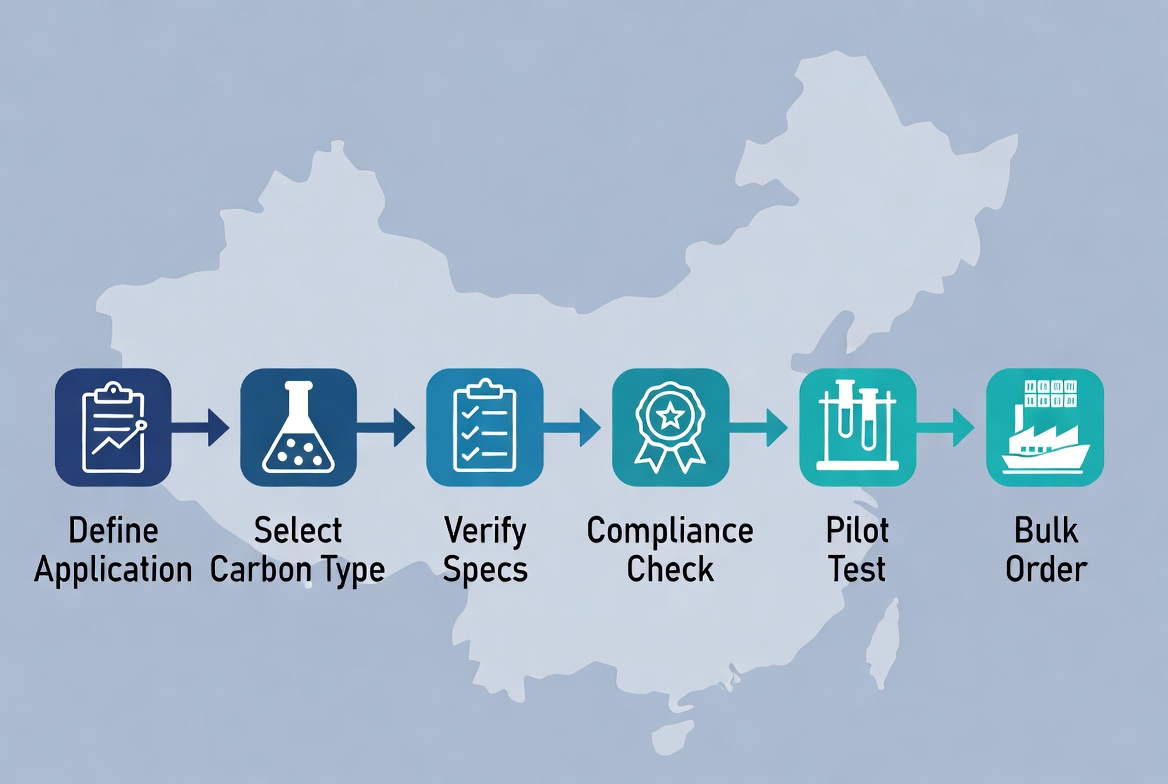
When assessing Tongke or similar Chinese manufacturers, industrial buyers can use this practical checklist:
1. Confirm application and target contaminants (e.g., VOC removal from flue gas, color removal in sugar syrup, chlorine removal in municipal water). [tongkeac]
2. Select candidate product types (powdered, granular, pelletized, honeycomb, etc.) and request detailed specs and test data. [tkcarbon.en.made-in-china]
3. Review manufacturing footprint and experience, including subsidiaries and R&D capabilities. [tongkeac]
4. Request compliance mapping to your local standards and relevant test reports.
5. Pilot test and evaluate performance and operational cost before committing to full‑scale orders.
This structured approach positions industrial buyers to capture cost benefits while maintaining performance and compliance.
Clear CTA – Talk to a Technical Expert Before You Import
Before you place your next order to import activated carbon from China, schedule a technical discussion with your shortlisted supplier's application engineers. Share your process flows, performance targets, and regulatory constraints, and ask them to propose a data‑backed configuration rather than a single catalog item.
If you are considering Guangdong Tongke Activated Carbon Co., Ltd., prepare your process requirements and request a tailored recommendation that includes product type, key specifications, and indicative life‑cycle expectations for your specific industrial use. This single step dramatically improves sourcing outcomes and aligns your decisions with both engineering and E‑E‑A‑T best practices. [tongkeac]
FAQs
Q1: What documents should industrial buyers request before importing activated carbon from China?
Industrial buyers should request technical data sheets, material safety data sheets, representative test reports, and descriptions of the supplier's quality management system, all aligned to the intended application. [tongkeac]
Q2: How can I verify that Chinese‑made activated carbon meets my local water or food safety regulations?
Ask suppliers to map their test data to relevant local standards and, where possible, provide third‑party lab reports using compatible test methods for drinking water, food-contact, or emissions regulations. [tongkeac]
Q3: Which type of activated carbon is best for air and gas purification?
Pelletized/extruded and honeycomb activated carbons, often based on coal or coconut shell, are typically preferred because they combine high activity with controlled pressure drop and mechanical strength. [tkcarbon.en.made-in-china]
Q4: Why is raw material origin important for industrial activated carbon applications?
Raw material (wood, coal, coconut shell, fruit shell) influences pore structure, impurity profile, and performance, especially in sensitive applications such as food processing and pharmaceuticals. [tongkeac]
Q5: What is the most common mistake industrial buyers make when importing activated carbon?
The most common mistake is treating activated carbon as a commodity and buying solely on price, without demanding application‑specific data, compliance mapping, and pilot testing in real process conditions.
References
1. Guangdong Tongke Activated Carbon Co., Ltd. – Official Website. Available at: https://www.tongkeac.com/
2. Guangdong Tongke Activated Carbon Co., Ltd. – Activated Carbon Products Overview. Available at: https://www.tongkeac.com/activated-carbon-product.html
3. Guangdong Tongke Activated Carbon Co., Ltd. – Product Listings on Made‑in‑China. Available at: https://www.madeinchina.com/supplier/tkcarbon/mall/page-2.html
4. Guangdong Tongke Activated Carbon Co., Ltd. – Company Introduction and Subsidiaries. Available at: https://tkcarbon.en.made-in-china.com/product/TEDpUdIlmrRx/China-High-Quality-100-Activated-Carbon-Powdered-.html
5. Guangdong Tongke Activated Carbon Co., Ltd. – Top 10 Wood Activated Carbon Manufacturers in China. Available at: https://www.tongkeac.com/top-10-wood-activated-carbon-manufacturers-in-china.html


