Content Menu
● What Is CIL Carbon‑in‑Leach Gold Processing?
● Step‑by‑Step: How the CIL Process Works
>> Ore preparation and slurry conditioning
>> Cyanide leaching
>> Gold adsorption onto activated carbon
>> Elution, electrowinning, and refining
● CIL vs. CIP: Which Process Fits Your Plant?
● Core Chemicals in CIL and Why They Matter
>> Sodium cyanide (NaCN)
>> Sodium hydroxide (NaOH) and lime (CaO)
>> Acids for pickling and wastewater
>> Activated carbon as the process backbone
● Why Activated Carbon Quality Makes or Breaks a CIL Circuit
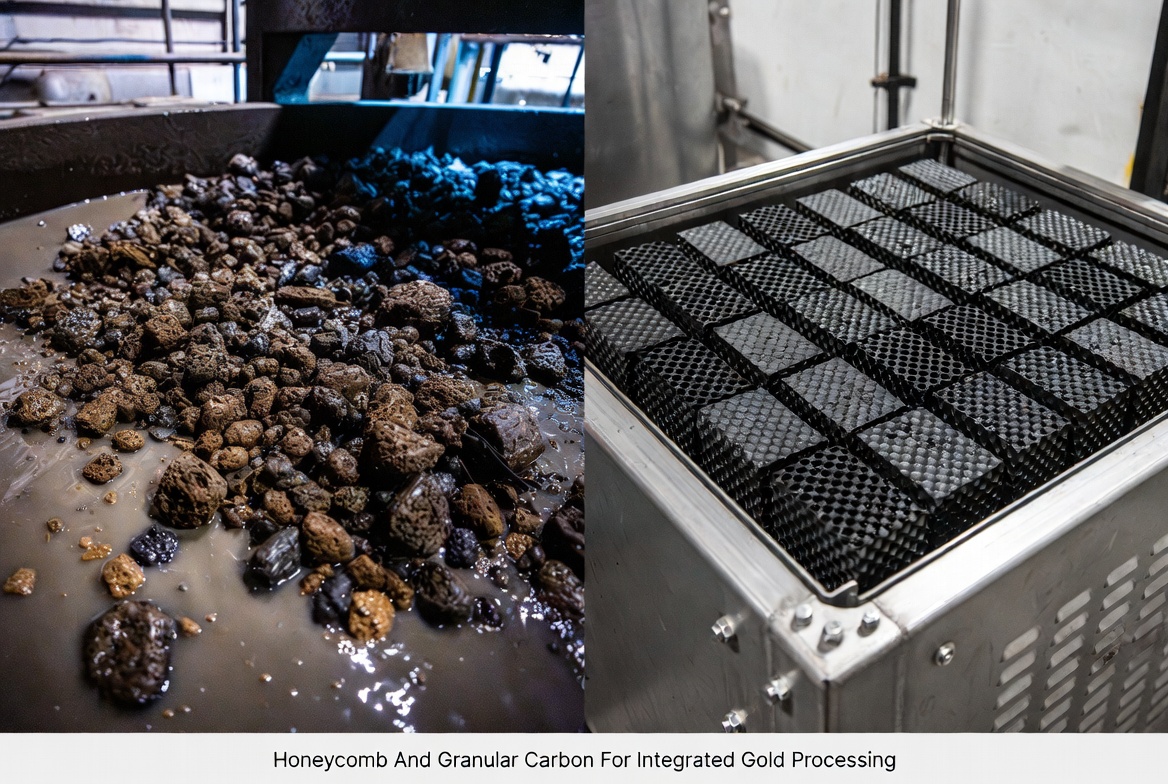
● Guangdong Tongke: Specialist in Honeycomb and Granular Carbon for Gold and Beyond
● Honeycomb Activated Carbon in Gold and Process Gas Treatment
● Tongke's Technical Strength: Advanced Equipment and Quality Control
● How to Specify Activated Carbon for CIL Gold Recovery
● From Field Experience: Why Dust Removal and Polishing Matter
● Emerging Trends: Advanced Activated Carbon for Gold Recovery
● Practical Checklist: Optimizing a CIL Circuit with Tongke
● Why Partner with Guangdong Tongke for CIL and Honeycomb Carbon
● Call to Action
● Frequently Asked Questions (FAQ)
● References
CIL carbon-in-leach gold processing relies on high‑performance activated carbon, and Guangdong Tongke Activated Carbon Co., Ltd. offers tailored honeycomb and granular carbon solutions that help gold plants push recovery, cut losses, and stabilize long‑term operating costs. This guide explains the CIL process from an engineer's perspective and shows how to specify and optimize activated carbon for demanding gold circuits while leveraging Tongke's technical support and custom manufacturing capabilities. [xygrup]
What Is CIL Carbon‑in‑Leach Gold Processing?
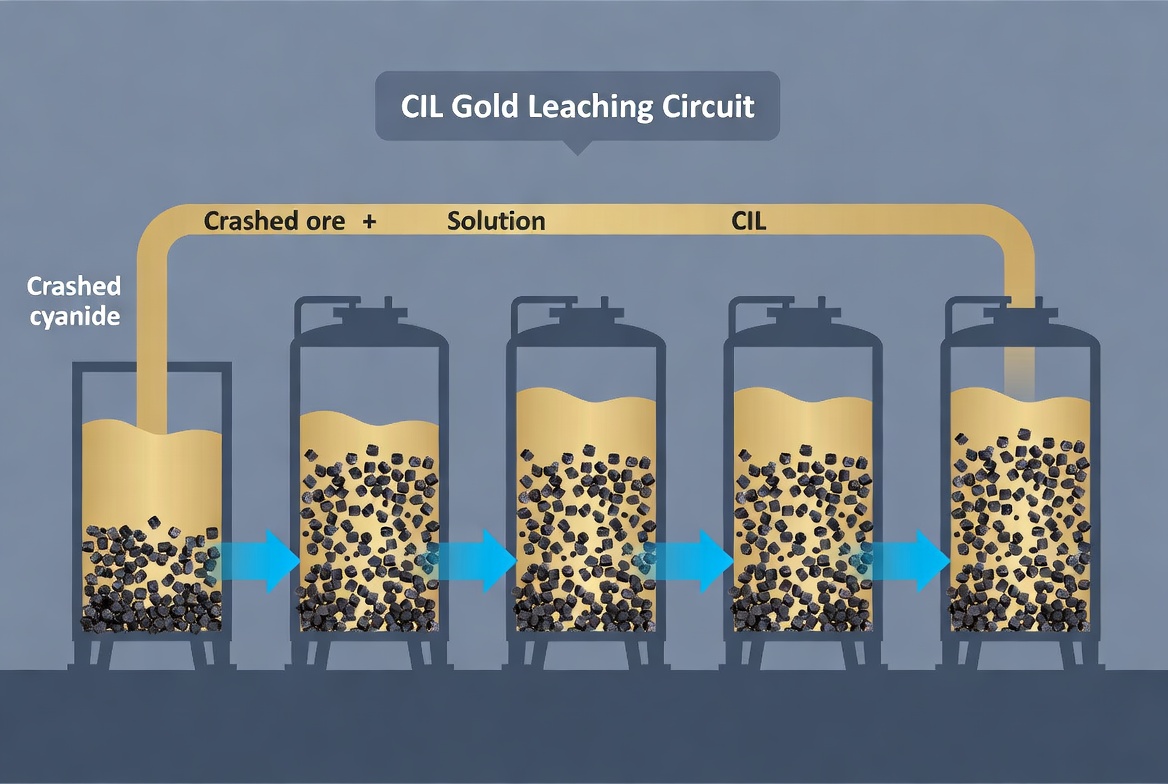
In a carbon‑in‑leach (CIL) circuit, cyanide leaching and gold adsorption on activated carbon happen in the same tanks instead of in separate stages. Slurried ore, cyanide solution, and activated carbon move together through a series of agitated tanks, so gold dissolves into solution and is immediately captured by the carbon surface. [qizhongcarbon]
From an operator's viewpoint, CIL is often chosen because it simplifies plant layout, reduces the number of tanks, and can deliver higher overall gold recovery compared with conventional carbon‑in‑pulp (CIP) when ore is complex or has high preg‑robbing potential. When combined with well‑engineered activated carbon, CIL becomes a robust, repeatable process that can run for months with stable metallurgical performance. [xygrup]
Step‑by‑Step: How the CIL Process Works
Ore preparation and slurry conditioning
The CIL circuit starts with crushing and grinding the ore to a size that exposes gold particles without generating excessive fines. Typical circuits use jaw and cone crushers followed by ball mills or semi‑autogenous mills to achieve the target grind. [qizhongcarbon]
After grinding, the pulp density, pH, and lime dosage are adjusted to create a stable, mildly alkaline environment (commonly pH 10–11) that protects cyanide from decomposing and forming hazardous hydrogen cyanide gas. Lime and caustic soda are usually added in the grinding or conditioning stage to lock in this pH window. [xygrup]
Cyanide leaching
In the leach tanks, sodium or potassium cyanide reacts with metallic gold to form a soluble aurocyanide complex \([Au(CN)₂]⁻\). Proper aeration, agitation, and cyanide concentration are critical, because inadequate oxygen or under‑dosing leads to low dissolution, while over‑dosing increases reagent cost and cyanide destruction load. [qizhongcarbon]
Maintaining the right redox potential and cyanide concentration across all tanks is one of the most important operator tasks in CIL. Stable control here makes the downstream adsorption stage far more efficient and predictable. [xygrup]
Gold adsorption onto activated carbon
Once leaching begins, activated carbon is already in the same tanks, so dissolved gold is adsorbed almost as soon as it forms. Gold‑loaded carbon is retained in the circuit by screens or special tank bottoms, while barren slurry passes forward for thickening or tailings treatment. [qizhongcarbon]
At this stage, carbon properties matter more than almost any other consumable: high surface area, optimized pore structure, and strong mechanical hardness directly influence loading capacity, attrition losses, and gold recovery. Well‑selected carbon can carry high gold loadings across multiple cycles without excessive breakage, dusting, or performance decay. [xygrup]
Elution, electrowinning, and refining
Loaded carbon is periodically removed and transferred to elution columns, where high temperature and pressure in the presence of cyanide and caustic desorb gold into a concentrated eluate. This eluate is sent to electrowinning cells, where gold is plated onto steel wool or cathodes and then melted to produce doré bullion bars. [qizhongcarbon]
The stripped carbon is thermally regenerated to restore surface activity and then reintroduced into the CIL circuit. Consistent regeneration is key: it maintains adsorption performance and extends carbon life, which directly affects the total cost of ownership. [xygrup]
CIL vs. CIP: Which Process Fits Your Plant?
From a plant design perspective, CIL and CIP are closely related but have important differences that affect equipment count, residence time, and carbon quality requirements. [qizhongcarbon]
Key process differences
| Aspect | CIL (Carbon‑in‑Leach) | CIP (Carbon‑in‑Pulp) |
| Process sequence | Leaching and adsorption in the same tanks (xygrup) | Leaching first, then carbon adsorption in separate tanks (xygrup) |
| Tank count | Fewer tanks, simpler layout (xygrup) | More tanks for leach and adsorption stages (xygrup) |
| Gold recovery | Often higher, especially with complex ores (xygrup) | Highly efficient on clean, non‑preg‑robbing ores (qizhongcarbon) |
| Carbon quality demand | High, but typically less stringent than some CIP duties (xygrup) | Often requires very high hardness and abrasion resistance (qizhongcarbon) |
| Control focus | Leaching conditions and carbon activity in same vessel (xygrup) | Separate optimization of leach and adsorption circuits (xygrup) |
Operational pros and cons
CIL's integration of leach and adsorption can reduce capital cost, simplify instrumentation, and improve recovery when gold is finely disseminated or when there are organic carbon impurities competing for gold. However, tighter control of cyanide concentration, dissolved oxygen, and redox potential is essential, and environmental controls for cyanide management must be robust. [xygrup]
Core Chemicals in CIL and Why They Matter
Sodium cyanide (NaCN)
Sodium cyanide is the primary leaching reagent, forming soluble gold‑cyanide complexes that can be adsorbed onto activated carbon. Its dosage must be carefully balanced: too little reduces gold dissolution, and too much increases cost and detoxification load without significantly improving recovery. [qizhongcarbon]
Sodium hydroxide (NaOH) and lime (CaO)
Sodium hydroxide and lime work together to maintain alkaline pH and stabilize cyanide. Without adequate pH control, cyanide can convert to hydrogen cyanide gas, reducing leach efficiency and raising safety and environmental risks. [xygrup]
Acids for pickling and wastewater
Sulfuric or hydrochloric acid is used in controlled pickling stages to remove inorganic deposits such as calcium and iron from carbon surfaces before regeneration. Acid is also used downstream to neutralize alkaline effluents, but its misuse can damage carbon structure and reduce mechanical strength, so it must be tightly controlled. [xygrup]
Activated carbon as the process backbone
Activated carbon provides the adsorption surface that captures gold cyanide complexes and concentrates them into a solid phase that can be stripped and regenerated. For reliable CIL performance, carbon should offer high iodine or CTC values, optimized pore distribution, and outstanding hardness with minimal attrition. [qizhongcarbon]
Why Activated Carbon Quality Makes or Breaks a CIL Circuit
From an engineer's perspective, there are three carbon attributes that directly shape revenue and risk in a CIL plant: adsorption performance, mechanical strength, and consistency over time. [qizhongcarbon]
- Adsorption performance: High surface area and well‑developed micropores allow carbon to reach high gold loadings without premature breakthrough. Tailored pore structure ensures gold cyanide complexes are adsorbed efficiently rather than being blocked by competing species. [xygrup]
- Mechanical strength and attrition: In a multi‑tank CIL circuit, carbon is continuously pumped, mixed, and screened; low‑hardness carbon breaks down, producing fines and dust that pass through screens and carry gold out with the tailings. High hardness and low attrition rate dramatically reduce carbon consumption and gold loss. [qizhongcarbon]
- Clean surface and low platelet content: Dust and thin plate‑like particles clog screens and slough into pulp, increasing elution load and gold losses. Clean, well‑rounded carbon with controlled platelet content protects recovery and reduces mechanical maintenance demands. [alibaba]
Guangdong Tongke: Specialist in Honeycomb and Granular Carbon for Gold and Beyond
Guangdong Tongke Activated Carbon Co., Ltd. is a China‑based manufacturer with over two decades of experience supplying customized activated carbon solutions to industrial clients worldwide. The company operates a 30,000‑ton annual capacity, serving water treatment, air and gas purification, food and beverage, chemical, pharmaceutical, and gold recovery applications across Southeast Asia, Europe, and North America. [tongkeac]
Tongke's product portfolio includes wood‑based, coal‑based, coconut shell, nut shell, pelletized, honeycomb, and activated carbon fiber, supported by advanced production equipment and a professional laboratory. Certification to standards such as NSF, KOSHER, and HALAL underlines the company's focus on traceability and quality assurance for global customers. [tongkeac]
Honeycomb Activated Carbon in Gold and Process Gas Treatment
While granular coconut shell carbon is widely used directly in CIL and CIP tanks, honeycomb activated carbon plays a growing role in associated gas and off‑gas purification tasks around gold plants. Its structured channels reduce pressure drop while providing high contact area, ideal for treating exhaust streams containing solvent vapors or volatile organics generated in smelting and refining. [alibaba]
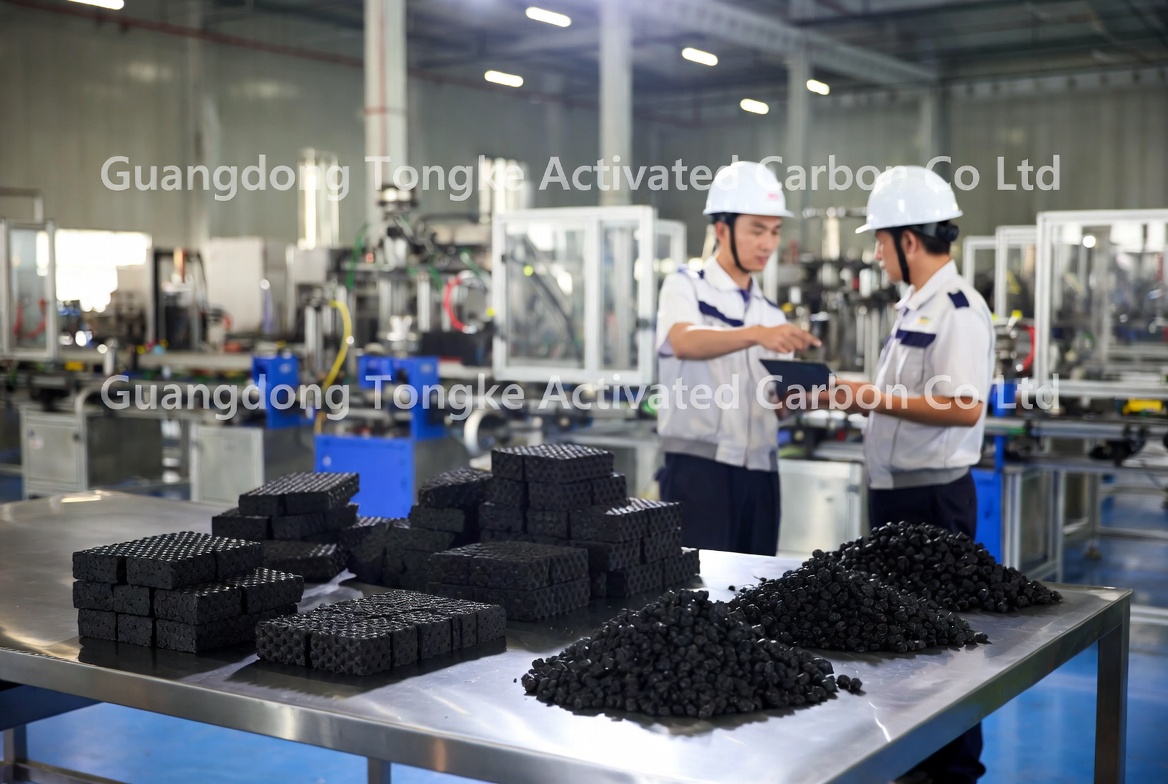
Honeycomb structures can also be applied in other mining and metallurgical operations where low pressure drop, low dust generation, and uniform flow distribution are critical performance requirements. Tongke's ability to produce both honeycomb and granular carbons allows engineers to design integrated solutions that cover slurry adsorption, gas purification, and downstream polishing within a single supplier framework. [tongkeac]

Tongke's Technical Strength: Advanced Equipment and Quality Control
Tongke operates with end‑to‑end testing and strict quality management, from raw material selection to finished product shipment. Key parameters such as iodine value, CTC activity, surface area, bulk density, and hardness are checked to ensure consistency in every batch. [tongkeac]
Large‑scale production facilities, advanced kilns, and dedicated R&D capabilities allow Tongke to fine‑tune activation conditions for different feedstocks and applications. Every order undergoes final inspection, and customers can request third‑party testing for independent verification, which is especially important for high‑value duties like gold recovery. [tongkeac]
How to Specify Activated Carbon for CIL Gold Recovery
When specifying activated carbon for a new CIL plant or an optimization project, engineers should focus on a clear, data‑driven set of parameters. Below is a practical checklist you can use in RFQs and technical datasheets. [xygrup]
1. Base material and mesh size
Choose coconut shell or other high‑hardness feedstocks, and define mesh size (for example, 6×12, 5×10, 8×16) based on tank hydraulics and screening strategy. [qizhongcarbon]
2. Activity indices
Request iodine value or CTC as a proxy for adsorption capacity; for gold recovery, high values (around 1000–1200 m²/g surface area equivalent) are typically preferred. [xygrup]
3. Bulk density and hardness
Specify bulk density to match pulp handling and carbon inventory calculations, and insist on hardness greater than 99% with attrition loss below 1% where possible. [xygrup]
4. Platelet and fines content
Limit platelets and fines to minimize screen blockages and fine carbon losses from the circuit. [alibaba]
5. Regeneration performance
Confirm that the carbon can withstand repeated thermal regeneration cycles without significant drop in activity or increased breakage. [qizhongcarbon]
Example parameter window for gold CIL carbon
| Parameter | Typical target range |
| Base material | Coconut shell or equivalent high‑hardness feedstock (xygrup) |
| Surface area | Around 1000–1200 m²/g (xygrup) |
| Mesh size | 6×12, 5×10, or 8×16, depending on plant design (xygrup) |
| Hardness | >99% by standard abrasion tests (xygrup) |
| Attrition | <1% mass loss (xygrup) |
| Platelet content | <1% to limit fine losses (xygrup) |
Working with a manufacturer that can tailor these parameters to your exact ore characteristics and processing conditions is often the fastest way to close recovery gaps and reduce operating costs. [tongkeac]
From Field Experience: Why Dust Removal and Polishing Matter
One lesson repeatedly highlighted by site feedback is that carbon dust is not just a housekeeping issue; it is a direct contributor to invisible gold losses. Dust and micro‑fines bypass standard carbon screens and leave the plant with tailings, carrying adsorbed gold with them. [alibaba]
Tongke's production process uses dust collectors, polishing, and wind‑selection stages to remove fines and flakes and to produce more rounded, robust carbon particles. This improved particle shape reduces wear, minimizes carbon breakage in tanks and pumps, and supports lower gold loss rates over long campaigns. [tongkeac]
Emerging Trends: Advanced Activated Carbon for Gold Recovery
Recent research has explored magnetic activated carbon and biomass‑derived carbons optimized by machine learning to improve gold recovery and ease separation from slurries. Magnetic carbons, for example, can achieve rapid adsorption rates and be separated using magnets instead of mechanical screens, potentially lowering maintenance demands. [pubs.acs]
Machine‑learning‑driven optimization of carbon production from agricultural residues has shown that tailored activation conditions can deliver high gold adsorption capacities while improving sustainability and waste utilization. While these technologies are still emerging, they highlight a broader shift: gold plants increasingly expect suppliers to combine traditional reliability with data‑driven innovation and flexible feedstock strategies. [pubs.acs]
Practical Checklist: Optimizing a CIL Circuit with Tongke
From a user‑experience standpoint, engineers and procurement teams typically want a simple roadmap to go from problem to solution. Below is a concise flow you can apply with Tongke's support. [tongkeac]
1. Diagnose your circuit
- Analyze current gold recovery, carbon losses, and tailing assays.
- Map carbon inventory, regeneration frequency, and cyanide consumption.
2. Define carbon requirements
- Set target activity, hardness, and mesh size based on ore characteristics and tank design.
- Decide whether you need granular, honeycomb, or a combination for slurry and gas streams.
3. Request technical consultation
- Share feed samples, process data, and KPIs with Tongke's technical team.
- Ask for lab testing and pilot trials to confirm carbon performance under real conditions. [tongkeac]
4. Implement and monitor
- Introduce the new carbon gradually while tracking recovery and carbon loss.
- Use Tongke's one‑stop service for logistics, stock planning, and ongoing optimization support. [tongkeac]
5. Iterate and scale
- Adjust specifications if ore changes or recovery targets increase.
- Scale supply volumes through Tongke's 30,000‑ton capacity and extensive warehousing network. [tongkeac]
Why Partner with Guangdong Tongke for CIL and Honeycomb Carbon
Choosing an activated carbon partner is ultimately a strategic decision that affects how confidently your plant can meet production targets year after year. Tongke combines long‑term manufacturing experience, advanced equipment, and a broad portfolio of granular, pelletized, honeycomb, and specialty carbons that can be tailored to each gold operation's specific flowsheet. [tongkeac]
With strict quality control, third‑party testing options, and a customer‑centric, one‑stop service model, Tongke can support you from early design through to full‑scale operation and continuous improvement. Whether you are optimizing an existing CIL circuit or planning a new project that integrates slurry and gas‑phase purification, working with a single, technically capable supplier simplifies both engineering and procurement. [alibaba]
Call to Action
If you are planning a new CIL plant, troubleshooting recovery losses, or exploring honeycomb activated carbon for exhaust and process gas treatment, contact Guangdong Tongke Activated Carbon Co., Ltd. for a tailored engineering consultation and quotation. Their technical team can help you define the right carbon specification, validate performance in the lab, and secure a stable global supply that supports long‑term gold production targets. [tongkeac]
Frequently Asked Questions (FAQ)
1. What is the main advantage of CIL over CIP for gold recovery?
CIL combines leaching and adsorption in the same tanks, which reduces equipment count and often delivers higher recovery on complex or preg‑robbing ores compared with CIP. [qizhongcarbon]
2. Why is activated carbon hardness so important in CIL circuits?
Low‑hardness carbon breaks down into fines that pass through screens, carry gold with them, and increase consumption, while high‑hardness carbon minimizes attrition and gold losses. [xygrup]
3. Can honeycomb activated carbon be used directly in CIL tanks?
Honeycomb carbon is primarily used for gas‑phase applications and off‑gas treatment, while granular coconut‑based carbons remain the standard choice inside CIL and CIP slurry circuits. [alibaba]
4. How often should carbon be regenerated in a CIL plant?
Regeneration frequency depends on ore characteristics and loading targets; most operations set a regular schedule based on gold loading, adsorption performance, and carbon activity tests. [qizhongcarbon]
5. How does Guangdong Tongke support custom carbon specifications?
Tongke's R&D and production teams adjust raw materials, activation conditions, and particle sizing to deliver carbon that fits each customer's mesh, hardness, activity, and application requirements. [tongkeac]
References
1. Heycarb. "CIL Activated Carbon in Leach Gold Processing – Heycarb." [https://heycarbons.com/cil-carbon-in-leach-gold-process/]
2. Guangdong Tongke Activated Carbon Co., Ltd. "About Us." [https://www.tongkeac.com/aboutus.html]
3. Qizhong Chemical. "Activated Carbon For Gold Recovery." [https://qizhongcarbon.com/blog/activated-carbon-for-gold-recovery/]
4. ACS Applied Materials & Interfaces. "Efficient Gold Recovery from Cyanide Solution Using Magnetic Activated Carbon." [https://pubs.acs.org/doi/10.1021/acsami.1c13920]
5. ACS Sustainable Resource Management. "Machine-Learning-Optimized Palm-Biomass-Derived Activated Carbon Adsorbent for Gold Recovery from Mobile Leachate." [https://pubs.acs.org/doi/10.1021/acssusresmgt.5c00071]
6. Alibaba Product Insights. "Activated Carbon Honeycomb: Structure, Specifications, and Common Industry Applications." [https://www.alibaba.com/product-insights/activated-carbon-honeycomb.html]
7. Xygrup. "Honeycomb Activated Carbon." [https://www.xygrup.cn/activated-carbon/honeycomb-activated-carbon.html]


