Content Menu
● Introduction: Why Source Activated Carbon Media from China?
● How We Evaluate Activated Carbon Media Manufacturers (E‑E‑A‑T Lens)
>> Experience: What a mature factory looks like
>> Expertise: Technical and process benchmarks
>> Authoritativeness: China's cluster advantage
>> Trust: What to check for each factory
● Transparent Selection Criteria for This Top 10 List
● Top 10 Activated Carbon Media Manufacturers in China (2026)
>> 1. Guangdong Tongke Activated Carbon Co., Ltd.
>> 2. Qizhong Chemical – Leading Coal‑ and Coconut‑Based Supplier
>> 3. Hangzhou Nature Technology Co., Ltd. (Nature Carbon)
>> 4. Integrated Multi‑Base Coal and Wood Activated Carbon Producer (Cluster‑Based Manufacturer)
>> 5. OEM‑Oriented Coconut‑Shell Activated Carbon Specialist
>> 6. High‑Purity Powdered Activated Carbon Producer for Food and Pharma
>> 7. Pelletized Activated Carbon Manufacturer for VOC and Solvent Recovery
>> 8. Honeycomb Activated Carbon and Filter Media Systems Supplier
>> 9. Industrial Export‑Focused Trader‑Manufacturer Hybrid
>> 10. Niche High‑Performance Media Innovator
● Comparison Table: Capacity, MOQ and Certifications (Indicative)
● Buyer's Guide: How to Verify Chinese Activated Carbon Media Suppliers
>> Step 1 – Qualification and certificate checks
>> Step 2 – Technical alignment and sampling
>> Step 3 – Factory audit and process verification
>> Step 4 – Contracting, logistics and long‑term monitoring
● Common Pitfalls and an Internal "Red‑Flag" Checklist
>> Typical industry pain points
>> Internal "avoid‑the‑pitfalls" guideline rarely stated online
● Conclusion and Call to Action
● FAQs from Advanced Procurement Managers
>> 1. How can I verify whether a Chinese factory's ISO certificate is still valid?
>> 2. What batch‑to‑batch variability is acceptable for iodine number and CTC?
>> 3. How do I differentiate between real and "trader‑only" suppliers?
>> 4. How should I structure long‑term pricing to handle raw‑material volatility?
>> 5. What is the best way to manage quality risk when onboarding a new Chinese activated carbon supplier?
Introduction: Why Source Activated Carbon Media from China?
China is currently the largest and fastest‑growing production base for activated carbon, supported by mature coal‑, wood‑ and coconut‑shell‑based supply chains and strong export infrastructure. Industry reports estimate the global activated carbon market at around USD 8–9 billion in 2025–2026, with Asia–Pacific (driven largely by China) as both the largest and fastest‑growing region. For global buyers in water treatment, air and gas purification, food and beverage, chemical and pharmaceutical sectors, this means broad product coverage, competitive pricing and reliable large‑volume supply. [thebusinessresearchcompany]
From a procurement perspective, however, the density of suppliers also brings risk: quality variance, inconsistent QC, and opaque certification claims are frequent pain points. China accounts for roughly a quarter of global activated carbon exports by value, so choosing the right manufacturer is critical for long‑term projects such as municipal water plants, power stations, or OEM filtration systems. This guide focuses on activated carbon media manufacturers with export experience and industrial‑grade capabilities, and is written from the perspective of a sourcing manager building a stable, multi‑year supply program. [trendeconomy]

How We Evaluate Activated Carbon Media Manufacturers (E‑E‑A‑T Lens)
Before looking at specific factories, it is important to understand how a professional buyer should evaluate Chinese activated carbon media suppliers. The following criteria reflect both standard due diligence and "on‑the‑ground" experience working with Chinese industrial manufacturers.
Experience: What a mature factory looks like
- Years in operation and export history
- Preference for factories with at least 10–15 years in production and a proven export track record to Europe, North America, or strict regulatory markets.
- Application depth
- Ability to support multiple sectors: drinking water, industrial wastewater, VOC removal, solvent recovery, food and beverage decolorization, pharma, etc. [naturecarbon]
- Process know‑how
- Experience with steam vs chemical activation, different raw materials (coal, wood, coconut shell, nut shell), and tailored pore structure design for specific adsorption isotherms. [naturecarbon]
Expertise: Technical and process benchmarks
When screening activated carbon media manufacturers, procurement managers usually benchmark the following technical dimensions:
- Product range and material systems
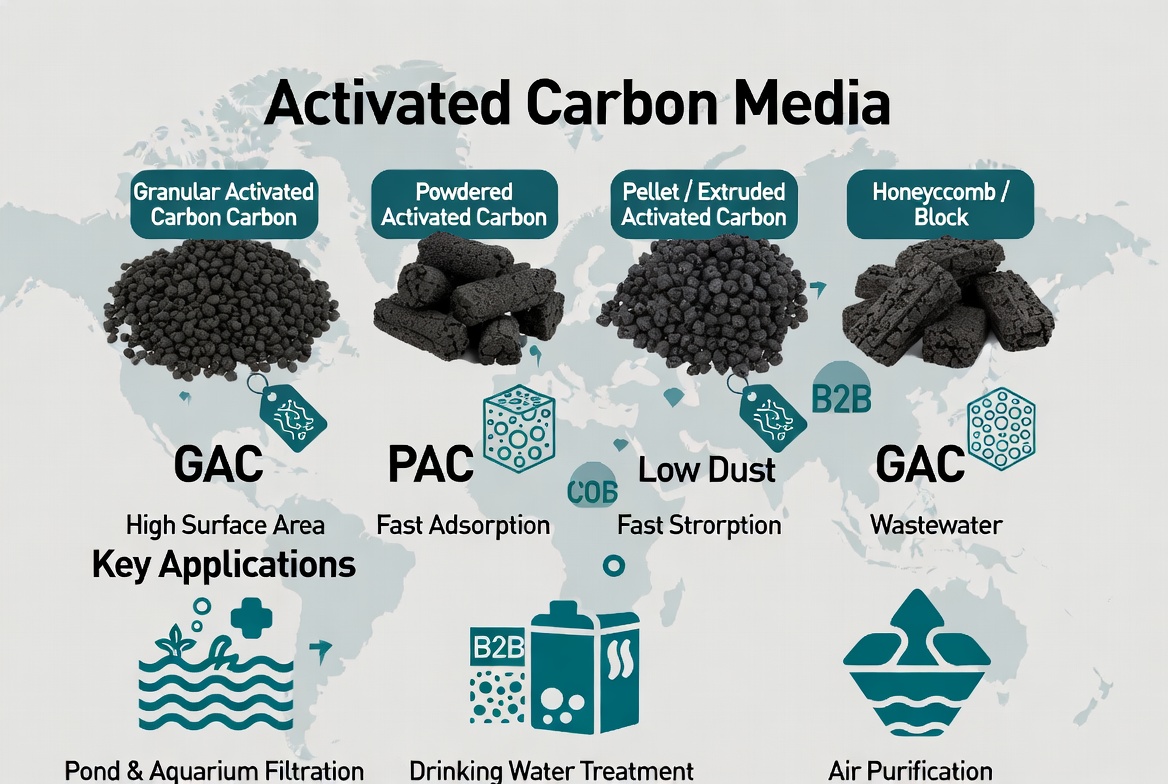
- Powdered, granular, pellet/extruded, and honeycomb activated carbon; coal‑based, wood‑based, coconut‑shell‑based and specialty carbons (e.g., low‑ash food grades). [naturecarbon]
- Key performance indicators
- Iodine number (e.g., 650–1300 mg/g), methylene blue value, CTC activity, hardness, ash content, moisture content, and particle size distribution; these directly impact performance and pressure drop in filters. [naturecarbon]
- Process and equipment
- Use of modern continuous kilns, advanced activation and washing systems, and in‑house laboratories for adsorption testing and particle size analysis; these are strong proxies for consistency. [naturecarbon]
- Compliance and environmental standards
- ISO 9001 for quality management, ISO 14001 for environmental management, and application‑specific approvals such as NSF for potable water, food‑grade certifications, KOSHER and HALAL. [naturecarbon]
Authoritativeness: China's cluster advantage
China's activated carbon industry benefits from several industrial clusters:
- Coal‑based and wood‑based clusters in northern and eastern provinces with access to raw coal and wood resources as well as port infrastructure. Industry research shows Chinese producers hold a significant share of global wood‑based activated carbon capacity. [researchinchina]
- Coconut‑shell and nut‑shell based clusters leveraging imported raw materials but benefiting from large‑scale processing and export know‑how. Asia–Pacific's dominant production role is reinforced by these Chinese clusters. [mordorintelligence]
- Integrated supply chains around major industrial hubs (e.g., Guangdong, Zhejiang) that combine production, R&D and logistics, shortening lead times for OEMs. [naturecarbon]
Trust: What to check for each factory
For each shortlisted manufacturer, a procurement manager should verify:
- Company profile: founding year, ownership structure, registered capital, and whether it runs its own production or outsources. [naturecarbon]
- Certifications and test reports: ISO certificates (with expiry dates), NSF / HALAL / KOSHER or other relevant approvals, plus third‑party test reports from accredited labs. [chinacheckup]
- Core strengths: whether the factory is better at high‑volume standard grades, high‑purity media for food/pharma, or flexible custom formulation for niche applications. [naturecarbon]
- Service scope: OEM/ODM experience, technical support capability, responsiveness, sample turnaround time and after‑sales issue handling. [naturecarbon]

Transparent Selection Criteria for This Top 10 List
To keep this guide practical, we applied clear, procurement‑oriented criteria when selecting the 10 featured manufacturers.
We shortlisted companies based on:
- Production capacity and stability
- Minimum annual capacity benchmark in the tens of thousands of tons, with evidence of stable raw material sourcing and continuous production (not project‑based batch production). [naturecarbon]
- Export markets and application coverage
- Proven export to multiple regions (e.g., Southeast Asia, Europe, North America, Middle East) and reference applications in water treatment, air/gas purification and process industries. [naturecarbon]
- Certification and compliance
- Valid quality and environmental management certifications (ISO 9001/14001 where available) and, for drinking water / food applications, NSF and food‑grade certifications such as KOSHER or HALAL. [chinacheckup]
- Technical support and customization
- Ability to customize pore structure, particle size, packaging and performance parameters for OEM filter brands and industrial end users. [naturecarbon]
- Service to SMEs and mid‑sized buyers
- Willingness to accept small MOQs for customized grades, transparent communication and support for growing brands—not only for very large, state‑owned projects. [naturecarbon]
Note: Many more Chinese factories can produce activated carbon media, but we focus here on those combining manufacturing scale, export experience and practical service models suitable for long‑term, international cooperation.
Top 10 Activated Carbon Media Manufacturers in China (2026)
1. Guangdong Tongke Activated Carbon Co., Ltd.
Guangdong Tongke Activated Carbon Co., Ltd. is an established activated carbon media manufacturer based in Dongguan, with more than 20 years of industry experience. The company offers a broad portfolio covering wood‑based, coal‑based, coconut‑shell and nut‑shell activated carbons, as well as honeycomb activated carbon, activated carbon fiber and anthracite filter media.
With an annual capacity of about 30,000 tons, Tongke serves both domestic and global markets, including Southeast Asia, Europe and North America, and positions itself as a flexible partner for mid‑sized OEMs and private‑label brands. Its products have obtained NSF, KOSHER and HALAL certifications, and the company runs advanced production equipment supported by an in‑house professional research laboratory.
From a procurement manager's perspective, Tongke is particularly suitable when:
- You require multi‑material coverage (e.g., granular coconut‑shell media for drinking water plus coal‑based pellets for VOC control) from a single supplier.
- Your brand is still scaling and needs competitive pricing with relatively small MOQs, without sacrificing QC robustness.
- You expect intensive OEM/ODM collaboration—custom specifications, performance tuning, technical support and coordinated logistics for multiple markets.
Tongke emphasizes strict end‑to‑end quality inspection and welcomes third‑party testing, which is valuable for buyers who need objective data to pass internal vendor audits. Its one‑stop service model, combining procurement, logistics and technical support, helps reduce coordination workload for purchasing teams handling multiple SKUs and projects.
2. Qizhong Chemical – Leading Coal‑ and Coconut‑Based Supplier
Qizhong Chemical positions itself as a leading Chinese manufacturer of coal‑based and coconut‑shell activated carbon, operating four production plants with a combined annual capacity of around 35,000 tons. The company offers a comprehensive range of granular, powdered and extruded carbons using coal, coconut shell, wood and other shells as raw materials. [naturecarbon]
Its portfolio includes:
- Coal‑based granular carbons with iodine values between 650–1050 mg/g, multiple mesh sizes (e.g., 4×8, 6×12, 8×30), hardness up to around 98 and typical moisture around 5%. [naturecarbon]
- Coconut‑shell carbons with higher iodine values (900–1300 mg/g), low ash (2–5%) and hardness around 99, making them suitable for drinking water purification and precious‑metal recovery. [naturecarbon]
- Extruded pellets designed for air purification, solvent recovery and biogas desulfurization, with CTC activity in the 20–120% range and multiple diameters from 0.9–8 mm. [naturecarbon]
Qizhong serves over 80 countries with international logistics solutions and maintains certifications such as ISO and NSF, along with HALAL, supported by a technical team that provides application guidance and custom solutions. For buyers focused on high‑volume water treatment or industrial air‑gas purification, Qizhong's combination of capacity, parameter transparency and broad mesh‑size coverage is attractive. [naturecarbon]
3. Hangzhou Nature Technology Co., Ltd. (Nature Carbon)
Hangzhou Nature Technology (Nature Carbon) is presented as a global player in high‑grade activated carbon, with applications spanning environmental protection, food and pharmaceutical, automotive and chemical industries. The company focuses on research, development and manufacturing, and highlights its role in supplying activated carbon for gas masks, protective equipment and critical purification systems. [naturecarbon]
For procurement teams, Nature Carbon is often considered when stringent performance in high‑risk environments (e.g., military defense, automotive cabin air, chemical processing) is required. Its strength lies in advanced R&D and specialized grades rather than purely commodity media, so it can be a good fit for technically demanding OEM projects where documentation and qualification testing are extensive. [naturecarbon]
4. Integrated Multi‑Base Coal and Wood Activated Carbon Producer (Cluster‑Based Manufacturer)
Several Chinese producers highlighted in industry reports operate large coal‑ and wood‑based activated carbon facilities with CR5 (top‑five concentration ratio) above 50% in certain wood‑based segments. These manufacturers typically combine raw‑material sourcing advantages with continuous kilns and bulk export capabilities. They often serve as backbone suppliers for global brands that repackage or blend activated carbon media. [researchinchina]
From a buyer's standpoint, such producers are well suited for large‑scale, standardized projects (e.g., municipal water treatment, flue gas treatment in power plants) where the primary requirement is stable high volume at predictable quality levels. Their cluster locations simplify logistics and enable competitive FOB pricing, though they may be less flexible on small‑batch customization.
5. OEM‑Oriented Coconut‑Shell Activated Carbon Specialist
In the broader Asia‑Pacific market, coconut‑shell activated carbon plays a major role in high‑purity water, food and beverage, and precious‑metal recovery applications. Among Chinese producers, a subset specializes in coconut‑shell media optimized for gold extraction, beverage decolorization and household water filters, competing directly with suppliers from Sri Lanka and the Philippines. [activatedcarbonfactory]
These factories are attractive to buyers who:
- Need high hardness and low dust levels for column applications.
- Require consistent iodine values above 1000 mg/g and strict heavy‑metal limits to meet food/pharma requirements.
- Want to consolidate demand from multiple sites into container‑load shipments at competitive rates.
6. High‑Purity Powdered Activated Carbon Producer for Food and Pharma
China hosts dedicated producers of wood‑based powdered activated carbon (PAC) with high adsorption speed and strong decolorization capabilities, widely used in sugar refining, pharma intermediates and cosmetics. Typical specifications include iodine values around 800–1100 mg/g, methylene blue values above 220 mg/g and controlled ash and moisture levels. [researchinchina]
For buyers, these suppliers are especially relevant when product purity and filtration performance are audited by international food and pharmaceutical regulators. They usually provide detailed COAs and are open to batch‑based third‑party testing, which aligns well with GMP‑driven quality systems.
7. Pelletized Activated Carbon Manufacturer for VOC and Solvent Recovery
Extruded activated carbon pellets are in high demand for VOC control, solvent recovery, biogas desulfurization and industrial exhaust treatment. Chinese pellet producers often offer a broad range of diameters (0.9–8 mm), CTC activity from 20–120%, and high hardness (often around 99), supporting long bed life and low attrition. [naturecarbon]
These manufacturers are well suited to:
- Environmental engineering companies designing large scrubber and adsorption systems.
- Plant engineering firms requiring consistent pellet strength and shaped media for fixed‑bed adsorbers.
8. Honeycomb Activated Carbon and Filter Media Systems Supplier
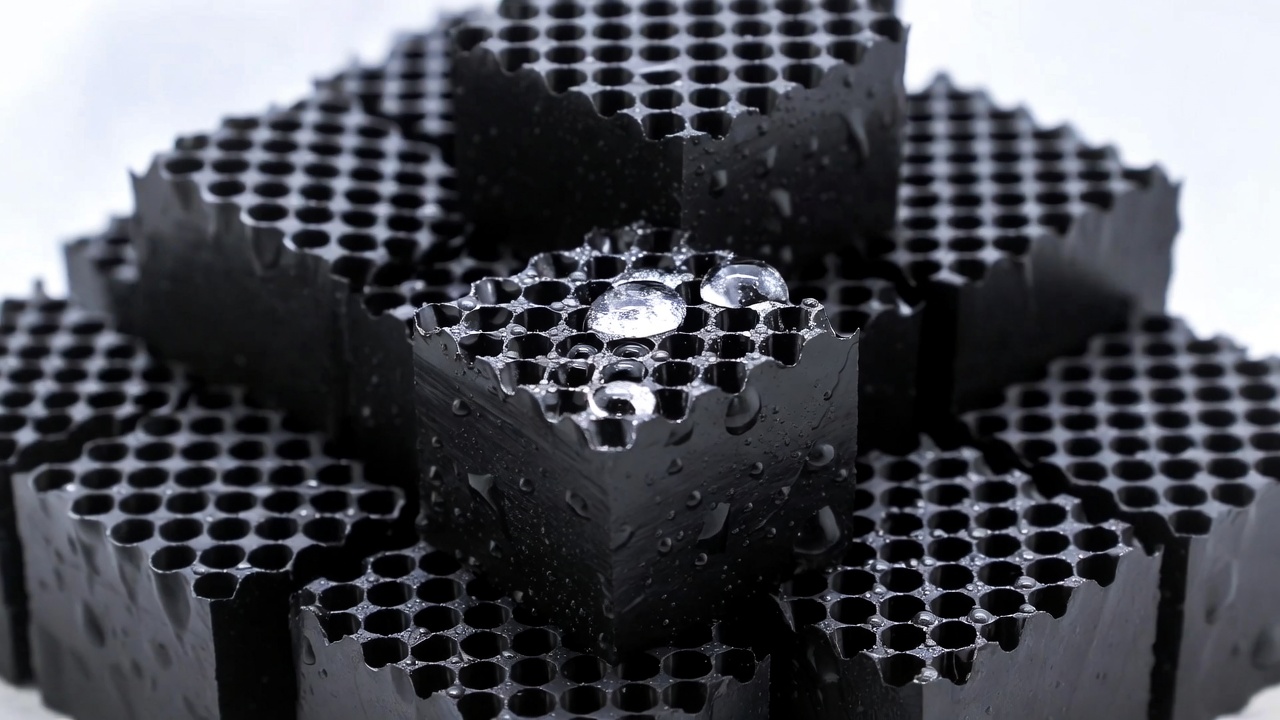
Some Chinese manufacturers, including integrated players like Tongke, offer honeycomb activated carbon blocks, monoliths and combined anthracite filter media to complement granular and pellet products. This is particularly relevant for air‑purification equipment makers, HVAC filter OEMs and industrial odor control systems.
For procurement managers, such suppliers simplify BOMs by providing multiple media formats and pre‑assembled filter modules, reducing the need to coordinate with separate media and module suppliers. This can shorten development timelines and reduce technical interface risk.
9. Industrial Export‑Focused Trader‑Manufacturer Hybrid
In addition to pure manufacturers, China has hybrid trader‑manufacturer companies that maintain equity relationships with multiple factories and coordinate exports. While they may not own all production facilities, their value can lie in: [qizhongcarbon]
- Sourcing from different plants for different grades (e.g., coal‑based, wood‑based, coconut‑shell) while offering a single point of contact.
- Managing complex multi‑product shipments, consolidation and export documentation.
Such partners are suitable when you require a broad portfolio and flexible sourcing but do not have the bandwidth to manage several individual factories yourself.
10. Niche High‑Performance Media Innovator
Finally, there are niche Chinese producers focusing on high‑performance activated carbons for specific applications, such as:
- Ultra‑low‑ash carbons for electronics and semiconductor chemicals.
- Impregnated carbons for specialty gas purification (e.g., removal of specific acid gases or mercury).
- Hybrid carbons combined with other media for multi‑contaminant removal.
These companies may have smaller capacities but strong laboratory capabilities and close cooperation with universities or research institutes. They are worth considering when your application has unique technical constraints not covered by standard media grades, or when you seek co‑development of new products.
Comparison Table: Capacity, MOQ and Certifications (Indicative)
The table below summarizes key procurement‑relevant factors for representative manufacturers based on available public information and typical market positioning. It is meant as a selection aid rather than a complete data sheet.
| Manufacturer type / example | Typical annual capacity (tons) | Typical MOQ for OEM media | Common certifications / approvals |
| Guangdong Tongke Activated Carbon Co., Ltd. | ≈30,000 | Flexible, small MOQ for SMEs | NSF, KOSHER, HALAL; ISO‑based QC system |
| Qizhong Chemical (coal & coconut specialist) | ≈35,000 (naturecarbon) | Container‑level for standard grades (naturecarbon) | ISO, NSF, HALAL (per product lines) (naturecarbon) |
| Large coal/wood cluster producer | 30,000–60,000+ (researchinchina) | Higher MOQs, project‑based | ISO 9001/14001, local environmental approvals (researchinchina) |
| Coconut‑shell OEM specialist | 10,000–30,000 (activatedcarbonfactory) | Flexible for high‑value grades | NSF / food‑grade, KOSHER, HALAL (activatedcarbonfactory) |
| High‑purity PAC producer (food/pharma) | 5,000–20,000 (researchinchina) | Drum‑scale to FCL | ISO 9001, food/pharma‑oriented standards (researchinchina) |
| Pelletized VOC and solvent‑recovery media supplier | 10,000–25,000 (naturecarbon) | Project‑based but negotiable | ISO 9001, environmental compliance (naturecarbon) |
Buyer's Guide: How to Verify Chinese Activated Carbon Media Suppliers
Step 1 – Qualification and certificate checks
- Verify ISO certificates properly
- Check the certificate number, revision (e.g., ISO 9001:2015), scope and addresses. A legitimate ISO 9001 certificate must clearly show the certified sites. [chinacheckup]
- Use the CNCA (Certification and Accreditation Administration of China) and CNAS (China National Accreditation Service) databases, or the certification body's own search portal, to confirm that the certificate is valid and not expired. [chinacheckup]
- Confirm application‑specific approvals
- For drinking water, look for NSF certification and cross‑check on the NSF official listings. For food, verify KOSHER and HALAL certificates and ensure they cover the relevant product categories. [naturecarbon]
Step 2 – Technical alignment and sampling
- Define target specs in your own language
- Clarify iodine number range, CTC value, hardness, ash, moisture, particle size, and any regulatory limits (e.g., heavy metals, PAHs) required by your local standards.
- Run staged sampling
- Phase 1: bench samples (1–5 kg) to screen adsorption performance and compatibility.
- Phase 2: pilot‑scale trial (100–500 kg) in actual operating conditions.
- Phase 3: first‑order lot (1–2 FCLs) with tight incoming inspection to confirm stability.
Step 3 – Factory audit and process verification
- Conduct a remote or on‑site audit
- Review kiln types, activation methods, raw‑material storage and blending practices.
- Check laboratory capabilities, including regular testing frequency for iodine, CTC, hardness and particle size.
- Evaluate QC systems
- Confirm that every batch receives a COA and that retention samples are kept for traceability.
- Ask how non‑conforming batches are handled and what corrective actions are implemented.
Step 4 – Contracting, logistics and long‑term monitoring
- Define clear quality and logistics clauses in the contract
- Include agreed‑upon spec ranges, test methods, sampling plans and claim handling procedures.
- Clarify Incoterms, lead times, buffer stock strategies and packaging requirements (bags, big bags, pallets).
- Implement continuous supplier performance review
- Monitor on‑time delivery, quality deviations and responsiveness, and review annually.
Common Pitfalls and an Internal "Red‑Flag" Checklist
Typical industry pain points
- "Spec on paper, different in container"
- Some suppliers present attractive spec sheets but deliver materials with lower iodine values, inconsistent particle size, or higher ash content than agreed. This is often driven by raw‑material cost pressure.
- Over‑stretched capacity
- During high demand cycles, certain factories run at maximum load, leading to shorter activation times or reduced QC sampling frequency, which can cause performance drift.
- Certificate misrepresentation
- ISO or NSF certificates that belong to a different legal entity or only cover a single site, not the factory where your shipment is produced.
Internal "avoid‑the‑pitfalls" guideline rarely stated online
One internal rule that experienced buyers use—but is seldom written publicly—is to always request multi‑batch samples from different production dates before signing a long‑term contract. Instead of testing a single polished sample, you ask the supplier to send:
- At least three samples from different batches over a 3–6 month period, each with its own COA and batch number.
- Historical QC data (e.g., 12 months of iodine, CTC, hardness values) in spreadsheet form.
You then check:
- Variability: whether key parameters stay within a narrow band rather than just hitting your minimum spec.
- Correlation: whether the supplier's in‑house test values align with your own lab results within an agreed tolerance.
Factories that hesitate to provide multi‑batch samples or historical QC data, or that show large swings in iodine/hardness over a short period, are usually considered higher‑risk for long‑term industrial projects. This simple practice filters out a large portion of "spec‑sheet only" suppliers without high audit costs.
Conclusion and Call to Action
China's activated carbon media industry combines scale, technical depth and export experience, making it a strategic sourcing destination for global water treatment, air and gas purification, food and beverage, chemical and pharma buyers. However, the same scale also makes supplier selection complex; robust criteria, multi‑batch validation and proper certificate verification are essential to secure quality, compliance and supply continuity. [trendeconomy]
Guangdong Tongke Activated Carbon Co., Ltd. represents the type of partner that many mid‑sized and growing brands look for: a manufacturer with around 30,000 tons of capacity, broad media coverage, NSF/KOSHER/HALAL‑certified products, strict QC, and flexible OEM/ODM support for both standard and customized projects. If you are building or optimizing a long‑term activated carbon procurement strategy, it is worth engaging directly with such factories to discuss your target specifications, qualification roadmap and multi‑year supply plans.
FAQs from Advanced Procurement Managers
1. How can I verify whether a Chinese factory's ISO certificate is still valid?
Ask for a clear scan of the ISO certificate, then cross‑check:
- Confirm the certification body and search its public database for the certificate number and company name, ensuring the certificate is active and matches the factory address. [chinacheckup]
- Use China's CNCA and CNAS databases to verify that the certification body itself is accredited; this double check reduces the risk of "fake" or unaccredited certificates. [chinacheckup]
2. What batch‑to‑batch variability is acceptable for iodine number and CTC?
For industrial applications, many buyers specify:
- Iodine number variation within ±5–10% of the nominal value across batches.
- CTC values maintained within a similar band, depending on application criticality.
If you observe systematic drift outside these bands over several batches, it is a sign to deepen your audit or re‑qualify the grade.
3. How do I differentiate between real and "trader‑only" suppliers?
Request and verify:
- Factory business license and production permit, with matching company names on certificates and COAs.
- Photos or video of production lines and lab facilities, ideally with time stamps and batch references.
Trader‑only companies can still be valuable partners, but they should transparently identify their cooperating factories and provide traceable documentation for each site.
4. How should I structure long‑term pricing to handle raw‑material volatility?
A common approach is:
- Set a base price tied to a reference index (e.g., coal or coconut‑shell charcoal cost) with a quarterly adjustment window.
- Include a clear formula or band for price revisions, and lock specifications so that cost pressure does not lead to unagreed quality downgrades.
This balances price stability with market reality and reduces unilateral adjustment disputes.
5. What is the best way to manage quality risk when onboarding a new Chinese activated carbon supplier?
- Start with dual‑sourcing: split your demand between an existing qualified supplier and the new one for a defined probation period.
- Implement stricter incoming inspection for the new supplier's shipments, including third‑party testing on initial lots.
- Gradually increase volume allocation only after the new supplier shows consistent performance over several months.


