Content Menu
● Introduction: Why Source Aquarium Activated Carbon from China in 2026
● How We Evaluated Top Aquarium Activated Carbon Suppliers (E‑E‑A‑T Lens)
>> Experience: What a "qualified" supplier looks like
>> Expertise: Technical parameters that matter for aquarium use
>> Authoritativeness: China's cluster advantages
>> Trust: Verifiable data and transparent communication
● Selection Criteria for the Top 10 List
● Top 10 Activated Carbon Aquarium Manufacturers in China (2026)
>> 1. Guangdong Tongke Activated Carbon Co., Ltd.
>> 2. Heycarbons (Henan, subsidiary of Ningxia Activated Carbon Factory)
>> 3. Mountain Tree (Aquarium Carbon and Filtration Media)
>> 4. Zhulin Carbon
>> 5. Large Integrated Activated Carbon Producers (e.g., Ningxia/coal‑base clusters)
>> 6–10. Other Export‑Oriented Aquarium‑Capable Carbon Factories
● Key Technical and Business Comparison (2026 Snapshot)
● Buyer's Guide: How to Work with Chinese Aquarium Carbon Suppliers
>> 1. Verifying certifications and compliance
>> 2. Sampling and technical alignment
>> 3. Logistics, packaging and incoterms
>> 4. Industry pain points and how to avoid them
>> 5. Market data to support sourcing decisions
● Conclusion and CTA: Building a Long‑Term Aquarium Carbon Supply Chain
● FAQ: Advanced Questions Professional Buyers Ask
● References
Introduction: Why Source Aquarium Activated Carbon from China in 2026
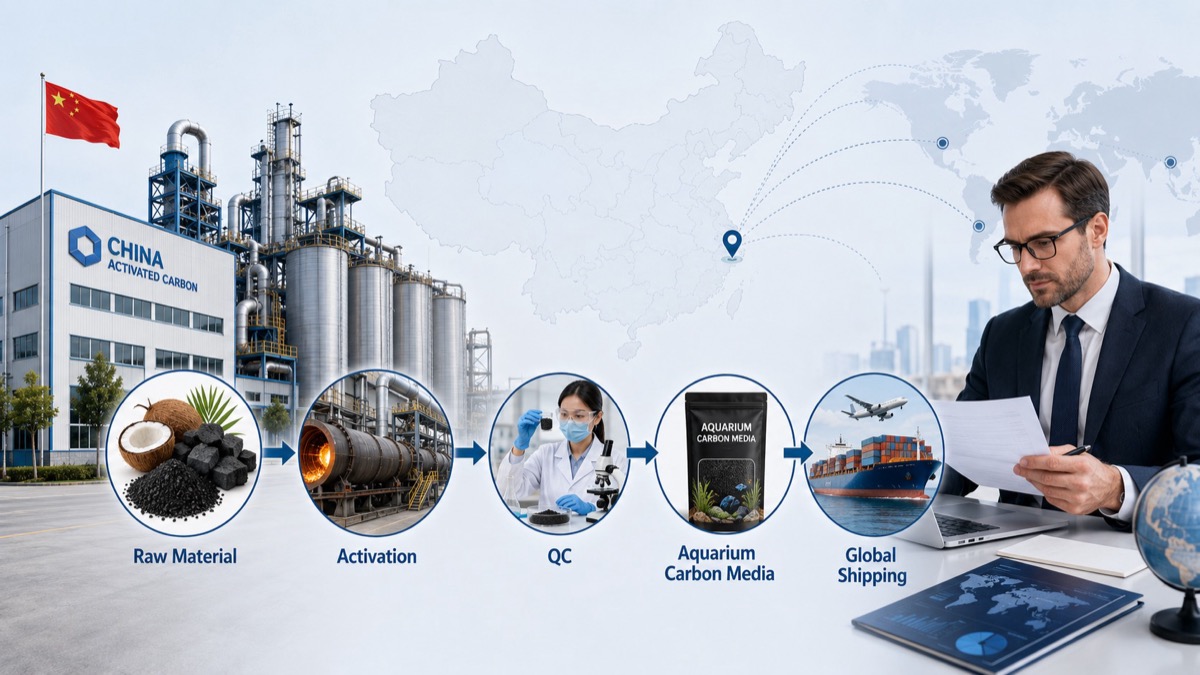
China has evolved into one of the most important production bases for coal‑based, coconut shell and specialty activated carbon, supported by integrated industrial clusters in Guangdong, Henan, Ningxia and other provinces. Global demand for activated carbon reached about USD 4.9 billion in 2024 and is projected to grow to around USD 5.3 billion in 2025 and USD 8.8 billion by 2032, which keeps driving capacity expansion and process upgrades among Chinese suppliers. [imountaintree]
For aquarium applications specifically, Chinese manufacturers now combine large‑scale raw material access (coal fields, imported coconut shell, domestic fruit shells) with mature carbonization and activation lines, allowing competitive pricing and flexible OEM formats for aquarium filter media brands worldwide. Many factories have introduced advanced laboratories, third‑party testing and international certifications (NSF, HALAL, KOSHER, ISO) to align with export market expectations in North America, Europe and Southeast Asia. [imountaintree]
How We Evaluated Top Aquarium Activated Carbon Suppliers (E‑E‑A‑T Lens)
Experience: What a "qualified" supplier looks like
From a procurement manager's perspective, high‑quality aquarium carbon suppliers in China typically have:
- 10+ years in activated carbon production, preferably covering both coal and coconut shell lines for better product portfolio resilience. [imountaintree]
- In‑house or partnered R&D labs capable of adjusting pore size distribution, iodine number, hardness and ash content to match aquarium use (water clarity, odor removal, low phosphate leaching).^ [imountaintree]
- End‑to‑end QC, including raw material inspection, in‑process sampling, and final lot testing against international standards and customer‑specific specs. [imountaintree]
- Stable export track record with recurring orders from the same regions, indicating consistency in quality, logistics and documentation.
Expertise: Technical parameters that matter for aquarium use
When assessing Activated Carbon Aquarium media, professional buyers usually focus on:
- Raw material: coal‑based for strong adsorption and cost efficiency; coconut shell for higher hardness and microporosity; wood/fruit‑shell for specific adsorption profiles. [imountaintree]
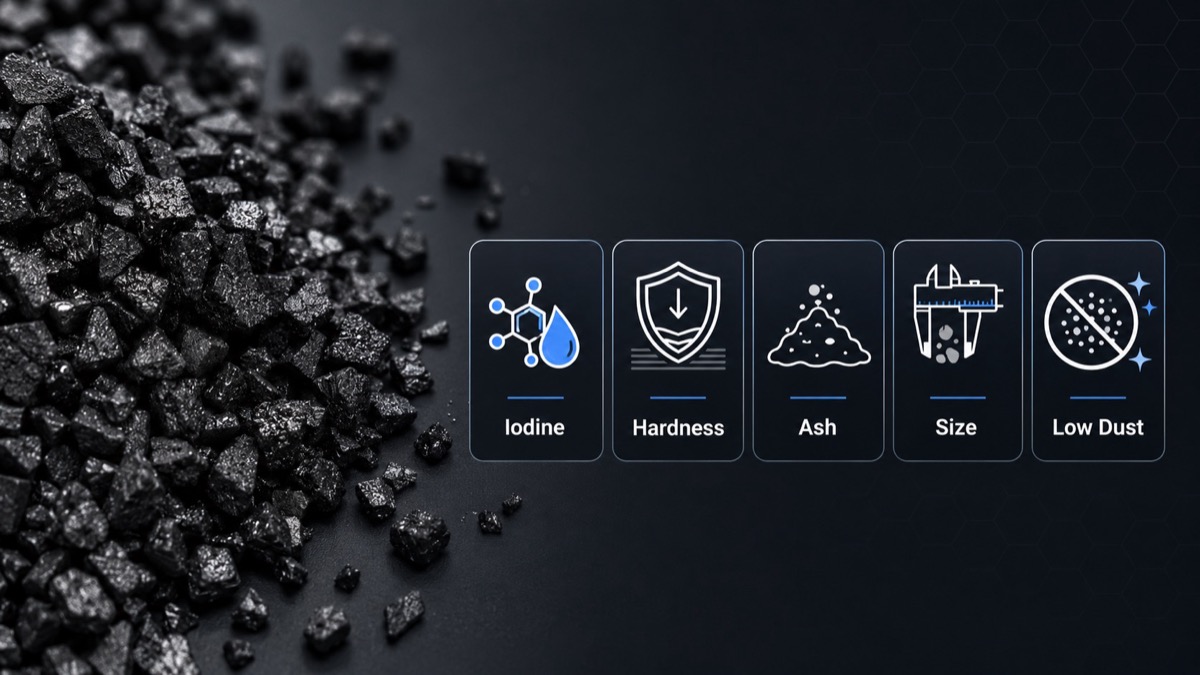
- Key indicators: iodine number, methylene blue value, hardness, ash content, bulk density, pH and moisture, all of which impact water clarity and media lifespan in aquarium systems.
- Processing: steam or chemical activation, controlled granule or pellet size (e.g. 0.5–4 mm), de‑dusting level to minimize initial clouding, and washing processes to reduce soluble impurities.
- Compliance: food‑contact or drinking‑water related certifications (such as NSF) for higher‑end aquarium brands, plus environmental and quality management systems like ISO 9001 and ISO 14001 where applicable. [chinacheckup]
Authoritativeness: China's cluster advantages
Regions such as Guangdong, Henan and Ningxia have formed dense activated carbon clusters that combine raw materials, kilns, granulation lines, laboratories and logistics hubs. This ecosystem allows Chinese producers to integrate R&D, production and export services, similar to how the Pearl River Delta is recognized for furniture and electronics clusters. [imountaintree]
Trust: Verifiable data and transparent communication
For each factory listed, we emphasize:
- Founding year and background (e.g. integrated with earlier carbon or chemical plants).^ [imountaintree]
- Main markets and export focus regions.
- Typical OEM/ODM scope: packaging design, custom particle sizes, tailored adsorption specs, private labels for aquarium brands, and support for third‑party testing. [imountaintree]
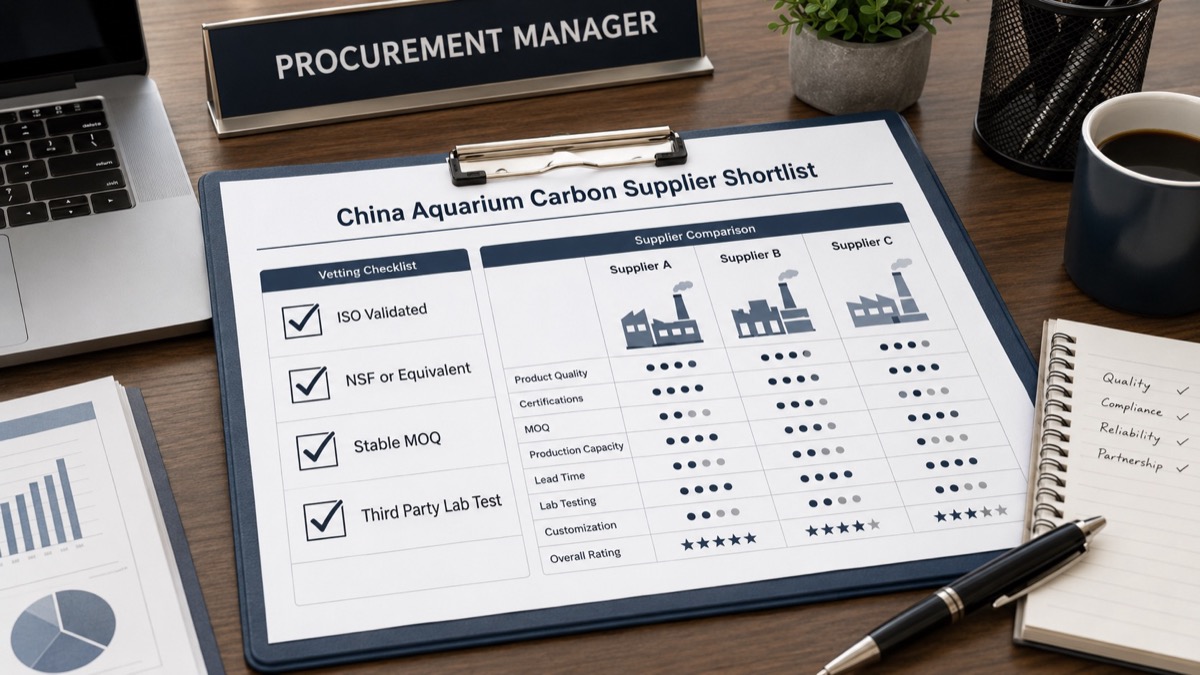
- Public certifications (NSF, KOSHER, HALAL, ISO) and whether they accept independent lab verification. [chinacheckup]

Selection Criteria for the Top 10 List
To make this list truly useful for global buyers rather than just a name directory, we used the following transparent criteria:
- Clear capability to supply granular/pellet activated carbon suitable for aquarium or aquatic filtration usage. [imountaintree]
- Export‑oriented operations with English‑language support and experience serving overseas clients.
- Evidence of technical strength: in‑house lab, collaboration with research institutes, or long history in activated carbon manufacturing. [imountaintree]
- Visible quality or environmental certifications and a structured QC process, not just marketing claims. [chinacheckup]
- Ability to support OEM/ODM projects for small and mid‑sized brands (reasonable MOQ, packaging customization, technical guidance). [imountaintree]
This article focuses on companies that can realistically support ongoing B2B cooperation, not just one‑off spot shipments.
Top 10 Activated Carbon Aquarium Manufacturers in China (2026)
> Note: Company descriptions are based on public information, export positioning and typical capabilities relevant to aquarium/aquatic filtration buyers. [imountaintree]
1. Guangdong Tongke Activated Carbon Co., Ltd.
Guangdong Tongke Activated Carbon Co., Ltd., based in Dongguan, is a specialized activated carbon manufacturer with more than 20 years of industry experience and a strong export orientation. The company offers a full range of coal‑based, coconut shell, wood‑based, honeycomb and activated carbon fiber products, with an annual capacity of about 30,000 tons.
Tongke's products cover water treatment, air and gas purification, food and beverage, chemical and pharmaceutical applications, making it well‑positioned to supply aquarium carbon grades that must meet both performance and safety expectations. The company operates advanced production equipment and a professional research laboratory, and its products have obtained NSF, KOSHER and HALAL certifications, which are valued by buyers seeking higher assurance for consumer‑facing water applications.
From a procurement perspective, Tongke is particularly suitable for small and mid‑sized aquarium brands looking for high‑value OEM solutions with flexible MOQ and tailored specifications. The company offers one‑stop service from product selection to logistics and technical support, and emphasizes strict quality control with 100% inspection before delivery plus support for third‑party testing.
- Established: Over 20 years in activated carbon production.
- Main markets: China domestic, Southeast Asia, Europe, North America and other global regions.
- Strengths: Comprehensive product portfolio, advanced lab, international certifications (NSF, KOSHER, HALAL), small MOQ and competitive pricing for OEM aquarium media.
- OEM/ODM scope: Custom granule/pellet sizes, application‑oriented formulations, packaging design and logistics support for brand owners.
2. Heycarbons (Henan, subsidiary of Ningxia Activated Carbon Factory)
Heycarbons is a China industrial activated carbon supplier that traces back to a Ningxia Activated Carbon Factory established in 2005, focusing on production, R&D, sales and services. The company manufactures columnar/pellet, granular and powdered activated carbon from coal, coconut shell and wood, and is ranked among the top 20 in the Chinese activated carbon industry according to its own profile. [imountaintree]
Heycarbons operates a modern management system with visualized and digitized temperature control in its production process, and collaborates with the China Carbon Research Institute as well as university PhDs from Zhengzhou University and Wuhan University on R&D. It also holds multiple production patents (16 pieces) and emphasizes regular equipment maintenance plus batch‑level mixed testing to stabilize product quality. [imountaintree]
For aquarium use, Heycarbons' strength lies in its technical depth and ability to produce tailored grades based on customer applications, while also supporting third‑party testing in any preferred format. This makes it a strong candidate for brands looking for technically optimized formulations for different aquarium segments, such as freshwater, marine or pond systems. [imountaintree]
- Established: Since 2005 in activated carbon production. [imountaintree]
- Main markets: Industrial and filtration applications with export orientation.
- Strengths: Strong R&D collaboration, patents, modern digitalized production control, support for third‑party testing. [imountaintree]
- OEM/ODM scope: Customized products by application, cost‑optimized grades, technical design support for aquarium filter media portfolios. [imountaintree]
3. Mountain Tree (Aquarium Carbon and Filtration Media)
Mountain Tree, founded in 2008, is widely seen as a leading aquarium carbon and filtration media manufacturer in China. The company's activated carbon filters are made from low‑ash, non‑toxic carbon designed for removing discolorations, organic waste and odors in aquariums and ponds. [imountaintree]
Mountain Tree focuses specifically on aquatic systems, offering a full range of filtration solutions for freshwater and marine aquariums as well as ponds, making it particularly relevant for aquarium brands requiring integrated media lines rather than generic industrial carbon. Its long experience in this niche enables it to match particle size, porosity and packaging formats to the needs of aquarium retailers and OEM brands. [imountaintree]
- Established: 2008. [imountaintree]
- Main markets: Aquarium and pond filtration media globally. [imountaintree]
- Strengths: Specialization in aquarium/pond filtration, non‑toxic low‑ash carbon, complete system solutions. [imountaintree]
- OEM/ODM scope: Private‑label aquarium carbon, branded packaging, media combinations for different tank sizes and species.
4. Zhulin Carbon
Zhulin Carbon is a Chinese activated carbon manufacturer and supplier offering granular, pellet and powdered activated carbon as well as specialty carbons. While it serves multiple sectors, its granular and pellet products are commonly used in water treatment and filtration, including potential aquarium applications. [zhulincarbon]
Zhulin emphasizes its broader solutions and services, including support for customized specifications and application‑oriented solutions. For buyers, this means flexibility in designing aquarium‑specific carbon grades and packaging to meet different retail channels. [zhulincarbon]
- Established: Experienced manufacturer (active and exporting by mid‑2020s). [zhulincarbon]
- Main markets: Industrial water treatment, environmental protection, and international filtration buyers. [zhulincarbon]
- Strengths: Broad product spectrum, export experience, ability to offer tailored solutions.
- OEM/ODM scope: Custom mesh sizes, bulk and retail packaging, branding support and specification matching for aquarium use.
5. Large Integrated Activated Carbon Producers (e.g., Ningxia/coal‑base clusters)
Several large integrated producers rooted in regions like Ningxia and Shanxi supply coal‑based activated carbon at scale for global markets. These companies often provide bulk granular carbon suitable for aquarium media processors who re‑package and re‑brand the product for consumer markets. [m.gelonghui]
Their advantages typically include access to local coal resources, economies of scale and cost‑efficient production, though they may be less specialized in small‑batch OEM work compared with mid‑sized players. For big-volume buyers or those with in‑house packaging facilities, these producers can be a cost‑effective source of base material. [m.gelonghui]
- Established: Often 15–30+ years in general activated carbon production. [m.gelonghui]
- Main markets: Industrial water treatment, flue gas, solvent recovery and overseas distributors.
- Strengths: Scale, cost efficiency, stable supply.
- OEM/ODM scope: Mainly bulk shipments; OEM services usually limited unless via subsidiaries or partners.
6–10. Other Export‑Oriented Aquarium‑Capable Carbon Factories
Beyond the highlighted firms, a group of export‑oriented activated carbon manufacturers can also serve aquarium and aquatic filtration markets, especially through custom grades and packaging. These include specialized coconut shell‑based carbon producers, wood‑based carbon factories for niche adsorption needs, and hybrid manufacturers with both pellet and granular lines. [m.gelonghui]
When assessing these additional suppliers, buyers should focus on the same due‑diligence matrix: minimum 10 years' experience in activated carbon, verifiable ISO and product certifications, explicit willingness to support OEM/ODM aquarium projects, and third‑party testing openness. Many such factories are clustered in coastal or central provinces close to ports and raw materials, providing logistics convenience for export‑focused brands. [chinacheckup]
Key Technical and Business Comparison (2026 Snapshot)
> The table below summarizes typical positioning for different types of suppliers mentioned, from an aquarium buyer's perspective. [imountaintree]
| Supplier type / example | Typical capacity (t/year) | Typical MOQ (aquarium OEM) | Core certifications focus | Aquarium suitability focus |
| Guangdong Tongke Activated Carbon Co., Ltd. | ≈30,000 total capacity | Flexible, supports small MOQ | NSF, KOSHER, HALAL, internal QC | High‑value OEM for small/mid brands, custom specs and one‑stop export support |
| Heycarbons (Ningxia‑linked) | Mid‑to‑large industrial scale (imountaintree) | Medium MOQ typical | ISO, top‑20 industry ranking, patents (imountaintree) | Technically optimized grades, strong R&D for demanding aquarium applications (imountaintree) |
| Mountain Tree (aquarium specialist) | Focused on aquarium media (imountaintree) | Oriented to consumer brands | Quality focus, non‑toxic low‑ash (imountaintree) | Ready‑made aquarium carbon and systems, ideal for brand‑label and set bundles (imountaintree) |
| Zhulin Carbon | Medium‑large exporter (zhulincarbon) | Medium MOQ | General ISO/QC emphasis | Versatile water‑filtration carbon; adaptable to aquarium specs via OEM (zhulincarbon) |
| Large bulk coal‑based producers (Ningxia etc.) | 50,000+ in some groups (m.gelonghui) | High MOQ, container‑based | Industrial ISO/QC | Cost‑effective base material for buyers with in‑house packaging and strong volume (m.gelonghui) |
*Values are indicative and should be confirmed directly with each supplier as part of RFQ and due diligence.
Buyer's Guide: How to Work with Chinese Aquarium Carbon Suppliers
1. Verifying certifications and compliance
- Always request scanned copies of ISO 9001/14001 and product‑related certificates (NSF, HALAL, KOSHER, CE, ROHS if electronics or equipment are involved) and check the issuing body and expiration date. [chinacheckup]
- Use official or reputable resources such as the China National Accreditation Service (CNAS) database and certification body websites, as well as guidance from China‑focused verification experts, to confirm that the certificate is valid and the certification body itself is accredited. [chinacheckup]
- For higher‑risk markets (e.g. drinking water applications), consider commissioning an independent lab to test randomly selected samples against your own specifications and relevant standards.
2. Sampling and technical alignment
- Start with at least two to three sample grades per supplier (e.g. high‑iodine coconut shell, cost‑efficient coal‑based, low‑ash or low‑phosphate options) to see how they perform in your own aquarium systems.
- Request a technical data sheet (TDS) that includes iodine number, hardness, ash, moisture, pH, bulk density and recommended application parameters, and run controlled comparisons against your current supplier's product.
- For private labels, align early on granule size, dust content and pre‑washing requirements to minimize end‑user complaints about cloudy water or media loss.
3. Logistics, packaging and incoterms
- Decide whether you will import bulk sacks (e.g. 25 kg bags, big bags) and re‑pack locally or buy finished consumer packaging (e.g. zipper pouches, jar packs, filter cartridge inserts).
- For first orders, FOB or CIF terms to your nearest major port often provide a balanced risk profile; once trust is established, some buyers move to more optimized logistics structures.
- Check the supplier's warehouse and transport capabilities; for example, Tongke operates a 3,000 m² warehouse to ensure stable supply and quick dispatch, which matters for replenishment.
4. Industry pain points and how to avoid them
Common "pitfalls" when sourcing aquarium activated carbon from any country include:
- Material substitution: delivering lower‑grade coal or mixed raw materials while quoting premium coconut shell‑based grades.
- Unstable quality: batch‑to‑batch variation in iodine number, dust level or ash content, leading to unpredictable performance in aquariums.
- Over‑promising on certifications: using expired ISO certificates or non‑accredited certification bodies to reassure uninformed buyers. [chinacheckup]
Internal insider guideline rarely published online:
Experienced buyers often insist on one full‑scale pilot shipment (not just lab samples) and split it into multiple internal test lots over several months. The rule of thumb is: *only after two or three consistent container‑level batches with third‑party test reports matching original samples should you negotiate meaningful price reductions or long‑term volume commitments.* This discipline prevents the common issue where suppliers deliver excellent first samples and pilot lots but downgrade quality after clients lock in long‑term contracts.
5. Market data to support sourcing decisions
Recent global market studies indicate that the activated carbon market is growing at roughly 7–8% CAGR from the mid‑2020s to early 2030s, reaching around USD 8.8 billion by 2032. This sustained growth suggests that suppliers investing in R&D, lab capacity and compliance infrastructure are more likely to remain long‑term partners, which is critical for aquarium brands that cannot easily change media formulations every year. [researchandmarkets]
Conclusion and CTA: Building a Long‑Term Aquarium Carbon Supply Chain
China's activated carbon industry, driven by strong domestic clusters and rising global demand, offers procurement managers a broad spectrum of options from high‑value OEM specialists like Guangdong Tongke to R&D‑driven enterprises such as Heycarbons and aquarium‑focused brands like Mountain Tree. By applying transparent selection criteria—experience, technical capability, verifiable certifications, and OEM readiness—you can significantly reduce sourcing risk and secure stable, long‑term supply for your aquarium product lines. [stratviewresearch]
If you are planning RFQs or vendor consolidation for Activated Carbon Aquarium products in 2026, a practical next step is to shortlist 3–4 suppliers from this guide, request detailed TDS and pilot samples, and run comparative testing under your own system conditions. For buyers who prioritize high value, flexible MOQ and deep OEM support, contacting Guangdong Tongke Activated Carbon Co., Ltd. as a benchmark supplier can provide a strong reference point for both technical performance and service expectations.
FAQ: Advanced Questions Professional Buyers Ask
1. How can I verify whether a Chinese factory's ISO 9001 certificate is still valid?
Ask for the certificate number and certification body name, then check the body's database or use the CNAS and CNCA resources listed by specialist verification services to confirm status and scope. If the certificate body does not appear on CNAS or on recognized international accreditation lists, treat the certificate with caution. [chinacheckup]
2. What is the best way to confirm that I am receiving genuine coconut shell‑based carbon rather than mixed raw materials?
Require the supplier to specify raw material and ash/iodine targets in the contract, then send random batch samples to an independent lab for verification, paying particular attention to ash content and pore size distribution that typically distinguish coconut shell carbon from coal‑based carbon.
3. How do I manage the risk of quality drift after the first few shipments?
Include clear technical specifications and allowable tolerance ranges in your purchase agreement and mandate third‑party testing for at least the first three to five batches, with price or order‑continuity penalties for deviations beyond agreed thresholds.
4. What MOQ should I expect for private‑label aquarium carbon?
Mid‑sized OEM‑oriented factories like Guangdong Tongke often support relatively small MOQs for private labels, especially if you can standardize packaging formats, while larger industrial plants or cluster‑based bulk producers may require full‑container MOQs per specification. [imountaintree]
5. Can one supplier reliably cover multiple product lines (aquarium, pond, drinking water, industrial)?
Yes, but only if they have diversified production lines and a competent R&D/QC team; factories like Tongke and Heycarbons, which serve water treatment, air purification and other sectors with comprehensive labs and technical support, are better positioned to customize for different end‑uses without compromising consistency. [imountaintree]
References
- Global activated carbon market growth (2024–2032) – Stratview Research. [stratviewresearch]
- Global activated carbon market share and trends – Research and Markets. [researchandmarkets]
- Guidance on verifying Chinese ISO certificates – China Checkup (ISO 9001, CNCA/CNAS resources). [chinacheckup]


