Content Menu
● Pelletized Activated Carbon Manufacturer in China: Why Tongke?
● What Is Pelletized Activated Carbon?
● Core Applications of Pelletized Activated Carbon
● Tongke's Pelletized Activated Carbon Product Portfolio
>> Coal-Based Pelletized Activated Carbon
>> Catalytic and Impregnated Pelletized Activated Carbon
>> Coconut-Shell Pelletized Activated Carbon
>> Wood-Based Pelletized Activated Carbon
● Technical Advantages of Tongke Pelletized Activated Carbon
● How Tongke Ensures Quality and Reliability
● Expert Guide: How to Select Pelletized Activated Carbon
>> 1. Define Application and Target Contaminants
>> 2. Analyze Operating Conditions
>> 3. Choose Base Carbon Type
>> 4. Select Pellet Size and Hardness
>> 5. Determine Impregnation or Catalytic Requirements
>> 6. Plan Lifecycle and Maintenance
● Customization, OEM Service, and Packaging
● User Experience and Service: What Customers Care About
● Call to Action: Partner with Tongke for Pelletized Activated Carbon Projects
● FAQs about Pelletized Activated Carbon and Tongke
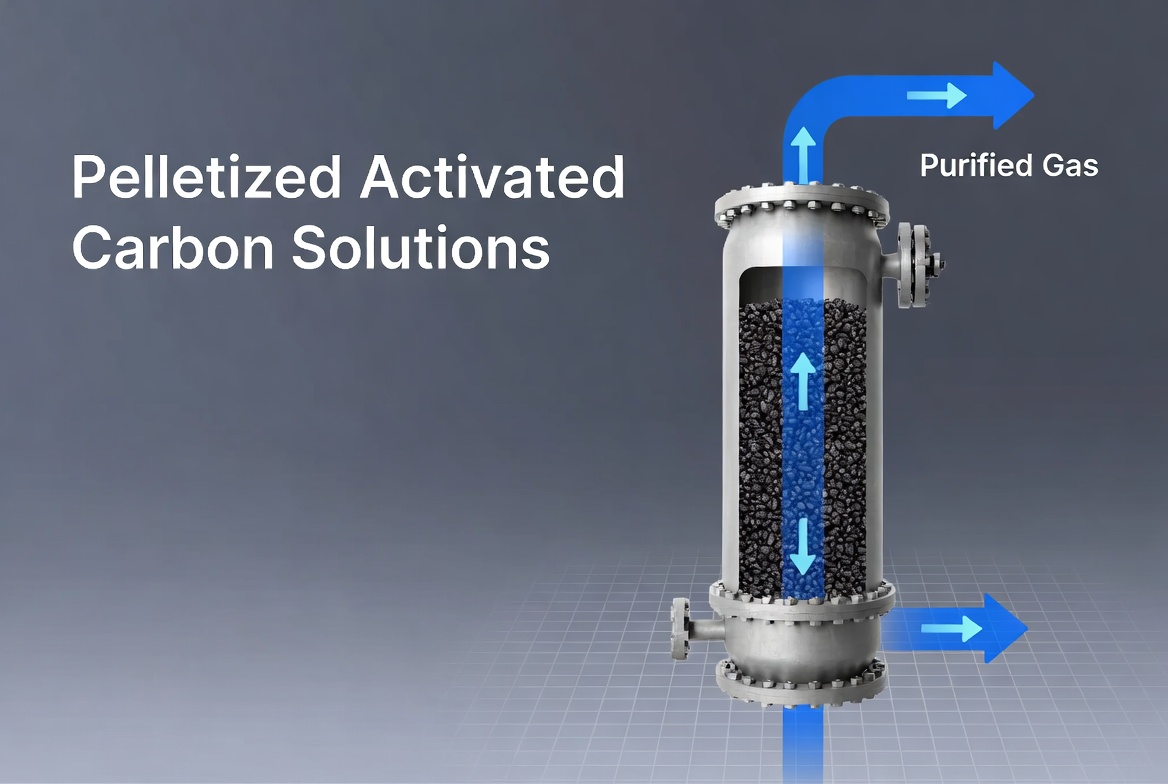
Pelletized activated carbon is a high-strength, low-dust form of activated carbon engineered for gas and vapor treatment, and Guangdong Tongke Activated Carbon Co., Ltd. is a specialized manufacturer in China that provides customized pellet solutions for global industrial users. From water and gas purification to chemical and energy applications, Tongke helps engineers and buyers design the right pelletized activated carbon for reliable, long-term performance.
Pelletized Activated Carbon Manufacturer in China: Why Tongke?
As a pelletized activated carbon manufacturer in China, Guangdong Tongke Activated Carbon Co., Ltd. focuses on R&D, production, and export of activated carbon products tailored to industrial requirements. The company supplies coal-based, coconut-shell, wood-based, honeycomb, and other activated carbons, as well as related filter media, to customers in water treatment, air and gas purification, food and beverage, chemical processing, and other sectors.
Tongke positions itself not just as a raw material vendor, but as a solution partner. Instead of offering only standard catalog items, the company works with process engineers, purchasing teams, and EPC contractors to match pore structure, pellet size, and impregnation chemistry to each application. This approach helps buyers reduce risk, stabilize system performance, and manage lifecycle cost more effectively.
What Is Pelletized Activated Carbon?
Pelletized activated carbon, also known as extruded or columnar activated carbon, is produced by milling fine carbon powder, mixing it with a binder, extruding it into cylindrical pellets, and then carbonizing and activating those pellets under controlled conditions.
Compared with granular activated carbon (GAC), pelletized carbon offers:
- More uniform shape and size, typically cylindrical pellets with diameters in the 0.9–8 mm range.
- Higher mechanical strength and lower dust generation, which reduces attrition in packed beds.
- More stable pressure drop and easier handling in gas-phase systems such as fixed beds, cartridges, and filter modules.
Because of these features, pelletized activated carbon is widely used in gas and vapor phase adsorption, especially where long bed life, low dust, and predictable flow behavior are critical.
Core Applications of Pelletized Activated Carbon
Tongke's pelletized activated carbon is designed for demanding industrial environments. Typical applications include:
- Air and gas purification
Removal of volatile organic compounds (VOCs), odors, and trace organic pollutants from process air, exhaust gases, and ventilation systems.
- Flue gas and emission control
Adsorption of acid gases (such as H₂S and SO₂), organic compounds, and other contaminants in flue gas from boilers, incinerators, and industrial furnaces.
- Biogas and natural gas purification
Removal of hydrogen sulfide (H₂S) and organic sulfur compounds from biogas and natural gas to protect downstream equipment and meet pipeline specifications.
- Solvent recovery and vapor capture
Adsorption and recovery of organic solvents in industries such as tape manufacturing, coating, printing, and electronics.
- Odor control and environmental protection
Long-life pellet beds in odor control units for wastewater treatment plants, sludge handling facilities, and solid waste management systems.
In many of these uses, pelletized activated carbon operates in continuous service and may be regenerated or replaced on a planned cycle, making mechanical strength and consistent quality essential.
Tongke's Pelletized Activated Carbon Product Portfolio
Tongke offers several families of pelletized activated carbon to address different performance requirements. While exact parameters can be customized, the main categories include:
Coal-Based Pelletized Activated Carbon
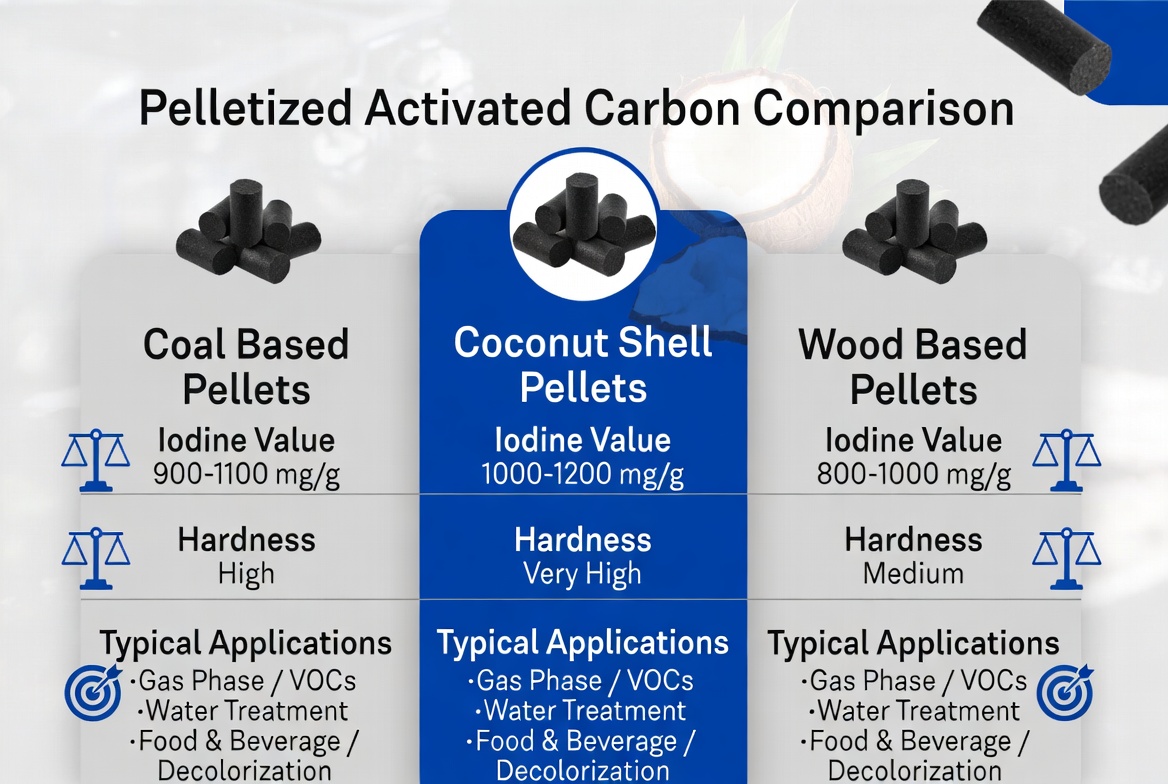
Coal-based pellets are produced from selected anthracite or bituminous coal under carefully controlled activation conditions. Typical features include:
- Diameter: 0.9–8 mm (commonly 2–4 mm for gas treatment).
- High CTC and iodine values, indicating strong adsorption capacity for organic vapors.
- Hardness generally above 90%, which reduces fines and dust during transport, loading, and operation.
- Moderate ash content and suitable bulk density for industrial gas-phase applications.
These pellets are widely used in flue gas purification, industrial exhaust treatment, and general gas-phase adsorption where robust mechanical performance and cost-effectiveness are priorities.
Catalytic and Impregnated Pelletized Activated Carbon
For gas streams containing acidic or basic gases, Tongke provides pelletized activated carbons that are impregnated or catalytically modified. Typical impregnation or catalyst systems include:
- Alkaline impregnation (e.g., KOH, NaOH, K₂CO₃) for acid gas removal (H₂S, SO₂, organic acids).
- Metal-oxide catalysts (such as CuO, MgO, or other proprietary blends) for enhanced oxidation reactions.
- Sulfur-based or other functional additives for specific contaminants like mercury or certain organic compounds.
These catalytic pellets are suitable for biogas desulfurization, refinery gas purification, and complex multi-contaminant streams, where both adsorption and catalytic conversion happen in the same bed.
Coconut-Shell Pelletized Activated Carbon
Coconut-shell pelletized activated carbon is based on high-quality coconut shell charcoal. It is characterized by:
- High micropore content and high iodine value, indicating strong adsorption capacity for small organic molecules.
- High hardness (often above 95%), which reduces attrition.
- Low impurity levels, making it suitable for more sensitive or high-value processes.
This type is commonly used in solvent recovery systems, carbon-in-column (CIC) gold refining, and high-purity gas purification, where high performance and regenerability are important.
Wood-Based Pelletized Activated Carbon
Wood-based pelletized activated carbon uses wood charcoal as the primary raw material, extruded and activated to form cylindrical pellets. It may be:
- Physically activated using steam or other gases.
- Chemically impregnated with alkaline or other agents to enhance H₂S and acid gas removal.
Wood-based pellets can offer a cost-effective solution for biogas desulfurization and other gas purification tasks where inlet H₂S levels are moderate and a balance between cost and performance is required.
Technical Advantages of Tongke Pelletized Activated Carbon
Customers typically evaluate pelletized activated carbon using several performance indicators. Tongke focuses on optimizing the following:
- Mechanical strength
High hardness reduces pellet breakage and dust formation, which extends bed life and prevents filter clogging.
- Optimized pore structure
By adjusting activation conditions and raw materials, Tongke tailors micropores, mesopores, and macropores to the target contaminants and process conditions.
- Controlled bulk density
Proper bulk density helps ensure predictable bed design, pressure drop, and contact time in packed columns and filter housings.
- Low moisture and balanced ash content
Suitable moisture and ash levels support stable adsorption performance while maintaining structural integrity.
- Flexible impregnation and catalysis
The ability to integrate various impregnating agents and catalysts allows Tongke to serve applications ranging from simple VOC removal to complex acid gas and H₂S treatment.
These technical strengths translate directly into longer service life, more stable operation, and lower total cost of ownership for industrial users.
How Tongke Ensures Quality and Reliability
For international industrial projects, consistent product quality is as important as the initial specification. Tongke implements a multi-step quality assurance process:
- Raw material control
Coal, coconut shell, wood, and other raw materials are selected and tested for parameters such as ash content, volatile matter, and sulfur content before production.
- Process monitoring
Key production steps—milling, mixing, extrusion, carbonization, and activation—are monitored and controlled to maintain uniform pore structure and pellet strength.
- Finished product inspection
Each batch is sampled and tested for properties such as iodine value, CTC, hardness, bulk density, moisture, ash, and particle size distribution.
- Documentation and traceability
Technical data sheets (TDS) and batch reports allow buyers to trace performance back to specific production runs, supporting internal QA and compliance requirements.
For customers with regulatory or corporate QA requirements, Tongke can coordinate third-party testing and provide detailed documentation to support audits and project approvals.
Expert Guide: How to Select Pelletized Activated Carbon
From the perspective of a plant engineer or procurement manager, selecting the right pelletized activated carbon requires a structured approach. Below is a practical framework:
1. Define Application and Target Contaminants
Begin by clarifying:
- Whether the medium is air, process gas, flue gas, or biogas.
- The main contaminants: H₂S, VOCs, organic solvents, acid gases, ammonia, or mixed pollutants.
- Target inlet and outlet concentrations and any applicable emission standards.
2. Analyze Operating Conditions
Next, consider:
- Gas flow rate and superficial velocity.
- Temperature and humidity levels.
- Bed design (fixed bed, moving bed, cartridge, or modular filter unit).
- Availability of regeneration systems (thermal or steam) versus single-use beds.
These factors influence the required contact time, bed height, and pellet size.
3. Choose Base Carbon Type
Match the base carbon to the application:
- Coal-based pellets for general industrial gas treatment and flue gas control.
- Coconut-shell pellets for high-value solvent recovery, precious metal processes, or high-purity gas applications.
- Wood-based pellets for cost-effective desulfurization where moderate H₂S levels and budget constraints apply.
4. Select Pellet Size and Hardness
Pellet size and strength affect both performance and operability:
- Smaller diameters can provide higher surface area and faster mass transfer, but may increase pressure drop.
- Higher hardness reduces attrition and dust, which is critical in long-term continuous service.
Choose a size that balances mass transfer efficiency, pressure drop, and mechanical robustness.
5. Determine Impregnation or Catalytic Requirements
If your gas stream contains acidic or basic gases, or if you require catalytic reactions, specify:
- The type of impregnant (alkaline, sulfur-based, or other).
- Desired H₂S capacity, acid gas capacity, or catalytic activity.
- Regeneration strategy (regenerable vs. disposable).
Tongke's technical team can help recommend specific formulations once they have your process data.
6. Plan Lifecycle and Maintenance
Finally, estimate:
- Expected service life of the carbon bed under typical loading.
- Regeneration frequency, if applicable.
- Replacement and maintenance schedule, including change-out procedures.
A clear lifecycle plan helps optimize total cost of ownership and ensures that pelletized activated carbon is integrated smoothly into operations.
Customization, OEM Service, and Packaging
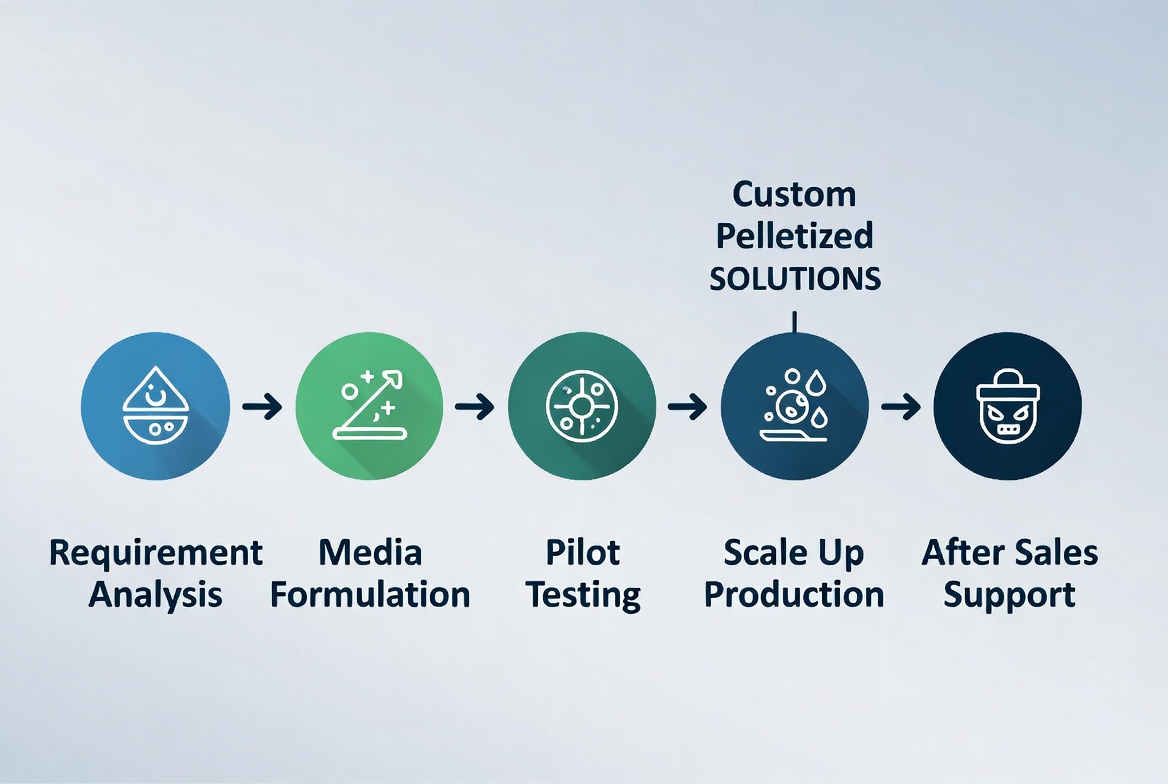
Tongke supports custom and OEM projects for distributors, brand owners, and engineering companies. Key options include:
- Custom formulations
Tailor iodine value, CTC, pore structure, pellet size, hardness, and impregnation to match specific project requirements.
- OEM and private-label packaging
Supply pelletized activated carbon in standard bags (for example 20 kg, 25 kg, or bulk bags) or customer-branded packaging for downstream resellers.
- Flexible order quantities
Support for pilot projects and trial orders allows buyers to test product performance before committing to large-scale procurement.
- Logistics coordination
Optimization of shipping routes and packaging for international transport, balancing lead time and freight cost based on customer location and volume.
These services are especially valuable for global buyers who require consistent supply, brand control, and technical support.
User Experience and Service: What Customers Care About
Industrial users value both product performance and service quality. Tongke focuses on:
- Responsive communication
Providing quick technical feedback and quotations to keep projects moving efficiently.
- Stable quality from sample to bulk
Ensuring that mass-production batches match the performance of approved samples.
- Problem-solving orientation
Working with customers when questions arise during commissioning, performance testing, or long-term operation.
This combination of technical expertise, stable production, and professional service helps buyers reduce uncertainty and manage risk across their supply chain.
Call to Action: Partner with Tongke for Pelletized Activated Carbon Projects
If you are planning a gas treatment, emission control, or biogas purification project, partnering with Guangdong Tongke Activated Carbon Co., Ltd. can help you achieve reliable performance and cost-effective operation.
To get started:
- Prepare a brief process description that includes gas composition, flow rate, temperature, and target outlet levels.
- Share your system design constraints, such as existing equipment dimensions, regeneration options, and operating schedule.
- Contact Tongke to request technical recommendations and samples, and use those samples in lab or pilot tests to validate performance.
By engaging early with Tongke's technical team, you can design a pelletized activated carbon solution that fits both your process requirements and your budget.
FAQs about Pelletized Activated Carbon and Tongke
1. What is the main difference between pelletized and granular activated carbon for gas treatment?
Pelletized activated carbon consists of extruded cylindrical pellets with higher mechanical strength and lower dust compared with granular carbon, which typically has irregular particle shapes. This makes pellets more suitable for long-term gas-phase applications where stable pressure drop and minimal dust are important. Granular carbon is often preferred for liquid-phase treatment, such as drinking water and wastewater.
2. Which type of Tongke pelletized activated carbon is best for H₂S removal in biogas?
For biogas desulfurization, Tongke usually recommends impregnated coal-based pellets or wood-based pellets designed specifically for H₂S capture. The choice depends on factors such as inlet H₂S concentration, required outlet levels, regeneration strategy, and budget. Tongke can suggest a formulation after reviewing your process data.
3. Can Tongke provide customized pellet sizes and impregnation types?
Yes. Tongke can adjust pellet diameter, hardness, pore distribution, and impregnation (such as alkaline, sulfur-based, or metal-oxide systems) to match the requirements of your gas treatment system. This customization is particularly useful in OEM projects or when retrofitting existing installations.
4. Does Tongke support third-party testing and certification?
Tongke can coordinate third-party tests and provide detailed test reports for parameters such as iodine value, CTC, hardness, ash, and moisture. This helps customers meet internal QA standards and comply with industry or regulatory requirements.
5. How long is the typical lead time for pelletized activated carbon orders from Tongke?
Lead time depends on order quantity, product type, and customization level. For many standard pelletized activated carbon products, production and shipment can be arranged within a short industrial lead time, while special formulations may require additional preparation. Tongke provides schedule estimates during quotation so buyers can plan their projects.


