
Language
Views: 261 Author: Tongke Activated Carbon Publish Time: 2026-08-17 Origin: Site


Content Menu
● Why Buyers Look for NORIT Activated Carbon Alternatives
● Why One Specification Cannot Define "Equivalent" Carbon
● Common NORIT Grades and Suitable Comparison Paths
● Activated Carbon Selection by Application
>> Water Treatment and Process Liquids
>> Air, Gas, and Solvent Recovery
>> Food, Beverage, Pharmaceutical, and Fine Chemicals
● A Four-Step Process for Selecting an Alternative Grade
>> 1. Define the real performance target
>> 2. Compare technical data on a like-for-like basis
>> 3. Run a bench or pilot test
>> 4. Qualify supply and quality control
● Total Cost Matters More Than Price Per Kilogram
● Request a Technical Carbon Comparison
>> Is a NORIT activated carbon alternative always cheaper?
>> Can iodine number prove that two activated carbons are equivalent?
>> Which carbon is best for water treatment?
>> Which activated carbon is suitable for VOC removal?
>> Why does activated carbon create pressure drop?
>> Can powdered activated carbon replace granular activated carbon?
>> What information is needed for a technical recommendation?
When industrial buyers search for a NORIT activated carbon alternative, the right decision is not simply about finding a lower unit price. It is about selecting activated carbon with a pore structure, particle size, mechanical strength, adsorption capacity, and quality-control profile that fit the actual operating conditions of the system.
For water treatment, air and gas purification, food processing, pharmaceutical purification, chemical production, and precious-metal recovery, Guangdong Tongke Activated Carbon Co., Ltd. supplies application-oriented activated carbon solutions that can be evaluated against widely used NORIT/Cabot grades. Our approach is practical: understand the contaminant, operating conditions, target outlet quality, and replacement cycle before recommending a product.
NORIT is a long-established activated carbon brand associated with water, air, food, pharmaceutical, and industrial purification applications. Its products are used across liquid-phase and vapor-phase adsorption systems.
However, many procurement teams now need a more flexible supply option because of:
- Budget pressure on filtration media and operating costs
- Longer international lead times or uncertain inventory availability
- A need for custom particle sizes, packaging, or specifications
- Different local raw-material and process-water conditions
- A requirement to optimize carbon performance for one specific contaminant rather than buy a general-purpose grade
For these buyers, the goal is not to copy a brand name. The goal is to achieve stable treatment performance, predictable service life, and acceptable total operating cost.
Activated carbon is a porous adsorbent. As water, air, gas, or process liquid flows through the carbon bed, contaminants attach to internal and external carbon surfaces. Performance therefore depends on far more than a single laboratory number.
A common purchasing mistake is to compare only iodine number, ash content, or price per kilogram. These indicators matter, but they do not independently predict whether a carbon will work in a real system.
For example, ASTM explains that iodine number is a relative indicator of activated-carbon porosity and may approximate surface area. It does not necessarily measure the carbon's ability to adsorb every target substance.
A technically sound comparison should include the full application profile.
| Evaluation factor | Why it matters | Typical impact |
|---|---|---|
| Raw material | Determines pore-size distribution and ash profile | Coconut shell carbon often favors small-molecule adsorption; coal and wood carbons can provide different mesopore and macropore structures |
| Activation method | Influences pore development and surface chemistry | Affects adsorption kinetics and capacity |
| Particle size | Controls pressure drop, contact efficiency, and handling | Smaller particles may adsorb faster but can increase pressure loss |
| Iodine number | Indicates relative micropore development | Useful as a screening value, not a stand-alone purchasing criterion |
| Methylene blue value | Helps assess larger-molecule adsorption potential | Particularly relevant for color removal and some liquid-phase applications |
| Abrasion resistance | Indicates resistance to breakage during transport, backwash, and reactivation | Higher hardness can reduce fines and media loss |
| Ash and soluble salts | Can affect purity, pH behavior, and suitability for sensitive processes | Important for food, pharmaceutical, and high-purity water uses |
| Bulk density | Affects volume-based dosing and vessel loading | Important when comparing price per bag with price per treated volume |
| Moisture content | Influences net carbon delivered | Higher moisture can make a low quoted price misleading |
| Actual challenge stream | Defines the true adsorption requirement | Determines service life and breakthrough behavior |
The best carbon is application-specific. A high iodine value cannot compensate for the wrong pore structure, poor mechanical strength, excessive fines, or inadequate contact time.

The following table is a practical starting point for buyers evaluating products commonly associated with NORIT/Cabot portfolios. Final selection should be based on laboratory data, system parameters, and representative trials.
| Common reference grade | Typical application direction | Tongke comparison approach |
|---|---|---|
| SORBONORIT 4 / SORBONORIT B3 | Solvent recovery and vapor-phase adsorption | Evaluate 4 mm extruded carbon with strong hardness, stable pellet geometry, low dust, and suitable working capacity for the solvent mixture |
| NORIT ROW 0.8 SUPRA | Drinking-water and process-water purification | Compare extruded water-treatment carbon based on particle size, adsorption of taste, odor, chlorine, organics, and hydraulic behavior |
| NORIT RB 1.5 | Low-concentration contaminants in gas streams | Evaluate 1.5 mm pelletized carbon for gas-phase kinetics, pressure drop, bed life, and mechanical integrity |
| NORIT PK 3-5 | Broad gas and liquid-phase service, including compressed-air applications | Compare granular or pelletized products by pore structure, oil-vapor performance, particle strength, and clean handling |
| NORITHENE filter plates | Indoor-air and acid-gas removal systems | Review impregnated or specialty filter media based on target gases, humidity, residence time, and filter configuration |
| NORIT RO 3515 / RO 3520 / GCN | Gold recovery | Compare coconut-shell granular and pelletized carbons based on hardness, attrition resistance, gold-loading behavior, and particle-size consistency |
| NORIT GAC 1240 / GAC 830 | Potable water and industrial process liquids | Compare coal-based or coconut-shell granular activated carbon using mesh size, ash, hardness, adsorption indicators, and site water quality |
| NORIT CG1 / SX Plus | Decolorization and purification of process liquids | Compare acid-washed or standard wood-based powdered activated carbon for color removal, filtration behavior, pH needs, and residual ash |
NORIT/Cabot materials are used in water, air, food and beverage, pharmaceutical, and liquid-and-gas purification applications. That broad use also explains why a direct one-product-for-all replacement claim is rarely reliable.
For potable water, wastewater polishing, industrial process water, and liquid purification, granular activated carbon is frequently used to remove taste- and odor compounds, natural organic matter, volatile organic compounds, synthetic organic compounds, and disinfection byproduct precursors.
A suitable water-treatment carbon should be evaluated against:
- Target contaminants: chlorine, odor compounds, pesticides, organics, color, solvents, or trace pollutants
- Influent water quality: turbidity, pH, temperature, organic loading, and suspended solids
- Carbon mesh size: commonly selected to balance adsorption kinetics and hydraulic performance
- Bed depth and empty-bed contact time
- Backwash requirements and carbon attrition
- Breakthrough monitoring plan
For standard municipal and industrial water applications, Tongke can assess coal-based granular activated carbon and coconut-shell granular activated carbon. Coal-based carbon can offer a balanced pore structure for many liquid-phase uses, while coconut-shell carbon is often selected where high hardness and micropore development are particularly valuable.
For vapor-phase service, the carbon must match the gas composition and operating conditions. The same carbon can perform very differently at different humidity levels, temperatures, flow rates, inlet concentrations, and residence times.
Select gas-phase activated carbon according to:
1. Contaminant type: VOCs, odors, solvent vapors, hydrogen sulfide, acid gases, mercury, or hydrocarbons
2. Gas concentration: low-level polishing and high-concentration solvent recovery require different design priorities
3. Humidity: water vapor can compete for adsorption sites and change performance
4. Bed pressure drop: particle diameter must match the blower capacity and airflow requirements
5. Fire and heat risk: certain solvent streams require careful engineering and operational controls
6. Replacement or regeneration strategy: media life must be evaluated using working capacity, not theoretical capacity only
For solvent recovery and industrial exhaust treatment, extruded activated carbon pellets can offer easier handling, lower dust generation, and good mechanical durability. For acid gases or highly specific contaminants, impregnation chemistry may be more important than base carbon alone.
Purification in sensitive processing environments requires more than strong adsorption. Buyers may need careful control of ash, moisture, pH behavior, particle distribution, filtration performance, and documentation.
Powdered activated carbon is commonly used for:
- Color reduction in syrups, sweeteners, edible oils, and beverage intermediates
- Removal of unwanted odor and flavor compounds
- Purification of pharmaceutical intermediates
- Fine-chemical decolorization
- Removal of selected organic impurities before downstream filtration
Wood-based powdered activated carbon is often considered for decolorization because its pore structure can support adsorption of larger color bodies. However, the best choice depends on the molecular size and chemistry of the impurity, filtration equipment, and acceptable product yield.
Practical recommendation: Test at least two or three candidate grades using the real process liquid. Measure not only color reduction, but also filtration time, dosage, pH shift, product loss, and final product quality.
Gold-recovery carbon needs high mechanical strength because it experiences continuous abrasion during adsorption, screening, stripping, regeneration, and transfer. Carbon breakdown creates fines, increases media loss, and can disrupt circuit stability.
For carbon-in-pulp, carbon-in-leach, and carbon-in-column applications, key selection factors include:
- Coconut-shell raw material
- Low attrition and high hardness
- Consistent particle-size distribution
- Appropriate pore structure for gold cyanide complex adsorption
- Low contamination risk
- Performance after regeneration cycles
Tongke can provide coconut-shell granular activated carbon and pelletized carbon options for gold recovery. Before conversion, we recommend comparing screen retention, abrasion resistance, apparent density, gold loading, and regeneration performance under the mine's actual operating protocol.
Do not start with the reference product name. Start with the treatment objective.
Provide the following information:
- Current carbon grade and annual consumption
- Target contaminant and inlet concentration
- Required outlet concentration or treatment target
- Flow rate, temperature, pH, and operating hours
- Existing vessel dimensions and carbon bed depth
- Current replacement frequency
- Problem to solve: cost, supply, short bed life, pressure drop, dust, or inconsistent quality
Ask suppliers to provide a product data sheet and test-method details. Compare the same test basis, particle-size range, moisture condition, and sampling approach.
Avoid comparing a dry-basis value from one supplier with an as-received value from another. This can create false conclusions about capacity, density, and delivered carbon quantity.
A pilot trial is especially important for complex wastewater, high-value food products, pharmaceutical streams, and mining circuits. EPA guidance for granular activated carbon emphasizes using pilot studies to determine whether the technology can meet site-specific requirements and to establish appropriate operating conditions.
A practical trial should measure:
- Treated-water or outlet-gas quality
- Breakthrough time
- Pressure drop
- Carbon loss and fines generation
- Dosage or bed volume required
- Operating stability
- Total cost per unit treated
A dependable carbon supplier should provide more than a sample. Review batch consistency, inspection records, packaging, loading controls, documentation, export capability, and response time for technical questions.
At Guangdong Tongke Activated Carbon Co., Ltd., we recommend confirming a written specification before production and retaining a reference sample for comparison. This creates a clearer basis for incoming inspection and future batch control.
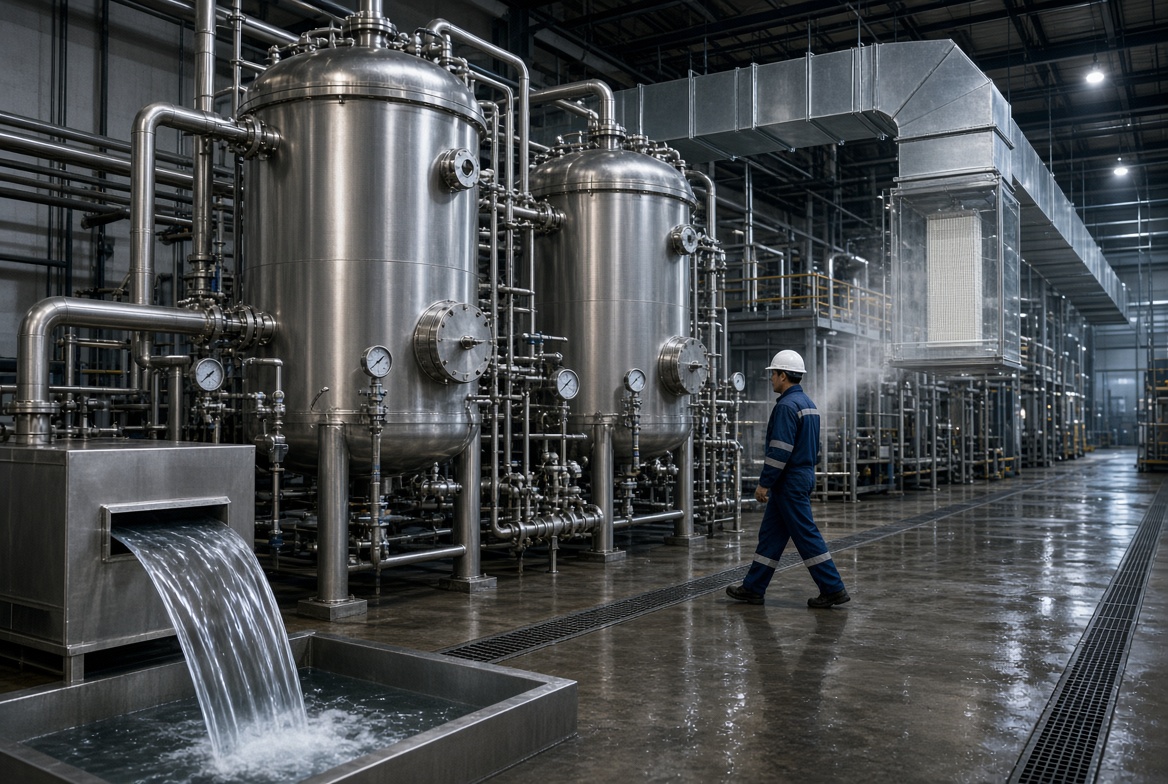
The lowest purchase price can become the highest operating cost if the carbon reaches breakthrough early, produces excessive fines, causes high pressure drop, or requires frequent replacement.
Use this simplified evaluation model:
Total treatment cost=(Carbon cost+Freight+Changeout labor+Disposal/regeneration cost+Downtime cost)/Volume or mass treated
A carbon with a higher delivered price may still be the better value if it lasts longer or protects product quality more consistently.
For GAC systems, carbon eventually becomes spent as adsorption sites are used. Replacement or regeneration is required when the treated stream no longer meets the required quality level. Periodic backwashing also helps control head loss and biomass accumulation.
If you are currently using a NORIT/Cabot grade or another activated carbon brand, Guangdong Tongke Activated Carbon Co., Ltd. can help you evaluate an application-appropriate alternative.
Send us your current specification, application details, particle-size requirement, annual quantity, and target market. Our technical team can recommend suitable granular, powdered, pelletized, coconut-shell, coal-based, wood-based, or impregnated activated carbon options for sampling and evaluation.
Not necessarily. Some alternatives have a lower purchase price, but the meaningful comparison is total treatment cost. A lower-priced carbon may be less economical if it has shorter bed life, greater attrition, or lower adsorption performance for the target contaminant.
No. Iodine number is useful for indicating relative porosity, but it does not confirm adsorption performance for every contaminant. Compare pore structure, particle size, hardness, ash, and trial performance.
There is no universal best choice. Coal-based granular activated carbon, coconut-shell granular carbon, and extruded carbon can all be suitable depending on contaminants, contact time, hydraulics, and required water quality.
Pelletized or granular vapor-phase carbon is commonly used for VOC control. The preferred grade depends on the VOC mixture, inlet concentration, humidity, temperature, airflow, residence time, and safety requirements.
Pressure drop can increase because of fine particles, undersized carbon, accumulated solids, poor backwashing, excessive bed depth, or unsuitable flow distribution. Carbon particle size and mechanical strength should match the system design.
Usually not as a direct substitution. Powdered carbon is generally dosed into a liquid and later separated by filtration or clarification. Granular carbon is normally installed in fixed beds or contactors for continuous flow treatment.
Share the current product data sheet, target application, contaminant data, process conditions, flow rate, equipment information, desired particle size, and current operational problem. This enables a more accurate sample recommendation.
1. [Huamei Carbon — Difference between Huamei Carbon vs NORIT (Cabot) Carbon]
2. [ASTM International — ASTM D4607: Determination of Iodine Number of Activated Carbon]
3. [United States Environmental Protection Agency — Overview of Drinking Water Treatment Technologies]
4. [United States Environmental Protection Agency — Granular Activated Carbon Treatment Fact Sheet]


