Content Menu
● What Is Decolorizing Carbon?
● How Activated Carbon Removes Color (Adsorption Mechanism)
● Key Industrial Applications of Decolorizing Carbon
>> Wine and Beverage Production
>> Sugar Refining
>> Edible and Industrial Oils
>> Pharmaceuticals, Fine Chemicals, and Intermediates
● Choosing Between Powdered and Granular Activated Carbon
>> PAC vs. GAC at a Glance
● Why Wood-Based Activated Carbon for Decolorization?
● Practical Steps to Select the Right Decolorizing Carbon
>> 1. Define Your Performance Targets
>> 2. Evaluate Critical Carbon Parameters
>> 3. Conduct Bench and Pilot Trials
● Best Practices for Operating Decolorization Systems
>> Batch Systems with PAC
>> Continuous Systems with GAC
● Sustainability and Regeneration Considerations
● Why Work with a Specialized Chinese Wood Activated Carbon Manufacturer
● Call to Action: Optimize Your Decolorization Performance
● Frequently Asked Questions (FAQ)
>> 1. What is the difference between wood‑based and coal‑based decolorizing carbon?
>> 2. How do I know whether to use PAC or GAC?
>> 3. Will decolorizing carbon affect flavor or active ingredients?
>> 4. How do I evaluate a new decolorizing carbon in my plant?
>> 5. Is regenerated activated carbon suitable for food and pharmaceutical applications?
● References
Decolorizing carbon (wood activated carbon) is a critical tool for modern food, beverage, pharmaceutical, and chemical manufacturers who need reliable color removal without sacrificing product quality or regulatory compliance. This guide combines hands-on plant experience with current technical and industry data to help you select, operate, and optimize decolorizing carbon for industrial applications. [feature-tec]
Decolorizing carbon—commonly referred to as activated carbon—is a highly porous adsorbent used to remove color bodies and impurities from liquids and gases across multiple industries. It is typically produced from wood, coal, or coconut shells through controlled high‑temperature carbonization and activation, which creates a vast internal pore network and high specific surface area. For applications that demand high purity and fast adsorption kinetics, wood-based activated carbon has become a preferred choice thanks to its well‑developed mesoporous and macroporous structure and low ash content. [rotarykilnsupplier]
From a process engineer's perspective, the right decolorizing carbon can stabilize product quality, reduce rework, and significantly lower downstream filtration and polishing costs. From a procurement and quality standpoint, partnering with a specialized manufacturer capable of tailoring pore structure, particle size, and washing level is essential to consistently meet tight color, odor, and contaminant specifications. [altitudemarketing]
What Is Decolorizing Carbon?
Decolorizing carbon is a class of activated carbon specifically engineered to remove color, off‑odor, and trace organic impurities from process streams. It combines three key properties that matter in industrial operations: [heycarbons]
- Extremely high internal surface area to capture large amounts of color bodies. [feature-tec]
- Optimized pore size distribution targeting dyes, polyphenols, and other chromophoric compounds. [char-grow]
- Controlled particle size (powder or granular) enabling flexible use in batch tanks, filters, or continuous columns. [heycarbons]
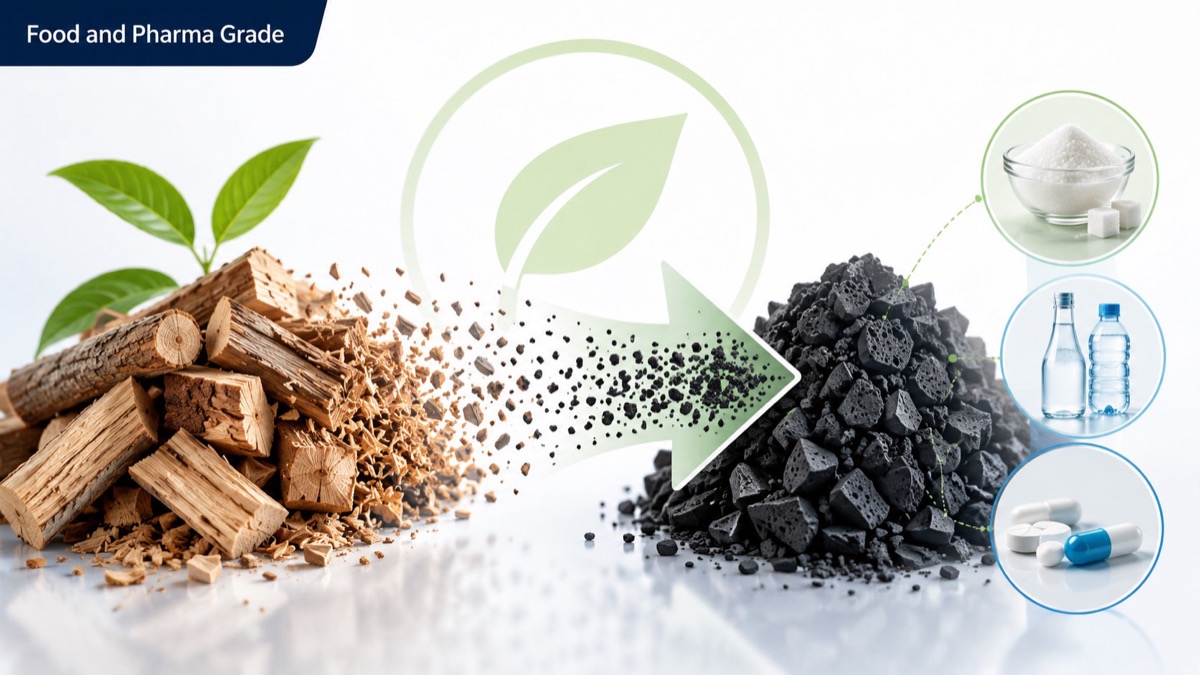
Wood‑based decolorizing carbon is typically derived from sawdust, wood chips, or similar biomass, then activated (steam or chemical) to create a highly developed pore network that is particularly effective for large organic molecules. When properly washed, it can also offer low soluble ash and heavy metals, which is critical for food, beverage, pharmaceutical, and biotech applications. [sciencedirect]
How Activated Carbon Removes Color (Adsorption Mechanism)
Activated carbon removes color through adsorption, not absorption. As the liquid or gas passes through the carbon bed or is mixed in a batch tank, dissolved color bodies and impurities are physically attracted to and held on the carbon's internal surface. [char-grow]
Several mechanisms work together:
- Physical adsorption driven by Van der Waals forces between the carbon surface and organic molecules. [feature-tec]
- Pore filling, where color molecules enter micro‑ and mesopores and are retained due to size and shape compatibility. [sciencedirect]
- Chemical interactions in some modified carbons, where surface functional groups improve affinity for specific contaminants. [pmc.ncbi.nlm.nih]
For decolorization, the most important practical factors are:
- Contact time: Sufficient residence time to reach target color reduction. [feature-tec]
- Temperature and pH: Many systems see improved adsorption at moderate temperatures and optimized pH. [pmc.ncbi.nlm.nih]
- Mixing and flow distribution: Uniform flow or agitation prevents channeling and ensures full use of the carbon bed. [feature-tec]
Key Industrial Applications of Decolorizing Carbon
Wine and Beverage Production
In wine and other beverages, decolorizing carbon is used to refine color and improve flavor stability. It removes polyphenols and other colored compounds that can make wines too dark or cause astringency and off‑notes. [heycarbons]
Typical objectives include:
- Reducing excessive color in white and rosé wines while preserving varietal character. [heycarbons]
- Polishing sensory profile by removing trace off‑flavors from fermentation byproducts. [char-grow]
- Stabilizing product appearance for consistent retail presentation across batches. [the4psolutions]
Wood‑based activated carbon is favored here for its strong affinity for large organic molecules and relatively mild impact on delicate aromas when properly dosed. [zhulincarbon]
Sugar Refining
In sugar refining, natural pigments and impurities in the syrup directly influence the ICUMSA color and overall market value of the final sugar. Decolorizing carbon is widely applied to: [heycarbons]
- Remove color bodies and turbidity to achieve high‑grade white sugar. [feature-tec]
- Lower organic impurities that may cause color reversion in storage. [pmc.ncbi.nlm.nih]
- Improve filterability and reduce load on downstream ion exchange or membrane systems. [feature-tec]
Here, powdered activated carbon (PAC) is often dosed into syrup, followed by filtration, allowing high surface contact and efficient decolorization in large‑scale equipment. [heycarbons]
Edible and Industrial Oils
Whether for edible oils (such as soybean, palm, or sunflower) or specialty industrial oils, color stability is a key quality indicator. Color impurities can indicate oxidation, processing byproducts, or contamination. [heycarbons]
Decolorizing carbon in oils is used to:
- Lower Lovibond or Gardner color values and improve clarity. [feature-tec]
- Remove oxidation products and polar compounds that affect flavor and shelf life. [pmc.ncbi.nlm.nih]
- Support downstream bleaching earth or refining steps for more stable products. [heycarbons]
In continuous systems, granular activated carbon (GAC) beds are often used to simplify solids handling and enable longer service intervals. [feature-tec]
Pharmaceuticals, Fine Chemicals, and Intermediates
In pharmaceutical and fine chemical production, regulators and customers demand extremely low levels of organic impurities and color bodies. Decolorizing carbon helps: [pmc.ncbi.nlm.nih]
- Purify APIs, intermediates, and excipients by removing colored byproducts and trace organics. [pmc.ncbi.nlm.nih]
- Improve crystallization behavior by lowering impurity load. [char-grow]
- Support compliance with pharmacopeia and quality standards for appearance and purity. [pmc.ncbi.nlm.nih]
Carefully selected wood‑based carbons with low heavy metal and ash contents are preferred to minimize the risk of introducing new contaminants. [pmc.ncbi.nlm.nih]
Choosing Between Powdered and Granular Activated Carbon
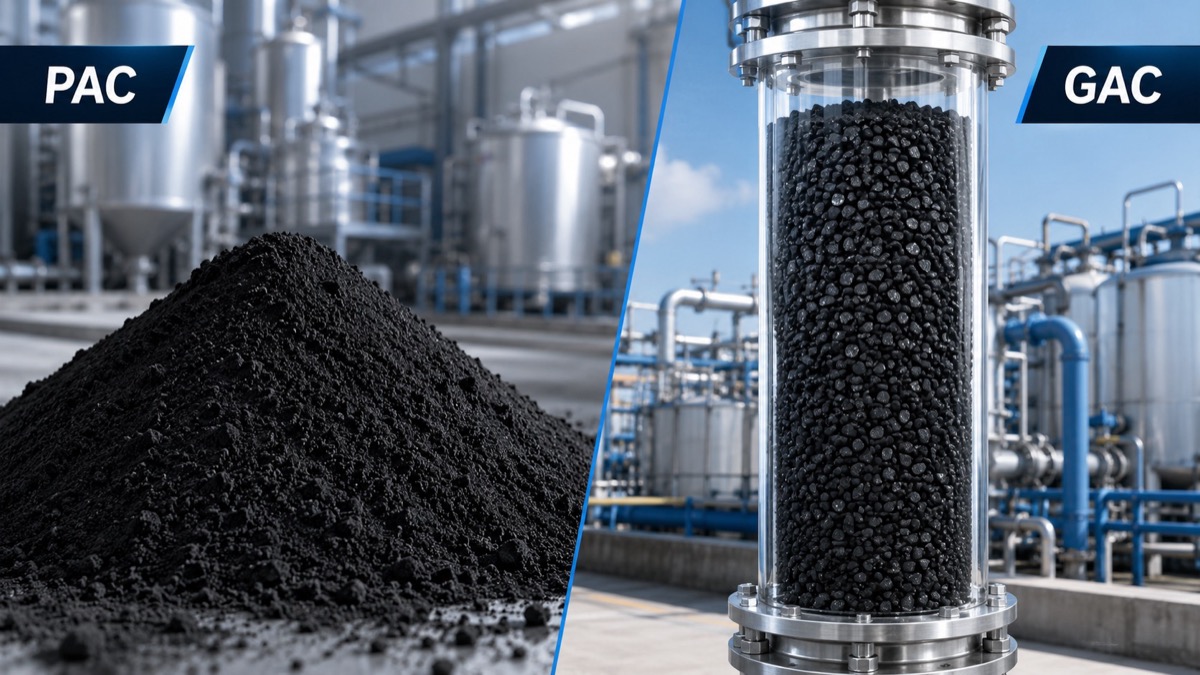
Both powdered activated carbon (PAC) and granular activated carbon (GAC) are widely used for decolorization. The right choice depends on your process design, operating mode, and solids‑handling capability. [heycarbons]
PAC vs. GAC at a Glance
| Parameter | Powdered activated carbon (PAC) | Granular activated carbon (GAC) |
| Typical particle size | 1–200 micrometers for fast adsorption and large surface area (feature-tec) | 0.8–5 mm for fixed‑bed and column systems (feature-tec) |
| Main usage mode | Dosed into tanks or syrup; removed via filtration or clarification (feature-tec) | Packed in columns or filters; used in continuous or semi‑continuous systems (feature-tec) |
| Key advantages | Very high apparent surface area, rapid mass transfer, excellent for batch decolorization (feature-tec) | Mechanically robust, reusable, low pressure drop, easier solids handling (feature-tec) |
| Main challenges | Sedimentation, filter clogging, dust and handling safety concerns (feature-tec) | Less effective suspension in liquids, suitability mainly for smaller equipment or defined flow systems (feature-tec) |
| Typical applications | Sugar syrup, high‑volume beverage tanks, pharmaceutical batch purification (feature-tec) | Beverage polishing filters, oil decolorization columns, specialty chemical streams (feature-tec) |
GAC is often more suitable for fluidized bed or fixed‑bed decolorization systems, where it helps prevent bed compression and backflow issues. PAC is ideal for static batch treatments that require rapid adsorption and flexible dosing, especially in large vessels or multi‑product plants. [feature-tec]

Why Wood-Based Activated Carbon for Decolorization?
From an industry expert's standpoint, wood‑based activated carbon offers several performance and sustainability advantages over many coal‑based alternatives in color‑sensitive applications. [rotarykilnsupplier]
Key benefits include:
- Richer mesopore and macropore structure, which enhances adsorption of larger organic color molecules such as dyes, polyphenols, and pigments. [rotarykilnsupplier]
- Lower ash content and higher purity, reducing the risk of ash‑related turbidity, catalytic decomposition, or pH drift in sensitive products. [rotarykilnsupplier]
- Renewable raw material base, supporting corporate sustainability objectives and green manufacturing initiatives. [sciencedirect]
In practical QA/QC testing, wood‑based carbons often show higher methylene blue values and very good iodine values, which correlate with strong performance in wastewater and food decolorization tasks. For processors targeting premium segments—such as high‑grade sugar, pharmaceutical excipients, or natural beverages—these characteristics can be a decisive factor in supplier selection. [the4psolutions]
Practical Steps to Select the Right Decolorizing Carbon
From a process optimization perspective, choosing the right decolorizing carbon is a structured technical decision rather than a simple catalog selection. [altitudemarketing]
1. Define Your Performance Targets
Start by specifying:
- Required color reduction (for example, ICUMSA, Lovibond, or Gardner targets). [heycarbons]
- Allowable impact on key quality attributes (flavor, pH, conductivity, trace metals). [pmc.ncbi.nlm.nih]
- Filtration and handling constraints (filter type, maximum pressure drop, existing equipment). [feature-tec]
2. Evaluate Critical Carbon Parameters
When you compare candidate carbons, pay attention to:
- Iodine value and methylene blue value as indicators of adsorption capacity and pore structure suitability. [heycarbons]
- Particle size and distribution (PAC vs GAC) based on your process mode. [feature-tec]
- Ash and heavy metal content, especially for food, beverage, and pharma uses. [pmc.ncbi.nlm.nih]
- pH, moisture, and bulk density, which affect handling and process compatibility. [heycarbons]
3. Conduct Bench and Pilot Trials
Before plant‑wide deployment, run controlled trials:
- Jar tests or bench‑scale columns to compare dose‑response and contact times. [char-grow]
- Pilot runs under realistic flow, temperature, and pH conditions to validate scaling behavior. [altitudemarketing]
- Regeneration or disposal assessments to understand lifecycle cost and environmental impact. [sciencedirect]
Partnering with a dedicated activated carbon manufacturer allows you to fine‑tune product grades and receive technical support on trial design, sampling, and analytics. [the4psolutions]
Best Practices for Operating Decolorization Systems
Batch Systems with PAC
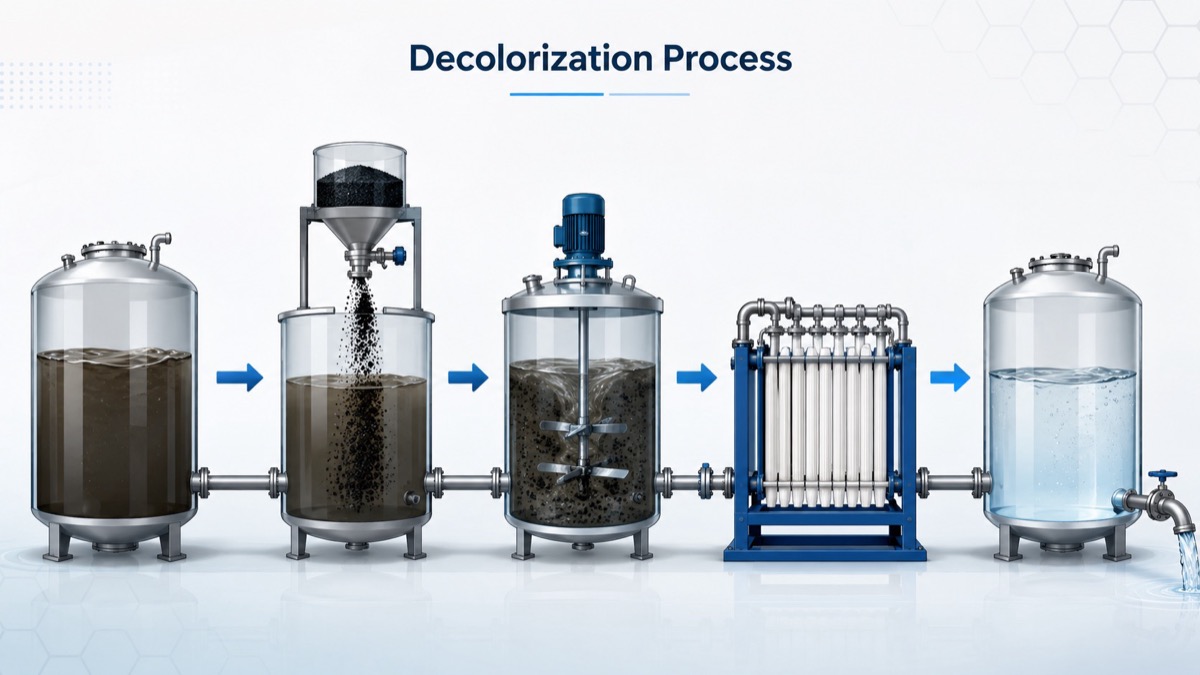
In batch decolorization (sugar syrup tanks, pharmaceutical reactors, beverage blending tanks), PAC remains the workhorse. [feature-tec]
Operational tips include:
- Add PAC under strong agitation to ensure rapid dispersion and contact with the entire liquid volume. [feature-tec]
- Maintain an optimized contact time (often 20–60 minutes depending on product and target). [heycarbons]
- Use appropriately sized filters or filter aids to avoid clogging and ensure reliable solid–liquid separation. [feature-tec]
Consistent dosing and process control reduce batch‑to‑batch variability and minimize over‑treatment, which can strip desired flavor or active components. [the4psolutions]
Continuous Systems with GAC
For continuous decolorization, GAC beds or fluidized systems are common. [feature-tec]
Key design and operational considerations:
- Maintain uniform flow distribution to avoid channeling and under‑utilized bed volume. [feature-tec]
- Monitor pressure drop and outlet color to determine optimal regeneration or replacement intervals. [pmc.ncbi.nlm.nih]
- Design for easy backwashing or bed maintenance to manage fines and maintain hydraulic performance. [feature-tec]
Well‑designed GAC systems often deliver lower operating costs and simpler daily operation than high‑dose PAC systems, particularly in dedicated production lines. [altitudemarketing]
Sustainability and Regeneration Considerations
As environmental and cost pressures increase, more processors evaluate the full lifecycle of their decolorizing carbon. [sciencedirect]
Important aspects include:
- Renewable feedstocks: Wood‑derived activated carbons support circular and bio‑based material strategies. [sciencedirect]
- Regeneration technology: Thermal or advanced regeneration methods can restore adsorption capacity and reduce waste. [sciencedirect]
- Metal and organic residue control: Acid washing and controlled activation help minimize residual metals and improve performance in reuse cycles. [pmc.ncbi.nlm.nih]
Research in sustainable modification and recycling of activated carbon continues to advance, offering routes to lower carbon footprint and total cost of ownership without sacrificing performance. [sciencedirect]
Why Work with a Specialized Chinese Wood Activated Carbon Manufacturer
For global manufacturers, sourcing decolorizing carbon is no longer just a price decision—it is about process stability, compliance, and long‑term partnerships. [altitudemarketing]
A specialized Chinese producer of wood activated carbon can deliver:
- Customized product grades tuned to your specific industry (sugar, beverages, oils, pharmaceuticals, chemicals). [zhulincarbon]
- Application‑driven technical support, from lab evaluation and pilot trials to scale‑up and troubleshooting. [the4psolutions]
- Reliable export logistics and documentation, meeting global quality, food safety, and environmental standards. [zhulincarbon]
For buyers managing multiple plants or regions, a strategic supplier that understands both activated carbon technology and industrial process requirements can significantly reduce risk and simplify standardization across facilities. [altitudemarketing]
Call to Action: Optimize Your Decolorization Performance
If your team is evaluating new decolorizing carbon grades, troubleshooting color issues, or planning to standardize wood‑based activated carbon across global sites, now is the right time to collaborate with an industry‑focused manufacturer. [the4psolutions]
Share your product specifications, target color values, process conditions, and any current pain points (filter clogging, variable color, off‑odors, high consumption rates). With that information, a technical team can recommend tailored wood activated carbon solutions, design pilot trials, and help you balance cost, performance, and sustainability in your decolorization systems. [altitudemarketing]
Frequently Asked Questions (FAQ)
1. What is the difference between wood‑based and coal‑based decolorizing carbon?
Wood‑based carbons generally have richer mesoporous structures, lower ash content, and better performance for larger organic color molecules, making them ideal for food, beverage, and pharmaceutical decolorization. Coal‑based carbons may offer higher mechanical strength and are often used in bulk water or gas treatment where pore structure requirements are different. [rotarykilnsupplier]
2. How do I know whether to use PAC or GAC?
Use PAC for flexible batch operations where rapid adsorption and easy dose adjustment per batch are important. Choose GAC for continuous systems or where you prefer fixed beds, lower dust, easier handling, and the possibility of regeneration. [heycarbons]
3. Will decolorizing carbon affect flavor or active ingredients?
If overdosed or poorly selected, activated carbon can remove desirable flavor compounds or active molecules. Proper product selection, dose optimization, and pilot testing will minimize these risks while achieving target color and impurity reduction. [char-grow]
4. How do I evaluate a new decolorizing carbon in my plant?
Begin with lab jar tests or bench‑scale columns to compare color reduction, adsorption rates, and impact on pH or key quality parameters. Then move to pilot or limited production runs, carefully tracking color values, filtration behavior, and cost per unit of product to validate performance before full rollout. [char-grow]
5. Is regenerated activated carbon suitable for food and pharmaceutical applications?
Regenerated activated carbon can perform well in many industrial applications, but its suitability for food and pharmaceutical use depends on the regeneration process, quality controls, and regulatory requirements. In highly regulated segments, many manufacturers prefer fresh, food‑grade wood‑based carbons to simplify compliance and documentation. [sciencedirect]
References
1. Zhulin Carbon. "Decolorizing Carbon – Applications and Types." [Link] [feature-tec]
2. Heycarbons. "A Guide to Activated Carbon Parameters: Iodine Value, pH, Methylene Blue, Specific Surface Area, etc." [Link] [heycarbons]
3. Rotary Kiln Supplier. "Comparison of Wood-Based Activated Carbon and Coal-Based Activated Carbon." [Link] [rotarykilnsupplier]
4. Zhulin Carbon. "Wood Activated Carbon – Properties and Applications." [Link] [zhulincarbon]
5. Altitude Marketing. "SEO Strategies for Chemical Industry Marketing." [Link] [altitudemarketing]
6. ScienceDirect. "Renewable Activated Carbon from Wood-Based Gasification – Porosity and Adsorption Properties." [Link] [sciencedirect]
7. Char‑Grow. "Wood-Based Carbon for Bioremediation: An Expert Guide." [Link] [char-grow]
8. NCBI. "Practical and Sustainable Modification Method on Activated Carbon." [Link] [pmc.ncbi.nlm.nih]
9. Feature‑Tec. "Activated Carbon Filtration in Decolorization." [Link] [feature-tec]
10. The 4P Solutions. "B2B Marketing for Chemical Brands – Storytelling and SEO." [Link] [the4psolutions]


