Content Menu
● What Is Activated Carbon Fiber in Solvent Recovery?
● Activated Carbon Fiber vs. Granular Activated Carbon
● Why ACF Can Improve Solvent Recovery Performance
>> Faster adsorption for variable solvent loads
>> Faster regeneration and shorter downtime
>> Lower air-side resistance in compact designs
● Solvents Commonly Considered for ACF Recovery
● ACF Selection Criteria for Solvent Recovery
>> 1. Identify the actual VOC composition
>> 2. Match pore structure to molecular properties
>> 3. Design for humidity and contamination
● Practical Comparison: When Should You Choose ACF?
● Expert Checklist Before Specifying an ACF System
● Why Customization Matters
● Start Your Solvent Recovery Evaluation
● FAQ
>> 1. Is activated carbon fiber better than granular activated carbon for solvent recovery?
>> 2. Can activated carbon fiber recover solvents for reuse?
>> 3. Which regeneration method is best for ACF solvent recovery?
>> 4. Can activated carbon fiber treat mixed VOC streams?
>> 5. How long does activated carbon fiber last in a solvent recovery system?
>> 6. Is ACF suitable for high-temperature solvent exhaust?
>> 7. What information is needed to select ACF for an industrial project?
● References
Activated Carbon Fiber (ACF) for solvent recovery applications offers a high-performance route for capturing and recovering valuable solvent vapors from industrial exhaust. Compared with conventional granular activated carbon (GAC) and pelletized activated carbon, ACF can deliver faster adsorption and desorption kinetics, lower flow resistance, and compact system design—provided the solvent stream, regeneration method, and operating conditions are correctly matched.
For solvent-intensive manufacturers in coating, printing, adhesives, pharmaceuticals, chemical processing, electronics, and flexible packaging, the decision is not simply "activated carbon fiber versus activated carbon." The real question is: which adsorbent structure produces the most stable recovery performance, usable recovered solvent, controlled operating cost, and safe regeneration cycle for the specific VOC stream?
Guangdong Tongke Activated Carbon Co., Ltd. supplies customized activated carbon fiber and activated carbon solutions for industrial solvent recovery, vapor purification, water treatment, food processing, chemical manufacturing, pharmaceutical production, and related applications. The following guide compares ACF with conventional activated carbon from an engineering and operating perspective.
What Is Activated Carbon Fiber in Solvent Recovery?
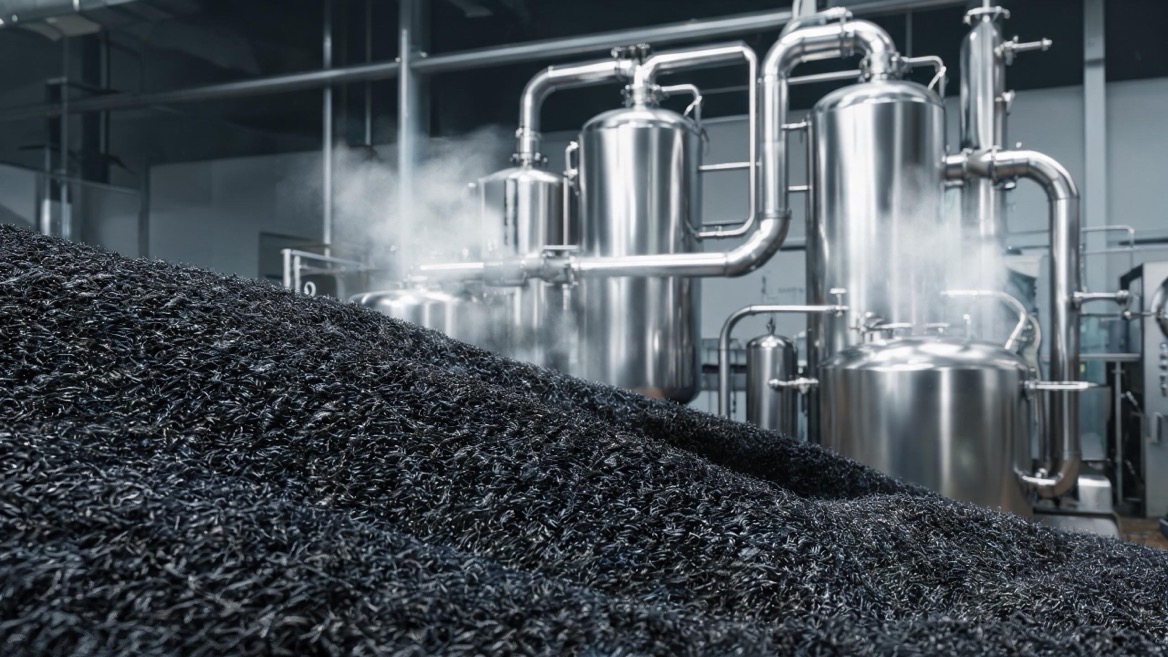
Activated carbon fiber is a fibrous adsorbent material with a highly developed pore structure. It is commonly supplied as activated carbon fiber cloth, felt, paper, woven fabric, nonwoven mat, or shaped filter media. When solvent-laden air passes through the fiber structure, VOC molecules are captured on the internal carbon surface through physical adsorption.
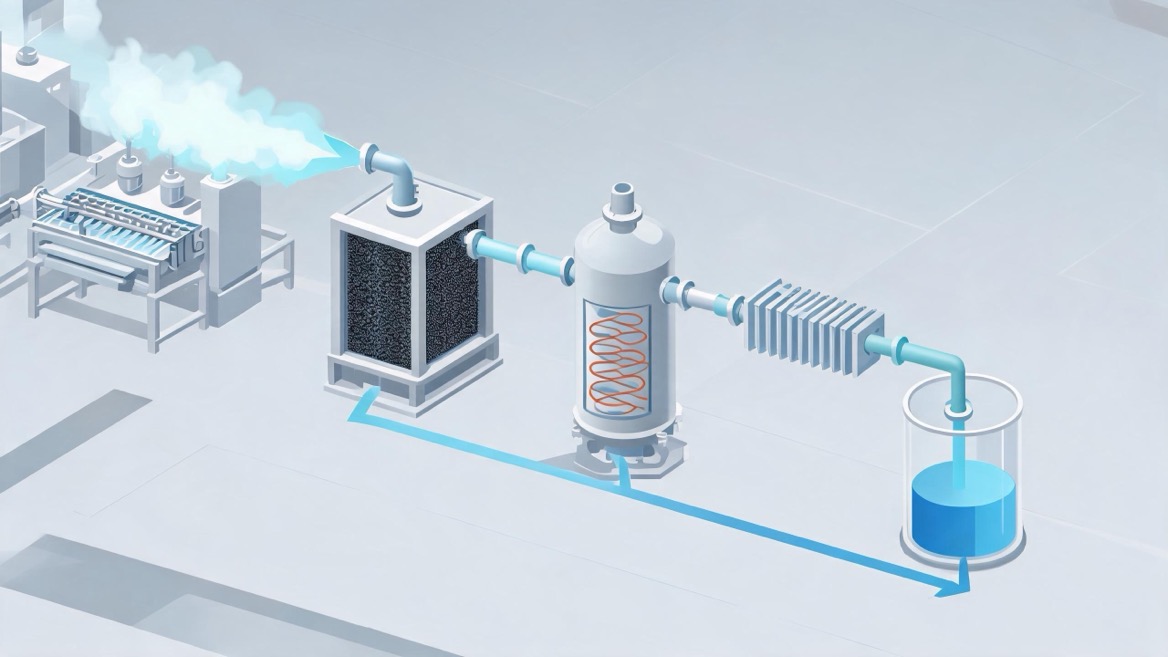
In a solvent recovery system, the cycle usually includes:
1. Adsorption — Solvent vapor is captured from the exhaust gas.
2. Saturation monitoring — The system detects breakthrough or reaches a planned cycle time.
3. Desorption — Heat, steam, vacuum, nitrogen, or a combined method releases the adsorbed solvent.
4. Condensation — The concentrated solvent vapor is cooled into liquid.
5. Separation and reuse — Water and solvent phases may be separated before the recovered solvent is returned to production or sent for further purification.
Unlike a one-time disposal filtration process, solvent recovery is designed around repeatable adsorption–regeneration cycles. The adsorbent must therefore provide not only high initial capacity, but also stable performance after repeated exposure to heat, moisture, solvent mixtures, and industrial contaminants.
Activated Carbon Fiber vs. Granular Activated Carbon
Both activated carbon fiber and granular activated carbon can remove VOCs from air streams. However, their pore accessibility, bed geometry, pressure drop, regeneration speed, and mechanical behavior differ substantially.
| Comparison Factor | Activated Carbon Fiber (ACF) | Granular Activated Carbon (GAC) |
| Physical form | Cloth, felt, paper, fabric, mat, cartridge media | Granules, crushed particles, fixed-bed media |
| Pore accessibility | Surface-oriented pore structure enables rapid mass transfer | Internal pore diffusion may be slower |
| Adsorption speed | Typically fast, especially for dynamic vapor capture | Effective but often slower under short contact time |
| Desorption speed | Can be rapid with optimized thermal, vacuum, or inert-gas regeneration | May require longer heating, steaming, cooling, and drying cycles |
| Pressure drop | Often low when correctly designed as a fiber bed | Depends on particle size, bed depth, dust loading, and gas velocity |
| System footprint | Can support compact modules and thin-bed designs | Usually requires deeper packed beds |
| Mechanical considerations | Requires proper support and handling to avoid deformation or fiber damage | Strong bulk-bed format, but attrition and dust formation can occur |
| Suitability for mixed streams | Requires detailed testing because competitive adsorption can be significant | Also requires testing, with broad established use in mixed VOC streams |
| Typical project fit | Fast-cycling systems, compact equipment, specialized capture modules | Conventional fixed-bed recovery units and high-volume industrial systems |
ACF is not automatically the best option for every solvent recovery project. Conventional activated carbon remains highly effective where the process has long residence time, established steam regeneration infrastructure, predictable solvent composition, and sufficient equipment space.
However, ACF can become especially attractive when the project requires rapid cycling, reduced bed depth, compact equipment, low resistance to airflow, or quick regeneration.
Why ACF Can Improve Solvent Recovery Performance
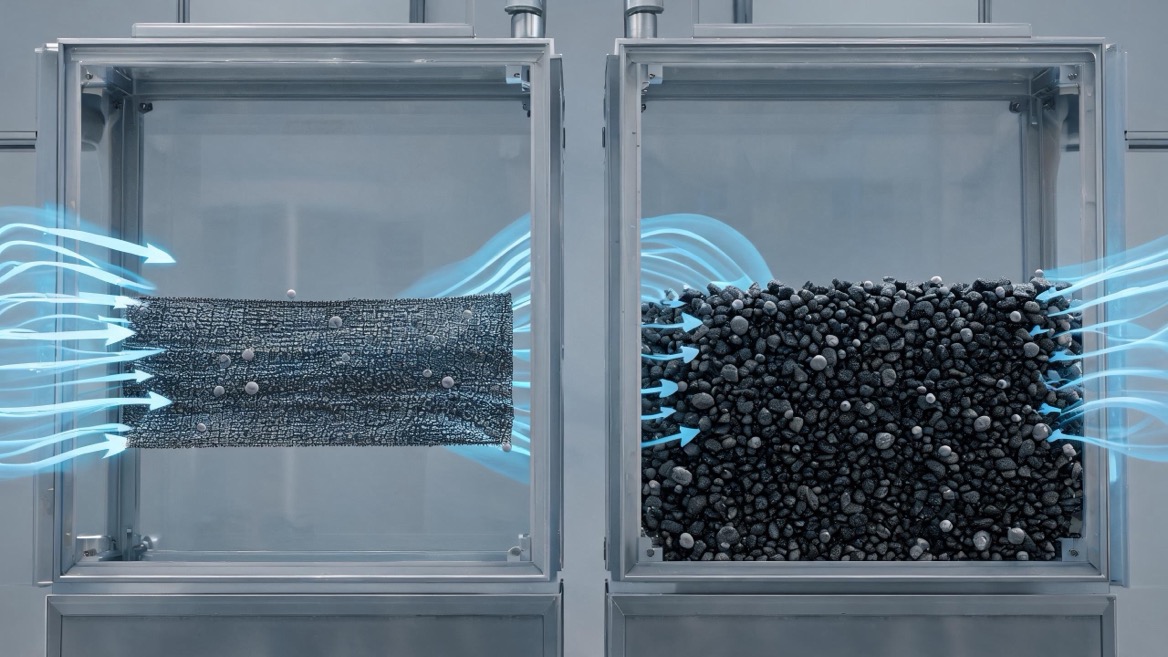
The major engineering advantage of activated carbon fiber lies in the accessibility of its adsorption sites. In a conventional granular carbon bed, solvent molecules must travel through particle pores before reaching internal adsorption surfaces. This internal diffusion can limit performance when gas velocity is high or contact time is short.
ACF places a large amount of active surface closer to the gas path. In practical terms, this can support faster vapor capture and faster release during regeneration.
Faster adsorption for variable solvent loads
Many factories do not produce a perfectly stable VOC stream. Solvent concentration can change with:
- Production speed
- Coating weight
- Dryer temperature
- Cleaning operations
- Batch formulation changes
- Shift schedules
- Equipment start-up and shutdown
- Intermittent solvent use
A properly selected ACF medium can respond efficiently to these fluctuating loads because solvent molecules can access its adsorption structure quickly. This is particularly relevant for intermittent emissions, short high-concentration peaks, and limited installation space.
Faster regeneration and shorter downtime
Regeneration performance strongly affects the economics of solvent recovery. If desorption is slow, the system may need more adsorbent beds, higher steam consumption, more heating energy, or longer standby periods.
ACF can support shorter regeneration cycles when the process is designed around the solvent's vapor pressure, boiling point, heat sensitivity, and safety requirements. Depending on the system configuration, regeneration may use:
- Steam stripping
- Hot inert gas
- Hot air, where safe and technically appropriate
- Vacuum desorption
- Temperature swing adsorption
- Combined temperature-vacuum desorption
Steam has long been used in industrial carbon recovery systems. After desorption, the steam-solvent mixture is condensed and separated. Hot nitrogen or low-oxygen inert gas can be selected where oxidation, flammability, or water contamination requires a different approach. Activated-carbon solvent recovery systems commonly use adsorption followed by regeneration and condensation to produce a reusable liquid stream.
Lower air-side resistance in compact designs
Exhaust fans consume energy continuously. A high-pressure-drop recovery system may increase electricity demand and disrupt process ventilation balance.
Because ACF can be arranged as thin layers, pleated elements, fabrics, or stacked modules, it can help designers build compact adsorption sections with controlled airflow resistance. Actual pressure drop depends on fiber density, media thickness, dust accumulation, face velocity, and housing configuration—not simply on whether the media is "fiber" or "granular."
For this reason, it is important to evaluate ACF based on a complete design package:
- Airflow volume
- VOC concentration range
- Temperature and humidity
- Allowable pressure drop
- Solvent composition
- Expected recovery target
- Regeneration method
- Required cycle time
- Available installation space
Solvents Commonly Considered for ACF Recovery
Activated carbon fiber can be used for the recovery of many organic solvent vapors. The viability of recovery depends on the solvent's adsorption characteristics, concentration, gas temperature, moisture level, and desired recovered-liquid quality.
| Industry | Typical Solvents | Recovery Objective |
| Printing and packaging | Ethyl acetate, ethanol, isopropanol, toluene | Reuse solvent and reduce VOC discharge |
| Coatings and paint | Toluene, xylene, acetone, MEK, butyl acetate | Recover process solvent from drying exhaust |
| Adhesives and tapes | Toluene, ethyl acetate, hexane, cyclohexanone | Control emissions and reduce material loss |
| Pharmaceuticals | Methanol, ethanol, acetone, isopropanol, ethyl acetate | Capture valuable solvents from process ventilation |
| Electronics | Acetone, IPA, PGMEA and other process solvents | Reduce vapor exposure and recover usable solvents |
| Chemical manufacturing | Aromatics, ketones, esters, alcohols, chlorinated solvents | Recover solvent and support closed-loop production |
Solvent recovery must be judged by more than removal efficiency. A plant may achieve high vapor capture but still have limited reuse value if the recovered liquid contains excessive water, mixed solvents, degradation products, oils, or process contaminants.
Recovered-solvent quality is a process-design issue, not just an adsorbent issue. Condenser design, separation equipment, solvent compatibility, and upstream exhaust control all influence whether the collected liquid can return to production.
ACF Selection Criteria for Solvent Recovery
In our experience with industrial carbon selection, the most common mistake is choosing media only by adsorption capacity. Capacity matters, but stable solvent recovery depends on a broader set of factors.
1. Identify the actual VOC composition
Do not design around a single "representative solvent" if the exhaust contains a mixture. Mixed streams can behave very differently from pure-vapor streams because compounds compete for adsorption sites.
A useful solvent-profile review should include:
- Main solvent names and percentages
- Expected concentration range
- Maximum concentration peaks
- Gas temperature
- Relative humidity
- Oxygen concentration
- Presence of oil mist, resin, plasticizer, dust, or acid gases
- Operating hours per day
- Required recovered-solvent purity
For example, a coating line using mainly ethyl acetate may require a different ACF pore distribution from a pharmaceutical exhaust stream containing alcohols, ketones, and moisture.
2. Match pore structure to molecular properties
Activated carbon fiber can be engineered with different pore characteristics. Smaller micropores can provide strong adsorption for certain low-molecular-weight VOCs, while larger transport pores can improve movement of larger molecules and support faster adsorption–desorption cycles.
The right media should balance:
- Working capacity, not only total capacity
- Adsorption rate
- Desorption rate
- Solvent selectivity
- Regeneration stability
- Mechanical durability
- Pressure-drop target
Working capacity is critical. It represents the amount of solvent that can be captured and then effectively released during normal cycling. A material with high total adsorption but difficult regeneration may create longer cycles and lower practical productivity.
3. Design for humidity and contamination
Water vapor can affect solvent adsorption, especially in streams containing polar compounds. Dust and oil mist can also block the adsorbent surface and reduce cycle stability.
For this reason, many industrial recovery systems benefit from upstream conditioning, such as:
- Particulate filtration
- Demisting
- Cooling
- Temperature stabilization
- Pre-separation of high-boiling contaminants
- Explosion-control measures where required
A clean, stable inlet stream generally extends adsorbent life and improves recovered-solvent quality.
Practical Comparison: When Should You Choose ACF?
| Application Condition | Recommended Direction | Reason |
| Limited installation space | Activated carbon fiber | Compact module and thin-bed potential |
| Rapid VOC concentration changes | Activated carbon fiber | Fast mass transfer can support quick response |
| Need for short regeneration cycles | Activated carbon fiber | Accessible pore structure can improve desorption kinetics |
| Large, stable exhaust volume with established SRU design | Granular or pelletized activated carbon | Proven fixed-bed format and broad industrial availability |
| Heavy dust or sticky aerosol load | Pretreatment plus robust carbon system | Protect the adsorbent before selecting media |
| High-value, reusable solvent | ACF or conventional activated carbon after pilot testing | Recovery economics depend on solvent value and purity |
| Complex multi-solvent exhaust | Laboratory and pilot evaluation | Competitive adsorption and separation must be verified |
| High humidity or water-sensitive recovery | Customized design and regeneration study | Moisture can affect adsorption and recovered-liquid quality |
The most reliable approach is application-based selection, not product-first selection. An adsorbent sample should be tested against the actual gas composition whenever the solvent mixture is complex, recovery value is high, or process risk is significant.
Expert Checklist Before Specifying an ACF System
Before selecting activated carbon fiber for solvent recovery, ask the following questions:
1. What is the normal and peak solvent concentration?
2. Is the exhaust continuous, batch-based, or intermittent?
3. Which solvents have real reuse or resale value?
4. What is the required emission-control target?
5. Can the process accept steam contact, or is dry regeneration necessary?
6. Is oxygen control required during regeneration?
7. What inlet pretreatment is needed for dust, oil mist, or moisture?
8. What recovered-solvent purity is needed for reuse?
9. How many adsorption beds or modules are needed for uninterrupted operation?
10. What data will trigger media replacement, regeneration adjustment, or maintenance?
A recovery system should use routine monitoring for inlet VOC loading, outlet breakthrough, bed temperature, pressure drop, regeneration conditions, and recovered-liquid composition. Activated carbon adsorption transfers gaseous pollutants from the gas stream to the solid adsorbent surface, while desorption can enable captured solvent to be recovered or managed downstream.
Why Customization Matters
A generic carbon product sheet rarely contains enough information for a solvent recovery decision. ACF performance depends on the interaction between the media and the full operating environment.
At Guangdong Tongke Activated Carbon Co., Ltd., we recommend evaluating activated carbon fiber and other activated carbon products based on application-specific parameters rather than relying only on standard specifications. This can include ACF form selection, pore-structure direction, basis weight or thickness, module configuration, and regeneration compatibility.
For industrial buyers, the most useful technical discussion begins with real process data. Share your solvent list, airflow, concentration range, temperature, humidity, existing recovery method, and reuse target. Our technical team can help assess whether activated carbon fiber, granular activated carbon, pelletized activated carbon, or a combined solution is the more practical option for your operation.
Start Your Solvent Recovery Evaluation
If your operation releases recoverable solvent vapors from coating, printing, adhesive production, chemical processing, pharmaceutical manufacturing, or electronics production, contact Guangdong Tongke Activated Carbon Co., Ltd. with your process data. We can help you compare activated carbon fiber with granular and pelletized activated carbon, identify suitable media forms, and develop a customized solution for solvent capture, regeneration, and recovery.
FAQ
1. Is activated carbon fiber better than granular activated carbon for solvent recovery?
Not always. Activated carbon fiber is often preferred for fast adsorption, rapid regeneration, compact systems, and controlled pressure drop. Granular activated carbon can be highly effective for conventional fixed-bed systems with stable exhaust conditions and established steam-regeneration infrastructure.
2. Can activated carbon fiber recover solvents for reuse?
Yes. ACF can capture solvent vapor and release it during regeneration. The desorbed vapor can then be condensed into liquid solvent. Whether it can be reused directly depends on solvent purity, water content, mixed-solvent composition, and process contamination.
3. Which regeneration method is best for ACF solvent recovery?
The best method depends on the solvent and process requirements. Steam is widely used, while hot inert gas, vacuum, and combined thermal-vacuum methods can be appropriate where water contamination, safety, or energy optimization is important.
4. Can activated carbon fiber treat mixed VOC streams?
Yes, but mixed streams should be evaluated carefully. Different solvents compete for adsorption sites and may produce a recovered liquid that requires separation or further purification. Pilot testing is recommended for high-value or complex solvent mixtures.
5. How long does activated carbon fiber last in a solvent recovery system?
Service life depends on regeneration frequency, operating temperature, solvent type, contaminants, mechanical handling, and inlet pretreatment. Clean inlet gas and well-controlled regeneration generally improve long-term cycle stability.
6. Is ACF suitable for high-temperature solvent exhaust?
It can be, but the exhaust may require cooling before adsorption. Higher gas temperatures generally reduce physical adsorption performance, so maintaining a suitable inlet temperature is important for solvent capture efficiency.
7. What information is needed to select ACF for an industrial project?
Provide the solvent composition, airflow, concentration range, temperature, humidity, operating hours, regeneration preference, emission target, available space, and desired recovered-solvent quality. This information supports accurate media and system selection.
References
1. [U.S. Environmental Protection Agency — Monitoring by Control Technique: Activated Carbon Adsorber]
2. [U.S. Environmental Protection Agency — Volatile Organic Compounds Recovery Seminar]
3. [American Chemical Society — Solvent Recovery by Steamless Temperature Swing Carbon Adsorption]
4. [National Center for Biotechnology Information — A New Desorption Method for Removing Organic Solvents from Activated Carbon]
5. [DEC Group — Activated Carbon for Solvent Recovery]
6. [DEC Group — Solvent Recovery Unit Engineering Guide]
7. [Kuraray — Solvent Recovery with Activated Carbon and Activated Carbon Fiber]


