Content Menu
● Why Carbon Media Matters in Respirators
● What Is Activated Carbon Fiber?
>> Core Properties of ACF
>> Where ACF Performs Best
● What Is Coconut Shell Activated Carbon?
>> Core Properties of Coconut Shell Carbon
>> Why It Is Common in Vapor Cartridges
● Activated Carbon Fiber vs Coconut Shell Carbon
● Adsorption Speed Versus Service Life
● Chemical Type Changes the Answer
>> Organic Vapors
>> Acid Gases, Ammonia, and Formaldehyde
>> Particulates Are Different
● Humidity, Temperature, and Breathing Rate
>> Humidity
>> Temperature
>> Breathing Rate
● A Practical Media Selection Process
● Expert Product-Development Insight: Hybrid Designs
● Common Selection Mistakes
● Choosing the Right Carbon for Your Respirator Filter
● FAQ
>> Is Activated Carbon Fiber better than coconut shell activated carbon for respirators?
>> Can coconut shell activated carbon remove organic vapors?
>> Can an ACF mask replace an organic vapor cartridge respirator?
>> Does an N95 respirator protect against solvent vapors?
>> How often should activated carbon cartridges be replaced?
>> Can activated carbon remove acid gases and ammonia?
>> What information should I provide when requesting respirator-grade activated carbon?
● References
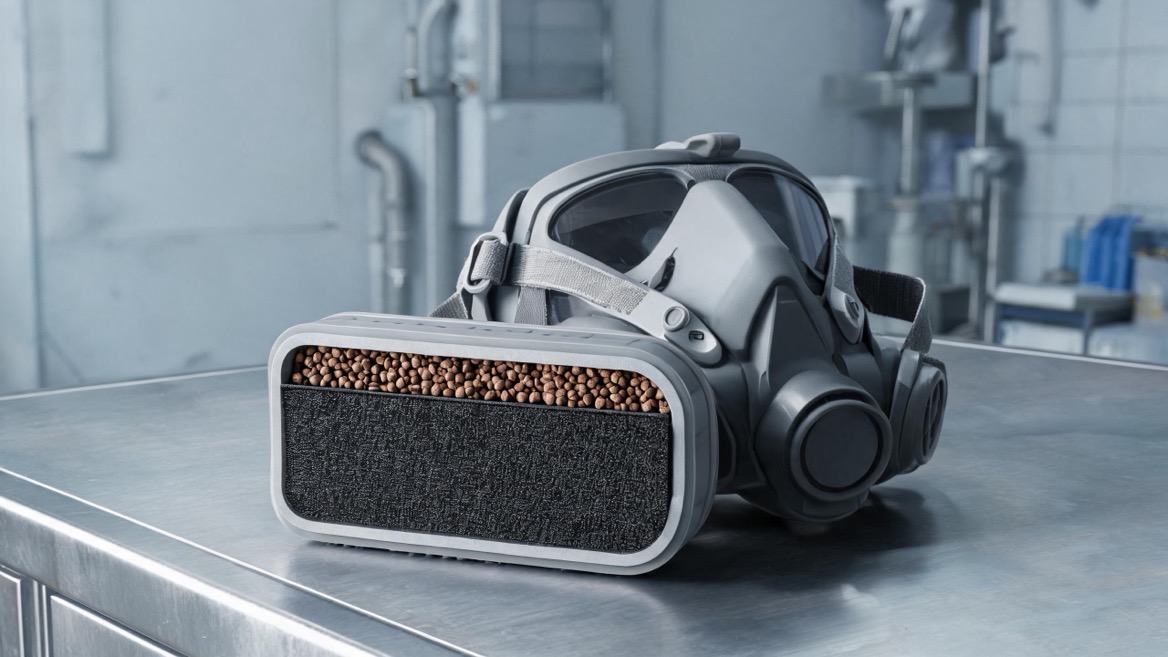
When selecting adsorbent media for respirator filters, Activated Carbon Fiber (ACF) and coconut shell activated carbon offer distinctly different performance profiles. ACF is valued for rapid adsorption and compact, thin-layer designs, while coconut shell carbon remains a practical choice for high-capacity granular beds used in organic vapor cartridges.
For manufacturers, safety teams, and respirator developers, the decision should not be based on surface area alone. The correct media depends on the target chemical, vapor concentration, humidity, airflow, cartridge geometry, breathing resistance, required service life, and applicable respirator approval requirements.
Why Carbon Media Matters in Respirators
Air-purifying respirators protect users by drawing contaminated air through particulate filters, gas/vapor cartridges, or combined filter-cartridge assemblies. For gases and vapors, activated carbon is the main adsorbent material inside the cartridge.
The carbon does not "filter" vapor in the same way that a mechanical filter captures dust. Instead, it removes molecules through adsorption: vapor molecules attach to the internal pore surfaces of the carbon.
In practical respirator use, an adsorbent medium must balance several requirements:
- Fast adsorption kinetics during inhalation
- Adequate working capacity before breakthrough
- Low pressure drop for comfortable breathing
- Stable packing and low dust release
- Compatibility with impregnation for reactive gases
- Consistent particle or fabric quality for repeatable cartridge production
- Suitability for the complete, approved respirator assembly
A respirator cartridge is only as effective as its complete design. Carbon type is important, but it is not the sole determinant of protection.
What Is Activated Carbon Fiber?
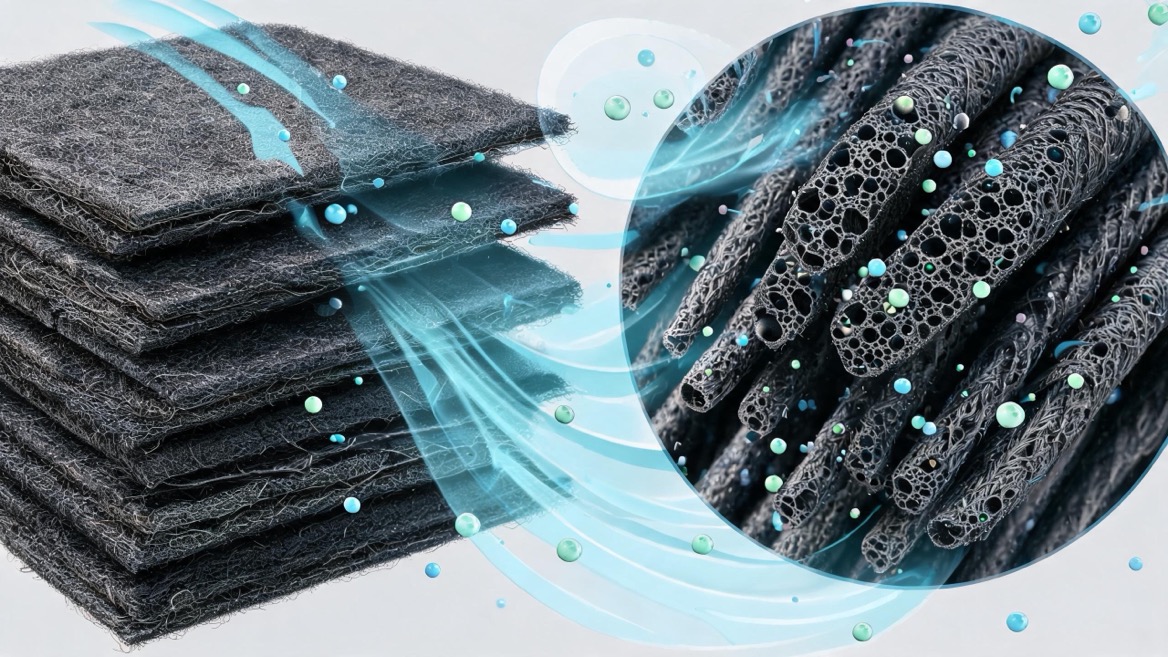
Activated Carbon Fiber is a fibrous adsorbent material produced from precursor fibers that are carbonized and activated. Unlike conventional granular activated carbon, ACF is supplied as a fabric, felt, paper, yarn, or other fiber-based structure.
Its defining feature is that much of its adsorption surface is highly accessible. This can support rapid uptake of certain volatile organic compounds, particularly where air contact time is short.
Core Properties of ACF
ACF commonly provides:
- High accessible surface area
- Fast vapor adsorption
- Thin and lightweight media construction
- Uniform sheet-like geometry
- Low risk of granule migration
- Potential for integration into flat respirator structures
- Good design flexibility for layered composite media
Research conducted for respiratory-protection applications found that ACF can provide rapid adsorption and may be suitable for thin filtering-facepiece designs intended for nuisance-level VOC conditions. However, the same body of research also emphasizes a key design limitation: an ACF layer may not contain enough adsorbent mass to deliver full-shift protection against higher organic-vapor exposures when used alone.
Where ACF Performs Best
From a product-development perspective, ACF is especially attractive when the design goal is:
- A thin respirator profile
- Fast capture of low-level VOCs
- A lightweight odor-reduction layer
- A hybrid media structure combining particle filtration and vapor adsorption
- Low bulk in disposable or compact protective products
- A pre-filter layer that improves short-contact-time adsorption
For example, a manufacturer designing a disposable mask for nuisance odors in painting preparation, low-intensity cleaning, or laboratory support activities may consider a carefully engineered ACF layer. However, that product should never be positioned as equivalent to a certified organic vapor cartridge unless the full respirator assembly has been tested and approved for the intended hazard.
What Is Coconut Shell Activated Carbon?
Coconut shell activated carbon is a granular adsorbent manufactured from coconut shells, an agricultural byproduct. It is widely used in air treatment, water purification, gold recovery, food processing, chemical purification, and respirator cartridges.
For respirator applications, coconut shell carbon is typically processed into controlled mesh sizes and packed into a cartridge or canister. Its pore structure is often strongly microporous, making it particularly useful for many low- and medium-molecular-weight volatile compounds.
Core Properties of Coconut Shell Carbon
Coconut shell activated carbon is often selected because it offers:
- High microporosity
- Strong adsorption of many organic vapors
- High bulk-bed capacity
- Reliable performance in packed cartridge designs
- Good mechanical hardness
- A renewable raw-material source
- Compatibility with impregnated-carbon formulations
- Flexible particle-size options for different cartridge designs
Granular coconut shell carbon is commonly used for low- to medium-molecular-weight, higher-volatility contaminants and broad odor-control duties. It can be used in shallow, moderate, or deep beds, depending on the equipment design and performance target.
Why It Is Common in Vapor Cartridges
In conventional organic vapor cartridges, carbon mass is critical. A deeper packed bed generally provides more adsorption capacity, provided that airflow distribution, pressure drop, carbon particle size, and contact time are properly managed.
This is where coconut shell activated carbon has a major advantage. A cartridge can hold a meaningful mass of granular adsorbent inside a controlled bed. That mass supports longer service life than a very thin carbon-fiber layer in many demanding industrial settings.
For a standard reusable half-mask or full-face respirator cartridge, granular coconut shell activated carbon is often the more practical base media for organic vapor protection.
Activated Carbon Fiber vs Coconut Shell Carbon
| Selection Factor | Activated Carbon Fiber | Coconut Shell Activated Carbon |
| Physical form | Fabric, felt, paper, yarn, or fiber mat | Granules, pellets, crushed particles |
| Adsorption speed | Often very fast because surface sites are highly accessible | Strong, but depends on particle size, bed depth, airflow, and pore structure |
| Carbon mass in compact designs | Often limited in thin media | Can be increased through cartridge-bed design |
| Typical respirator role | Thin odor-control layer, hybrid media, compact applications | Primary adsorbent in organic vapor cartridges and canisters |
| Pressure-drop design | Can support low-profile structures | Must be optimized through mesh size, bed depth, and packing |
| Dust and media movement | Low granule-migration risk | Requires proper screens, pads, and vibration-resistant packing |
| Impregnation potential | Possible, depending on fiber substrate and chemistry | Widely used as a base for impregnated gas-treatment carbons |
| Best fit | Low-level VOC adsorption where space is constrained | Higher-capacity gas and vapor cartridge applications |
| Production flexibility | Useful for converting, laminating, and layered media | Useful for filling, grading, and cartridge-specific formulations |
| Cost structure | Often higher per unit mass | Often more economical for bulk adsorption capacity |
Adsorption Speed Versus Service Life
One of the most important distinctions is the difference between adsorption kinetics and adsorption capacity.
Adsorption kinetics describes how quickly a contaminant is captured. Capacity describes how much contaminant the media can retain before it reaches breakthrough.
ACF can provide excellent rapid adsorption because vapor molecules can access much of the fiber's pore structure quickly. This feature is useful when residence time is extremely short, as occurs during a user's inhalation cycle.
However, rapid uptake does not automatically mean the longest service life. If the design contains only a small mass of ACF, the total amount of vapor it can retain may be limited.
Coconut shell carbon, when installed as a granular packed bed, may provide more adsorbent mass. That makes it better suited to applications where sustained organic-vapor capacity is required.
A useful way to think about this is:
- ACF can be the sprinter: quick initial capture in a thin format.
- Coconut shell carbon can be the endurance platform: greater practical bed mass for longer cartridge service.
Neither statement is universal. Actual results depend on the challenge chemical, concentration, humidity, temperature, breathing rate, cartridge construction, and defined breakthrough endpoint.
Chemical Type Changes the Answer
There is no single "best activated carbon" for every gas or vapor. Selection must begin with the contaminant.
Organic Vapors
For many solvent vapors, such as toluene, xylene, acetone, MEK, ethyl acetate, and paint-related VOCs, high-quality activated carbon is commonly used in organic vapor cartridges.
ACF has demonstrated measurable adsorption capacity for toluene, hexane, and MEK in respirator-oriented testing. In one study, different ACF materials showed toluene adsorption capacities ranging from 239 to 381 mg/g, while performance varied by chemical and fiber grade.
Coconut shell activated carbon is also widely used for VOC capture, especially where a granular cartridge bed provides sufficient carbon mass and contact time.
Acid Gases, Ammonia, and Formaldehyde
Base carbon alone may not be enough for reactive contaminants. These hazards may require impregnated activated carbon, in which chemical additives promote chemisorption or neutralization.
For these applications, a respirator developer must evaluate:
- The specific gas or vapor
- Target breakthrough concentration
- Impregnant chemistry
- Humidity sensitivity
- Carbon base material
- Cartridge configuration
- Applicable test method and approval pathway
Do not assume that an ordinary organic vapor carbon cartridge will protect against acid gases, ammonia, formaldehyde, carbon monoxide, or unknown chemical mixtures.
Particulates Are Different
N95, P100, and similar particulate filter classifications address aerosols and particles, not chemical gases or vapors. A particulate filter alone is not a substitute for a chemical cartridge. Air-purifying respirators may use filters, cartridges, canisters, or combined elements depending on the hazard.
Humidity, Temperature, and Breathing Rate
A carbon material may perform well in a laboratory challenge test yet behave differently in real use. Three operating variables are especially important.
Humidity
Water vapor competes for adsorption sites. High relative humidity can reduce the working capacity of activated carbon for some contaminants, especially polar compounds.
For humid production environments, the carbon evaluation should include realistic humidity conditions rather than dry-air screening only.
Temperature
Higher temperatures can reduce physical adsorption for many VOCs. A cartridge used in a hot industrial process area may have a shorter practical service life than the same cartridge used in a cooler environment.
Breathing Rate
A worker performing strenuous activity has a higher airflow rate through the cartridge. Faster airflow reduces contact time and can accelerate breakthrough.
This is why laboratory data should never be copied directly into a universal "hours of protection" claim.
A Practical Media Selection Process
For respirator brands and industrial distributors, the most reliable selection route is a structured evaluation rather than a one-material assumption.
1. Identify the exact contaminant. Obtain the chemical name, CAS number, vapor pressure, molecular weight, exposure concentration, and whether other contaminants are present.
2. Define the protection scenario. Confirm whether the product is intended for nuisance odor reduction, intermittent work, routine industrial exposure, emergency escape, or regulated workplace protection.
3. Choose the media format. Consider ACF for thin, fast-adsorption layers and coconut shell granular carbon for cartridge beds requiring greater carbon mass.
4. Evaluate impregnation needs. Determine whether the target gas requires a treated carbon rather than untreated activated carbon.
5. Test under realistic conditions. Include expected temperature, relative humidity, airflow, challenge concentration, and breakthrough criterion.
6. Validate pressure drop and comfort. A high-capacity bed that creates unacceptable breathing resistance may not be a workable design.
7. Set a replacement schedule. Cartridge replacement must be based on objective service-life information, use conditions, and relevant regulations—not odor detection alone.
Expert Product-Development Insight: Hybrid Designs
In our experience supporting industrial activated-carbon applications, the strongest respirator-media concept is often not an either-or choice.
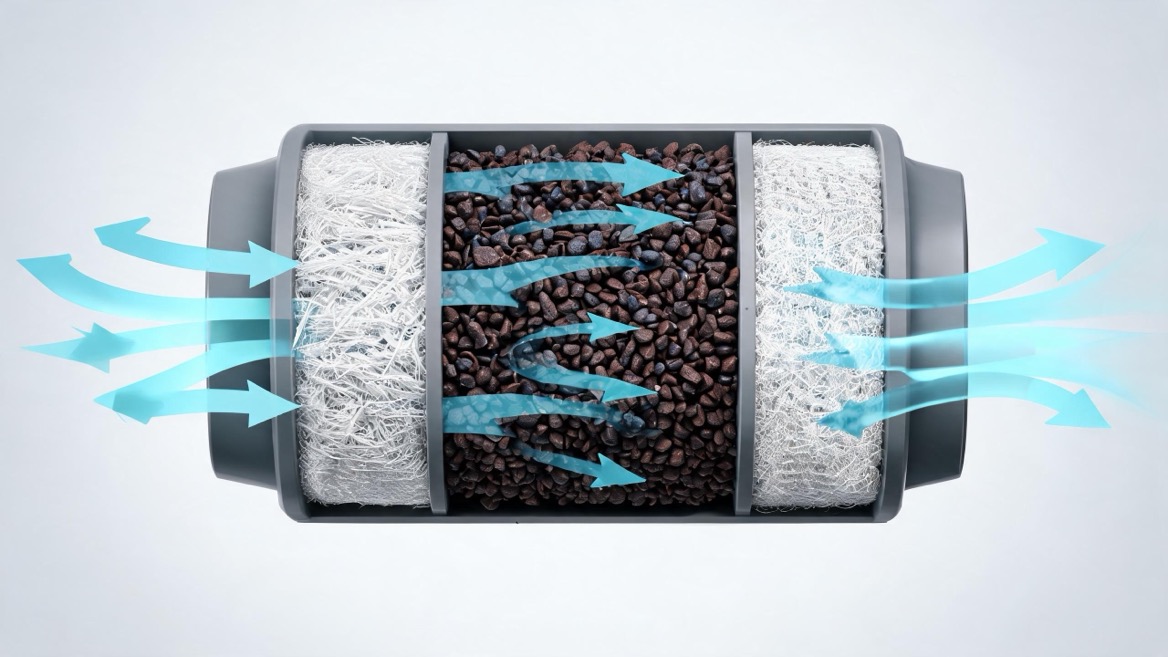
A hybrid design can combine:
- A particulate pre-filter
- A thin ACF layer for rapid initial VOC capture
- A granular coconut shell carbon bed for capacity
- A post-filter layer to control carbon fines
- An impregnated carbon section when the hazard requires chemical reactivity
This layered approach can help developers optimize response speed, capacity, structural stability, and user comfort.
For instance, a reusable cartridge designed for solvent-handling operations may use granular coconut shell carbon as the primary organic-vapor adsorbent. An ACF layer can be added where fast initial vapor uptake or a compact layered configuration adds measurable value. The final design still requires complete assembly testing and approval for its intended use.
Common Selection Mistakes
Avoid these frequent errors when sourcing carbon media for respirator filters:
- Choosing carbon only by iodine number
- Treating surface area as a direct replacement for service-life testing
- Assuming odor reduction equals occupational protection
- Using untreated carbon for reactive gases
- Ignoring humidity and high work-rate conditions
- Selecting carbon without checking particle size and bed pressure drop
- Promising a fixed cartridge life without defined conditions
- Treating a component material as proof of complete respirator approval
- Using a particle-only respirator for vapor hazards
- Failing to control carbon dust, packing density, and media leakage
Choosing the Right Carbon for Your Respirator Filter
Choose Activated Carbon Fiber when you need a thin, lightweight, fast-adsorption material for low-level VOC control, odor-reduction layers, laminated filter media, or compact hybrid structures.
Choose coconut shell activated carbon when you need a robust granular adsorbent bed with practical carbon mass, strong VOC adsorption potential, and flexibility for conventional organic vapor cartridge designs.
For high-performance respiratory protection, the best choice may be a tested combination of both materials rather than a single adsorbent.
Guangdong Tongke Activated Carbon Co., Ltd. supplies customized activated carbon solutions for air and gas purification applications. Contact our technical team to discuss your target contaminant, cartridge dimensions, carbon mesh range, adsorption requirements, and whether Activated Carbon Fiber, coconut shell activated carbon, impregnated carbon, or a hybrid media design is the right fit for your respirator project.
FAQ
Is Activated Carbon Fiber better than coconut shell activated carbon for respirators?
Not in every case. ACF can deliver rapid adsorption in thin media, while coconut shell carbon generally provides greater practical adsorbent mass in a granular cartridge bed. The right choice depends on chemical type, exposure concentration, cartridge design, airflow, and required service life.
Can coconut shell activated carbon remove organic vapors?
Yes. Properly selected coconut shell activated carbon is widely used to adsorb many organic vapors and odors. Actual performance depends on the vapor, bed depth, carbon grade, humidity, temperature, and airflow conditions.
Can an ACF mask replace an organic vapor cartridge respirator?
Not automatically. ACF may be used in thin odor-control or low-level VOC applications, but a complete respirator must be tested and approved for the specific hazard. Research indicates that ACF used alone in a filtering-facepiece format may not provide enough carbon mass for full-shift protection at higher organic-vapor exposure levels.
Does an N95 respirator protect against solvent vapors?
No. N95 respirators are designed for particulate filtration. Chemical gases and vapors require a properly selected gas/vapor cartridge or other appropriate respiratory protection.
How often should activated carbon cartridges be replaced?
There is no universal replacement interval. Cartridge service life varies with chemical concentration, humidity, temperature, airflow, work rate, cartridge size, and carbon formulation. Employers should use a documented change schedule based on objective information when no reliable end-of-service-life indicator is available.
Can activated carbon remove acid gases and ammonia?
Some acid gases and ammonia require specially impregnated carbon rather than standard untreated activated carbon. Select the cartridge and carbon formulation specifically for the identified gas.
What information should I provide when requesting respirator-grade activated carbon?
Provide the target chemical, concentration range, temperature, humidity, expected airflow, cartridge dimensions, desired mesh size, intended approval market, required service life, and whether the carbon will be untreated or impregnated.
References
1. [National Institute for Occupational Safety and Health — Filtration and Adsorption Performance of Activated Carbon Fiber for Respiratory Protection]
2. [Balanay et al. — Adsorption Characteristics of Activated Carbon Fibers in Respirator Cartridges]
3. [Summers et al. — Determination of Activated Carbon Fiber Adsorption Capacity for Organic Vapor Respiratory Protection]
4. [NIOSH — Air-Purifying Respirators and Respirator Information]
5. [Camfil — Granular Coconut Shell Activated Carbon]
6. [3M — Respirator Selection and Gas/Vapor Cartridge Guidance]
7. [OSHA/NIOSH Guidance — Respirator Requirements for Selected Chemicals]
8. [JJ Keller — Respirator Cartridge Change Schedule Guidance]


