Content Menu
● Understanding Activated Carbon Testing
● Why Activated Carbon Testing Matters
● Key Performance Parameters for Activated Carbon
>> Iodine Number
>> BET Surface Area
>> Pore Structure and Methylene Blue Value
>> Hardness and Abrasion Resistance
>> Ash Content and Purity
>> Moisture Content
>> Apparent (Bulk) Density and Particle Size
● Standard Test Methods for Activated Carbon
>> ASTM and Other Standards
>> Laboratory Bench Testing vs. Dynamic Testing
● Practical Steps to Test Activated Carbon in Your Plant
>> Step 1 – Visual and Sensory Inspection
>> Step 2 – Core Laboratory Quality Tests
>> Step 3 – Application-Specific Performance Testing
>> Step 4 – Online Monitoring and Replacement Strategy
● Matching Activated Carbon Testing to Different Applications
>> Water Treatment Activated Carbon
>> Air and Gas Purification Activated Carbon
>> Food, Beverage, and Pharmaceutical Grade Activated Carbon
● Advanced and Emerging Approaches to Activated Carbon Testing
● Conclusion
● FAQ – Activated Carbon Testing
>> 1. How often should I test my activated carbon?
>> 2. Which test is most important for activated carbon quality?
>> 3. Can I test activated carbon performance on-site without a full laboratory?
>> 4. How do I know when to replace activated carbon in my system?
>> 5. Does testing differ between powdered and granular activated carbon?
● Citations:
Activated carbon testing is essential to ensure stable adsorption performance, safety, and regulatory compliance in industrial water treatment, air and gas purification, food and beverage processing, chemical production, and pharmaceutical manufacturing. By applying structured test methods, you can verify that each batch of activated carbon delivers the capacity, purity, and mechanical strength required by your process.
Understanding Activated Carbon Testing
Testing activated carbon means evaluating its adsorption capacity, pore structure, purity, mechanical properties, and real-world performance under operating conditions. A complete testing program combines standardized laboratory methods with application-specific pilot or on-site tests, so that activated carbon users can make data-driven decisions about product selection, system design, and replacement intervals.
Well-designed activated carbon testing programs typically focus on these categories:
- Adsorption capacity indicators (iodine number, methylene blue value, specific surface area).
- Pore structure and surface chemistry of activated carbon.
- Mechanical properties, especially hardness and abrasion resistance.
- Purity indices such as ash content, moisture, and leachable contaminants.
- Hydraulic and operational behavior in full-scale systems.
Why Activated Carbon Testing Matters
Reliable testing of activated carbon is not just a laboratory exercise; it directly affects operating cost, product quality, and environmental compliance. If activated carbon is under-performing, contaminants may break through into finished water, process streams, or emissions, causing quality complaints or regulatory violations. Testing activated carbon before and during service helps prevent these outcomes.
Key benefits of proper activated carbon testing include:
- Verifying that incoming activated carbon meets technical data sheet and purchase specifications.
- Comparing the performance of different activated carbon grades to select the most cost-effective option.
- Optimizing bed design, contact time, and change-out intervals in water and air treatment units.
- Documenting quality control for audits and certifications in drinking water, food, and pharmaceutical applications.
- Supporting troubleshooting when systems with activated carbon experience unexpected breakthrough or pressure drop.
Key Performance Parameters for Activated Carbon
Iodine Number
Iodine number is one of the most widely used indicators of activated carbon activity, especially for liquid-phase adsorption. It measures how many milligrams of iodine can be adsorbed per gram of activated carbon under controlled conditions, and it correlates with the amount of micropore surface area available for adsorption.
Important points about iodine number:
- Higher iodine number generally means higher micropore volume and higher overall adsorption capacity.
- Typical commercial activated carbon products may show iodine numbers roughly in the range of 600–1450 mg/g depending on raw material and activation.
- Many water treatment applications specify a minimum iodine number for activated carbon (for example 900–1100 mg/g) to ensure sufficient capacity.
- Iodine number is especially useful as a quick comparative measure between different batches or suppliers of activated carbon.
BET Surface Area
BET (Brunauer–Emmett–Teller) surface area analysis uses gas adsorption (usually nitrogen) to quantify the total internal surface area of activated carbon. Because adsorption occurs on surfaces, the enormous internal area of pores in activated carbon is closely linked to its performance.
Practical notes on BET surface area:
- High-quality water and air treatment activated carbon often reaches 1000–1500 m²/g or more.
- BET surface area alone does not describe which molecules will be adsorbed; pore size distribution and surface chemistry must also be considered.
- BET analysis is usually performed in specialized laboratories and is often used along with iodine number and methylene blue tests to build a complete picture of activated carbon performance.
Pore Structure and Methylene Blue Value
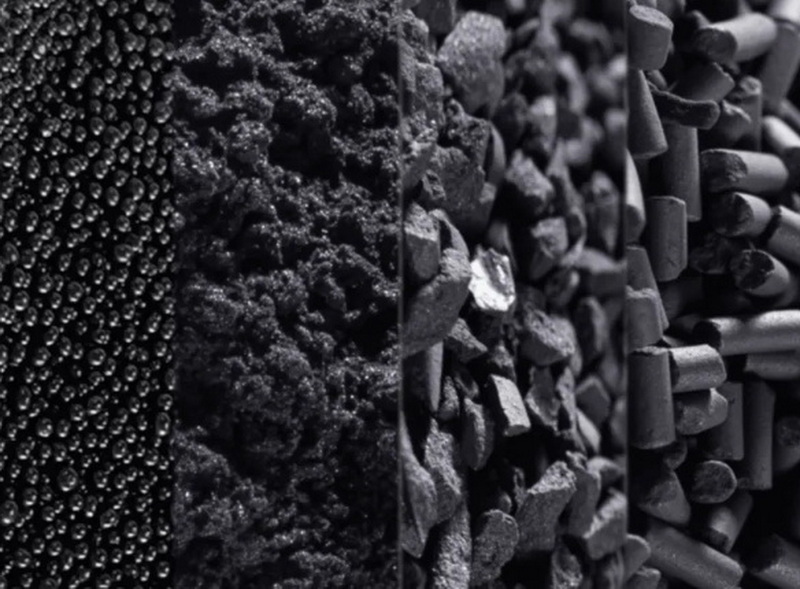
The pore structure of activated carbon is usually described in terms of micropores, mesopores, and macropores. The distribution and volume of each pore type determine which contaminants can enter the pores and be adsorbed effectively.
Methylene blue value is a commonly used test that reflects the mesopore capacity of activated carbon, especially for larger organic molecules and dye-like species. In practice:
- Micropores in activated carbon are critical for adsorption of small organic molecules and many gases.
- Mesopores provide transport pathways and capacity for larger molecules, colors, surfactants, and certain industrial contaminants.
- Combining iodine number (micropore indicator) and methylene blue value (mesopore indicator) gives a more complete evaluation of activated carbon for liquid-phase applications.
Hardness and Abrasion Resistance
Hardness describes how well granular activated carbon (GAC) resists breakage, attrition, and the generation of fines during handling, transport, loading, and backwashing. Abrasion resistance is particularly important in pressurized filters and large vessels where activated carbon is subject to repeated hydraulic or pneumatic stress.
For activated carbon users, hardness matters because:
- Low hardness activated carbon tends to generate dust and small particles that can cause pressure drop, channeling, and loss of bed depth.
- High hardness activated carbon maintains particle size and shape, which supports stable flow distribution and predictable contact time.
- Coconut shell-based activated carbon is often favored in demanding applications due to its naturally high mechanical strength.
Ash Content and Purity
Ash content measures the inorganic mineral residue remaining after complete burning of activated carbon at high temperature. These mineral components originate from the raw material and can occupy pore volume, influence pH, and introduce unwanted ions into treated fluids.
Typical considerations about ash in activated carbon:
- Many general-purpose activated carbons fall in the range of roughly 5–15% ash, but premium products for drinking water or food may have significantly lower ash content.
- High ash levels reduce the effective carbon content and can negatively affect adsorption capacity.
- Acid-washed low-ash activated carbon is widely used in sensitive applications such as sugar refining, beverage polishing, and pharmaceutical purification where low mineral content is required.
Moisture Content
Moisture content indicates how much water is present in the delivered activated carbon. Because activated carbon is hygroscopic, it can absorb moisture during storage and transport, which affects its apparent weight and can influence handling and dosing.
Key points:
- Moisture is usually determined by drying a representative sample of activated carbon in an oven or using a solvent extraction method for heat-sensitive products.
- Excess moisture reduces the net amount of dry activated carbon in each kilogram or bag, potentially changing the dosage required to reach target performance.
- Controlling storage conditions and keeping packaging intact help maintain stable moisture content of activated carbon.
Apparent (Bulk) Density and Particle Size
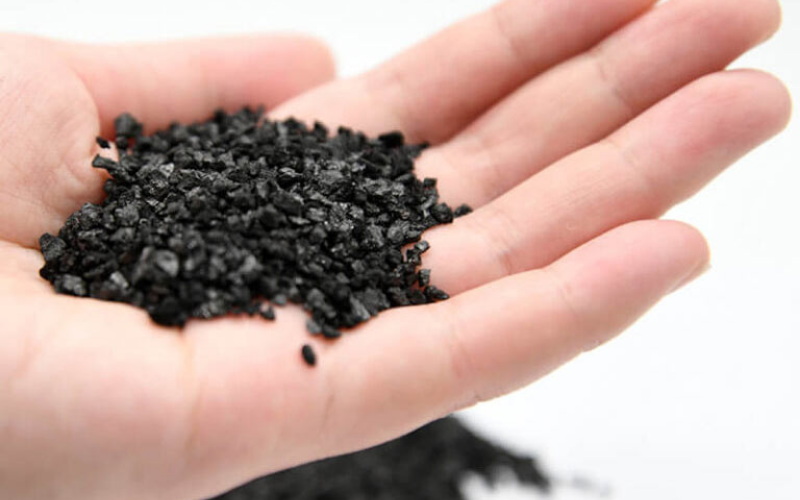
Apparent density, also called bulk density, measures the mass of activated carbon that occupies a specific bed volume under defined packing conditions. Particle size distribution characterizes the range and proportion of particle sizes in a batch of granular or powdered activated carbon.
These parameters are critical for system design:
- Bulk density determines how much activated carbon will be needed to fill a given filter or vessel volume.
- Particle size affects pressure drop, contact time, and kinetics of adsorption. Smaller particles provide faster kinetics but higher pressure loss, while larger particles reduce pressure drop but may require longer contact time.
- Consistent particle size distribution allows reliable prediction of hydraulic behavior and performance across batches of activated carbon.
Standard Test Methods for Activated Carbon
ASTM and Other Standards
Internationally recognized test standards allow activated carbon manufacturers and users to speak the same technical language. ASTM standards are among the most widely referenced for activated carbon, especially in North America.
Common ASTM methods relevant to activated carbon testing include:
- Iodine number (ASTM D4607) for assessing activation level and micropore capacity.
- Moisture in activated carbon (ASTM D2867).
- Apparent density of activated carbon (ASTM D2854).
- Particle size distribution of granular activated carbon (ASTM D2862).
- Total ash content of activated carbon (ASTM D2866).
- Ball-pan hardness of activated carbon (ASTM D3802).
- Carbon tetrachloride activity (ASTM D3467) for gas-phase capacity.
- pH of activated carbon in water contact (ASTM D3838).
- Practices for determining adsorptive capacity by aqueous or micro-isotherm techniques (ASTM D3860, D5919).
- Standard guides for gas-phase testing and rapid small-scale column tests relevant to activated carbon selection.
Using such methods ensures that results from different laboratories and suppliers are comparable, and helps buyers of activated carbon write clear, enforceable specifications.
Laboratory Bench Testing vs. Dynamic Testing
Laboratory tests on activated carbon can be divided roughly into static (batch) tests and dynamic (flow-through) tests:
- In static tests, a known mass of activated carbon is mixed with a solution or gas containing a known concentration of contaminant. After equilibrium is reached, the remaining concentration is measured to calculate adsorption capacity and isotherms.
- In dynamic tests, contaminated water or gas flows through a packed bed of activated carbon, and outlet concentration is measured over time to generate breakthrough curves that closely resemble real operating conditions.
Static tests are rapid and lower cost, making them useful for routine quality control on activated carbon. Dynamic tests require more equipment and time but provide better prediction of full-scale performance and bed life.
Practical Steps to Test Activated Carbon in Your Plant
Step 1 – Visual and Sensory Inspection
Before sending samples of activated carbon to the lab, conduct basic visual and sensory checks. Though simple, these inspections can quickly identify obvious problems and prevent nonconforming batches of activated carbon from being used.
Practical checks include:
- Confirm that the activated carbon granules have consistent color and appearance with no unusual discoloration.
- Inspect for excessive dust, broken particles, or foreign materials in bags or containers of activated carbon.
- Smell the activated carbon to detect unusual odors that might indicate contamination or improper storage.
- Sample multiple bags or points from a silo to collect a representative composite sample of activated carbon for further testing.
Step 2 – Core Laboratory Quality Tests
For each batch of activated carbon, core quality tests should verify that the material meets agreed specifications. These tests may be performed in an in-house quality control lab or by an independent third-party laboratory.
Typical core tests for activated carbon include:
- Iodine number to confirm basic adsorption capacity.
- BET surface area to validate internal surface development of activated carbon.
- Ash content, moisture content, and apparent density for purity and consistency.
- Hardness and abrasion resistance for mechanical stability of granular activated carbon during handling and operation.
- Particle size distribution to ensure that the activated carbon mesh size is suitable for the design pressure drop and contact time.
Recording all results and comparing them against supplier certificates of analysis helps maintain traceability and continuous improvement for activated carbon usage.
Step 3 – Application-Specific Performance Testing
Beyond generic quality parameters, application-specific testing evaluates how activated carbon behaves under real process conditions. Performance testing should be designed around the target contaminants, operating temperatures, pH ranges, and flow rates of the actual system.
For water treatment applications with activated carbon:
- Conduct column tests where water containing the relevant contaminants passes through a small-scale bed of activated carbon at the same superficial velocity and empty bed contact time as the full-scale system.
- Measure breakthrough curves for key indicators such as TOC, COD, chlorine, taste and odor compounds, pesticides, or micro-pollutants, depending on the application.
- Use the resulting data to estimate the service life of the activated carbon bed and set preliminary replacement or regeneration intervals.
For air and gas purification applications using activated carbon:
- Test under realistic temperature, humidity, and contaminant concentration conditions.
- Evaluate removal efficiency and capacity of activated carbon for volatile organic compounds (VOCs), solvents, odors, or hazardous gases.
- Pay special attention to the impact of humidity, as water vapor can occupy the pore volume of activated carbon and reduce adsorption capacity for organic contaminants.
Step 4 – Online Monitoring and Replacement Strategy
Once activated carbon has been loaded into full-scale systems, ongoing monitoring is crucial to maintain performance and protect treated water, process streams, or emissions. Without monitoring, even high-quality activated carbon can unexpectedly reach saturation and allow breakthrough.
Common monitoring practices for systems with activated carbon include:
- Regular sampling of influent and effluent to track contaminant levels and detect early signs of breakthrough.
- Continuous or periodic measurement of pressure drop across activated carbon beds to detect plugging, fouling, or excessive fines generation.
- Monitoring temperature, flow, and other operating parameters that may shorten or extend the life of activated carbon.
- Developing replacement or reactivation schedules based on a combination of time-based planning and performance data from sampling and online instruments.
Over time, historical data about your system and activated carbon performance can be used to refine the frequency of testing and optimize the total cost of ownership.
Matching Activated Carbon Testing to Different Applications
Water Treatment Activated Carbon
In municipal and industrial water treatment, activated carbon is used for removing organic compounds, disinfection by-product precursors, chlorine or chloramine, taste and odor compounds, and specific synthetic chemicals. Testing activated carbon for water treatment must consider not only capacity but also purity and safety.
Key focus points:
- Iodine number, BET surface area, and pore structure to ensure sufficient adsorption performance.
- Ash content, leachable metals, and pH to verify that activated carbon does not introduce unwanted substances into drinking water.
- Static and dynamic tests (e.g., rapid small-scale column tests) to estimate bed life under realistic water quality conditions.
- Compliance with relevant drinking water standards, certifications, or guidelines in your target markets.
Air and Gas Purification Activated Carbon
In exhaust gas treatment, odor control, and VOC removal, activated carbon performance depends on gas-phase isotherms, humidity conditions, and bed design. Testing for gas applications emphasizes vapor-phase capacity and stability of activated carbon.
Considerations include:
- Pore size distribution and surface chemistry tailored to specific target compounds.
- Gas-phase capacity tests such as carbon tetrachloride activity or butane working capacity for appropriate activated carbon grades.
- Hardness and abrasion resistance to withstand high-flow, cyclic loads, and regeneration cycles.
- Performance testing at different humidity levels to evaluate how water vapor may occupy pores of activated carbon and reduce organic adsorption.
Food, Beverage, and Pharmaceutical Grade Activated Carbon
In sugar refining, edible oil purification, beverage decolorization, and pharmaceutical production, activated carbon is in direct contact with high-value products and final consumable goods. As a result, testing requirements for activated carbon in these sectors are more stringent.
Typical testing focus:
- Very low ash content and low soluble impurities to avoid contamination and off-flavors.
- Controlled pH and conductivity of activated carbon extracts to maintain product stability.
- Specific performance tests for color removal, off-flavor reduction, or impurity removal for each process.
- Compliance of activated carbon with applicable pharmacopeia or food-grade regulations.
Advanced and Emerging Approaches to Activated Carbon Testing
In addition to conventional tests, more advanced or specialized methods are increasingly being used to evaluate activated carbon for critical applications:
- Detailed adsorption isotherms for specific contaminants in water or gas, allowing more precise modeling of bed performance.
- Rapid small-scale column tests that accelerate evaluation of multiple activated carbon candidates under conditions that mimic full-scale behavior.
- Comprehensive evaluation frameworks that combine iodine number, hardness, dynamic performance, and other parameters into a multi-criteria decision model.
- Media life analysis services that interpret sample testing from operating beds of activated carbon to estimate remaining life and optimize change-out timing.
These advanced techniques can provide a competitive edge for plants that rely heavily on activated carbon and need to control operating cost and environmental risk.
Conclusion
Testing activated carbon correctly is the foundation for achieving stable, safe, and cost-effective adsorption in water treatment, air and gas purification, food and beverage processing, chemicals, and pharmaceuticals. By combining routine quality control tests such as iodine number, BET surface area, ash content, hardness, moisture, and density with application-focused dynamic tests and on-line monitoring, you can build a robust quality assurance program for activated carbon.
A well-structured activated carbon testing strategy allows you to compare suppliers, select the right grade of activated carbon for each application, design efficient adsorption systems, and plan timely replacement or regeneration. Whether you operate a municipal water plant, a chemical facility, a food factory, or a pharmaceutical production line, disciplined testing and monitoring of activated carbon will help protect product quality, human health, and regulatory compliance.
Contact us to get more information!
FAQ – Activated Carbon Testing
1. How often should I test my activated carbon?
The testing frequency depends on the criticality of your process and regulatory requirements, but many facilities test each new batch of activated carbon and perform routine monitoring during operation. For high-risk applications such as drinking water treatment, it is common to combine batch testing of activated carbon with regular effluent sampling and periodic performance checks.
2. Which test is most important for activated carbon quality?
There is no single “universal” test, but iodine number is one of the most important parameters because it reflects the overall activation level and micropore capacity of activated carbon. However, relying only on iodine number is risky; you should also evaluate ash content, moisture, hardness, pore structure, and, most importantly, application-specific performance of the activated carbon under real conditions.
3. Can I test activated carbon performance on-site without a full laboratory?
Yes, basic on-site testing of activated carbon is possible and very helpful. You can perform simple color removal tests, chlorine removal tests, or small-scale column trials, and you can monitor effluent quality and pressure drop to assess the condition of the activated carbon bed. For more sophisticated analyses such as BET surface area or detailed ash composition, samples of activated carbon can be sent to external laboratories.
4. How do I know when to replace activated carbon in my system?
The most reliable indicator is breakthrough of target contaminants in the treated water or gas downstream of the activated carbon bed. When concentrations start to rise toward or above specification limits, the activated carbon is becoming saturated. Rising pressure drop, excessive fines, or visual signs of fouling in the activated carbon bed are also important operational signals that replacement or regeneration is necessary.
5. Does testing differ between powdered and granular activated carbon?
Powdered activated carbon (PAC) and granular activated carbon (GAC) share many core tests such as iodine number, ash content, and moisture, but they are used differently in practice. GAC is typically tested for hardness and particle size distribution and is evaluated using dynamic column tests because it operates in fixed or moving beds. PAC is dosed directly into liquids, so testing often focuses on batch dose–response performance and ease of separation rather than long-term bed behavior.
Citations:
1. https://contitesting.com/astm-d4607/
2. https://www.astm.org/d4607-14r21.html
3. https://www.analytice.com/en/astm-d4607-determination-of-iodine-value/
4. https://infinitalab.com/astm/determination-of-iodine-number-of-activated-carbon-astm-d4607/
5. https://wcponline.com/2013/06/03/testing-tips-activated-carbon-users-part-1/
6. https://wcponline.com/2001/09/15/lab-testing-astm-awwa-test-methods-evaluating-activated-carbon/
7. https://pacslabs.com/activated-carbon/astm-method-numbers/
8. https://www.activatedcarbon.org/wp-content/uploads/2025/02/Test_method_for_Activated_Carbon_86.pdf
9. https://heycarbons.com/a-guide-to-activated-carbon-parameters-iodine-value-ph-methylene-blue-specific-surface-area-etc/
10. https://heycarbons.com/activated-carbon-testing-standards/
11. https://www.keiken-engineering.com/news/how-is-activated-carbon-made-and-methods-to-check-the-quality-of-carbon-active-para-tral
12. https://www.carbonyihang.com/Key-Considerations-for-Activated-Carbon-Testing-for-Water-Purification-in-Industry
13. https://carbons.ir/en/what-is-the-ash-content-of-activated-carbon/
14. https://westernadsorbents.com/importance-of-activated-carbon-testing-standards/
15. https://epslabs.com/carbon-testing/
16. https://recofiltration.com/media-life-analysis
17. https://services.jacobi.net/design-selection-of-air-gas-treatment-with-industrial-filters/
18. https://www.epa.gov/air-emissions-monitoring-knowledge-base/monitoring-control-technique-activated-carbon-adsorber


