
Language
Views: 212 Author: Tongke Activated Carbon Publish Time: 2026-08-01 Origin: Site


Content Menu
● What Is Channeling in a GAC Filter Bed?
● Channeling vs. Normal Filter Saturation: Key Differences
● Why Channeling Happens: The Root Causes
● The Engineering Ratio That Prevents Channeling
● Step-by-Step: How to Prevent Channeling in Your GAC Filter
● Why Channeling Is Especially Critical in Multi-Sector Applications
● Practical Case Consideration: Diagnosing Channeling in the Field
● Choosing the Right Custom GAC Solution
Channeling is one of the most overlooked yet costly failures in granular activated carbon (GAC) filter systems. When water or gas finds the path of least resistance through a carbon bed, large sections of media go unused — and contaminant breakthrough follows quickly behind it.
At Guangdong Tongke Activated Carbon Co., Ltd., we've spent years supplying custom activated carbon solutions to water treatment plants, air purification facilities, food and beverage processors, and pharmaceutical manufacturers across the globe. This guide breaks down exactly why channeling happens, how it compares to other GAC filter failure modes, and the field-proven engineering steps that stop it before it starts.
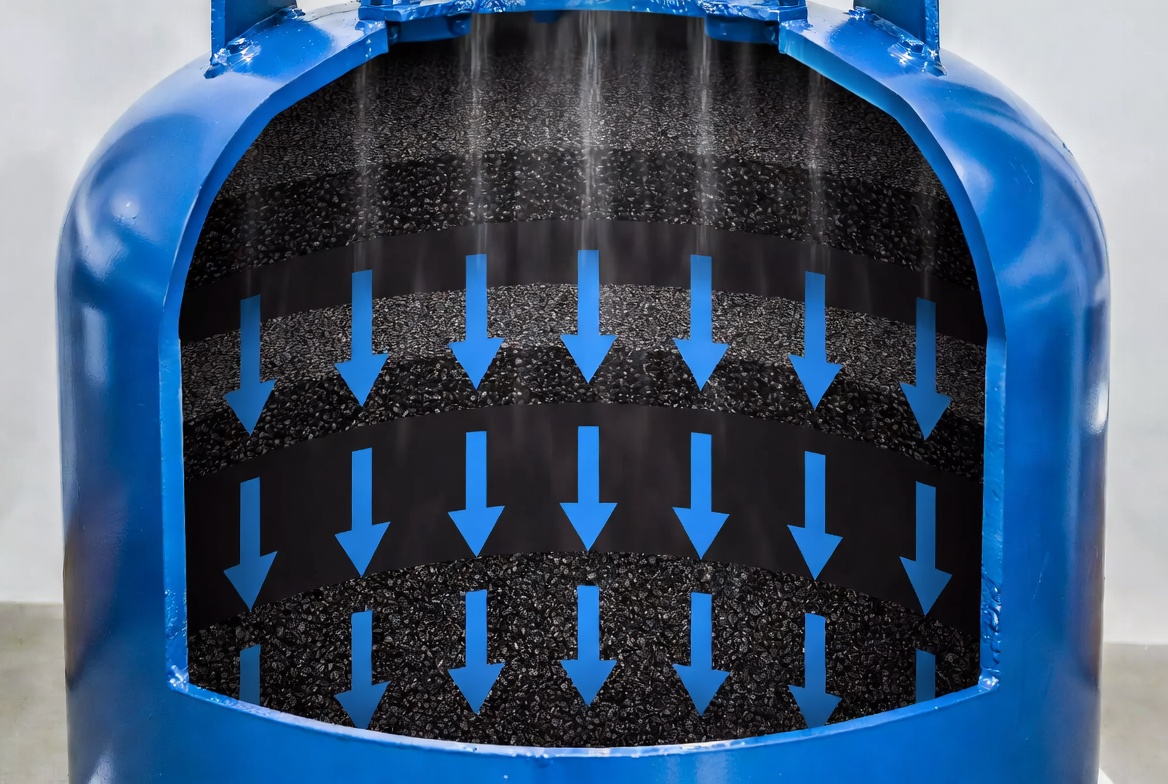
Channeling occurs when fluid — water or air — carves preferential pathways through a carbon bed instead of flowing evenly across the entire media surface. The result is uneven contact time, meaning some carbon granules never see the contaminant stream at all.
This is fundamentally different from simple carbon exhaustion. Exhaustion means the media has run out of adsorption capacity everywhere. Channeling means most of the bed still has capacity — it's just never being used.
Understanding how channeling differs from standard media saturation helps operators diagnose the right problem before wasting money on premature carbon replacement.
| Factor | Channeling | Normal Saturation |
|---|---|---|
| Cause | Uneven flow distribution, poor packing, low flow rate | Full adsorption capacity reached uniformly |
| Timing | Can occur early, even with fresh carbon | Occurs gradually over the media's rated service life |
| Detection | Early breakthrough despite "fresh" carbon | Predictable breakthrough matching design calculations |
| Fix | Re-pack bed, adjust flow rate, correct mesh size | Replace or regenerate spent carbon |
| Bacterial risk | High — stagnant pockets promote bacterial growth | Lower if flow remains distributed |
Most channeling problems trace back to one of five design or operational issues. Recognizing these early prevents the downstream contamination risks that channeling creates.
- Undersized flow distribution systems that dump fluid unevenly onto the bed surface
- Improper mesh size selection, where mismatched granule sizing creates gaps and voids
- Low or inconsistent flow rates, which allow fluid to seek the easiest route rather than saturating the full bed
- Insufficient bed depth relative to media particle size, disrupting the depth-to-effective-size ratio engineers rely on
- Poor initial packing or settling, often from inadequate backwashing during commissioning
Water treatment engineers commonly reference the L/de ratio — bed depth (L) divided by the effective size of the filter media (de) — to design channeling-resistant systems.
Recommended benchmarks include:
1. Minimum for standard filtration: L/de greater than 1,000
2. Recommended range for reliable performance: L/de between 1,200 and 1,500
3. Challenging water sources with heavy contaminant loads: L/de exceeding 1,800
Systems designed below these thresholds are statistically far more prone to channeling failures, regardless of how high-quality the carbon itself is.
Preventing channeling is not a single fix — it's a combination of correct design, disciplined operation, and routine maintenance.
Step 1: Select the correct mesh size for your application. Coarser mesh (8x30) suits high-flow industrial applications, while finer mesh (12x40 or 20x50) suits precision municipal or pharmaceutical-grade filtration.
Step 2: Maintain proper bed depth. A typical carbon bed should run 30 to 36 inches deep for most water treatment applications, adjusted upward for challenging contaminant loads.
Step 3: Control flow rate within design limits. Service flow should generally sit between 4 and 10 gallons per minute per square foot, with peaks capped around 12 to 15 gpm/ft⊃2;.
Step 4: Backwash correctly and regularly. Backwashing should expand the bed by at least 20%, with 30% as a practical target to accommodate seasonal temperature shifts, running for a minimum of five minutes until wash water runs clear.
Step 5: Use multiple smaller vessels in series instead of one oversized tank. This staged approach distributes flow more evenly and reduces the risk of a single large void forming inside one massive bed.
Step 6: Install proper flow distribution headers. Uniform inlet distribution across the entire bed surface — not just the center — is essential to prevent preferential pathing.
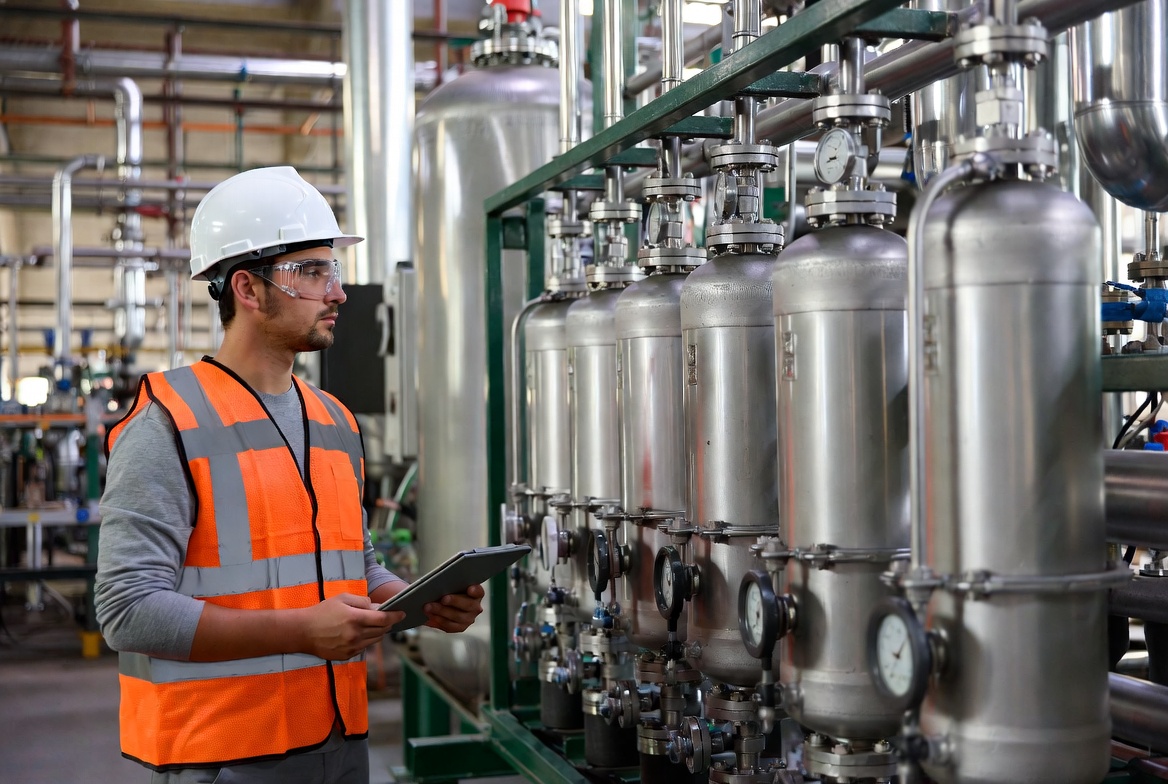
Channeling doesn't just reduce filter efficiency — it introduces sector-specific risks that vary by application.
- Water treatment: Stagnant zones behind channels become breeding grounds for bacteria, undermining the very purification the system was designed for
- Air and gas purification: Uneven gas flow allows volatile organic compounds and odor-causing molecules to bypass untouched carbon entirely
- Food and beverage processing: Inconsistent contact time risks inconsistent taste and odor removal, directly affecting product quality consistency
- Pharmaceutical manufacturing: Regulatory purity standards demand uniform adsorption performance, making channeling a compliance risk, not just an efficiency one
- Chemical processing: Corrosive or high-load contaminant streams accelerate localized carbon exhaustion in channeled zones, shortening effective service life
Operators often mistake early breakthrough for defective carbon when the real culprit is channeling. A practical diagnostic sequence includes:
1. Check whether breakthrough occurred far earlier than the carbon's rated service life would suggest
2. Inspect the bed surface after draining for visible cratering, cracks, or uneven settling
3. Review recent backwash logs for inadequate expansion percentages or shortened wash cycles
4. Confirm flow rate readings against original design specifications, since pump wear or valve issues can silently push flow rates outside safe ranges
If cratering or uneven settling is visible and backwash records show shortened cycles, channeling — not media exhaustion — is almost always the underlying issue.
Not every application needs the same carbon. Bed depth, mesh size, and flow tolerance should be matched to your specific contaminant profile and industry requirement — whether that's dechlorination in municipal water, VOC capture in industrial air systems, or decolorization in food-grade processing.
Guangdong Tongke Activated Carbon Co., Ltd. works directly with engineering teams to specify mesh sizing, bed depth calculations, and flow rate compatibility for each customer's exact operating conditions, rather than offering one-size-fits-all carbon.
Ready to eliminate channeling risk in your next filtration project? Contact our technical team for a custom GAC specification review tailored to your flow rate, contaminant load, and industry compliance requirements.
Q1: How quickly can channeling occur in a new GAC filter?
Channeling can occur almost immediately after installation if the bed was poorly packed or the flow distribution system is defective, even with completely fresh carbon.
Q2: Can channeling be fixed without replacing the carbon?
Yes, in many cases. Re-backwashing to properly resettle the bed, correcting flow rate, or adjusting the inlet distribution system can resolve channeling without discarding usable media.
Q3: Does mesh size affect channeling risk?
Yes. Overly coarse or inconsistently sized granules create larger voids between particles, increasing the likelihood that fluid finds an easy path through the bed.
Q4: Is channeling more common in air filtration or water filtration systems?
Both are susceptible, but water filtration systems face an added complication: stagnant channeled zones can develop bacterial growth, a risk that gas-phase systems generally avoid.
Q5: How often should a GAC filter be backwashed to prevent channeling?
Backwash frequency depends on flow rate and contaminant load, but most systems benefit from backwashing whenever pressure drop rises significantly or on a scheduled interval defined by the equipment manufacturer.
Q6: What is the ideal bed depth to avoid channeling?
Most standard water treatment applications perform well with a 30 to 36 inch carbon bed, though deeper beds are recommended for higher contaminant loads or challenging water chemistry.
1. The Science Behind Activated Carbon Water Filters — [carbonblocktech]
2. Designing Carbon Filter Systems — [youtube]
3. Applications of Activated Carbon — [activatedcarbon]
4. Granular Activated Carbon (GAC) vs. Activated Carbon Block Comparison — [support.boshart]
5. Drinking Water Filtration Using Granular Activated Carbon — [wateronline]
6. Role of Activated Carbon in Water Treatment — [intechopen]
7. Granular Activated Carbon (GAC) Fact Sheet — [wqa]
8. Chapter 2: Industrial Applications of Activated Carbon — [books.rsc]


