Content Menu
● What Is Activated Carbon Filter Media?
● Why Activated Carbon Is Essential in Commercial Filtration
● Key Forms of Commercial Activated Carbon Media
● Honeycomb Activated Carbon: Structure and Advantages
● How Activated Carbon Works in Commercial Filter Media
● Major Applications in Commercial and Industrial Systems
>> Water and Wastewater Treatment
>> Air, Gas, and VOC Control
>> Food & Beverage, Chemical, and Pharmaceutical Processing
● Emerging Trends in Activated Carbon Filtration
● Practical Selection Guide: Choosing the Right Activated Carbon Media
● Why Many Industrial Buyers Prefer Honeycomb Activated Carbon
● Illustration: Typical Industrial VOC Treatment Setup
● Call to Action: Designing the Right Carbon Solution for Your Plant
● Frequently Asked Questions (FAQ)
● References
Activated carbon has quietly become one of the most critical materials in modern commercial filtration – from drinking water plants and food factories to chemical, pharma, and VOC exhaust treatment systems. As someone who has spent years working with industrial buyers and process engineers, I see honeycomb activated carbon media moving from a "nice-to-have" to a strategic choice for efficiency, compliance, and lifecycle cost control. [terrauniversal]
What Is Activated Carbon Filter Media?
Activated carbon filter media is a highly porous carbon material engineered to trap contaminants from water, air, and process streams through adsorption, not absorption. One gram of quality activated carbon can offer up to 3,000 m² of internal surface area, giving it a remarkable capacity to bind organic molecules, chlorine, odors, and industrial pollutants. [everfilt]
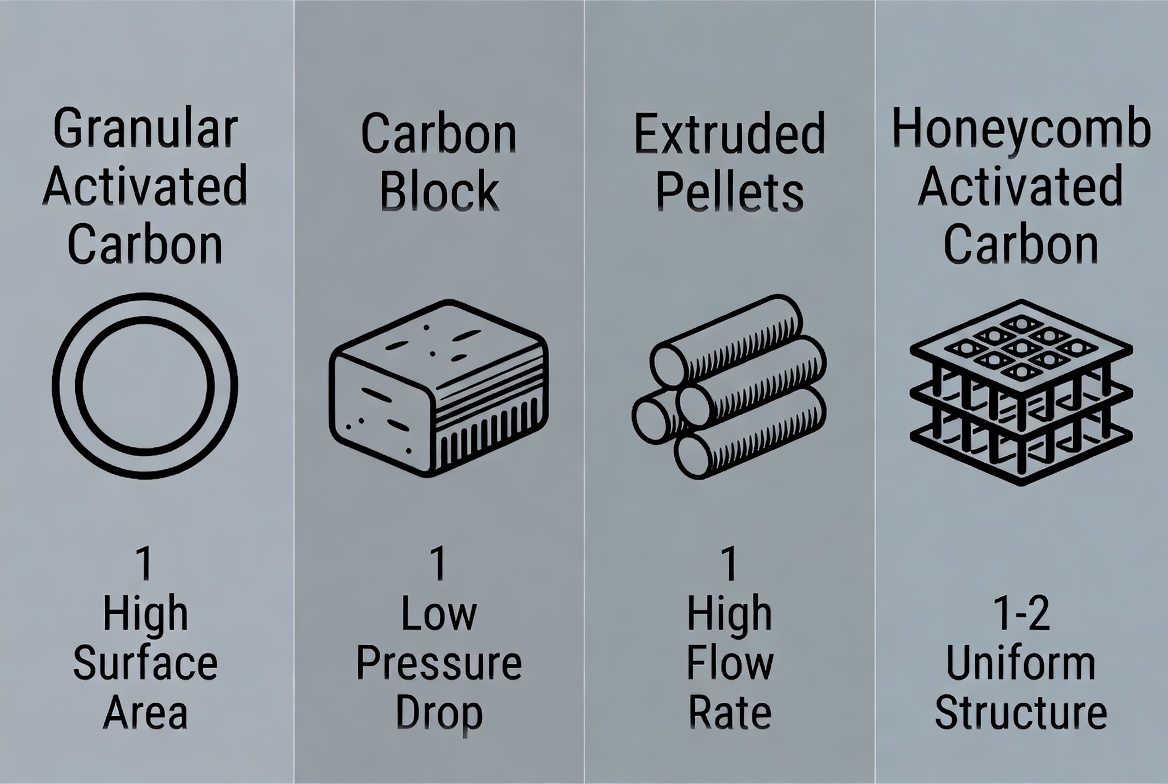
The media itself can be produced from coconut shell, coal, wood, or other carbon-rich precursors, which are then activated to open up a network of micro-, meso- and macropores tailored to different industrial needs. In commercial filter systems, this media is integrated as granular activated carbon (GAC), carbon block, extruded pellets, or honeycomb blocks depending on the application and hydraulic or airflow constraints. [ifilters]
Why Activated Carbon Is Essential in Commercial Filtration
In real-world industrial environments, contaminants rarely come in isolation – they often appear as complex mixtures of dissolved organics, chlorine, residual solvents, and malodorous gases. Activated carbon is one of the few filtration media that can effectively address this complexity, making it a preferred choice across water treatment, air purification, food and beverage, and chemical processing. [grandviewresearch]
For plant operators, the most tangible benefits include better product quality (taste, color, odor), easier compliance with tightening discharge standards, improved worker comfort, and lower corrosion risk in downstream equipment due to reduced aggressive gases or chemical residues. When engineered correctly, an activated carbon filter is not just a "polishing" stage, but a core control point in the process. [everfilt]
Key Forms of Commercial Activated Carbon Media
Different filter designs require different carbon formats. Below is a quick overview of the primary forms you'll encounter in commercial and industrial systems. [ifilters]
| Media form | Typical features and use cases |
| Granular activated carbon | Loose granules, high throughput; ideal for large water filters, bed reactors, polishing beds (everfilt) |
| Carbon block | Compressed powder, fine filtration; widely used in cartridges, point-of-use systems (ifilters) |
| Extruded / pellet carbon | Cylindrical pellets, low dust, good mechanical strength; popular in gas and VOC treatment (tkcarbon.en.made-in-china) |
| Honeycomb activated carbon | Structured blocks with channels; low pressure drop, high contact area for air & gas (terrauniversal) |
From an engineering standpoint, the choice comes down to flow rate, pressure drop tolerance, target contaminants, and serviceability (how often and how easily you can change media). Honeycomb activated carbon has gained strong traction in recent years for systems that must balance high airflow with compact equipment footprints. [qingke.en.made-in-china]
Honeycomb Activated Carbon: Structure and Advantages
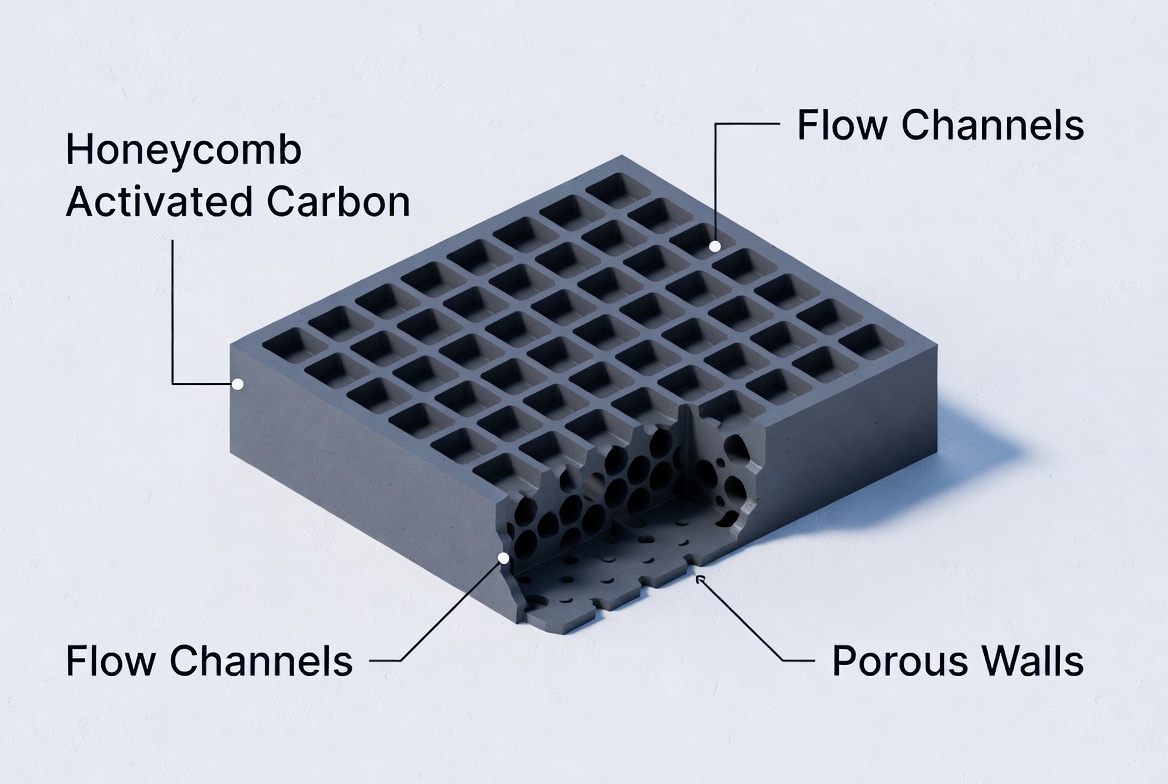
Honeycomb activated carbon is a structured monolithic block featuring a matrix of straight, parallel channels (cells) running through the media, similar to a ceramic honeycomb substrate. This geometry maximizes contact surface area with the gas stream while keeping pressure drop remarkably low, which is crucial for high-volume exhaust and VOC treatment lines. [qingke.en.made-in-china]
Because the active carbon is shaped into a rigid block, it avoids problems like settling, channeling, or dust generation that are common with loose granular beds. For plant operators, this means more stable removal performance over time, less risk of media carry-over downstream, and simpler module-style replacement during shutdowns. [terrauniversal]
How Activated Carbon Works in Commercial Filter Media
The core mechanism behind activated carbon filtration is adsorption – contaminants are attracted to and held on the carbon surface by physical forces and sometimes chemical interactions. In practice, when water or air passes through a packed bed, block, or honeycomb structure, contaminants diffuse into the pores and attach to internal surfaces until the carbon's capacity is reached. [everfilt]
In water applications, activated carbon excels at removing free chlorine, many VOCs, and compounds responsible for taste and odor, while in air and gas systems it is highly effective against solvents, organic fumes, and odorous gases like hydrogen sulfide or ammonia. For engineers, a key design parameter is contact time (EBCT for water, residence time for gases), which determines how fully the adsorption sites can be utilized under working conditions. [terrauniversal]
Major Applications in Commercial and Industrial Systems
Water and Wastewater Treatment
Commercial and municipal water treatment plants frequently integrate activated carbon stages for dechlorination, organics removal, and polishing. Typical applications include: [ifilters]
- Pretreatment for RO and membrane systems to protect membranes from chlorine and organics
- Final polishing of drinking water to improve taste, odor, and color
- Tertiary treatment of industrial wastewater to meet discharge limits for organics and emerging contaminants
The global activated carbon market, including water treatment, is projected to reach about USD 5.5 billion by 2033, underscoring demand driven by stricter environmental regulations and growing water reuse initiatives. [grandviewresearch]
Air, Gas, and VOC Control
In industrial exhaust and VOC control, activated carbon – especially in honeycomb and pellet form – is used to remove solvents, odorous gases, and toxic compounds from process ventilation. Typical applications include: [qingke.en.made-in-china]
- Exhaust from paint lines, printing, coating, and chemical processing
- Odor abatement in waste treatment, composting, and food processing plants
- Cleanroom make-up air systems and fume scrubbers in electronics and pharma facilities
Honeycomb activated carbon filters offer advantages such as higher airflow rates, low wind resistance, and strong adsorption capabilities for VOCs like toluene, xylene, and non-methane hydrocarbons. [qingke.en.made-in-china]
Food & Beverage, Chemical, and Pharmaceutical Processing
In food and beverage production, activated carbon is widely used to remove color, off-odors, and trace contaminants from liquids like sugar syrup, juices, and edible oils. In the chemical and pharmaceutical sectors, carbon media is used in both liquid and gas phase to polish intermediates, capture unwanted by-products, and protect catalysts and sensitive equipment from impurities. [grandviewresearch]
Beyond product quality, these applications play a central role in meeting purity specs defined by regulators and customers, especially for export-oriented operations. For plant teams operating under GMP or strict QA frameworks, documented carbon performance and traceability are becoming as important as removal efficiency itself. [grandviewresearch]
Emerging Trends in Activated Carbon Filtration
The activated carbon market is evolving quickly under regulatory and sustainability pressure. Several trends are particularly relevant for commercial filter media buyers: [bygen.com]
- Shift to higher-performance formats: While granular carbon remains dominant, technologies like structured honeycomb and advanced carbon blocks are growing due to better hydraulic performance and easier integration. [bygen.com]
- Focus on air purification and VOC control: Air purification uses of activated carbon are among the fastest-growing segments, supported by stricter indoor air quality and emission standards. [grandviewresearch]
- Higher expectations for sustainability: Buyers increasingly ask for life cycle data, regeneration options, and sourcing transparency, encouraging manufacturers to optimize activation processes and consider renewable precursors. [bygen.com]
For global industrial buyers, aligning filter media choices with these trends can improve not just compliance but also brand positioning around environmental responsibility. [grandviewresearch]
Practical Selection Guide: Choosing the Right Activated Carbon Media
From a practical standpoint, selecting the right activated carbon for commercial filter media involves balancing technical performance, operating cost, and regulatory needs. Here is a simplified three-step approach you can apply in real projects: [everfilt]
1. Define target contaminants and performance goals
- Identify the main pollutant groups (e.g., chlorine, VOCs, organics, odors). [ifilters]
- Clarify removal targets, effluent specs, and any relevant regulatory limits. [grandviewresearch]
2. Match media type and system design
- For high-flow water systems, consider granular or extruded forms designed for bed reactors. [everfilt]
- For compact or cartridge-based systems, look at carbon block or honeycomb modules that combine high surface area with low pressure drop. [qingke.en.made-in-china]
3. Evaluate lifecycle factors
- Compare expected service life, regeneration options, and ease of replacement during shutdowns. [everfilt]
- Factor in energy costs associated with pressure drop; structured honeycomb media often adds value here by reducing fan or pump load. [terrauniversal]
In many cases, a combination of carbon formats (for example, honeycomb for primary VOC capture and granular beds for polishing) delivers the best balance of performance and operability. [terrauniversal]
Why Many Industrial Buyers Prefer Honeycomb Activated Carbon
Based on field feedback and project case reviews, honeycomb activated carbon has become a go‑to solution for many industrial air and gas filtration projects. The reasons are both technical and operational: [qingke.en.made-in-china]
- Low pressure drop at high airflow, reducing energy consumption in fans and blowers [terrauniversal]
- Strong adsorption for VOCs, odors, and many industrial gases, with stable performance over time [qingke.en.made-in-china]
- Modular, easy‑to‑handle blocks that simplify installation, inspection, and replacement [qingke.en.made-in-china]
For buyers specifying systems in sectors such as incineration exhaust, coating lines, or chemical vents, honeycomb carbon modules often make it easier to design compact filter units that fit into existing plants without major civil work. Over the lifetime of the installation, the reduction in energy use and maintenance can offset the slightly higher initial media cost compared with conventional granular beds. [qingke.en.made-in-china]
Illustration: Typical Industrial VOC Treatment Setup
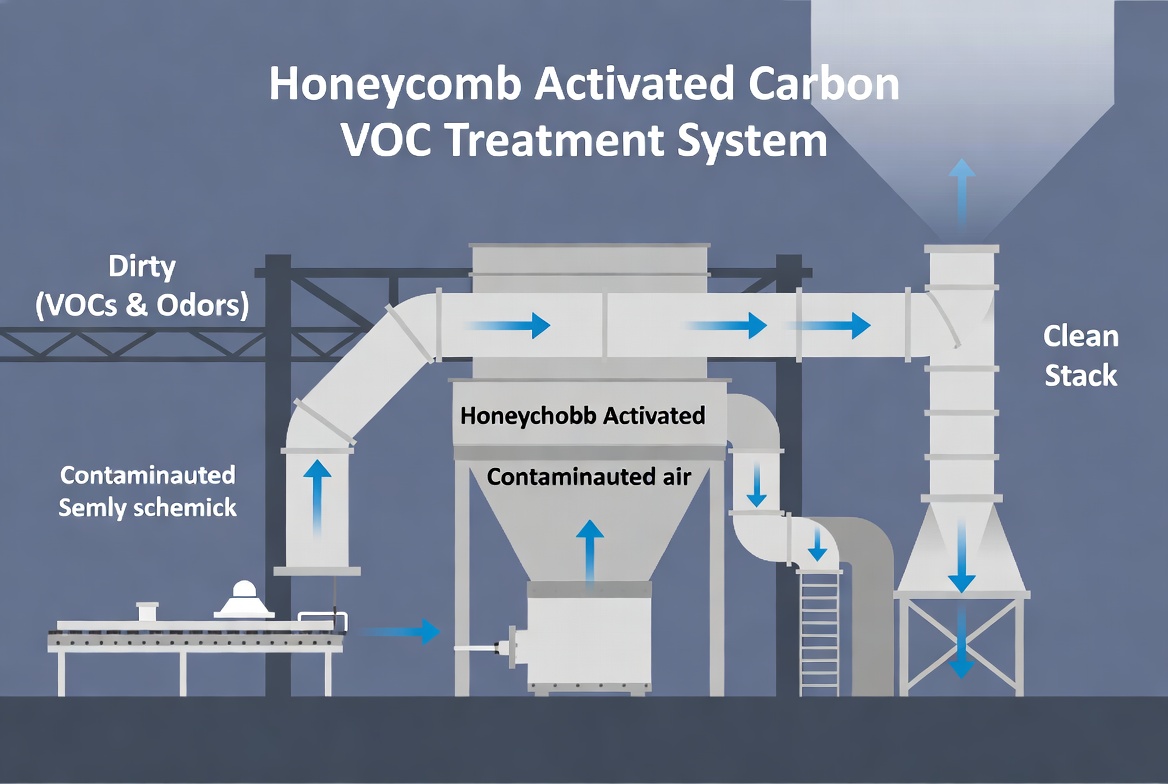
In a typical VOC exhaust treatment line, contaminated gas from the process is first passed through prefilters to remove particulates and mists, then routed into a honeycomb activated carbon module. As the gas flows through the honeycomb channels, VOC molecules diffuse to the carbon surface and are adsorbed, allowing clean air to exit the system and meet emission standards. [qingke.en.made-in-china]
To extend service life, many plants operate multiple carbon modules in parallel or series, enabling one line to be isolated for inspection or replacement while others remain online. Monitoring pressure drop and outlet VOC levels helps operators determine the optimal replacement interval before breakthrough occurs. [terrauniversal]
Call to Action: Designing the Right Carbon Solution for Your Plant
If you are evaluating or upgrading commercial filter media for water, air, or process streams, it pays to work with a specialist manufacturer that can match media type, pore structure, and module geometry to your specific operating conditions. A partner with strong R&D, manufacturing capability across multiple carbon formats (granular, pellet, honeycomb, etc.), and international export experience can help you reduce trial‑and‑error, accelerate commissioning, and improve total cost of ownership. [tkcarbon.en.made-in-china]
When you define a new filtration project, prepare basic information such as flow rate, target contaminants, inlet/outlet specs, and available installation space, then reach out to an activated carbon supplier for a tailored recommendation. This collaborative approach typically results in a more robust and future‑proof filtration solution that can adapt as regulations and production volumes evolve. [tkcarbon.en.made-in-china]
Frequently Asked Questions (FAQ)
Q1: What is the main advantage of honeycomb activated carbon over granular carbon in commercial systems?
A: Honeycomb activated carbon provides high surface area with much lower pressure drop, making it ideal for high‑airflow VOC and exhaust applications while keeping energy consumption under control. [qingke.en.made-in-china]
Q2: Can activated carbon media be regenerated and reused?
A: Many industrial-grade activated carbons can be thermally regenerated or reactivated by specialized service providers, though the feasibility depends on the specific contaminants and local regulations. [bygen.com]
Q3: How often should activated carbon filter media be replaced?
A: Replacement intervals vary widely with contaminant load, flow rate, and system design, but they are typically determined by breakthrough curves, outlet quality monitoring, and pressure drop trends. [everfilt]
Q4: Is activated carbon effective against heavy metals in water?
A: Activated carbon is primarily used for organics, chlorine, and taste/odor; some metal removal is possible in combination with specific surface chemistries, but ion exchange or other media are usually preferred for heavy metals. [everfilt]
Q5: Why is activated carbon so widely used in food and beverage processing?
A: Activated carbon helps remove color bodies, off‑odors, and trace organic contaminants, improving sensory quality and helping producers meet purity specifications in sugar refining, beverages, and edible oils. [everfilt]
References
1. Everfilt. "Activated Carbon Filtration Media: Definition, Facts, & Figures." – <https://www.everfilt.com/post/activated-carbon-filtration-media-definition-facts-figures> [everfilt]
2. iFilters. "What Is Carbon Filter Media? Benefits, Uses & How It Works." – <https://www.ifilters.com/blogs/news/carbon-filter-media-guide> [ifilters]
3. Terra Universal. "Activated Carbon Filters for FFUs." – <https://www.terrauniversal.com/ffu-honeycomb-activated-carbon-filters.html> [terrauniversal]
4. BYGEN. "Emerging Trends in Activated Carbon Technologies." – <https://www.bygen.com.au/post/emerging-trends-in-activated-carbon-technologies> [bygen.com]
5. Grand View Research. "Activated Carbon Market Size & Share | Industry Report 2033." [grandviewresearch] – <https://www.grandviewresearch.com/industry-analysis/activated-carbon-market>
6. Guangdong Tongke Activated Carbon Co., Ltd. Company Profile. – <https://tkcarbon.en.made-in-china.com> [tkcarbon.en.made-in-china]
7. "Honeycomb Activated Carbon for Industrial Waste Incineration Exhaust Gas and Wastewater Treatment." – <https://qingke.en.made-in-china.com/product/LxkrTegCYyUD> [qingke.en.made-in-china]
8. "Honeycomb Activated Carbon for Exhaust Gas and Wastewater." – <https://qingke.en.made-in-china.com/product/aJWYIsirYCRM> [qingke.en.made-in-china]
9. Tongke Activated Carbon. "Top 10 Extruded Activated Carbon Manufacturers in China." – <https://www.tongkeac.com/top-10-extruded-activated-carbon-manufacturers-in-china.html> [tongkeac]


