Content Menu
● What Is Honeycomb Activated Carbon?
● Why Honeycomb Activated Carbon Matters in Modern Industry
● Guangdong Tongke: Expert Honeycomb Activated Carbon Manufacturer
● Core Technical Specifications and Performance Indicators
● Product Types and Customization Options
>> Key Advantages at a Glance
● Typical Industrial Applications by Sector
>> Industrial Waste Gas and VOC Control
>> Air Purification and Odor Control
>> Water and Wastewater Treatment
>> Additional Uses as Catalyst Carrier
● Production Process and Quality Control
● Expert Insights: Selecting Honeycomb Activated Carbon for Your Project
● Market and Regulatory Drivers in 2026
● Practical Steps to Implement Honeycomb Carbon in VOC Systems
● Case-Style Usage Scenarios (Aggregated from Customer Feedback)
● Honeycomb vs. Other Activated Carbon Forms
● Why Partner with Guangdong Tongke for Honeycomb Activated Carbon
● Call to Action: Discuss Your Honeycomb Carbon Project
>> Frequently Asked Questions (FAQ)
● References
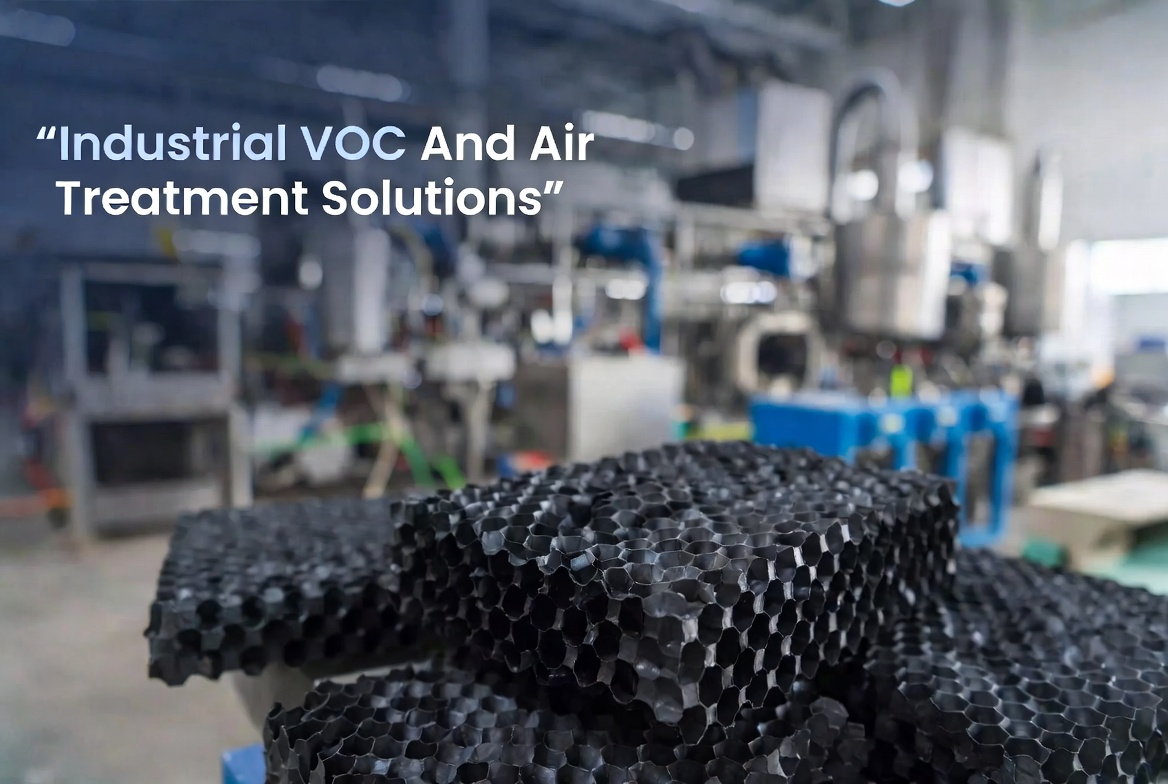
Honeycomb activated carbon is a high-performance adsorbent with a unique honeycomb structure, widely used for VOC control, industrial waste gas treatment, and specialized water purification in modern industry. As a Chinese manufacturer with patented production technology, Guangdong Tongke Activated Carbon Co., Ltd. provides customized honeycomb activated carbon solutions tailored to demanding global applications in air, gas, and water treatment. [prsync]
What Is Honeycomb Activated Carbon?
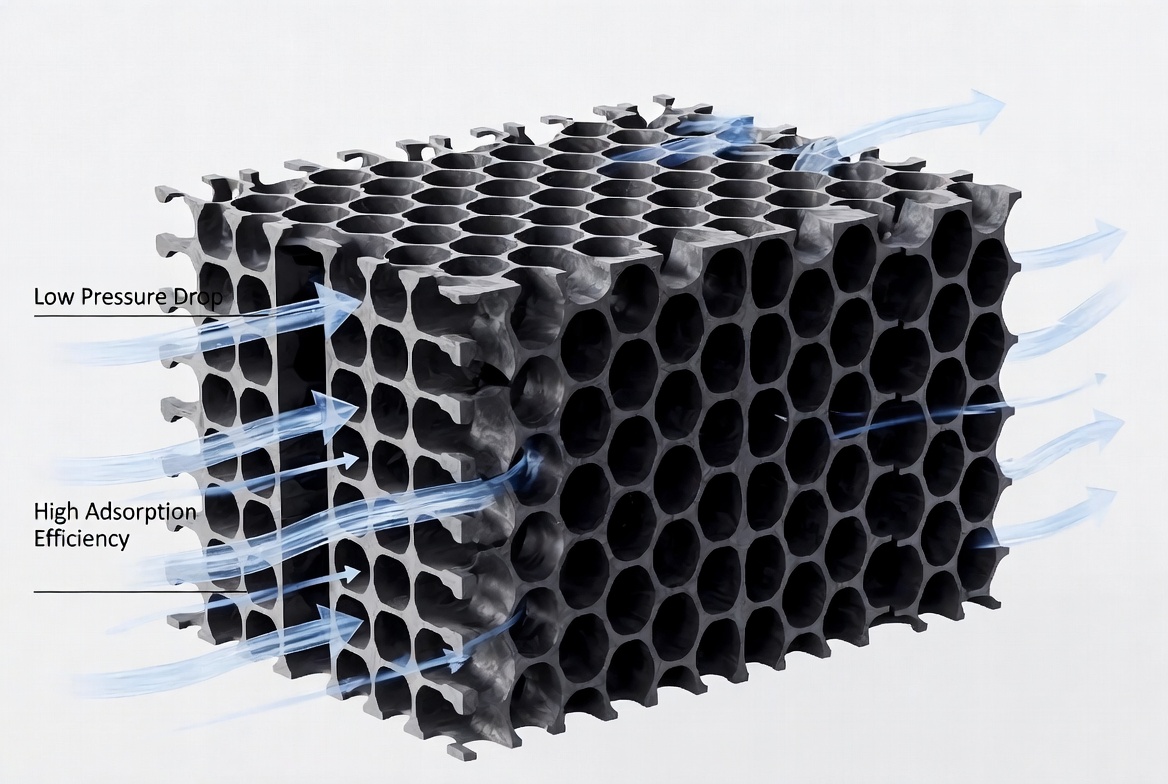
Honeycomb activated carbon is an advanced form of activated carbon shaped into a three-dimensional honeycomb or grid-like block, typically extruded from coal-based, coconut shell, or wood-based activated carbon powders with a binder. This structured design drastically increases specific surface area while minimizing airflow resistance, making it ideal for continuous gas-phase and selected liquid-phase adsorption processes. [hongsencarbon]
The internal pore system of honeycomb activated carbon is dominated by micropores and mesopores, which enable efficient adsorption of volatile organic compounds (VOCs), odorous gases, and a range of organic and some inorganic pollutants. Compared with loose granular activated carbon, the monolithic honeycomb structure offers better hydraulic or aerodynamic performance, easier handling, and more stable pressure drop in industrial systems. [carbons]
Why Honeycomb Activated Carbon Matters in Modern Industry
Global demand for honeycomb activated carbon is rising, driven by stricter environmental regulations on VOCs, industrial emissions, and water quality across multiple regions. Market analyses show that the honeycomb activated carbon sector is expected to maintain robust growth, supported by rapid industrialization in Asia-Pacific, stronger sustainability initiatives in Europe, and high adoption rates in North America. [openpr]
For manufacturers, engineering firms, and plant operators, honeycomb activated carbon offers a practical route to meeting emission limits while controlling operational costs through long service life and regenerability. As more industries prioritize durable, high-performance, and customizable adsorbent solutions, structured carbons such as honeycomb blocks are increasingly replacing traditional packed beds in critical applications. [naturecarbon]
Guangdong Tongke: Expert Honeycomb Activated Carbon Manufacturer
Guangdong Tongke Activated Carbon Co., Ltd. is a professional manufacturer and exporter of honeycomb activated carbon and other activated carbon products, serving industrial clients worldwide. The company operates integrated production lines covering raw material preparation, extrusion molding, carbonization, and activation, with a strong focus on quality control and performance consistency. [tongkeac]
Tongke's honeycomb activated carbon products are marketed under the Heycarb/Heycarbons brand, supported by 16 production-related patents that reflect continuous innovation in structural design, process control, and application development. With multiple manufacturing bases and a broad product portfolio including powdered, granular, and specialty carbons, Tongke can provide complete adsorption and filtration solutions rather than just single products. [honeycarb]
Core Technical Specifications and Performance Indicators
In real engineering projects, buyers and design engineers often start by comparing key performance parameters to ensure fit-for-purpose selection. The following metrics summarize the typical ranges available from Heycarb honeycomb activated carbon products. [prsync]
- Iodine value: 600–1000 mg/g, indicating strong adsorption capacity for small organic molecules. [carbons]
- Specific surface area: 700–1050 m²/g, providing a large active surface for gas or liquid contact. [hongsencarbon]
- CTC (carbon tetrachloride) adsorption: 40–80%, reflecting high gas-phase adsorption efficiency for VOCs. [prsync]
- CPSI (cells per square inch): typically 100–200 CPSI, balancing contact area with pressure drop. [hongsencarbon]
- Moisture content: 3–6%, controlled to maintain stability during storage and use. [carbons]
- Wall thickness: around 1–1.5 mm, giving good mechanical strength while keeping resistance low. [prsync]
- Benzene adsorption rate: about 30–60%, indicating strong affinity for aromatic solvents. [carbons]
- Recommended air tower wind speed: approximately 0.8 m/s, often used as a design reference. [prsync]
These parameters can be fine-tuned based on application requirements—for example, higher CTC values for solvent recovery or specific CPSI configurations for high-volume air streams. [naturecarbon]
Product Types and Customization Options
Heycarb honeycomb activated carbon is available in multiple geometries and configurations to suit different equipment and installation constraints. [carbons]
- Square honeycomb blocks for standard modular installations in towers and duct systems. [prsync]
- Round honeycomb blocks for cylindrical housings, cartridge filters, and compact scrubbers. [carbons]
- Rectangular and irregular honeycomb formats for retrofit projects and custom-designed reactors where space is limited or non-standard. [prsync]
Typical size options include 100 × 100 × 100 mm and 50 × 50 × 50 mm blocks, with custom dimensions available upon request for OEMs and engineering contractors. Products can be impregnated or used as catalyst carriers, allowing integration with oxidation catalysts, desulfurization agents, or other functional coatings to meet specific process objectives. [carbons]
Key Advantages at a Glance
- Low wind resistance and stable pressure drop in gas-phase systems. [prsync]
- High adsorption capacity and long service life, reducing replacement frequency. [carbons]
- High mechanical strength, easy installation, and reduced risk of dusting or breakage. [prsync]
- Flexible customization of size, CPSI, and impregnation to match system design. [hongsencarbon]
Typical Industrial Applications by Sector
Honeycomb activated carbon has become a mainstream solution across multiple industrial sectors due to its combination of adsorption efficiency, structural strength, and customizability. [hongsencarbon]
Industrial Waste Gas and VOC Control
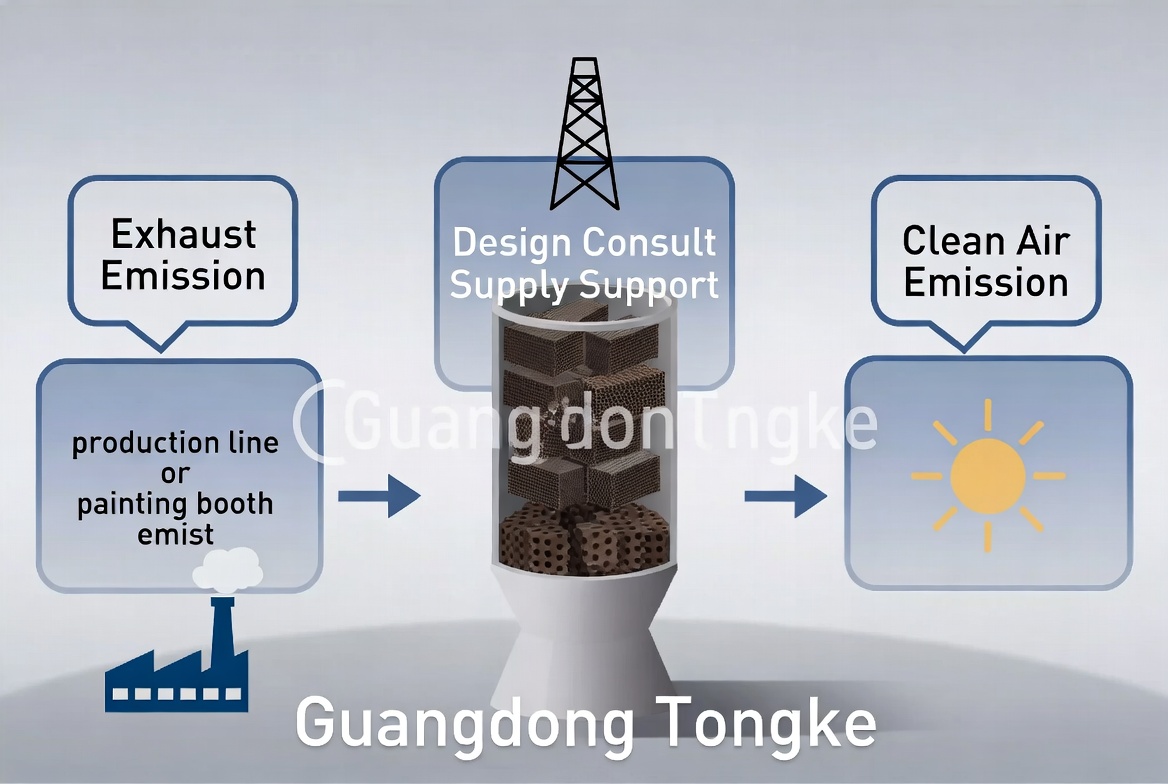
In industrial waste gas treatment, honeycomb activated carbon is widely used for low-concentration, large-volume VOC streams and odorous exhaust gases. It is commonly applied in painting, printing, chemical processing, electronics manufacturing, pharmaceutical production, plastics, and related industries where solvent emissions must be controlled. [naturecarbon]
Typical targets include benzene, toluene, xylene, acetone, alcohols, and other organic solvents, as well as sulfur compounds and odors. Honeycomb carbon modules are installed in adsorption towers or duct-mounted filters to capture contaminants before discharge or before a catalytic oxidation stage. [carbons]
Air Purification and Odor Control
In indoor air purification, honeycomb activated carbon is widely used for removing harmful gases such as VOCs, ammonia, sulfides, and odors. It is often integrated into multi-stage filter systems together with pre-filters and HEPA filters in HVAC systems, cleanrooms, and high-end air purifiers. [naturecarbon]
Restaurants and commercial kitchens use honeycomb carbon filters to treat cooking fumes and oil mist, improving exhaust quality and ensuring compliance with local regulations. In underground facilities, wastewater plants, and animal husbandry environments, honeycomb carbon helps control persistent odors and corrosive gases. [naturecarbon]
Water and Wastewater Treatment
Although honeycomb activated carbon is primarily designed for gas-phase adsorption, it is also used in selected water treatment applications where stable flow and structural durability are required. In industrial and municipal systems, honeycomb carbon can help remove organic contaminants, odor, color, and residual chlorine or chloramine from water. [hongsencarbon]
In specialized applications such as aquariums, livestock water systems, and certain process water loops, honeycomb carbon's rigid structure resists breakage and channeling, providing more uniform flow compared with loose granular beds. Its use upstream of membrane systems such as RO can extend membrane life by reducing organic fouling and residual disinfectants. [hongsencarbon]
Additional Uses as Catalyst Carrier
Honeycomb activated carbon is often used as a support or carrier for catalysts in processes such as desulfurization, denitrification, or oxidation of specific pollutants. By impregnating the honeycomb with active components, engineers can combine adsorption and catalytic reactions in a compact unit, improving treatment efficiency and reducing footprint. [prsync]
This dual-function approach is particularly valuable in high-value or constrained installations, such as electronic component manufacturing, fine chemicals, and specialized VOC abatement systems. [hongsencarbon]
Production Process and Quality Control
From an engineering perspective, process stability and repeatability are critical for reliable adsorbent performance. Heycarb's honeycomb activated carbon production process follows a structured sequence designed to ensure consistent geometry and pore structure. [naturecarbon]
1. Raw material preparation and extrusion: High-quality coal-based or coconut shell-based activated carbon powder is blended with a binder and extruded into honeycomb shapes. [hongsencarbon]
2. Molding, cutting, and drying: Extrudates are shaped using precision molds, cut to target dimensions, and dried to remove moisture without cracking. [carbons]
3. Carbonization and activation: The formed blocks are loaded into refractory brick fixtures to ensure even heating and avoid deformation, then processed in activation furnaces to develop the pore structure. [prsync]
4. Testing and packaging: Finished products undergo performance testing (e.g., iodine value, CTC, strength) before being packed for shipment. [carbons]
By controlling each step and applying patent-backed process refinements, Guangdong Tongke can maintain high mechanical strength, fine pore development, and consistent adsorption performance across batches. [tongkeac]
Expert Insights: Selecting Honeycomb Activated Carbon for Your Project
From a practical, project-level perspective, choosing the right honeycomb activated carbon involves more than just selecting a standard block size. Engineers and procurement teams should consider the following factors when defining specifications: [naturecarbon]
- Target pollutants and concentrations: Different VOCs or gases may require higher CTC values, specific pore structures, or impregnations to achieve desired removal efficiencies. [hongsencarbon]
- System configuration and flow rates: CPSI, wall thickness, and block dimensions should align with required pressure drop and available footprint in the adsorption tower or duct. [prsync]
- Operating temperature and humidity: High humidity or elevated temperature conditions can influence adsorption performance and may require tailored formulations. [naturecarbon]
- Regeneration strategy: If thermal or in-situ regeneration is planned, material selection must support repeated cycles without structural damage. [carbons]
As a manufacturer, Guangdong Tongke often works closely with integrators and end users to translate process requirements into optimized honeycomb carbon specifications, reducing trial-and-error and shortening commissioning time. [tongkeac]
Market and Regulatory Drivers in 2026
Recent market research indicates that the honeycomb activated carbon market is projected to reach around 550 million USD in value by 2026, with further growth expected toward 2033 at a CAGR of about 8.5%. This growth is tightly linked to global moves toward stricter VOC emission standards, tighter industrial odor regulations, and broader ESG commitments among manufacturers. [naturecarbon]
In Asia-Pacific, rapid industrialization and urbanization continue to drive investments in air and water treatment infrastructure, making the region one of the fastest-growing markets for honeycomb carbon solutions. Meanwhile, Europe and North America are seeing steady demand due to regulatory updates and retrofit projects in existing plants, which often favor compact, high-performance solutions like honeycomb structures. [openpr]
Practical Steps to Implement Honeycomb Carbon in VOC Systems
Based on typical engineering practice, implementing honeycomb activated carbon in a VOC treatment system usually follows a staged approach. [hongsencarbon]
1. Define treatment objectives: Clarify target pollutants, desired outlet concentration, and regulatory limits.
2. Characterize the gas stream: Measure flow rate, temperature, humidity, and contaminant concentration profiles.
3. Select honeycomb specifications: Work with the manufacturer to define block size, CPSI, adsorption capacity, and any required impregnations or catalyst loadings. [hongsencarbon]
4. Design or retrofit the equipment: Size the adsorption tower or filter housing to accommodate the required number of modules while keeping pressure drop acceptable. [prsync]
5. Plan monitoring and maintenance: Establish pressure drop, breakthrough, and replacement or regeneration schedules to maintain consistent performance. [carbons]
This structured approach helps ensure that honeycomb carbon modules are not just installed, but integrated into a broader process and compliance strategy, improving long-term ROI for the end user. [naturecarbon]
Case-Style Usage Scenarios (Aggregated from Customer Feedback)
While specific customer identities are typically confidential, aggregated feedback from real projects highlights how honeycomb activated carbon performs in practice. [prsync]
- Coating and painting lines: Users report significant odor reduction and compliance with local VOC emission limits after installing honeycomb carbon towers downstream of drying ovens and spray booths. [naturecarbon]
- Electronics and precision manufacturing: Facilities handling solvents and fine chemicals use honeycomb modules to stabilize exhaust quality, reducing odor complaints and protecting corrosion-sensitive equipment. [hongsencarbon]
- Aquarium and livestock water systems: Operators have observed clearer, less odorous water and more stable system operation when honeycomb carbon is integrated into recirculating water treatment stages. [carbons]
These experiences reinforce the importance of matching product specifications to real operating conditions and working closely with the supplier from design through commissioning. [tongkeac]
Honeycomb vs. Other Activated Carbon Forms
For buyers comparing honeycomb activated carbon with granular activated carbon (GAC) or powdered activated carbon (PAC), the table below summarizes typical differences. [hongsencarbon]
| Feature | Honeycomb Activated Carbon | Granular Activated Carbon | Powdered Activated Carbon |
| Structure | Monolithic honeycomb blocks with defined channels (prsync) | Loose granules in packed beds (hongsencarbon) | Fine powder dispersed in water or slurries (hongsencarbon) |
| Pressure drop | Low, stable across modules (prsync) | Moderate; can increase with fines (carbons) | Not used in gas-phase beds (hongsencarbon) |
| Handling and installation | Easy modular installation and replacement (prsync) | Requires careful packing and retention (carbons) | Requires dosing and separation equipment (hongsencarbon) |
| Typical applications | VOC control, air filters, special water systems (prsync) | Drinking water, wastewater, gas treatment (hongsencarbon) | Short-term water polishing, batch treatment (hongsencarbon) |
| Regeneration and reuse | Suitable for in-situ or ex-situ regeneration (carbons) | Regeneration possible but more complex (carbons) | Typically non-regenerated, disposed after use (hongsencarbon) |
For many modern gas-phase applications, honeycomb carbon offers a balanced combination of performance, footprint, and ease of maintenance, making it an attractive choice for both new and retrofit projects. [naturecarbon]
Why Partner with Guangdong Tongke for Honeycomb Activated Carbon
From a buyer's perspective, selecting a supplier is not only about product data sheets but also about technical support, quality assurance, and long-term reliability. Guangdong Tongke combines extensive production capacity, patent-backed know-how, and a broad activated carbon portfolio to support complex industrial projects from design to after-sales. [tongkeac]
With flexible customization (size, CPSI, adsorption performance, impregnation) and experience across air, gas, and water applications, the company can act as a strategic partner rather than just a component supplier. For global customers, this means easier technical communication, faster sampling and pilot testing, and more predictable performance in full-scale operations. [tongkeac]
Call to Action: Discuss Your Honeycomb Carbon Project
If you are planning a new VOC treatment system, upgrading your air purification line, or exploring structured activated carbon for specialized water applications, now is the right time to talk with Guangdong Tongke. You can request free samples, share your process data and regulatory requirements, and receive a tailored honeycomb activated carbon proposal that aligns with your performance targets and budget. [tongkeac]
Whether you are an engineering contractor, OEM, or plant operator, partnering early in the design phase helps you optimize equipment sizing, media selection, and lifecycle cost—turning honeycomb activated carbon into a true competitive advantage rather than just a consumable. [tongkeac]
Frequently Asked Questions (FAQ)
1. What is the main difference between honeycomb activated carbon and granular activated carbon?
Honeycomb activated carbon is an extruded, monolithic structure with ordered channels, providing low pressure drop and easy modular installation, while granular activated carbon consists of loose particles in packed beds. Honeycomb blocks are particularly advantageous in high-airflow VOC systems and compact equipment, whereas granular carbon remains widely used in water and traditional gas-phase filters. [prsync]
2. Can honeycomb activated carbon be regenerated and reused?
Yes, many honeycomb activated carbon products can be thermally or in-situ regenerated, depending on the pollutant type and process design. Proper regeneration helps extend service life and reduce total cost of ownership, though feasibility should be evaluated with the supplier based on specific operating conditions. [hongsencarbon]
3. Is honeycomb activated carbon suitable for drinking water treatment?
Honeycomb activated carbon can be used in selected drinking water and process water systems, especially where structural stability and flow uniformity are critical. However, specific compliance with drinking water regulations and local standards must be confirmed on a project-by-project basis in consultation with the manufacturer. [naturecarbon]
4. How do I choose the right CPSI and block size for my application?
CPSI and block size should be chosen based on airflow or water flow, acceptable pressure drop, available space, and target pollutant load. Engineers typically collaborate with the manufacturer to perform basic design calculations and pilot tests, ensuring that selected specifications meet performance and maintenance requirements. [carbons]
5. What information should I provide when requesting a honeycomb carbon proposal?
To receive a precise proposal, you should share data on gas or water flow rate, temperature, humidity, pollutant type and concentration, desired outlet levels, and any constraints on footprint or pressure drop. Providing current equipment layouts, process diagrams, or regulatory documentation can further help the supplier design an optimized honeycomb carbon solution for your plant. [tongkeac]
References
1. Honeycomb Activated Carbon – Heycarb Activated Carbon. https://heycarbons.com/honeycomb-activated-carbon/
2. What Is Honeycomb Activated Carbon? Applications, Structure, and Uses. https://www.hongsencarbon.com/news/what-is-honeycomb-activated-carbon.html
3. Guangdong Tongke Activated Carbon Co., Ltd. Company Site. https://www.tongkeac.com
4. Honeycomb Activated Carbon – Carbons.ir Technical Overview. https://carbons.ir/en/honeycomb-activated-carbon-2/
5. Honeycomb Activated Carbon Market – Industry Growth Outlook to 2033. http://prsync.com/market-research-update/honeycomb-activated-carbon-market--industry-growth-greece-icelandserbia-5043651/
6. Global Honeycomb Activated Carbon Market Analysis. https://www.openpr.com/news/2184499/global-honeycomb-activated-carbon-market-analysis-by-2020-2025
7. What Are the Main Application Areas of Honeycomb Activated Carbon? https://www.naturecarbon.com/news/what-are-the-main-application-areas-of-honeyco-75525417.html


