Content Menu
● Understanding activated carbon in real industrial practice
● Granular activated carbon (GAC): long‑term, continuous solutions
● Powdered activated carbon (PAC): fast‑response and batch treatments
● GAC vs PAC: what really drives performance and cost
>> Particle size, adsorption speed and pressure drop
>> Adsorption capacity and operational efficiency
● Lifecycle economics: short‑term budget vs long‑term ROI
● Environmental and regulatory considerations
● How industry experts choose between GAC and PAC
● Practical selection guide for common applications
● Customized activated carbon solutions: why supplier expertise matters
● Step‑by‑step approach to selecting GAC or PAC
● Frequently asked questions (FAQ)
● References
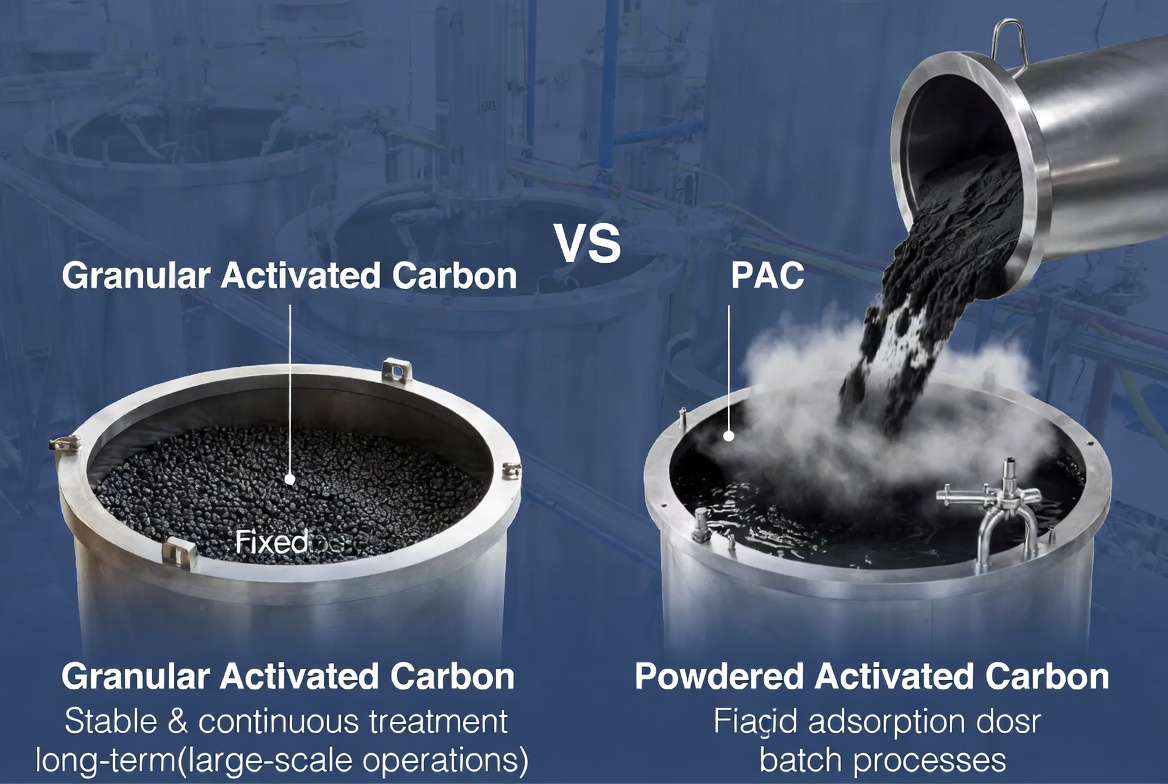
Granular activated carbon (GAC) and powdered activated carbon (PAC) each play a distinct, strategic role in modern industrial filtration, and the most effective plants now treat them as complementary tools rather than interchangeable commodities. As an activated carbon manufacturer and solution provider, positioning your choice of GAC or PAC as part of a custom-engineered program—rather than a generic media swap—is often what wins long‑term industrial contracts. [sciencedirect]
Understanding activated carbon in real industrial practice
Activated carbon is a highly porous adsorbent produced from raw materials such as coconut shell, coal, and wood under controlled carbonization and activation conditions. Its internal pore network and surface chemistry make it exceptionally effective at capturing dissolved organics, odors, color bodies and toxic gases across water, air, and process streams. [en.wikipedia]
In real plants—municipal water, beverage lines, flue gas treatment, chemical processing—the choice between granular and powdered forms is primarily an engineering decision tied to operating mode (continuous vs. batch), regeneration strategy, and contaminant profile, not just a price comparison. [intropylabs]
Granular activated carbon (GAC): long‑term, continuous solutions
GAC consists of relatively large particles, typically in the range of 0.2–5 mm, produced from carbonized and activated materials such as coconut shell or coal and then sized into stable granules. These granules are designed to withstand hydraulic and pneumatic stress in fixed beds, pressure filters, and packed towers where carbon stays in service for months or years. [haycarb]
Typical GAC applications include:
- Municipal and industrial water purification (organics, chlorine, smell, taste).
- Air and gas purification for VOCs, acid gases, and odors.
- Gold recovery circuits (CIC, CIL, CIP) and solvent recovery systems.
- Food and beverage purification, decolorization and polishing of liquids. [activatedcarbonsolutions]
From an operator's perspective, the biggest advantages of GAC are:
- Regenerability and lifecycle cost: Spent GAC can be thermally or chemically regenerated and returned to service, significantly reducing total cost of ownership for continuous processes. [sciencedirect]
- Mechanical strength and low dust: High‑hardness granules keep systems clean, minimize fines in downstream equipment, and support high flow rates without excessive attrition. [haycarb]
- Flexible bed design: By selecting mesh sizes such as 4×10, 8×30, or 12×40, engineers can balance adsorption performance against pressure drop and hydraulic behavior. [sciencedirect]
The trade‑offs that decision‑makers must consider with GAC are higher initial media cost, the need for dedicated fixed‑bed hardware, and integration with regeneration logistics—points that should be addressed openly when advising industrial clients. [linkedin]
Powdered activated carbon (PAC): fast‑response and batch treatments
PAC is produced via similar carbonization and activation steps but is milled to fine particles typically below 0.18 mm (often <100 μm). This ultra‑fine structure delivers very high external surface area, which allows rapid adsorption during short contact times in mixing tanks, clarifiers, and emergency treatment trains. [activatedcarbonsolutions]
PAC is widely used where speed and flexibility matter more than bed stability:
- Emergency or seasonal drinking water treatment for taste and odor spikes.
- Food and beverage decolorization, e.g., sugar syrup, juices, and specialty ingredients.
- Flue gas treatment in waste incineration for dioxins, mercury, and other toxic compounds. [activatedcarbonsolutions]
Key benefits for plant operators include:
- Lower unit price and simple dosing: PAC can be dosed directly into the liquid stream, mixed, allowed to adsorb, and then removed via filtration or sedimentation.
- Very fast adsorption kinetics, ideal when regulatory limits must be met quickly after a contamination incident or during start‑ups.
- High versatility across liquids and gases without major changes to existing infrastructure. [sciencedirect]
The downsides are equally important for purchasing and EHS teams: PAC is normally single‑use, so waste volume and disposal cost accumulate; fine dust creates handling and occupational safety concerns; and lack of regenerability limits its attractiveness for continuous, high‑volume duties. [activatedcarbonsolutions]
GAC vs PAC: what really drives performance and cost
Particle size, adsorption speed and pressure drop
Smaller particles expose more external surface, which accelerates adsorption—this is the main reason PAC delivers very fast contaminant removal in batch systems. However, simply grinding carbon into finer sizes does not magically increase the total molecular‑scale surface area of a given mass; adsorption capacity still depends on pore structure and chemistry, not just particle size. [sciencedirect]
In continuous packed beds, very fine carbon would create excessive pressure drop, driving up pumping energy and risking channeling or bed fouling. Engineers therefore select granular sizes (for example 4×10 mesh for air treatment, 8×30 or 12×40 for water) to balance kinetics and energy cost for the specific application. [sciencedirect]
Adsorption capacity and operational efficiency
In practice, PAC often reaches target contaminant levels quickly, but its single‑pass use limits the utilization of its full capacity before disposal. GAC, by contrast, operates over a longer service life, and its more developed internal pore network supports high cumulative adsorption, making it the preferred choice for plants that value predictable breakthrough curves and long bed runs. [intropylabs]
Lifecycle economics: short‑term budget vs long‑term ROI
From a procurement and operations standpoint, the economic comparison can be summarized as:
| Factor | GAC (Granular) | PAC (Powdered) |
| Media cost per kg | Higher upfront cost. (sciencedirect) | Lower upfront cost. (sciencedirect) |
| Regenerability | Regenerable in external facilities; multiple cycles possible. (sciencedirect) | Typically single‑use; regeneration rarely economical. (sciencedirect) |
| Equipment | Requires fixed beds, vessels and valves. (sciencedirect) | Uses dosing systems, mixers, and filtration. (sciencedirect) |
| Waste and disposal | Lower annual waste due to reuse and longer service life. (sciencedirect) | Higher waste volume and disposal cost. (sciencedirect) |
| Best‑fit use case | Continuous, high‑volume treatment and gas phase systems. (haycarb) | Intermittent, seasonal, emergency or batch treatments. (sciencedirect) |
In many industrial tenders, operators choose GAC when they have sufficient bed infrastructure and access to regeneration, because total cost per unit of contaminant removed is lower over the life of the installation. PAC tends to win where capital budgets are tight, contamination events are sporadic, or utilities need a flexible "toolbox" product for short‑term interventions. [linkedin]
Environmental and regulatory considerations
Sustainability and regulatory compliance are now central to procurement decisions for water, air, and process treatment systems. Because GAC is regenerable and remains in service for extended campaigns, it usually generates less solid waste and a smaller disposal footprint per unit of treated volume. [haycarb]
PAC, on the other hand, is often disposed of after each use, so industrial and municipal users must manage spent carbon streams in line with local hazardous waste regulations, especially when it has adsorbed metals, PFAS, or persistent organics. Fine powder handling also raises occupational exposure concerns, which must be addressed via closed dosing systems, dust collection, and appropriate PPE. [haycarb]
For end‑users, these environmental and safety aspects are no longer optional—they are part of risk assessments, ESG reporting, and permit negotiations—and should be integrated into any recommendation about GAC vs PAC. [haycarb]
How industry experts choose between GAC and PAC
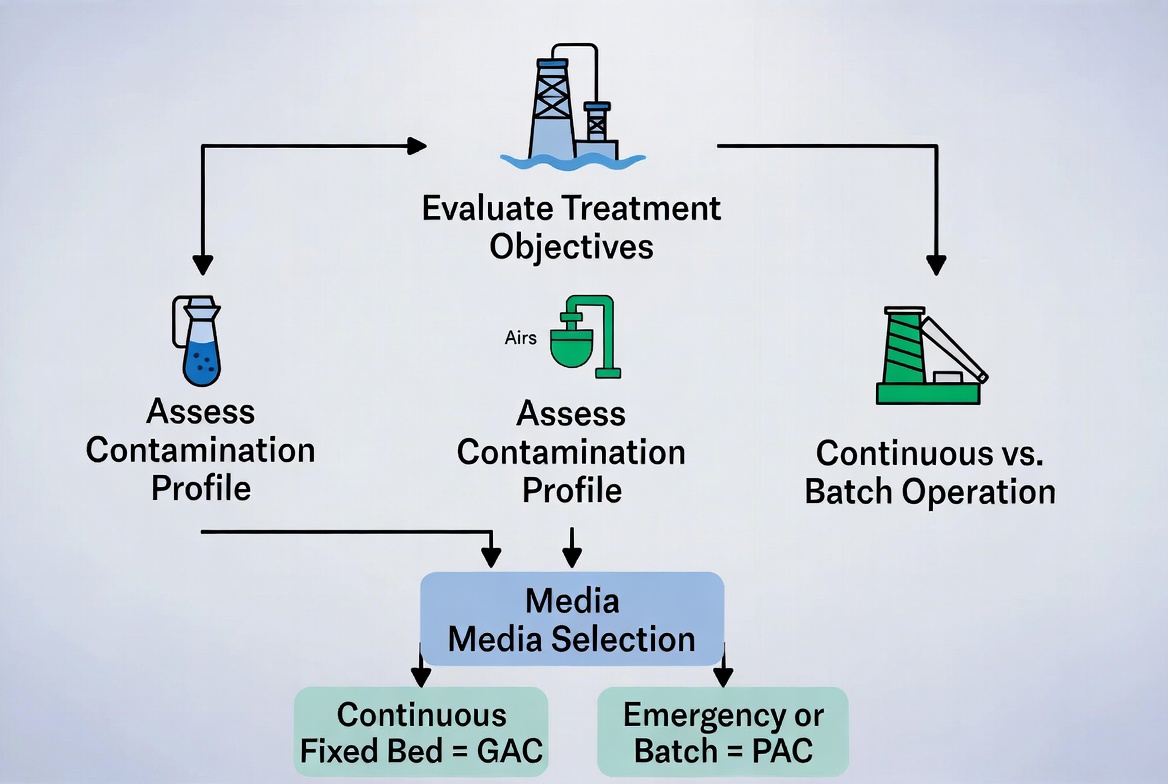
Experienced process engineers and water treatment specialists typically follow a structured decision path when selecting activated carbon media for a new or upgraded system: [intropylabs]
1. Define treatment objectives and regulatory limits (organics, color, odor, PFAS, metals).
2. Characterize influent variability (steady vs. seasonal peaks vs. acute incidents).
3. Select operating mode: continuous fixed beds favor GAC; emergency or batch treatment favors PAC. [intropylabs]
4. Evaluate regeneration, logistics and waste management options and costs.
5. Optimize particle size to balance adsorption kinetics against pressure drop and energy consumption. [sciencedirect]
For example, in high‑COD industrial wastewater with dyes, one published case study shows a custom fixed‑bed carbon system designed around detailed flow, COD, and logistics data, including vessel configuration and carbon inventory planning over a 30‑day regeneration cycle. This kind of engineered solution illustrates how media choice (and sizing) is part of a holistic design, not a stand‑alone decision. [linkedin]
Practical selection guide for common applications
The following matrix can help plant managers and project engineers quickly align GAC or PAC to their situation:
| Application scenario | Recommended media | Why it is preferred |
| Municipal drinking water with steady organic load | GAC | Continuous operation, regenerable media, predictable breakthrough. (sciencedirect) |
| Sudden taste & odor event in reservoirs | PAC | Rapid dosing, fast adsorption, temporary treatment. (sciencedirect) |
| Industrial flue gas (dioxins, mercury) | PAC | Fine powder in injection or batch systems, fast gas‑phase adsorption. (sciencedirect) |
| VOC removal from process exhaust | GAC | Stable packed beds; controllable pressure drop and regeneration options. (haycarb) |
| Gold recovery circuits | GAC | High hardness, robust granules, optimized pore structure for gold complexes. (haycarb) |
| Food & beverage decolorization | PAC | High external surface, fast color removal in batch tanks. (sciencedirect) |
By framing recommendations in terms of risk, lifecycle cost, and operational reliability, you support both technical and commercial stakeholders, strengthening trust and positioning your brand as a solution partner rather than just a media supplier. [haycarb]
Customized activated carbon solutions: why supplier expertise matters
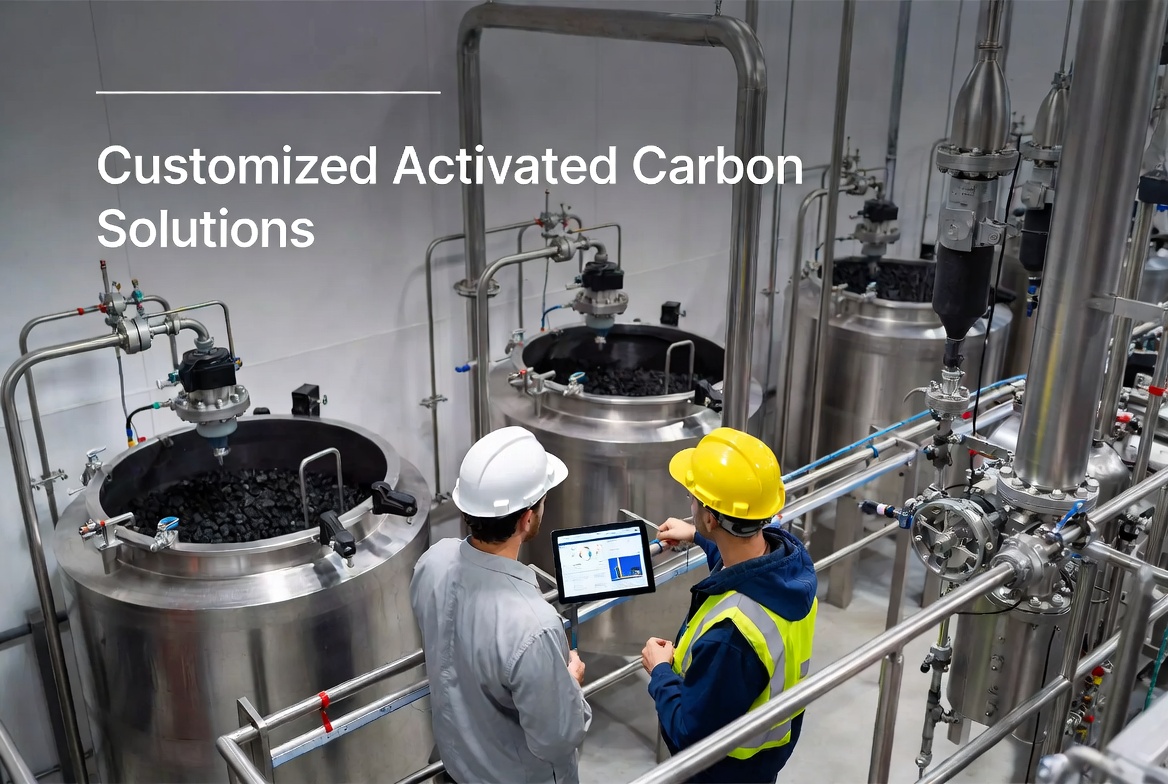
Leading activated carbon suppliers increasingly compete not just on carbon specifications, but on engineering support and application know‑how. They tailor pore size distributions, particle size ranges, and impregnation chemistries to specific contaminants—from PFAS and chloramines in drinking water to hydrogen sulfide, VOCs, and siloxanes in gas streams—often backed by in‑house laboratories and pilot systems. [haycarb]
In complex industrial projects, performance depends as much on system design, bed configuration, and carbon management strategy as on the media itself. Suppliers who can interpret wastewater analytics, model adsorption capacity, and plan regeneration logistics provide measurable value, reducing operating risk and unlocking long‑term contracts. [linkedin]
For plants evaluating GAC vs PAC, partnering with an experienced manufacturer that can offer both forms, along with engineering guidance, allows them to build hybrid strategies—using GAC for base‑load treatment and PAC as a tactical tool during upsets or seasonal spikes. [haycarb]
Step‑by‑step approach to selecting GAC or PAC
When advising end‑users or planning internal projects, the following practical framework helps ensure that the choice of GAC or PAC is aligned with both technical and business objectives: [intropylabs]
1. Characterize the contamination profile
- Identify target compounds (organics, color, PFAS, H₂S, VOCs, metals) and their typical ranges.
- Assess variability: daily cycles, seasonal changes, potential upset scenarios.
2. Define operating strategy
- Decide between continuous fixed‑bed operation, semi‑batch treatment, or emergency interventions.
- Map existing infrastructure (tanks, filters, vessels) and constraints.
3. Select media form and particle size
- Choose GAC for continuous beds and gas‑phase systems; PAC for fast, temporary or batch treatment.
- Optimize mesh size for GAC or fineness for PAC to balance adsorption speed and pressure drop. [sciencedirect]
4. Model lifecycle costs and logistics
- Include media cost, regeneration fees, energy, waste handling and labor.
- For PAC, factor in disposal and chemical dosing; for GAC, plan regeneration cycles and bed replacement intervals. [linkedin]
5. Validate with pilot testing
- Run small‑scale trials to confirm contaminant removal, breakthrough behavior and operating stability.
- Use data to refine carbon grade selection and system configuration before full‑scale deployment. [intropylabs]
This expert‑level approach gives decision‑makers confidence that their choice of GAC or PAC is grounded in data and aligned with long‑term operational goals.
Frequently asked questions (FAQ)
Q1. Is granular activated carbon always more expensive than powdered activated carbon?
GAC typically has a higher price per kilogram due to stricter size control and mechanical strength requirements, but its regenerability and longer service life often lower total treatment cost over time compared with single‑use PAC. [intropylabs]
Q2. Can powdered activated carbon be regenerated in practice?
While PAC can technically be regenerated, the fine particle size and handling complexity make regeneration uneconomical in most real‑world cases, so it is generally used once and then disposed of in line with waste regulations. [activatedcarbonsolutions]
Q3. What particle sizes are typical for GAC in water and air treatment?
In air and gas treatment, sizes around 4×10 mesh are common, while drinking water systems frequently use 8×30 or 12×40 mesh to balance adsorption performance with acceptable pressure drop and hydraulic behavior. [haycarb]
Q4. How do environmental regulations influence the choice between GAC and PAC?
Because PAC is often used once and discarded, plants must manage spent carbon as a regulated waste stream, especially when toxic contaminants are adsorbed, whereas GAC can be regenerated, reducing waste volume and supporting sustainability and ESG targets. [haycarb]
Q5. When is it best to use both GAC and PAC in the same facility?
Many advanced facilities use GAC as the backbone of continuous treatment and keep PAC available for short‑term events, seasonal peaks, or emergency incidents, creating a flexible, resilient treatment strategy that can adapt to real‑world variability. [linkedin]
References
1. General Carbon. "Granular vs. Powdered Activated Carbon: Key Differences, Use Cases & Selection Tips." Available at: [https://generalcarbon.com/granular-vs-powdered-activated-carbon/]
2. ScienceDirect Topics. "Powdered Activated Carbon – an overview." Available at: [https://www.sciencedirect.com/topics/engineering/powdered-activated-carbon]
3. Wikipedia. "Activated carbon." Available at: [https://en.wikipedia.org/wiki/Activated_carbon]
4. Haycarb PLC. "Activated Carbon Solutions." Available at: [https://www.haycarb.com/activated-carbon-solutions/]
5. Haycarb PLC. "Resources and Insights – Suppliers of Activated Carbon." Available at: [https://www.haycarb.com/resources/]
6. Activated Carbon Solutions Inc. "Products." Available at: [https://activatedcarbonsolutions.com/products/]
7. Intropy Labs. "High‑Performance Activated Carbon | Filtration & Purification Solutions." Available at: [https://intropylabs.com/activated-carbon]
8. PureAir Filtration. "Activated Carbon Pellets & Custom Carbon Air Filtration Solutions." Available at: [https://www.pureairfiltration.com/ar/activated-carbon-pellets-air-filtration-solutions/]
9. LinkedIn. "How Activated Carbon Is Applied in Industrial Wastewater Treatment – A Customized Solution Snapshot." Available at: [https://www.linkedin.com/posts/matt-m-44479431_how-activated-carbon-is-applied-in-industrial-activity-7417986031809077249-8yap]


