Content Menu
● What Is Activated Carbon Regeneration?
● Basics: Activated Carbon, Adsorption, and Media Types
● Why Activated Carbon Loses Effectiveness
● Main Activated Carbon Regeneration Methods
>> Water Washing Regeneration
>> Thermal Regeneration
>> Chemical Regeneration
>> Biological Regeneration
● Cost and Operational Considerations
● Environmental Benefits of Regeneration
● Practical Limitations and Risk Management
● Emerging Technologies and Future Trends
● Case Insight: Water Washing in Industrial Operations
● Expert Checklist: Designing an Effective Regeneration Program
● Why Work With a Specialized Activated Carbon Manufacturer
● FAQ: Activated Carbon Regeneration
● References
Activated carbon regeneration is now a strategic lever for cost savings, environmental compliance, and long-term performance in modern industrial systems. This enhanced guide blends practical plant experience with current research to help engineers, buyers, and sustainability leaders make better decisions about spent activated carbon. [haycarb]
What Is Activated Carbon Regeneration?
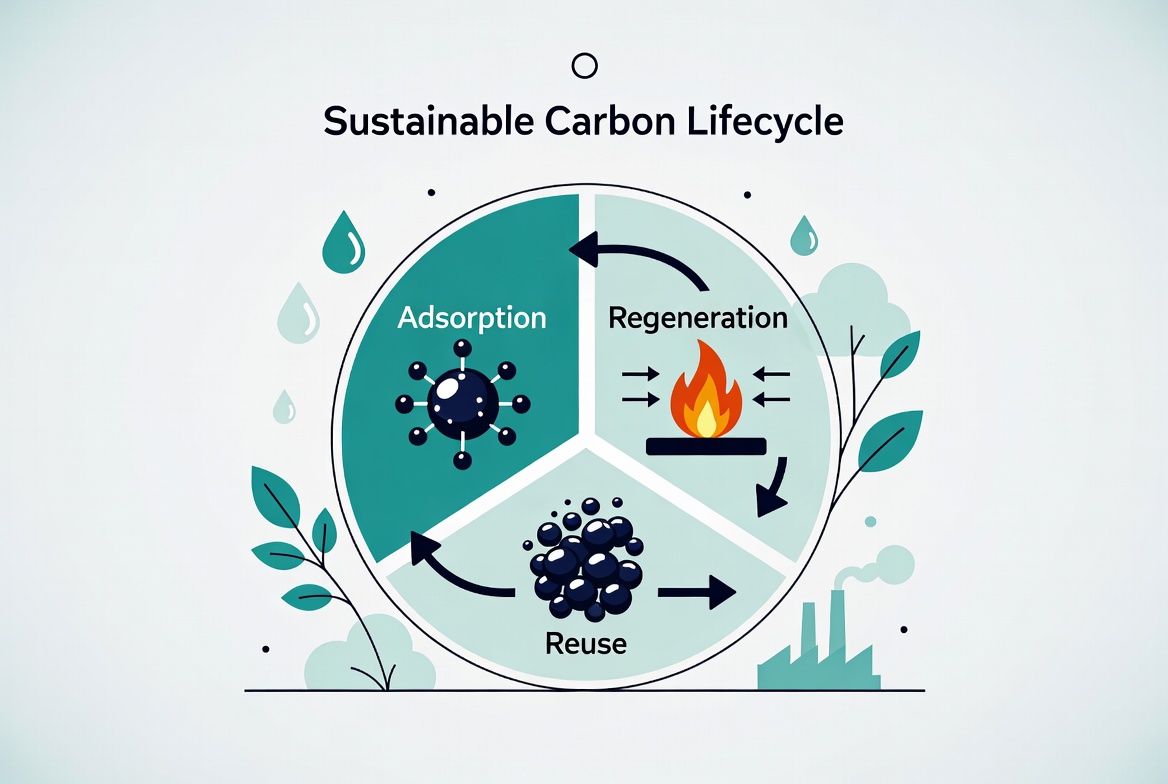
Activated carbon regeneration is the process of removing adsorbed pollutants from saturated carbon so that its adsorption capacity can be restored and reused. Instead of discarding spent carbon, operators use thermal, chemical, washing, or biological methods to recover performance and extend media life. [pubs.acs]
In industrial practice, regeneration is now a critical part of lifecycle planning for water treatment, air and gas purification, food and beverage production, chemical and pharmaceutical processes, and many other applications. This shift is driven by rising carbon costs, stricter discharge standards, and corporate sustainability commitments. [haycarb]
Basics: Activated Carbon, Adsorption, and Media Types
Activated carbon works through adsorption, where contaminants adhere to the internal pore surfaces rather than dissolving or reacting chemically. A highly developed microporous structure and large surface area make it ideal for capturing organics, odors, color bodies, and many trace compounds. [haycarb]
For industrial applications, two main forms dominate:
| Activated carbon type | Key features | Typical applications |
| Granular activated carbon (GAC) | Versatile particle sizes, high surface area, easy backwashing | Drinking water, wastewater, VOC removal, process liquids (haycarb) |
| Columnar / pelletized activated carbon | High mechanical strength, low pressure drop, uniform shape | Industrial gas purification, complex exhaust streams, solvent recovery (haycarb) |
Both granular and columnar products have long service lives, but pores eventually fill with contaminants, leading to breakthrough and efficiency loss. At that point, a regeneration strategy or replacement plan is required to keep systems on-spec. [pubs.acs]
Why Activated Carbon Loses Effectiveness
As operating hours increase, contaminants progressively occupy the available pore volume and active sites, reducing adsorption capacity and mass transfer efficiency. When saturation is reached, outlet water or gas quality declines, often visible as color, odor, or increased TOC and VOC levels. [stream-idc]
Several factors drive the timing of regeneration:
- Nature and concentration of contaminants (hydrophobic, hydrophilic, metals). [stream-idc]
- Operating temperature, contact time, and flow rates. [haycarb]
- Media type (granular vs columnar) and bed design. [haycarb]
- Regulatory limits and internal quality standards. [haycarb]
Practical operators use online quality monitoring (e.g., TOC, COD, VOC, turbidity, gas-phase analyzers) and differential pressure trends to decide when carbon should be regenerated or replaced. [haycarb]
Main Activated Carbon Regeneration Methods
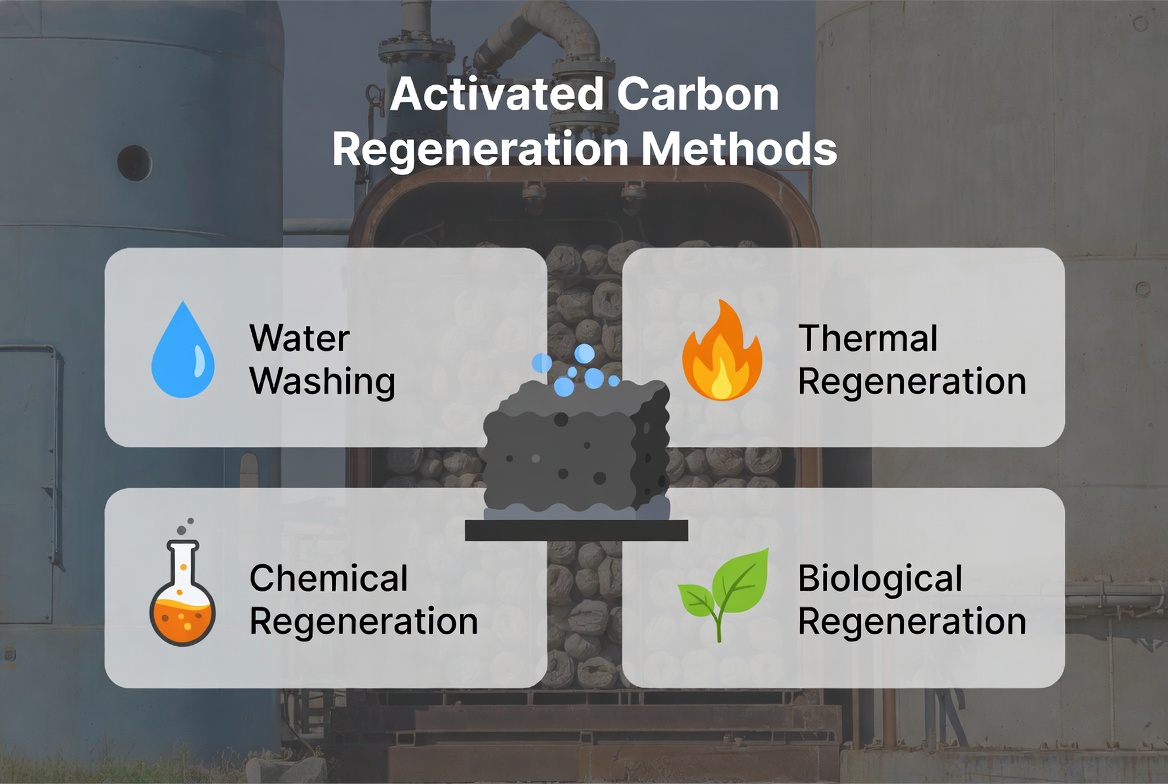
Modern plants use four primary regeneration approaches, often in combination, to match contaminant profiles and cost constraints. [pubs.acs]
Water Washing Regeneration
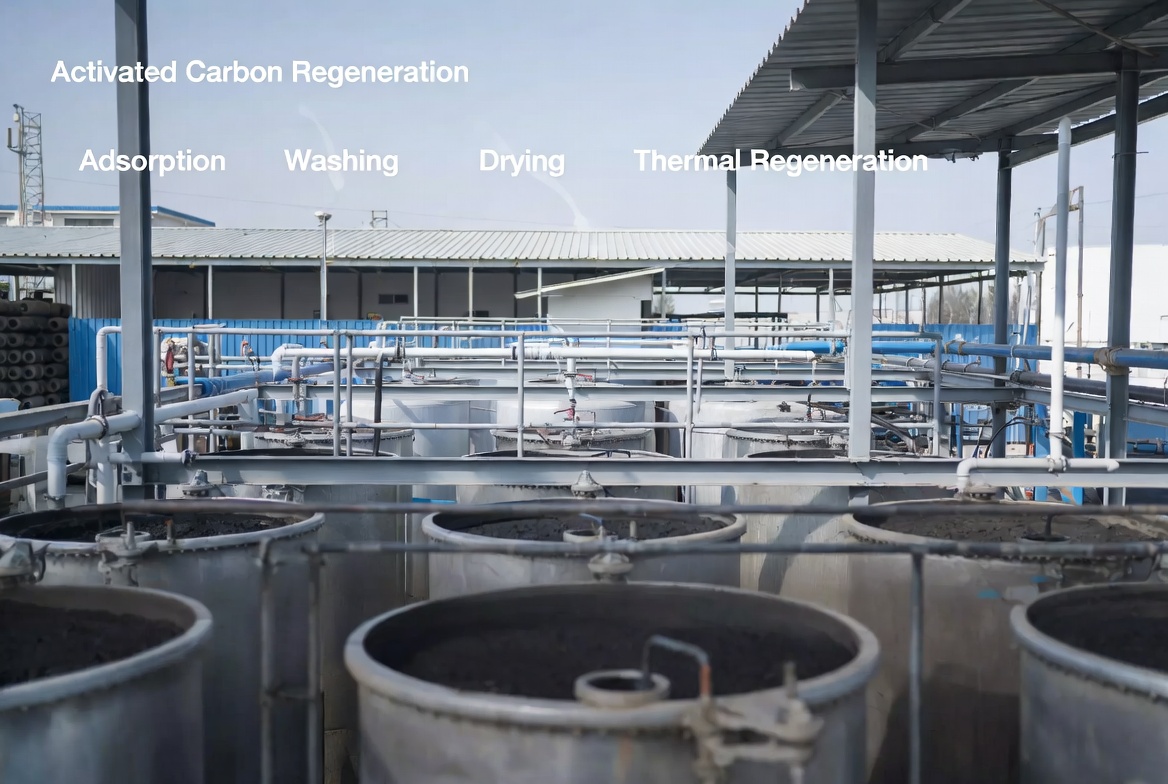
Water washing regeneration uses controlled water flow to rinse water-soluble organics, inorganic salts, and fines out of the carbon bed. It is particularly effective for lightly contaminated granular and columnar media in water treatment and some gas-phase applications where soluble compounds are present. [stream-idc]
Key advantages include:
- Low energy consumption and simple equipment (pumps, filters, tanks). [haycarb]
- Minimal operator training requirements. [haycarb]
- Suitability for small and medium-sized facilities with limited capital budgets. [haycarb]
However, washing has limited impact on strongly hydrophobic or tightly bound contaminants, and multiple cycles may reduce overall adsorption capacity over time. [stream-idc]
Thermal Regeneration
Thermal regeneration uses high temperatures (typically 600–900°C) in specialized furnaces or kilns to burn off adsorbed organics and restore pore structure. This off-site method is widely used in heavy industrial wastewater and gas treatment where contaminant loads are high or complex. [pubs.acs]
Characteristics:
- High regeneration efficiency for difficult-to-remove organics. [pubs.acs]
- Significant energy demand and higher initial equipment investment. [pubs.acs]
- Need for trained operators and strict control of emissions and furnace conditions. [haycarb]
Thermal regeneration is often chosen for seriously polluted carbon and for facilities with centralized regeneration contracts or internal high-temperature capabilities. [pubs.acs]
Chemical Regeneration
Chemical regeneration uses acidic or alkaline solutions and other reagents to desorb specific pollutants, especially heavy metals and certain organic classes. Research shows that hydrophilic phenolic contaminants can be effectively removed using alkaline solutions, while some electron-withdrawing aromatic compounds respond well to organic acids. [stream-idc]
Key points:
- Medium capital cost for corrosion-resistant equipment and chemical handling. [stream-idc]
- Requires chemical expertise for safe dosing, recovery, and waste management. [stream-idc]
- Particularly valuable where target contaminants are well characterized. [stream-idc]
Chemical regeneration is often integrated upstream or downstream of thermal methods to optimize removal of high-value or hazardous pollutants before final treatment or disposal. [pubs.acs]
Biological Regeneration
Biological regeneration leverages microbial activity to degrade adsorbed organics on the carbon surface over time. It is a low-energy, environmentally friendly approach but operates more slowly than thermal or chemical methods. [haycarb]
This method suits applications with stable operating conditions, long contact times, and contaminant profiles that are biodegradable, such as certain municipal or industrial wastewater streams. [pubs.acs]
Cost and Operational Considerations
Choosing a regeneration method is ultimately a balance between investment cost, operating complexity, energy use, and performance. [haycarb]
- Water washing regeneration: low capital cost, simple operation, very low energy demand, ideal for lightly contaminated carbon and smaller facilities. [haycarb]
- Thermal regeneration: high capital and energy cost, moderate operational complexity, but capable of deep regeneration for heavily polluted media. [pubs.acs]
- Chemical regeneration: medium equipment cost, higher process complexity, moderate energy use, best for specific metals and organics. [stream-idc]
- Biological regeneration: low energy, low direct capital, but slower and more sensitive to biological conditions. [pubs.acs]
For many plants, a hybrid strategy—washing for routine maintenance and periodic external thermal regeneration—delivers the best lifecycle economics. [haycarb]
Environmental Benefits of Regeneration
Activated carbon regeneration directly supports sustainable operations by reducing waste and resource consumption. [pubs.acs]
- Reduced landfill and incineration of spent carbon. [haycarb]
- Lower demand for virgin carbon production and associated emissions. [haycarb]
- Less hazardous waste generation when regeneration is tightly controlled. [stream-idc]
Water washing regeneration stands out as a low‑energy option with minimal harmful gas emissions, especially when rinsing effluent is captured and treated or recycled. For companies under pressure to meet higher environmental standards, structured regeneration programs are now part of core ESG strategies. [haycarb]
Practical Limitations and Risk Management
Despite its benefits, regeneration is not a universal solution for every contaminant profile. [stream-idc]
- Washing is ineffective for non‑water‑soluble pollutants and strongly hydrophobic compounds. [stream-idc]
- Multiple regeneration cycles can gradually lower adsorption capacity, requiring periodic full thermal regeneration or media replacement. [pubs.acs]
- Chemical regeneration introduces handling risks and requires robust health, safety, and environmental controls. [stream-idc]
Best practice is to define clear performance thresholds—such as breakthrough concentration limits, maximum allowable bed pressure drop, or regeneration cycle counts—and to combine regeneration with planned replacement for critical applications. [haycarb]
Emerging Technologies and Future Trends
Recent research points to several promising trends in activated carbon regeneration technology. [pubs.acs]
- Advanced oxidation processes (AOPs), including combinations of oxidants and catalysts, are being explored to achieve high regeneration efficiency while minimizing damage to carbon structure. [pubs.acs]
- Superheated steam and low‑temperature chemical regeneration aim to cut energy use while delivering deep cleaning of pores. [haycarb]
- Distributed on‑site regeneration systems reduce transportation costs and allow tighter quality control and faster turnaround. [haycarb]
In parallel, plant engineers are increasingly integrating in‑situ regeneration concepts—partial bed regeneration without full media replacement—to maintain performance between major maintenance events. Together, these innovations are moving regeneration from a cost center to a strategic optimization tool in industrial water and air management. [haycarb]
Case Insight: Water Washing in Industrial Operations
Field experience shows that water washing regeneration can produce measurable cost savings in real installations. [haycarb]
- A large water treatment facility reported up to 50% reduction in annual activated carbon replacement and treatment costs after implementing structured wash regeneration cycles for granular media. [haycarb]
- A chemical plant using columnar activated carbon for gas purification extended media life and reduced exhaust treatment maintenance by adopting wash‑down regeneration for lightly contaminated beds. [haycarb]
These cases illustrate that, when contaminant profiles are suitable, wash‑based regeneration can deliver both economic and sustainability benefits without major capital upgrades. [haycarb]
Expert Checklist: Designing an Effective Regeneration Program
From an industrial and buyer's perspective, a robust activated carbon regeneration program should include:
1. Contaminant characterization
Define target pollutants (organics, metals, odors, color), solubility, and hydrophobicity before selecting regeneration techniques. [stream-idc]
2. Lifecycle and cost modeling
Compare the total cost of virgin carbon replacement versus regeneration options, including energy, labor, transport, and downtime. [haycarb]
3. Method selection and integration
Combine washing, thermal, chemical, or biological approaches in a staged strategy to match plant size and risk tolerance. [pubs.acs]
4. Quality and safety controls
Implement monitoring of outlet quality, emissions, and residual contaminants post‑regeneration, with clear acceptance criteria and safety protocols. [stream-idc]
5. Supplier partnership
Work with experienced carbon manufacturers to tailor media selection and regeneration cycles to your process, ensuring consistent performance and reliable supply. [tongkeac]
Why Work With a Specialized Activated Carbon Manufacturer
For global industrial users, partnering with a specialized activated carbon producer is essential to getting regeneration right. [tongkeac]
Manufacturers with deep industry experience can:
- Recommend the most suitable granular, columnar, honeycomb, or fiber‑based carbon for your application and regeneration strategy. [tongkeac]
- Provide technical support on washing, thermal, and chemical regeneration conditions to protect pore structure and maximize cycles. [tkcarbon.en.made-in-china]
- Deliver customized formulations and batch consistency to ensure predictable performance across water, air, gas, food, chemical, and pharmaceutical systems. [tkcarbon.en.made-in-china]
For plants that operate in multiple regions or under tight compliance schedules, this combination of custom products and regeneration know‑how can significantly reduce risk and total cost of ownership. [tongkeac]
FAQ: Activated Carbon Regeneration
Q1. How often should activated carbon be regenerated in a typical water treatment system?
Regeneration frequency depends on contaminant load, flow rates, and performance targets, but many industrial systems schedule regeneration based on breakthrough monitoring rather than fixed time intervals. [pubs.acs]
Q2. Can water washing regeneration fully restore activated carbon performance?
Water washing can effectively remove water‑soluble pollutants and improve performance, but it may not fully restore capacity when hydrophobic or strongly bound contaminants dominate. [stream-idc]
Q3. Is thermal regeneration always the best option for industrial plants?
Thermal regeneration is highly effective for heavily loaded or complex contaminant profiles, but its energy and capital requirements mean it is most suitable when pollutant levels justify the cost. [pubs.acs]
Q4. What are the main safety concerns with chemical regeneration?
Operators must carefully manage chemical selection, dosing, and waste handling, as regeneration solutions and desorbed contaminants can pose health, environmental, and corrosion risks if not controlled. [stream-idc]
Q5. How do emerging technologies like AOPs change regeneration planning?
Advanced oxidation approaches can enhance regeneration efficiency and reduce dependence on extreme temperatures, giving plants more flexibility to design sustainable and cost‑effective regeneration strategies. [pubs.acs]
References
1. "A Comprehensive Guide to Activated Carbon Regeneration" – Heycarbons (original article) https://heycarbons.com/activated-carbon-regeneration-guide/
2. Haycarb – Activated Carbon Solutions for Industrial Applications https://www.haycarb.com/activated-carbon-solutions/
3. ACS ES&T Water – "Advanced Oxidation Processes for Activated Carbon Regeneration: From Fundamental to Application" https://pubs.acs.org/doi/10.1021/acsestwater.4c00280
4. STREAM‑IDC – "In‑situ Regeneration of Activated Carbon for Water Treatment" http://www.stream-idc.net/data/outputs/amandalarasati/amandalarasati.pdf
5. Guangdong Tongke Activated Carbon Co., Ltd. – Company and Product Information https://www.tongkeac.com https://tkcarbon.en.made-in-china.com


