Content Menu
● What Is Granular Activated Carbon in Groundwater Treatment?
>> Why Groundwater Is Different From Surface Water
● Granular Activated Carbon vs. Groundwater Treatment Requirements
● Selecting the Right GAC Feedstock
>> Coconut Shell Granular Activated Carbon
>> Coal-Based Granular Activated Carbon
>> Wood-Based Granular Activated Carbon
● Key Water-Quality Parameters Before Carbon Selection
>> Expert Perspective: Competitive Adsorption Is Often Underestimated
● Design Considerations for a GAC Groundwater System
>> 1. Empty Bed Contact Time
>> 2. Lead-Lag Vessel Configuration
>> 3. Pressure Vessels vs. Gravity Contactors
>> 4. Bed Depth, Freeboard, and Backwashing
● Pretreatment: Protecting Carbon Capacity
● Monitoring Breakthrough and Carbon Replacement
>> A Practical Breakthrough Framework
● Common Mistakes in Groundwater GAC Projects
>> Selecting Carbon Only by Iodine Number
>> Ignoring Iron and Manganese
>> Using One Vessel Without a Safety Margin
>> Delaying Carbon Changeout Planning
>> Treating Pilot Testing as Optional
● A Site-Specific Selection Workflow
● Work With a Granular Activated Carbon Supplier
● FAQs
>> 1. What contaminants can granular activated carbon remove from groundwater?
>> 2. Is coconut shell activated carbon suitable for groundwater treatment?
>> 3. How often should GAC be replaced?
>> 4. Does granular activated carbon remove iron and manganese?
>> 5. Why is a lead-lag GAC system recommended?
>> 6. Can spent granular activated carbon be regenerated?
● References
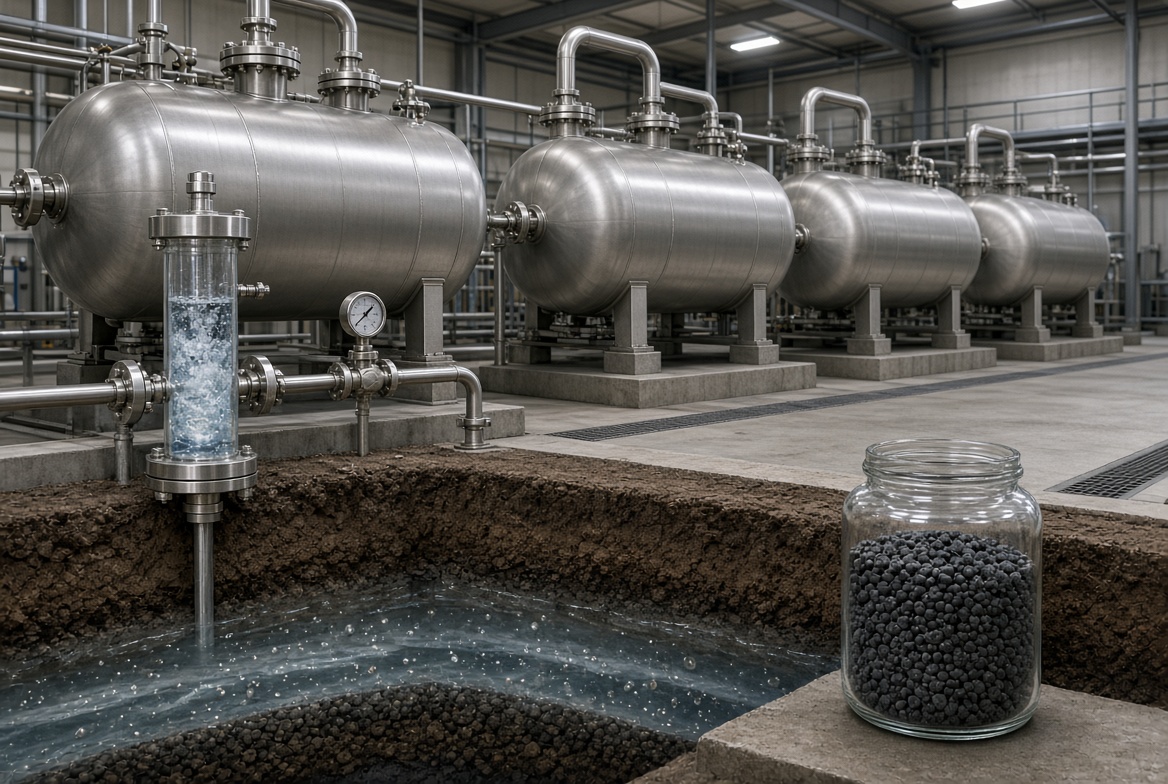
Granular activated carbon (GAC) is one of the most established adsorption media for groundwater treatment, particularly where dissolved organic contaminants, volatile organic compounds (VOCs), pesticides, taste-and-odor compounds, and selected PFAS are present. However, successful groundwater treatment depends on more than choosing a high-quality activated carbon product. It requires matching the granular activated carbon grade, pore structure, operating conditions, pretreatment process, vessel configuration, and changeout strategy to the actual groundwater chemistry.
For Guangdong Tongke Activated Carbon Co., Ltd., the practical question is not simply, "Can activated carbon remove this contaminant?" The more important engineering question is: Which granular activated carbon can maintain removal performance for the required operating period under this site's real groundwater conditions?
What Is Granular Activated Carbon in Groundwater Treatment?
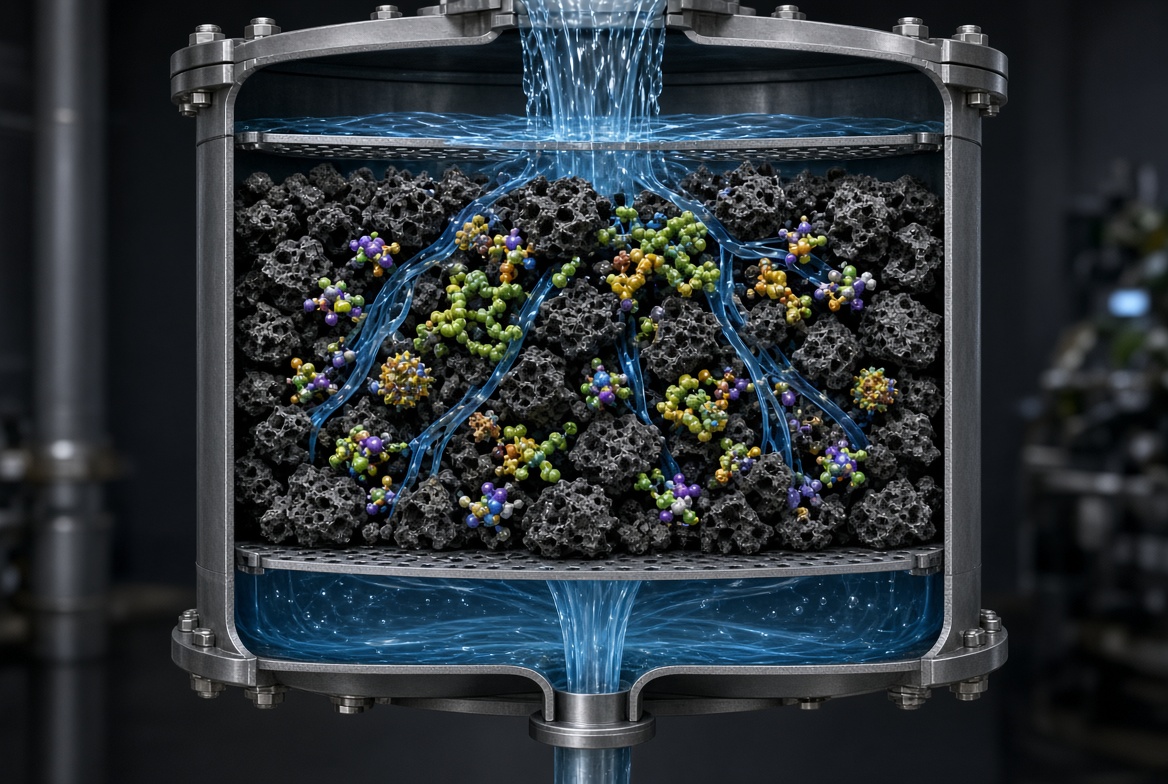
Granular activated carbon is a porous adsorption material commonly produced from coconut shell, coal, wood, or other carbonaceous feedstocks. In groundwater treatment systems, water flows through a packed GAC bed, where target contaminants move from the water phase onto internal carbon surfaces.
The performance of a granular activated carbon filter depends on three connected factors:
- Adsorption capacity: How much contaminant the carbon can retain before breakthrough
- Adsorption rate: How quickly the contaminant reaches available internal pores
- Hydraulic performance: Whether water can flow evenly through the bed without channeling, excessive pressure loss, or media loss
For many VOC applications, GAC can achieve very high removal efficiency. The U.S. Environmental Protection Agency notes that granular activated carbon may remove VOCs such as trichloroethylene (TCE) and tetrachloroethylene (PCE) at efficiencies up to 99.9% under suitable conditions. It also states that treated concentrations can often be reduced below 1 µg/L for applicable contaminants.
Why Groundwater Is Different From Surface Water
Groundwater often appears visually clean, but its dissolved chemistry can be complex. Unlike surface water, it may contain elevated iron, manganese, hardness, sulfides, dissolved organic matter, chlorinated solvents, petroleum hydrocarbons, pesticides, or industrial chemicals.
These components can directly influence granular activated carbon service life.
For example:
- Natural organic matter can compete with target pollutants for adsorption sites.
- Iron and manganese may oxidize and precipitate inside the GAC bed.
- Fine solids can block inter-particle spaces and increase pressure drop.
- High concentrations of small organic molecules can shorten carbon life.
- Changing groundwater flow rates can reduce actual contact time.
A granular activated carbon system should therefore be designed around measured water quality—not assumptions based only on the named contaminant.
Granular Activated Carbon vs. Groundwater Treatment Requirements
The phrase "granular activated carbon for groundwater treatment" includes two major elements: the adsorption media and the treatment challenge. They must be evaluated together.
| Evaluation Area | Granular Activated Carbon Requirement | Groundwater Treatment Requirement |
| Contaminant profile | Carbon must have suitable pore structure and adsorption characteristics | Water may contain VOCs, PFAS, pesticides, hydrocarbons, dissolved organics, or mixed contaminants |
| Particle size | Mesh size affects adsorption kinetics and pressure drop | Flow rate and suspended solids determine acceptable particle size |
| Feedstock choice | Coconut shell, coal-based, and wood-based carbons offer different pore distributions | Target contaminant molecular size determines the best carbon structure |
| Iodine number | Indicates a general level of micropore development | It should not be used alone to predict field performance |
| Hardness and abrasion resistance | Important for repeated backwashing and long operating cycles | Groundwater systems may require regular backwashing where solids are present |
| Ash content | Lower ash can help reduce mineral contribution from the media | Water-quality requirements may demand strict control of leachable components |
| Carbon replacement strategy | Spent carbon requires changeout, reactivation, or disposal planning | Regulatory limits and breakthrough risk determine replacement timing |
The best activated carbon is not always the carbon with the highest iodine number. A high iodine number may indicate substantial microporosity, but field performance also depends on pore-size distribution, contaminant diffusivity, competitive adsorption, bed depth, empty bed contact time, and influent water conditions.
Selecting the Right GAC Feedstock
Coconut Shell Granular Activated Carbon
Coconut shell granular activated carbon is known for a high proportion of micropores. It is often suitable for smaller dissolved organic compounds and can offer high hardness, which helps reduce carbon attrition during handling and backwashing.
Typical strengths include:
- High mechanical strength
- Low abrasion loss
- Strong microporous structure
- Suitable performance for many low-molecular-weight organic contaminants
- Potentially favorable carbon loss control in pressure-vessel systems
For groundwater treatment, coconut shell GAC can be a strong option when the target contaminants are relatively small and adsorption is primarily driven by micropore volume.
Coal-Based Granular Activated Carbon
Coal-based activated carbon generally provides a broader pore-size distribution, including micro-, meso-, and macropores. This can make it valuable for groundwater containing a wider mix of organic contaminants or larger molecular compounds.
Coal-based GAC may be considered when a project requires:
- Broader adsorption capacity across mixed pollutants
- Improved access for larger organic molecules
- Reliable performance in industrial groundwater remediation
- A balance between adsorption kinetics and capacity
Wood-Based Granular Activated Carbon
Wood-based activated carbon typically has more mesopores and macropores than coconut shell carbon. It may be useful for larger molecules, color compounds, or applications where rapid access to larger pores is needed.
However, a groundwater treatment decision should not be made only by feedstock category. Pilot data, water analysis, and breakthrough testing remain more reliable than generic feedstock preferences.
Key Water-Quality Parameters Before Carbon Selection
Before specifying granular activated carbon, obtain a representative groundwater dataset. A single sampling event is often insufficient, especially at industrial sites where pumping patterns, seasonal recharge, source-zone conditions, and remediation activities can change influent quality.
At minimum, test:
- Target contaminants and their concentration ranges
- Total organic carbon (TOC)
- Chemical oxygen demand (COD), where relevant
- pH and alkalinity
- Iron and manganese
- Turbidity and total suspended solids
- Hardness
- Sulfide concentration
- Temperature
- Flow rate, peak flow, and daily operating profile
- Competing VOCs, pesticides, petroleum compounds, or PFAS
The EPA emphasizes that GAC performance and design assumptions are affected by influent-water characteristics, including factors such as pH and alkalinity.
Expert Perspective: Competitive Adsorption Is Often Underestimated
In real groundwater projects, the target contaminant is rarely the only compound entering the vessel. A carbon bed treating TCE may also receive dissolved hydrocarbons, naturally occurring organic matter, or other chlorinated solvents.
These non-target compounds consume adsorption sites. As a result, carbon breakthrough can occur earlier than predicted by a laboratory test using clean water or a single contaminant.
Treatability testing should use actual groundwater whenever possible. Synthetic water and single-compound tests are useful for initial screening, but they may not accurately replicate site conditions. Pilot-scale PFAS research has similarly shown that small bench tests using synthetic groundwater can differ materially from full-scale conditions.
Design Considerations for a GAC Groundwater System
1. Empty Bed Contact Time
Empty bed contact time (EBCT) is one of the most important design variables. It represents the nominal amount of time water remains in contact with the carbon bed.
EBCT=Carbon Bed Volume/Flow Rate
A longer EBCT may improve adsorption performance and delay breakthrough, but it also increases vessel size, carbon inventory, footprint, and capital cost.
The appropriate EBCT should be based on:
- Target contaminant properties
- Influent concentration
- Required effluent limit
- Carbon type
- Bed depth
- Temperature
- Competitive adsorption
- Expected carbon operating life
EPA guidance notes that pilot columns can help determine the necessary EBCT and assess the balance between contact time and carbon reactivation frequency.
2. Lead-Lag Vessel Configuration
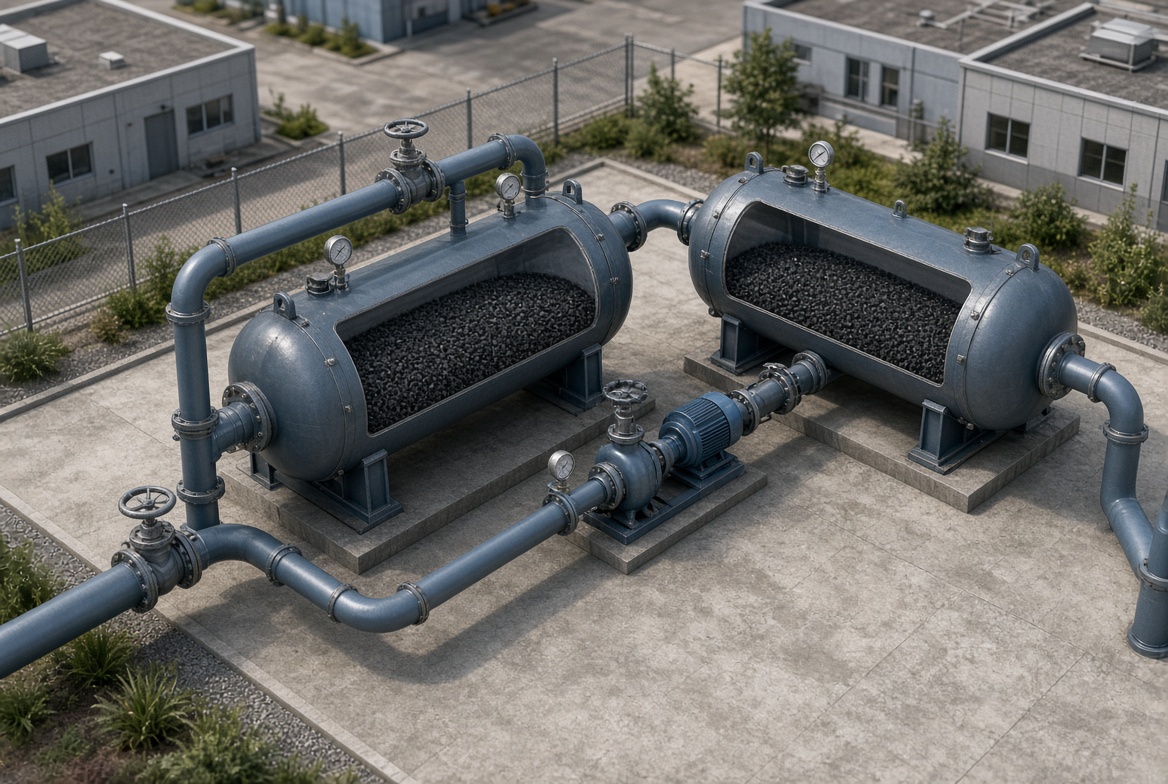
A lead-lag configuration uses two GAC vessels in series. The first vessel captures most of the contaminant loading, while the second vessel acts as a polishing and protection stage.
This design offers several benefits:
- Reduced risk of untreated-water discharge
- Earlier detection of breakthrough
- More predictable carbon changeout planning
- Better use of remaining adsorption capacity
- Increased operational flexibility
When the lead vessel approaches breakthrough, operators can move the lag vessel into the lead position and install fresh carbon in the second position. This rotation strategy can improve carbon utilization compared with replacing both vessels at once.
3. Pressure Vessels vs. Gravity Contactors
The selection between pressure GAC and gravity GAC depends on flow rate, site layout, available head, operating preferences, and construction budget.
| System Type | Best-Fit Conditions | Main Advantages | Main Considerations |
| Pressure GAC vessel | Industrial sites, modular systems, lower-to-medium flows | Compact footprint, enclosed operation, easy skid integration | Requires pumping energy and pressure monitoring |
| Gravity GAC contactor | Larger treatment plants and higher flow rates | May reduce pumping requirements and allow large bed volumes | Requires more land area and civil construction |
| Mobile GAC unit | Temporary remediation, pilot testing, emergency response | Fast deployment and flexible capacity | Long-term rental and logistics costs may increase |
According to EPA cost-model documentation, a typical GAC system may include influent pumps, contactors, backwash equipment, carbon transfer and storage equipment, piping, valves, and instrumentation.
4. Bed Depth, Freeboard, and Backwashing
A GAC bed is not static throughout its operating life. Fine solids, iron precipitates, biomass, and carbon fines can increase head loss. Backwashing may be necessary to expand and clean the bed.
Design teams should provide adequate:
- Bed depth for adsorption capacity
- Freeboard for bed expansion
- Backwash flow capacity
- Drainage and spent-backwash handling
- Sampling points before, between, and after GAC vessels
EPA specifically notes that vessel height or basin depth must allow for bed expansion during backwashing, while gravity systems require sufficient freeboard to prevent media washout.
Pretreatment: Protecting Carbon Capacity
Pretreatment is often the difference between a carbon system that works for months and one that experiences early pressure-drop problems or premature breakthrough.
Consider pretreatment when groundwater contains:
- High turbidity
- Oxidized iron or manganese
- Oil and grease
- Suspended solids
- Biological growth potential
- Significant scaling risk
- Free chlorine or strong oxidants
Possible pretreatment steps include:
1. Equalization to reduce flow and concentration fluctuations
2. Aeration or oxidation for selected dissolved metals
3. Clarification or settling
4. Multimedia filtration
5. Cartridge filtration
6. Oil-water separation
7. pH adjustment, where justified by treatability results
The EPA notes that solids may accumulate in GAC beds, causing higher pressure drop and more frequent backwashing. It identifies prefiltration as a site-specific requirement, including situations involving coagulant solids or iron and manganese precipitates.
Monitoring Breakthrough and Carbon Replacement
Carbon exhaustion is not a visual condition. A GAC vessel can look normal while treated-water concentrations are approaching the compliance limit.
A practical monitoring program should include:
- Influent and effluent sampling
- Inter-stage sampling in lead-lag systems
- Differential-pressure monitoring
- Flow-rate tracking
- pH, turbidity, and conductivity checks
- Target-contaminant trend analysis
- Carbon bed volume calculations
- Changeout forecasting
A Practical Breakthrough Framework
Use three decision levels:
| Monitoring Stage | Meaning | Recommended Action |
| Early detection | Target compound appears after the lead vessel but remains controlled by the lag vessel | Increase sampling frequency and prepare replacement logistics |
| Operational warning | Lead-vessel removal is declining rapidly | Schedule carbon rotation before lag-vessel risk increases |
| Compliance threshold | Final effluent approaches the required discharge or drinking-water limit | Replace or rotate media immediately according to site protocol |
For projects involving PFAS, contaminant-specific behavior matters. Pilot-scale research comparing GAC and anion-exchange resin found that earlier breakthrough of perfluorocarboxylic acids could control media replacement timing.
Common Mistakes in Groundwater GAC Projects
Selecting Carbon Only by Iodine Number
Iodine number is useful as a quality-control indicator, but it does not replace adsorption testing with actual groundwater. It does not fully describe mesopore structure, contaminant diffusion, competitive adsorption, or breakthrough behavior.
Ignoring Iron and Manganese
Dissolved metals may enter the system in soluble form and later precipitate after oxidation or operational changes. The resulting solids can foul the bed and increase backwash demand.
Using One Vessel Without a Safety Margin
A single-vessel design can be appropriate in limited applications, but it creates less protection against unexpected influent spikes or early breakthrough. For critical discharge requirements, lead-lag operation is usually more resilient.
Delaying Carbon Changeout Planning
Carbon replacement is not only a procurement event. It requires logistics, vessel isolation, media removal, fresh-carbon loading, spent-carbon handling, sampling, and restart verification.
Treating Pilot Testing as Optional
Pilot testing can reduce expensive design errors. EPA materials identify pilot testing as a method to select carbon, determine EBCT, establish carbon replacement needs, and evaluate water-quality variability.
A Site-Specific Selection Workflow
For industrial users, engineering contractors, and remediation firms, the following workflow can reduce project risk.
1. Define the treatment target. Identify contaminants, influent ranges, required effluent limits, and compliance margins.
2. Characterize the groundwater. Test both target pollutants and competitive constituents such as TOC, iron, manganese, suspended solids, and hydrocarbons.
3. Screen carbon options. Compare coconut shell, coal-based, or customized granular activated carbon based on target molecule size, adsorption behavior, hardness, ash level, and expected operating conditions.
4. Conduct laboratory and pilot testing. Use actual site water where possible and assess breakthrough, pressure drop, EBCT, and pretreatment requirements.
5. Choose vessel configuration. Determine whether pressure vessels, gravity contactors, or mobile units best fit the flow rate, site footprint, and reliability requirements.
6. Establish a monitoring plan. Include influent, inter-stage, and final-effluent sampling with defined decision thresholds.
7. Plan carbon lifecycle management. Confirm fresh-carbon supply, changeout timing, spent-carbon transportation, regeneration feasibility, and disposal requirements before startup.
Work With a Granular Activated Carbon Supplier
Guangdong Tongke Activated Carbon Co., Ltd. supports global customers with customized activated carbon solutions for groundwater treatment, water purification, air and gas purification, food and beverage processing, chemical production, and pharmaceutical applications.
For a groundwater GAC project, an effective supplier discussion should cover:
- Target contaminants and treatment objectives
- Full groundwater-analysis data
- Required carbon specification
- Particle-size distribution
- Iodine number and adsorption indicators
- Hardness, ash, moisture, and bulk density
- Recommended vessel loading quantity
- Sampling and pilot-test requirements
- Packaging, export documentation, and delivery schedule
Request a site-specific granular activated carbon recommendation rather than relying on a generic grade. The right carbon selection can help extend bed life, stabilize effluent quality, reduce operational interruptions, and improve total treatment economics.
FAQs
1. What contaminants can granular activated carbon remove from groundwater?
Granular activated carbon is commonly used for VOCs, chlorinated solvents, many pesticides, petroleum-related organic compounds, taste-and-odor compounds, natural organic matter, and selected PFAS. Performance depends on contaminant properties and groundwater chemistry.
2. Is coconut shell activated carbon suitable for groundwater treatment?
Yes. Coconut shell GAC can be suitable for groundwater treatment, especially where high hardness and a microporous structure are beneficial. Final selection should be confirmed through site-water testing.
3. How often should GAC be replaced?
There is no universal replacement interval. Carbon life depends on influent concentration, flow rate, EBCT, competing contaminants, water temperature, carbon type, and required effluent quality. Breakthrough monitoring should determine the actual changeout schedule.
4. Does granular activated carbon remove iron and manganese?
GAC is primarily an adsorption medium for dissolved organic contaminants. It may retain metal precipitates after upstream oxidation, but iron and manganese usually require dedicated oxidation and filtration design rather than relying on carbon alone.
5. Why is a lead-lag GAC system recommended?
Lead-lag vessels provide an additional treatment barrier. The lead vessel handles most contaminant loading, while the lag vessel protects final water quality and gives operators time to plan carbon replacement.
6. Can spent granular activated carbon be regenerated?
In many applications, spent GAC can be thermally reactivated, depending on the adsorbed contaminants, local regulations, logistics, and the available regeneration service. Some spent carbon may require controlled disposal, particularly when hazardous contaminants are present.
References
1. U.S. Environmental Protection Agency. "[Overview of Drinking Water Treatment Technologies]."
2. U.S. Environmental Protection Agency. "[Work Breakdown Structure-Based Cost Model for Granular Activated Carbon Systems]."
3. U.S. Environmental Protection Agency. "[PFAS Treatment Technology Cost and Performance Report]."
4. U.S. Environmental Protection Agency. "[Interim Treatment Guide for Controlling Organic Contaminants in Drinking Water Using Granular Activated Carbon]."
5. U.S. Environmental Protection Agency. "[Granular Activated Carbon Installations]."
6. Ross, I. et al. "[Removal of Per- and Polyfluoroalkyl Substances from Contaminated Groundwater Using Granular Activated Carbon: A Pilot-Scale Study with Breakthrough Modeling]." *Environmental Science: Water Research & Technology*.
7. McCleaf, P. et al. "[Removal of Per- and Polyfluoroalkyl Substances from Contaminated Groundwater by Granular Activated Carbon and Anion Exchange Resins: A Pilot-Scale Comparative Assessment]." *Environmental Science: Water Research & Technology*.


