Content Menu
● Why Bed Depth Determines Performance
>> The Core Design Relationship
● Typical Bed Depth Ranges by Application
● Empty Bed Contact Time: The Number That Actually Matters
● Real-World Bed Depth Case Comparisons
● Step-by-Step: How to Calculate the Bed Depth You Need
>> A Practical Design Guideline (L/de Ratios)
● Manufacturing Process Also Shapes Depth Requirements
● Common Bed Depth Mistakes in Industrial Design
● Getting Bed Depth Right for Your System
● Frequently Asked Questions
● References
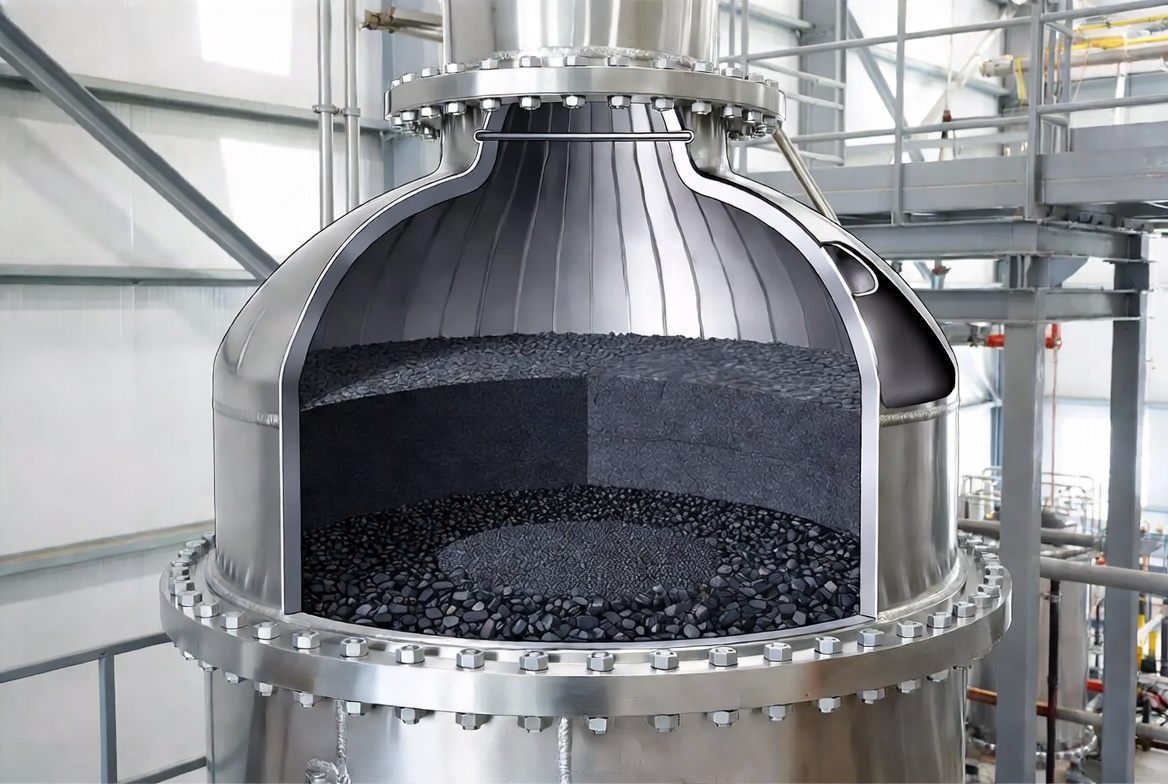
Choosing the right granular activated carbon bed depth is one of the most misunderstood decisions in industrial water and air treatment design. Too shallow, and contaminants break through before they're removed. Too deep, and you waste carbon, budget, and pressure capacity. The right answer depends on flow rate, contact time, particle size, and the specific contaminant profile of your system.
At Guangdong Tongke Activated Carbon Co., Ltd., we've spent years supplying custom granular activated carbon solutions to industries ranging from municipal water treatment to pharmaceutical purification, and bed depth questions come up in nearly every technical consultation we run.
Why Bed Depth Determines Performance
Bed depth is not a fixed number pulled from a catalog. It is an engineering variable that interacts directly with Empty Bed Contact Time (EBCT) — the time water or gas spends inside the carbon volume relative to flow rate. A deeper bed generally supports better mass-transfer stability and delays the point of "breakthrough," where contaminants start passing through untreated.
That said, depth alone does not guarantee performance. Particle size, flow rate, and pressure drop all interact with depth to define whether a system actually works efficiently or simply becomes an expensive column of carbon.
The Core Design Relationship
Design engineers commonly express the relationship between bed depth and filtration efficiency as a ratio: depth of media divided by the effective size of the filter media, written as L/de. This single ratio explains why a shallow bed of fine carbon can outperform a deep bed of coarse carbon in some applications, and why the reverse is true in others.
Typical Bed Depth Ranges by Application
Different processes call for very different depths. Below is a practical breakdown based on established industrial practice.
| Application | Typical Bed Depth | Common Particle Size | Notes |
| Liquid-phase polishing (water treatment) | 0.6–1.8 m | 8×30 or 12×40 mesh | Deeper beds delay breakthrough in complex organics |
| Vapor-phase / gas treatment | 0.3–1.2 m | 3–4 mm pellets | Shorter residence time (0.5–2 seconds) is typical |
| Municipal drinking water filtration | Shallow beds under 36 in; deep beds 48–60 in | 8×30, 12×40 (shallow) vs. 8×16, 8×20 (deep) | Deep beds require air scour during backwash |
| Rapid gravity or pressure filters | Up to 2.5 m (gravity), up to 3 m (pressure) | Varies by system | Common in large-scale municipal and industrial adsorbers |
The takeaway: there is no universal "correct" bed depth. The right depth is the one matched to your flow rate, contaminant load, and acceptable pressure drop.
Empty Bed Contact Time: The Number That Actually Matters
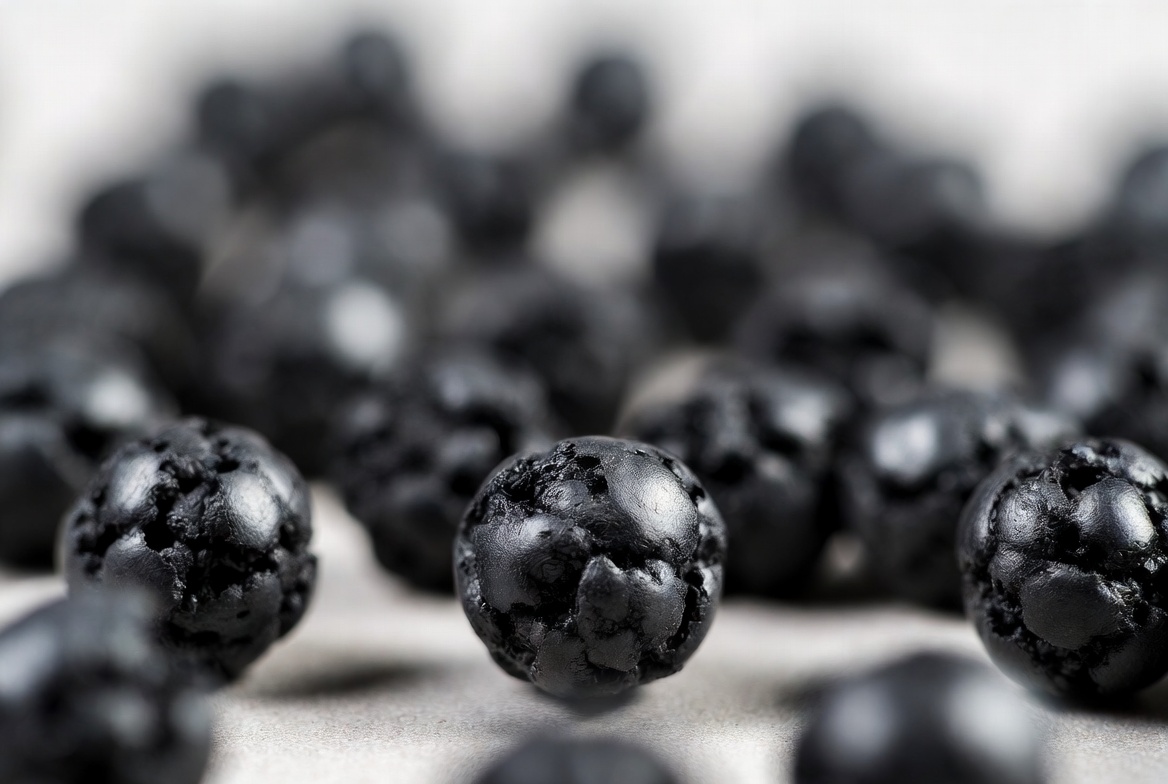
If bed depth is the headline metric, EBCT is the number that actually drives performance. EBCT is calculated as bed volume divided by flow rate, and it tells you how long water or gas is genuinely interacting with the carbon surface.
- For liquid polishing, many systems target 5–10 minutes of EBCT as a starting point, with more difficult organic compounds requiring longer contact.
- For vapor treatment, residence times of 0.5–2 seconds are common, though this varies with humidity and temperature.
- Systems with higher flow rates but shallow beds will inevitably deliver shorter contact time — even if the total carbon volume looks sufficient on paper.
This is why simply increasing bed depth without recalculating EBCT against your actual flow rate is one of the most common design mistakes we see from clients moving into large-scale carbon adsorption for the first time.
Real-World Bed Depth Case Comparisons
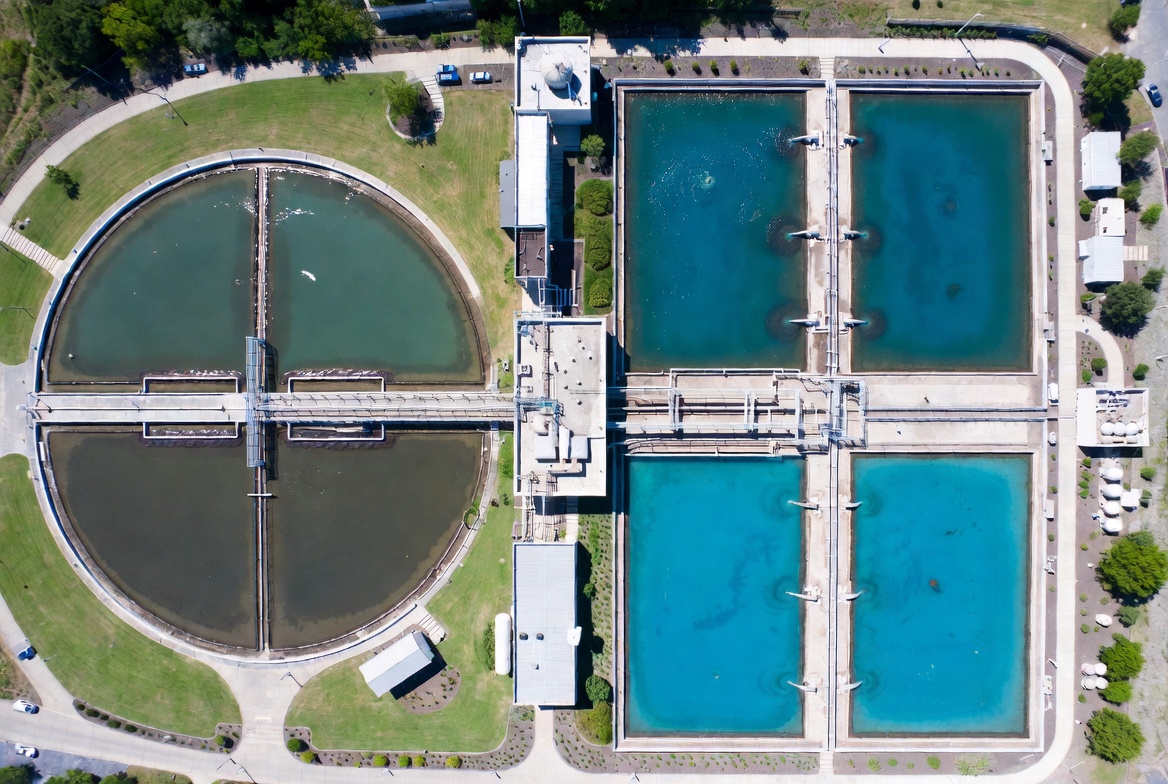
Field data from municipal drinking water plants illustrates how bed depth and particle size trade off against each other in practice:
- Robinson Township, PA runs a shallow bed of 24 inches of 8×30 GAC over sand, achieving effluent turbidity of 0.022 NTU at a flow rate of 1.5 gpm/ft⊃2;.
- Lawrence, MA uses 33 inches of finer 12×40 GAC to handle more challenging influent water (1.01 NTU average), reducing turbidity to 0.31 NTU.
- Augusta, ME employs a deep bed of 60 inches using coarser 8×16 mesh carbon, requiring air scour during backwash, and achieves turbidity reduction from 0.29 NTU to 0.019 NTU.
- Chester, CT runs 48 inches of 8×20 mesh carbon, reducing influent turbidity from 0.40 NTU to 0.1 NTU.
These four operating plants prove a critical point: there is more than one valid bed depth strategy. Shallow beds with fine particles and deep beds with coarse particles can both achieve strong filtration results — the deciding factor is matching particle size, flow rate, and backwash strategy to the depth chosen.
Step-by-Step: How to Calculate the Bed Depth You Need
Rather than guessing, follow a structured sizing process. This is the same sequence our engineering team walks clients through before recommending a custom carbon grade.
1. Define your target contaminants and required removal efficiency, along with concentration, flow rate, temperature, and pH of the influent.
2. Select liquid-phase or vapor-phase media based on your process — this determines your starting EBCT range.
3. Match particle size to your pressure drop tolerance. Finer particles increase surface contact but raise head loss significantly.
4. Calculate the L/de ratio for your intended particle size and desired filtration performance, using established design minimums for your water or gas difficulty level.
5. Confirm vessel dimensions and maximum allowable pressure drop against your calculated bed depth.
6. Run a bench-scale or pilot bed trial before committing to full-scale installation — this catches design errors before they become costly retrofits.
A Practical Design Guideline (L/de Ratios)
Empirically derived minimums for the depth-to-effective-size ratio provide a useful sanity check during design:
- Minimum for dual-media beds with polymer filter aid: L/de greater than 1,000
- Recommended for dual-media beds with polymer filter aid: L/de between 1,200 and 1,500
- Minimum for dual-media beds without polymer filter aid: L/de greater than 1,500
- Challenging water conditions: L/de greater than 1,800
If your calculated ratio falls below these thresholds, your bed is likely too shallow relative to the particle size you've selected — a common cause of early breakthrough and disappointing field performance.
Manufacturing Process Also Shapes Depth Requirements
Bed depth decisions cannot be separated from how the carbon itself was made. Reagglomerated bituminous coal-based carbon produces a denser granule with man-made pores evenly distributed throughout, while direct-activated carbon tends to concentrate surface activity on the outer shell of the granule. Denser, more evenly activated carbon allows facilities to achieve equivalent adsorption performance with a comparatively shallower bed, because more usable carbon structure exists within the same volume.
This is a key reason custom manufacturers matter: a generic carbon grade sized against generic industry averages may force you into a deeper, more expensive bed than a properly engineered granule would require for the same water quality outcome.
Common Bed Depth Mistakes in Industrial Design
Based on recurring technical consultations, these are the errors that most frequently derail carbon bed performance:
- Sizing bed depth without recalculating EBCT against actual (not nameplate) flow rate.
- Selecting fine mesh carbon for high-flow applications without accounting for the resulting pressure drop.
- Ignoring compatibility ratios between carbon and other media (such as sand) in dual-media backwash systems.
- Assuming a deeper bed always outperforms a shallower one, regardless of particle size or contaminant load.
- Skipping pilot-scale validation before full deployment, leading to costly field corrections.
Getting Bed Depth Right for Your System
Bed depth is not a one-size-fits-all specification — it's the output of a calculation involving flow rate, particle size, contact time, and contaminant difficulty. Getting it wrong means either overspending on unnecessary carbon volume or underdelivering on treatment performance.
If you're designing a water treatment, air purification, or process filtration system and need a bed depth recommendation matched to your specific flow conditions, contact our engineering team at Guangdong Tongke Activated Carbon for a tailored carbon grade and sizing consultation.
Frequently Asked Questions
- What is the minimum granular activated carbon bed depth for water treatment?
Shallow bed systems using fine mesh carbon (such as 8×30 or 12×40) commonly operate with total depths under 36 inches, while deep bed systems using coarser mesh (8×16 or 8×20) may require 48 to 60 inches for equivalent filtration performance.
- Does a deeper carbon bed always mean better filtration?
Not necessarily. Filtration efficiency depends on the ratio between bed depth and effective particle size, not depth alone; a shallow bed with fine particles can outperform a deep bed with coarse particles under the right conditions.
- How does particle size affect bed depth requirements?
Finer particles increase filtration efficiency but also raise pressure drop, so shallow beds typically pair with fine mesh carbon while deep beds pair with coarser mesh to keep head loss manageable.
- What is Empty Bed Contact Time and why does it matter more than depth alone?
EBCT measures how long fluid actually spends interacting with the carbon volume at a given flow rate, and it is a more direct predictor of adsorption performance than bed depth by itself.
- Can bed depth be reduced with a higher-quality carbon grade?
Yes. Denser, reagglomerated carbon with evenly distributed internal pores can deliver comparable adsorption capacity in a shallower bed than lower-density, direct-activated carbon of the same mesh size.
- How often does a granular activated carbon bed need backwashing?
Backwash frequency depends on flow rate, influent turbidity, and bed depth, with observed intervals ranging from roughly 72 hours in deep bed systems to 100 hours in shallow bed systems.
References
- Sorbents Direct — Activated Carbon: Specs, Sizing & Selection: https://www.sorbentsdirect.com/blogs/news/activated-carbon-a-practical-guide-for-industrial-purification
- Water Online — Drinking Water Filtration Using Granular Activated Carbon: https://www.wateronline.com/doc/drinking-water-filtration-using-granular-acti-0001
- ScienceDirect — Granular Activated Carbon Overview: https://www.sciencedirect.com/topics/engineering/granular-activated-carbon


