Content Menu
● What Is Coconut Shell Activated Carbon?
● Why Industries Prefer Coconut Shell Carbon
● Market Trends and Why Supply Security Matters
● Product Forms: Matching Carbon Type to Application
>> Granular Activated Carbon (GAC)
>> Catalytic Granular Activated Carbon
>> Powdered Activated Carbon (PAC)
>> Columnar / Pellet (Extruded) Activated Carbon
● Quick Selection Guide for Engineers
● Real‑World Performance in Water Treatment
● Air, Gas, and VOC Control: Beyond Basic Odor Removal
● Gold Recovery and Metallurgical Applications
● How to Specify the Right Coconut Shell Carbon
● Customized Solutions from a Specialist Manufacturer
● Expert Tips for Implementing Coconut Shell Carbon in Your System
● Why Coconut Shell Carbon Supports Your Sustainability Goals
● Call to Action: Design Your Custom Coconut Shell Carbon Solution
● Frequently Asked Questions (FAQ)
● References
As a process engineer who has spent years working with water, air, and gold recovery plants across Asia, I've seen first‑hand how coconut shell activated carbon can make or break system performance. Today, it is one of the most reliable, sustainable, and technically advanced adsorbents available for industrial purification, especially when you work with a manufacturer that can tailor pore structure, mesh size, and surface chemistry to your process. [yanshancarbon]
What Is Coconut Shell Activated Carbon?
Coconut shell activated carbon is a highly porous adsorbent produced from mature coconut shells through controlled carbonization and steam activation. Compared with coal- or wood-based carbons, it offers a higher micropore volume, greater hardness, and more consistent performance in critical applications such as drinking water, gold recovery, and air purification. [dagonuniversity.edu]
Because coconuts are a renewable agricultural resource, coconut shell carbon is widely recognized as an eco‑friendly alternative to fossil-based carbons in modern ESG-focused supply chains. [linkedin]
Why Industries Prefer Coconut Shell Carbon
From an operator's point of view, coconut shell activated carbon delivers a balance of performance, safety, and lifecycle cost that is hard to match. Key advantages include: [allcarbontech]
- High hardness and low dust – reduces pressure drop, backwashing losses, and reactor fouling. [yanshancarbon]
- Dominantly microporous structure – excellent for removing low-molecular-weight organics, VOCs, and taste‑ and‑odor compounds. [sinoucarbon]
- Stable quality and renewable raw material – less variability and better ESG profile than many coal-based alternatives. [maximizemarketresearch]
- Strong adsorption kinetics – particularly valuable in fixed-bed filters and gold CIP/CIL circuits where contact time is limited. [allcarbontech]
In 2025–2026, water treatment applications account for around 45% of total activated carbon demand, driven by stricter PFAS, heavy metal, and disinfection by‑product regulations worldwide. Coconut shell carbon is at the center of this shift because it combines high performance with a sustainable feedstock. [activatedcarbonfactory]
Market Trends and Why Supply Security Matters
If you are responsible for procurement, you've probably already felt the impact of the tight coconut shell market. [activatedcarbonfactory]
- The global activated carbon market reached about USD 5.6 billion in 2025 and is projected to grow above 8% CAGR through 2035, with coconut shell-based products among the fastest-growing segments. [linkedin]
- Coconut shell activated carbon market revenue is projected to rise from roughly USD 1.1 billion in 2024 to nearly USD 1.9 billion by 2033, at around 6–7% CAGR. [yanshancarbon]
- PFAS regulations, mercury emission controls, and VOC standards are all pushing utilities and industrial plants to sign multi‑year GAC contracts, creating structural support for prices. [maximizemarketresearch]
For engineering and purchasing teams, this means supplier selection is no longer just a price question. You need partners with stable coconut shell sourcing, mature production lines, and the ability to customize high‑value grades rather than generic commodity carbon. [khycarbon]
Product Forms: Matching Carbon Type to Application
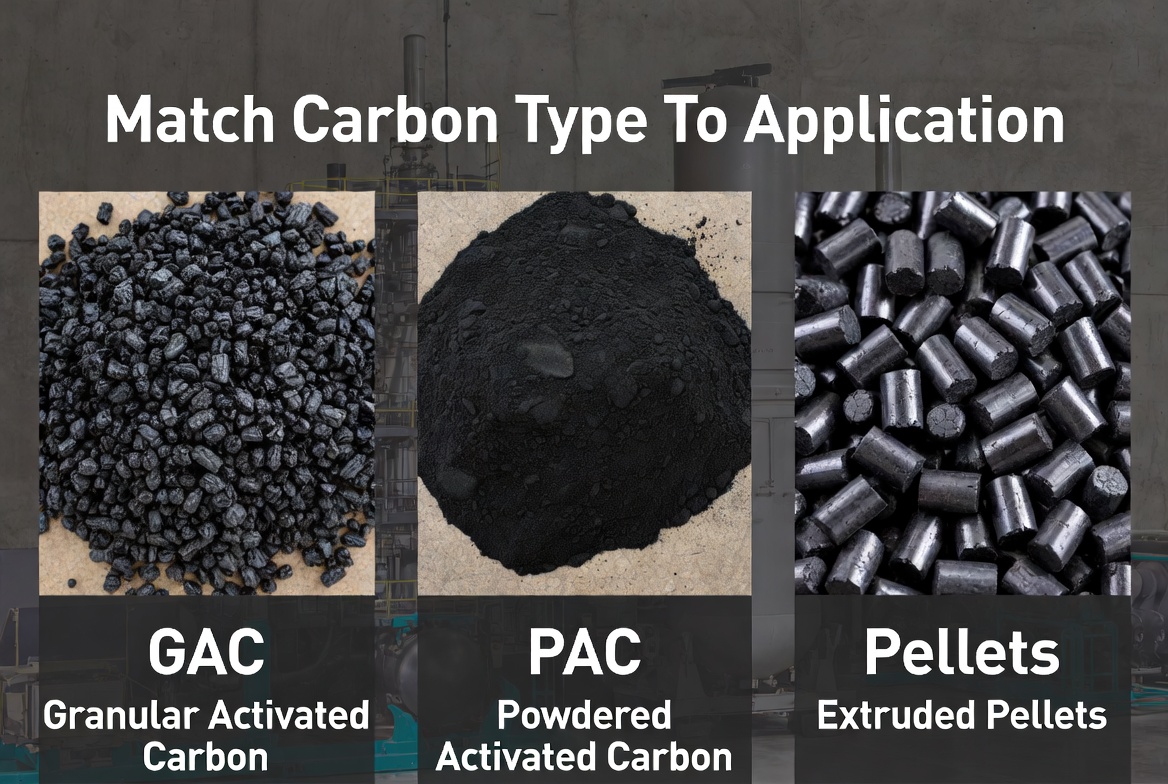
As an industrial user, one of the most common mistakes I see is buying the wrong carbon form for the job. Below is a practical overview of the main coconut shell activated carbon forms Guangdong Tongke (Heycarbons) and similar manufacturers supply. [gremarco]
Granular Activated Carbon (GAC)
Granular coconut shell activated carbon is the workhorse for water treatment and gold recovery. [allcarbontech]
Typical specifications: [yanshancarbon]
- Mesh sizes: 4×8, 8×16, 8×30, 12×40, 30×60, 80×150
- Iodine value: 700–1700 mg/g
- Hardness: 95–99.8%
- Bulk density: 0.45–0.55 g/cm³
- Ash: 2–4%, moisture ≤5%, pH 8–11
Ideal for:
- Gold recovery (CIP, CIL, CIC)
- Municipal and industrial water filters
- Drinking water devices (CTO, UDF cartridges)
- Beverage and food-grade applications after proper washing
The combination of high hardness and high iodine value makes these grades especially attractive for gold loading circuits and high-throughput filters, where abrasion loss directly affects operating cost. [allcarbontech]
Catalytic Granular Activated Carbon
Catalytic coconut shell GAC is engineered to accelerate surface reactions, especially chloramine and hydrogen sulfide (H₂S) removal in water. [yanshancarbon]
Key characteristics:
- Produced by modifying surface chemistry via high‑temperature gas activation, not by caustic impregnation. [yanshancarbon]
- Maintains high organic adsorption capacity while providing enhanced catalytic activity for chloramine and H₂S reduction. [allcarbontech]
Benefits for system designers: [allcarbontech]
- More effective than conventional GAC for chloramines and H₂S
- Smaller equipment footprint due to faster reaction kinetics
- No impregnated chemicals, reducing ignition risks and handling concerns
- On‑site regeneration with water washing, extending service life
Powdered Activated Carbon (PAC)
Powdered coconut shell activated carbon is produced from granular grades and then milled to fine mesh sizes such as 30–60, 50–120, 80–150, 200, and 325. [yanshancarbon]
Typical properties:
- Iodine value: 800–1100 mg/g
- Methylene blue adsorption: 120–180 mg/g
- Bulk density: 0.4–0.5 g/cm³
- Ash levels can be reduced to below 0.5% after pickling. [yanshancarbon]
Use cases:
- Pharmaceutical intermediates decolorization
- Food and beverage color and odor control
- Cosmetic and health-care formulations, body detox products, teeth whitening, etc. [yanshancarbon]
PAC is especially useful when you need fast, flexible dosing in batch tanks or emergency situations such as accidental spills, where fixed‑bed GAC is not practical. [linkedin]
Columnar / Pellet (Extruded) Activated Carbon
Pelletized coconut shell carbon is produced from high-quality coconut shell charcoal powder extruded into 0.9–8 mm diameter pellets. [pureairfiltration]
Typical data:
- Diameter: 0.9–8 mm
- CTC value: 50–120%
- Iodine value: 500–1500 mg/g
- Hardness: 95–99%
- Bulk density: 400–520 kg/m³, moisture ≤3%, pH 8–11 [yanshancarbon]
Ideal for:
- CIC gold extraction
- Solvent recovery and VOC abatement
- Gas masks, cigarette filters, and industrial exhaust treatment
- Biogas and off‑gas H₂S and odor control [pureairfiltration]
Because pellets combine high strength, low dust, and excellent flow properties, they are a natural fit for packed beds, cartridge filters, and high‑velocity gas streams. [pureairfiltration]
Quick Selection Guide for Engineers
The table below gives a concise, application‑driven view of which coconut shell carbon form is typically used. [pureairfiltration]
| Application | Recommended Form | Key Properties (Typical) |
| Drinking water & municipal filters | GAC 8×30, 12×40 | High iodine (≥1000 mg/g), low ash, high hardness |
| Industrial process water | GAC 8×16, 8×30 | Robust hardness, optimized mesh for contact time |
| Chloramine & H₂S in water | Catalytic GAC | Modified surface, non‑impregnated, regenerable |
| Gold CIP/CIL/CIC | GAC 6–12, 5–10, 8–16 mesh | Ultra high hardness, high activity, low attrition |
| VOC & solvent recovery | Pellets 3–4 mm | High CTC, high mechanical strength |
| Indoor air, masks, cigarette filter | Pellets 0.9–4 mm, small GAC | Controlled size, low dust |
| Pharmaceutical decolorization | PAC 200–325 mesh | Low ash, high methylene blue and iodine value |

Real‑World Performance in Water Treatment
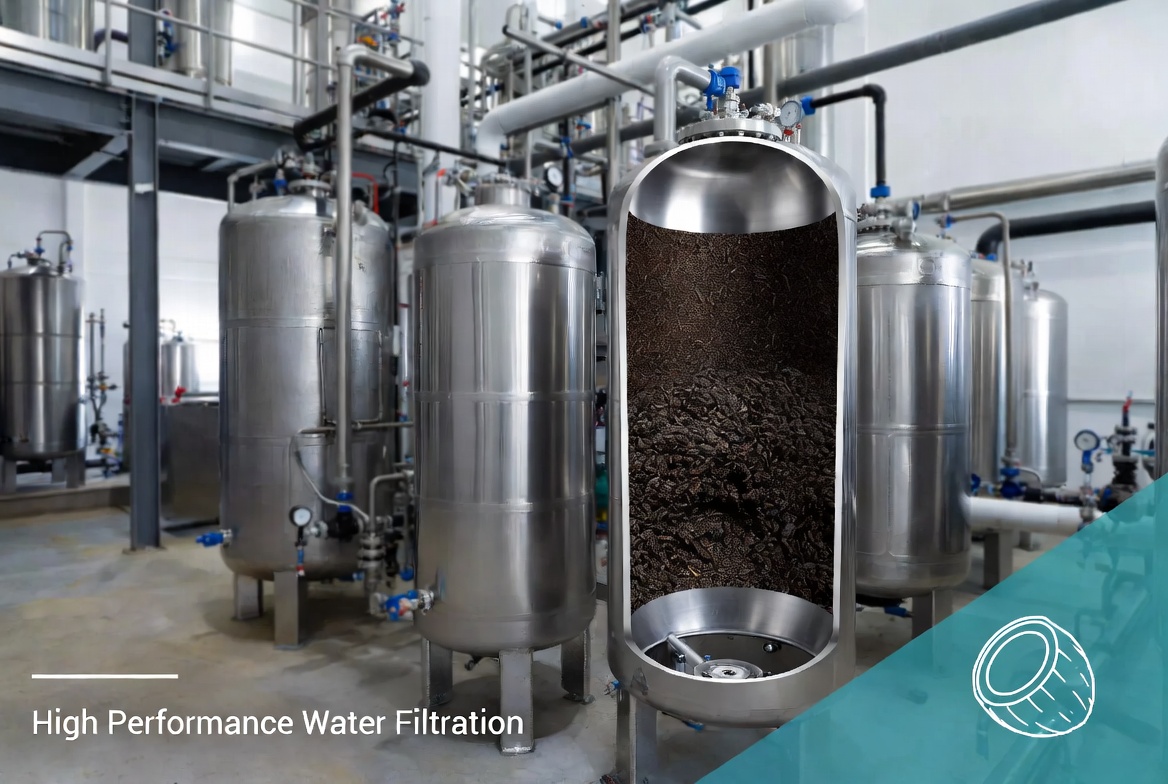
In water treatment, coconut shell carbon has consistently shown superior performance for removing chlorine, pesticides, and certain heavy metals while improving taste and odor. [dagonuniversity.edu]
- A comparative study on surface water filtration found that coconut shell-based carbon reduced pH and arsenic to safe levels, outperforming other raw materials. [dagonuniversity.edu]
- In practice, PAC doses of 0.5–1 g/L are common in tap water treatment, while industrial systems may use 1–2 g/L depending on contaminant load. [linkedin]
Operators also appreciate that coconut shell GAC can be thermally reactivated, closing the loop and reducing disposal volumes, which supports corporate sustainability goals. [haycarb]
Air, Gas, and VOC Control: Beyond Basic Odor Removal
For air and gas purification, the microporous structure of coconut shell carbon makes it highly effective at capturing VOCs, H₂S, and solvent vapors, especially when configured as pellets or specialized GAC. [pureairfiltration]
Typical industrial uses include:
- Wastewater plant odor control with pelletized beds targeting H₂S. [pureairfiltration]
- Industrial VOC scrubbers for paint lines, chemical production, and printing facilities. [pureairfiltration]
- Commercial and indoor air quality systems using custom-cut filtration media. [gremarco]
Manufacturers like Guangdong Tongke and other global suppliers can also provide custom blends and impregnated carbons tailored to specific contaminants and operating conditions, ensuring maximum bed life and predictable breakthrough behavior. [haycarb]
Gold Recovery and Metallurgical Applications
In gold mining, coconut shell GAC is the industry standard for carbon-in-pulp (CIP), carbon-in-leach (CIL), and carbon-in-column (CIC) circuits because of its superior hardness, high loading capacity, and low attrition. [allcarbontech]
Key success factors:
- High iodine value and activity to achieve high gold loading and fast kinetics. [yanshancarbon]
- Extremely high hardness (95–99.8%) to minimize losses during mixing, screening, and regeneration. [yanshancarbon]
- Consistent mesh sizes (6–12, 5–10, 8–16) to optimize contact time and minimize carryover. [yanshancarbon]
When you are running a CIP circuit, every percent of carbon loss is direct revenue leakage, so the abrasion resistance of coconut shell carbon translates into measurable profit retention. [allcarbontech]
How to Specify the Right Coconut Shell Carbon
From an engineer's perspective, the most reliable way to select carbon is to start from the process requirement and target pollutant, then work backward to pore structure and particle size. [allcarbontech]
A practical three‑step approach:
1. Define your primary contaminants
- Chlorine and taste/odor in drinking water → high iodine GAC (≥1000 mg/g). [allcarbontech]
- PFAS and micro‑organics → high surface area GAC with optimized pore distribution. [activatedcarbonfactory]
- H₂S and chloramines → catalytic GAC. [allcarbontech]
- VOCs and solvent vapors → high CTC pellet carbon. [pureairfiltration]
2. Choose the appropriate carbon form and mesh size
- GAC for fixed‑bed filters and gold circuits. [allcarbontech]
- PAC for batch treatment, emergency response, and fine decolorization. [linkedin]
- Pellets for gas‑phase and high‑velocity streams. [pureairfiltration]
3. Verify critical performance parameters
- Iodine value, CTC, methylene blue adsorption, hardness, ash content, and moisture. [allcarbontech]
- Required certifications (such as NSF 61 for drinking water). [allcarbontech]
A technical partner like Guangdong Tongke can then fine‑tune the grade, including mesh distribution, surface chemistry, and regeneration strategy, to match your plant's flow rates and compliance targets. [khycarbon]
Customized Solutions from a Specialist Manufacturer
As a Chinese manufacturer focusing on coconut shell activated carbon and other specialty carbons, Guangdong Tongke (Heycarbons) combines: [tongkeac]
- End-to-end production control – from raw coconut shell selection (trees >5 years old for better hardness) through carbonization, activation, crushing, screening, and air classification. [yanshancarbon]
- A portfolio covering granular, catalytic, powdered, and pelletized coconut shell carbons for water, air, gold mining, food & beverage, chemical, and pharmaceutical uses. [khycarbon]
- Custom specification services – mesh, iodine, hardness, ash, and impregnation or catalytic activation tailored to project needs. [haycarb]
This level of customization is increasingly important as global buyers face tighter performance specs, longer-term contracts, and higher expectations for traceability and sustainability. [linkedin]
Expert Tips for Implementing Coconut Shell Carbon in Your System
Based on field experience and published guidelines, a few practical best practices can significantly improve your results. [linkedin]
1. Pre‑rinse and backwash thoroughly
- Before commissioning, backwash filters to remove fines and stabilize the bed. [dagonuniversity.edu]
2. Monitor differential pressure and breakthrough
- Track pressure drop and contaminant levels to optimize change‑out or regeneration cycles. [linkedin]
3. Adjust PAC dosing to water quality
- In municipal systems, 0.5–1 g/L PAC is common; in heavily contaminated industrial wastewater, 1–2 g/L or more may be required. [linkedin]
4. Consider regeneration options early
- For larger installations, thermal or water‑wash regeneration can cut lifecycle cost and waste volumes. [haycarb]
5. Qualify at least one backup grade or supplier
- Given raw material volatility, it is wise to qualify at least one alternate coconut shell grade that matches your critical parameters. [activatedcarbonfactory]
Why Coconut Shell Carbon Supports Your Sustainability Goals
Modern buyers are under pressure to balance compliance, cost, and carbon footprint. Coconut shell activated carbon provides meaningful advantages here: [maximizemarketresearch]
- It uses a renewable agricultural by‑product, reducing dependency on coal and wood. [linkedin]
- Enhanced performance in PFAS, VOC, and mercury‑related applications supports stricter environmental regulations. [maximizemarketresearch]
- Regeneration and long service life minimize solid waste and CO₂ emissions per unit of treated water or air. [haycarb]
For companies reporting under ESG frameworks, specifying high‑performance coconut shell carbon from a reliable Asian manufacturer is a practical, data‑backed way to improve environmental metrics without compromising process reliability. [linkedin]
Call to Action: Design Your Custom Coconut Shell Carbon Solution
If you're planning a new filtration system or upgrading an existing line, the most effective next step is to translate your process challenges into a tailored carbon specification. [khycarbon]
Guangdong Tongke (Heycarbons) can support you with:
- Application‑specific recommendation for GAC, catalytic GAC, PAC, or pellets. [yanshancarbon]
- Lab testing and pilot samples to validate performance on your actual water, gas, or process solution. [haycarb]
- Fast, stable supply from a seasoned Chinese manufacturer with deep experience in gold recovery, water treatment, and industrial air purification. [tongkeac]
Share your target contaminants, flow rate, and regulatory requirements, and request a customized coconut shell activated carbon specification and quote. A well‑designed carbon solution can significantly reduce your operating costs while helping you meet tightening environmental standards. [khycarbon]
Frequently Asked Questions (FAQ)
1. Is coconut shell activated carbon safe for drinking water?
Yes. When produced under controlled conditions and certified to relevant standards such as NSF 61, coconut shell activated carbon is widely used in municipal drinking water plants and household filters to remove chlorine, organics, and taste‑ and‑odor compounds. [dagonuniversity.edu]
2. How often should I replace or regenerate the carbon?
Replacement intervals depend on contaminant load, flow rate, and bed design, but many drinking water filters are changed every 3–6 months, while industrial systems often rely on breakthrough monitoring and scheduled thermal regeneration to extend life. [linkedin]
3. What is the difference between catalytic carbon and standard GAC?
Standard GAC primarily works via physical adsorption, whereas catalytic coconut shell carbon has a modified surface that accelerates chemical reactions, making it much more effective for chloramine and H₂S removal without relying on caustic impregnation. [allcarbontech]
4. Why is coconut shell carbon preferred for gold recovery?
Gold plants choose coconut shell carbon because it offers very high hardness, strong gold adsorption capacity, and low attrition, which reduces carbon losses and improves gold recovery efficiency in CIP/CIL/CIC circuits. [yanshancarbon]
5. Can I use the same carbon type for both air and water treatment?
In practice, most systems use different grades: pelletized high‑CTC carbon for air and VOCs, and granular or catalytic GAC for water. Coconut shell-based carbons are versatile, but optimizing pore structure, particle size, and surface chemistry for each phase delivers better performance and longer bed life. [pureairfiltration]
References
1. Yanshan Carbon – “Coconut Shell Activated Carbon Price Trends & Forecast 2026”. https://yanshancarbon.com/coconut-shell-activated-carbon-price-trends-forecast-2026/
2. Activated Carbon Factory (Hojee) – “Activated Carbon Market 2026: $4.19B Size & Price Data”. https://activatedcarbonfactory.com/blog/activated-carbon-market-2026
3. AllCarbonTech – “Coconut Shell Activated Carbon | 2025 Proven Guide”. https://allcarbontech.com/coconut-shell-activated-carbon-guide/
4. Khin Khin et al. – “Analysis of Activated Carbon for Water Purification System”. https://www.dagonuniversity.edu.mm/wp-content/uploads/2019/08/KhinKhin-Kyaw-Hla-Toe-1.pdf
5. LinkedIn – “Coconut Shell Based Activated Carbon Market Size – Strategic Outlook & Forecast 2026–2033”. https://www.linkedin.com/pulse/coconut-shell-based-activated-carbon-0tejf
6. Maximize Market Research – “Global Activated Carbon Market – Emerging Key Trends”. https://www.maximizemarketresearch.com/market-report/global-activated-carbon-market/17449/
7. Guangdong Tongke Activated Carbon Co., Ltd. (Heycarbons) – “Coconut Shell Activated Carbon | Manufacturer From China”. https://heycarbons.com/coconut-shell-activated-carbon/
8. KHYCARBON – “Activated Carbon Manufacturer | Customized Solutions”. https://khycarbon.com
9. Haycarb – “Activated Carbon Solutions for Diverse Industrial Applications”. https://www.haycarb.com/activated-carbon-solutions/
10. PureAir Filtration – “Activated Carbon Pellets & Custom Carbon Air Filtration Solutions”. https://www.pureairfiltration.com/activated-carbon-pellets-air-filtration-solutions/
11. Gremarco – “Activated Carbon Filtration Media”. https://www.gremarco.com/activated-carbon
12. LinkedIn – Liu Mina, “How to use coconut shell activated carbon?”. https://www.linkedin.com/pulse/how-use-coconut-shell-activated-carbon-mina-liu-b7rre


