
Language
Views: 210 Author: Tongke Activated Carbon Publish Time: 2026-08-13 Origin: Site


Content Menu
● How Granular Activated Carbon Removes Chlorine
● Coal Based GAC vs Coconut Shell GAC at a Glance
● Coconut Shell GAC for Chlorine Removal
>> Main advantages of coconut shell GAC
>> Limitations of coconut shell GAC
● Coal Based GAC for Chlorine Removal
>> Main advantages of coal based GAC
>> Limitations of coal based GAC
● Free Chlorine and Chloramine Are Different Challenges
● How to Select the Right GAC Grade
>> Step 1: Test the influent water
>> Step 2: Define the outlet requirement
>> Step 3: Confirm the hydraulic design
>> Step 4: Compare lifecycle cost, not only price per tonne
● Application-Based Recommendations
● A Practical Sourcing Checklist
● Request a Carbon Selection Review
>> Is coconut shell GAC always better for chlorine removal?
>> Can coal based GAC remove free chlorine effectively?
>> Does a higher iodine number guarantee longer chlorine-removal life?
>> Which GAC is better before reverse osmosis?
>> Can standard GAC remove chloramine?
>> How often should activated carbon be replaced?
>> What mesh size is suitable for chlorine-removal GAC?
Removing residual chlorine is essential when water will be used in sensitive industrial processes, food and beverage production, pharmaceutical manufacturing, membrane protection, or high-quality process-water applications. Coal based GAC and coconut shell GAC can both remove free chlorine effectively, but their pore structures, reaction behavior, durability, impurity tolerance, and operating economics differ significantly.
For buyers evaluating granular activated carbon for chlorine removal, the correct decision should not rely on iodine number or purchase price alone. Influent water quality, chlorine species, empty-bed contact time, hydraulic loading, competing contaminants, and downstream equipment all determine which activated carbon grade will deliver the best long-term result.
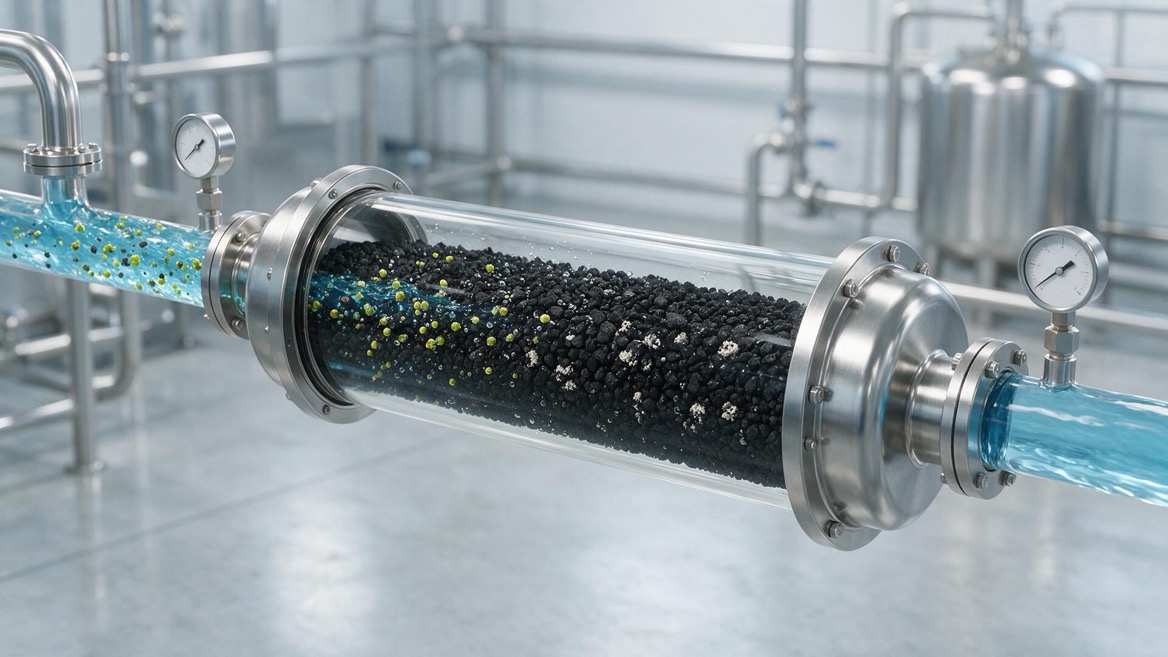
Free chlorine in water commonly exists as hypochlorous acid (HOCl) and hypochlorite ion (OCl⁻). When chlorinated water passes through a granular activated carbon bed, chlorine is removed through a combination of initial adsorption and surface-driven chemical reduction.
The activated carbon surface helps convert free chlorine into chloride ions. This is why a well-designed GAC filter can continue removing chlorine beyond the simple physical adsorption capacity of its pores.
In practical systems, chlorine-removal performance is affected by:
- Free chlorine concentration at the inlet
- Water pH, which changes the balance between HOCl and OCl⁻
- Contact time between water and the carbon bed
- Carbon particle size and bed depth
- Flow rate and hydraulic distribution
- Natural organic matter, oil, color, iron, or suspended solids
- Carbon surface chemistry and activation method
Laboratory studies comparing coal-derived and coconut-shell activated carbons confirm that both materials can remove free residual chlorine. However, their performance profiles are not identical: coconut carbon may offer stronger adsorption capacity related to fine microporosity, while certain commercial coal carbons can show higher surface reactivity under tested conditions.
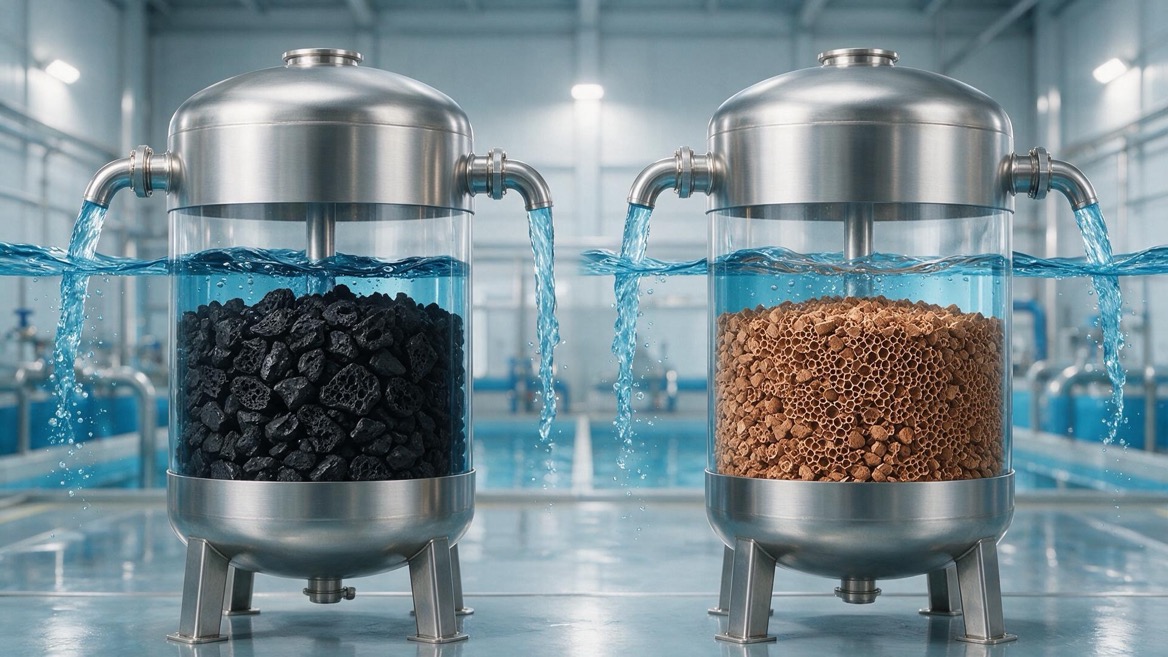
| Factor | Coal Based GAC | Coconut Shell GAC |
|---|---|---|
| Raw material | Bituminous coal, anthracite, or lignite-derived carbon | Coconut shell charcoal |
| Typical pore profile | Broad mix of micropores, mesopores, and macropores | Predominantly microporous |
| Chlorine removal | Strong when correctly activated and sized | Strong, especially for clean water and small-molecule adsorption |
| Organic contaminant tolerance | Often better for water containing larger organic molecules and color | Best suited to relatively clean water with smaller dissolved contaminants |
| Mechanical strength | Varies by coal source and manufacturing process | Usually very high hardness and abrasion resistance |
| Ash content | Can be higher, depending on coal feedstock | Often lower when properly processed |
| Density | Often lower bulk density | Usually higher bulk density |
| Cost position | Commonly more economical for bulk industrial systems | Often priced higher due to raw-material supply and processing |
| Typical use | Industrial water, wastewater polishing, decolorization, mixed contaminant streams | Drinking water, beverage water, RO pretreatment, high-purity process water |
The most important takeaway is simple: neither material is universally better. Coconut shell GAC is often favored when small-molecule adsorption, low ash, mechanical durability, and clean-water performance are priorities. Coal based GAC is frequently the more flexible and cost-efficient option for industrial influent containing mixed organic contaminants.
Coconut shell activated carbon is manufactured from hard coconut shells that are carbonized and activated under controlled conditions. Its structure is typically rich in micropores, which are very small pores that provide a large internal surface area.
For chlorine-removal applications, this pore structure can be particularly useful in low-turbidity water where residual disinfectant and low-molecular-weight organic compounds are the main targets.
- High micropore volume supports adsorption of small dissolved molecules.
- High hardness can reduce carbon loss during backwashing, transport, and handling.
- Low ash potential is valuable where water purity and low extractables matter.
- Dense granules can provide a stable filtration bed in properly designed vessels.
- Good fit for high-purity water used in food, beverage, pharmaceutical, laboratory, and membrane-preparation systems.
For a beverage plant using municipal water, coconut shell GAC can be a strong choice when the treatment target includes free chlorine, taste-and-odor compounds, and trace organics before reverse osmosis or final polishing.
Coconut shell GAC should not be selected only because it has a high iodine number or a high reported surface area. In actual water systems, a highly microporous carbon can be less suitable where contaminants are larger, heavier, or more complex.
Potential limitations include:
- Higher acquisition cost in some global supply markets.
- Less pore volume available for bulky organics than some coal-based grades.
- Possible performance reduction when influent contains oil, high color, humic substances, or elevated suspended solids.
- More demanding prefiltration requirements in heavily contaminated industrial water.
A coconut-shell grade should therefore be paired with appropriate pretreatment when raw water contains turbidity, iron precipitates, oil, or high organic loading.
Coal based GAC is produced from selected coal feedstocks and can be engineered to provide a wider distribution of micropores, mesopores, and macropores. This mixed pore structure is one reason coal-based carbon remains widely used in industrial and municipal treatment systems.
For free chlorine removal alone, a properly manufactured coal-based GAC can provide highly effective results. One published comparison found coal-derived activated carbon useful for removing free residual chlorine in tap water, with performance influenced by carbon dose, contact time, and hydraulic conditions.
- Broader pore distribution can better accommodate mixed contaminant sizes.
- Cost-effective bulk supply can reduce media cost for large treatment plants.
- Good versatility for industrial water containing chlorine, color, odor, and dissolved organics.
- Customizable grades can be produced for different mesh sizes, hardness levels, and adsorption requirements.
- Practical choice for large beds where total installed carbon volume is substantial.
Coal based GAC is often selected for cooling-tower makeup water, industrial process-water pretreatment, municipal polishing, wastewater reuse, and systems where chlorine removal is only one of several treatment objectives.
Coal-based carbon quality can vary more widely between suppliers because raw-material properties and activation conditions differ. A low-cost product may carry higher ash content, lower hardness, inconsistent particle sizing, or inadequate washing.
Buyers should not assume that every coal-based grade provides the same chlorine-removal behavior. The carbon should be evaluated using representative influent water and operating conditions.
Important purchasing checks include:
- Iodine number
- Abrasion or hardness value
- Ash content
- Moisture content
- Particle-size distribution
- Bulk density
- Water-soluble ash
- pH of water extract
- Methylene blue value where larger organic molecules are relevant
- Third-party testing for the intended application
Pore structure is central to the coal based GAC versus coconut shell GAC comparison.
Micropores are generally associated with adsorption of small molecules. Coconut shell GAC typically has a higher proportion of these fine pores, making it attractive for residual chlorine, odor compounds, and low-molecular-weight dissolved substances.
Mesopores and larger transport pores help contaminants move into the internal carbon structure. Coal based GAC often has a wider range of pore sizes, which can be beneficial when water contains a broader mix of organic compounds.
However, chlorine removal is not solely a pore-volume question. The activated carbon surface also participates in chemical reactions. Research has shown that free-chlorine removal can continue through catalytic reduction after initial adsorption, and longer contact time improves removal.
That means a lower-cost coal-based grade with the right surface characteristics and adequate bed contact time can outperform an unsuitable coconut-shell product in real service.
A common specification mistake is treating free chlorine and chloramine as the same contaminant.
Free chlorine is usually removed relatively quickly by standard granular activated carbon. Chloramine, especially monochloramine, is more stable and generally requires longer contact time or a carbon product with enhanced catalytic activity.
Before specifying a GAC grade, confirm whether your water contains:
- Free chlorine
- Monochloramine
- Dichloramine
- A changing disinfectant program
- Seasonal variation in chlorine residual
If the feedwater contains chloramine, selecting carbon solely by raw material may be insufficient. A catalytic activated carbon grade, verified under relevant flow and contact-time conditions, may be the more appropriate solution.
From an industrial supply perspective, the best carbon choice begins with the water—not with a product catalog.
Collect representative water data before choosing a carbon grade. At a minimum, test:
- Free chlorine and total chlorine
- pH
- Temperature
- Turbidity
- Total organic carbon
- Color
- Iron and manganese
- Oil and grease, where relevant
- Conductivity
- Suspended solids
- Chloride and alkalinity
A single chlorine result is not enough. Daily and seasonal variation can substantially change carbon consumption and breakthrough behavior.
State the required chlorine concentration after treatment. For example, a general process-water system may accept a low residual level, while reverse-osmosis membrane protection may require chlorine to be non-detectable according to the plant's operating method.
The target should be measurable and linked to a defined test method.
Contact time is often more important than buyers expect. A small carbon vessel filled with premium media may still fail if water passes through too quickly.
Check:
1. Carbon bed depth
2. Service flow rate
3. Peak flow rate
4. Empty-bed contact time
5. Backwash expansion rate
6. Pressure drop
7. Flow distribution across the vessel
Published testing has demonstrated that greater contact time improves free-chlorine removal, while pH and influent chlorine concentration also affect performance.
The cheapest carbon is not automatically the lowest-cost solution. Consider:
- Carbon purchase cost
- Freight and packaging
- Bed volume required
- Backwash loss
- Fines generation
- Replacement interval
- Disposal or reactivation cost
- Downtime risk
- Downstream equipment protection
Coconut shell GAC may justify a higher initial price where durability and clean-water performance extend service life. Coal based GAC may deliver lower overall treatment cost where the process requires large media volumes and broad organic-removal capability.
| Application | Preferred Starting Option | Why |
|---|---|---|
| Municipal drinking-water polishing | Coconut shell GAC or selected coal GAC | Choice depends on organics, taste, odor, and operating budget |
| Food and beverage water | Coconut shell GAC | Low ash and strong performance in clean-water polishing systems |
| RO pretreatment | Coconut shell GAC or catalytic carbon | Focus on dependable chlorine removal before membrane contact |
| Cooling-tower makeup water | Coal based GAC | Practical for mixed industrial contaminants and larger system volumes |
| Industrial wastewater reuse | Coal based GAC | Broad pore structure can better address color and mixed organics |
| Pharmaceutical process water | Coconut shell GAC | Suitable where purity control and low extractables are priorities |
| High-chloramine feedwater | Catalytic carbon evaluation required | Standard GAC may not provide sufficient kinetics |
These are starting points, not final specifications. Pilot testing remains the most reliable way to confirm media selection for high-value or high-risk applications.
When comparing suppliers, request a complete technical data sheet and avoid buying based only on "high iodine number."
Ask the supplier to provide:
- Raw material declaration
- Product mesh size and tolerance
- Iodine number
- Methylene blue value
- Hardness or abrasion resistance
- Ash and moisture content
- Bulk density
- pH value
- Water-wash procedure
- Packaging options
- Batch traceability
- Sampling and inspection process
- Recommended operating conditions
- Application-specific technical support
At Guangdong Tongke Activated Carbon Co., Ltd., we recommend matching coal based GAC or coconut shell GAC to actual feedwater data, target residual chlorine, flow conditions, and downstream process requirements. A well-matched carbon grade can protect equipment, improve product-water consistency, and reduce unnecessary media replacement.
Need help selecting coal based GAC or coconut shell GAC for chlorine removal? Share your water analysis, chlorine type, inlet concentration, required outlet level, flow rate, and vessel dimensions with Guangdong Tongke Activated Carbon Co., Ltd. Our technical team can recommend a suitable grade, mesh size, and operating approach for your industrial water-treatment system.
No. Coconut shell GAC is often an excellent option for clean water and small-molecule adsorption, but coal based GAC can be highly effective for free chlorine removal and may be better suited to water containing mixed organics, color, or larger contaminants.
Yes. Properly activated coal-based GAC can remove free residual chlorine effectively when the bed design, contact time, and flow rate are suitable. Published work has demonstrated its usefulness in tap-water dechlorination.
No. Iodine number is useful as a general indicator of microporosity, but it does not fully predict chlorine-removal performance. Surface chemistry, particle size, contact time, pH, hydraulic design, and competing contaminants are also important.
Coconut shell GAC is commonly considered for RO pretreatment because of its hardness, low ash potential, and effectiveness in clean-water polishing. However, the final choice should be confirmed by chlorine residual, total chlorine, contact time, and membrane supplier requirements.
Standard GAC can remove chloramine, but its reaction rate is typically slower than for free chlorine. For chloramine-heavy water, a catalytic activated carbon grade and adequate contact time should be evaluated.
Replacement frequency depends on influent chlorine level, water quality, bed size, flow rate, backwashing practice, and outlet requirement. Routine testing of free and total chlorine before and after the carbon filter is the best way to identify breakthrough.
Common granular grades include 8×30 mesh and 12×40 mesh. The appropriate size depends on vessel design, pressure-drop limits, backwash conditions, and required adsorption kinetics. Finer particles can improve kinetics but may increase pressure drop.
1. Ogata, F., Tominaga, H., Ueda, A., Tanaka, Y., Iwata, Y., & Kawasaki, N. (2013). [Application of activated carbons from coal and coconut shell for removing free residual chlorine]. *Journal of Oleo Science*, 62(4), 241–244. [onlinelibrary.wiley]
2. Li, B., Zhang, H., Zhang, W., Huang, L., Duan, J., Hu, J., & Ying, W. (2009). [Cost effective activated carbon treatment process for removing free chlorine from water]. *Asia-Pacific Journal of Chemical Engineering*. [ui.adsabs.harvard]


