Content Menu
● What Are Activated Carbon Pellets?
● Coal-Based vs Other Activated Carbon Raw Materials
>> Why Industrial Buyers Often Prefer Coal Activated Carbon
● How Coal Activated Carbon Pellets Are Manufactured
>> Step 1: Selection and Preparation of Coal
>> Step 2: Carbonization (Primary Pyrolysis)
>> Step 3: Activation (Steam or CO₂)
>> Step 4: Pelletizing and Shaping
● Are Activated Carbon Pellets the Same as Activated Charcoal?
● Key Industrial Applications of Coal Activated Carbon Pellets
● How to Use Activated Carbon Pellets in Industrial Systems
>> 1. Define Process Conditions and Targets
>> 2. Design the Carbon Bed or Cartridge
>> 3. Operation, Monitoring, and Replacement
● Practical Example: Using Activated Carbon Pellets in Aquariums
● How Coal Activated Carbon Pellets Compare by Form and Use
● Expert Buying Checklist for Industrial Procurement
>> Technical Specifications to Confirm
>> Supplier Evaluation Considerations
● Common Mistakes to Avoid When Using Activated Carbon Pellets
● Why Work with a Specialized Chinese Coal Activated Carbon Manufacturer?
● Call to Action: Get a Tailored Coal Activated Carbon Pellet Solution
● Frequently Asked Questions (FAQ)
● References
As a coal activated carbon manufacturer working with engineers, procurement teams, and plant managers across water, air, and chemical applications, I have seen how the right activated carbon pellets can literally decide whether a project passes emission audits or fails critical quality tests. In this guide, I will walk you through what coal-based activated carbon pellets really are, how they are made, when to choose them over other media, and what specifications matter most for industrial buyers who need consistent performance and secure supply. [optimum7]
What Are Activated Carbon Pellets?
Activated carbon pellets are compact, cylindrical or granular particles made from carbon-rich raw materials such as coal, wood, or coconut shells that have been carbonized and activated to create a highly porous structure. Through high-temperature treatment with steam or carbon dioxide, the internal surface area increases dramatically, providing millions of active sites for adsorption of contaminants in gas or liquid streams. [suneetacarbons]
In practice, pelletized activated carbon is chosen when you need:
- High mechanical strength to avoid dusting in packed beds. [suneetacarbons]
- Low pressure drop in gas or air systems. [suneetacarbons]
- Controlled particle size for predictable flow and contact time. [suneetacarbons]
For continuous industrial operation, pellets are often easier to handle, refill, and regenerate than powders or irregular granules, especially in fixed-bed columns and large industrial filters. [suneetacarbons]
Coal-Based vs Other Activated Carbon Raw Materials
Activated carbon pellets can be produced from different carbonaceous raw materials, mainly coal, coconut shell, wood, and biomass blends. Each comes with distinct adsorption and mechanical characteristics that affect cost and performance. [sciencedirect]
Why Industrial Buyers Often Prefer Coal Activated Carbon
From an industrial manufacturer's standpoint, coal-based activated carbon pellets offer several practical advantages in mid‑to‑large-scale operations: [suneetacarbons]
- Balanced pore structure (micro and meso pores) suitable for a wide range of organic molecules and odorous gases. [suneetacarbons]
- High hardness and low attrition, making them ideal for high-velocity gas streams and frequent backwashing. [suneetacarbons]
- Stable quality and scalable supply thanks to mature coal-based production lines in China and other manufacturing hubs. [allcarbon]
Compared with coconut shell-based carbons (very microporous, excellent for small molecules but often costlier) and wood-based carbons (more macroporous, used in decolorization), coal activated carbon pellets provide a versatile and cost-effective option for general industrial purification projects. [sciencedirect]
How Coal Activated Carbon Pellets Are Manufactured
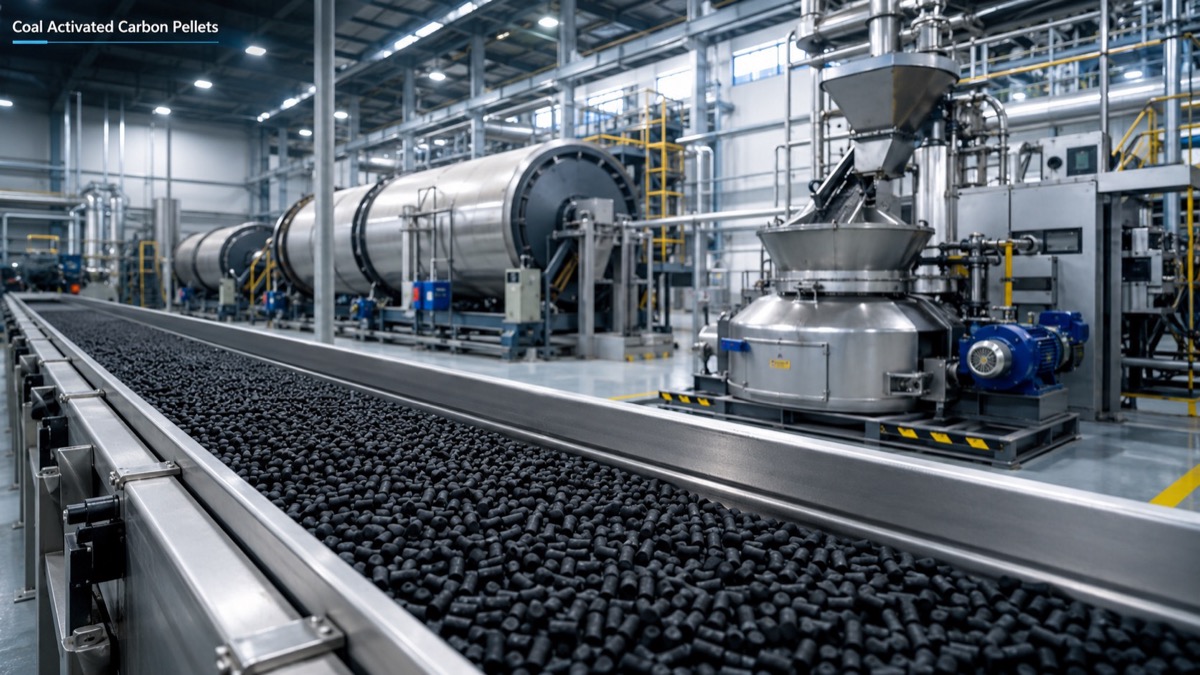
A deep understanding of the manufacturing process is crucial when you are evaluating suppliers, especially for long-term framework agreements and OEM projects. As a manufacturer, here is how a typical coal activated carbon pellet line works. [sana-commerce]
Step 1: Selection and Preparation of Coal
The process starts with selected coal grades with suitable ash content, volatile matter, and carbon composition to ensure good activation response and mechanical strength. The coal is crushed and sieved to a controlled particle size range to support consistent carbonization. [sciencedirect]
Step 2: Carbonization (Primary Pyrolysis)
In an oxygen-limited environment, the prepared coal is heated to drive off volatiles and form a carbon-rich char: [sciencedirect]
- Typical temperatures: 500–800°C (932–1472°F). [sciencedirect]
- Objective: remove volatile components and stabilize the carbon matrix.
- Output: relatively dense char with initial pore structure.
Step 3: Activation (Steam or CO₂)
The char then enters an activation furnace (rotary kiln, shaft furnace, or multiple-hearth furnace) where it is exposed to steam or carbon dioxide at 800–1000°C (1472–1832°F). During this stage: [sciencedirect]
- Pores expand and multiply, increasing BET surface area.
- Pore size distribution is tuned by temperature, residence time, and oxidizing agent.
- Chemical modifications can be added to enhance specific adsorption (e.g., sulfur-impregnated carbons for H₂S removal). [sciencedirect]
Step 4: Pelletizing and Shaping
After activation, the material is processed into pellets or cylindrical extrudates, typically 1–4 mm in diameter: [suneetacarbons]
- The activated carbon powder is mixed with a binder.
- It is extruded, cut, and then re-dried and re-hardened.
- The final product is sieved to achieve consistent pellet size.
This pelletization step directly affects pressure drop, bed packing behavior, dust level, and mechanical strength, so for critical applications, you should always request and review the supplier's pellet dimension and hardness specifications. [sana-commerce]
Are Activated Carbon Pellets the Same as Activated Charcoal?
In many real projects, engineers and buyers use the terms activated carbon, activated charcoal, and carbon pellets interchangeably. Technically: [suneetacarbons]
- Activated carbon / activated charcoal: umbrella term for the highly porous adsorbent produced from various raw materials. [suneetacarbons]
- Activated carbon pellets: a specific physical form (extruded or pelletized) of activated carbon. [suneetacarbons]
The chemistry and adsorption mechanism are similar, but the particle size, shape, and mechanical behavior differ, which has a direct impact on equipment design, pressure drop, and handling. For design calculations and vendor comparison, always specify both material type (coal-based) and form (pellet, size range). [suneetacarbons]
Key Industrial Applications of Coal Activated Carbon Pellets
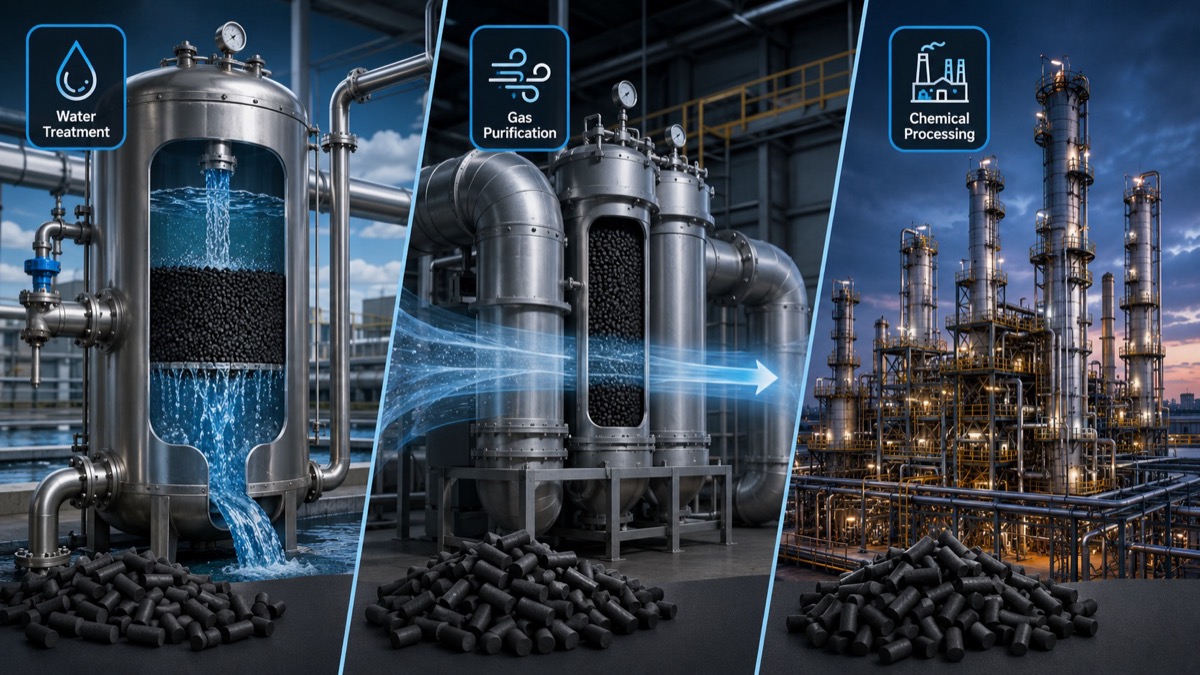
Coal-based activated carbon pellets are used wherever reliable adsorption is needed in continuous industrial processes. Based on field projects and industry data, typical applications include: [suneetacarbons]
- Air and gas purification
- VOC removal from exhaust gases.
- Odor control in chemical and waste facilities.
- Solvent recovery systems in painting and coating lines. [linkedin]
- Water and wastewater treatment
- Removal of chlorine, organics, and micro-pollutants in municipal and industrial water. [suneetacarbons]
- Polishing treatment for process water in electronics, food & beverage, and power plants. [suneetacarbons]
- Food and beverage processing
- Deodorization and purification of ingredients and process water.
- Control of trace organic contaminants affecting flavor or color. [suneetacarbons]
- Chemical and pharmaceutical industries
- Purification of intermediates and solvents.
- Protection of catalysts and downstream equipment by removing impurities. [linkedin]
- Specialty applications
- Respirator cartridges and gas masks.
- Biogas desulfurization (when modified or impregnated). [suneetacarbons]
For each sector, coal activated carbon pellets provide a proven balance of adsorption performance, cost, and mechanical robustness, which is why they remain a go‑to solution for many engineers and system integrators. [suneetacarbons]
How to Use Activated Carbon Pellets in Industrial Systems
Correct use of activated carbon pellets is as important as choosing the right grade. Below is a high-level framework we apply when supporting customers in new projects.
1. Define Process Conditions and Targets
Before selecting the carbon, define:
- Type and concentration of contaminants (e.g., H₂S, VOCs, COD, organics). [linkedin]
- Flow rate and operating temperature/pressure.
- Target outlet concentration or regulatory limits.
- Available footprint and bed volume.
This information directly shapes bed design, contact time (EBCT or GHSV), and pellet size selection. [sana-commerce]
2. Design the Carbon Bed or Cartridge
For fixed-bed designs, typical engineering steps include: [sana-commerce]
1. Calculate required contact time for the target removal efficiency.
2. Select appropriate pellet diameter to balance pressure drop and mass transfer.
3. Define bed depth and column dimensions.
4. Plan for sampling points for breakthrough monitoring.
For smaller systems (e.g., cartridge filters in food and beverage or pharma), you will usually select from standardized cartridges where the internal bed design is pre-engineered.
3. Operation, Monitoring, and Replacement
In operation, you should:
- Monitor inlet and outlet contaminant concentration regularly.
- Track pressure drop across the bed to detect fouling or channeling.
- Replace or regenerate the pellets when breakthrough approaches your internal limits. [suneetacarbons]
For example, in air filtration, we often recommend scheduled sampling and replacement cycles rather than waiting for complete breakthrough, especially in critical odor or emission control systems.
Practical Example: Using Activated Carbon Pellets in Aquariums
Although our primary focus is industrial applications, many buyers are also curious about aquarium use, especially for pilot testing or small-scale trials. [suneetacarbons]
To use activated carbon pellets in an aquarium:
- Rinse the pellets to remove fine dust.
- Place them in a mesh or filter bag.
- Position the bag in the filter or an area with strong water circulation. [suneetacarbons]
The pellets help remove odors, discoloration, and certain organic impurities, making the water clearer and more pleasant for fish. However, they should be replaced every 3–4 weeks to maintain effectiveness and avoid over-adsorption of beneficial compounds. [suneetacarbons]
How Coal Activated Carbon Pellets Compare by Form and Use
Below is a simplified comparison that many industrial buyers use when evaluating media options for projects.
| arameter | Coal Activated Carbon Pellets | Powdered Activated Carbon (PAC) | Granular Activated Carbon (GAC) |
| Form | Cylindrical or extruded pellets, 1–4 mm. (suneetacarbons) | Fine powder, typically <0.18 mm. (suneetacarbons) | Irregular granules, 0.2–5 mm. (suneetacarbons) |
| Main use | Continuous fixed beds in gas and liquid systems. (suneetacarbons) | Batch dosing, shock treatment in water. (suneetacarbons) | Filters and columns for water and some gas. (suneetacarbons) |
| Pressure drop | Low to moderate, depends on size and bed design. (suneetacarbons) | High if packed, usually not used in packed beds. (suneetacarbons) | Moderate, higher than pellets at similar size. (suneetacarbons) |
| Mechanical strength | High, good for high-velocity gas and frequent backwash. (suneetacarbons) | Low mechanical robustness as a powder. (suneetacarbons) | Moderate, depends on grade. (suneetacarbons) |
| Handling | Easy to load/unload, limited dust if quality is good. (suneetacarbons) | Dusty, needs careful handling and dosing systems. (suneetacarbons) | Standard bulk handling, some dust generation. (suneetacarbons) |
For industrial gas purification and odor control, coal-based pellets are often preferred over GAC or PAC because they combine strong mechanical behavior with stable adsorption performance. [suneetacarbons]
Expert Buying Checklist for Industrial Procurement
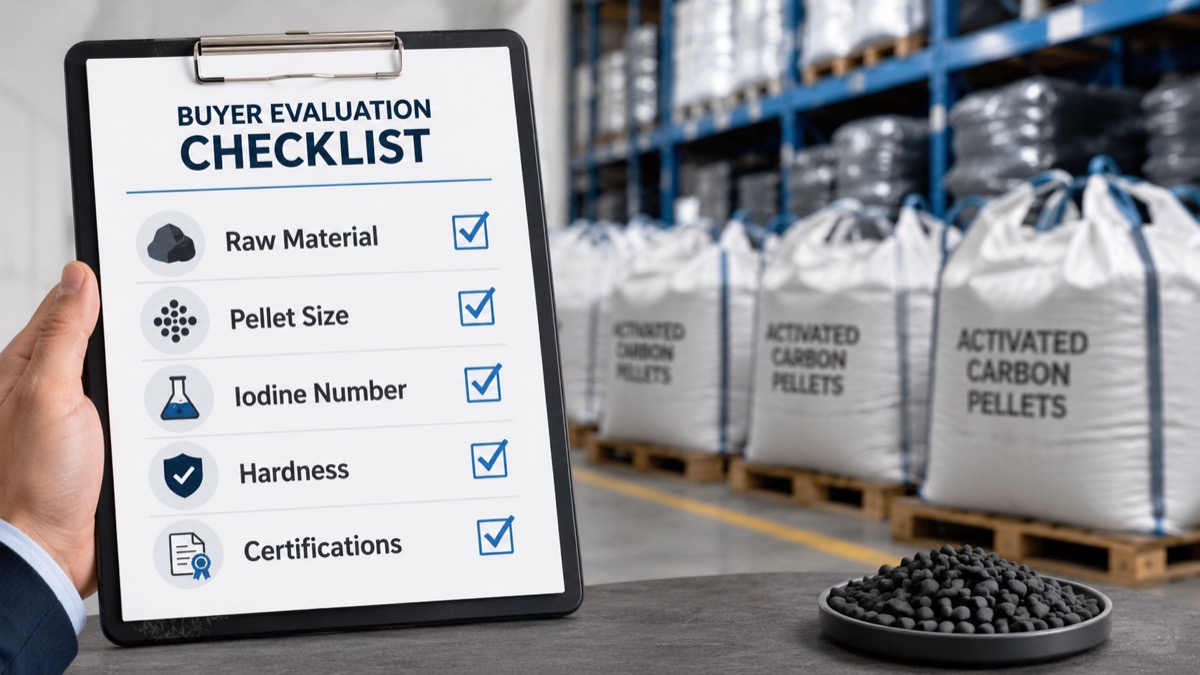
From a B2B UX perspective, buyers need not just features but a clear decision framework. Here is a practical checklist we usually walk through with procurement teams and engineers. [cleardigital]
Technical Specifications to Confirm
When you request a quote or datasheet, make sure you obtain and compare:
- Raw material: coal-based, coconut shell, wood, blended. [sciencedirect]
- Pellet size: diameter (e.g., 3 mm), length range, size distribution. [suneetacarbons]
- Iodine number / surface area: indicative of adsorption capacity. [sciencedirect]
- CTC or butane activity (for gas-phase adsorption). [suneetacarbons]
- Hardness and abrasion resistance: critical for gas-phase and backwashed systems. [suneetacarbons]
- Moisture, ash, and bulk density: impact handling and performance. [sciencedirect]
Supplier Evaluation Considerations
Beyond the product itself, global buyers should also evaluate:
- Manufacturing capacity and lead times for large or recurring orders. [optimum7]
- Export experience and documentation (RoHS, REACH, MSDS, COA, CO, etc.). [optimum7]
- Technical support for application design and troubleshooting. [sana-commerce]
- Consistent quality control with batch testing and traceability. [sciencedirect]
A supplier that can share case studies, third-party test reports, and long-term client references typically offers higher reliability for strategic industrial projects. [stellarcontent]
Common Mistakes to Avoid When Using Activated Carbon Pellets
Based on real-world support cases, here are typical mistakes that can reduce system performance or increase lifecycle cost:
- Selecting carbon only by price, not by specification
Low-cost products with inadequate hardness or surface area often show faster attrition, higher dust, and shorter service life. [sana-commerce]
- Ignoring bed design and contact time
Even premium pellets cannot compensate for an undersized bed or insufficient residence time. [sana-commerce]
- Skipping pre-filtration
Using activated carbon as a "catch-all" filter without upstream solids removal leads to rapid fouling and shortened carbon life. [suneetacarbons]
- No monitoring plan
Without periodic outlet monitoring, replacement is often delayed until breakthrough is far beyond safe or regulatory limits. [sana-commerce]
Addressing these points early typically results in lower total cost of ownership and fewer unplanned shutdowns.
Why Work with a Specialized Chinese Coal Activated Carbon Manufacturer?
China has developed one of the world's most complete activated carbon supply chains, covering coal, wood, coconut shell, and specialty carbons, along with a wide range of shapes such as pellets, granules, and powders. Partnering with a dedicated coal activated carbon manufacturer offers several strategic benefits: [allcarbon]
- Integrated sourcing and production for multiple grades and forms. [allcarbon]
- Competitive cost structure with industrial-scale furnaces and pelletizing lines. [allcarbon]
- Flexibility for customization of pellet size, pore structure, and surface chemistry for specific applications (e.g., gas phase VOC, H₂S, or water treatment). [sciencedirect]
For global OEMs, EPC contractors, and distributors, this combination of technical depth, customization capability, and reliable export operations is key to meeting long-term project requirements.
Call to Action: Get a Tailored Coal Activated Carbon Pellet Solution
If you are planning a new purification project or optimizing an existing system, the right coal activated carbon pellet grade can significantly improve performance and reduce operating costs. [suneetacarbons]
Share your process details (gas or liquid, contaminants, flow rate, target outlet values, and existing system design), and request:
- A tailored grade recommendation for your application.
- Detailed technical datasheets and typical performance curves.
- A sample and trial plan to validate performance in your own plant.
A brief technical discussion at the start of the project usually saves weeks of trial-and-error later and ensures the chosen carbon grade and pellet size are fully aligned with your industrial requirements. [cleardigital]
Frequently Asked Questions (FAQ)
1. What is the difference between coal activated carbon pellets and coconut shell pellets?
Coal activated carbon pellets typically have a broader pore size distribution and are often more cost-effective for general industrial air and water purification, while coconut shell pellets are more microporous and favored for certain small-molecule removal tasks or drinking water applications. [sciencedirect]
2. How long do activated carbon pellets last in industrial systems?
Service life depends on contaminant load, operating conditions, and pre-treatment, but in many gas-phase systems pellets can last from several months to over a year before needing replacement, while high-load liquid systems may require more frequent changeouts. [linkedin]
3. Can coal activated carbon pellets be regenerated?
In many cases, spent pellets can be thermally regenerated in specialized facilities, restoring a substantial portion of their adsorption capacity; feasibility depends on the type of adsorbed contaminants, local regulations, and regeneration economics. [sciencedirect]
4. Are coal-based activated carbon pellets safe for food and beverage applications?
Yes, when manufactured under appropriate quality standards and supplied in food-grade grades with the required certifications and testing, coal-based pellets can be safely used for certain food and beverage purification processes. [sciencedirect]
5. What information should I provide to get an accurate quotation for activated carbon pellets?
For a precise quotation and grade recommendation, share your application (gas or liquid), contaminants and concentrations, flow rate, operating conditions, preferred pellet size, required certifications, and expected annual consumption volume. [optimum7]
References
1. Zhulincarbon. "Activated Carbon Pellets – Applications and Usage Guide."
<https://www.zhulincarbon.com/application/activated-carbon/activated-carbon-pellets.html> [suneetacarbons]
2. Suneeta Carbons. "Top Industrial Applications of Pelletized Activated Carbon."
<https://www.suneetacarbons.com/blog/top-industrial-applications-of-pelletized-activated-carbon/> [suneetacarbons]
3. Optimum7. "How Global Industrial Manufacturers Win in Search with International SEO."
<https://www.optimum7.com/blog/how-global-industrial-manufacturers-win-in-search-with-international-seo.html> [optimum7]
4. Sana Commerce. "The Complete Guide to SEO for Manufacturers."
<https://www.sana-commerce.com/blog/seo-for-manufacturers/> [sana-commerce]
5. Google Search Central. "Creating Helpful, Reliable, People-First Content."
<https://developers.google.com/search/docs/fundamentals/creating-helpful-content> [developers.google]
6. Stellar Content. "The Complete Guide to Google E-E-A-T: How to Improve SEO."
<https://www.stellarcontent.com/blog/seo/the-complete-guide-to-google-e-a-t-what-is-it-why-is-it-and-how-do-you-create-it/> [stellarcontent]
7. AllCarbon (ACC Activated Carbon). "Activated Carbon Manufacturer and Supplier."
<https://www.allcarbon.net/chs/activated-carbon/> [allcarbon]
8. ScienceDirect. "Industrial Production of Activated Carbon Using Circular Approaches."
<https://www.sciencedirect.com/science/article/pii/S2666790822000489> [sciencedirect]
9. LinkedIn. "Report on Activated Carbon Pellets Manufacturing Plant Setup."
<https://www.linkedin.com/pulse/report-activated-carbon-pellets-manufacturing-plant-setup-ashish-rana-yd6sc> [linkedin]


