Content Menu
● What Is Activated Carbon?
>> Key Properties Relevant to Air Purification
>> Typical Industrial Air Applications
● What Is Zeolite in Air Purification?
>> Key Properties Relevant to Air Purification
>> Typical Industrial Air Applications
● Activated Carbon vs Zeolite: Performance Comparison in Industrial Air Purification
>> Core Performance Metrics
● Expert View – When Activated Carbon Outperforms Zeolite
>> High-Load VOC and Variable Emissions
>> Fit with Coal-Based and Honeycomb Activated Carbon Solutions
● Expert View – Where Zeolite Has the Edge
>> High-Temperature and Humid Exhaust
>> Process Safety and Regulatory Considerations
● Real Industrial Case Insights (VOC Exhaust)
>> Coating VOCs – Capacity vs Stability
>> Practical Takeaway for Plant Engineers
● How to Choose Between Activated Carbon and Zeolite for Your Air System
>> Step-by-Step Selection Framework
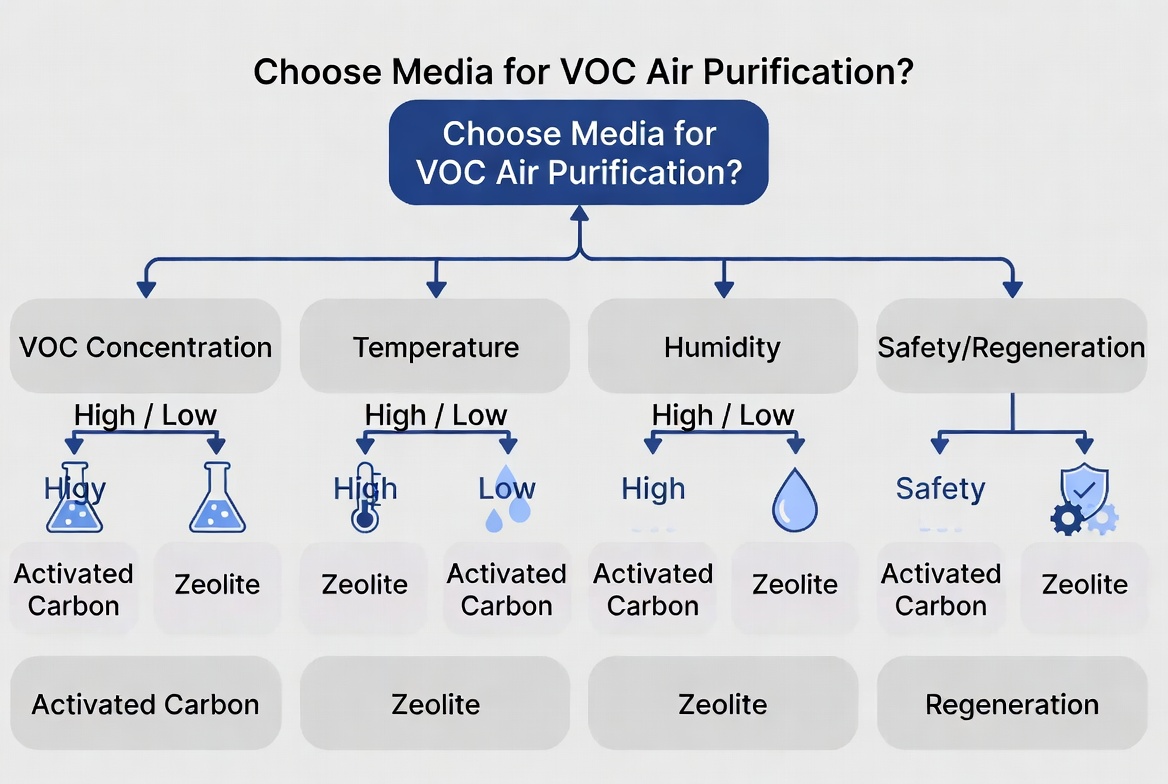
>> Typical Scenarios and Recommended Choice
● Where a Coal-Based Activated Carbon Manufacturer Adds Value
>> Custom Coal and Honeycomb Activated Carbon Solutions
>> Hybrid and Upgrade Strategies
● CTA – Talk to an Industrial Adsorption Specialist
● FAQ: Activated Carbon vs Zeolite in Industrial Air
● References
In industrial air treatment, engineers are not choosing an abstract "best" adsorbent; they are choosing the most suitable material for a specific VOC profile, airflow pattern and regeneration strategy. From my experience working with coal-based and honeycomb activated carbons for painting lines, chemical plants and VOC abatement systems, activated carbon often wins for high-loading, variable VOC streams, while zeolite is highly competitive for stable, low–medium concentration exhaust at elevated temperatures. [hjgc.ic-mag]
What Is Activated Carbon?
Activated carbon is a porous carbonaceous material produced from coal, coconut shell, wood or other carbon-rich feedstocks through controlled activation to create an enormous internal surface area. Coal-based and honeycomb activated carbon are widely used in industrial exhaust gas treatment to capture VOCs, odorous gases and hazardous air pollutants. [qizhongcarbon]
Key Properties Relevant to Air Purification
- Very high surface area
Typical BET surface areas for industrial activated carbons are around 800–1,200 m²/g, often 2–3 times higher than comparable zeolite molecular sieves used for VOCs. [hjgc.ic-mag]
- Broad pore size distribution
Pores span micro-, meso- and some macropores, giving activated carbon a broad-spectrum adsorption capability for many organic molecules. [eekw.rcees.ac]
- Hydrophobic character (for coal-based grades)
Properly formulated coal-based carbons are relatively hydrophobic, which supports VOC adsorption in humid air, though water can still compete at high RH. [eekw.rcees.ac]
- Multiple formats
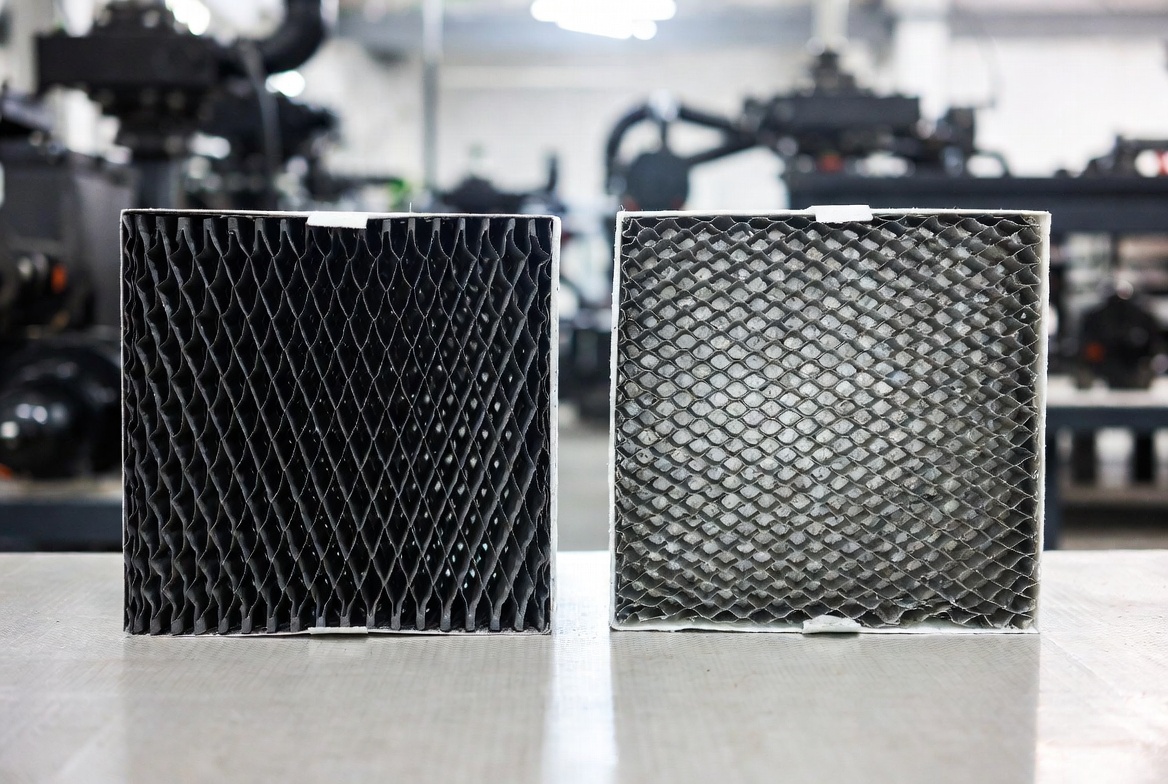
Powdered, granular and honeycomb monolithic forms are available, with honeycomb activated carbon combining high surface area and low pressure drop for large air volumes. [qizhongcarbon]
Typical Industrial Air Applications
- Painting and coating lines VOC control (xylene, toluene, MEK). [hjgc.ic-mag]
- Chemical and petrochemical exhaust treatment. [eekw.rcees.ac]
- Odor control in food, wastewater and waste gas treatment. [antpedia]
- Solvent recovery or pre-treatment stages in multi-step systems. [eekw.rcees.ac]
What Is Zeolite in Air Purification?
Zeolite used in industrial air treatment is typically a crystalline aluminosilicate with uniform micropores, often engineered as a zeolite molecular sieve or coated onto a honeycomb substrate. In VOC treatment, honeycomb zeolite modules are used as fixed-bed or rotating concentrators to selectively adsorb organic vapors from large airflows and desorb them with hot air or steam. [kelihuoxingtan]
Key Properties Relevant to Air Purification
- Uniform pore size and strong selectivity
Zeolite pores are often in the 0.3–1.0 nm range with tightly controlled sizes, giving strong selectivity for certain molecules based on size and polarity. [gtss]
- Tunable hydrophobicity
By adjusting the Si/Al ratio, zeolite can be made more hydrophobic, reducing water competition and maintaining VOC adsorption performance under humidity. [kelihuoxingtan]
- High thermal stability and non-flammability
Zeolite structures tolerate 350–500 °C without structural collapse, making them suitable for high-temperature desorption and inherently non-combustible. [tepteck]
- Excellent cyclic stability
Studies report that even after 10–50 adsorption–desorption cycles, zeolite retains over 80% of its initial adsorption performance for VOCs. [hjgc.ic-mag]
Typical Industrial Air Applications
- VOC adsorption and concentration for coating lines and printing. [kelihuoxingtan]
- High-temperature exhaust from ovens and dryers where activated carbon risks thermal degradation or ignition. [tepteck]
- Systems designed for continuous regeneration with hot air, steam or catalytic oxidation. [eekw.rcees.ac]
Activated Carbon vs Zeolite: Performance Comparison in Industrial Air Purification
From a plant engineering perspective, the key question is: under real operating conditions, which material gives you higher removal efficiency, safer operation and lower lifecycle cost? The table below summarizes the main trade-offs seen in VOC and industrial air treatment projects. [hjgc.ic-mag]
Core Performance Metrics
| Metric / Aspect | Activated Carbon in Air Purification | Zeolite in Air Purification |
| Adsorption capacity for many VOCs | Generally higher equilibrium adsorption capacity for aromatics like xylene and toluene due to larger surface area and broad pore distribution. (hjgc.ic-mag) | Often lower capacity per gram for some organics but more stable across temperature and concentration variations. (hjgc.ic-mag) |
| Working capacity under variable loads | Very strong for high-concentration, fluctuating VOC streams; high working capacity in fixed beds. (hjgc.ic-mag) | More stable at low–medium VOC concentrations and elevated temperatures; good for concentration wheel applications. (kelihuoxingtan) |
| Humidity sensitivity | Performance declines at very high humidity, but coal-based and honeycomb carbons perform reasonably well in typical industrial RH ranges. (antpedia) | Hydrophobic zeolite grades (high silica‑to‑alumina ratio) maintain adsorption efficiency better under humidity by reducing water competition. (kelihuoxingtan) |
| Temperature resistance | Adsorption capacity drops at high temperature; risk of self-heating and ignition above roughly 120 °C if not properly controlled. (kelihuoxingtan) | Excellent thermal stability; normal operation up to 350 °C and more, with low risk of combustion. (kelihuoxingtan) |
| Regeneration and cyclic stability | Faster desorption at similar temperatures; high initial capacity but performance decreases after multiple cycles. In one study, adsorption efficiency dropped to about 71.35% of initial after 10 cycles. (hjgc.ic-mag) | Regeneration often requires higher temperature (180‑220°C), but structure remains stable. After 10 cycles, adsorption efficiency stayed above 81.15% of initial, indicating more stable long-term performance. (hjgc.ic-mag) |
| Safety characteristics | Carbonaceous and potentially combustible; requires careful design for high VOC loads and regeneration temperatures. (kelihuoxingtan) | Inorganic, non-flammable; generally safer at high temperature and high VOC accumulation. (kelihuoxingtan) |
| Environmental impact & disposal | Spent activated carbon may be classified as hazardous waste depending on adsorbed pollutants; disposal or regeneration must follow regulations. (kelihuoxingtan) | Zeolite is inorganic and non-combustible; spent zeolite may have simpler disposal in some cases, though it still carries adsorbed pollutants. (kelihuoxingtan) |
| Cost and lifecycle | Lower purchase cost, high adsorption capacity; regeneration and replacement frequency impact total cost over time. (kelihuoxingtan) | Higher initial cost, but longer service life and more stable regeneration may reduce long-term operating cost for suitable applications. (kelihuoxingtan) |
In practice, this means activated carbon tends to perform better in systems that emphasize maximum VOC capture per unit mass and fast desorption, while zeolite excels where temperature, humidity and safety are the dominant constraints. [hjgc.ic-mag]
Expert View – When Activated Carbon Outperforms Zeolite
From a process engineering viewpoint, activated carbon becomes the preferred choice when your priority is high adsorption capacity and quick turnaround per cycle. Studies comparing honeycomb activated carbon with zeolite molecular sieves for VOC treatment show that activated carbon provides significantly higher iodine number, BET surface area and total pore volume—often 1.5–3 times those of zeolite under similar conditions. [hjgc.ic-mag]
High-Load VOC and Variable Emissions
Activated carbon has clear advantages in:
- Wide-load, low–medium airflow with medium–high VOC concentration, such as painting booths, adhesive lines and printing machines. [antpedia]
- Processes where VOC composition changes frequently, and broad-spectrum adsorption is required. [eekw.rcees.ac]
- Installations needing compact bed volumes for retrofit projects, where every cubic meter of adsorbent must deliver maximum loading. [hjgc.ic-mag]
In controlled tests for industrial coating VOCs, honeycomb activated carbon showed a clearly higher saturated adsorption capacity than zeolite molecular sieves, and VOCs desorbed more easily from activated carbon at the same regeneration temperature. This leads to shorter desorption times and higher productivity in batch or swing-bed systems. [hjgc.ic-mag]
Fit with Coal-Based and Honeycomb Activated Carbon Solutions
For a coal-based and honeycomb activated carbon manufacturer, the real-world sweet spots include:
- Fixed-bed or modular systems designed for medium-to-high VOC concentrations with moderate air volumes.
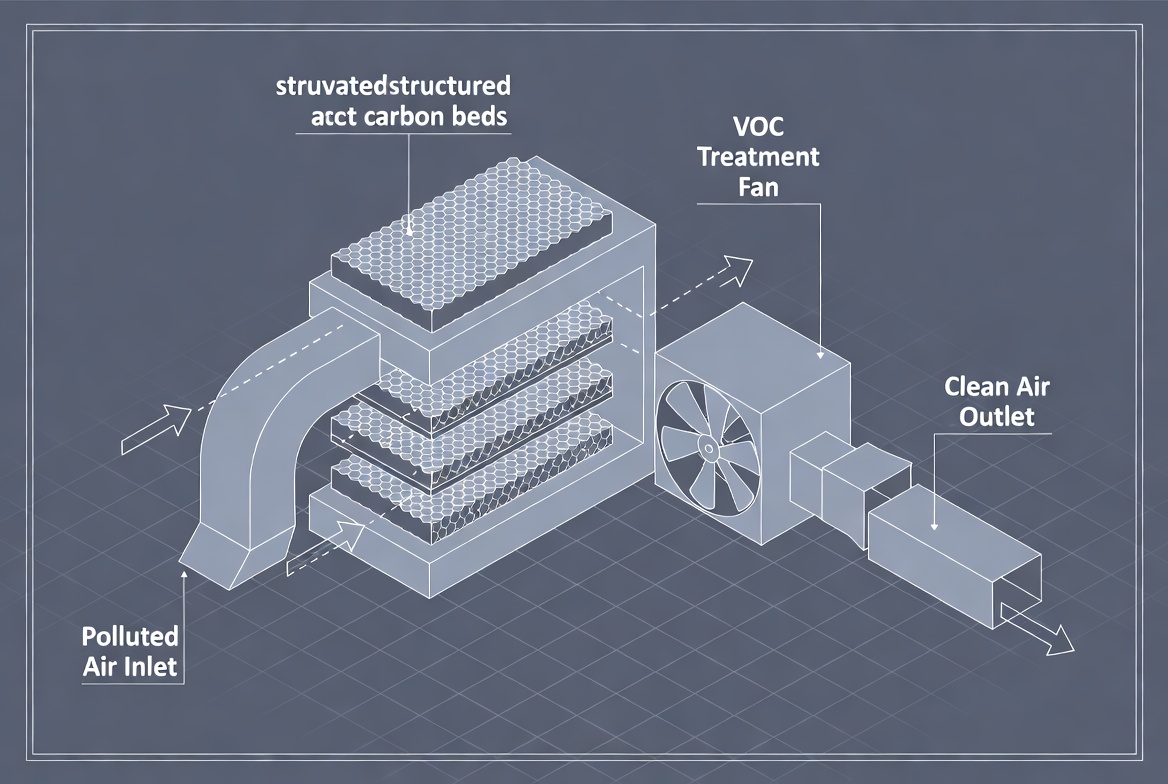
- Retrofit upgrades where existing carbon beds are replaced with honeycomb activated carbon to reduce pressure drop and improve adsorption efficiency. [qizhongcarbon]
- Projects that combine adsorption with downstream thermal or catalytic oxidation, where high VOC loading on the adsorbent reduces the size and fuel consumption of the oxidizer. [eekw.rcees.ac]
Expert View – Where Zeolite Has the Edge
Zeolite is not a universal replacement for activated carbon, but its thermal stability, hydrophobicity and structural robustness give it clear advantages in some scenarios. Many modern VOC concentrator wheels and high-temperature waste gas systems are designed around zeolite-based adsorbents. [gtss]
High-Temperature and Humid Exhaust
Zeolite is often selected when:
- Exhaust gas temperature is consistently high, such as 150–250 °C or more, where activated carbon adsorption capacity collapses and self-heating becomes a risk. [tepteck]
- The gas stream is humid and water competition severely impairs carbon performance, yet hydrophobic zeolite can maintain VOC capture. [gtss]
- The system is designed for continuous high-temperature regeneration, leveraging zeolite's tolerance of 350 °C and above. [kelihuoxingtan]
Research shows that while activated carbon carries higher working capacity under many conditions, zeolite maintains more stable performance after dozens of adsorption–desorption cycles and at elevated temperatures. For continuous concentrator systems, this stability often outweighs its lower per-cycle capacity. [hjgc.ic-mag]
Process Safety and Regulatory Considerations
Because zeolite is inorganic and non-flammable, plant safety and compliance teams sometimes favor it in:
- Environments with strict fire and explosion regulations.
- Facilities where VOCs are oxygenated or exothermic, raising the risk of hotspots inside carbon beds. [tepteck]
- Systems with limited space or monitoring, where conservative safety margins are critical. [kelihuoxingtan]
In these cases, even if activated carbon provides higher theoretical capacity, zeolite's safety profile and durability can make it the better overall choice. [gtss]
Real Industrial Case Insights (VOC Exhaust)
Several comparative studies on VOC exhaust provide a practical benchmark for engineers choosing between activated carbon and zeolite. These experiments align closely with what we see in coating lines and chemical plants. [hjgc.ic-mag]
Coating VOCs – Capacity vs Stability
In tests using industrial coating VOC exhaust:
- Honeycomb activated carbon showed higher iodine value, BET surface area, total pore volume and micropore volume than zeolite molecular sieves—often around 1.5–3 times higher for these metrics. [hjgc.ic-mag]
- Under the same operating conditions, honeycomb activated carbon achieved a higher saturated adsorption capacity for VOCs and faster desorption time at the same regeneration temperature. [hjgc.ic-mag]
- After 10 adsorption–desorption cycles, adsorption rates dropped to about 71% of the initial level for activated carbon and about 81% for zeolite, indicating better long-term stability for zeolite despite lower per-cycle capacity. [hjgc.ic-mag]
Another study on non-steady, large-flow, low-concentration VOCs found that activated carbon generally had a higher equilibrium adsorption capacity for xylene, but zeolite achieved faster mass transfer rates and more complete desorption at higher temperatures, giving more stable long-term operation in certain process schemes. [eekw.rcees.ac]
Practical Takeaway for Plant Engineers
For VOC coating lines:
- If your key KPI is maximum adsorption per cycle and you can manage regeneration and replacement, activated carbon—especially in honeycomb form—is often the most efficient choice. [hjgc.ic-mag]
- If your KPI is long-term stability, safety, and integration into continuous high-temperature concentration systems, zeolite may deliver better total cost of ownership. [tepteck]
How to Choose Between Activated Carbon and Zeolite for Your Air System
From a practical design standpoint, the smartest approach is to map your process conditions against the strengths of each material. [antpedia]
Step-by-Step Selection Framework
1. Define your VOC profile
- Main VOC types (aromatic, aliphatic, oxygenated).
- Typical and peak concentrations.
2. Map your operating conditions
- Gas temperature range and humidity.
- Airflow volume and variability (steady vs non-steady, large vs small).
3. Set safety and regulatory constraints
- Fire and explosion requirements.
- Local rules on hazardous waste and spent adsorbent disposal.
4. Decide on regeneration strategy
- Once-through, off-site regeneration, on-site thermal regeneration, or concentrator wheel.
5. Run a lifecycle cost comparison
- Consider adsorbent price, capacity, replacement frequency, and energy for regeneration over a 3–5 year horizon. [antpedia]
Typical Scenarios and Recommended Choice
- High VOC concentration, moderate temperature, variable load, strong focus on capacity
→ Favors activated carbon, especially honeycomb modules for lower pressure drop. [qizhongcarbon]
- Medium–low VOC concentration, high temperature, continuous operation, stringent fire safety
→ Favors zeolite, particularly in honeycomb or wheel form. [kelihuoxingtan]
- Retrofit of legacy carbon beds, limited energy budget for regeneration
→ Upgraded coal-based or honeycomb activated carbon often delivers the strongest ROI. [qizhongcarbon]
- New build line designed around continuous VOC concentration and thermal oxidation
→ Zeolite-based concentration systems may provide better stability and integration. [tepteck]
Where a Coal-Based Activated Carbon Manufacturer Adds Value
As a coal-based and honeycomb activated carbon producer, your strongest value proposition is helping industrial users optimize their adsorbent choice at system level, not just selling a commodity material. [antpedia]
Custom Coal and Honeycomb Activated Carbon Solutions
You can provide:
- Tailor-made coal-based activated carbon grades with targeted pore structure and surface chemistry optimized for specific VOC mixtures. [qizhongcarbon]
- Honeycomb activated carbon modules sized and shaped for the customer's ductwork and housing, minimizing pressure drop and installation work. [qizhongcarbon]
- Technical support to size beds, calculate breakthrough curves and plan regeneration or replacement cycles based on real plant data. [hjgc.ic-mag]
Hybrid and Upgrade Strategies
In many plants, the best solution is not "activated carbon vs zeolite" but a hybrid system:
- Upstream honeycomb activated carbon for high-concentration peaks and odor control. [antpedia]
- Downstream zeolite concentration wheel or thermal oxidation for polishing and long-term stability. [kelihuoxingtan]
By positioning your company as an advisor on system-level air purification, you help clients choose the right combination and timing for adsorbent replacement, regeneration and upgrades.
CTA – Talk to an Industrial Adsorption Specialist
If you are designing or upgrading an industrial air purification system and are unsure whether activated carbon or zeolite will perform better in your exact conditions, the best next step is a data-driven adsorption evaluation. Share your VOC composition, airflow, temperature and compliance targets, and our engineering team can recommend the right coal-based or honeycomb activated carbon solution—and indicate where zeolite may complement it—so you get maximum VOC removal, safety and lifecycle value.
FAQ: Activated Carbon vs Zeolite in Industrial Air
Q1: Is activated carbon always better than zeolite for VOC removal?
No. Activated carbon generally offers higher adsorption capacity for many VOCs, but zeolite can outperform it at high temperature, under humidity and in continuous concentration systems where stability and safety dominate. [kelihuoxingtan]
Q2: Can I switch from activated carbon to zeolite in an existing system?
Sometimes you can, but it depends on bed design, regeneration method, pressure drop limits and safety requirements; a pilot test or engineering assessment is recommended before full conversion. [tepteck]
Q3: Which material is safer for high-temperature exhaust?
Zeolite is generally safer because it is inorganic and non-flammable, whereas activated carbon is combustible and can pose self-heating risks at high temperatures and VOC loads if not properly engineered. [tepteck]
Q4: How often do I need to replace activated carbon compared with zeolite?
Activated carbon may require more frequent replacement or regeneration under high-load conditions, while zeolite often maintains performance over more cycles, though the exact interval depends on VOC load, temperature and design. [hjgc.ic-mag]
Q5: Can I use both activated carbon and zeolite in the same system?
Yes. Many advanced VOC control systems combine activated carbon for peak load and broad-spectrum capture, with zeolite for concentration or polishing, achieving both high capacity and long-term stability. [qizhongcarbon]
References
1. 环境工程期刊 – "蜂窝活性炭与沸石分子筛对涂装VOCs废气的吸脱附性能对比". Available at: [http://hjgc.ic-mag.com/article/doi/10.13205/j.hjgc.202303012] [hjgc.ic-mag]
2. 环境工程期刊 – "活性炭和沸石分子筛处理非稳定排放VOCs气体的性能比较". Available at: [http://eekw.rcees.ac.cn/article/id/201611026] [eekw.rcees.ac]
3. GTSS – "沸石与活性炭的区别与用途 / 比较分析". Available at: [http://www.gtss.cn/en/archives/82372.html] and [https://www.gtss.cn/en/archives/83074.html] [gtss]
4. 某环保技术企业 – "蜂窝活性炭和蜂窝沸石哪个好?" and "蜂窝沸石&活性炭性能及成本对比". Available at: [http://www.kelihuoxingtan.com/knowledge/468.html] and [https://www.tepteck.com/showinfo-77-548-0.html] [kelihuoxingtan]
5. 行业资料 – 蜂窝活性炭应用与市场、废气治理用活性炭选择. Available at: [https://qizhongcarbon.com/zh/product/honeycomb-activated-carbon/] and [https://www.antpedia.com/news/45/n-2471145.html] [antpedia]


