Content Menu
● What Industrial Buyers Really Need from Activated Carbon Suppliers
● Global Landscape of Activated Carbon Manufacturers
● Core Activated Carbon Product Types for Industrial Use
>> Pelletized / Extruded (Columnar) Activated Carbon
>> Granular Activated Carbon (GAC)
>> Powdered Activated Carbon (PAC)
● Matching Raw Materials to Industrial Applications
>> Coal-Based Activated Carbon
>> Coconut Shell Activated Carbon
>> Wood-Based and Fruit Shell Activated Carbon
● Mission-Critical Applications for Industrial Activated Carbon
>> Water and Wastewater Treatment
>> Air and Gas Purification
>> Food and Beverage Processing
>> Chemical and Pharmaceutical Production
● How to Evaluate an Activated Carbon Manufacturer for Industrial Projects
>> Step-by-Step Evaluation Checklist
● Why Industrial Buyers Work with China-Based Activated Carbon Manufacturers
● Key Manufacturer Selection Criteria – Quick Comparison Table
● Market Trends Industrial Buyers Should Monitor
● Designing an Activated Carbon Solution for a Multi-Stage Water Line
● Building Long-Term Partnerships Between Plants and Manufacturers
● FAQs About Industrial Activated Carbon Manufacturers
● Reference
Guangdong Tongke Activated Carbon Co., Ltd. is a specialized manufacturer and exporter of high‑performance activated carbon solutions for demanding industrial applications worldwide. From water and wastewater treatment to air purification, food processing, chemicals, and pharmaceuticals, the company supports engineering teams with tailored products and technical insight drawn from real industrial projects.
What Industrial Buyers Really Need from Activated Carbon Suppliers
Most industrial users are not simply buying a commodity material; they are securing a filtration asset that must perform predictably in complex systems over many operating cycles. In practice, this means the manufacturer must understand how pore structure, particle size, and raw material choice affect performance in municipal water plants, solvent recovery loops, VOC abatement systems, and sugar decolorization lines.
When you look at long‑term contracts and buyer feedback, several expectations appear consistently:
- Stable adsorption performance throughout the planned service life
- Lot‑to‑lot consistency supported by reliable testing data
- Technical support for design, optimization, and troubleshooting
- Supply security across regions and multi‑year projects
Tongke positions itself as a solution‑oriented partner, helping global industrial users specify and deploy customized activated carbon grades for water, air, and process streams rather than relying on generic catalog selections.
Global Landscape of Activated Carbon Manufacturers
The international activated carbon market includes long‑established brands, regional specialists, and agile Asian producers serving different niches. Well‑known companies such as Calgon Carbon, Jacobi Carbons, Norit, Haycarb, and Chemviron hold strong positions in large municipal projects and specialized applications.
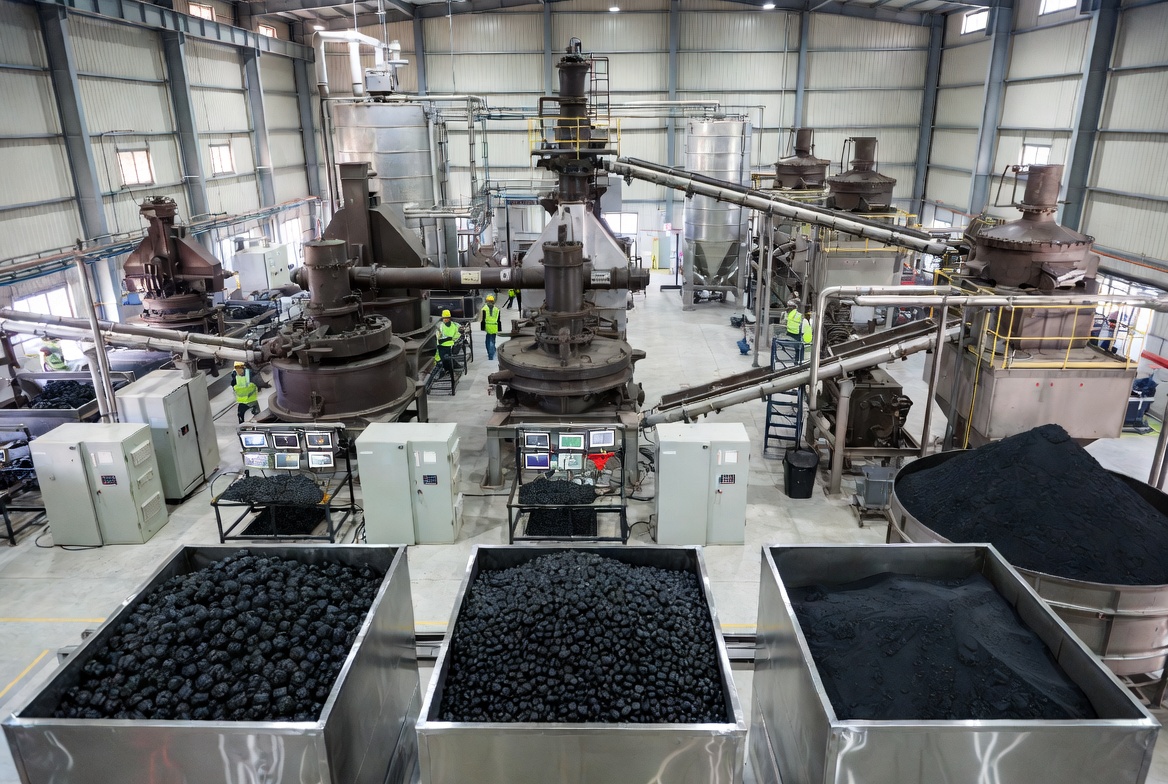
In parallel, Asian manufacturers have significantly expanded capacities in coconut shell, coal‑based, and wood‑based carbons, supplying OEMs, system integrators, and local distributors worldwide. Tongke operates in this landscape as a China‑based producer combining manufacturing capability with export‑oriented technical service, giving buyers a balance of performance, flexibility, and cost efficiency across multiple industries.
Core Activated Carbon Product Types for Industrial Use
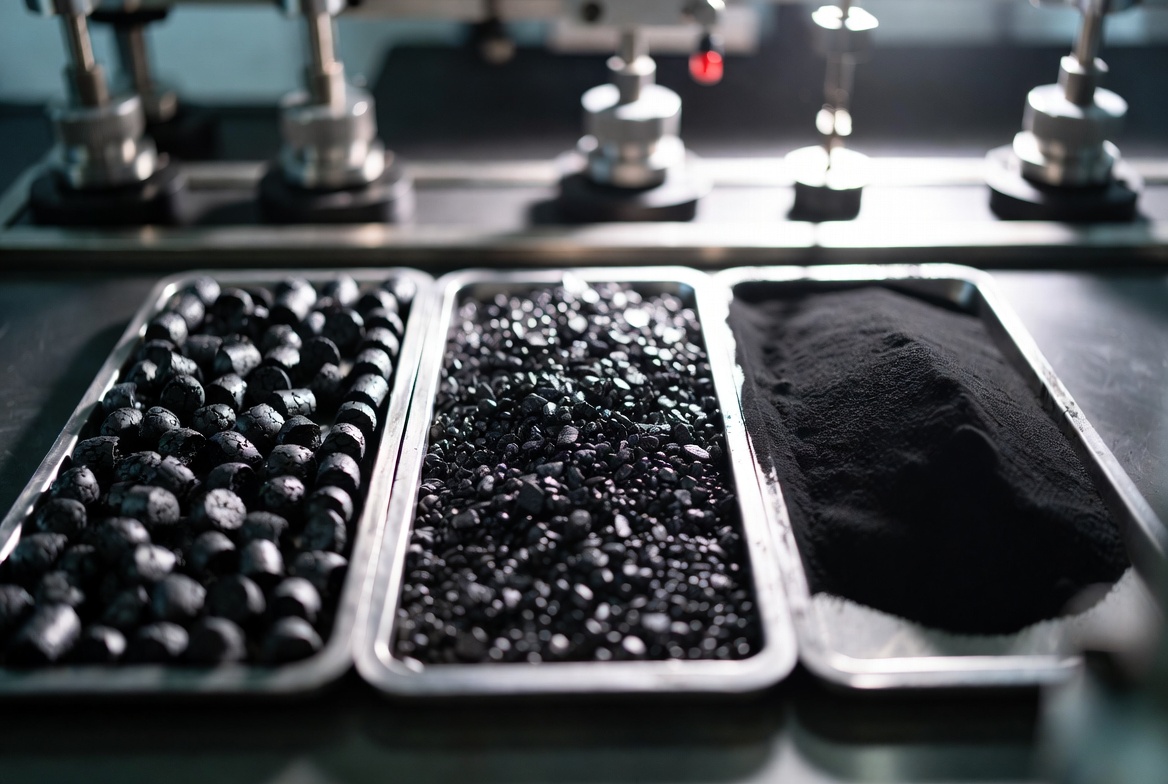
Industrial purification projects typically start with three basic dimensions: shape, raw material, and activation or impregnation. Choosing the right combination is essential to achieving target performance.
Pelletized / Extruded (Columnar) Activated Carbon
Pelletized or extruded carbon is widely used in air and gas treatment, solvent recovery, and VOC control systems. Its cylindrical shape provides low dust generation, good mechanical strength, and a predictable pressure drop, which is crucial for continuous‑flow operations.
Tongke produces columnar activated carbon primarily from coal and other suitable feedstocks. These products are used in waste air treatment, gas purification, and solvent recovery lines where stability, bed life, and safe operation are critical to plant performance.
Granular Activated Carbon (GAC)
Granular activated carbon is a workhorse for liquid‑phase applications. It is commonly deployed in municipal water treatment, industrial wastewater polishing, groundwater remediation, and beverage purification.
Tongke offers granular carbons made from coal, coconut shell, wood, and fruit shell. This diversity allows process engineers to optimize hardness, adsorption kinetics, and cost depending on whether the priority is heavy metals removal, organics reduction, color removal, or taste and odor control.
Powdered Activated Carbon (PAC)
Powdered activated carbon is typically used where short‑contact‑time removal of organics, color bodies, or specific contaminants is required. Typical uses include emergency water treatment, batch decolorization, and polishing of certain chemical or pharmaceutical streams.
The company supplies PAC grades tailored to food decolorization, chemical purification, and pharmaceutical intermediates, enabling fast adsorption and flexible dosing wherever permanent fixed beds are not practical.

Matching Raw Materials to Industrial Applications
Different raw materials produce distinct pore structures and performance profiles. From an engineering standpoint, choosing between coal, coconut shell, wood, or fruit shell is as important as deciding on the physical form.
Coal-Based Activated Carbon
Coal‑based carbons offer high mechanical strength and versatile adsorption behavior in both gas and liquid treatment. They are widely used in flue gas treatment, industrial wastewater, and solvent recovery systems.
Coal‑based products from Tongke are especially suitable for waste air treatment, gas purification, and industrial wastewater polishing, where robustness against abrasion and long service life are essential.
Coconut Shell Activated Carbon
Coconut shell activated carbon naturally provides high micro‑porosity and hardness. It is favored for drinking water, food and beverage processing, and certain high‑purity applications where low leachable impurities are required.
As demand for coconut shell carbons grows in areas such as advanced water treatment and high‑value processing, buyers increasingly seek suppliers who can combine stable raw material sourcing with reliable technical performance. Tongke's coconut‑based products support stringent taste, odor, and trace contaminant requirements in many liquid‑phase systems.
Wood-Based and Fruit Shell Activated Carbon
Wood‑based and fruit shell carbons typically have a broader mesoporous structure, which makes them ideal for decolorization and refining tasks. They are widely used in sugar refining, edible oil processing, and certain pharmaceutical and chemical operations where larger organic molecules need to be removed.
Tongke leverages these materials to support food decolorization and specialty purification projects, helping manufacturers achieve consistent visual and sensory quality in final products.
Mission-Critical Applications for Industrial Activated Carbon
Activated carbon has become a strategic process material rather than a generic filter medium. Industrial buyers deploy it in several mission‑critical areas where process stability, compliance, and product quality depend on reliable adsorption.
Water and Wastewater Treatment
Key uses include drinking water production, municipal treatment lines, industrial wastewater polishing, and reuse systems. The global market is expected to maintain strong growth, driven by investment in clean water infrastructure and stricter discharge regulations.
Tongke provides granular and powdered carbons to support municipal plants, industrial users, and engineering firms operating fixed‑bed adsorbers, filters, and polishing units. Products are selected to balance adsorption performance, regenerability, and long‑term operating cost.
Air and Gas Purification
In air and gas treatment, activated carbon protects equipment, reduces odor, and supports compliance with emission standards. Typical targets include VOCs, sulfur compounds, and various organic vapors.
The company's pelletized carbons are widely used in gas purification, waste air treatment, and solvent recovery. Their mechanical strength and controlled pressure drop help engineers design safe and efficient systems for continuous operation.
Food and Beverage Processing
Food and beverage processors rely on activated carbon for decolorization, deodorization, and removal of trace organics in sugar, edible oils, beverages, and ingredients. Consistent adsorption behavior and low impurities are crucial to maintain product quality.
Tongke offers grades specifically tailored for food decolorization and purification, supporting manufacturers who need repeatable color removal and flavor stabilization while meeting relevant material and process standards.
Chemical and Pharmaceutical Production
In chemical and pharmaceutical plants, activated carbon is used to purify intermediates, remove catalysts, capture residual organics, and protect downstream equipment. The choice between PAC and GAC depends on the process design and filtration setup.
Working with these clients, Tongke recommends grades that support purification yields, minimize fines and dust, and simplify solid‑liquid separation while respecting tight limits on trace elements and impurities.
How to Evaluate an Activated Carbon Manufacturer for Industrial Projects
Choosing a manufacturer for critical industrial use should follow a structured evaluation rather than a purely price‑driven comparison. A practical, step‑by‑step approach helps engineering and procurement teams manage risk and performance.
Step-by-Step Evaluation Checklist
1. Define the process objective
Decide whether the main goal is contaminant removal, odor control, color reduction, metal recovery, or protection of downstream membranes and catalysts.
2. Specify operating conditions
Document pH, temperature, flow rates, contact time, regeneration strategy, and any relevant regulatory constraints. These details directly affect adsorption behavior and media life.
3. Shortlist by application expertise
Focus on manufacturers with real experience in your segment—drinking water, industrial wastewater, flue gas, food processing, pharmaceuticals, or solvent recovery—rather than generic product lists.
4. Request detailed technical data
Ask for iodine number, methylene blue value, surface area, pore size distribution, hardness, particle size distribution, ash content, and moisture levels, plus test methods used.
5. Run laboratory and pilot tests
Conduct bottle tests, column trials, or pilot runs on actual process streams. Collaborative testing with the manufacturer's technical team helps translate datasheet values into real‑world performance.
6. Assess supply capability and service
Review production capacity, lead times, inventory strategy, export experience, and communication responsiveness. Stable supply and reliable support are vital for long‑term operation.
Tongke supports this evaluation process with professional technical assistance and practical experience across water purification, gas purification, waste air treatment, gold refining, food decolorization, solvent recovery, and pharmaceutical and chemical purification.
Why Industrial Buyers Work with China-Based Activated Carbon Manufacturers
China has become a major center for coal‑based, wood‑based, and coconut shell activated carbon production. Large‑scale facilities, broad product portfolios, and competitive pricing make it an attractive sourcing base for global industrial users.
For many buyers, partnering with a specialized Chinese manufacturer offers a way to balance operating budgets with technical performance while securing multi‑year supply for projects across different regions. Tongke, based in Guangdong and serving international markets, focuses on customized solutions rather than generic catalog sales, aligning product design with specific industrial uses.
By supplying columnar, granular, and powdered carbons made from multiple raw materials, and by supporting engineering teams during design and operation, Tongke helps plants achieve more predictable results and longer media life under real operating conditions.
Key Manufacturer Selection Criteria – Quick Comparison Table
Industrial users often compare potential manufacturers using a small set of practical criteria. The table below summarizes these points and highlights how Tongke approaches each area.
| Criterion | What to Look For | Tongke Focus |
| Product range | Pelletized, granular, and powdered carbons across several raw materials | Columnar, granular, powdered from coal, coconut shell, wood, fruit shell |
| Application expertise | Proven performance in similar industrial processes | Water, gas, waste air, gold, food, solvent recovery, pharma, chemicals |
| Technical support | Guidance on grade selection, trial design, and troubleshooting | Dedicated technical support for global industrial users |
| Quality and consistency | Stable specifications, test reports, and traceability | Controlled adsorption performance, hardness, and particle size |
| Supply capability | Scalable capacity, export experience, and logistics solutions | Export‑oriented supply and support for worldwide buyers |
Market Trends Industrial Buyers Should Monitor
The activated carbon market is expanding, driven by stronger environmental rules, clean water investments, and new applications in advanced processing. Independent industry analyses point to multi‑billion‑dollar market values in the coming years, with particularly strong momentum in water treatment, emission control, and emerging contaminant management.
Several trends are especially relevant to engineering and procurement teams:
- Stricter discharge and air quality requirements are pushing facilities to upgrade purification systems and adopt higher‑performance carbons.
- New contaminant challenges, including persistent organics and trace compounds, are leading to demand for specialized grades and more advanced adsorption system design.
- Sustainability and lifecycle impact are gaining importance, with more attention paid to feedstock choice, reactivation options, and overall resource efficiency.
Manufacturers with flexible raw material sourcing, robust product portfolios, and strong technical support—such as Tongke—are well placed to help industrial buyers adapt specifications and projects as these trends continue to evolve.
Example Scenario – Designing an Activated Carbon Solution for a Multi-Stage Water Line
Consider a multi‑stage industrial water treatment line designed for reuse or high‑quality discharge. The process might include pre‑filtration, activated carbon adsorption, and downstream polishing steps.
In a typical project, an engineering team might:
- Use granular coal‑based carbon in fixed beds to reduce organic load and protect membranes and resins
- Deploy coconut shell GAC in stages where taste, odor, or trace organics must meet strict limits
- Add powdered carbon during seasonal peaks or process upsets to maintain stable effluent quality
In such scenarios, Tongke works with plant teams to propose grade combinations and operating parameters—including bed depth, contact time, and expected replacement intervals—based on both laboratory data and field experience. This collaborative approach reduces breakthrough incidents, unplanned shutdowns, and overall lifecycle cost.
Building Long-Term Partnerships Between Plants and Manufacturers
Long‑term success in purification and filtration comes from sustained collaboration between industrial plants and their chosen manufacturer. Strong partnerships usually share several common features:
- Transparent communication between process engineers, procurement staff, and the manufacturer's technical specialists
- Regular performance reviews based on plant data, enabling fine‑tuning of grades and operating conditions
- Joint planning around capacity expansions, new regulations, or new product lines that change process demands
By taking this partnership approach, and by working closely with Tongke's technical and export teams, global industrial users can integrate customized activated carbon solutions into water treatment, air purification, food processing, chemical production, and pharmaceutical manufacturing. The result is more predictable operation, better compliance, and improved cost control over the full life of each project.
FAQs About Industrial Activated Carbon Manufacturers
Q1: What is the most important factor when choosing an activated carbon manufacturer for industrial use?
The most important factor is proven expertise in your specific process area, such as water treatment, air purification, food processing, or pharmaceuticals. A manufacturer that understands your operating conditions and typical challenges will help you select the right grade and avoid expensive trial‑and‑error.
Q2: How do different raw materials affect activated carbon performance?
Coal‑based carbons are valued for mechanical strength and versatile performance in both gas and liquid treatment. Coconut shell carbons offer high micro‑porosity and hardness for drinking water and high‑purity applications, while wood‑based and fruit shell carbons are often chosen for decolorization and specialty purification thanks to their broader pore structures.
Q3: Why are many industrial buyers sourcing activated carbon from China?
China combines large production capacity with a full range of coal‑based, wood‑based, and coconut shell carbons, giving buyers wide choice at competitive cost. Specialized manufacturers like Tongke also provide technical support and export experience, helping global users integrate these materials into complex industrial systems.
Q4: How often should granular activated carbon be replaced in industrial systems?
Replacement intervals depend on influent quality, bed design, contact time, and the specific contaminants being removed. In practice, plants use performance monitoring, breakthrough curves, and pilot data developed with their manufacturer to determine when replacement or regeneration is necessary.
Q5: Can one manufacturer supply activated carbon for both water and air purification needs?
Yes, many leading manufacturers supply grades for both liquid and gas applications. Tongke, for example, provides pelletized carbons for gas treatment and granular or powdered carbons for water and process liquids, allowing industrial users to simplify sourcing and technical coordination across multiple applications.
Reference
1. GlobeNewswire. "Activated Carbon Industry Research Report 2026: $15.71 Bn Market Outlook." [Link]
2. Fortune Business Insights. "Activated Carbon Market Size, Share & Growth Report." [Link]
3. Future Markets Inc. / ResearchAndMarkets. "The Global Activated Carbon Market 2026–2036." [Link]
4. Mordor Intelligence. "Activated Carbon Market – Size, Trends, and Global Forecast." [Link]
5. Hojee Activated Carbon. "Activated Carbon Market 2026: Size & Price Data." [Link]
6. Heycarbons. "Top 50 Activated Carbon Manufacturers In The Global Market." [Link]


