Content Menu
● Understanding Activated Carbon Hardness
● What Attrition Loss Really Means
● Hardness vs Attrition Loss: Core Differences
● Why Hardness Matters in Industrial Systems
● The Operational Cost of Attrition Loss
● Mechanical Performance in Different Applications
● How Hardness Influences Attrition Loss
● Industrial Water and Gas Systems
● Practical Steps to Evaluate Hardness and Attrition
● Balancing Mechanical Strength and Adsorption Performance
● Choosing Activated Carbon for Long-Term Industrial Reliability
● FAQs
● References
Activated carbon hardness and attrition loss are two sides of the same mechanical performance story: one defines how resistant the material is to breakage, the other shows how much it actually degrades in real industrial systems over time. Understanding and balancing both is critical for reliable operation, predictable life-cycle costs and consistent treatment quality in water, air, gas and process applications. [activatedcarbon.com]
Understanding Activated Carbon Hardness
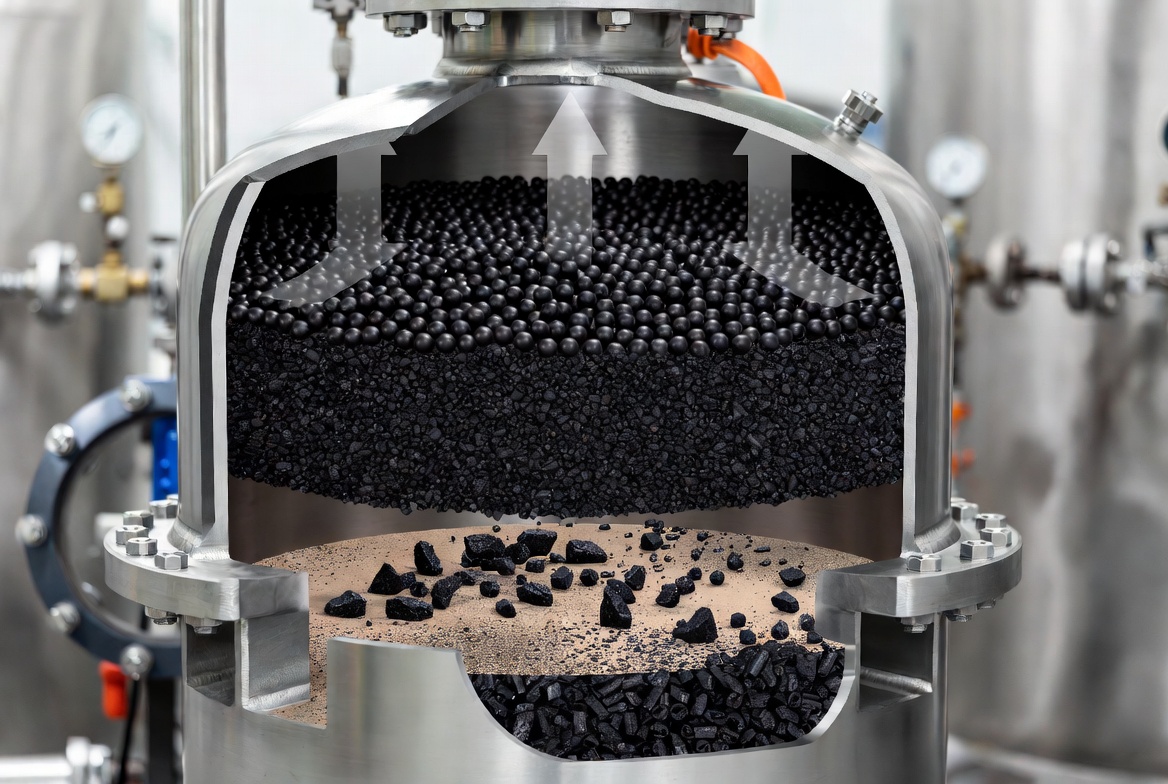
Activated carbon hardness describes how strongly each particle or pellet resists external mechanical forces such as compression, impact and abrasion in handling and operation. In practice, hardness is evaluated by standardized tests that expose the carbon to repeated mechanical stress and then quantify how much of the material remains intact above a defined particle size. Harder carbons typically show: [qizhongcarbon]
- Higher resistance to crushing during transport and silo loading. [qizhongcarbon]
- Better stability in backwashing or counter-current operations in water treatment. [activatedcarbon.com]
- More durable performance in gas-phase fixed beds where friction and vibration are continuous. [qizhongcarbon]
From an engineering perspective, hardness becomes especially important in pelletized and granular carbons used in industrial water, air and gas treatment, where mechanical integrity directly affects pressure drop and bed life. [qizhongcarbon]
What Attrition Loss Really Means
Attrition loss measures the material that turns into fines and fragments due to mechanical wear during handling, loading, backwashing, regeneration and continuous flow operation. Instead of being a single material property, attrition reflects how the carbon behaves under realistic system conditions, including: [qizhongcarbon]
- Flow velocity, turbulence and bed expansion in columns and contactors. [activatedcarbon.com]
- Pneumatic conveying, screw feeding or mechanical transfer systems in plants. [qizhongcarbon]
- Thermal or chemical regeneration cycles that weaken the particle matrix over time. [qizhongcarbon]
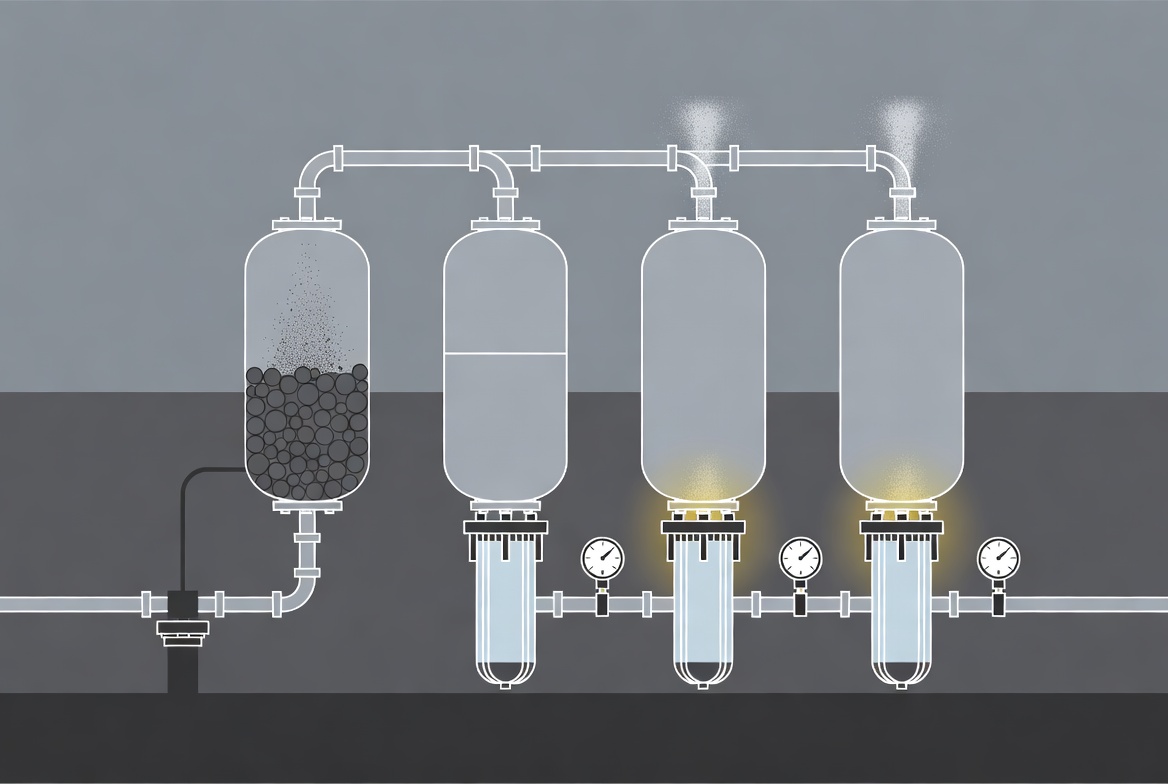
High attrition loss leads to increased fines, which can cause filter plugging, higher pressure drop, dust emissions and more frequent media replacement in industrial systems. [activatedcarbon.com]
Hardness vs Attrition Loss: Core Differences
Although related, hardness and attrition loss focus on different aspects of mechanical performance. Hardness is a controlled test property, while attrition loss is the observed consequence in operation. [qizhongcarbon]
| Aspect | Hardness | Attrition loss |
| Definition | Resistance to mechanical stress under standardized testing (qizhongcarbon) | Proportion of material lost as fines and fragments in real operation (qizhongcarbon) |
| Measurement | Lab strength tests, crushing or abrasion indexes (qizhongcarbon) | Field or pilot data from loading, backwashing, regeneration and long-term operation (qizhongcarbon) |
| Focus | Intrinsic mechanical strength of particles (qizhongcarbon) | System-level impact on performance, pressure drop and maintenance (activatedcarbon.com) |
| Main users | Material specifiers, design engineers, procurement teams (activatedcarbon.com) | Plant operators, maintenance engineers, reliability managers (activatedcarbon.com) |
The key practical insight is that high hardness does not automatically guarantee low attrition loss, because real systems add variables such as hydraulic shocks, regeneration chemistry and mechanical handling that can damage even strong carbons if design is not balanced. [activatedcarbon.com]
Why Hardness Matters in Industrial Systems
In large-scale industrial installations—such as municipal water plants, chemical process units or VOC scrubbers—hardness becomes a reliability parameter. From an industry practitioner's viewpoint, hardness directly influences: [activatedcarbon.com]
- Bed stability and uniformity. Harder pellets maintain shape and size distribution longer, keeping flow profiles more predictable in fixed beds and columns. [qizhongcarbon]
- Pressure drop behaviour. Stronger media reduces fragmentation and fines, which limits unexpected increases in pressure drop that can force operating changes or emergency maintenance. [activatedcarbon.com]
- Media life and replacement cycles. Higher hardness extends media life by resisting mechanical fatigue, especially in systems with frequent backwash or dynamic flow changes. [activatedcarbon.com]
For a manufacturer specializing in industrial activated carbon solutions, achieving the right hardness level is central to designing products that integrate smoothly into existing plant infrastructure and operating regimes. [tongkeac]
The Operational Cost of Attrition Loss
From a plant engineer or operations manager's perspective, attrition loss is a direct cost driver. Every percentage of mass converted into fines has practical impacts: [activatedcarbon.com]
- Increased media consumption. Fines are typically removed during filtration or blowdown, forcing more frequent top-up or complete replacement of the carbon. [activatedcarbon.com]
- Higher maintenance load. Plugging of strainers, downstream filters or instrumentation leads to more cleaning, shutdowns and unplanned downtime. [qizhongcarbon]
- Environmental and safety concerns. Dust from attrition can affect indoor air quality, explosion risk in enclosed spaces and occupational health compliance. [qizhongcarbon]
Because of these factors, industrial buyers increasingly treat low attrition loss as a critical selection criterion for high-throughput water, air and gas treatment lines. [activatedcarbon.com]
Mechanical Performance in Different Applications
Mechanical performance demands vary significantly across industrial applications, which changes how hardness and attrition loss are prioritized. Typical patterns include: [activatedcarbon.com]
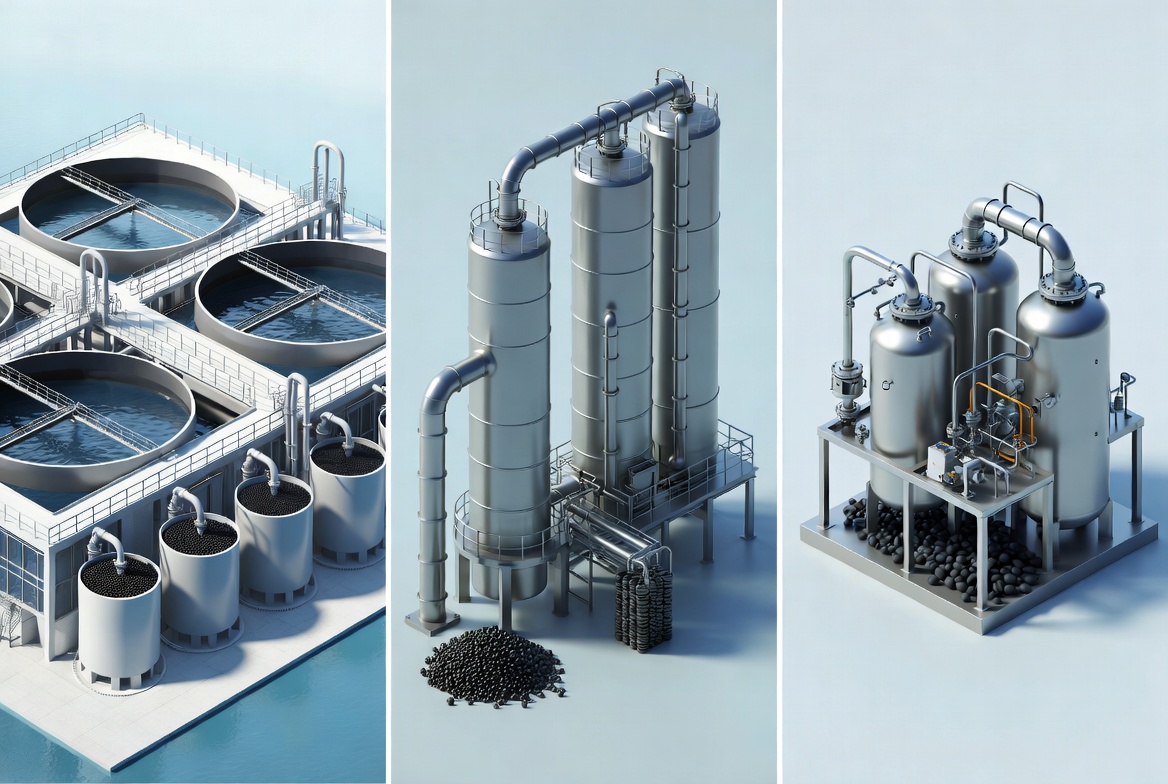
- Water treatment and wastewater plants. Systems with backwashing and hydraulic shock need balanced hardness and low attrition to maintain bed structure and avoid fines passing into downstream clarifiers. [activatedcarbon.com]
- Air and gas purification. Pelletized carbons for VOC control or biogas treatment require higher hardness to withstand constant gas flow abrasion, with low attrition to avoid dust carryover and pressure drop rise. [qizhongcarbon]
- Food, beverage and pharmaceutical. These sectors focus on both mechanical robustness and cleanliness, because fines can affect product clarity, filtration loads and compliance with process hygiene standards. [activatedcarbon.com]
A supplier serving multiple sectors must match mechanical profiles to each operating environment, rather than relying on a single generic hardness grade. [qizhongcarbon]
How Hardness Influences Attrition Loss
In most systems, higher hardness correlates with lower attrition loss, but the relationship is mediated by design and operation factors. Several mechanisms explain the interaction: [qizhongcarbon]
- Resistance to micro-cracking. Stronger particle matrices resist the micro-cracks that gradually turn edges and surfaces into dust under repeated stress. [qizhongcarbon]
- Shape retention under load. Harder pellets maintain roundness or structural geometry, which reduces stress concentration points where breaking initiates. [qizhongcarbon]
- Fatigue behaviour. Carbons with optimized hardness show more elastic response to cyclic loading in backwash cycles, delaying structural fatigue. [activatedcarbon.com]
However, over-optimized hardness without attention to pore structure and process chemistry can create brittle materials that fracture sharply under specific thermal or chemical regeneration conditions. Mechanical design must therefore balance hardness with the full operating profile. [activatedcarbon.com]
Industrial Water and Gas Systems
From the viewpoint of industrial carbon suppliers, experience with water and gas treatment projects shows how hardness and attrition loss must be managed together. In water treatment applications, plant upgrades often involve: [tongkeac]
- Selecting granular carbons with sufficient hardness to survive intensive backwashing in deep beds.
- Matching particle size distribution to system hydraulics to keep attrition-generated fines from breakthrough. [activatedcarbon.com]
In gas-phase systems such as VOC control towers and biogas purification, field data frequently highlight:
- The advantage of engineered pelletized carbons with high mechanical strength for long bed life and stable pressure drop. [qizhongcarbon]
- The importance of controlling attrition to limit dust formation, which can affect blowers, ductwork and downstream components. [qizhongcarbon]
These real-world observations reinforce the need for application-specific mechanical design in activated carbon products. [tongkeac]
Practical Steps to Evaluate Hardness and Attrition
Industrial buyers and engineers can follow a structured approach to evaluate hardness and attrition loss in potential carbon grades: [activatedcarbon.com]
1. Define mechanical stress profile. Map expected handling, transport, loading, backwashing, flow regimes and regeneration cycles across the system. [activatedcarbon.com]
2. Request mechanical performance data. Ask for hardness and strength indexes along with attrition or abrasion loss data under test conditions that resemble your application, where available. [qizhongcarbon]
3. Align particle size and form with equipment. Ensure pellet size, granule distribution and bulk density match column dimensions, distributors and hydraulic design to minimize localized stress. [activatedcarbon.com]
4. Consider long-term operating scenarios. Evaluate how repeated start-stop cycles, process upsets and chemical cleaning could affect mechanical performance. [activatedcarbon.com]
5. Plan monitoring of fines generation. Incorporate differential pressure tracking, visual inspection and fines quantification into standard operating procedures to detect attrition trends early. [activatedcarbon.com]
This step-by-step view helps transform mechanical specifications from abstract numbers into actionable design and operating decisions. [qizhongcarbon]
Balancing Mechanical Strength and Adsorption Performance
From an industry expert's perspective, mechanical strength must be balanced with adsorption performance rather than optimized in isolation. The processes that create high hardness—such as binder selection, shaping methods and activation conditions—also influence: [qizhongcarbon]
- Pore volume and pore size distribution, which govern adsorption capacity for specific contaminants. [activatedcarbon.com]
- Transport properties inside the particle, affecting kinetics and breakthrough behaviour. [activatedcarbon.com]
- Ash content and surface chemistry, which can impact selectivity and interaction with process chemicals. [qizhongcarbon]
In practice, application-tailored carbons aim for a hardness level that is high enough to manage expected mechanical stress, while still preserving the pore architecture and surface properties needed for water treatment, air purification, gas processing or critical process applications. This integrated view is increasingly standard in advanced industrial projects. [tongkeac]
Choosing Activated Carbon for Long-Term Industrial Reliability
For owners and operators of industrial systems, choosing activated carbon is ultimately about long-term reliability and predictable performance. Taking both hardness and attrition loss into account offers several benefits: [qizhongcarbon]
- More stable process conditions due to consistent bed structure and pressure drop. [qizhongcarbon]
- Lower life-cycle costs from reduced media replacement, maintenance and downtime. [activatedcarbon.com]
- Improved environmental and workplace performance through reduced dust generation and fines carryover. [qizhongcarbon]
By aligning mechanical properties with specific application needs, industrial stakeholders can secure treatment solutions that remain robust and efficient throughout their operating life. [tongkeac]
FAQs
Q1: Is higher hardness always better for industrial activated carbon?
Not always; hardness must be high enough to handle mechanical stresses but still compatible with pore structure and regeneration conditions to avoid brittle fracture in specific processes. [activatedcarbon.com]
Q2: How can a plant monitor attrition loss over time?
Plants typically track differential pressure, observe fines in backwash or filtrate and periodically quantify fines content in sampled media to understand attrition trends. [qizhongcarbon]
Q3: Does attrition loss affect adsorption capacity directly?
Attrition does not change the chemistry of remaining particles, but by removing mass as fines it reduces effective bed volume and can increase pressure drop, indirectly affecting overall system performance. [activatedcarbon.com]
Q4: Are pelletized carbons generally stronger than granular carbons?
Engineered pelletized carbons often provide higher mechanical strength and more uniform geometry, which can reduce attrition in gas-phase systems, though actual performance depends on formulation and manufacturing quality. [qizhongcarbon]
Q5: What mechanical data should be requested from suppliers?
Key data usually include hardness or strength indexes, attrition or abrasion loss values, particle size distribution, bulk density and any application-specific mechanical testing results where available. [activatedcarbon.com]
References
1. Activated carbon application overview – Guangdong Tongke Activated Carbon Co., Ltd. [1]
2. Activated carbon product information – Guangdong Tongke Activated Carbon Co., Ltd. [2]
3. Industrial activated carbon selection guidance – Huoli Carbon Industry Co. [3]
4. Pellet activated carbon mechanical performance and applications – Qizhong Chemical. [4]
5. Pelletized activated carbon solutions for industrial water, air and gas treatment – Tongke Carbon. [5]


