Content Menu
● What is activated carbon for seawater treatment?
● How activated carbon works in seawater
>> Adsorption and pore structure
>> Removing odor and color from seawater
>> Reducing microorganisms (without disinfection)
>> Protecting desalination membranes and equipment
● Real-world seawater applications
>> 1. Seawater desalination pretreatment (RO and distillation)
>> 2. Marine aquaculture and recirculating systems
>> 3. Emergency response to marine pollution
● Key specifications of coal-based activated carbon for seawater
>> Typical parameters to review
>> Recommended product selection checklist
● Example: How a desalination plant integrates activated carbon
● Why work with an experienced Chinese manufacturer
● Practical steps to design an activated carbon filter for seawater
● Seawater vs freshwater activated carbon applications
● How to evaluate a seawater activated carbon supplier
● When to replace activated carbon in seawater systems
● Call to action: plan your next seawater project with expert support
● Frequently asked questions (FAQ)
● References
What is activated carbon for seawater treatment?
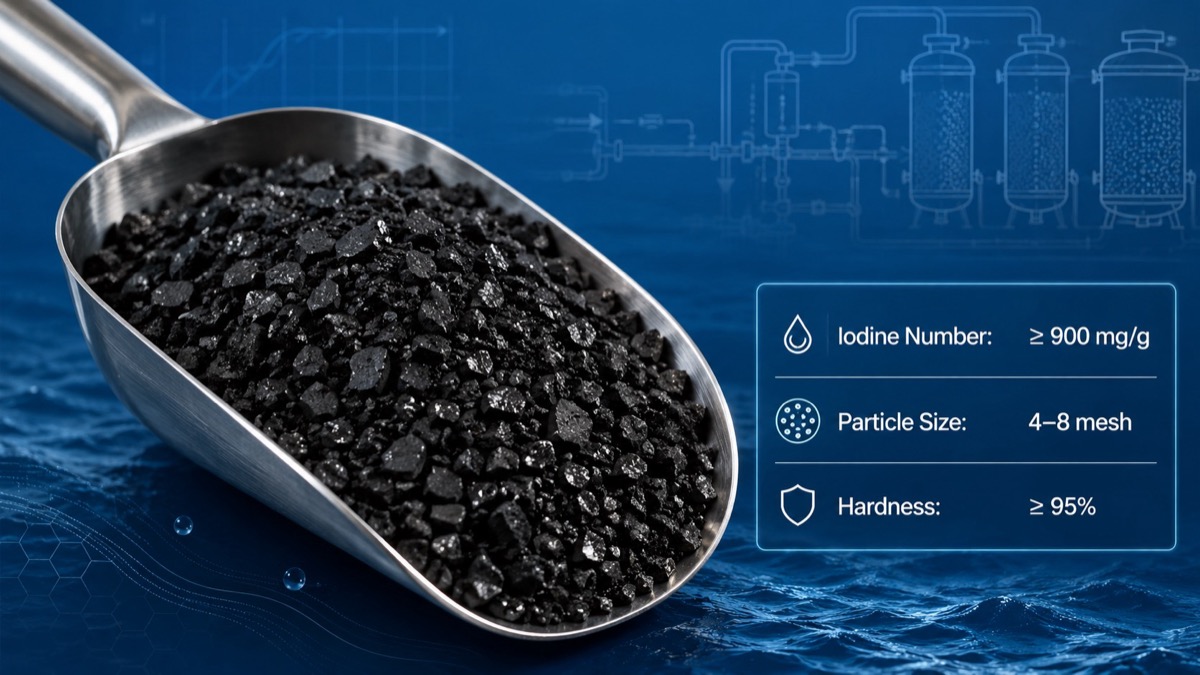
Activated carbon for seawater treatment is a highly porous carbon material engineered to remove odor, color, organic pollutants, residual chlorine, and certain micro-pollutants under high-salinity conditions. It is typically manufactured from coal, coconut shell, or wood, then activated to develop a large internal surface area and a tailored pore-size distribution. For seawater, coal-based activated carbon is often preferred because of its mechanical strength, stable performance in saline environments, and cost-effectiveness for large-scale plants. [heycarbons]
From an engineering point of view, seawater-grade activated carbon must balance three factors: adsorption capacity, hydraulic performance (flow and pressure drop), and durability under continuous operation and backwashing. When these factors are optimized, activated carbon becomes a reliable workhorse in pretreatment and polishing stages across desalination, aquaculture, offshore platforms, and coastal industrial facilities. [keiken-engineering]
How activated carbon works in seawater
Adsorption and pore structure
Activated carbon removes impurities from seawater mainly via adsorption, where dissolved molecules attach to the internal surface of the carbon's pores. Different pore sizes target different types of contaminants: [sciencedirect]
- Micropores: Remove small organic molecules and some low–molecular weight pollutants. [sciencedirect]
- Mesopores: Improve kinetics and help with larger organics and natural organic matter (NOM). [sciencedirect]
- Macropores: Facilitate transport so water and solutes can reach the inner adsorption sites. [sciencedirect]
Key performance parameters often used in specifications include iodine number, methylene blue value, specific surface area, and hardness, which together indicate how well the carbon will adsorb organics and withstand mechanical stress. For seawater pretreatment before reverse osmosis (RO), a high iodine number and good mechanical strength are particularly important to handle both dissolved organics and frequent backwashing. [heycarbons]
Removing odor and color from seawater
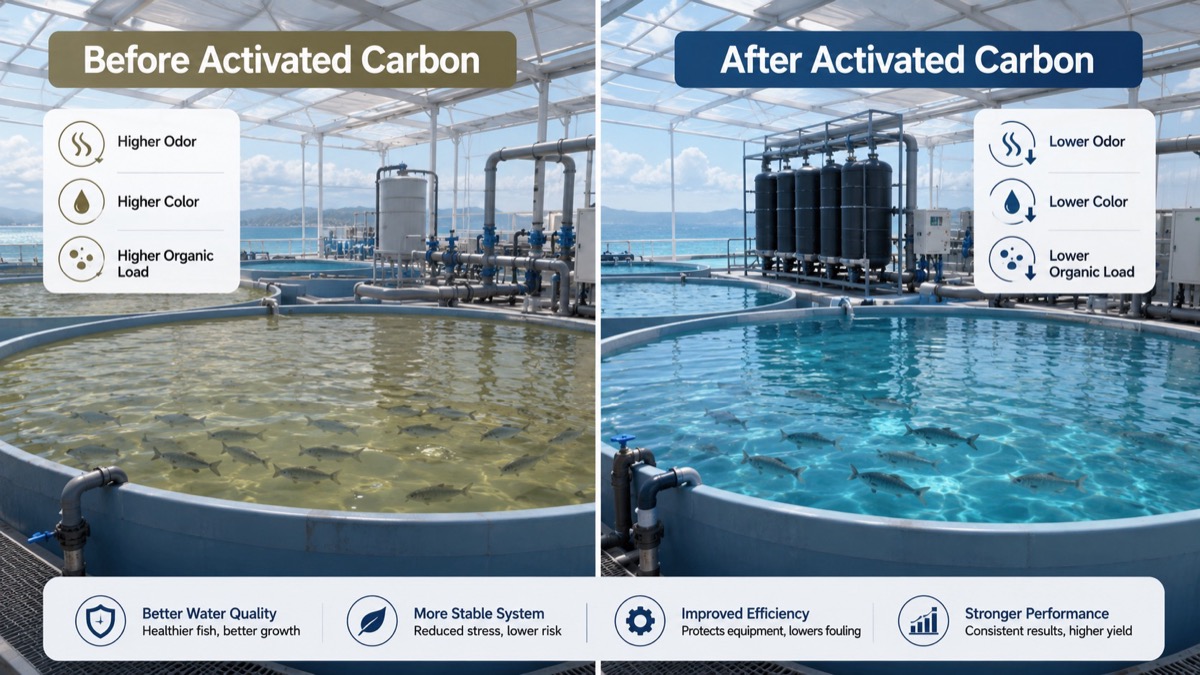
Natural seawater may contain sulfides from decomposed organic matter and other compounds that generate unpleasant odors. Coal-based activated carbon effectively adsorbs these odor-causing molecules, leaving seawater noticeably fresher and more neutral in smell. At the same time, pigments released by algae, plankton, and microorganisms can give seawater a yellowish or greenish tint, which is undesirable in many industrial and municipal applications. [keiken-engineering]
By capturing these colored compounds, activated carbon restores seawater to a more clear and transparent state, improving not only aesthetics but also downstream process efficiency, since high color and organic load can foul membranes or resins. [keiken-engineering]
Reducing microorganisms (without disinfection)
Seawater is naturally rich in microorganisms. In applications such as marine aquaculture, research facilities, and aquarium systems, lowering microbial load helps stabilize water quality and protect sensitive species. The microporous structure of activated carbon physically traps some microorganisms and provides surfaces for them to adhere as water passes through the filter bed.
It is important to clarify for engineers and operators that activated carbon does not sterilize seawater; it does not kill microorganisms but helps reduce their numbers via filtration and adsorption of organic nutrients. Therefore, it is usually combined with disinfection technologies such as UV, ozone, or chlorination to meet strict microbial standards. [keiken-engineering]
Protecting desalination membranes and equipment
In seawater desalination plants, activated carbon is a key component of pretreatment before RO, nanofiltration, or distillation. Its main jobs in these processes include: [keiken-engineering]
- Removing residual chlorine that would otherwise attack RO membranes and metallic components.
- Adsorbing natural organic matter and some colloidal contaminants that contribute to membrane fouling. [keiken-engineering]
- Improving feedwater quality, which stabilizes flux, extends cleaning intervals, and prolongs equipment life. [keiken-engineering]
Well-designed activated carbon pretreatment often leads to lower operating costs, fewer unplanned shutdowns, and more predictable membrane performance over time. [keiken-engineering]
Real-world seawater applications
1. Seawater desalination pretreatment (RO and distillation)
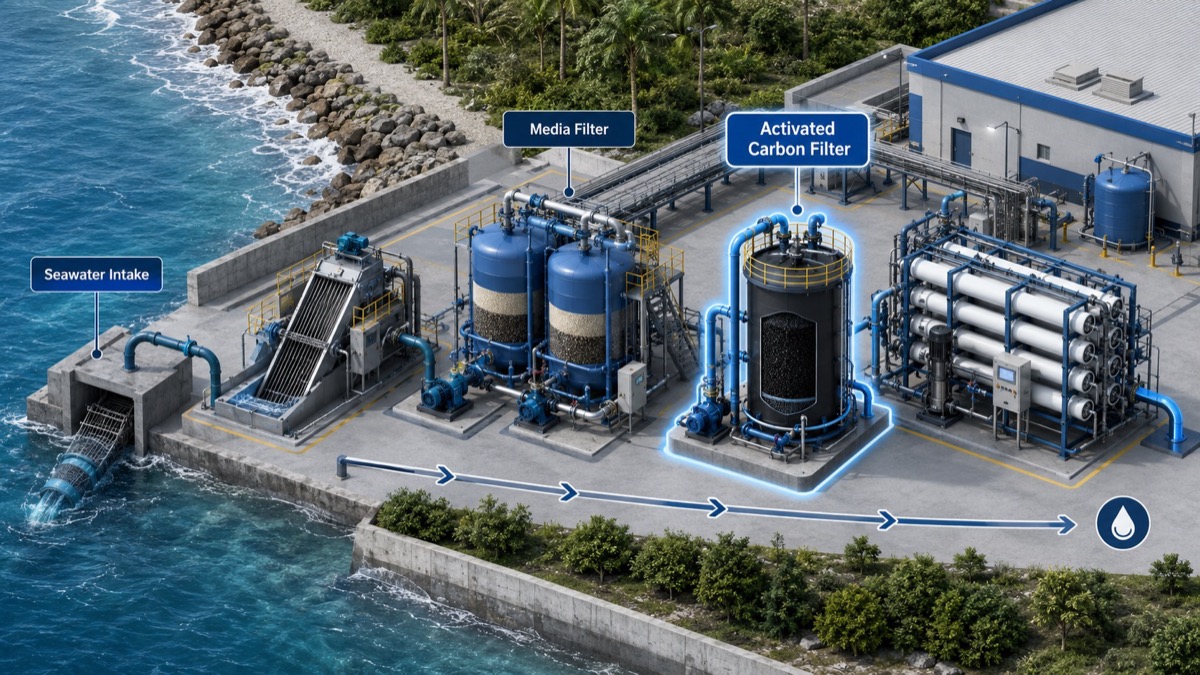
In large municipal and industrial desalination projects, pretreatment is a critical step that directly affects plant availability and lifecycle cost. Activated carbon is commonly installed after coarse filtration and media filtration to: [keiken-engineering]
- Remove suspended particles and fine organics that passed through sand or multimedia filters.
- Adsorb residual disinfectants (mainly chlorine) used in intake and storage facilities. [keiken-engineering]
- Improve feedwater quality and reduce silt density index (SDI) ahead of RO membranes. [keiken-engineering]
In practice, operators value activated carbon because it provides a combination of buffer capacity and robustness against fluctuating seawater quality, for example during algal blooms or storm events. [keiken-engineering]
2. Marine aquaculture and recirculating systems
Modern marine aquaculture systems, especially recirculating aquaculture systems (RAS), must maintain stable, clean seawater to safeguard high-value species and intensive stocking densities. Activated carbon is used in:
- Removal of dissolved organic matter and metabolic by-products to improve water clarity.
- Reduction of ammonia nitrogen, organic waste, and drug residues to protect fish and shellfish health.
- Odor and color control, which contributes to a more stable and predictable environment.
As a result, activated carbon supports better survival rates, improved feed conversion, and more consistent product quality for aquaculture operations. [keiken-engineering]
3. Emergency response to marine pollution
During marine oil spills or chemical discharge events, activated carbon can be deployed as an emergency treatment material in floating barriers, filtration units, or land-based treatment systems. Thanks to its strong adsorption capacity, it quickly binds oil, organic chemicals, and certain toxic compounds, helping to reduce ecological damage and protect sensitive shorelines and habitats. [keiken-engineering]
While activated carbon is not the only technology used in spill response, it is valued for its versatility and compatibility with other physical and chemical cleanup methods. [keiken-engineering]
Key specifications of coal-based activated carbon for seawater
From a buyer's perspective, understanding the critical specifications of coal-based activated carbon for seawater helps ensure reliable performance once the media is installed. [heycarbons]
Typical parameters to review
- Particle size (e.g., 0.9–2.0 mm or 8×30 mesh) for optimized filtration and head loss. [heycarbons]
- Iodine number indicating adsorption capacity for small organic molecules. [heycarbons]
- Methylene blue value or specific surface area for broader organic removal. [heycarbons]
- Hardness and abrasion number to predict media loss and dust generation during backwash. [heycarbons]
- Bulk density, moisture, and ash content, which affect transport, handling, and long-term stability. [heycarbons]
Seawater applications often demand higher mechanical strength because filters operate under continuous flow with regular backwashing and exposure to saline conditions. Working with a manufacturer that can provide test reports and ongoing quality control is essential for long-term plant performance. [nopio]
Recommended product selection checklist
When evaluating a seawater-grade activated carbon for your project, engineers typically:
1. Define process goals (odor removal, RO protection, aquaculture water polishing, etc.).
2. Confirm compatibility with upstream and downstream equipment (filters, membranes, pumps). [nopio]
3. Review detailed technical datasheets and independent test results. [heycarbons]
4. Assess availability of on-site or remote technical support during design and commissioning. [nopio]
5. Request pilot testing or sample evaluation for critical or high-risk projects. [wgcontent]

Example: How a desalination plant integrates activated carbon
A typical coastal desalination plant might follow this sequence:
1. Intake and screening – Seawater passes through coarse screens to remove debris. [keiken-engineering]
2. Coagulation and media filtration – Sand or multimedia filters remove suspended solids. [keiken-engineering]
3. Activated carbon filtration – Coal-based activated carbon removes odors, color, organics, and residual chlorine.
4. Cartridge filtration – Fine filtration protects RO elements. [keiken-engineering]
5. Reverse osmosis – Membranes remove salts to produce fresh water. [keiken-engineering]
In this process, the activated carbon stage plays a disproportionately important role in protecting expensive RO membranes and stabilizing operating conditions, even though it may represent a small fraction of the total capital cost. [keiken-engineering]
Why work with an experienced Chinese manufacturer
For global buyers, especially EPC contractors and industrial end users, choosing the right manufacturing partner is as important as choosing the media itself. A specialized Chinese manufacturer focused on coal-based activated carbon and export markets can provide: [linkedin]
- Tailored product grades designed for seawater and other demanding industrial applications. [zhulincarbon]
- Stable supply, batch-to-batch quality control, and competitive pricing for large volumes. [nopio]
- Technical guidance on filter design, start-up, and maintenance based on real-world project experience. [wgcontent]
When a supplier has long-term experience working with desalination plants, aquaculture systems, and coastal industrial users, it is easier for project teams to translate paper specifications into actual performance and risk reduction in the field. [nopio]
Practical steps to design an activated carbon filter for seawater
While every project is different, engineers often follow a structured approach when integrating activated carbon into seawater systems. [nopio]
1. Define influent and effluent targets
Start with a clear picture of current seawater quality (TSS, TOC, color, residual chlorine, turbidity) and define target values after activated carbon filtration, considering downstream equipment limits. [keiken-engineering]
2. Select media grade and bed depth
Based on flow rate, required contact time, and contaminant type, choose a coal-based activated carbon grade and define bed depth (often 0.8–1.5 m) that can achieve the desired removal. [heycarbons]
3. Design hydraulic conditions
Calculate empty bed contact time (EBCT), acceptable pressure drop, and backwash rate to minimize channeling and maintain consistent performance. [nopio]
4. Plan operation and maintenance
Define backwash frequency, monitoring parameters (e.g., differential pressure, chlorine breakthrough), and media replacement intervals under expected loading conditions. [keiken-engineering]
5. Pilot test where needed
For critical or high-risk projects, run pilot tests with real seawater to validate performance assumptions and fine-tune design parameters before full-scale deployment. [wgcontent]
Seawater vs freshwater activated carbon applications
Below is a high-level comparison that is often useful when explaining project design choices to non-specialist stakeholders. [keiken-engineering]
| Aspect | Seawater applications | Freshwater applications |
| Typical salinity | High salinity, corrosive environment (keiken-engineering) | Low salinity, less corrosive (keiken-engineering) |
| Main objectives | Protect RO, remove organics, odor, color | Drinking water polishing, taste and odor control (keiken-engineering) |
| Media preference | Coal-based, high mechanical strength (heycarbons) | Coal, coconut shell, or blends (heycarbons) |
| Mechanical stress | Higher backwash stress and continuous flow | Often moderate stress (keiken-engineering) |
| Design priority | Long-term stability in saline conditions (keiken-engineering) | Regulatory compliance and taste quality (keiken-engineering) |
| Common downstream process | RO, distillation, industrial processes (keiken-engineering) | Distribution networks, household use (keiken-engineering) |
This table helps internal teams and customers understand why seawater systems require specialized grades and designs, even if they are already familiar with freshwater activated carbon filters. [heycarbons]
How to evaluate a seawater activated carbon supplier
From experience working with B2B industrial buyers, the most successful projects look beyond price and consider five key evaluation dimensions. [linkedin]
- Technical depth
Check whether the supplier has documented case experience with seawater, desalination, aquaculture, and other marine projects, not just generic water treatment. [nopio]
- Quality consistency
Ask for recent test reports, QA certifications, and batch tracking processes to ensure stable performance over long-term contracts. [nopio]
- Engineering support
Look for engineering teams that can review your process flow, suggest design parameters, and assist during commissioning and troubleshooting. [wgcontent]
- Export and logistics capability
For international projects, verify export experience, shipping lead times, packaging standards, and documentation to avoid delays and compliance issues. [linkedin]
- Long-term partnership mindset
Strong suppliers invest in understanding your plant's lifecycle and provide support across design, operation, optimization, and media replacement. [linkedin]
When to replace activated carbon in seawater systems
In real-world operation, activated carbon is a consumable. Even if the media still looks intact, adsorption capacity gradually declines as pores become occupied. Common replacement indicators include: [keiken-engineering]
- Noticeable increase in odor, color, or organic load in treated water.
- Chlorine or other target contaminants breaking through earlier than expected. [keiken-engineering]
- Rising differential pressure across the filter bed that cannot be resolved by backwashing.
Many seawater plants define a replacement schedule based on operating hours or volume treated, then fine-tune it using online monitoring data and periodic lab analyses. Working closely with your activated carbon supplier can help optimize replacement intervals to balance performance, cost, and risk. [wgcontent]
Call to action: plan your next seawater project with expert support
If you are designing or upgrading a seawater desalination pretreatment line, marine aquaculture system, or coastal industrial water treatment process, it is worth involving an experienced activated carbon manufacturer early in the design stage. This helps you select the right coal-based activated carbon grade, optimize filter design, and avoid costly rework or downtime after commissioning. [wgcontent]
You can prepare your process data, target specifications, and project schedule, then reach out to a specialist team to discuss tailored seawater activated carbon solutions and request samples or a pilot trial. Early collaboration often delivers measurable benefits in efficiency, reliability, and lifecycle cost for your seawater treatment projects. [nopio]
Frequently asked questions (FAQ)
1. Why is coal-based activated carbon commonly used for seawater treatment?
Coal-based activated carbon offers high mechanical strength, good adsorption capacity, and stable performance under saline conditions, making it suitable for continuous operation and frequent backwashing in seawater systems. [heycarbons]
2. Can activated carbon alone make seawater safe to drink?
No, activated carbon improves odor, color, and organic contaminant levels but does not remove salts or fully disinfect seawater, so it must be combined with processes such as RO and disinfection for potable water. [keiken-engineering]
3. How often should activated carbon be replaced in a seawater desalination plant?
Replacement frequency depends on influent quality, operating conditions, and design, but plants typically base replacement on breakthrough of target contaminants, pressure build-up, and volume treated. [keiken-engineering]
4. Is activated carbon effective during algal blooms in coastal waters?
Activated carbon helps mitigate odor, color, and some dissolved organics associated with algal blooms, but it is usually used in combination with other pretreatment steps such as coagulation and media filtration. [keiken-engineering]
5. What data should I prepare before consulting a supplier about seawater activated carbon?
Prepare information on seawater quality, target effluent parameters, flow rate, existing pretreatment steps, and downstream equipment limits so the supplier can recommend an appropriate grade and filter design. [nopio]
References
1. ScienceDirect – Carbon as a multifunctional material in adsorption and water treatment research. [sciencedirect]
2. Heycarbons – A guide to activated carbon parameters (iodine value, pH, methylene blue, specific surface area). [heycarbons]
3. Keiken Engineering – Activated carbon adsorption as a key to efficient seawater desalination pretreatment. [keiken-engineering]
4. Zhulin Carbon – Activated carbon applications and product information for industrial water treatment. [zhulincarbon]
5. Nopio – Manufacturing website design and best practices for technical content and product pages. [nopio]
6. WGContent – E-E-A-T content quality and trust-building recommendations for B2B websites. [wgcontent]
7. ROI Revolution – Optimizing websites for Google's E-E-A-T guidelines, with emphasis on source citation and trust. [roirevolution]
8. MarketVeep – Best website content practices for manufacturing companies, including detailed specs and strong CTAs. [marketveep]
9. Zhulin Carbon – Activated carbon for seawater application page (source text for core application descriptions).
10. LinkedIn – Manufacturing website design and content best practices for B2B buyers. [linkedin]


